Pâté with Mushrooms

Let’s celebrate the season by preparing a Pâté! The combination of a crispy crust, a structured, colourful filling and various flavours is always a pleasure. Making a pâté (or better: a Pâté en Croûte) can be a bit intimidating (especially if you look at the pâté’s prepared during the World Championship!) but that should not stop you from giving it a try. It’s a pleasure to think about the ingredients, work on the construction and enjoy the wonderful aromas from your oven while baking the pâté. And the joy when slicing it: is the pâté as beautiful as you expected it to be?
Feel free to make your own puff pastry, but if you buy ready-made pastry, please check it’s made with butter, flower, salt and water only and not with rapeseed oil, palm oil, yeast etcetera.

Wine Pairing

A red, medium bodied wine will be a great accompaniment of this Pâté en Croûte. In general you’re looking for a red wine with aromas of black fruit, floral notes and delicate wood. The tannins should be soft or well-integrated. We enjoyed a glass of Pinot Noir from La Cour Des Dames

What You Need

  • 150 grams of Cèpes
  • 250 grams of Champignon de Paris
  • 1 small Shallot
  • Handful of Spinach
  • Half a cup of Rice
  • Parmesan Cheese
  • Parsley
  • One Egg
  • Puff Pastry
  • Black Pepper

What You Do

Start by cooking some rice, you will probably need a tablespoon of cooked rice. Clean the cèpes and see how they best fit in the pâté baking mould. Perhaps you need to trim the stems or the caps to have the best result when it’s ready. Set the cèpes aside.
Clean the champignons and wash the spinach. Peel and finely chop the shallot. Warm a heavy iron skillet, glaze the shallot, add the cleaned and lengthwise halved mushrooms (and the leftovers of the cèpes) and cook them on medium heat for 10 minutes or so. In parallel blanch the spinach, drain and squeeze. Also in parallel, coat the mould first with baking paper and then with puff pastry. Make sure you have some extra pastry to create the lids for the chimneys. Chop the cooked mushrooms. Chop the spinach. Add the egg to a large bowl and whisk. Add the cooked mushrooms to the bowl, add some black pepper, chopped parsley and finely grated Parmesan Cheese. Add some spinach, just to have some extra colour. Add the rice. The rice will help absorb additional juices from the cèpes, so how much rice you need is a matter of looking at the mixture and the cèpes.

Now it’s time to build the pâté: start by creating a bottom with the mixture, position the cèpes and add the remainder of the mixture. Make sure the mixture envelops the mushrooms. Close the pâté with the pastry. Make two holes in the roof of the pâté and use baking paper to create 2 chimneys. Transfer to the oven (180 °C or 355 °F) for 45 minutes. Use the remainder of the puff pastry to make 4 mini cookies that will function as lid on the chimney (of course, you only need 2, but baking 4 allows you to choose the best). After 45 minutes add the 4 cookies, bake for another 10 minutes. Mix some egg yolk and coat the pâté and the cookies. Cook for another 5 to 10 minutes. The duration and temperatures very much depend on the shape of the mould and the pastry.

Transfer from the oven, remove the chimneys, glue the lids on the chimneys using some egg yolk and let cool. Once cool, remove from the mould, transfer to the refrigerator and wait until the next day. 

Japanese Pumpkin with Shrimps

The traditional Japanese way of preparing Kabocha (Japanese Pumpkin) requires a bit of work but is not overly complex. The result is a combination of delicate, fresh pumpkin flavours with clear umami as a result of simmering the pumpkin in a dashi-based stock. You could replace the Japanese Pumpkin with a more common winter squash or with a red Hokkaido pumpkin.

Combining shrimps and pumpkin seems a bit odd, but it’s actually very nice. The combination is colourful and the various flavours come together nicely, also thanks to the dashi.
The first time we enjoyed this combination was when we prepared Takiawase, following the recipe from author and Michelin Award winning chef Akira Oshima. The recipe is included in his book Yamazato, Kaiseki Recipes: Secrets of the Japanese Cuisine. It’s a mouth-watering dish but unfortunately fairly difficult to prepare. Typically, Takiawase is a combination of vegetables and fish. Every ingredient requires its own preparation and is simmered in its own dashi-based stock. Indeed: four different kinds of homemade stock. The recipe of Akira Oshima combines kabocha, eggplant, okra and shrimp.

Drink Pairing

We prefer a glass of sake with our Kabocha with Shrimps, for instance a Junmai sake with fresh aromas and good acidity. The sake must be dry and well-balanced with a clean finish. You could enjoy a glass of white wine with the dish, provided it’s dry and mineral. Or a more adventurous choice: a glass of Manzanilla or Fino sherry. Manzanilla is a dry sherry with a flowery bouquet, a delicate palate and subtle acidity. It works beautifully with the dashi and the sweetness of both the kabocha and the shrimps.

What You Need                                                                         

  • For the Dashi
    • 10 grams of Kelp
    • 10 grams of Katsuobushi
  • For the Kabocha
    • Mirin
    • Light Soy Sauce (Usukuchi)
    • Sake
  • For the Shrimps
    • Sake
    • (Olive) Oil
    • Mirin
    • Light Soy Sauce (Usukuchi)
  • Pickled Cucumber

What You Do

Start by preparing 500 ml of dashi.
Peel and devein the six shrimps. We prefer to leave the tail on. Transfer the shrimps to a bowl, add some sake and transfer to the refrigerator for a few hours.
Peel the Kabocha, remove the seeds. Halve and then slice in 6 equal parts. Combine 400 ml of dashi with 25 ml of mirin, 25 ml of light soy sauce and a tablespoon of sake. Add the slices of kabocha and let is simmer for some 10 minutes or until nearly done.
In parallel heat a heavy iron skillet, add oil, dry the shrimps with kitchen paper and then fry them quickly, let’s say 4 minutes. Transfer to a warm oven. Remove the oil from the pan with kitchen paper. Reduce the heat to low. Mix 50 ml of dashi with 25 ml of mirin and a small spoon of light soy sauce. Deglaze the pan and let the mixture reduce. Transfer the shrimps back the pan and coat them quickly with the mixture. Serve the slices of kabocha with the fried, coated shrimps and the pickled cucumber.

Lobster Mushroom with Pasta

The Lobster Mushroom is, obviously, bright reddish orange like the shell of cooked lobster. Not obvious is the fact that it’s actually a parasite that grows on certain mushrooms, making the host completely invisible and even changing its structure and taste. If you slice a lobster mushroom, you’ll see a beautiful red skin, as if the host mushroom is sprayed.
The taste of the Lobster Mushroom depends on the host. The ones we bought tasted fairly bland, but nevertheless the pasta turned out to be very tasteful and uplifting, partly due to the homemade tomato confit.

Wine Pairing

Enjoy a glass of white wine with your Lobster Mushrooms. We drank a Portuguese Vinho Verde, made by Cazas Novas. It comes with floral and fruit notes, has some acidity and a medium body with a good texture and a fresh aftertaste. In general you’re looking for a wine with freshness, minerality and some acidity. A wine that will go well with the intense flavors of the tomato confit and the creamy mushroom pasta.

What You Need

  • 100 grams of Lobster Mushroom
  • Shallot
  • Garlic
  • Thyme
  • 1 Bunch of Udon
  • 10 Small Tomatoes (confit or roasted)
  • Stock (Chicken, Veal or Vegetable)
  • Parmesan Cheese
  • Olive Oil
  • Black Pepper

What You Do

Clean the Lobster Mushroom. This is a bit time consuming due to the structure of the mushroom. Slice the shallot and the garlic. Strip the leaves of the thyme. In a large iron skillet gently fry the shallot in olive oil until soft. Add the garlic. After a few minutes add the sliced lobster mushroom (chunks). Add the thyme. Leave on low heat. In parallel cook the udon for 10 minutes or until ready. Drain the udon but keep some of the cooking liquid. Add stock, just to have more liquid in the pan. Add the tomatoes, mix gently. Now add the udon to the pan, mix, making sure the tomatoes remain intact. Add cooking liquid to get the right consistency. Finish with a splash of excellent olive oil, black pepper and finely grated Parmesan Cheese.

  • Lobster Mushroom with Pasta ©cadwu
  • Lobster Mushroom ©cadwu

Cod and Horn of Plenty

The magic of a great combination: only two ingredients supported by butter, olive oil and white pepper. It made us think of James Tanner’s inspiring Take 5 Ingredients. Sometimes you need various cooking techniques and lots of ingredients. Sometimes the combination of only 5 ingredients is all you need to make a perfect dish.

Why perfect? Both the fish and the mushroom are clearly present and nicely balanced. As if the combination brings out the best of both. The butter supports the richness of the fish and the aromas are delicate. The texture of the cod is soft and a touch flaky; the Trompettes de la Mort have a more fibrous and chewy texture. Excellent mouthfeel!

Wine Pairing

You’re looking for a wine that has minerality, a touch of oak and has sufficient body and length, for instance a Chardonnay.
We enjoyed our Cod and Horn of Plenty with a glass of Chablis, Antonin Rodet, Premier Cru, Montmains. It has a clear and pale gold colour. It comes with mineral notes and a touch of lemon. The taste is delicate and persistent with aromas of fresh citrus. It goes very well with the ‘long’ taste of the dish and the citrus is ideal with the cod and butter.

What You Need

  • 150 grams of Cod
  • 100 grams of Horn of Plenty
  • Butter
  • Olive Oil
  • White Pepper

What You Do

Make sure the mushrooms are fresh and dry. They become soggy and smelly easily. Clean the mushrooms thoroughly with a piece of kitchen paper. This can be time consuming. You may want to cut the cod in two. Fry the cod in olive oil with some butter in a non-stick pan. In a second pan fry the mushrooms in olive oil. This may take 5 minutes or so. Transfer the mushrooms from the pan to a warm plate with kitchen paper. When the cod is ready, serve immediately on a warm plate with some white pepper and sprinkle the mushrooms on top.

  • Cod and Horn of Plenty ©cadwu
  • Horn of Plenty ©cadwu

Fleurs de Courgettes Farcie

Such a pleasure to see courgette flowers in your garden or at the greengrocers. The young courgette is firm and tasty; the flowers a beautiful yellow. Simply stuff the flowers, fry in a pan or cook in the oven and you have a great side dish or starter. And then you start wondering: ‘Stuff with what? Cheese? Salmon? Mushrooms? Tomatoes? Ricotta? Vegetable Mousse?’
Earlier we described a simple, tasty vegetarian version. This recipe requires a bit more work, but the result is delicious and beautiful. Crab and courgette go together very well; it’s a well balanced combination with surprisingly delicate flavors.

Wine Pairing

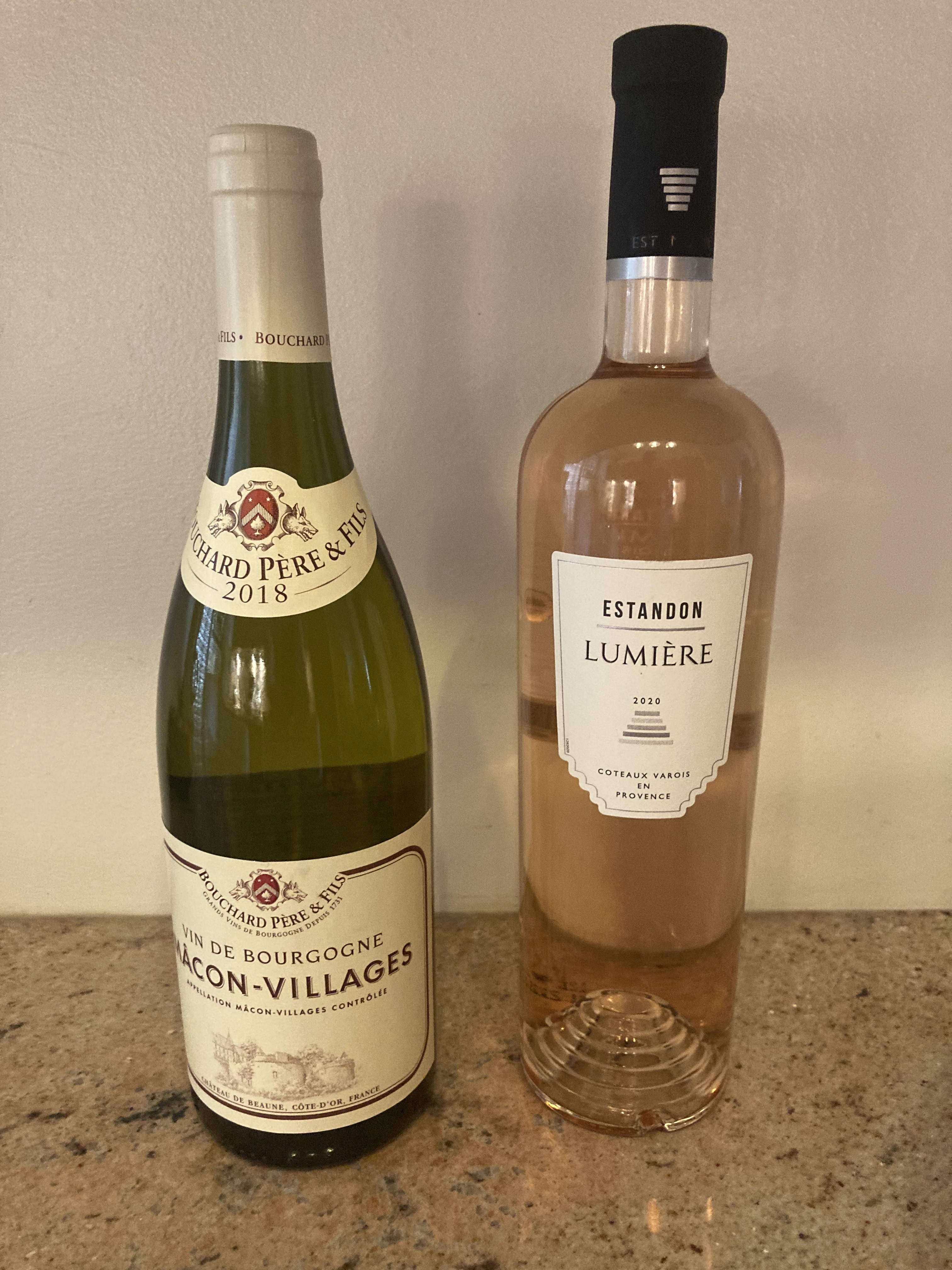
Obviously a nice glass of Côtes de Provence Rosé is an excellent choice. But you could also go for a white wine, for instance a Macon-Villages as produced by Bouchard Père & Fils. In general a subtle wine that goes well with the gentle flavors of both the crab and the courgette.

What You Need

  • One Courgette (small and firm)
  • One Garlic Clove
  • Olive Oil
  • Six Small Courgettes with their flower
  • Crab
  • Black Pepper

What You Do

Wash the courgette, dry and grate coarsely. Warm a small cooking pan, add olive oil and the grated courgette. Fineley grate the garlic and mix with the courgette. Leave for 20 minutes minimum on low heat. When ready, set aside and let cool.
Best is to use a leg of a fresh (littoral) crab, but you could also buy a can of most excellent crab. If using fresh crab, heat a pan with water, bay leaf and crushed black pepper corns; cook the crab for 10 minutes, remove from the water, set aside until cooler and then remove the meat from the shell. Be sure to remove all shards of shell. Set aside and let cool.
Remove the stamens from the flowers. Remove the end of the small courgette. Use a very sharp knife to slice the courgettes lengthwise in 3, making it look like a fan. Heat water in a pan and poach the small courgettes (not the flowers!) for 60-90 seconds depending on the size. Add some crab meat to the courgette mixture and taste. Keep adding crab until you’ve reached the perfect combination (or the end of the crab). Add some black pepper. Stuff the flowers, close them by slightly twisting the leaves of the flower, sprinkle with olive oil, making sure they are completely coated with oil. Heat your oven to 200° C or 390° F. Using the grill is a good idea. Transfer to the oven and cook for 10 minutes. The flowers should be crisp and perhaps a touch golden. Allow to cool for a few minutes before serving.

  • Fleurs de Courgettes Farcie ©cadwu
  • Macon Villages and Cotes de Provence ©cadwu

Fig Jam

Sometimes we dream of having a small garden, with perhaps a few roses, herbs, peonies and definitely a fig tree. Being able to pick figs, all summer long, and enjoy the abundance of the tree, it sounds like magic to us. Figs don’t do well in a pot on a balcony, so we depend on greengrocers and the market. And that’s where we struggle: when you want to buy figs, you’ll notice they’re fairly expensive and hard to find. The ones we bought yesterday were individually wrapped in paper, as if they were very exclusive chocolates. But since we love fig jam, we simply had to buy them.

Wine Pairing

Homemade fig jam combines very well with Foie Gras, toasted bread and a glass of Sauternes, for instance this very affordable Dourthe Grands Terroirs. This wonderful, sweet wine from the French Bordeaux region made from late-harvest grapes affected by noble rot, comes with flavors like apricot, tropical fruit, honey and gently toast. Drinking Sauternes has become less popular, also because it’s often positioned as a wine to accompany your dessert. A concept that seems to be a bit old fashioned. Why not try a glass of Sauternes with some excellent blue cheese, a chocolate cake or simply on its own as aperitif?

What You Need

  • 500 grams of Fresh Figs
  • 100 grams of Sugar
  • 1 Lemon

What You Do

We recommend using only 100 grams of sugar, so 20% of the weight of the figs. Therefore the jam must be stored in the refrigerator and the jar must be finished shortly after opening it. That’s why we prefer using small jars and cooking small quantities of jam.
Start by washing the figs. Remove the stems. Cut the figs in small chunks, add to a pan. Add the sugar and the juice of one lemon. Put on medium heat, for at least 60 minutes, no lid needed (but be careful if the fruit is not ripe). During the cooking process the jam will become bright red. Use a fork to mash some of the figs. We think using a blender ruins the texture.
Make sure your jars are perfectly clean. Fill the jars, close the lid and cool in a cold-water basin. When cool, transfer to the refrigerator.

All Our Recipes For You

A few years ago we created an overview of recipes per season, simply because it’s such a good idea to enjoy what is available in the season. Nice to eat strawberries in Winter, but isn’t it a much better idea to enjoy seasonal slow cooked pears?

We then introduced overviews per course, ranging from side dish to lunch. The categories didn’t always make sense, so we added a few more, making our admin more complicated, especially when we updated a recipe or a picture.

The obvious thing happened: we lost track of recipes, noticed some links were broken and the overviews became incomplete.

So how to organise this blog?

After much debate and intense workshops (not really) we’re pleased to present to you an old fashioned, up to date and very easy to use (and maintain) index of All Our Recipes For You!

All Our Recipes For You ©cadwu

Asparagus with Scrambled Eggs and Shrimps

Asparagus and eggs, it’s a match made in heaven. For instance à la Flamande (with boiled egg, butter, parsley and ham) or more exotic with Kimizu or with scrambled eggs, chives and shrimps.

Shrimps?

Indeed, with small excellent shrimps, preferably freshly peeled; not used as an ingredient but as an element of flavour. The first time we tasted this combination we were surprised by the role of the shrimps. The salty, intense taste, balanced with the very rich eggs and the sweet-bitter asparagus is a very clever idea. The chives in the scrambled eggs lift the dish to a higher level.
Unfortunately we don’t know who created it, so we offer the recipe with a caveat.

Scrambled eggs?

Preparing scrambled eggs, it seems obvious and simple, but actually we are looking for a version that is more like a sauce. Gordon Ramsey’s instructive and hilarious video shows you how to make scrambled eggs, so no need for us to explain. You need to stop a bit earlier, given it needs to have a sauce-like consistency.

Wine Pairing

We decided to drink a glass of Rivaner from the house Gales in Luxembourg. The aroma made us think of grapefruit, ripe melon and apple. The taste is elegant with a touch of sweetness, acidity and minerality. Ideal with our dish! The sweetness with the asparagus, the acidity in combination with the scrambled eggs and chives, the minerality with the shrimps. And the taste is surprisingly long lasting, which is perfect with such a rich dish.

What You Need

  • 6 White Asparagus
  • 2 Eggs
  • Butter
  • Chives
  • Crème Fraiche
  • White Pepper
  • A Few Small (unpeeled) Shrimps

What You Do

Peel the asparagus and steam for 20 minutes or so. They should have a bite. Prepare scrambled eggs à la Ramsay. Serve the asparagus with the scrambled eggs and just a few shrimps. Done!

White Asparagus with Chervil

A salad can be an excellent starter of your lunch or dinner, provided it’s one with lots of flavour and gentle acidity. For instance a Salade Ni­çoi­se, a Salade Caprese or a salad of White Asparagus and Chervil.

Chervil is a very delicate herb. It tastes like anise, but it is much more refined. Chervil looses its taste almost immediately when heated. The salad needs to be prepared well in advance, allowing for the flavours to be well integrated.

Honey can easily ruin a salad (and sugar will always ruin a salad). In this case we use only a touch of honey to create an environment for the sweetness of the white asparagus. The honey should act as a trigger.

The salad is a great example of the complexity of white asparagus: you will taste the sweetness and the freshness of the asparagus. The mouth feel of the salad is very nice, because the asparagus will be both juicy and crispy, with the chervil, honey and vinegar in a supporting role.

After having mixed the salad you will notice that the asparagus and chervil absorb the dressing. During the time in the refrigerator the asparagus will loose some juices, which is actually the beginning of a great dressing.

Wine Pairing

Combining salad and wine is not straightforward. Especially the acidity of the dressing creates a challenge. One solution is to use verjuice and not vinegar. Verjuice is made by pressing unripe grapes. The idea is that verjuice links to wine, whereas classic vinegar or lemon juice would compete with wine. In this case we choose a wine that reflects the flavours of the salad: a hint of anise, a touch of sweetness and florality. Typical notes you will find in a wine from the Alsace region, for instance a Pinot Blanc or a Pinot Gris.

What You Need

  • 2 White Asparagus per person
  • Excellent Olive Oil
  • White Wine Vinegar or Verjuice
  • Lots of Chervil
  • Touch of Honey
  • White Pepper

What You Do

Steam the asparagus for 10 minutes. Let cool. Dry with kitchen paper if needed. Prepare a dressing with the olive oil and vinegar. Chop the chervil and add to the dressing. Add a touch of honey and stir well. Add some white pepper. Taste the dressing: it should be a balance, meaning that none of the ingredients is overly present. Now slice the asparagus in nice chunks, let’s say 3 centimetres long. Mix, cover and transfer to the refrigerator for 6 hours. Mix the salad every two hours. Check the taste after 4 hours, you may want to adjust. Mix the dressing just before serving.

White Asparagus with Ham, Egg, Potatoes and Parsley

Finally, it’s spring. The season of white asparagus, morels and many more primeurs. This dish brings together white asparagus with eggs, excellent ham, butter, small potatoes and parsley. Taste the slight bitterness and sweetness of the asparagus, the umami of the potato and enjoy the velvety feeling on your palate as a result of the butter and the egg.
Don’t be tempted to boil white asparagus in water with butter, lemon, sugar or salt. Steaming is by far the best way to prepare them. We love our Russel Hobbs food steamer! Simple, straightforward and the result is a tribute to spring.

Wine Pairing

Ideally we would serve a dry Muscat from the Elzas with our asparagus. The delicate, slightly sweet but dry taste, the hint of bitterness and the rich aromas work very well with white asparagus. Muscat to us means the smell of fresh fruit. As if you taste the original grape. A wonderful wine and a wonderful combination.
Fortunately asparagus are fairly flexible when it comes to wine: a Pinot Blanc or Pinot Gris will also be fine.

We opened a bottle of Vinho Verde from Portugal. A light and vibrant wine with clear notes of citrus and floral aromas that combined rather well with the flavours of the asparagus. Not the most exquisite combination, but it worked for us.

What You Need

  • 6 or 10 White Asparagus
  • 2 Eggs
  • 100 gram Excellent, Organic Ham
  • Small Firm Potatoes
  • Parsley
  • Butter
  • White Pepper

What You Do

Peel the asparagus and steam them for 20 minutes. Steam the eggs medium (10 minutes), making sure the yolk is firm but not dry. Wash the potatoes and steam them for 15 minutes. Timing depends on the size. Melt the butter. Peel the egg and cut in four. Chop the parsley. Serve the asparagus and eggs on a plate. Coat the potatoes with butter and parsley. Dress the plate with ham (please make sure it has a bit of fat) and potatoes. Poor the remaining melted butter over the asparagus. Sprinkle the parsley over the egg. Add some white pepper.

White Asparagus with Ham, Egg, Potatoes and Parsley ©cadwu