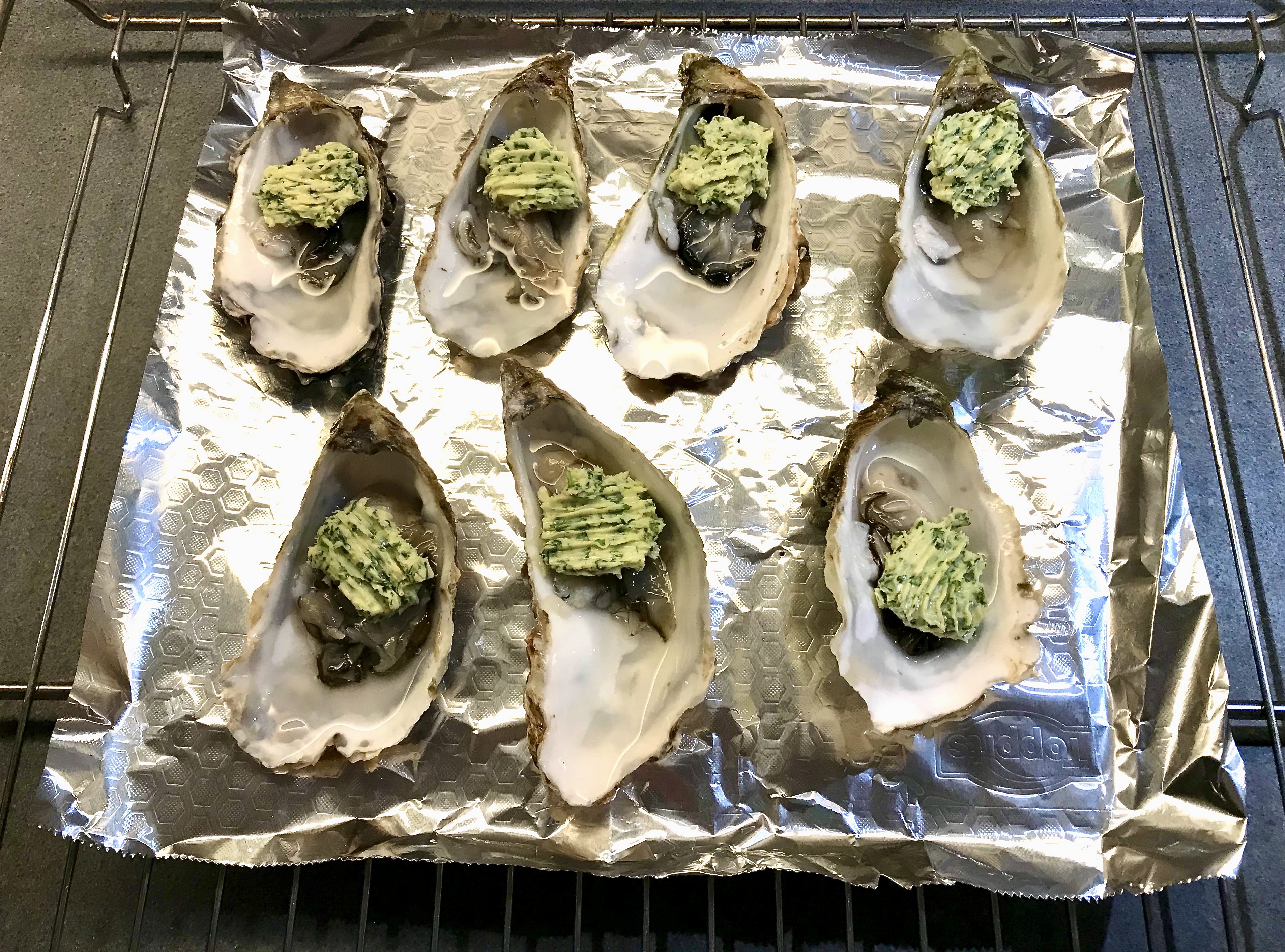
Saffron Milk Cap and Halibut

Earlier we wrote about Antonio Carluccio’s A Passion for Mushrooms, published in 1989. The book includes some wonderful recipes and intriguing combinations. The book also includes a chapter on conservation techniques. We prepared two dishes from the book, Sandwiched Parasol Mushrooms and Halibut with Saffron Milk Cap.
A Passion for Mushrooms is a must have for mushroom-lovers. The book is available via the usual channels and perhaps at your local second-hand bookstore. Prices will vary.

Halibut with Saffron Milk Cap

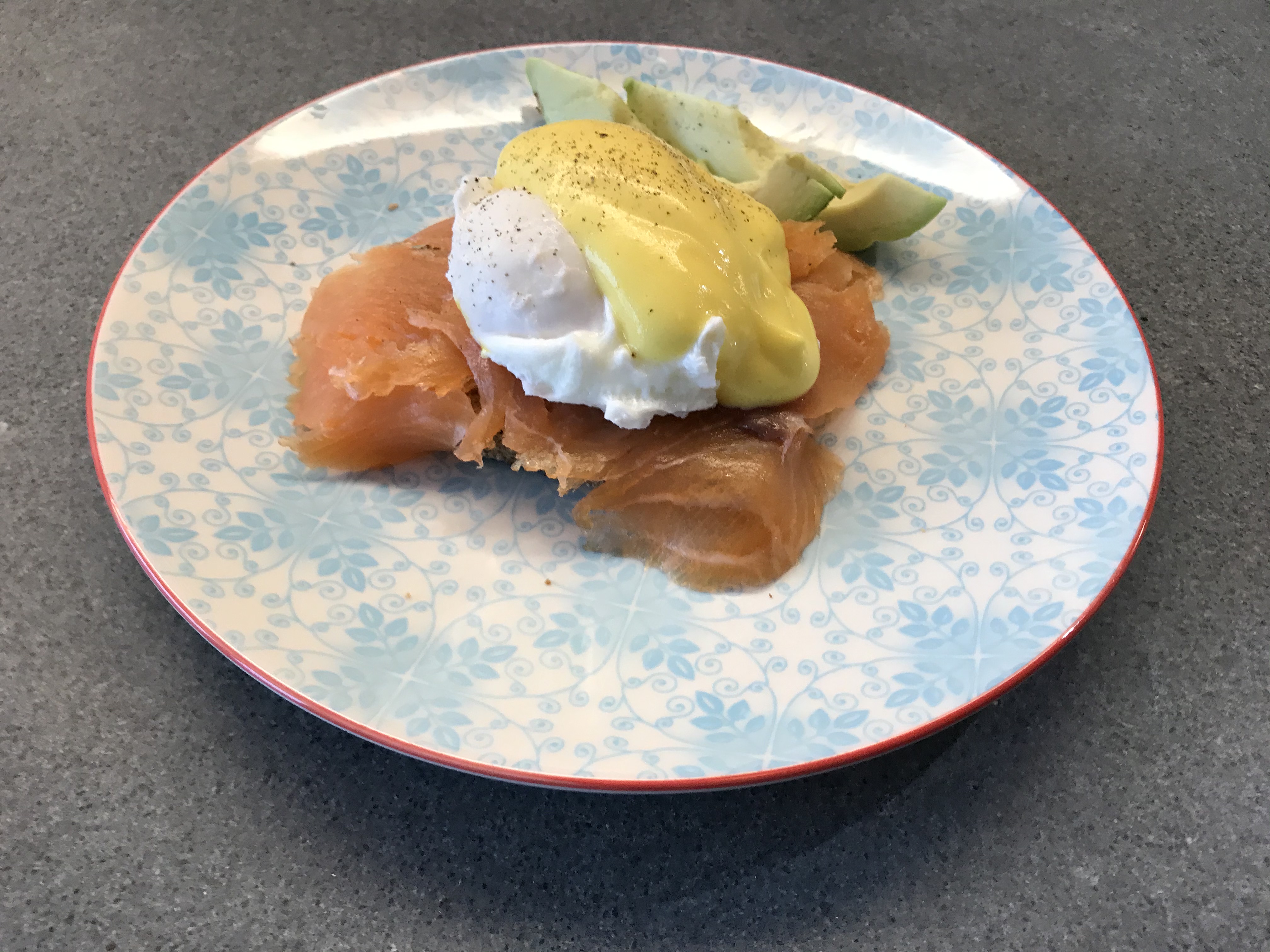
We were keen to read his chapter on mushrooms and fish because the combination is both challenging and surprising. We spotted a recipe with saffron milk cap, a popular mushroom in Spain, Portugal, Turkey, Scotland, Poland, Russia and many other European countries. Earlier we combined it with chorizo, with squid and we prepared a stew with eggplant and potatoes. Carluccio used the mushrooms to create a rich, creamy mushroom sauce which he combined with poached halibut. The fish is supported by the flavours and texture of the mushrooms and vice versa. Is it about saffron milk cap or about halibut? Absolutely delicious.

Wine Pairing

We opened a bottle of Rosenstock Grüner Veltliner, produced by Markus Huber in the Traisental region in Austria. Markus Huber is a young, internationally successful winemaker. The vineyards and the winery are organic and sustainable. He made a fresh, dry, fruity and aromatic white wine. Great accompaniment of the fish and the light character of the wine worked also very well with the rich mushroom sauce.
In general we suggest a light, refreshing, aromatic white wine.

What You Need
  • Filet of Halibut (skin on)
  • Butter
  • For the sauce
    • Saffron Milk Cap
    • Shallot
    • All Purpose Flour
    • Butter
    • Fish Stock
    • Vegetable Stock
    • Double Cream
    • Parsley
    • Dill
    • Mint
    • Mustard
    • Black Pepper
  • Crusted Bread
What You Do

Details of the recipe can be found in A Passion for Mushrooms. Buy the book and enjoy this dish and many more!

  1. Clean the mushrooms and slice.
  2. Chop the shallot finely.
  3. Chop and combine equal quantities of parsley, mint and dill.
  4. Add olive oil to a heavy iron skillet and fry the shallot.
  5. After a few minutes add the mushrooms. Reduce heat and fry for 5-10 minutes.
  6. Remove the shallot and the mushrooms from the pan.
  7. Use flour, butter and stock to make a basic sauce.
  8. Allow to integrate for a few minutes.
  9. The sauce should have a clear but not overpowering fish flavour.
  10. Add cream and mustard to the sauce. Mix.
  11. Add half of the herbs to the sauce. Mix.
  12. Add the mushrooms to the sauce.
  13. If necessary, add more stock to the sauce. Taste.
  14. In parallel, add butter to a non-stick pan and fry the halibut, skin down.
  15. When nearly done, turn the fish, colour the meat side, remove the skin and turn again.
  16. The sauce should be ready by now, so add the remainder of the herbs and some black pepper.
  17. Serve the fish on top of the sauce.
  18. Serve with crusted bread or steamed new potatoes.
Saffron Milk Cap and Halibut ©cadwu

Eggplant Omelette

Having made Banana Ketchup, we were keen to explore what kind of food would combine well with it. Monch Weller wrote us: It’s often paired with fried food here in the Philippines – spring rolls (both meat and vegetable versions), fried chicken, and eggplant omelette.
The ketchup paired nicely with vegetarian rolls, but not as well as hot sweet and sour sauce.
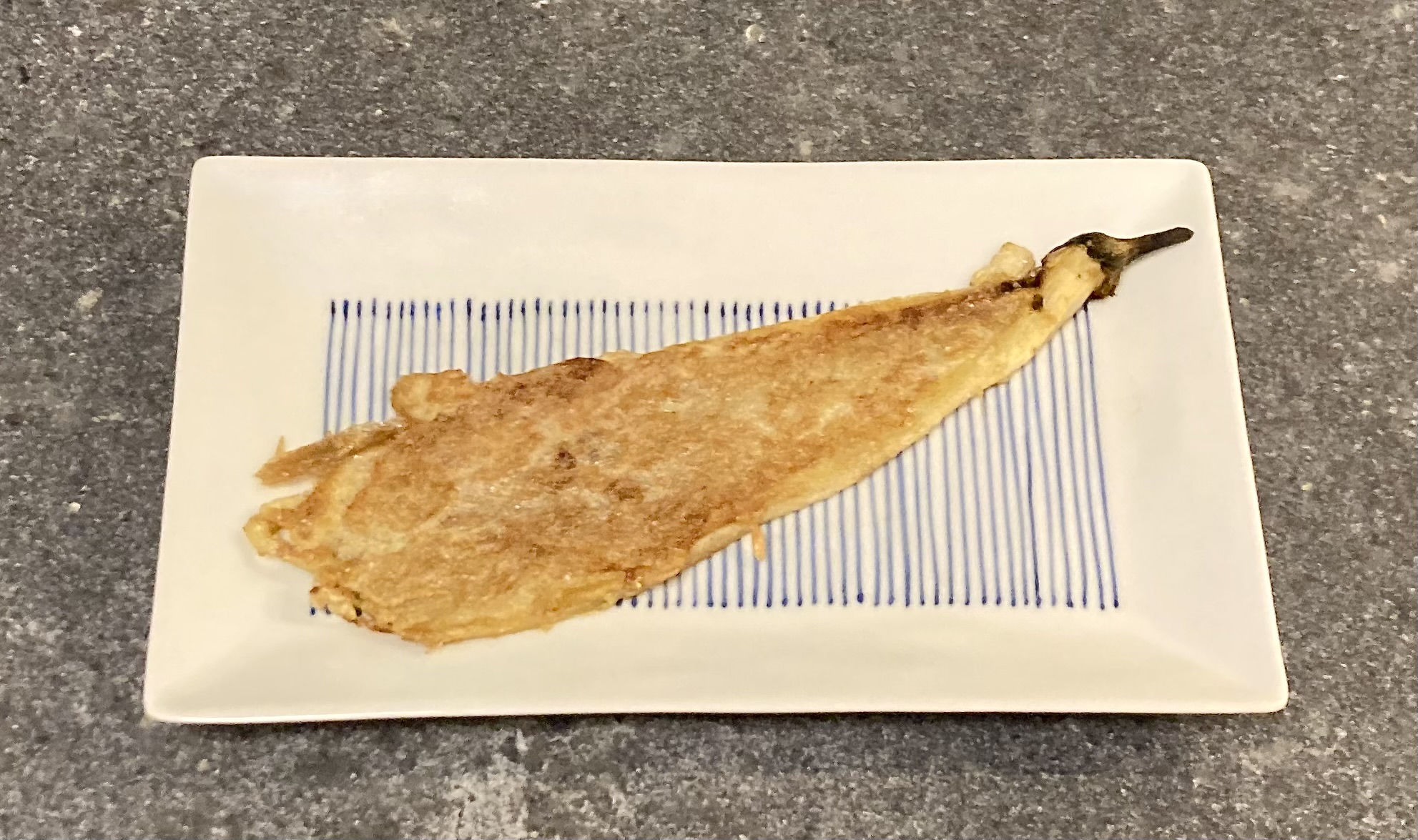
We decided to make an eggplant omelette, known as Tortang Talong in the Philippines. The eggplant is grilled, peeled, flattened, dipped in an egg mixture and fried in oil. The outside crispy and brown, the inside soft and moist. Best to use the long and slender purple variety, for instance Chinese or Japanese eggplant.
Our eggplant was a standard eggplant, large and oblong. Very different in size and shape compared to the one used in the Philippines. We were not sure how we could turn our eggplant into Tortang Talong. Slice it? Fan it? Or mash it and add the eggplant to the egg mixture?

What You Need
  • 1 regular or Italian Eggplant
  • 2 Eggs
  • Small Garlic Clove
  • Black Pepper
  • (optional) Salt
  • Oil
What You Do
  1. Heat your oven to 230°C or 450°F
  2. Poke the eggplant with a fork. This allows for steam to escape
  3. Place the eggplant on lightly oiled aluminium foil
  4. Roast the eggplant for 30-40 minutes, depending on the size
  5. Let cool
  6. Peel of the skin
  7. Mash the eggplant, but not too much
  8. Combine eggs, salt (if using) and pepper
  9. Beat the mixture well
  10. Add the mashed eggplant. We used 2/3 of our eggplant. Combine
  11. Add grated garlic and mix again
  12. Add oil to a small skillet, set to medium heat
  13. Add the mixture and fry until brown
  14. Flip the omelette and fry the other side until brown
  15. Slice the omelette and serve immediately
  16. Serve with banana ketchup
PS

When we can buy a long slender eggplant, we will prepare the original Tortang Talong. To be continued!

Banana Ketchup

A few weeks ago we were reading Monch Wellers food and lifestyle blog. He writes about Via Mare, a Filipino restaurant that opened its doors 50 years ago. In his blog Monch writes about the food Via Mare offers, for instance Spanish Hot Chocolate, Bibingka (rice cake), Crab Omelette with Banana Ketchup, Lumpiang Ubod (spring rolls made with heart of palm) and Puto Bumbong, a glutinous rice dyed violet and steamed in bamboo tubes. We learn so much about the Filipino food culture thanks to Monchs excellent blog!

Why Bananas?

Maria Orosa (1893–1945) was born in the Philippian province of Batangas, some 100 kilometres south of Manilla. She studied food chemistry and pharmacology in the US. She returned to the Philippines in 1922. She was a food chemist, innovator and war hero. She saw the potential of many local products, for instance bananas and soy, and used these to empower the Philippines. She invented Soyalac (a protein-rich powdered soybean product), Darák (bran rice powder rich in vitamins) and Tiki-Tiki cookies. The powders and cookies saved many lives during wartime food shortages in the Philippines.
One of her more frivolous inventions is Banana Ketchup. Why rely on imported tomatoes when it’s possible to make an equally tasty condiment using local bananas?

We loved the philosophy behind the ketchup and began searching for recipes. We noticed that tomato paste is often added, to give the ketchup a more familiar and appetizing colour. We didn’t do this. Afterall, the idea was not to use tomatoes. Plus: what’s wrong with the colour?

Food Pairing

The Banana Ketchup is smooth, its taste long, tangy, spicy and uplifting. The bananas give the ketchup natural sweetness and depth. They also support the spices. A condiment to love.
We asked Monch for his favourite combination. He wrote us: It’s often paired with fried food here in the Philippines – spring rolls (both meat and vegetable versions), fried chicken, and eggplant omelette (which was No. 2 in TasteAtlas’ 50 Best Egg Dishes). We tried it with eggplant omelette and vegetable spring rolls. The ketchup paired perfectly with the moist and more delicate flavours of the omelette.
Thanks Monch for introducing us to this unknown, delectable sauce!

What You Need
  • 2 small ripe Bananas
  • ½ Shallot
  • 2 cloves of Garlic
  • 20 grams fresh Ginger
  • ½ Kashimiri Pepper
  • 1/8 cup Brown Sugar
  • ¼ cup Rice Vinegar
  • ¼ cup Water
  • ¼ teaspoon Turmeric
  • Dash of Cinnamon and Nutmeg plus 1 Clove (replacing dash of All Spice)
  • Oil
What You Do
  1. Chop onion, garlic and ginger
  2. Mash the bananas
  3. Heat oil in a heavy iron skillet
  4. Add chopped onion and glaze, about 5 minutes
  5. Add garlic and ginger
  6. Leave on medium heat, stirring constantly
  7. Add bananas and combine
  8. After a few minutes add vinegar, water, sugar, spices and Kashmiri pepper
  9. When the mixture begins to simmer, reduce heat to low
  10. Leave for 15-20 minutes, stir regularly
  11. Remove from heat and let cool for 10 minutes
  12. Transfer to a food processor and blend until smooth. This may take one or two minutes
  13. Pass through a sieve to get the right velvety smoothness
  14. Leave to cool before transferring the ketchup to the refrigerator
  15. Serve with eggplant omelette (recipe next week!)
  16. The ketchup will remain tasty for up to 3 days.
PS

In general, we find tomato ketchup too sweet, too salty and bland. Have we ever considered making our own tomato ketchup? No, we haven’t. We’re okay with a small bottle of Heinz Tomato Ketchup Zero, in case we have an irresistible craving for ketchup. Heinz doesn’t add sugar and salt to the Zero Ketchup. They add more tomatoes than usual (great) and a sweetener (pity). The taste? Well, still typically tomato ketchup. Fortunately, Banana Ketchup has far more flavour, spiciness and complexity.

Risotto with Peas

Risotto is amongst our favourite dishes, especially one with mushrooms. Preparing risotto is not difficult, as long as you pay attention to the cooking process and use the right ingredients.
Recently a dear friend who lived in Italy for many years told us how to make Risotto with Peas. In the region where he lived (Liguria) this risotto is made without butter. We were not sure about not using butter, so we had it on standby. No need for that: the result was delicious. The rice was creamy thanks to the combination of the starchy cooking liquid and the Parmesan cheese. The peas were cooked to perfection and their taste nutty. The dish as a whole was light and energizing.

Wine Pairing

In general, a dry white wine will pair well with the Risotto with Peas. We enjoyed a glass of lightly oaked Chardonnay produced by Abbots & Delaunay. Aromas of apples and toast; the taste refreshing, long and a touch buttery. 

What You Need
  • 80 grams of Carnaroli or Arborio rice
  • 1 Shallot
  • Olive Oil
  • Fresh Peas
  • Stock (Chicken, Vegetable)
  • Parmesan Cheese
What You Do
  1. Peel and chop the shallot
  2. Shell the peas
  3. Warm the stock
  4. Add olive oil to the pan and glaze the shallot 
  5. Add the rice to the pan and coat for 2 minutes
  6. Keep the pan on medium heat. Be patient
  7. Start adding the stock, spoon by spoon and stir frequently
  8. After 10 minutes add the peas
  9. In total it may take 15 – 18 minutes before the rice is al dente
  10. Transfer the pan to the kitchen countertop and leave to rest for 2 minutes
  11. Add grated Parmesan cheese, combine, add some black pepper, taste, add more Parmesan cheese if so required
  12. Serve immediately
PS

We have three other risotto recipes: one with mushrooms, one with squid and one with beetroot.

Risotto with Peas is a tasty, uplifting dish. A delicious starter.
Risotto with Peas ©cadwu

How to Make a Roulade (part 2)

Earlier we wrote about ‘butterflying’ meat, a technique that allows you to turn a bigger piece of meat into a roulade. Ideal for pork loin or turkey. But what to do when you have smaller pieces of meat and butterflying is not possible? Then it’s a matter of flattening the meat, for instance with a hammer. Better to ask your butcher to do it for you with the head (blade) of a butcher’s axe: easy, quick and a much better result. Thin is better!
Once you have flattened pieces of meat it’s a bit of a puzzle to create the roulade. Just give it a try and see what works best. When you think you have the right combination, make sure the kitchen twine is in place and the filling ready.
Obviously, you want to match the filling with the side dishes. We served the roulade with caponata and decided to make a filling with sage and thyme.

Wine Pairing
homemade roulade: chicken thighs, sage and pancetta. Served with caponata

We enjouyed a non-oaked Nero d’Avola from Sicily. The ruby red coloured wine has aromas of cherries and plum. The taste is fruity and long with subtle tannins. Great combination with the Mediterranean flavours in both the roulade and the caponata.

What You Need
  • 4 Boneless Chicken Thighs
  • 1 small Shallot
  • 1 clove of Garlic
  • 10 leaves of Sage
  • Thyme
  • Butter
  • Pancetta
  • Olive Oil
  • Lemon
  • Black Pepper
What You Do
  1. Ask your butcher to flatten the chicken thighs
  2. Chop the shallot and the garlic
  3. De-vein the sage
  4. Remove the thyme leaves from the stalk
  5. Grate the butter
  6. Add olive oil to a heavy iron skillet and gently fry the shallot
  7. After a few minutes reduce the heat
  8. Add garlic and thyme. Stir
  9. Add some lemon juice
  10. Allow the filling to cool
  11. Put strings of kitchen twine on your work top
  12. Decide on the pattern for the meat and put it on top of the kitchen twine. This way you can easily roll up the meat and tie the twine
  13. Cover the meat with sage
  14. Spread the mixture over the sage. Keep the edges free
  15. Add grated butter
  16. Cover with slices of pancetta
  17. Roll up the meat
  18. Tie with kitchen twine
  19. Tightly wrap in plastic foil and transfer to the refrigerator for at least 2 hours
  20. Remove the roulade from the refrigerator and allow to rest at room temperature for 30 minutes
  21. Preheat your oven to 180 °C or 350 °F
  22. Remove the foil
  23. Put the roulade on a rack (this way it will brown evenly)
  24. Add water to the pan
  25. Fry in the oven until the internal temperature is between 70 °C and 75 °C, or 160 °F and 165 °F
  26. Transfer to your worktop, wrap in aluminium foil and allow to rest for 10 minutes
  27. Serve with caponata

Easy Mushroom Pie

Hurray! The mushroom season has started! Last Friday we bought beautiful golden chanterelles (girolles) and white beech mushrooms (shimeji). It’s the time of year to enjoy wonderful dishes such as Cèpes à la Bordelaise or Salad with Mushrooms and Smoked Duck. Will there be bay boletes this year? Or the intriguing Japanese Matsutake? It’s been some time since we last saw these on the market, and we would really love to make Matsutake with Spinach and Ginger again.
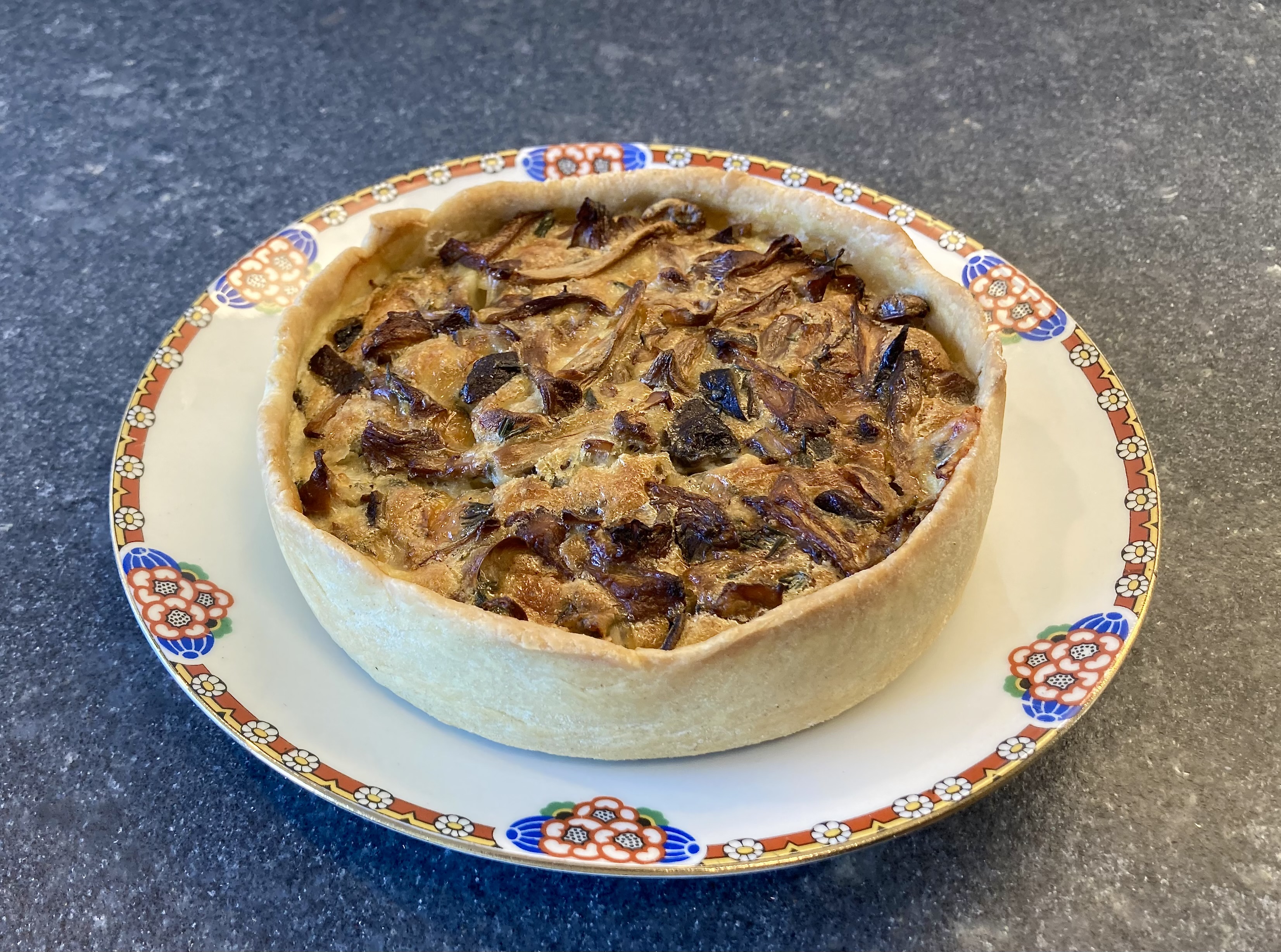
We decided to celebrate the start of the season by making an easy Mushroom Pie, packed with rich flavours, nuttiness and a touch of autumn.

Wine Pairing

We treated ourselves to a bottle of Pinot Noir from the Elzas region, made by Sophie Schaal. She produces wine in France and South Africa. The grapes are handpicked and then naturally fermented before ageing in French oak barrels for 10 months. The result is a wine with a deep ruby colour. The aromas suggest black fruit and a touch of vanilla. The taste is well balanced with soft tannins and length.
In general, you’re looking for a wine with red fruit and refined tannins. Some earthiness will match very well with the mushrooms and the taleggio.

What You Need
  • For the Pastry
    • 100 grams of Flour
    • 50 grams of Water
    • 10 grams of Olive Oil
    • 1 gram of Salt
  • For the Filling
    • 250 grams of firm Mushrooms (shiitake, golden chanterelles, beech mushrooms, button mushrooms)
    • 1 Organic Egg
    • 50 grams of Taleggio
    • 50 ml Double Cream
    • Thyme
    • 1 small Garlic Clove
    • Black Pepper
    • Olive Oil
    • 2 slices of Bacon (optional)
What You Do
  1. Combine flour, salt, water and olive oil
  2. Kneed for a minute and store in the refrigerator for at least 30 minutes.
  3. Clean the mushrooms and slice if necessary
  4. (Optional) Fry the bacon, let dry on kitchen paper and crumble. Add to the egg mixture (step 11)
  5. Lightly fry the mushrooms in a heavy iron skillet
  6. Transfer the mushrooms to a plate and let cool
  7. After 30 minutes: preheat the oven to 180 ˚ C or 355 ˚ F
  8. Combine the egg with the cream
  9. Add lots of thyme and black pepper
  10. Add grated garlic
  11. Add the mushrooms
  12. Slice small cubes of taleggio
  13. Add the cheese to the mixture
  14. Roll out the dough with a rolling pin on a lightly floured surface.
  15. Coat a 22 cm or 9-inch round baking tin with oil or butter
  16. Place the dough in the baking tin
  17. Add the mixture and distribute evenly
  18. Transfer to the oven for 35-40 minutes or until nice and golden
  19. Allow to cool for a few minutes
  20. Remove from the tin and let cool on a wire rack
  21. Serve lukewarm
PS

It tastes even better the next day!

An easy to make mushroom pie with rich flavours
Mushroom Pie ©cadwu

Panna Cotta with a Twist

Recently we enjoyed mouth-watering Indian food thanks to Asma Khan’s cookbook Ammu. When we were looking for a dessert in her book, we hoped to find a recipe for Kulfi or for Kheer, both delicious creamy desserts with ingredients such as cardamon and saffron. Unfortunately these recipes are not included in the book.
Cream? Dessert? Why not try making a panna cotta with cardamon?
The combination turned out to be very tasty, not too rich, a touch sweet and the cardamom was present in just the right way. Decorate with pistachios and rose petals for a delectable Panna Cotta with an Indian twist.

What You Need (for 6)
  • 500 ml Cream
  • 30 Cardamom Pods
  • 20 grams of Sugar
  • 3,5 leaves of Gelatine (5,25 grams)
  • Rose Petals
  • Pistachios
What You Do
  1. Peel the cardamon pods
  2. Use a pestler and mortar to lighly crush the seeds
  3. Add the seeds to the cream
  4. Slowly bring the cream with the seeds to the boil
  5. Keep close to boiling for 15 minutes. Stir when necessary
  6. Remove from the heat and while stirring add sugar until totally dissolved
  7. Follow the instruction of the gelatine and soak the leaves
  8. Pass the mixture through a sieve
  9. Add the gelatine to the mixture and stir well
  10. Cool the liquid somewhat before filling the forms. We used a silicone mold. Nice and easy! The only thing you need to do is to make the mold a bit moist with water
  11. Let the panna cotta cool and than store in the refrigerator until set
  12. Don’t forget to seal with cling foil, otherwise your panna cotta will absorb aromas from other food in the refrigerator
  13. Decorate with pistachios and rose petals
Panna Cotta with Cardamom based on a classic Italian dessert, with cardamon, pistachios and rose petals
Panna Cotta with Cardamom ©cadwu

Cacio e Pepe

It takes only four ingredients to create an international culinary incident: a classic Italian recipe, a well-known British food website, Parmesan cheese and butter. What happened? BBC Good Food published a recipe for a quick and easy lunch meal, called Cacio e Pepe, with Spaghetti, Butter, Black Pepper and Parmesan Cheese. Claudio Pica, president of the Fiepet Confesercenti Roma (an association representing restaurants in Italy) couldn’t disagree more and expressed his astonishment in several letters, including one to the UK Ambassador.

Cacio e Pepe is a traditional, Italian classic, typical for the Lazio region, made with Tonnarelli or Spaghetti, Water, Salt, Pecorino Romano and Black Pepper. No cream, no butter, no olive oil, no Parmesan cheese. And it may seem simple to prepare, but serving Cacio e Pepe requires skills, passion and experience, according to Claudio Pica.

The incident made us think of Sophia Loren adding cream to her Spaghetti Carbonara and Jamie Oliver putting chorizo on his Pizza. Don’t mess with Italian traditions!

Now that we agree on the ingredients, we need to understand how to prepare the dish. The heart of the dish is a sauce made with pasta water and pecorino. We found various ways of making this sauce, ranging from adding pepper and grated cheese to the pasta just before serving (no sauce, just sticky pasta) to a scientific one whereby the sauce is made au bain marie (complicated).

We think the main points of the recipe are:

  • Use less water than usual, because you need starchy water to create the sauce
  • Use less salt in the pasta water because the Pecorino cheese is rather salty
  • The Pecorino must be relatively young, older cheese may make the sauce lumpy
  • The Pecorino must be very finely grated

We humbly present our version of this delicious Italian classic dish.

Wine Pairing

We enjoyed a glass of Pima Luna Frascati with our Cacio e Pepe. This is a white wine from the Lazio region, or to be more precise: from the hills overlooking Rome. The wine is made by wine maker Mauro Merz with malvasia bianca di candia and trebbiano grapes. It’s a light and refreshing wine with hints of green apple and citrus. Notes of slightly bitter almond on the finish. Its freshness matched very well with the creamy Cacio e Pepe. The aroma of the wine comes with a hint of butter, which is a nice connection to the Pecorino.

What You Need
  • 130 grams of Spaghetti
  • 70 grams of Pecorino cheese
  • 2 grams of Black Pepper
  • 1 litre of Water
What You Do
  1. Heat the water in a large pan and add the spaghetti
  2. Warm your plates (50 °C or 120 °F)
  3. Cook the spaghetti for a few minutes. Our spaghetti needed 11 minutes in total; we cooked it for 7 minutes in the pan.
  4. Crush the peppercorns
  5. Roast them in a pan over medium heat until they become very aromatic
  6. Reduce heat and wait for the spaghetti to be somewhat cooked
  7. Add some pasta water to the pan with the toasted pepper
  8. Increase the heat
  9. Transfer the pasta to the pan and combine
  10. Add a large spoon of pasta water to the pan
  11. Leave to cook
  12. Repeat steps 10 and 11 until the pasta is al dente. At this moment the pan should be nearly dry
  13. In parallel add some pasta water to the finely grated pecorino and make a smooth paste
  14. When the pasta is al dente remove the pan from the heat
  15. Allow to cool for perhaps one minute
  16. Quickly add the paste and combine everything in the pan
  17. Add pasta water to reach the right consistency
  18. Serve immediately on warm plates
  19. No need to add pepper or cheese
PS

The Good Food website mentioned they would be happy to post the original recipe. We looked for it, but couldn’t find it. We did however find a recipe for Cacio e Pepe with Gnocchi (and butter and Parmesan cheese, obviously).
Perhaps another letter to the Ambassador? Or one to the Prime Minister?

Satureja or Savory

The traditional way of eating Fava Beans in the Netherlands is by combining them with an herb called ‘bonenkruid’. The name isn’t very helpful, it translates into ‘bean herb’, so it’s ‘beans with bean herb’. The tradition is based on the idea that the herb would help your body digest the fava beans and that it would compensate for the bitterness of the inner skin of the beans.

Given its name we didn’t pay too much attention to ‘bean herb’, until we saw it in France, where it’s called ‘sarriette’. In English it’s ‘satureja’ or ‘savory’. It turns out to be a very tasty herb, related to rosemary and thyme. It is one of the main herbs in Herbes de Provence, together with marjoram, rosemary, thyme, and oregano.

Its history goes back to Roman times, when it was one of the main ingredients of Garum (or Liquamen), the fermented fish sauce that was used to flavour food. Amongst the herbs used in garum are cilantro, dill, fennel, celery, mint, thyme, oregano and clary sage. The Romans also used satureja as an aphrodisiac.

In her book Van Soeter Cokene Professor Van Winter describes a recipe from 1430 for Crustade, a pie with veal, various herbs (satureja, sage, parsley, hyssop) and spices such as cinnamon, saffron, cloves and mace. According to Van Winter one of the first recipes to combine (green) herbs with spices.

Our ‘bonenkruid’ has much more potential than we expected!
We decided to combine it with slowly baked waxy potatoes. They will be very crunchy on the outside and soft on the inside. The satureja makes it into a very light, uplifting side dish, great with Coq au Vin or a hearty stew.

What You Need
  • Waxy Potatoes
  • Satureja
  • Olive Oil
  • Butter
  • (optional) Black Pepper
What You Do
  1. Peel the potatoes, wash and cook until not yet done
  2. Let cool
  3. Heat a heavy iron pan
  4. Add butter and olive oil
  5. Chop the satureja
  6. Slice the potatoes, not too thin, add to the pan and fry on medium heat
  7. Turn the slices every one or two minutes. The potatoes should become very crispy, a touch golden but not brown
  8. When ready to serve, add ¾ of the satureja and mix
  9. Add black pepper (if using)
  10. Serve and add the remainder of the satureja
PS

Making your own garum is perhaps not the most obvious thing to do. We made it once, many years ago. It turned out to be a very tasty and subtle condiment, despite the fairly present aroma.

Satureja ©cadwu
Satureja ©cadwu

Exploring Asma Khan’s Ammu (Part 3)

We conclude our review of Asma Khan’s cookbook Ammu, Indian Home Cooking to Nourish Your Soul by preparing two dishes: Saffron Lamb and Pulao and asking our esteemed panel (André, Joke, Martine and Rutger) for their thoughts. In Part 1 we wrote about her Pumpkin and Coconut soup and in Part 2 about her Pineapple and Chilli Chutney and Eggs in Tamarind Gravy

Asma Khan is an Indian British chef, cookbook author and restaurant owner. In 2012 her pop-up restaurant started for 12 guests at her home, serving food cooked from traditional family recipes. Today her all-female Darjeeling Express restaurant in London offers Indian Rajput and Bengali home cooking specialties.

In 2024 she won the Johannes van Dam Prize, a lifetime achievement award for an individual who has made an exceptional contribution to the world of gastronomy. Previous winners of the prestigious prize include Yotam Ottolenghi, Carlo Petrini, Alice Waters, Claudia Roden, Jeroen Meus and Alain Passard.

The book is called ‘Ammu’ which translates to ‘Mother’. The stories, the recipes, the whole book is a tribute to the food her mother (and the family’s cook) prepared. But we feel it’s more: it’s also a tribute to original flavours, to people taking time to prepare food, to sharing and enjoying, to communities and heritage.

Saffron Lamb

The recipe calls for a whole leg of lamb. For practical reasons we decided to make a stew using neck of lamb. The meat is marinated for at least 4 hours (or overnight) in a combination of yoghurt, garlic, chilli powder and saffron. Using saffron can be challenging. Asma Khan soaks the saffron in tepid water, which makes it much easier to add the right amount of saffron, not only at the beginning but also just before serving. The stew was a well-balanced combination of lamb, spices and saffron. To quote Asma Khan: “This is a good one to serve friends and family to make them feel loved without having to spend a lot of time in the kitchen!”. It was Rutger’s favourite.

Pulao
Pulao © cadwu with rose petals, cardamom, cinnamon and pistachios. Recipe by Asma Khan

Doesn’t it look amazing? Basmati rice with cardamon, cinnamon, rose petals, pistachios, apricots, cloves, onion, rose water and bay leaf. The pulao surprised us all with its flavours, aromas and vibrant colours. The rice has a sweet undertone which makes it ideal to serve with spicy dishes. It combined very well with the lamb, the chutney and the eggs.

It was Martine’s favourite. Preparing it is, as you will expect by now!, a bit of work but it’s not difficult.

Should This Book Be On Your Shelf?

Our answer is “Yes, definitely” but our esteemed panel didn’t agree with us. They loved the dishes and the range of (new) flavours, the complexity of the aromas and the beautiful colours. They would be happy to enjoy more food from Asma Khan, but the time and effort required to prepare the food would be a problem.
Which means we will plan another Asma Khan dinner, with dishes such as Stir-Fried AuberginesCoconut Ladoo and Prawns with Peas and Potatoes. To be continued!

The Book

Ammu, Indian Home Cooking to Nourish Your Soul by Asma Khan is available via the usual channels or your local bookstore for 35,00 US$ or 26,00 EUR.
Some of her recipes were published by the BBC, other recipes were published by Great British Chefs and these by the Foodnetwork.