Mashua

This edible, very productive plant (Tropaeolum Tuberosum ) is originally from the Andes. It grows very well in colder climates, it’s not very demanding and comes back year after year thanks to its tubers. Other names include Capucine TubéreuseKnollige Kapuzinerkresse en Knolcapucien.
We saw Mashua Tubers in our local bio supermarket and we bought them, without having a clue how to prepare the tubers.

The leaves are supposed to taste like Indian Cress (same family) and the deep orange-red trumpet flowers will do very well in a salad. The leaves can also be turned into pesto or prepared like spinach. The tubers (vibrant yellow with an intriguing purple pattern) are often used in stews and soups. They can be eaten raw in a salad, grated or thinly sliced. Not our favourite. The taste is radish like, but sharper and not very elegant.
The taste and the texture of the cooked mashua tubers took us by surprise: delicate cocoa but not sweet, moist and with a pleasant structure thanks to the peel.

We combined our Mashua with chicken and shiitake, a combination that worked very well, although we must admit we were a bit overwhelmed by the Mashua!

Wine Pairing

A medium bodied, fruity, non-oaked red wine will go very well with the Mashua. A glass of Merlot perhaps?

What You Need
  • For the Mashua
    • 5 Mashua Tubers
    • Cumin
    • Shallot
    • Olive Oil
  • For the Chicken
    • 2 Organic Chicken Thighs
    • 50 grams of Shiitake
    • Olive Oil
    • Black Pepper
What You Do
  1. Wash the mashua (don’t peel them)
  2. Cook for 5 minutes
  3. Let cool
  4. Slice the tubers lengthwise in two
  5. Dry with kitchen paper
  6. Peel the shallot, quarter and slice
  7. Warm a small skillet
  8. Add a generous amount of olive oil to the pan and glaze the shallot for a few minutes
  9. Add cumin (crushed seeds preferred)
  10. Add the halved mashua
  11. Leave for 30+ minutes until just a bit soft
  12. Turn them occasionally to coat the roots with the flavours of the oil, the shallot and the cumin
  13. No need to colour them
  14. Add some extra cumin 5 minutes before serving
  15. In parallel, fry the chicken thighs and transfer to the oven (60 °C or 140 °F). Clean and slice the shiitake, add to the pan and fry. Add the chicken, allow to integrate. Add black pepper to taste.

Golden Turnips

A forgotten vegetable, ridiculed by Baldrick in the British series Blackadder (remember the Turnip Surprise that he prepared for Blackadder? It contained, obviously, turnip and the surprise? There was nothing else in it except turnip) and it still not very popular.
To be called a golden turnip and remain forgotten is of course a bit sad.

Let’s give credit to the turnip: it has been around for many years (according to some sources as early as 2000 BC), it is used in many cuisines, from America to Japan, the leaves are also edible and it was once an important vegetable in the four-year-crop-rotation system. Next time you see turnips, just buy them, look for a recipe and enjoy.

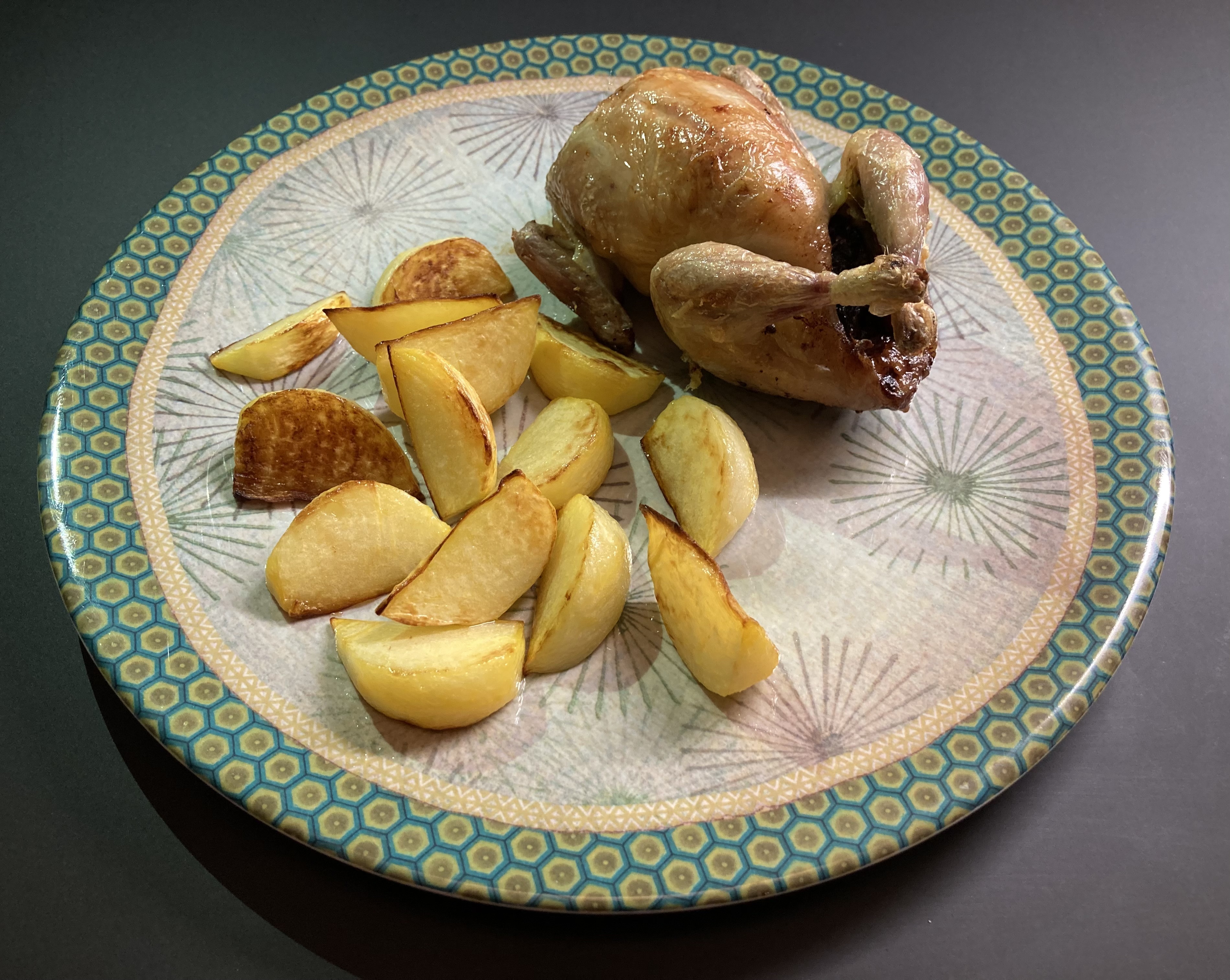
The golden turnip has indeed a beautiful yellow colour, its taste is sweet and delicate, the structure smooth. Great to turn into a mash (with butter and perhaps nutmeg). They can be eaten raw (crunchy and the taste is peppery, radish-like). You could also mix them with other vegetables such as Jerusalem artichoke and parsnip (fry in the oven). 

We combined the turnip with a very tasty quail, stuffed with prunes, pancetta and bay leaf.

Wine Pairing

The turnip was cheap, the quail expensive so we decided to spend even more money and bought a bottle of Château de Crémat from the Bellet region near Nice. The wine is made with 75% folle noir and 25% grenache. Folle noir is a grape typical for the Provence region. Once very popular, this grape is now hardly used.
The wine is very balanced with flavours like prune and blackberries, a touch of oak and an aroma that made us think of flowers and dark fruit. In general you’re looking for a full bodied red wine, one that matches the quail and the presence of the bay leaf and the herbs in the pancetta.

What You Need
  • 4 Golden Turnips
  • Black Pepper
  • Nutmeg
  • Olive Oil
What You Do
  1. For the quail see our earlier post
  2. For the turnips: peel these as thinly as possible
  3. Cook or steam for perhaps 5 minutes and let cool
  4. Slice in eight
  5. Heat a pan, add olive oil and colour the turnips quickly
  6. The idea is to add some colour and taste to the turnip and keep its golden colour
  7. Serve with some black pepper and nutmeg.
PS

Use the remainder of the quails to make a very tasty stock. Put in ice cube bags, freeze and use when making sauces.

Dorade

The Gilt-Head (Sea) Bream, better known as Daurade, Dorade (Royale) or Orata is a popular fish in France, Greece, Italy, Spain and many other Mediterranean countries. Delicious when stuffed with herbs such as thyme, rosemary or marjoram, grilled and served with a slice of lemon. The firm, juicy meat is aromatic and a culinary treat.
Serving a whole fish can be a bit uncomfortable. You must remove the head, dissect the fish and look carefully for hidden bones. Serving a fillet makes enjoying fish much easier. The downside is that a fillet is less tasty and perhaps a touch dry. When you buy a fillet, make sure it’s fresh and enjoy it the same day.
We combine the Dorade with typical Mediterranean ingredients. A combination that is both light and tasty.

Wine Pairing

The dish is full of flavours, so we would suggest a glass of Spanish Verdejo or Italian Custoza. In general you’re looking for a full, fragrant dry white wine with a fruity aroma and a round, long, full and dry taste.

What You Need

  • 200 grams of Dorade Fillet
  • 2 ripe Tomatoes
  • 1 Garlic Clove
  • Capers (in brine)
  • Basil
  • Black Pepper
  • Olive Oil

What You Do

Remove the pits from the tomato and dice. Chop the garlic. Coarsely slice the capers. Add olive oil to the pan, heat the garlic for a few seconds, add tomatoes. Leave for a few minutes, add the capers. Taste and adjust. One minute before serving add half of the basil. Add black pepper.
In parallel fry the dorade until golden. Serve on a hot plate and add the remaining basil.
PS When you use salted capers, wash these thoroughly to remove the salt. You need lemon juice to get the right acidity.

Dorade ©cadwu
Dorade ©cadwu

Bitter Orange

One of our favourite dishes is Duck Breast with Orange Sauce. Not difficult to make and the result is always tasty. Use a combination of fresh orange juice, thyme, rosemary, butter, Mandarine Napoléon, Cointreau, chicken stock and/or orange peel to make a tasty, not to sweet sauce. Mandarine Napoléon is preferred because it gives bitterness and depth to the sauce. The juicy meat, the sweetness of the duck and the orange, the nice aromas, the herbs and the velvety mouthfeel of the sauce make this an excellent combination.

Last week we were lucky, very lucky when we spotted Orange Amère on our local market. Bitter Orange! Also known as Seville Orange, Bigarade Orange or Pomerans. Finally! The ideal ingredient to make Orange Curd, Marmalade and of course Orange Sauce.

We bought a handful and as soon as we were at home, we wanted to taste it. The Bitter Orange does not contain much juice, their seize is similar to that of a clementine and the seeds are relatively big. The taste is sweet and gentle at first, and then you have bitterness, some astringency and length. Wow! We rushed to our butcher, bought an excellent magret de canard and later enjoyed a perfect Duck Breast with Orange Sauce.

Bitter Oranges are normally available from late December until the end of February. Ask your greengrocer!

Our suggestions: Duck Breast with Orange Sauce and Orange Curd.

  • Bitter Orange ©cadwu
  • Duck Breast with Bitter Orange Sauce ©cadwu

Tomate aux Crevettes

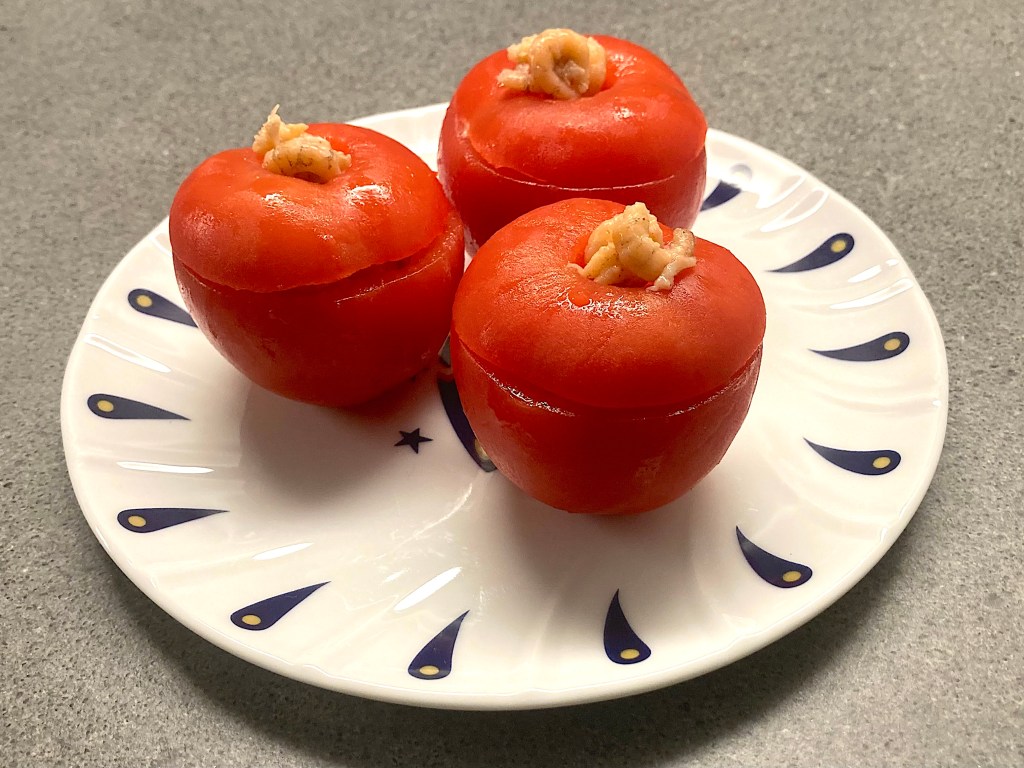
This simple and delicious starter is served in Belgium on special occasions. There are three key ingredients: tomatoes, small (grey) shrimps and mayonnaise. The tomato brings sweetness, umami and some acidity, the mayonnaise richness and a velvety mouthfeel and the shrimps saltiness and sweetness. Ideal combination.
We prefer to peel the tomatoes, because it makes it easier to enjoy the dish.
We thought it would be nice to tweak the recipe slightly. These ingredients are listed as optional.

Wine Pairing

We enjoyed our Tomate aux Crevettes with a glass of Muscadet Sevre et Maine sur Lie produced by Domaine Raphael Luneau. This is a very aromatic wine with a strong flavour and a long finish, which goes very well with the taste of the shrimps and the mayonnaise. The term ‘sur lie’ indicates that during a few months the wine stays in contact with the dead yeast cells left over after fermentation. This technique makes the wine more complex.
In general you’re looking for a fresh, light wine with a clear acidity. 

What You Need

  • 6 excellent ripe Tomatoes
  • 100 grams of (grey) small Shrimps
  • Mayonnaise
  • Black Pepper
  • Chervil
  • Optional
    • Ketchup
    • Worcestershire Sauce
    • Lemon Juice
    • Mustard

What You Do

  1. Peel the tomatoes
  2. Cut of the top and remove the green centre,
  3. Remove the inside of the tomato and discard
  4. Dry the inside of the tomatoes
  5. Dry the shrimps
  6. Add some black pepper to the shrimps and mix
  7. Chop the chervil
  8. Classic version: start with a layer of shrimps, then some mayonnaise and chervil, followed by a second layer of shrimps and finish with mayonnaise and chervil
  9. Alternative version: mix the mayonnaise with a squeeze of ketchup, Worcestershire sauce, lemon juice and mustard. Taste and adjust. Follow step 8
  10. Put the top back on the tomato and decorate with a few shrimps and chervil
Tomate aux Crevettes ©cadwu

Mousse au Chocolat

Crème Brulée, Ile Flottante, Crêpes Suzette and Mousse au Chocolat: four classic French desserts. It’s tempting to buy them ready-made, especially Mousse au Chocolat is popular in supermarkets, but why not make your own?

From 1992 until 2002 Belgian cook Herwig van Hove and host Dré Steemans (better known as Felice Damiano) had a weekly program on television called ‘1000 seconds’. In these 1000 seconds (just under 17 minutes) Herwig van Hove would prepare a three-course meal. Sometimes he took a short cut by serving cheese as dessert, but very often he would prepare three courses. His recipe for Mousse au Chocolat is quick and easy. The result is a delicious Mousse au Chocolat, one that will keep well for at least 24 hours.

What You Need (for 4)

  • 2 fresh organic Eggs
  • 35 grams of fine Sugar
  • 100 grams of Dark (Cooking) Chocolate
  • 165 grams of Cream
  • Raspberry (to decorate, optional)

What You Do

  1. You will need 2 bowls plus one larger bowl
  2. Start by separating the eggs
  3. In a smaller bowl beat the egg white until firm
  4. In the larger bowl beat the egg yolks and the sugar until ‘ruban’ (meaning thick and pale)
  5. In a smaller bowl whip the cream until firm
  6. This order allows you to use one wire whisk for all three steps in the process!
  7. Melt the chocolate with 65 grams of cream in your microwave on very low power. No rush, the result should be lukewarm. This will take 3 minutes or longer
  8. Use a spoon to mix the cream and chocolate until smooth
  9. For the next steps you need a spatula
  10. Add the chocolate mixture to the egg yolks and combine
  11. Now fold in the cream using a spatula and then fold in the egg whites. Don’t stir or mix, just fold
  12. Fill four nice glasses with the mousse, cover with cling foil and transfer to the refrigerator
  13. Just before serving decorate with raspberries and perhaps some freshly whipped cream.
  • Mousse au Chocolat ©cadwu
  • Mousse au Chocolat not decorated ©cadwu

Deviled Eggs with a Twist

Easy to make, tasty, and most people love them. You only need a few simple ingredients such as hard boiled (organic) eggs, mayonnaise, Dijon mustard, vinegar (or lemon juice) and black pepper. Sprinkle some paprika on top and they’re ready.

Alas, we’re not huge fans of paprika. Why would you ruin lovely ingredients like egg, mayonnaise and mustard by adding a spice that is at best a touch sweet and in most cases bland?

Paprika (powder) is made from dried red peppers and probably originates from Mexico. When it was brought to Europe, local versions were created, for instance a hot Hungarian version (essential when making goulash) and a smoked Spanish version (pimentón, key ingredient of chorizo and paella). Local peppers were used, including red bell pepper, and the flavours ranged from mild and sweet to hot. By the way, the term ‘deviled’ refers to the spiciness of the dish.
Unfortunately, nowadays factory produced paprika seems to be used for its red colour only.

We combine a bit of everything by adding roasted bell pepper. It adds depths, smokiness, complexity and flavour.

What You Need

  • 6 organic Eggs
  • Mayonnaise
  • Dijon Mustard
  • Lemon Juice
  • Red Bell Pepper
  • Black Pepper
  • Parsley (optional)

What You Do

Grill the bell pepper in your oven until nicely burned, perhaps 10 minutes. Transfer to a plastic container and close the lid. Wait a few hours before peeling the bell pepper. Use a sharp knife to mash the bell pepper. It’s fine if the mash has a bit of structure.
Boil the eggs and let cool. Slice the eggs lengthwise, remove the yolk. Use a fork to crumble the yolks (mimosa) and then combine with mayonnaise, mustard and mashed bell pepper. Add lemon juice and black pepper to taste. Remember the stuffing should be ‘devilish’. Add mixture to the egg whites. Decorating with parsley gives an extra twist to the deviled eggs.

Deviled Eggs ©cadwu
Deviled Eggs ©cadwu

Pasta with Tomatoes and Octopus

Happy New Year! Let’s start 2023 with a flavourful pasta dish, inspired by the Portuguese cuisine. A cuisine that is all about food with great flavours, such as bacalhauCaldo Verde, octopus, cuttlefish, and the well known chicken piri-piri and pastel de nata. Octopus is very tasty and it comes with a great texture. The suction cups may be a bit unappealing, but don’t worry, the taste will make up for it.
In this case we use Orecchiette, small ear shaped pasta. The mixture of tomato and octopus is not like a sauce, so the paste should function as a carrier (a mini spoon) of the mixture. Enjoy quality pasta with slightly acidic tomatoes, rich octopus and refreshing parsley.

Wine Pairing

A Portuguese white wine will be a great idea, for instance a Vinho Verde. You could also go for a Spanish Verdejo from Rueda. Look for characteristics like fresh, fruity, clear acidity, subtle bitterness, minerality and full bodied. We enjoyed a glass of Pazo das Tapias Finca os Cobatos, from Monterrei in Spain made with Godello grapes.

What You Need

  • 2 Octopus Tentacles (cooked)
  • 2 Large Tomatoes
  • 2 Gloves of Fresh Garlic
  • Parsley
  • Jerez Vinegar
  • Black Pepper
  • Olive Oil
  • Pasta (Orecchiette)

What You do

Quarter the tomatoes, slice the garlic (not too small) and fry gently in a warm pan with olive oil. Set to low heat. In parallel heat a heavy iron skillet. Remove the gelatinous substance from the tentacles, dry them, coat with olive oil and fry. Cook the orecchiette according to the pack. With only 5 minutes to go for the pasta, slice the octopus in small chunks (depending on the size of the pasta), add the octopus to the tomato mixture and add half of the chopped parsley. Just before serving the dish, add some Jerez vinegar to the mixture. Add the remaining parsley and black pepper. Drain the pasta, keep some of the cooking liquid and add the pasta to the mixture. Combine, decide if you want to add some cooking liquid or perhaps some olive oil. Serve immediately on a hot plate.

Pasta with Tomatoes and Octopus ©cadwu

Your Favourites in 2022

We have been baking our own bread for several years, based on the method of no-knead bread (see Jim Lahey’s book My Bread for more detail) and using the ingredients of the French Talmière. The technique is a bit challenging, so we were very pleased to test the simplified method described by Le Creuset. You were also pleased to learn about this easier method for No-Knead Bread, because it’s our number one post this year!

Kimizu is the classic, golden sauce from Japan, made from Egg Yolks, Rice Vinegar, Water and Mirin. The recipes for Kimizu and Kimizu with Tarragon continue to be very popular. Although this is a classic sauce, we use a microwave to prepare it. A great tool to be in control of temperature and consistency.

If you’ve been following this blog for a few months, perhaps years, then you’ll know we love mushrooms. We are especially interested in the seasonal ones, such as Morels, St. George’s mushroom, and Caesar’s Mushroom. We combine these with Japanese Udon, creating a very tasty starter, full of flavours and texture. Also one of our personal favourites.
Another favorite is the Bay Bolete. Actually a fairly common mushroom, as tasty as Cèpes, but much more affordable.
During the season we saw lots of interests in Bay Boletes and Caeser’s Mushroom, so next season we will publish new recipes with these two delicious mushrooms.

The classic Cèpes à la Bordelaise was also amongst your favourites. You can also use more available mushrooms for this great combination. Always a pleasure to serve, with eggs, with meat, with more present fish.

Ajerkoniak was a dish we looked into when we were exploring dishes/drinks based on egg yolks, such as caudle, eggnog and advocaat. Perhaps not our personal favourite, but why nog give it a try?

We wish you a happy and inspiring 2023!

Your Favourites in 2022 ©cadwu

Madeira Cake

A delicious cake that doesn’t contain Madeira, nor does it originate from the island. The idea is perhaps to serve the cake with a glass of Madeira. We tried it and yes, it works, but you could also serve the cake with a cup of tea or coffee. Let’s forget about the name and enjoy a relatively easy to make traditional British cake. It has a light structure, it is a touch moist and the flavours and aromas are citrusy.
We think it looks best when made in a round tin.

What You Need

  • 140 grams of Butter
  • 130 grams of fine Sugar
  • 3 Eggs
  • 170 grams of Self-Raising Flour
  • 25 grams of Almond Flour
  • Zest of 1 Lemon
  • 1 slice of Candied Orange

What You Do

Melt the butter in the microwave until very soft but not warm. Line the bottom of a 16 cm (6 inch) round baking tin with parchment baking paper. Butter the inside. Sieve the self-raising flour into a bowl. Set your oven to Traditional (upper and lower heat, no fan), temperature 180 °C or 355 °F.
Mix the butter with the sugar until yellow and light. Add one egg, mix and add ⅓ of the flour. Mix until you have a smooth batter. Repeat this step twice. Now add the almond flour and the fine lemon zest. Mix. Add the batter to the tin, smooth the top and transfer to the oven.
It will probably take 45 minutes. Check with a metal pin if the cake is ready. Leave the cake in the tin for 10-15 minutes, then remove from the tin and let cool on a wire rack.
When cool, decorate with candied orange.

Madeira Cake ©cadwu
Madeira Cake ©cadwu