Matsutake with Garland Chrysanthemum

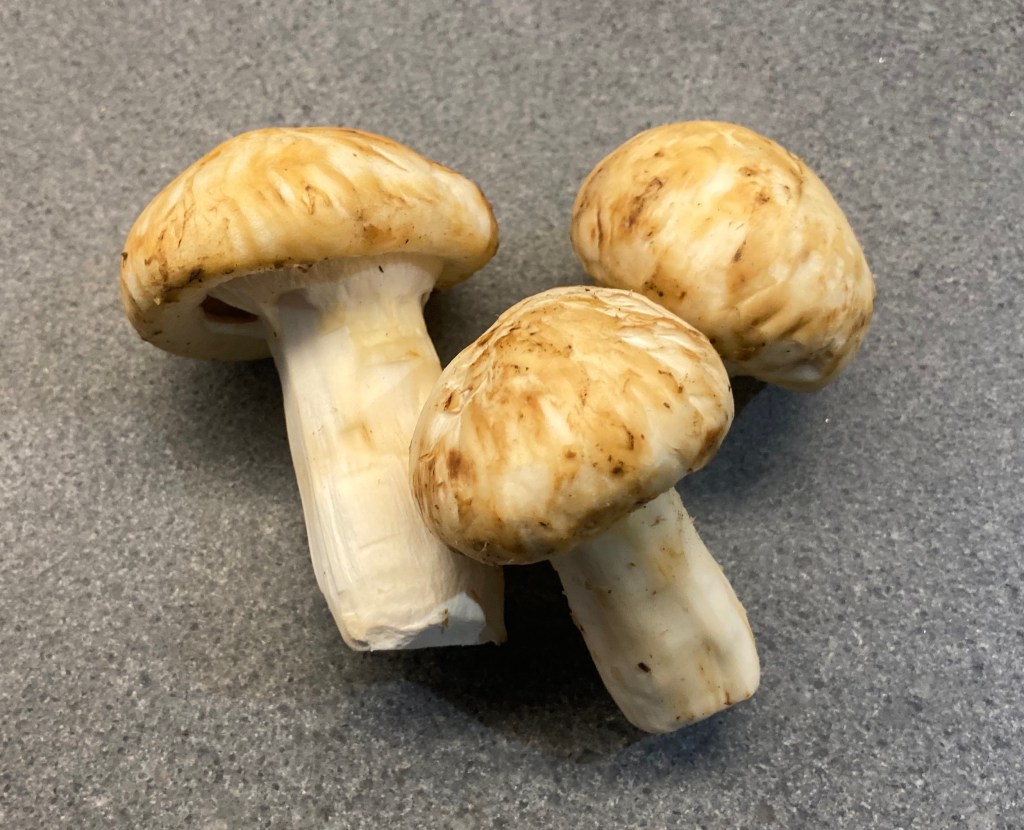
A very special mushroom, to say the least. Matsutake smells like a pine wood forest and its taste is intense and unique. It’s also expensive and rare. If you happen to find it, be sure to buy it.

Earlier we used Matsutake to make a soup and we combined it with spinach and ginger. In this recipe we combine Matsutake with Garland Chrysanthemum (Glebionis coronaria) also known as Tong Ho or Shungiku. It is a widely used vegetable in Japan, China, Vietnam and Korea. Its taste is delicate, a touch bitter and different (unless you’re familiar with chrysanthemum tea); one that goes very well with dashi, sesame seeds, mushrooms, mirin and soy sauce. If the vegetable is young, you can eat the stalks and the leaves. Also great as tempura. We use the leaves only for making a salad.

Wine and Sake pairing

We enjoyed a glass of Camino de Caza Almansa Sobre Lías Verdejo 2021. An organic white wine produced by Bodegas Piqueras and made with selected verdejo grapes from the Almansa region in Spain. It’s an aromatic, fresh wine with flavours that will make you think of yellow fruit (peach) and it has a welcome touch of bitterness.
The combination of the intense Matsutake and the intriguing Chrysanthemum begs for a dry, white wine with character.
You could also serve a glass of a cold, not too crispy sake, for instance a Taru Sake (a sake aged in barrels made of Japanese cedar).

What You Need
  • 75 grams of Matsutake
  • 200 grams of Garland Chrysanthemum
  • 150 ml Dashi
  • 3 teaspoons Light Soy Sauce
  • 3 teaspoons Mirin
  • Walnut Oil
  • Olive Oil
What You Do
  1. Make 150 ml of dashi
  2. Let cool
  3. Add light soy sauce and mirin
  4. Mix
  5. Remove the stems of the Chrysanthemum
  6. Wash the leaves in water
  7. Add to a pan with boiling water and blanch for 45 seconds
  8. Transfer the leaves to a basin with cold water
  9. When the leaves are cold, gently remove the excess water and transfer to the dashi mixture
  10. Leave in the refrigerator for one hour.
  11. Clean the matsutake, take your time to do this
  12. Remove the lower half of the stem
  13. Slice the mushrooms, chop the stem
  14. In a non-stick pan heat a little olive oil, just enough to gently fry the mushrooms
  15. When ready, remove the leaves from the mixture, combine with the chopped mushroom, mix
  16. Add the salad to a plate, decorate with the fried slices of matsutake and add a small drizzle of walnut oil
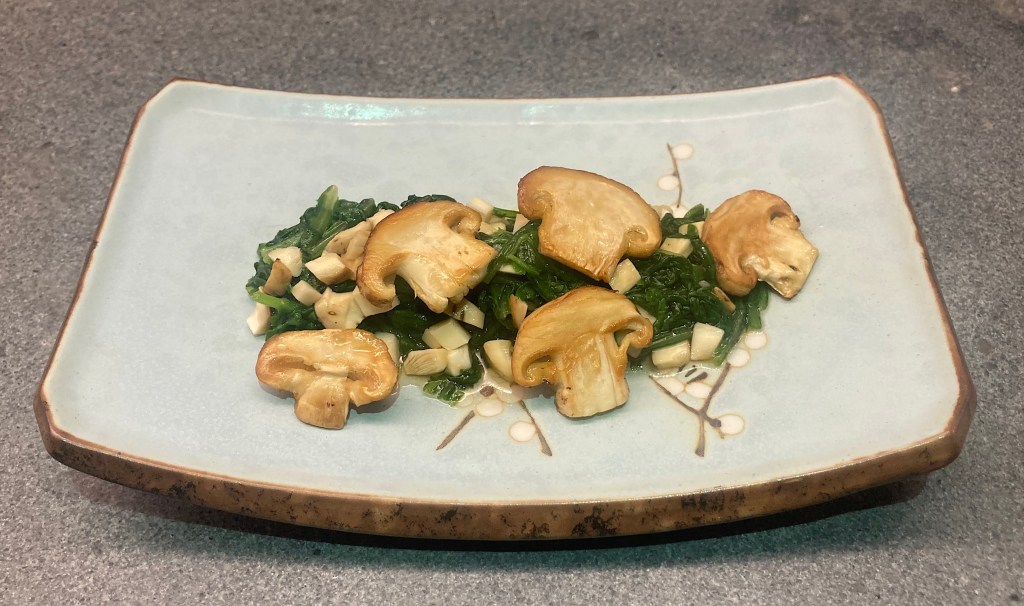
  • Matsutake with Chrysanthemum ©cadwu
  • Cleaned Matsutake ©cadwu
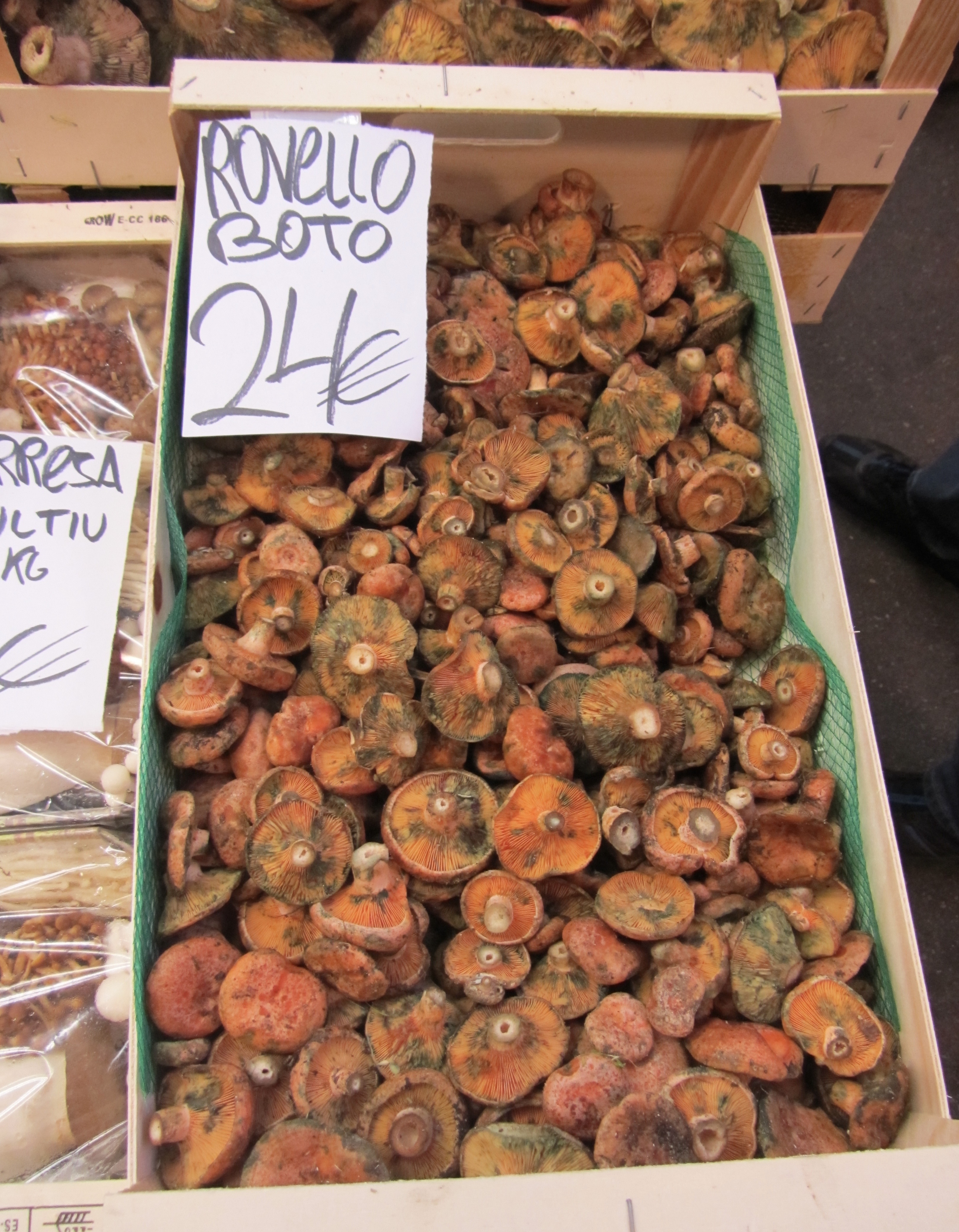
  • Matsutake on the market ©cadwu

Saffron Milk Cap with Red Bell Pepper and Chorizo

This mushroom is absolutely delicious, which is reflected in its Latin name Lactarius deliciosus. When you cut a thin slice of the stem, you will see the intense, orange colored milk of the mushroom.
The mushroom may be a bit green, which is the result of bruising, so nothing to worry about. Cleaning it may require rinsing with cold water because leaves and mud may be stuck to the cap.

It is a popular mushroom in Spain, Portugal, Turkey, Scotland, Poland, Russia and many other countries. In Spain they are combined with garlic and parsley, in Turkey with spinach to make börek or used in a rich tomato stew and in Poland and Russia they are salted with herbs such as dill and caraway.

Many recipes suggest blanching the mushrooms for 2, 3 or even 10 minutes, but that’s not necessary. Much better idea is to use them in stew like recipes, allowing for the flavours to integrate. Talking about flavours, Saffron Milk Cap is a touch nutty, sweet and mild.

The season is relatively short, from August until October, November. Which in a way makes the joy of buying and preparing these delicious mushrooms even greater!

Wine Pairing

We very much enjoyed a glass of Portuguese Segredos de São Miguel, a full bodied, warm red wine, made from grapes such as Alicante Bouschet, Aragonez, Touriga Nacional and Trincadeira. You will taste lots of fruit and a touch of toast.

In general you’re looking for a full bodied wine, with some acidity and smooth tannins. A glass of Malbec will also be a good choice.

What You Need

  • 150 grams of Saffron Milk Caps
  • Roasted Red Bell Pepper
  • 50 grams of Sliced Chorizo
  • Parsley
  • One Garlic Glove
  • Black Pepper
  • Olive Oil

What You Do

Clean the mushroom and slice (not too thin). Chop the garlic. Peel the skin of the roasted bell pepper and slice. Warm a skillet, add olive oil and gently add the sliced Spanish chorizo (yes, we know, it seems a bit odd. You would expect us to use fresh chorizo, which is great when you want to create something like a sauce or ragu, but we like the idea of being able to taste all three main elements, on their own and in combination). Add the garlic. After a minute or so add the mushrooms and the bell pepper. Fry gently. After 5 or 10 minutes add some chopped parsley. Leave on low heat. Add some more parsley. Just before serving add the remaining parsley and some black pepper.

PS

Roasting a red bell pepper before using it, is such a good idea. Simply slice the bell pepper in 4, put on the highest rack in the oven and grill for 10 minutes or until truly burned. Remove from the oven, put in a container, close it and wait for an hour or so. Remove the skin of the bell pepper and it’s ready to use. Roasted bell peppers are sweet and intense, with only a touch of smokiness.

Mushroom Fricassee

A few weeks ago, we wrote about History on Our Plate (2019) written by food historian and award-winning author Peter G. Rose. She writes about America’s Dutch past and the influence of the Dutch settlers on today’s American food. She explains how the founders of New Netherland (1609 – 1664, currently the states of New York, Delaware, Connecticut and New Jersey) brought Dutch recipes, tools, herbs and fruit to the US. Most recipes are based on publications like Een Notabel Boecxken van Cokeryen (a Notable Little Book of Cookery, 1514) and the 13thcentury publication Le Viandier de Taillevent. Peter Rose includes both the original and a modern version, allowing you to recreate food from the 17th century. 

Two Recipes

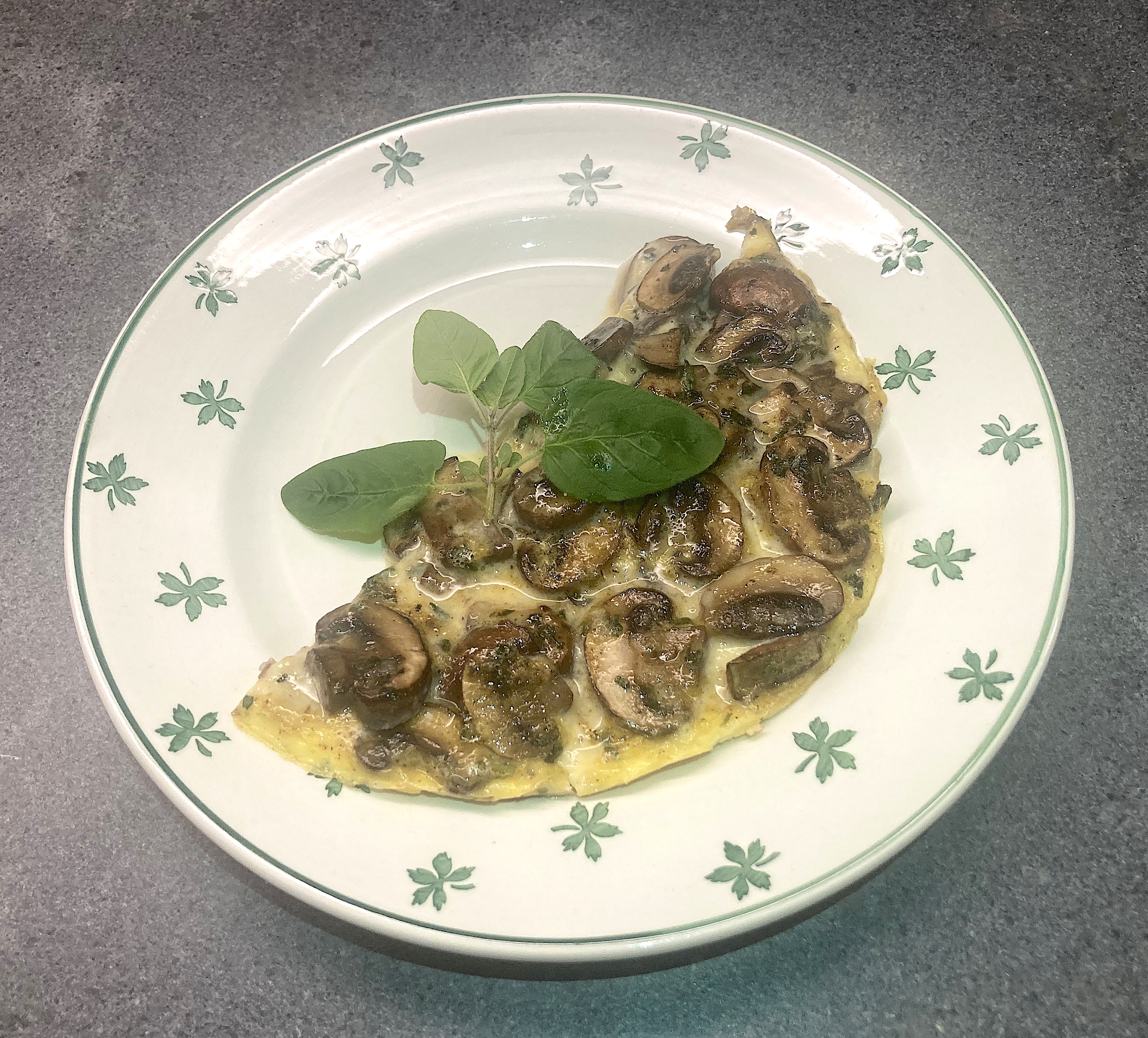
We were intrigued by a recipe for Mushroom Quiche without a Crust that made us think of a savoury clafoutis. We were also intrigued by another mushroom recipe, called Mushroom Fricassee, partly because of the unusual combination of eggs, mushrooms, onion, marjoram, thyme, orange juice, sherry, nutmeg and (optional) beef juice. The recipe is included in a manuscript written by Anne Stevenson Van Cortlandt (1774- 1821). She was married to Pierre Van Cortlandt, a well-known influential family with Dutch origins. Anne Stevenson was born in Albany, a city linked to Dutch settlers until the British took over in 1664.
We tried this imaginative combination of ingredients and prepared an omelette. The result was tasty and beautifully balanced, with a nice twist thanks to the herbs, sherry and orange juice. Peter Rose suggests preparing it like scrambled eggs, which is probably a better idea. Turning the mixture into an omelette was a bit of a challenge.
You’ll find a detailed recipe in History on Our Plate.

Wine Pairing

We enjoyed our Mushroom Fricassee with a glass of Conde Valdemar Tempranillo Blanco Rioja DOCa 2020, produced by Bodegas Valdemar. Its colour is slightly yellow with greenish tones. The wine has notes of tropical fruit (pineapple) and its taste is fresh and pleasantly persistent. A beautiful, unoaked white Rioja made with 100% tempranillo blanco grapes.
In general, you’re looking for a lean, dry, slightly fruity white wine with notes of lemon, melon and/or pineapple, preferably with a long finish.

Buy The Book

History on Our Plate is available via the well-known channels and your local bookstore for approximately 15 euro or 10 US$.

History on Our Plate

A few years ago, we had the pleasure of attending a lecture by food historian and award winning author Peter G. Rose. She talked about America’s Dutch past and the influence of the Dutch settlers on today’s American food. She explained how the founders of New Netherland (currently the states of New York, Delaware, Connecticut and New Jersey) brought Dutch recipes, tools, herbs and fruit to the US. And she showed how the Dutch influence is still present in today’s food in the USA.

Recipes

In her book History on Our Plate (2019) she writes in more detail about this topic, also by providing various food and drink recipes from New Netherland (1609 – 1664). The recipes are based on publications like Een Notabel Boecxken van Cokeryen (a Notable Little Book of Cookery, 1514) and the 13th century publication Le Viandier de Taillevent. The recipes include both the original and a modern version, allowing you to recreate food from the 17th century. Fried cod with mace, waffles, mushroom fricassee, artichokes with a bread, cinnamon and wine sauce: they all sound amazing.

In her introduction she describes the joy of baking bread in a hearth, the fun (and challenges) of preparing food in her home fireplace and the candlelight dinners that follow. When reading the well written recipes, you sense that she (and her husband who is in charge of the fire) aims to let her readers enjoy the cooking and eating as much as they did.

Quiche or Clafoutis?

We were intrigued by a recipe for Mushroom Quiche without a Crust. It made us think of clafoutis. Replace the cherries by mushrooms, change the seasoning and you have a delicious vegetarian starter or main course. The recipe was first published in 1668 by Franciscus van Sterbeeck  in his book Tractaet van de Kampernoeljes, Genaamd Duivelsbrood (or Treatise of Mushrooms, named Devils’s Bread).
You’ll find a detailed recipe in History on Our Plate.

We enjoyed our Mushroom Quiche without a Crust (or should we say, Flaugnarde with Mushrooms?) with a glass of Rioja d’Oliva Gran Reserva, Altos d’Oliva, 2013. A full bodied, red wine with lots of character that worked really well with the mushrooms, the oregano, and the Gouda cheese.

Buy the Book!

History on Our Plate is available via the well-known channels and your local bookstore for approximately 15 euro or 10 US$.

Mushroom Season

Hurray! The mushroom season has started! Last Saturday we bought delicious cèpes and chanterelles. Such a treat. It does of course mean that summer is over, which makes us a bit sad, but it also means the joy of eating wonderful dishes such as Cèpes à la Bordelaise or Salad with Mushrooms and smoked Duck (see below). Last year we prepared a Pâté with bay boletes, which was both beautiful and delicious. Will we be able to buy them this year? Or perhaps the intriguing Japanese Matsutake? It’s been some time since we last saw them on the market, and we would really love to make Matsutake with Spinach and Ginger again. How about Caesar’s mushroom with Udon?

Books

If you’re looking for useful mushroom recipes, then we suggest Antonio Carluccio’s The Quiet Hunt or Mushroom by Johnny Acton and Nick Sadler. Or look at our list of mushroom recipes.

Wine Pairing

Combining wine and salad is never obvious. In the case of a salad with mushrooms and duck we need to consider umami (mushrooms, duck), a touch of sweetness (smoked or cured meat) and the acidity of the dressing. We choose Domaine de Rimauresq Côtes de Provence Cru Classé rosé. A classic wine from the French Provence with grapes such as grenache noir, mourvèdre, ugni blanc and rolle. The wine comes with delicate fruity, fresh flavours and aromas. It is very well balanced, dry and mouth filling and it combines beautifully with all aspects of the salad.
In general you’re looking for a white or rosé wine that has complexity and length, without being overpowering.

What You Need

  • 150 grams of Mushrooms (Cèpes preferred but also great with Oyster Mushrooms or a mix of Champignon de Paris, Shiitake and others)
  • Mesclun
  • Dried or Smoked Breast of Duck
  • Olive Oil
  • Vinegar (Red Wine, Jerez or Raspberry)

What You Do

Clean and slice the mushrooms. Heat a heavy iron skillet and fry the mushrooms in olive oil. Make a dressing of oil and vinegar. Toss the mesclun and the dressing. Transfer the salad to a plate, add mushrooms and finish with 3 or 5 slices of duck.

Pasta with Mushrooms

Most historical recipes are about meat, fish and poultry, using a range of herbs and spices. Vegetables were not considered to be a healthy (slimy and wet) or were seen as food for the poor. Afterall, the recipes were to be used by cooks and chefs for the upper class and the gentry. Eating meat, drinking wine and using spices also illustrated wealth.

Today’s food culture is very different: meat is seen by many as the most important aspect of a meal, we tend to eat far too much of it and we’re not willing to pay a decent price for it. Go to your local supermarket, visit your local snack restaurant and feel sorry for the animals. From happy pig in the mud to intensive farming where the animals are kept in gestation crates.
On the other hand, hurray, we see more and more vegetarian alternatives, with lentils, beans, vegetables etcetera inspired by, for instance, traditional vegetarian cuisine from India.

We were pleasantly surprised when Manon Henzen and Jeroen Savelkouls published their Historisch Kookboek Vega, discussing historical vegetarian cuisine. The book includes 14 recipes, for instance dishes like Surprise Honey Cake and Chick Pea Soup. Plus one for Pasta with Mushrooms. Sounds very much 21st century but is actually based on a Venetian recipe from the 14th century. It’s a nice combination of homemade pasta (a bit chewy perhaps), mushrooms and spices. We tweaked it a bit. The original recipe is included in the book which is available via the webshop for €12,50 (Dutch only). On the website you will also find a range of videos, helping you to cook historical vegetarian food.

Wine Pairing

You can be flexible in this case. We enjoyed a glass of Côtes de Provence rosé with our pasta, but a glass of not too complex, red or white wine will also be fine.

What You Need

  • Dough
    • 125 grams of All Purpose Flour
    • 2 Eggs
    • 50 grams of Parmesan Cheese
  • Spices
    • Black Pepper
    • 3 Cardamom Seed Pods
    • Cinnamon Powder
    • Laos Powder
    • Nutmeg
  • Shallot
  • 150 grams of Mixed Mushrooms
  • 4 Sage Leaves
  • Parsley
  • White Wine Vinegar
  • White Wine
  • Olive Oil

What You Do

Crush and combine the spices. Add 2 teaspoons of the mixture and the grated Parmesan cheese to the flour and mix. Whisk two eggs and add these to the mixture. A bit of kneading is required to make the dough. Set aside for an hour or so.
Knead the dough a bit more, flour your hands and make finger-long, thin pasta.
Chop the shallot, glaze in a large heavy iron pan, add the sliced mushrooms and fry these gently for a few minutes. Now add half of the deveined sage leaves and roughly chopped parsley plus some white wine. You could add a splash of white wine vinegar. Cook the pasta in a pan with boiling water for 10 minutes or until done. It behaves very similar to gnocchi. Five minutes before serving add the remaining sage and parsley. Drain the pasta, add to the pan and combine. Serve with some extra Parmesan cheese.

Pasta with Mushrooms ©cadwu

Mushroom Cream Sauce from 1790

This recipe for a rich and tasty sauce is included in Het Receptenboek van mevrouw Marselis (the recipe book of Mrs. Marselis), published in the Netherlands in 1790. The combination of mushrooms, cream and nutmeg works remarkably well. One to prepare more often!

Mrs. Marselis doesn’t mention what the sauce is supposed to accompany. In this case we decided to combine it with pasta, making it a nice vegetarian dish, but we could also imagine combining it with veal or chicken. 

Wine Pairing

We suggest drinking an excellent rosé with the sauce, one with flavour, fruit, depth and refreshing acidity. For instance Monte del Frà Bardolino Chiaretto. This is a very affordable, tasty rosé with just the right balance between serious flavours, freshness and fruitiness.

What You Need
  • Mushrooms
  • Nutmeg
  • Flour
  • Chicken Stock
  • Cream
  • One egg
  • Butter
  • Lemon
  • Spaghetti
What You Do
  1. We used yellow chanterelles, but you could also use Champignons de Paris
  2. Clean and chop the mushrooms (we didn’t peel them, sorry Mrs. Marselis) and glaze them in butter
  3. When glazed, sprinkle some flour over the mushrooms and stir
  4. After a few minutes, slowly start adding chicken stock to make the beginning of a sauce
  5. Add cream to the pan and some freshly grated nutmeg
  6. Leave on low heat for at least 10 minutes
  7. Beat one egg yolk
  8. Slowly add the mixture from the pan to the egg yolk (marrying the sauce)
  9. Then add the egg yolk and cream mixture back to the pan
  10. Warm carefully, otherwise it will split, or you just cooked an omelette
  11. Taste and add a drop of lemon to make the sauce a touch fresher and lighter
  12. No need for pepper or parsley.
  13. We served the sauce with spaghetti and used the cooking liquid to give the sauce the right consistency.

Artichoke à la Barigoule

It’s the time of year to enjoy artichokes: steamed, as a salad, in a pie or perhaps à la Barigoule. This is a rather intriguing recipe from the French Provence region. There are lots of variations, so we looked in books like La Cuisinière Provençale and La Cuisine Niçoise d’Hélène Barale to find the ‘original’ recipe.

Obviously you want to know what ‘barigoule’ means. According to Hélène Barale ‘barigoule’ means thyme, which is odd because she doesn’t add thyme to her Artichoke à la Barigoule. Is it perhaps derived from the Latin word mauruculai (meaning morel according to some and saffron milk cap to others) as the Larousse suggests? But what is the link between artichokes and mushrooms?

Three Versions

We found three different ways of preparing Artichoke à la Barigoule: cooked with onions, white wine and carrot, stuffed and preserved with lots of citrus. The stuffed one is probably the original version because the artichoke is stuffed with a mixture of mushrooms, thyme and garlic. Which makes the Larousse explanation more likely.

Preparing Artichokes a la Barigoule is quite a bit of work and the result, we must admit, looks like an old fashioned underbaked meatball. We could imagine you serve the artichoke halfway the recipe. If you do, best is to use smaller artichokes.

Wine Pairing

It’s not straightforward to pair artichokes with wine. According to various researchers this is due to cynarin, a chemical especially found in the leaves of the artichoke. When the wine and the cynarin meet in your mouth, the natural sweetness of the wine is enhanced, making it taste too sweet. So you have to pair artichokes with a bone-dry, crisp, unoaked white wine with clear, present acidity. For instance Sauvignon Blanc, Grüner Veltliner or Albariño. 

What You Need

  • Artichokes
  • Cooking liquid
    • Shallot
    • Carrot
    • Olive oil
    • White wine
    • Water
    • Thyme
  • Filling
    • Mushrooms
    • Egg yolk
    • Garlic
    • Shallot
    • 2 Strips of Bacon
    • Thyme
    • Black Pepper
  • Excellent Olive Oil

What You do

Remove outer leaves and stem of the artichokes. Add oil to a large pan, gently fry the chopped shallot and the chopped carrot. After 10 minutes or so add white wine, thyme and some water. Leave to simmer for 10 minutes. Add the artichokes to the liquid, close the pan and allow to cook and steam on low heat for 45-60 minutes or until nearly done. You could decide to stop here and serve the artichoke with the (reduced) sauce.
Let the artichokes cool, remove the leaves and the centre choke (the hairy part).  Use a spoon to remove the ‘meat’ from the leaves (bracts) of the artichokes. Set aside. In a small skillet heat some oil, add chopped shallot, glaze, add sliced bacon, mushrooms, garlic and thyme. Leave for 10 minutes until done. Add the artichoke meat from the leaves, stir, add the egg yolk and mix. Add freshly grounded black pepper. Use a food processor to make the mixture smoother, but not too smooth. Fill the artichokes with the mixture. It should look like an oversized golf ball on top of the bottom of the artichoke. You will probably have too much filling, which is fine. Gently transfer the artichokes to the pan with cooking liquid and allow to steam and warm for 30 minutes. Now transfer the artichokes to a warm oven (60 ˚C or 140 ˚F).  Add the reaming mixture to the liquid, use a powerful blender to create a sauce. Pass through a sieve and blender some more. Set the blender to low speed and add excellent olive oil. Taste and adjust. Serve the filled artichokes on a small plate with the sauce.

Mushroom Caponata

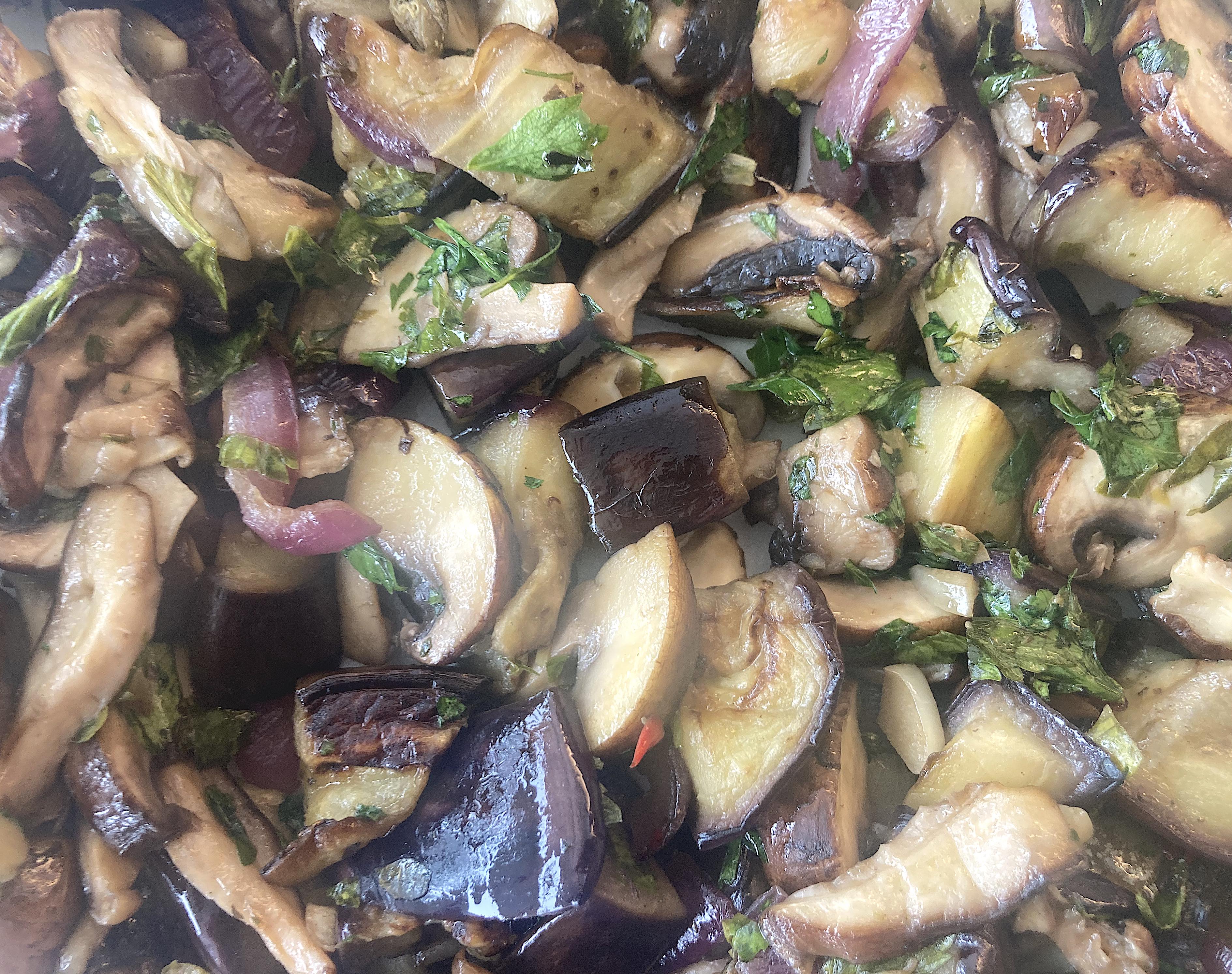
There must be hundreds of recipes for Caponata. The dish originates from Sicily and should contain (at least, we think so) eggplant (aubergine), celery and vinegar. Sugar is often added to enhance the sweetness and intensity. Nowadays it’s often a combination with tomatoes, shallot, capers, olives and perhaps raisins, pine nuts, oregano and basil.
The flavour of caponata should be slightly bitter (the eggplant) with a touch of sweetness (sugar, onion), acidity and saltiness (celery). The texture should be moist, but not sauce-like.
We love to enhance the flavours by adding mushrooms. And since we’re not keen on using sugar, we make sure the onions bring sufficient sweetness.

Enjoy your caponata as an appetizer, for instance with some crusted bread or bruschetta. A nice glass of white wine or rosé will be perfect with it. It’s also great as a side dish, with fish or even merguez.

Whatever the combination, caponata must be made one day ahead.

What You Need

  • 1 Aubergine
  • 200 grams of Mushrooms (preferably a mix with Shiitake)
  • 1 Red Onion
  • 1 Garlic Clove
  • 1 cm Red Chilli Pepper
  • Parsley
  • Celery
  • 2 tablespoons of White Wine Vinegar
  • Olive Oil
  • Fine Salt

What You Do

Wash the eggplant and slice. We slice the eggplant lengthwise in 8 and then we slice these strips. Salt them generously, transfer to a sieve and allow to drain for one or two hours. The more liquid they lose, the better! Rinse the eggplant with cold water and dry them with a kitchen cloth. Fry the aubergine in a heavy iron skillet until nicely golden brown. Set aside. Slice the red onion, clean and chop the mushrooms. Chop the garlic and the chilli pepper finely. Add some olive oil to the pan and fry the onion. Remove and set aside. Now fry the mushrooms. After 5 minutes or so add the garlic and the chilli pepper. After a few minutes add the mushrooms and the eggplant to the pan. Add chopped parsley and celery. Mix well. Add two spoons of white wine vinegar and leave on low heat for 10 minutes. Add black pepper to taste. Transfer to a plate and let cool. Keep in the refrigerator for the next day.

Pasta with Mushrooms and Bell Pepper

Udon is such a wonderful noodle. What better comfort food than a warm soup made with dashi, vegetables, tofu, udon and thinly sliced spring onions? Perhaps some tempura on top of the soup? Or would you prefer a very simple dish, called Mori Udon? The cold udon is served with a sauce of mirin, dashi and soy sauce on the side.
Udon is also a great alternative to Italian pasta, for instance with Caesar’s Mushrooms.

In this recipe we combine udon with roasted bell pepper and Trompettes de la Mort. We’re not sure why, but this combination works really well. Is it because of the smokey aroma of the roasted bell pepper mixed with the aromas of the mushroom? The crispy pancetta in combination with the soft textures of the other ingredients, including the udon? The overall richness and umami thanks to the Trompettes de la Mort?

Wine Pairing

We enjoyed our pasta with a glass of Bianco di Custoza, made by Monte del Frà from Italy. It is a well-balanced, dry white wine, with a fruity nose. Its colour is straw yellow, with pale green highlights. A glass of Soave, made from the Garganega grape, will also be an excellent choice. In general you’re looking for a fresh, aromatic dry white wine. 

What You Need

  • 1 Red Bell Pepper
  • 1 Bunch of Udon
  • 100 grams of Trompettes de la Mort
  • 1 Glove of cooked Garlic
  • 4 slices of Pancetta
  • Black pepper
  • Olive Oil

What You Do

Clean the bell pepper and cut in 4. Transfer to the oven and grill or roast for 10 minutes or until well charred. When still hot, put the bell pepper in a plastic container and close it. After one hour it’s easy to remove the skin of the bell pepper. Slice lengthwise to make nice strips. Set aside.
Slice the mushrooms in two and clean them with a soft brush. Check carefully for grit and other things you don’t like to eat.
Fill a large pan with water (no salt!) and bring to a boil. Add the udon and cook it according to the instruction. When nearly done, add some cooking liquid to a cup and set aside. Drain the udon.
In parallel heat a large heavy iron skillet, add olive oil and fry the mushrooms. Once they become a bit dryer, add the sliced bell pepper. Add the cooked garlic, crush it with a fork and mix. Now add the udon and continue mixing. Add cooking liquid until the pasta is sufficiently moist.
Also in parallel: grill the strips of pancetta (perhaps 5 minutes).
Add some black pepper to the pasta and serve with the grilled pancetta.

Pasta with Mushrooms and Bell Pepper ©cadwu