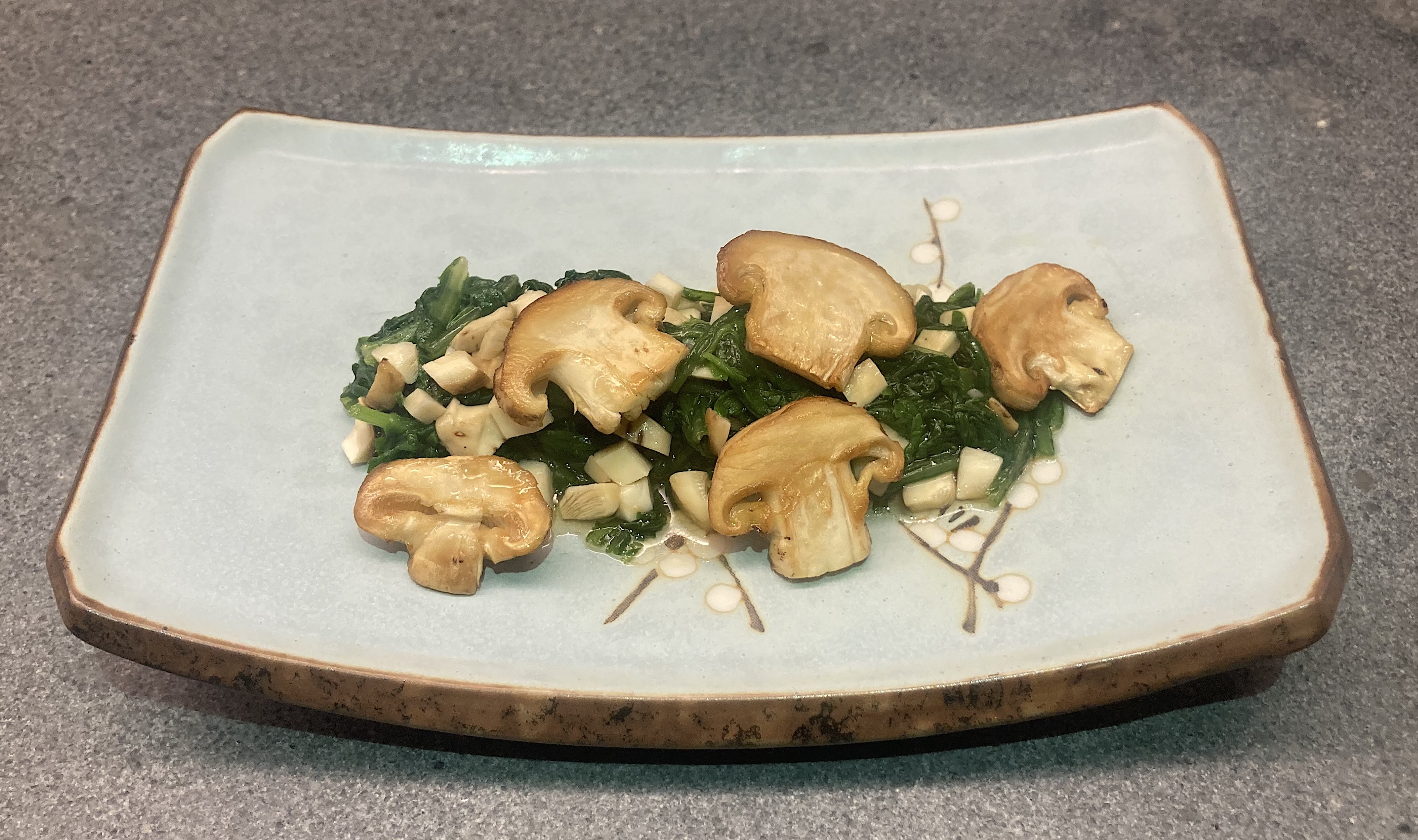
Pork with Enoki

It’s nearly the end of the mushroom season in Europe. It’s hard to find chanterelle (girolle), and nearly impossible to buy fresh cèpes. The black winter truffle (Tuber melanosporum) is an exception. It’s available until March, but the price may be prohibitive. Better to focus on cultivated mushrooms, such as enoki, available at your local Asian supermarket. A delicious mushroom with a pleasant texture and aroma. Its flavour is mild, a bit sweet and fruity. You can use it raw in a salad, in a soup or combine it with soba noodles. A few weeks ago, we wrote about an omelette with enoki and a light soy sauce. The result is a lovely sweet, rich and intriguing dish.
Combining enoki with pork is also a great idea. Feel free to adjust the recipe and make the sauce spicier or sweeter or thicker. The result will be tasty given all three elements in the dish bring some kind of sweetness.

Wine Pairing

You could emphasize the Asian influence by serving a glass of Pinot Gris, Riesling, Chenin Blanc or perhaps Soave. In general you’re looking for a light or medium bodied, unoaked, dry white wine with nice acidity. Benefits are minerality and florality. A glass of Côtes de Provence rosé will also be a good choice.
If you want to focus on the flavours of the pork, we suggest a glass of Beaujolais or a glass of wine made with Grenache (France) or Garnacha (Spain) grapes.

What You Need

  • Organic Pork Tenderloin
  • 100 grams of (Golden) Enoki
  • Soy Sauce
  • Light Soy Sauce (we used Tentsuyu)
  • Stock
  • Oyster Sauce
  • Black Bean Sauce (optional)
  • Red Chili Paste (optional)
  • Olive Oil

What You Do

Fry the pork in olive oil until pink. Turn on a regular basis. Remove the stem (bottom) of the enoki. Fry in olive oil for maximum one minute. Add some (vegetable stock), soy sauce, oyster sauce, black bean sauce and red chili paste and create a not overly sweet, intense sauce. We like some spiciness, hence the chili paste. Serve the meat on top of the enoki mixture.

An invitation to Indian Cooking

Recently we reviewed An invitation to Indian Cooking (published in 1973) by Madhur Jaffrey as part of the ongoing cookbook review project by Bernadette. When we leaved through the book we were looking for something special, something new and exciting to prepare. Dal soup (the classic Indian soup made with red lentils, onion, various spices and perhaps ginger or orange) was not on our radar, until we read her recipe. Interesting! Yellow Split Peas? Cloves? Croutons? Let’s start cooking!
The soup was very tasty and uplifting. The split peas brought structure to the soup, making this soup different compared to lentil-based dal soup. The combination of peas and cloves is one to remember. 

Dal Soup ©cadwu
Dal Soup ©cadwu

Asafoetida

We’re always interested in new ways to prepare mushrooms, so when we spotted a recipe with cumin and asafoetida (asafetida) we immediately knew we wanted to prepare this dish. But what is actually asafoetida and where to buy it?
The first thing to know about asafoetida is that it has an extremely powerful aroma. Its taste and smell are a combination of onion and garlic. We bought 25 grams at Jacob Hooy which is Amsterdam’s premium shop for spices. The Dutch name is Duivels Drek and the German name Stinkasant. Both names are a clear indication of its pungent smell.
Mushrooms, tomatoes, various spices and asafoetida: we didn’t know what to expect of the dish. The result was delicious, aromatic (in a subtle way) and a tribute to the tomatoes and mushrooms, with a long-lasting taste. We loved it. Mrs. Jaffrey suggest serving the mushrooms with chapatis or pooris. Recipes are included in her book, obviously!

Mushrooms with Cumin and Asafetida ©cadwu

The Book

An invitation to Indian Cooking by Madhur Jaffrey is a comprehensive introduction to the Indian kitchen, one with reliable, easy to follow, tasty recipes and useful background information. The book includes chapters on meat, chicken, fish, dal, soups, vegetables, chutneys, breads and desserts. Which reminds us of our plan to make Kulfi (ice cream with milk and cardamon pods).
An invitation to Indian Cooking by Madhur Jaffrey is available via your local bookstore or the usual channels for 15 euro or 18 US$.

Recipes can be found on Bernadette’s website.

Mushroom Season

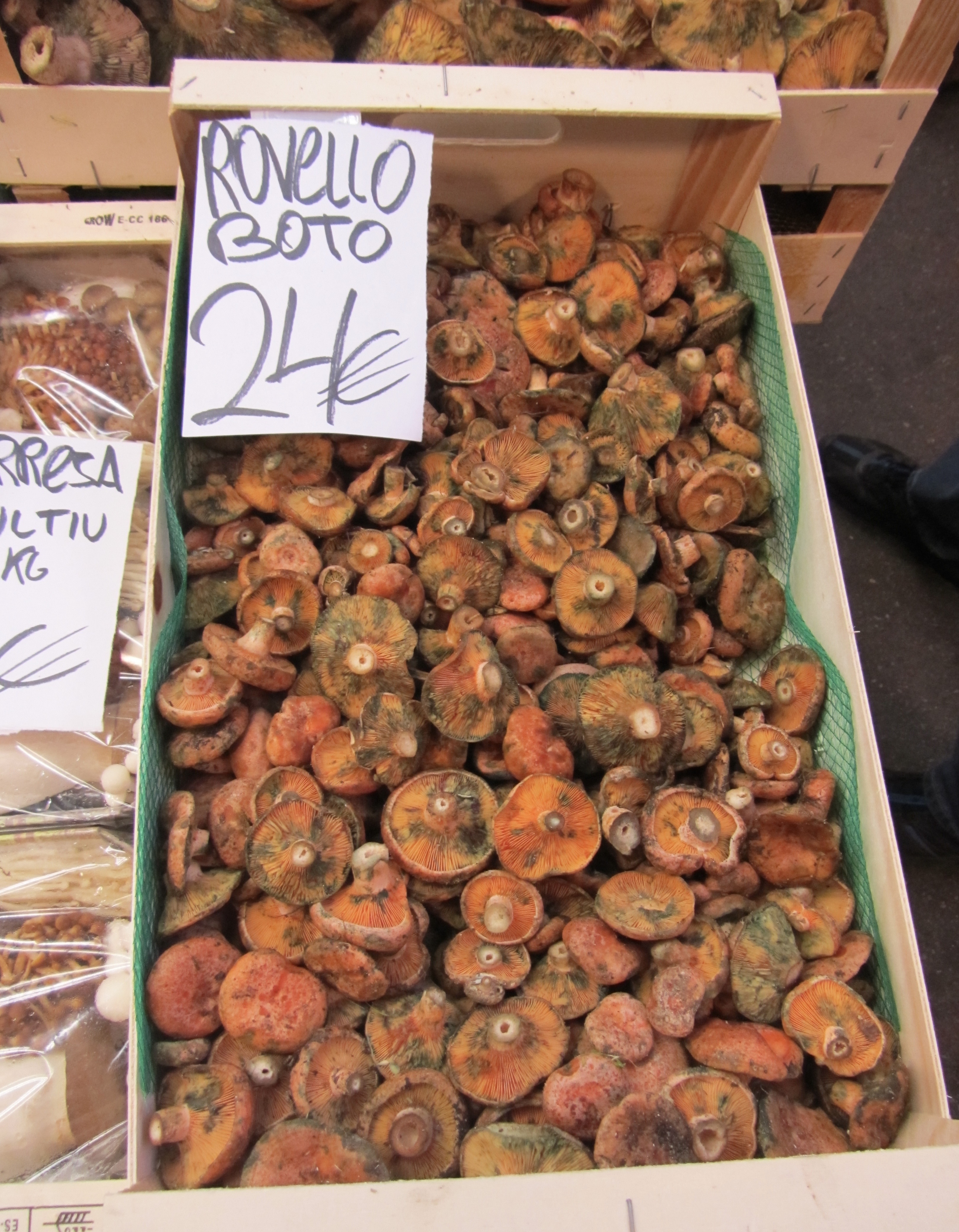
So far this year’s mushroom season has been great with lots of delicious Cèpes, Bay Boletes, Birch Boletes and Chanterelles. This Saturday we bought a very tasty autumn Truffle and a day earlier we treated ourselves to Matsu Take. Such a special mushroom. We’re waiting for the Saffron Milk Cap, Spain’s favourite mushroom, and the Caesar’s mushroom, a mushroom much appreciated in Italy. 

Since it’s a great year for the Bay Bolete, we thought it would be nice to share some recipes with this mushroom. Its taste is similar to that of the Cèpes or Penny Bun. Perhaps more intense?

Pâté with Mushrooms ©cadwu

Pâté en Croûte

A few years ago we celebrated the mushroom season by preparing a Pâté with bay boletes. The combination of a crispy crust, a structured, colourful filling and various flavours is always a pleasure. It’s good fun to think about the ingredients, work on the construction and enjoy the wonderful aromas from your oven while baking the pâté. And the joy when slicing it: is the pâté as beautiful as you expected it to be?

A red, medium bodied wine will be a great accompaniment of this Pâté en Croûte. In general you’re looking for a red wine with aromas of black fruit, floral notes and delicate wood. The tannins should be soft or well-integrated. We enjoyed a glass of Pinot Noir from La Cour Des Dames. 

Bay Boletes with Veal and Sage ©cadwu

Sauce

Earlier this year we prepared a rich sauce with bay boletes, sage, mustard en crème fraîche. We served the sauce with excelltn veal rib eye and turnip cabbage. The turnip brings frsshness and lightness to the dish, creating a lovely balance.
A fruity, slightly chilled red wine will be great with the dish. We opened a bottle of German Spätburgunder from the Pfalz area. Some dark fruit, strawberries, touch of earthiness, not too complex. One that supported the flavours and aromas of the dish very well.

Guineafowl and Bay Bolete ©cadwu

Guineafowl

Bay boletes combine very well with guineafowl. The meat is leaner, somewhat darker and more flavourful compared to chicken. It is not difficult to prepare, but due to the low-fat content you must be careful not to overcook. In this recipe we use guineafowl supreme (the breast fillet with the skin on plus the wing bone), rosemary, thyme, pancetta and garlic.
Enjoy with a glass of Chiroubles, a cru from the Beaujolais, produced by Domaine Montangeron. The wine has floral notes, aromas of cherries and strawberries. Its colour is pale ruby. Rich, elegant and long. It brings freshness and fruitiness to the dish and is sufficiently complex to remain present when enjoying the guineafowl and the bay bolete.
In general you’re looking for a red wine with freshness, fruity aromas and complexity. Perhaps a Pinot Noir?

More recipes on our website dedicated to mushrooms.

Fairy Ring Mushrooms with Tarragon and Fennel

July was sunny and very warm in some parts of Europe, but not in the Netherlands. Moderate temperatures, a bit of sunshine, sometimes, and lots of rain. Not ideal for sunseekers but very promising for mushroom lovers.
Let’s enjoy one of our favourites, the Fairy Ring Mushroom, a very common mushroom in many countries. It’s a small, very edible mushroom, available from early spring until late autumn. Its taste is a bit sweet (the mushrooms contain a sugar called trehalose) and perhaps that’s why some people suggest using them to make sweet mushroom cookies.

In this recipe we enhance their specific sweetness by combining them with tarragon and fennel. Both come with their own sweetness plus a hint of liquorice and anise. Flavours that go very well with fish, veal and mushrooms. A delicious, aromatic and surprisingly light dish. We served the mushrooms and vegetables with veal rib eye.

Wine Pairing

A glass of Sauvignon Blanc or Chardonnay could be nice, but we prefer an unoaked Merlot. A fruity red wine with an intense colour and flavours of strawberries and raspberries. For instance a glass of Merlot as produced by Di Lenardo in Italy.

What You Need

  • What You Need
  • Mushrooms
    • 150 grams of Fairy Ring Mushrooms
    • Tarragon
    • Vegetable Stock
    • Black Pepper
    • Olive Oil
  • Fennel
    • One Fennel
    • Fennel sprigs
    • Olive Oil
  • Veal Rib Eye

What You Do

Chop the fennel and add it to a pan with some olive oil. Allow to simmer. This may take 20 minutes.
Meanwhile clean the mushrooms with kitchen paper. Remove the stems. Chop the tarragon. Add olive oil to a heavy iron skillet and gently fry the mushrooms. No rush. Add the tarragon. Add one or two cubes of homemade vegetable stock. Reduce.
Happy with the firmness (or softness) of the fennel? Add some fresh tarragon and black pepper to the mushrooms. Taste and adjust. Add some fennel sprigs to the fennel, mix. Serve the fairy ring mushrooms and the fennel with gently fried veal rib eye (with some extra tarragon, obviously!).

Farfalle with Saint George’s Mushroom, Oregano and Pancetta

Nearly the end of the season for the Saint George’s Mushroom (at least, where we live). So far it’s been a great year for this mushroom and the Fairy Ring Mushroom. Unfortunately, it’s been a poor year for another of our spring favourites: the morel.

Saint George’s Mushroom have a strong, not very pleasant aroma (it disappears when you heat the mushrooms) and a long lasting, earthy taste. Famous chef, author and mushroom expert Jane Grigson wasn’t a fan. In her classic book The Mushroom Feast she wrote “I have omitted one or two which our mushroom books follow each other in praising too highly. One of these is the Saint George’s Mushroom.” Obviously, we humbly disagree with her. It’s a bit of a puzzle to find the right combination of ingredients when one is the Saint George’s Mushroom but isn’t that part of the fun?
Earlier we wrote about an omelette with Saint George’s Mushroom and a starter with udon. This recipe is a combination of fat, moist, slightly sweet pancetta and earthy mushrooms, with the egg sauce and the oregano making it into a delicious dish.

Wine Pairing

We matched the rather intense flavours with a Pinot Noir, made by La Cour Des Dames. In general you’re looking for a red, medium bodied wine with aromas of berries, floral notes and delicate wood. The tannins should be soft or well-integrated. 

What You Need

  • 100 grams of Saint George’s Mushroom
  • 100 gram of Pancetta (slab preferred)
  • Fresh Oregano
  • Two eggs
  • Freshly grated Parmesan Cheese
  • Black Pepper
  • Farfalle

What You Do

  1. Start by cleaning the mushrooms with kitchen paper. Slice.
  2. Dice the pancetta. We used pancetta produced by Fumagalli. Sustainable, organic, ecological etcetera.
  3. Use a heavy iron skillet and fry the pancetta on medium/high heat. No need to add olive oil.
  4. When nicely coloured transfer the pancetta to a plate, remove most of the fat and gently fry the mushrooms.
  5. After a few minutes transfer the pancetta back to the pan.
  6. Add fresh oregano leaves, bigger ones shredded.
  7. Add the farfalle to a pan of boiling water and cook until al dente.
  8. In the meantime, beat two eggs and add some parmesan cheese.
  9. When the farfalle is ready, taste the mixture in the pan, perhaps add some extra oregano and transfer the farfalle to the pan.
  10. Wait for a minute or so until the excess water has evaporated.
  11. Move the pan away from the heat, add the egg mixture and combine (like you would do with Spaghetti Carbonara).
  12. Add black pepper and some extra Parmesan cheese before serving.
Farfalle with Saint George’s Mushroom, Oregano and Pancetta ©cadwu

Bouchée à la Reine

Crispy, fluffy, flaky puff pastry and a rich, warm filling with mushrooms and parsley, what better way to turn leftovers into a tasty starter. Bouchée a la Reine: a classic in Belgium and France. Not modern at all, but such fun to serve (and eat). You could fill the pastry with poultry, with mushrooms, shrimps, sweetbread, just about anything will go, as long as you use a rich roux as basis.
Making our own puff pastry is a bit too much for us, making your own bouchée is not too difficult, but buying them at the bakery is also fine. 

Wine Pairing

It all depends on the filling of your Bouchée a la Reine. It could be a light red wine if you have some left over veal, if it’s sweetbread then a lightly oaked chardonnay is fine et cetera. In all cases keep in mind that the filling comes with a generous amount of butter.

What You Need

  • 2 Bouchées
  • Some left over Veal or Chicken or Shrimps
  • Mushrooms
  • For the Roux
    • Butter
    • All Purpose Flour
    • Stock
  • Parsley
  • Lemon
  • Black Pepper
  • Butter

What You Do

Chop the (already cooked) meat and the mushrooms. Gently heat some butter in a pan, add the mushrooms and leave them for 10 minutes or so. Add the meat. Taste and add black pepper, perhaps some lemon juice, spices and herbs, definitely lots of parsley. In parallel make the roux. Warm the stock. Add butter to a pan, add the equal amount of flour plus a bit more (remember you also have some butter in the other pan). Softly fry the flour until you begin smelling that typical cookie aroma, then start adding the warm stock, slowly at first, constantly whisking. Add the meat, the mushrooms, some black pepper and the chopped parsley. Don’t turn the roux into a sauce, it must be ragout like. At this stage you could cool the filling for use later on.
Heat the bouchée in an oven at 180 °C or 355 °F for 10 minutes. Transfer from the oven onto a plate, add the filling and serve immediately.

Bouchée a la Reine ©cadeau

Your Favourites in 2022

We have been baking our own bread for several years, based on the method of no-knead bread (see Jim Lahey’s book My Bread for more detail) and using the ingredients of the French Talmière. The technique is a bit challenging, so we were very pleased to test the simplified method described by Le Creuset. You were also pleased to learn about this easier method for No-Knead Bread, because it’s our number one post this year!

Kimizu is the classic, golden sauce from Japan, made from Egg Yolks, Rice Vinegar, Water and Mirin. The recipes for Kimizu and Kimizu with Tarragon continue to be very popular. Although this is a classic sauce, we use a microwave to prepare it. A great tool to be in control of temperature and consistency.

If you’ve been following this blog for a few months, perhaps years, then you’ll know we love mushrooms. We are especially interested in the seasonal ones, such as Morels, St. George’s mushroom, and Caesar’s Mushroom. We combine these with Japanese Udon, creating a very tasty starter, full of flavours and texture. Also one of our personal favourites.
Another favorite is the Bay Bolete. Actually a fairly common mushroom, as tasty as Cèpes, but much more affordable.
During the season we saw lots of interests in Bay Boletes and Caeser’s Mushroom, so next season we will publish new recipes with these two delicious mushrooms.

The classic Cèpes à la Bordelaise was also amongst your favourites. You can also use more available mushrooms for this great combination. Always a pleasure to serve, with eggs, with meat, with more present fish.

Ajerkoniak was a dish we looked into when we were exploring dishes/drinks based on egg yolks, such as caudle, eggnog and advocaat. Perhaps not our personal favourite, but why nog give it a try?

We wish you a happy and inspiring 2023!

Your Favourites in 2022 ©cadwu

Crostini

You don’t want to spend hours in the kitchen when serving drinks and you want to enjoy a warm appetizer (snack, finger food, quick nibble)? What to do? Of course: serve crostini! You can prepare them in advance and the only thing you need to do is put them under the grill for 3-5 minutes. A nice crunchy appetizer with a rich taste and intense aroma.

We use taleggio, a semi-soft cheese from Italy with a mild taste. It melts easily, so you need to keep an eye on your oven! If you can’t get hold of taleggio, then use mozzarella instead and add a bit more flavour to the mushroom topping.

What You Need
  • For the Mushroom Topping
    • Button Mushrooms and Shiitake
    • Garlic Cloves
    • Olive Oil
    • Thyme and Rosemary
    • Black Pepper
    • (Excellent) Olive Oil
  • For the Crostini
    • Old, stale Bread (Baguette preferred)
    • Garlic (optional)
    • Excellent Olive Oil
  • Taleggio
What You Do
  1. One day before serving the crostini
    1. Clean and chop the mushrooms
    2. Finely chop the rosemary, the thyme and the garlic
    3. Fry the mushroom in olive oil in a heavy iron skillet
    4. Reduce heat
    5. Add herbs and garlic
    6. Continue on low heat for 10-15 minutes
    7. Transfer the mushroom mix to a plate and let cool
    8. Transfer to a kitchen aid and on low speed add some olive oil
    9. Taste and add some black pepper.
    10. You’re looking for a coarsely chopped mixture, one that you can easily distribute over the crostini
    11. Store in the refrigerator.
  2. Also one day before serving the crostini
    1. Slice the bread and toast it
    2. Halve a garlic clove, very gently rub the top of the toasted bread with the garlic and then brush with olive oil
    3. An alternative is to preheat your oven to 180 °C or 350 °F, brush both sides with olive oil and bake until golden, 15 to 20 minutes. Perhaps you need to turn the slices over once
    4. Store in a plastic container.
  3. A few hours before serving the crostini
    1. slice the taleggio (with crust!)
    2. top the bread with the mushroom mixture and then with a slice of cheese.
    3. Set your oven to grill (broiler)
    4. Transfer the crostini to the top of your oven
    5. Wait for a few minutes (watch carefully!) and serve immediately.
Crostini with Mushrooms and Taleggio ©cadwu

Potato and Truffle Purée

The combination of potatoes and truffle is an interesting one. Because one is the opposite of the other in terms of price and availability? Because both grow underground?

Dutch chef John Halvemaan (also winner of the prestigious Johannes van Dam prize) created a no doubt delicious combination, using butter, veal stock, parsley and cooked bacon. Also very tasty: a recipe for a gratin with crème fraîche and eggs and a recipe by chef Claude Deligne (Le Taillevent in Paris) with foie gras. All far too complex for us, so we prepared a very rich and tasty potato purée with lots of truffle.

If you look for recipes with potatoes and truffle, you will find suggestions using truffle oil. It’s not the real thing, however, if you find quality truffle oil and use only a little bit, your purée will be yummy. The sad news is that some (most?) truffle oil comes with 2,4-dithiapentane, a synthetically produced, aromatic molecule. Producers add this because it gives the impression that the oil contains truffle. Unfortunately, the flavours of 2,4-dithiapentane are not even close to the aromas and taste of a real truffle.

In this case you have to spend some money on both the truffle and the potatoes.

We combined our purée with an excellent rib eye and served it with its own jus and the purée.

Wine Pairing

We enjoyed a glass of Camino de Caza Almansa Garnacha Tintorera-Monastrell 2020. An organic red wine produced by Bodegas Piqueras and made grapes from the Almansa region in Spain. It’s a full-bodied wine with soft tannins and a hint of vanilla and chocolate. In general, you’re looking for a smooth wine with notes of red fruit and oak, medium acidity and with a long, dry finish. One that goes very well with for instance red meat and game (hare, deer).

What You Need

  • Potatoes
  • Butter
  • Egg Yolk
  • Cream
  • Milk
  • Salt
  • Winter Truffle

What You Do

Make your favourite purée! Cook the potatoes until ready (meaning: until the blade of a knife inserted in the potato goes easily through it). Drain. Mash with a fork, add cold butter, combine, add warm milk and/or cream and use a spatula to get the right consistency. You could add a beaten egg yolk (also because eggs and truffle work together wonderfully). Add salt to taste. Perhaps some white pepper. Grate the truffle and add half of it to the purée. The taste of a winter truffle benefits from the warmth of the purée. Just before serving add the remaining truffle.

Potato and Truffle Purée ©cadwu

Saffron Milk Cap with Squid and Tomatoes

It’s nearly the end of the season for this delicious mushroom. And what better idea than to close the season with a new recipe! Normally we would combine Saffron Milk Cap with Chorizo and roasted Bell Pepper. Thinking more about Spain and its markets (the one in Valencia is our all-time favourite) we came up with the idea of combining the mushroom with fish? Or gambas? Or perhaps squid?

Wine Pairing

We opened a bottle of Domaine Font-Mars Picpoul de Pinet 2021. Picpoul de Pinet (Son terroir c’est la mer) is a white wine from the South of France between Narbonne and Montpellier. The terroir (think calcareous soil) is influenced by the sea, which is reflected in the mineral taste of the wine. The story is that Picpoul could be read as pique poul which translates into something like ‘stings the lip’; a nice reflection of the high acidity of the grapes. This acidity guarantees a refreshing white wine, which is exceptional given the warm climate. The wine is bright yellow with a very subtle touch of green. It’s aromatic, floral and fruity. The taste has notes of citrus and apple.
In general we suggest drinking a refreshing, unoaked white wine that goes well with seafood.

What You Need

  • For the Squid
    • 150 grams of Squid
    • 4 Tomatoes
    • One Garlic Clove
    • Red Wine
    • Thyme
    • Olive Oil
  • 150 grams of Saffron Milk Cap
  • Parsley and or Celery Leaves
  • Cayenne Pepper
  • Olive Oil

What You Do

The day before serving: clean the squid. Slice (not too thin). Peel, seed and dice the tomatoes, use a strainer to get as much tomato juice as possible. Chop the garlic finely. Heat a skillet, add olive oil and add the sliced squid. Fry for a few minutes, add the garlic and the tomatoes. Reduce the heat. After a few minutes add the tomato juice, half a glass of red wine and thyme. Leave to simmer for 2 hours or until the squid is ready both in flavours and texture. Cool and transfer to the refrigerator.

The next day clean the mushroom and slice (not too thin). Chop the parsley and or celery leaves. Heat a skillet, add olive oil and add the sliced mushroom. Fry for one minute, then reduce heat. Add the squid mixture and cook for a few minutes. Taste and add cayenne pepper. You’re looking for a fairly sharp, spicy taste. Add half of the chopped parsley/celery. After a few minutes serve the mixture and garnish with parsley/celery. The idea is to have a mixture (not a sauce) of squid and mushrooms, coated with tomatoes.