King Oyster Mushrooms

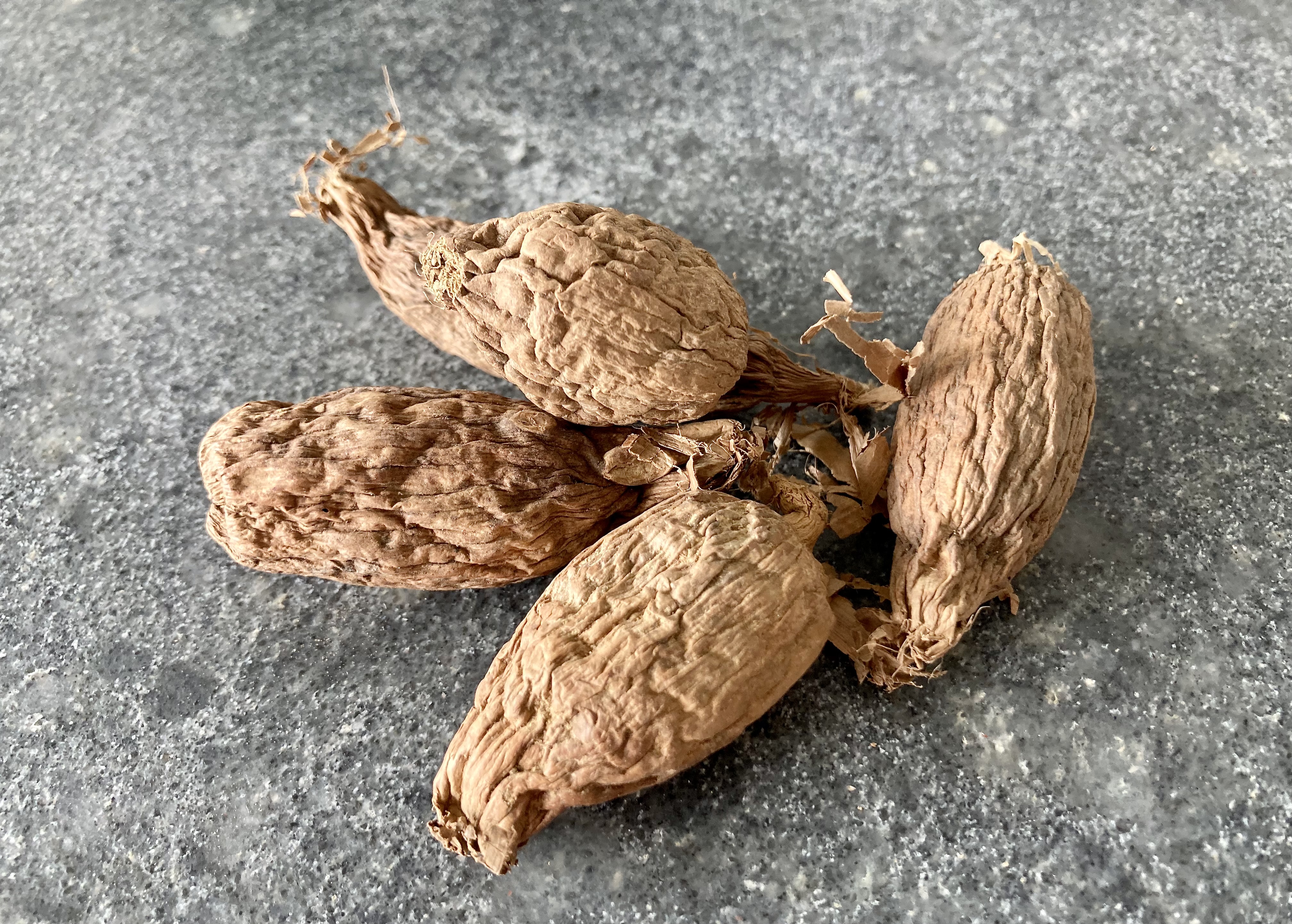
The King Oyster Mushroom (Pleurotus Eryngii, also known as EryngiKing Trumpet MushroomPleurote de Panicaut and Seta de Cardo) is a very tasty, large oyster mushroom with a great meaty texture. 
One of its Dutch names is intriguing: Kruisdisteloesterzwam. The name consists of two parts: the second half is obvious, but why the reference to a plant called Kruisdistel? The King Oyster Mushroom is a parasite on the roots of plants, in general on herbaceous plants and especially on the roots of the Kruisdistel (Eryngium campestre) which brings us nicely back to the name Eryngi.
We often buy Eryngi at our local Asian Supermarket, so we assumed the mushroom is native to China or Japan. Much to our surprise it turns out to be a native to the Mediterranean, the Middle East, and North Africa. Its Italian name is Cardoncello and it’s common in regions such as Calabria and Puglia. Cardoncello is combined with tomatoes and served with orecchiette. Sounds like a delicious dish to us!
But it does raise the question why they’re often sold in Asian supermarkets and why so many recipes combine it with Asian ingredients. Anyone?
We decided to combine Eryngi with very different ingredients, including fried polenta and grilled pancetta. The result is a delicious combination with lots of textures and flavours.

Wine Pairing

We enjoyed the combination with a glass of Rosé, produced by Lionel Osmin, from the Fronton area just north of the French city of Toulouse. The grape used to make this wine was the négrette, a grape that has been used to produce red and rosé wines in the Fronton region since perhaps the 12th century. The wine was low in acidity and had aromas such as violet and strawberry. It was a supple, fruity, balanced wine. In general we would suggest a relatively easy wine, but the wine must have sufficient character, thinking of the different flavours in the dish.

What You Need
  • For the Mash
    • Green Peas
    • Parsley
    • Olive Oil
    • White Pepper
    • Pinch of Salt
  • For the Fried Polenta
    • Polenta
    • (optional) Parmesan Cheese
    • (optional) Vegetable Stock
  • For the Mushrooms
    • King Oyster Mushrooms
    • Olive Oil
    • Black Pepper
  • Pancetta or Speck
What You Do
  1. Cook the polenta (in vegetable stock) according to the package until ready. You could add Parmesan Cheese.
  2. Pour the polenta onto a plate and smooth it into an even layer (1,5 centimetres) with a spatula.
  3. Cool to room temperature.
  4. Cover with plastic foil and transfer to the refrigerator for use the next day.
  5. Cook the peas for one or two minutes in water or vegetable stock (preferred). They should have a bite.
  6. Chop the parsley and combine drained peas with parsley, white pepper and a pinch of salt.
  7. Blender. Add olive oil and mix. Taste and adjust. The mash can be prepared in advance.
  8. Turn out the polenta onto a cutting board.
  9. Cut it into a shape you like (strips, triangles, circles).
  10. Fry in a generous amount of relatively hot olive oil in a non-stick pan until golden, probably 2*3 minutes. 
  11. In parallel clean the mushroom and slice (not too thin). Some suggest slicing the mushroom horizontally, but then you lose its impressive shape.
  12. Fry in olive oil until golden brown, probably 2*5 minutes.
  13. Add just a hint of black pepper before serving.
  14. Warm the mash.
  15. Also in parallel: grill speck or pancetta for 3 minutes until crispy.
  16. Assemble and serve on a warm plate. 

Your Favourites in 2024

Happy New Year!
Let’s begin the new year with the 2024 highlights. For the past two years your favorite post was No-Knead Bread, This year’s most popular post was an all time favorite: Kimizu. This classic, golden sauce from Japan, is made with Egg Yolks, Rice Vinegar, Water and Mirin. We also have a version with Tarragon, let’s say the Béarnaise version of Kimizu. Although it is a classic sauce, we use a microwave to prepare Kimizu and Kimizu with Tarragon. An easy and very effective way of controlling temperature and consistency.

This year’s runner up is Scallops with Roe, a recipe we published in January 2023. We were inspired by the great quality of the scallops on the market in Nice and we were not disappointed. The combination of scallops, roe and mashed potatoes is simple and delicious.

On August 19th 2024 Michel Guérard passed away. He was a French chef, author, one of the founders of the Nouvelle Cuisine and the inventor of La Cuisine Minceur. We wrote about his version of sauce vierge and combined it with sea bass and with skate. Very happy to see so many people interested in this post.

You’ve probably noticed we love mushrooms. Cultivated ones, like Shiitake, Oyster Mushrooms, Enoki and Champignons de Paris and seasonal ones, such as Morels, St. George’s mushroom and Caesar’s Mushroom. One of the most popular posts is Cèpes à la Bordelaise. Also very tasty when prepared with button mushrooms. Always a pleasure to serve, for instance with eggs, with meat, with more present fish. Last year we created a special page with an overview of our mushroom recipes.

We were very impressed by the exhibition Food For Thought by Kadir van Loohuizen in the Maritime Museum in Amsterdam. Let’s summarize it by quoting Ralph Dahlhaus, Chef of the National Maritime Museum: “Your choice of food does not need to be perfect, but it must be responsible.”

We continued our series of Sauces. One of your favorites is another classic sauce: Ravigote. We served the sauce with Pâté de Tête Persillé and crusted bread. The recipe we posted goes back to the more or less original version: the Ravigote is light, uplifting and flavorful.

This year we are looking forward to the Amsterdam Symposium on the History of Food on June 5th and 6th. This year’s topic is Food and the City. The symposium takes place in the 750th anniversary year of the city of Amsterdam. The symposium will be organized during an exhibition on the history of food culture in Amsterdam, from April 11th until September 7th 2025 in the Allard Pierson.

Let’s start cooking!

Paillasson with Pied de Mouton

Going through our list of mushroom recipes, we noticed we didn’t have one with Pied de Mouton. Very odd! The taste of this firm mushroom is a bit sweet, nutty and mild. The mushroom is slightly dry and tends to absorb flavours and juices of other ingredients.
The season of the Pied de Mouton begins in August and continues until January, sometimes even March. A very affordable and tasty wild mushroom that keeps very well in your refrigerator. Very nice in a creamy pasta dish, with a meat ragoût or in a casserole with vegetables and lentils.
We decided to add them to a Paillasson de Pommes de Terre, which is similar to the Galette de Pommes de Terre, the Reibekuche in Germany and the Rösti in Switzerland. Ingredients vary per country, per region. Inspired by the Potato paillasse with sage and young garlic by Alain Passard, we decided to keep things simple and tasty.

Wine Pairing

The Paillasson with Pied de Mouton is creamy, moist, rich and aromatic. We think it’s best with a fruity, non-oaked red wine, for instance a Pinot Noir or a Merlot. Not too complex!

What You Need
  • 250 grams of Potatoes (waxy)
  • 200 grams of Pied de Mouton
  • 15 grams of Pancetta (Bacon)
  • Butter
  • Olive Oil
  • Rosemary
  • 2 cloves of Garlic
  • Black Pepper
What You Do

Heat a small non-stick pan. Dice the pancetta and fry in olive oil. Remove and set aside. Use a brush to clean the mushrooms. Dice. Fry the mushrooms for 5 minutes. Add finely chopped garlic and finely chopped rosemary. Remove and set aside. Add some black pepper. Grate the potatoes, add black pepper and combine with the mushrooms and the pancetta. Add a generous amount of butter to the pan. Fry the paillasson for 10 minutes, flip, and fry for another 10 minutes, depending on the thickness. We decided to go for 15+10.

PS

The easiest way to flip the paillasson is to let it slide from the pan on a cutting board. Cover the paillasson with the pan, turn the board and the pan and you’re done.

Sandwiched Parasol Mushrooms

In 2005 Antonio Carluccio published The Quiet Hunt, the Complete Mushroom Book. In this book he describes various mushrooms, discusses their habitat and edibility and of course offers a range of mushroom recipes. Recently we were at a second-hand bookstore, and we spotted La Passion des Champignons. We assumed that this was the French version of The Quiet Hunt, but surprisingly it wasn’t! The original of this book is called A Passion for Mushrooms and was published in 1989. We obviously expected some overlap between the two, but since we saw several new recipes, we decided to buy it. As soon as we were at home, we compared the two books. In a Passion for Mushrooms, you will also find descriptions of various mushrooms plus a range of mushroom recipes. The overlap however is minimal. A Passion for Mushrooms includes some wonderful recipes and combinations we didn’t expect, for instance Filet de Bœuf aux Pleurotes et aux ChanterellesTruite aux Pied BluesRagout de Crevettes Rose et de Morilles and Velouté d’Huitre aux Truffes. The book also includes a chapter on conservation techniques.

We prepared two dishes from the book, Sandwiched Parasol Mushrooms and Halibut with Saffron Milk Cap.

A Passion for Mushrooms is a must have for mushroom-lovers. The book is available via the usual channels and perhaps at your local second-hand bookstore. Prices will vary.

Sandwiched Mushrooms

The Parasol Mushroom is a common mushroom in many countries. It is very tasty and easy to prepare. It has a beautiful juicy and meaty texture, and its flavour is delicate with a touch of lemon. Simply fry the caps alla Milanese or stuff young parasol mushrooms with onion, sage or minced meat. Or in this case, with ham and cheese!
We liked the idea of sandwiching because it allows for a nice amount of stuffing and it keeps the mushroom intact. By frying the sandwiched parasol mushrooms in the oven, the mushrooms will become thin and crunchy. The flavour of the stuffing was more complex than we expected. The combination of ham, cheese and parsley worked very well. Be careful with the breadcrumbs, these are only needed to get the right consistency.

Wine Pairing

A Pinot Grigio from the Italian Alto Adige region will be a great accompaniment. In general, you’re looking for a white, fresh, dry, non oaked wine with floral notes.

What You Need
  • 4 Parasol Mushrooms or large Mushrooms (portabella)
  • Shallot
  • Garlic
  • Egg
  • Breadcrumbs
  • Gruyere or Emmenthaler
  • Parmesan Cheese
  • Ham
  • Parsley
  • Black Pepper
  • Olive Oil
What You Do

Details of the recipe can be found in A Passion for Mushrooms. Buy the book and enjoy this dish and many more!
Finely chop the shallot and fry in olive oil. Clean the mushroom and discard the stem (if using parasol mushrooms, otherwise chop the stems and fry with the shallot). Add finely chopped garlic to the pan. After a few minutes remove from the heat and allow to cool. Chop the ham and the parsley, grate the two cheeses. Whisk the egg, add cheeses, black pepper, parsley and ham. Add the shallot and garlic. Add breadcrumbs. Add half of the mixture on top of a cap and close with another slightly smaller cap. Add oil to a baking tray, add the two sets of mushrooms. Brush with olive oil, sprinkle with some breadcrumbs and then add a few drops of olive oil. Fry in the oven at 180 °C or 355 °F for 20 minutes.

Girolle and Guineafowl

The Girolle (or Chanterelle) season in Europe runs from late summer until late autumn. It’s a much-loved mushroom, especially the golden (common) girolle, but let’s not forget the chanterelle jaune, the chanterelle grise and the trompette de la mort. The common girolle remains tender and somewhat meaty when cooked, which makes it ideal when thinking of a rich sauce. You will taste delicate nutty, buttery and earthy flavours. Delicious when combined with the gentle flavours of guineafowl. The sauce we made is fairly simple: it’s all about enhancing the texture and the flavours of the mushroom. The parsley will bring a freshness and bitterness to the sauce.

Guineafowl meat is leaner, somewhat darker and more flavourful compared to chicken. It is not difficult to prepare, but due to the low-fat content you must be careful not to overcook. In this recipe we use guineafowl supreme (the breast fillet with the skin on plus the wing bone) which is perhaps the tastiest part of the guineafowl. 

Wine Pairing

We enjoyed a glass of Le Jardin de Fleur La Mothe made by Château Fleur la Mothe with merlot and cabernet sauvignon grapes. An affordable wine from the French Médoc region. The wine has a beautiful deep red colour, the tannins are balanced and the fruit nicely present, both in the aroma and the flavour. In general, we suggest a smooth, medium bodied red wine with fruity aromas. 

What You Need
  • For the Guineafowl
    • 2 Guineafowl Supremes
    • Pancetta
    • Olive Oil
  • For the Sauce
    • 150 grams of Golden Girolle
    • One small Shallot
    • One small Garlic Clove
    • Double Cream
    • Crème Fraîche
    • Dijon Mustard
    • Vegetable Stock
    • Parsley
    • Butter
    • Black Pepper
What You Do
  1. Pre-heat your oven to 180 °C or 355 °F
  2. Thinly slice the pancetta
  3. Open the supreme, add pancetta and then close the supreme, using kitchen twine
  4. Fry the supreme in olive oil in a heavy iron skillet until golden
  5. Transfer the skillet to the oven. The internal temperature of the meat should be minimum 70°C or 160°F.
  6. Clean the mushrooms with kitchen paper.
  7. Halve or quarter the mushrooms, depending on the size
  8. Finely chop the shallot and the garlic.
  9. When the guineafowl is ready, transfer the pan to your kitchen top, cover the meat with aluminium foil and allow to rest. This way the meat will be moist and not over-cooked.
  10. Now it’s time to prepare the sauce. Add butter to a warm pan, add the shallot, gently fry for a few minutes, add the girolles, fry, reduce heat, add the garlic.
  11. After a few minutes add the vegetable stock. Stir.
  12. After a few minutes add double cream, crème fraîche and some Dijon mustard.
  13. Stir well and create a thick creamy sauce. Taste and add some black pepper.
  14. wo minutes before serving add the parsley.
  15. Slice the guineafowl and serve 3 or 4 slices on top of the sauce.
Girolle and Guineafowl ©cadwu
PS

More mushroom recipes on our mushroom page.

Cordyceps

Bright orange mushrooms that look like spaetzle? Interesting. We pick one up and look carefully: a long stem but without a cap with spores. Odd. We ask if they are edible, and the obvious answer is “yes”. We buy 100 grams and decide to look for details and recipes in our mushroom cookery books when at home.
Hm. No mention of Cordyceps. We visit the Forager Chef (Alan Bergo) and read about the background of the Cordyceps (or better: Ophiocordyceps). Parasite mushroom, infects insects, controls them, takes over, kills and then sprouts a fruiting body from their head. The fruit we just bought…
Fortunately, the Cordyceps we bought are grown on substrates that are not made of insects, which make them less scary. Normally when we find a new mushroom on the market, we taste it raw, but not today.
We quickly wash our hands and watch this BBC video as suggested by Chef Bergo. Interesting, but we prefer the culinary aspects of mushrooms.

Use

In traditional Chinese medicine dried and powdered cordyceps are used. Today it is considered to be superfood, supposedly boosting your vitality and endurance. Fresh cordyceps are used in Chinese soups and hot pots. Chef Bergo uses them in a dish with linguini. He writes: “The cordyceps weren’t mind blowing, but they definitely weren’t bad”.
We decide to make an Asia-inspired salad, with stir fried cordyceps, obviously. The salad tasted great. It was nutty, mild, fresh and the texture of the mushrooms worked beautifully with the crunchy radishes. 

Wine Pairing

Best to drink a white wine with a touch of oak, perhaps a chardonnay. We tried something different, a wine made with a grape called Bouquet 1359. The wine is produced by French winery Abbotts & Delaunay. The grape was developed by Alain Bouquet. It is somewhat similar to the chardonnay grape but more resistant and easier to use in an ecologic environment. It comes with aromas of brioche and yellow fruit; the taste is fresh, long and slightly nutty. 

What You Need
  • 100 grams Cordyceps
  • 1 Scallion
  • Bok Choy
  • White Radishes or Daikon
  • Walnut Oil
  • Jerez Vinegar
  • Light Soy Sauce (we used Tsuyu)
  • French Mustard
  • Olive Oil
What You Do
  1. Clean the mushrooms if necessary
  2. Cook radishes or daikon for 4 minutes in boiling water
  3. Let cool quickly and slice or quarter
  4. Finely slice one or two bok choy stems, depending on the size
  5. Heat a skillet, add some olive oil and fry the mushrooms
  6. After 1 minute add the sliced bok choy and the pre-cooked radishes
  7. Toss, leave for 1 or 2 minutes and allow to cool
  8. Transfer to the refrigerator
  9. When ready to serve, make a dressing by combining walnut oil, soy sauce, Jerez vinegar and a touch of mustard. The mustard will emulsify the dressing
  10. Taste and adjust
  11. Happy?
  12. Then add the dressing to the salad, mix and serve as a side dish or small appetizer.
Inspiration

If you’re into video games you will have recognised cordyceps as inspiration of the action-adventure game The Last of Us, which was the inspiration for the American post-apocalyptic drama television series with the same tittle and produced by HBO.
The 2016 movie The Girl with All the Gifts was also inspired by cordyceps. Two Pokémon species are also based on Ophiocordyceps.

Nasty Details

A few days later we opened Merlin Sheldrake’s impressive book Entangled Life. He explains that the fungus doesn’t turn the insects into zombies but controls it like a puppeteer master. He describes how a specific species of Ophiocordyceps is focused on giant ants. The fungus infects the ant and from that moment on it controls the insect. In the end 40% of the body weight of the ant is mycelium (the network created by the fungus). Through the mycelium the fungus controls the ant. When the Ophiocordyceps is ready to propagate, it steers the ant to a height of approximately 25 cm, ideal for the fungus and its spores. The ant then bites into the main vein of a leaf and locks its jaws. The ant is now in an ideal position for the fungus. This is the moment the fungus kills the ant and the fruit begins to grow.
Very pleased our cordyceps were grown on a substrate of grains!

PS

More mushroom recipes on our mushroom page.

Girolle Omelette

Friday morning, beginning of September, we go shopping at the organic street market in the beautiful city of Haarlem. We want to buy fruit and vegetables, cheese and obviously mushrooms. The season just started but already the stall offers lobster mushrooms, truffle, chicken of the wood, mai take, trompette de la mort, cèpes and girolles, also the grey (grise) and the yellow ones (jaune). They look perfect and we decide to buy 150 grams. Greyish cap, bright yellow stem, perfect with an omelette. We cross the street and buy extremely old goat cheese, one that matured for 2 to 3 years. Its taste is full of umami, a bit spicy and makes us think of Roquefort. It will be perfect with the aromas and flavours of the girolle jaune.

Wine pairing

The fried girolle comes with an aroma that will make you think of a forest in autumn. Its taste is complex and nutty. The rich egg in combination with the grated old cheese made us decide to drink a glass of Flor de la Mar, barrel aged Chardonnay, produced by Casa Ermelinda Freitas in Portugal. The wine aged for 4 months in barrels made of American oak. It is medium bodied, nicely oaked and comes with hints of citrus and caramel. In general, you’re looking for a lightly oaked chardonnay, balanced, fresh, not too complex.

What You Need
  • 150 grams of Girolle (Jaune)
  • 2 Organic Eggs (preferably Demeter)
  • Very Old Goat Cheese
  • Garlic Clove
  • Olive oil
  • Butter
  • Black Pepper
What You Do

Whisk the eggs together. Warm a small non-stick pan, add some butter and make sure the pan is warm through and through. Add the mixture and leave on low heat until the omelette is baveuse. In the meantime, clean the mushrooms. Perhaps you need to cut off some of the stem. Slice the mushrooms lengthwise in halve. The stem is hollow and may contain sand or other bits of the forest floor. Quickly fry the mushrooms in olive oil. Grate some garlic and add to the mushrooms. Time to plate up: the omelette, fresh black pepper, the mushrooms and some grated goat cheese, not too much, it can be overpowering.

PS

More mushroom recipes on our mushroom page.

Shiitake Salad

We love mushrooms and are always keen to explore new recipes and ideas. This recipe for a salad is very much about the nutty flavour and the moist texture of the shiitake. An easy to make and delicious, aromatic salad with lots of umami and citrus.
We used Grains of Paradise (also known as Maniguette or Awisa). This West African spice was introduced in Europe in the 14th or 15th century as a substitute for black pepper. We like its peppery, citrusy flavour.

Wine Pairing

The fish sauce brings briny, caramel-like flavours with obviously some fishiness. The cilantro is very present with notes of citrus and pepper. The result is an aromatic, umami rich salad, best enjoyed with a glass of Pinot Blanc. We decided to open a bottle produced by Dr. Loosen. The winery was founded over 200 years ago and is well known for its Riesling and other excellent wines from the German Mosel region. In general, you’re looking for a white wine that is fruity and easy to drink, with gently acidity and some minerality.

What You Need
  • 150 grams of Shiitake
  • 2 cloves of Garlic
  • Olive Oil
  • Rice Vinegar
  • Thai Fish Sauce
  • Grains Of Paradise (Maniguette) or Black Pepper and Lemon Juice
  • Cilantro (Coriander)
  • Smoked Breast of Duck
What You Do

Remove the stems of the shiitake (they are chewy and fibrous). If necessary, clean the caps with kitchen paper. Slice. Finely chop the garlic. Warm a heave iron skillet, add olive oil and gently fry the shiitake. After a few minutes add the garlic. Keep on medium/low heat for a few minutes. Combine olive oil, rice vinegar and fish sauce. Ground grains of paradise and add to the dressing. The grains of paradise can be replaced with freshly grounded black pepper and a few drops of lemon juice. Taste the dressing and adjust. Add the shiitake to the dressing and mix. Allow to cool somewhat. Add a generous amount of chopped cilantro. Mix again. Garnish with slices of smoked duck breast.

PS

More mushroom recipes on our mushroom page.

Salad with Truffle and Asparagus

Sometimes a dish is all about seasonal products, for instance the combination of white asparagus, morels and wild garlic. Sometimes it’s about a winning combination, for instance truffle and potato, or truffle and egg. This dish has a bit of both aspects because this year the end of the Dutch white asparagus season coincides with the beginning of the summer truffle season. And since both combine very well with egg, why not make an extravagant salad?

Wine Pairing

The salad has a velvety, rich mouthfeel. You will taste subtle truffle, some bitterness and sweetness of the asparagus and a hint of acidity thanks to the mayonnaise. The salad will combine very well with a Chardonnay with subtle oak. We enjoyed our salad with a glass of Mâcon-Bussières, produced by Thierry Drouin. The white wine is made from 100% chardonnay grapes and comes with a touch of oak, aromas of apple and citrus and a rich flavour with hints of toast and butter. An excellent wine and a perfect accompaniment of the salad.

What You Need
  • 3 Eggs
  • 12 Asparagus (tips only)
  • (home-made) Mayonnaise
  • 30 grams of Summer Truffle
  • 1 or 2 teaspoons of Excellent White Truffle Oil
  • White Pepper
What You Do

Cook or steam the eggs until slightly runny. We steamed the eggs for 9 minutes. Peel and leave to cool. Steam the tips of the asparagus for 9 minutes. No need to peel them. Leave to cool. Mix two tablespoons of mayonnaise with one or two teaspoons of truffle oil. Roughly chop the eggs and crunch the truffle. Gently combine the asparagus tips, the truffle, the eggs and some white pepper with the mayonnaise. Transfer to the refrigerator for one or two hours.

Salad with Truffle and Asparagus ©cadwu

Mushroom Salad

White Button Mushrooms and Cremini can be eaten raw, but we think they are tastier when fried or marinated, which is exactly what we do for this salad. A tasty accompaniment that will bring umami and depth to your dish. We combined the salad with carrots prepared in butter, lemon and lamb chops. The meat was fried in olive oil and seasoned with chopped thyme and black pepper. A delicious and light combination.

Wine Pairing

The salad comes with some acidity, but not too much. The main aspects in the dish are the sweetness and the velvety coating of the carrots, the aromatic lemon and thyme, the deepness of the salad and the richness of the lamb. We decided to open a bottle of Macon, a red wine from East-Central France. The region is well known for its white wines, Pouilly-Fuissé for instance. Most white wines in this region are made from Chardonnay grapes. This red wine is made from Gamay grapes. The wine has a beautiful ruby red colour, and it comes with aromas of black cherries and strawberries. A balanced wine with a touch of spiciness and nice tannins. Not too difficult and great with the various aspects of the dish. In general, we would suggest a red wine with fruit, freshness and character but not too complex. 

What You Need
  • 250 grams of Button Mushrooms or Cremini
  • Olive Oil
  • White Wine Vinegar
  • Parsley
  • Garlic Clove
  • Black Pepper
What You Do
  1. Clean the mushrooms with kitchen paper
  2. Slice the mushrooms, heat a heavy iron skillet and fry the mushrooms for a few minutes
  3. Leave to cool
  4. Combine excellent olive oil and white wine vinegar
  5. Chop some parsley
  6. Finely chop a garlic clove
  7. Combine the mushrooms, the dressing, the parsley and the garlic
  8. Add some black pepper
  9. Leave in your refrigerator for 24 hours. Feel free to stir a few times.
Mushroom Salad ©cadwu