Your Favourites in 2022

We have been baking our own bread for several years, based on the method of no-knead bread (see Jim Lahey’s book My Bread for more detail) and using the ingredients of the French Talmière. The technique is a bit challenging, so we were very pleased to test the simplified method described by Le Creuset. You were also pleased to learn about this easier method for No-Knead Bread, because it’s our number one post this year!

Kimizu is the classic, golden sauce from Japan, made from Egg Yolks, Rice Vinegar, Water and Mirin. The recipes for Kimizu and Kimizu with Tarragon continue to be very popular. Although this is a classic sauce, we use a microwave to prepare it. A great tool to be in control of temperature and consistency.

If you’ve been following this blog for a few months, perhaps years, then you’ll know we love mushrooms. We are especially interested in the seasonal ones, such as Morels, St. George’s mushroom, and Caesar’s Mushroom. We combine these with Japanese Udon, creating a very tasty starter, full of flavours and texture. Also one of our personal favourites.
Another favorite is the Bay Bolete. Actually a fairly common mushroom, as tasty as Cèpes, but much more affordable.
During the season we saw lots of interests in Bay Boletes and Caeser’s Mushroom, so next season we will publish new recipes with these two delicious mushrooms.

The classic Cèpes à la Bordelaise was also amongst your favourites. You can also use more available mushrooms for this great combination. Always a pleasure to serve, with eggs, with meat, with more present fish.

Ajerkoniak was a dish we looked into when we were exploring dishes/drinks based on egg yolks, such as caudle, eggnog and advocaat. Perhaps not our personal favourite, but why nog give it a try?

We wish you a happy and inspiring 2023!

Your Favourites in 2022 ©cadwu

Classic Beef Stew

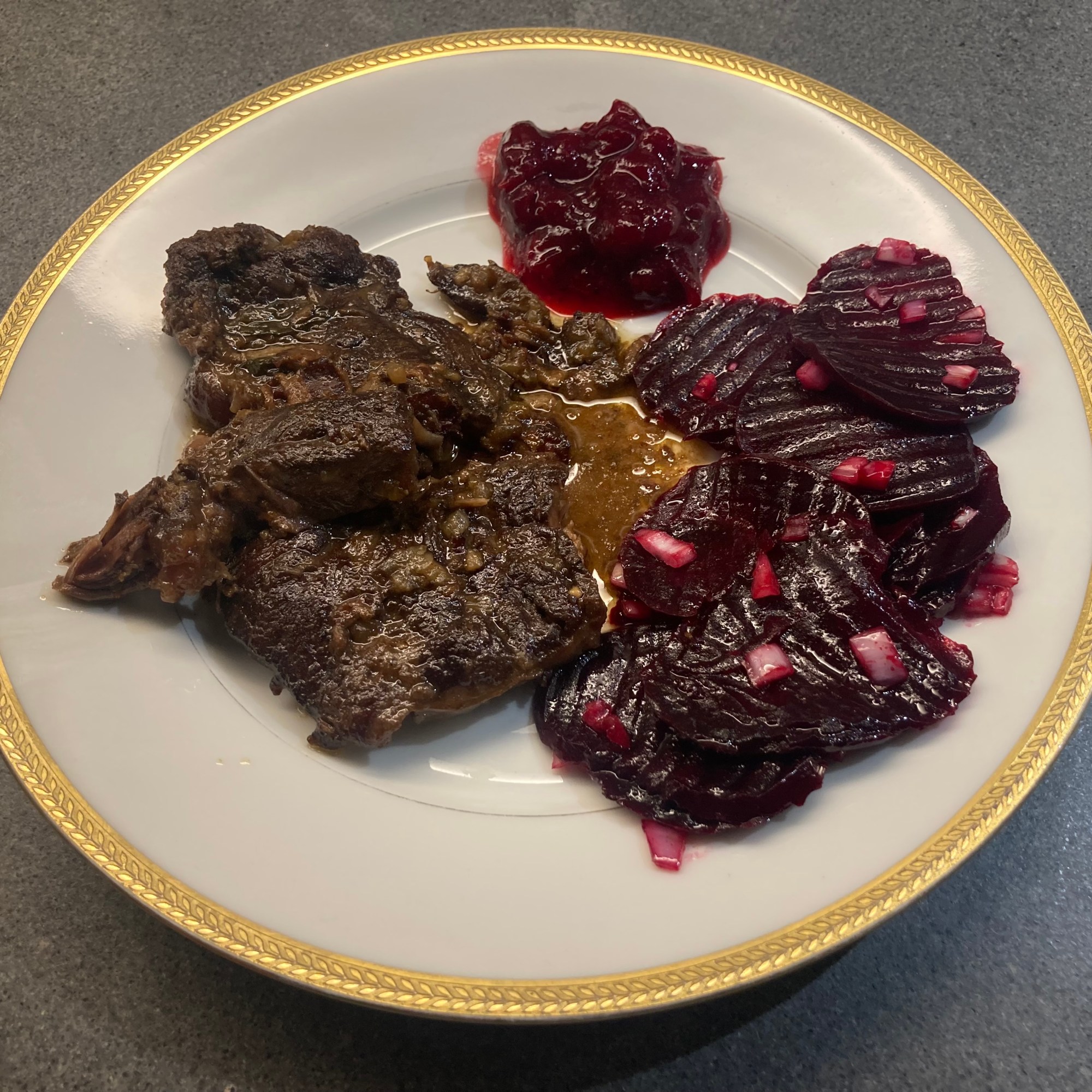
Wintery weather, sunny and cold, the best time of year to enjoy a beef stew. We decided to cook an old-fashioned version, with red wine, bay leaf, mustard and black pepper. And patience of course, because it will take hours.

Regardless if you want to cook a Flemish Stew, Bœuf Bourguignon, Daube à la Provençale or this beef stew, you must use fatty, structured meat. The idea to use lean meat because fat is unhealthy or altogether wrong is one to forget quickly. Fat, structured meat is the key to a delicious stew. In general you’re looking for meat from the neck or the shoulder (beef chuck roast, sucadepaleron). When in doubt, ask your butcher.

Most recipes suggest dicing the meat. We didn’t want to do that. When cutting the meat before serving, we followed the structure of the meat, which gives the plate a rustic feel.

We served the beef stew with a beet root salad and cranberry compote.

Drink Pairing

A rich beer or a full-bodied red wine will be a great accompaniment with the stew. The dish comes with some sweetness (the stew, the salad and the compote, obviously) so the wine should have some acidity and tannins. A robust wine with aromas of dark fruit (plums, blackberries, cherries), a touch of oak and a long taste will be perfect. 

What You Need

  • 400 grams of excellent Fat, Structured Beef
  • 50 grams of organic Bacon
  • Butter
  • Shallot
  • Mustard
  • Red Wine
  • 2 Bay Leaves
  • Bouquet Garni (Thyme, Parsley, Sage)
  • Black Pepper
  • Water

What You Do

Heat a heavy iron skillet, pat the meat dry with kitchen paper, add butter to the pan and fry until golden-brown. Reduce the heat and remove the meat from the pan. Add the sliced bacon and fry until golden. Add the shallot and glaze. Return the meat to the pan, add red wine, some water, mustard, bay leaves, bouquet garni and crushed black pepper. Allow to simmer for 6+ hours. You could close the pan with a lid. We prefer to cook it without a lid. The meat will take longer to become tender and soft. Our impression is that a stew prepared in a skillet without a lid is more moist. In all cases check the pan every 30 minutes, turn the meat and add water if required.
You could reduce the jus or turn it into a sauce, but you could also keep it as is.

What You Need – Beet Root Salad

  • One Beet Root
  • Excellent Olive Oil
  • White Wine Vinegar
  • Shallot
  • Black Pepper

What You Do – Beet Root Salad

The day before wash the beetroot and wrap in aluminium foil. Leave in the oven on 180° Celsius or 355° Fahrenheit for 45 – 60 minutes depending on the size. Cool and store in the refrigerator.
The next day peel the beet root and use a vegetable slicer (or mandoline) to make ridges. This will not only make the dish look more inviting, it will also enhance the taste given there is more coated surface and more air when chewing it. Make a simply, relatively acidic dressing with olive oil and vinegar. Finely chop the shallot and add to the dressing. Test a small slice of beet with the dressing and adjust when necessary. Perhaps some fresh black pepper? If you’re happy with the combination, toss the slices with the dressing making sure everything is nicely coated.

Date with Foie Gras and Bacon

It’s such a pleasure to serve a warm snack (appetizer, finger food, quick nibble). In an earlier post we described how to make crostini with mushrooms and taleggio. A delicious vegetarian appetizer. This one is also simple and quick, but requires some shopping.

Let’s start with the bacon. Ideally you would use bacon made of pork belly, cooked in water with spices such as cloves, bay leaf and mustard seed, then rubbed with sugar, smoked and dried. The result is a moist, slightly sweet, cured bacon. The Dutch call it Katenspek.

Foie gras is always a bit of a debate. We are flexible and enjoy eating it, provided it comes with an authenticity label, perhaps with an award of an agricultural show and of course with positive reviews from connaisseurs. Ethical foie gras, made without force feeding the geese, is of course the preferred option. One that is nearly impossible to find. The Guardian published an interesting article about making Foie Gras without gavage.

The combination of these three ingredients is savoury and sweet, with a texture that is soft, crispy and a touch chewy. We love it.

What You Need

  • Excellent Dates
  • Excellent Terrine de Foie Gras (Goose preferred)
  • Sweet Cured Bacon

What You Do

Make sure all ingredients are at room temperature. Stuff the dates with foie gras and wrap it in one rasher of bacon. Fry quickly in a non-stick pan. The bacon should be crispy, the foie gras soft, the date warm. Serve immediately on a warm plate.

Date with Foie Gras and Bacon ©cadwu

Salad of Small Artichokes

The season of artichokes varies depending on the variety and where you are based. In Italy it’s from mid-winter until early spring, in other countries from March to June, or September and October. And in other countries they peak in August. Best is to decide based on quality and price. An artichoke should feel heavy, look fresh and the leaves should be closed. If the leaves are wide open, the artichoke is older and it could be dry with lots of choke (the hairs) and dry inner leaves.

Don’t cook artichokes in boiling water. They must cook for 45+ minutes and during the long cooking process they will lose most of their flavour. Best is to steam artichokes.

Serve large artichokes as a relaxing starter or use them to make Artichoke Barigoule or a Pie. We use smaller ones to make a salad.  You can serve it to accompany an aperitif, or with some bread as a starter. Make sure you have plenty of dressing!

Wine Pairing

It’s not straightforward to pair artichokes with wine. According to various researchers this is due to cynarin, a chemical especially found in the leaves of the artichoke. When the wine and the cynarin meet in your mouth, the natural sweetness of the wine is enhanced, making it taste too sweet. So you have to pair freshly cooked or steamed artichokes with a bone-dry, crisp, unoaked white wine with clear, present acidity. For instance, Sauvignon Blanc, Grüner Veltliner or Albariño.
We enjoyed a glass of Château Pajzos Tokaj Furmint 2019. This dry, white wine made from the well-known Hungarian Furmint grape is fresh, clean and slightly floral. It supports the Salad of Artichokes beautifully.

What You Need

  • 6 small Artichokes
  • Olive Oil
  • Vinegar
  • Mayonnaise
  • Mustard
  • Garlic
  • Thyme
  • Black Pepper

What You Do

Remove the stem of the artichokes and steam the artichokes for 45 – 60 minutes, depending on the size. Remove and let cool. Peel of the first layers of the outer leaves. Make the dressing by turning the mustard and the crushed garlic into a smooth paste. Then gently add the other ingredients and whisk well to make it really smooth, thick dressing. Cut the artichokes in 6 or 8 parts. Add to the dressing, mix well, coating all artichokes. Sprinkle lots of thyme and mix again. Put in the refrigerator for at least 3 hours. Mix again, taste, add some more thyme and serve!

Potato and Truffle Purée

The combination of potatoes and truffle is an interesting one. Because one is the opposite of the other in terms of price and availability? Because both grow underground?

Dutch chef John Halvemaan (also winner of the prestigious Johannes van Dam prize) created a no doubt delicious combination, using butter, veal stock, parsley and cooked bacon. Also very tasty: a recipe for a gratin with crème fraîche and eggs and a recipe by chef Claude Deligne (Le Taillevent in Paris) with foie gras. All far too complex for us, so we prepared a very rich and tasty potato purée with lots of truffle.

If you look for recipes with potatoes and truffle, you will find suggestions using truffle oil. It’s not the real thing, however, if you find quality truffle oil and use only a little bit, your purée will be yummy. The sad news is that some (most?) truffle oil comes with 2,4-dithiapentane, a synthetically produced, aromatic molecule. Producers add this because it gives the impression that the oil contains truffle. Unfortunately, the flavours of 2,4-dithiapentane are not even close to the aromas and taste of a real truffle.

In this case you have to spend some money on both the truffle and the potatoes.

We combined our purée with an excellent rib eye and served it with its own jus and the purée.

Wine Pairing

We enjoyed a glass of Camino de Caza Almansa Garnacha Tintorera-Monastrell 2020. An organic red wine produced by Bodegas Piqueras and made grapes from the Almansa region in Spain. It’s a full-bodied wine with soft tannins and a hint of vanilla and chocolate. In general, you’re looking for a smooth wine with notes of red fruit and oak, medium acidity and with a long, dry finish. One that goes very well with for instance red meat and game (hare, deer).

What You Need

  • Potatoes
  • Butter
  • Egg Yolk
  • Cream
  • Milk
  • Salt
  • Winter Truffle

What You Do

Make your favourite purée! Cook the potatoes until ready (meaning: until the blade of a knife inserted in the potato goes easily through it). Drain. Mash with a fork, add cold butter, combine, add warm milk and/or cream and use a spatula to get the right consistency. You could add a beaten egg yolk (also because eggs and truffle work together wonderfully). Add salt to taste. Perhaps some white pepper. Grate the truffle and add half of it to the purée. The taste of a winter truffle benefits from the warmth of the purée. Just before serving add the remaining truffle.

Potato and Truffle Purée ©cadwu

Bouchot Mussels

When you buy champagne, Cornish Clotted cream, Parmigiano-Reggiano or Kalamate Olives, you want to be sure it’s really champagne, clotted cream, Parmigiano or a Kalamata olive. There are various ways of protecting food (and wine) for instance by law, by creating and protecting a brand, or by systems such as the Appellation d’Origine Protégée (AOP) also known as Protected Designation of Origin (PDO). AOP/PDO is based on unique aspects of a region. For instance, the AOP for Comté cheese reflects the use of milk from specific cows from a region in the French Jura with a unique flora. This determines the cheese, its flavour and quality.

Another system focuses on the way food is produced. If this is done in a unique traditional way, the product can be labelled with Spécialité Traditionnelle Garantie (STG) or Traditional Speciality Guaranteed (TSG).

Bouchot Mussels carry both labels and they come with a special logo. Obviously, you wonder why.
The mussels grow in a unique way, benefitting from the large tide near Mont-Saint-Michel in Normandy. They grow on ropes strung from wooden poles (so called bouchots) in the sea. During a significant part of the day the mussels sit above sea level and therefore they grow slowly. The influence of the tide makes the bouchot mussels typical for the region and the use of poles makes the way the mussels grow unique.

Perhaps you also wonder if these aspects have an impact on the mussel and its taste. The answer is yes. They are small, clean, very tasty, flavourful, juicy and meaty plus they are free of sand and grit.

Preparing bouchot mussels is very simple, because adding flavours will only interfere with the already delicious taste.

Perhaps a bit more expensive than other mussels, but given they are so very tasty and rich, we think it’s perfectly fine to buy less than usual.

Wine Pairing

We enjoyed our Bouchot Mussels with a glass of Muscadet Sèvre et Maine, Domaine Raphaël Luneau. The wine originates from the Loire Valley and is made with 100% Melon de Bourgogne. The wine is stored on its ‘lees’ for several months before bottling. Lees are leftover yeast particles. They add flavour and structure to the wine.
In general, you’re looking for a white wine with minerality, fruit, structure and expression. It must be aromatic with a long taste.

What You Need (Starter)

  • 500 grams of Bouchot Mussels
  • White wine
  • One garlic Glove
  • Parsley
  • Crusted Bread

What You Do

Finely chop the garlic and the parsley. Add white wine to a pan and add the garlic. Bouchot mussels don’t release much liquid when you cook them, so use a little more wine than you would do with regular mussels. Leave for 10 minutes. Clean the mussels. Cook the mussels as quickly as you can, lid on the pan, until they are open. Add the parsley and combine. Serve immediately on a hot (soup) plate.

Partridge with Sauerkraut and Parsley Root

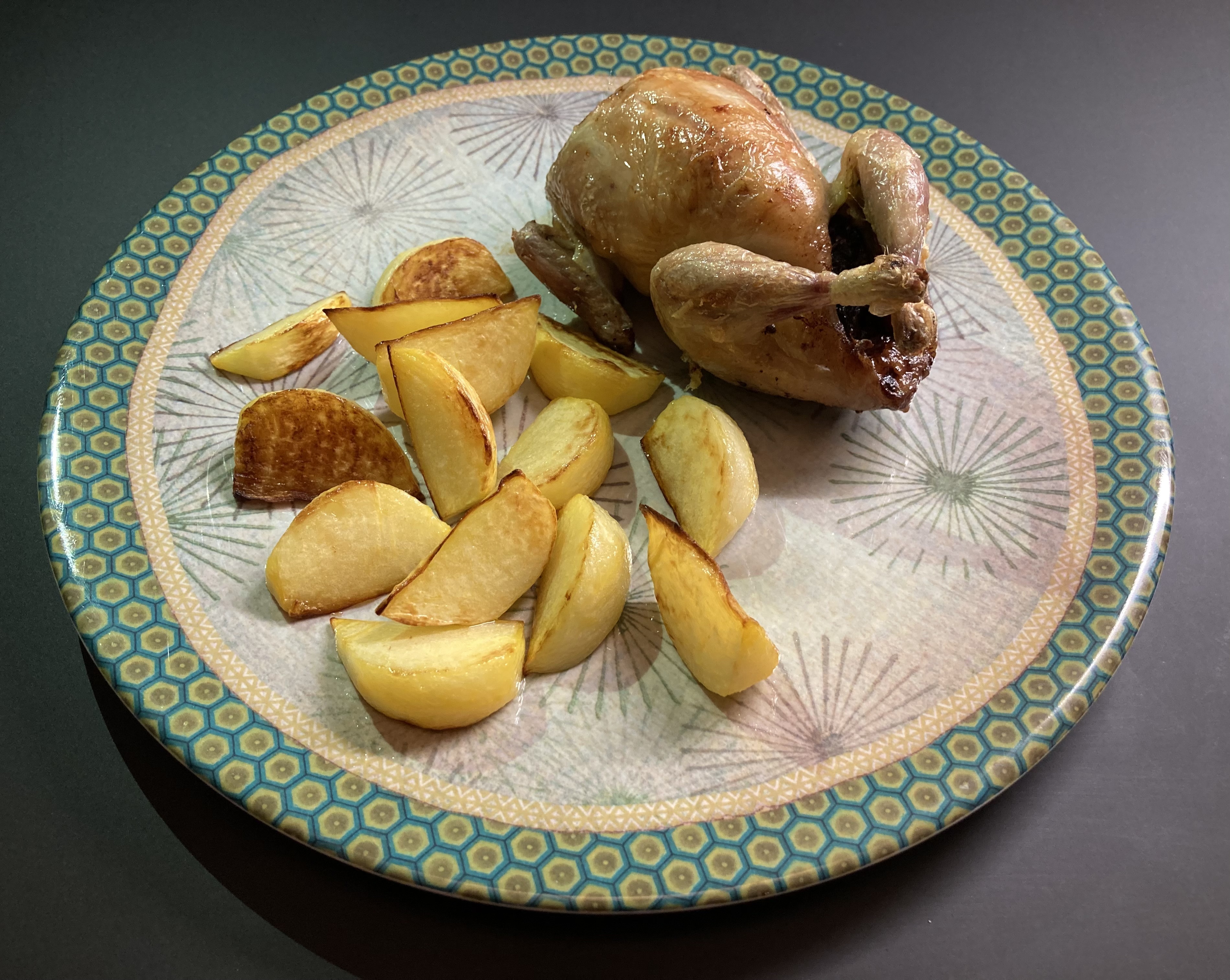
Partridge is perhaps the most delicate of game birds. Tasty, aromatic, mild. It is also one of the most vulnerable birds, given it is under threat from loss of habitat. Especially the grey partridge is becoming scarce. They are also expensive (we paid 10 euro per partridge) and the best part of the season (September-November) is relatively short, so don’t wait too long if you want to enjoy partridge once a year, like we do.

The meat of a partridge is lean and tends to become very dry when preparing it. So what to do? Of course! Put a strip of bacon on each breast and transfer the partridge to a hot oven.
Not really. The bacon will impact the delicate taste of the partridge. And placing such a small, lean bird in a hot oven is a massive risk. Just a few minutes too long (simply because something else you are preparing takes a bit longer) and the meat is bone dry. Stuffing the partridge doesn’t help either; the filling will be moist, but the meat will be dry anyway.

The key to an excellent partridge is to be brave enough to use an oven on a really low temperature, meaning on the temperature the meat should have when it’s served, which is 70 °Celsius or 160 °Fahrenheit.  Dutch chef Peter Lute presents this method in two highly recommended videos.

Partridge combines very well with a range of vegetables and herbs. You could celebrate the end of summer by enjoying your partridge with a thyme-courgette cake. Easy to make and full of flavours. This year we decided to combine our annual partridge with Sauerkraut (Elzas-style) and Parsley Root Puree. 

Wine Pairing

We enjoyed our Partridge with a glass of Riesling, produced by Markus Molitor. A classic Moselle Riesling from Germany. Clear mineral aromas, also fruit, herbal, delicate and pure. Excellent with the flavors of the partridge and the sauerkraut.
In general you’re looking for an aromatic white wine, with perhaps a touch of sweetness.

What You Need

  • For the Partridge
    • Two Partridges
    • Two Garlic Cloves
    • Bay Leaf
    • Butter
    • Olive Oil
  • For the Sauerkraut
    • 250 grams of Sauerkraut
    • 50 grams of Bacon
    • One small Shallot
    • Bay Leaf
    • Caraway (Cumin)
    • Pink (or Red) Peppercorns
    • Juniper Berries
    • White Wine
    • Butter
  • For the Parsley Root Puree
    • Parsley Root
    • Cream
    • White Pepper
    • Nutmeg

What You Do

Start with preparing the sauerkraut. Slice the bacon and chop the shallot. Fry the bacon in some butter in a small iron skillet. After a few minutes add the shallot. Mix sauerkraut, pink peppercorns, crushed juniper berries, crushed caraway, white wine and a splash of olive oil. Add the sauerkraut to the skillet, add bay leaf, some butter, cover with foil and transfer to the oven (110° Celsius or 230° Fahrenheit). Leave in the oven for 4-6 hours. Check the sauerkraut every hour, mix and add water if needed.

A very helpful instruction (in Dutch) how to prepare partridge is presented and demonstrated by Peter Lute in two excellent videos. Please watch them and see how it should be done.
In summary: prepare the partridge by carefully cutting of the two legs and removing the lower part of the back of the bird (the tail bone area). Warm a heavy iron pan and add butter. Coat the birds with butter, making sure they have a very light brown colour. Transfer the pan to a warm oven: 70° Celsius or 160° Fahrenheit. Leave in the oven for 50-60 minutes. Since the oven is on the ideal temperature for the meat, it doesn’t really matter if you leave them in the oven longer. Set aside.

Peel the parsley root, chop and put in a pan with water and bring to a boil. When the parsley root is halfway, remove the water and add cream. Let cook on low heat until tender. Use a blender to create a puree. Add white pepper and nutmeg.

Add a touch of olive oil to a non-stick pan, and quickly brown the meat, skin side only. Just before serving separate the tenderloin from the breast and remove the fleece before serving the breasts. If all is well you will see a beautiful pink colour, indicating your cuisson is perfect and your partridge as tasty and delicate as possible.

Partridge with Sauerkraut and Parsley Root ©cadwu

The Art of Sauces: Cameline

Welcome to the Middle Ages, welcome to the world of bread sauces and strong flavours. Already in the thirteenth century Sauce Cameline was very popular and in the fourteenth century it could be bought ready-made from vendors. It was used as accompaniment with fish, wild boar, chicken and it was served warm or cold.

Different from béchamel, velouté, Hollandaise or other modern sauces, a bread sauce has a very specific structure. In the United Kingdom a bread sauce with milk, onion, cloves, bay leaf and peppercorns is served with turkey as part of the traditional Christmas dinner.

Recipes for Sauce Cameline are included in several books, for instance in Two Fifteenth Century Cookery by Faulke Watling and Thomas Austin, 1888 and in The Viandier of Taillevent: An Edition of All Extant Manuscripts by Terrence Scully, 1988. Both books are available via the well-known channels.

The Viandier of Taillevent is very much a historical research into the origin of 5 manuscripts with recipes, all ranging from probably the same source, but all different. The oldest is from the second half on the thirteenth century. Taillevent, also known as Guillaume Tirel (ca. 1310 – 1395), was cook to the court of France (Charles V and many others). As the dates suggest it’s not very likely that he is the author of the oldest version of the recipes but on the other hand no other name is mentioned.

Terence Scully explains in wonderful detail the background of the manuscripts and the recipes. He also includes a modern version of 220 recipes, based on his historical and culinary interpretation of all manuscripts. A very impressive book.
The Viandier of Taillevent is also the inspiration for many other historical cookbooks.

There is no original recipe for Sauce Cameline. Our impression is that it must contain vinegar, bread, cinnamon, cloves, grains of paradise, mace and ginger. 

Food Pairing

We would suggest pairing it with chicken. Depending on your choice of ingredients you could combine it with pork or wild boar. We enjoyed Sauce Cameline with small chicken roulades, stuffed with chopped raisins and rosemary.

What You Need

  • Old White Bread
  • Red Wine Vinegar
  • Cinnamon Powder
  • Ginger Powder
  • Mace
  • Clove
  • Grains of Paradise
  • Optional
    • Nutmeg
    • Raisins
    • Almonds
    • Black Pepper
    • Salt 

What You Do

Soak the bread in red wine vinegar (and water). In a mortar combine cinnamon, ginger and other spices. When using raisins, make sure to soak them.
The first option is to strain the bread and then combine it with the mixture.
We didn’t think that worked very well, so we drained the bread, added the mixture to the liquid and added some of the bread. We used a blender to create a sauce. We added a bit more bread and cinnamon to make it tastier and thicker.
The third option is to cook and reduce the mixture. According to the Viandier it should be a cold sauce, but others claim a warm sauce was served during winter.
Regardless the way you prepare it, keep in mind it should be a fairly acidic sauce with a dominant cinnamon taste.

PS

Grains of Paradise? New to me!
The grains are common to the North and West African cuisine. They were brought to Europe in the thirteenth century.
The taste is supposed to be hot, peppery and fruity. Unfortunately, we couldn’t find them and we didn’t feel the need to order the grains online. We substituted them with freshly grounded black pepper. The other flavours were sufficiently intense!

Guineafowl and Bay Bolete

It seems to be a great year for the Bay Bolete! Earlier we wrote about this delicious mushroom and its name. The Bay Bolete is a fairly common mushroom and its flavour can be compared to that of the more expensive Cèpes or Porcini. It’s a bit more intense and especially when served with meat it is a culinary treat. We combined the Bay Bolete with guineafowl, rosemary, thyme, garlic and pancetta. Lots of flavours and aromas. An intense and great way to celebrate autumn.

Guineafowl meat is leaner, somewhat darker and more flavourful compared to chicken. It is not difficult to prepare, but due to the low-fat content you must be careful not to overcook. In this recipe we use guineafowl supreme (the breast fillet with the skin on plus the wing bone) which is perhaps the tastiest part of the guineafowl. 

Wine Pairing

We opened a bottle of Chiroubles, a cru from the Beaujolais, produced by Domaine Montangeron. The wine has floral notes and aromas of cherries and strawberries. Its colour is pale ruby. Rich, elegant and long. It brings freshness and fruitiness to the dish and is sufficiently complex to remain present when enjoying the guineafowl and the Bay Bolete.
In general you’re looking for a red wine with freshness, fruity aromas and complexity. Perhaps a Pinot Noir?

What You Need

  • 2 Guineafowl Supremes
  • Pancetta
  • Rosemary
  • Thyme
  • Olive Oil
  • 150 grams of Bay Bolete
  • One Garlic Clove

What You Do

Pre-heat your oven to 180 °C or 355 °F. Clean the mushrooms with kitchen paper. Put a sprig of thyme and rosemary on the meat side of the fillet and close it with two strings of red/white kitchen twine. Add some olive oil to an iron oven dish, add the guineafowl, meat side up, and cover with strips of pancetta (or bacon). Leave in the oven for 10-15 minutes depending on the size. Transfer the pancetta to the side of the pan, turn the meat and leave for another 10-15 minutes until done (and golden). The temperature of the meat should be minimum 70 °C or 160 °F. When the guineafowl is done, transfer from the oven, remove the kitchen twine and allow to rest for 10 minutes. Halve or quarter the mushrooms, chop the garlic very fine, fry the mushrooms in olive oil and add the garlic seconds before the mushrooms are ready. Add the mushroom mixture to the sizzling guineafowl juices in the pan and stir. Serve the guineafowl with the bay bolete on a warm plate.

Classic Cèpes

What better way to start the mushroom season than serving Classic Cèpes? The recipe is very simple and the result is about cèpes and cèpes alone. The stems a bit firm, the caps moist, the flavours intense and the taste rich and earthy, with a touch of freshness from the parsley. It’s a classic in Germany (Steinpilze auf klassische Art), France (similar to Cèpes a la Bordelaise), Italy and many other countries. 

Wine Pairing

If you want to enjoy the cèpes with a glass of white wine, then we suggest drinking one that is fresh, fruity, round and balanced, for instance of a glass of Bodegas Mocén Selección Especial made from verdejo grapes. A glass of rosé with similar flavours is also a good idea. The idea is to support the cèpes by adding fruitiness and freshness to the dish.

When you decide to drink a glass of red wine, then we suggest a full-bodied red wine with gently fruit and present tannins. 

What You Need

  • 200 gram Cèpes
  • Butter
  • One small Shallot
  • Parsley
  • Black Pepper

What You Do

Clean the mushrooms and slice lengthwise. Finely chop the shallot and the parsley. Add butter to a relatively hot heavy iron skillet. Reduce the heat and fry the cèpes for a few minutes. Add the shallot. Cook on medium heat for 2 minutes. Add chopped parsley, add more butter, black pepper and stir. Serve on a warm plate.