Shiitake Salad

We love mushrooms and are always keen to explore new recipes and ideas. This recipe for a salad is very much about the nutty flavour and the moist texture of the shiitake. An easy to make and delicious, aromatic salad with lots of umami and citrus.
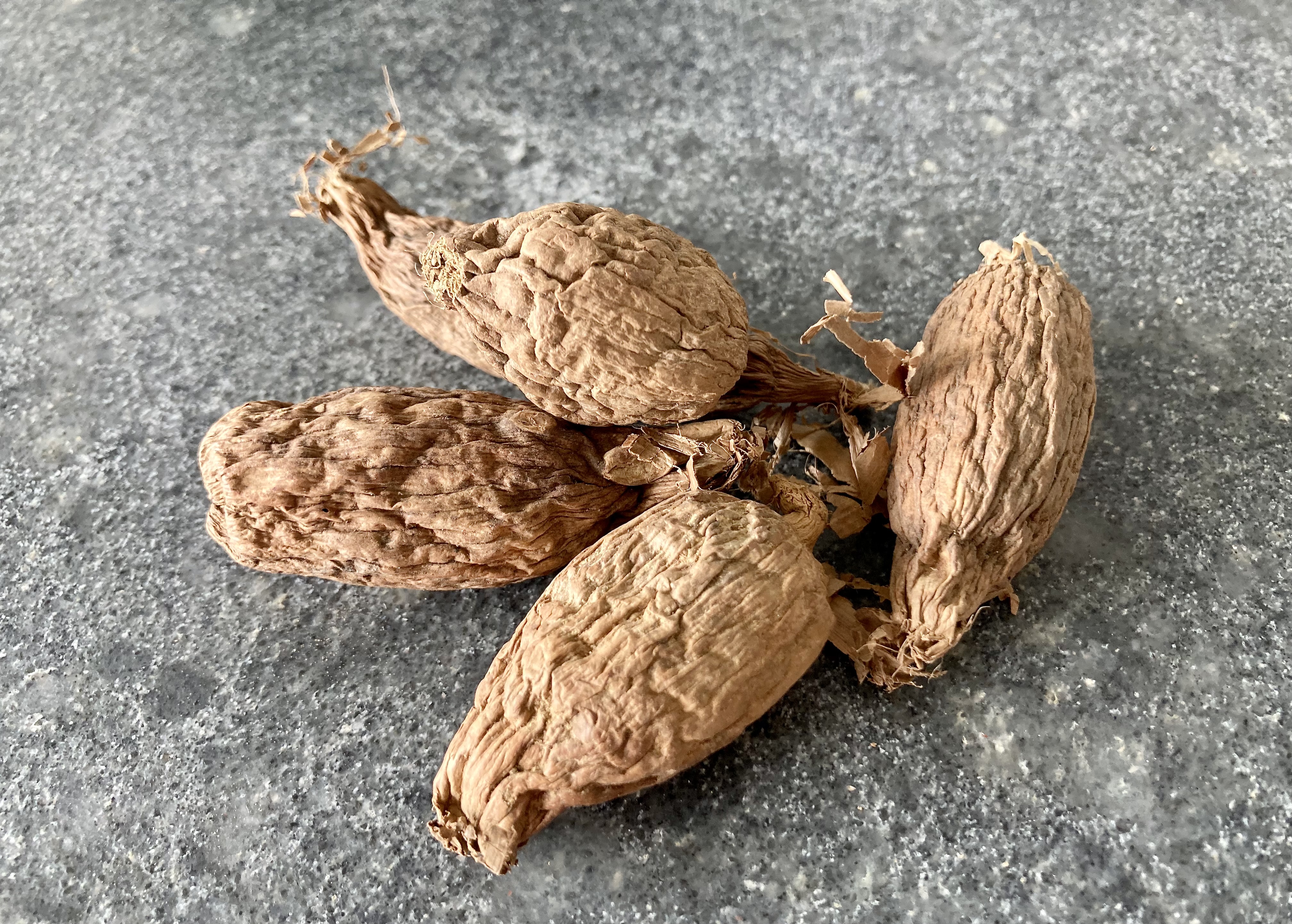
We used Grains of Paradise (also known as Maniguette or Awisa). This West African spice was introduced in Europe in the 14th or 15th century as a substitute for black pepper. We like its peppery, citrusy flavour.

Wine Pairing

The fish sauce brings briny, caramel-like flavours with obviously some fishiness. The cilantro is very present with notes of citrus and pepper. The result is an aromatic, umami rich salad, best enjoyed with a glass of Pinot Blanc. We decided to open a bottle produced by Dr. Loosen. The winery was founded over 200 years ago and is well known for its Riesling and other excellent wines from the German Mosel region. In general, you’re looking for a white wine that is fruity and easy to drink, with gently acidity and some minerality.

What You Need
  • 150 grams of Shiitake
  • 2 cloves of Garlic
  • Olive Oil
  • Rice Vinegar
  • Thai Fish Sauce
  • Grains Of Paradise (Maniguette) or Black Pepper and Lemon Juice
  • Cilantro (Coriander)
  • Smoked Breast of Duck
What You Do

Remove the stems of the shiitake (they are chewy and fibrous). If necessary, clean the caps with kitchen paper. Slice. Finely chop the garlic. Warm a heave iron skillet, add olive oil and gently fry the shiitake. After a few minutes add the garlic. Keep on medium/low heat for a few minutes. Combine olive oil, rice vinegar and fish sauce. Ground grains of paradise and add to the dressing. The grains of paradise can be replaced with freshly grounded black pepper and a few drops of lemon juice. Taste the dressing and adjust. Add the shiitake to the dressing and mix. Allow to cool somewhat. Add a generous amount of chopped cilantro. Mix again. Garnish with slices of smoked duck breast.

PS

More mushroom recipes on our mushroom page.

Claudia Roden – The Book of Jewish Food, part 1

The cookbook review project by Bernadette is a great way to explore cookbooks. The book of Jewish Food by Claudia Roden was not yet on our bookshelf, so we bought a copy of the 25th edition for 40 euro.  Its subtitle is An Odyssey from Samarkand and Vilna to the present day. The book combines more than 800 recipes with the stories and histories that have shaped Jewish cooking over the centuries. The book showcases the diversity of Jewish food. 

The first time we saw Claudia Roden was during the 2016 Amsterdam Symposium on the History of Food. In 1999 she received the Prince Claus Award in recognition of her exceptional initiatives and achievements in the field of culture. She is author of the classic comprehensive book Food of Italy and member of the jury of the prestigious Johannes van Dam prize, awarded in 2016 to Yotam Ottolenghi. We were far too impressed to actually talk to her. A bit silly, agreed, and we will make up for it in April 2025 during the next Symposium.

The Netherlands

The Dutch Jewish community plays an important role in the Netherlands, and more specifically in Amsterdam. The community was formed in the seventeenth century by people who came from Portugal (Sephardi Jews) and from Germany and Eastern Europe (Ashkenazi Jews). In general the first group was worldly, cultured and well connected to the Dutch upper classes. The second group was poor and unskilled. They worked as market traders, food sellers (for instance pickled vegetables and salted herring with chopped onions, which is still a Dutch treat) and pedlars.

Over the years both groups influenced Dutch cuisine. According to food author and publisher Jonah Freud dishes such as Haringsalade met Bietjes (see here for our version) and Broodje Halfom (a bun with beef liver and salted beef (somewhat similar to pastrami) with white pepper) are typical examples of the Jewish influence on Dutch cuisine. Gemberbolussen (a sweet cake with ginger) and Kugel (a cake with almonds and pears) are still widely available in Amsterdam.

Two Recipes

We decided to make two recipes from the book. Boterkoek is very typical for the Netherlands. A rich combination of lots of butter, sugar, flour and a pinch of salt. Classic and easy to make. We slightly adjusted Claudia Roden’s recipe, inspired by Dutch Pâtissier Cees Holtkamp. Early on during his career he learned how to bake Boterkoek when he worked for a Jewish Bakery. 

The second recipe is for Aliyah, stewed chicken with tomatoes, tamarind, cilantro and basil. An intriguing combination and one we simply had to try. The recipe originates from the Georgian town of Kulashi. This small town was once the home of one of the largest Georgian Jewish communities.

Obviously we decided to enjoy a kosher wine with the Aliyah. We bought a bottle of Barkan Classic Merlot-Argaman 2021. The Argaman grape (an Israeli creation) is combined with Merlot. The result is an intensely coloured red wine with dark fruit, supple tannins and depth. In general, we would suggest a medium to full-bodied red wine with sufficient depth and length.

Your Bookshelf

We think this book should be on your bookshelf. It’s about (Jewish) culture, about how food is part of our shared culture, how we are all connected and how food can help us understand history. It took Claudia Roden 16 years to write it. We can only thank her for this impressive and relevant achievement.

The book of Jewish Food by Claudia Roden is available via your local bookstore or the usual channels for approximately 50 US$ or 40 euro.

Recipes for Joodse Boterkoek and Aliyah on Bernadette’s website.

Cauliflower with Mint and Cilantro

Dutch cuisine and cauliflower? Nice, but not sensational. Normally the cauliflower will be broken into florets, cooked in water (and in the old days this meant cooking until the cauliflower was more than well done), drained and served with a béchamel sauce and nutmeg. That is, if you’re lucky, it can also be a thin sauce made with the cooking liquid and corn starch.
A pity because cauliflower is such a delicious and versatile vegetable. As curry, korma, gratin, casserole (with potatoes, thyme and garlic), in a pickled sauce, as vada (a snack from South-India), steamed or fried, all very yummy!
We combine our cauliflower with grilled lamb chops and a mint and cilantro sauce. Lots of flavours, colours and aromas!

Wine Pairing

Given the various spices we would suggest a white wine or a rosé. A glass of Verdejo will be a great choice if you decide to drink a glass of white wine. We opened a bottle of Monteabellón Rueda. The wine comes with the right acidity, bringing freshness to the dish. It has floral aromas typical for the Verdejo grape. You may recognize the aromas of banana and exotic fruit. A glass of Provence rosé will also be nice. Or our favorite rosé: Chiaretto di Bardolino, produced by Monte del Frà from Italy.

What You Need (Cauliflower)

  • One small Cauliflower
  • Turmeric
  • Fresh ginger
  • Garam Marsala
  • Red Onion
  • One clove of Garlic
  • Fresh Cilantro (optional)
  • Olive Oil

What You Do (Cauliflower)

Clean the cauliflower and break into florets. Peel and slice the fresh ginger, match size. Peel and slice the onion (rings). Chop the garlic. Add olive oil to the pan and fry the turmeric (curcuma) and the garam marsala on medium heat. After a few minutes add the florets. Make sure the florets are nicely coated with the spices. Now add the fresh ginger and the garlic. Reduce the heat somewhat. A few minutes begore serving add the sliced onion. You could add some cilantro, to bring the cauliflower and the sauce together.

What You Need (Sauce)

  • Three Mint Leaves
  • Lots of Cilantro
  • Teaspoon Cumin Seeds
  • One clove of Garlic
  • Ginger
  • ½ Green Chili Pepper (depending on the taste)
  • Olive Oil
  • Lemon Juice
  • Black Pepper

What You Do (Sauce)

Crush the cumin seeds in a mortar. Chop the garlic, some ginger and the green chili pepper. Combine everything and use a blender to make a smooth paste. Add lemon juice to taste. Transfer to a bowl. Drizzle some olive oil into the mixture and stir using a spoon. Happy with the consistency? Add black pepper and perhaps some extra lemon juice.

Cauliflower with Mint and Cilantro ©cadwu

Guacamole

It’s very tempting to buy ready-made tapenade, guacamole, mayonnaise or fish paté. It’s easier, much quicker and you don’t need to worry about ingredients and recipes. Very true. On the other hand, we also know that most of these ready-made products contain far too much salt plus additives that shouldn’t be in there. For instance, we found a trout paté with rapeseed oil, vinegar, egg, salt, lemon juice, sugar and paprika. The ingredients in a jar with guacamole included mascarpone, cellulose gum, sugar (again) and coconut oil.

The good news is that making your own guacamole is very simple. The only challenge is to buy ripe and tasty avocados. When in doubt, ask your greengrocer.
Guacamole combines very well with nachos, chips and toast, but also with baked potatoes, fried fish and smoked salmon. We like to enjoy it with our beloved (Flemish) grey small shrimps.

Wine Pairing

If you serve guacamole with small shrimps as a starter, then we suggest a refreshing white wine, for instance a glass of Viognier. You could also serve a glass of dry rosé.

What You Need

  • 2 Ripe Avocados
  • Small Red Onion or Shallot
  • Small Garlic Clove
  • Red Chili Pepper
  • Lemon
  • Soy Sauce
  • 100 grams Small (Grey) Shrimps
  • Black Pepper
  • Cilantro (optional)

What You Do

Peel both avocados, remove the seeds and chop coarsely. Finely chop the shallot, the garlic clove and some red chilli pepper. How much you use depends on the spiciness of the pepper and your preference. Add one avocado to the beaker of your blender. Add the shallot, garlic and chili pepper. Add a small splash (start with half a teaspoon) of soy sauce and a bigger splash of lemon juice. Add the remaining avocado and blender until smooth. Taste and decide if you want to add more lemon juice or soy sauce. Transfer to the refrigerator.
Serve with small shrimps, black pepper and cilantro.

PS

We know, we start by mentioning that ready-made guacamole contains odd ingredients like mascarpone and then we suggest adding soy sauce to this typical Mexican dish. Inconsistent to say the least. Well, guacamole needs a pinch of salt. You could (of course) add regular salt, but by adding a drop of fish sauce or soy sauce, you also add some umami, which seems to work well with the avocado and the shrimps. 

Guacemole ©cadwu
Guacamole ©cadwu

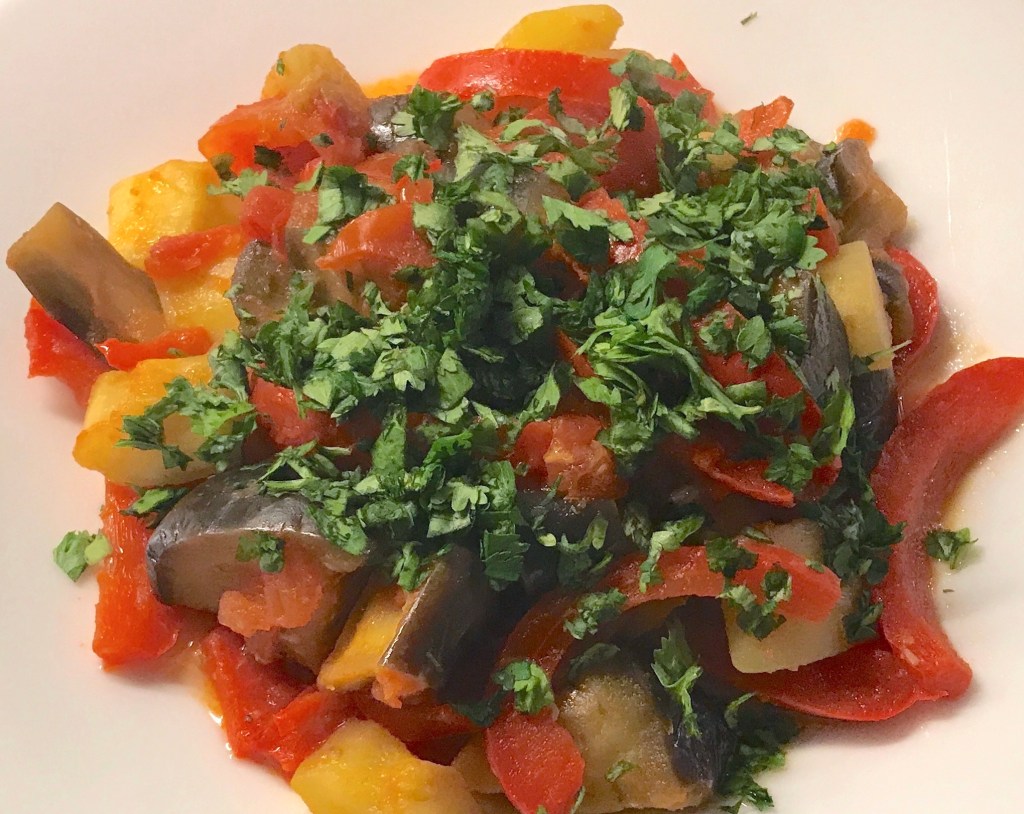
Ratatouille

Think summer vegetables, think Ratatouille! Which is also the title of a film released in 2007 about a rat called Remy with a passion for cooking. If you want to see how he prepares ratatouille then simply go to YouTube (or buy the DVD if you’re old fashioned like us).
Ratatouille brings back memories of summer, of the South of France, of the Mediterranean. It combines very well with a simple sausage, with lamb, with grilled chicken.
However you prepare your ratatouille, be sure to prepare it a day ahead. The taste becomes much more integrated after a day (or two) in the refrigerator. Unfortunately it doesn’t freeze well due to the eggplant.

Our recipe is very much the recipe of a dear friend. She taught us how to make ratatouille in her summer kitchen, overlooking the pool and the garden with herbs and vegetables. Indeed, fond memories.
To our surprise she added cilantro (you would expect thyme or basil) and many years later we are still grateful for this twist. The cilantro enhances the feeling of summer and it supports the various vegetables in a beautiful way.

Wine Pairing

We enjoyed our ratatouille with a glass of simple, red wine with lots of red and black fruits. Spicy with subtle tannins. A wine that brings summer to your glass.

What You Need (4 people)

  • 1 Eggplant or Aubergine
  • 1 Courgette or Zucchini
  • 1 Red Bell Pepper
  • 1 Chili Pepper
  • 4 Excellent Tomatoes
  • Cilantro
  • Olive oil

What You Do

Start by cutting the aubergine in small but not too small chunks. Drizzle with salt and mix. Let the mixture rest for a few hours, allowing for the aubergine to loose water and become firm. Best way to do this is by putting the aubergine in a sieve and let it rest above a bowl.
The tomatoes require some attention as well. You could peel them, but that’s optional. What is not optional is to separate the tomato meat and juices from the pits. First step is to remove the internal hard bits and the pits and put these aside. You now have the outer part of the tomato, which you can slice. Cut the remainder of the tomatoes roughly, add to a sieve and by using the back of a spoon make sure you capture the juices. Be surprised about the volume of tomato juice and the small amount of tomato bits and pits that remain in your sieve.

Cut the bell pepper into long slices and fry these in the pan with olive oil. Peel the courgette, slice in the way you sliced the aubergine and add to the pan. Continue frying. Add the finely chopped chilli pepper (not the seeds of course). Add the firm aubergine after having removed the remaining salt with water. After a few moments add the tomato chunks, fry a bit more, add the tomato juice and leave on low to medium heat for 60 minutes. Try not to stir too much; otherwise you risk creating mashed vegetables. Cool, set aside and store in the refrigerator.
The next day: if you have excess liquid, remove the vegetables from the liquid, reduce it until thickened and transfer the vegetables back into the pan. Otherwise gently warm the ratatouille, add some chopped cilantro, mix gently and add more cilantro just before serving.

Ratatouille ©cadwu
Ratatouille ©cadwu

Lentils with Cod and Cilantro

Lentils are healthy, easy to work with, not expensive, nutritious and high in fiber, protein and iron. Lentils have been around for a long time, so you would expect lentils to be popular, but for some reason they are not. Lentils can be used to prepare soups, salads, dahl, burgers, curry, biscuits (sablés) and so much more.
The three basic types are Green or Brown lentils, Red lentils and Black or Beluga lentils. Red lentils are often dehusked and then split, making them perfect for cooking soup.

In most cases we prefer Du Puy lentil from Sabarot because of their great taste and the fact that they hold their beautiful shape, even when cooked. Sabarot also produces lentil flour; ideal for biscuits, pancakes and waffles.

Beware of fake Du Puy lentils! They have names like ‘Le Puy lentils’ or ‘Dupuis lentils’. All nasty marketing. The real Du Puy lentils come with an Appellation d’Origine Controlee (Protected Designation of Origin).

Wine Pairing

We very much enjoyed a glass of Spanish Verdejo. In our case a bottle of Monteabellón Rueda 2019. In general wines made from the Verdejo grape combine very well with fish. The wine comes with the right acidity, giving freshness to the wine. It has floral aromas typical for the Verdejo grape. You may also recognize the aromas of banana and exotic fruit.

What You Need

  • Shallot
  • Olive Oil
  • Cilantro Seeds
  • Green, Du Puy or Beluga Lentils
  • Mild Fish Stock
  • Cod
  • Butter
  • Fresh Cilantro
  • White Pepper

What You Do

Chop the shallot (seize lentil) and glaze gently in olive oil. In the mean time check the lentils for small pebbles; wash them. Once the shallot is glazed, add the lentils and the crushed cilantro seeds. Heat for a few minutes, as you would do with risotto rice. Add the mild fish stock and leave to simmer on low heat for approximately 20 minutes, depending on the size (and your preference of course). In parallel fry the cod in butter in a non-stick pan. Just before the lentils are ready, add half of the finely cut cilantro to the lentils and mix.
Timing is all. The lentils should be cooked, all liquid evaporated and absorbed and the cod just done. Meaning the cod is opaque and the flakes can be separated easily. And overcooked meaning you can see those nasty small white bits of egg white and the fish becomes dry.
Serve the cod on top of the lentils and sprinkle some cilantro over the lentils and cod. Maybe add a touch of white pepper.

PS In case you think cilantro tastes like soap, feel free to replace the fresh cilantro with parsley. Cilantro seeds do not trigger the soap-like taste.

Asparagus with Basil and Olives

Al Fresco

Finally, summer is here (more or less) and the time is right for outdoor dining. You want to enjoy the evening so you’re looking for something you can prepare in advance. Given you’re eating al fresco you want something with powerful flavours and present aromas. A salad is nice, easy and too obvious. Tasty vegetables and ingredients that will make you think of summer. Of course! Olives, basil and asparagus.  Time to begin working on the mise en place.

Wine Pairing

Best to combine with a full bodied and elegant red wine. Flavour-wise you’re looking for red fruit and a touch of spiciness. We enjoyed our asparagus with a glass of La Tour Beaumont Cabernet Franc. This wine is from the Loire region and it is made by Pierre Morgeau, who was awarded the title of Wine Maker of the year 2019 by the renowned Guide Hachette. His focus is on the vineyards, the terroir and the environment in combination with a vinification as natural as possible.

What You Need

  • Asparagus
    • Equal Amount of White and Green Asparagus
    • Basil
    • Black Olives (preferably Cailletier or Taggiasca)
    • Olive oil
  • Meat Balls
    • 250 gram minced meat of Lamb
    • Cilantro
    • Mustard
    • 1 Egg
    • 1 Slice of Old Bread
    • Cumin
    • Pinch of Salt
    • Black Pepper

What You Do

Peel the white asparagus and cut of the end. Wash the green asparagus and cut of the end. Slice the asparagus in nice chunks (4 centimetres or so). Combine the asparagus with olive oil and a nice amount of black olives. Transfer to the refrigerator.
Toast the old slice of bread and let cool. Chop and transfer to the blender. You’ll now have home made chapelure. Beat the egg. Chop the cilantro. Combine all ingredients and create small meatballs. Store in the refrigerator. Mise en place done.
When ready for your al fresco dinner, heat your oven to 190˚ – 200˚ Celsius (or 375˚ – 390˚  Fahrenheit). Add a few basil leaves to the asparagus mixture and transfer to the oven. After 10 minutes mix and add more basil leaves. After again 10 minutes heat a heavy iron skillet and start frying the meatballs in olive oil. In parallel add more basil leaves to the asparagus and mix. After 10 minutes transfer the meatballs to a plate covered with kitchen paper. Add some basil leaves to the asparagus, mix and serve a generous amount of vegetables on a hot plate. Top with 5 meatballs.
PS Feel free to use green asparagus only. The dish will lose some of its bitterness and complexity but it’s still a great combination of flavours and aromas.

Pumpkin Soup

Pumpkin

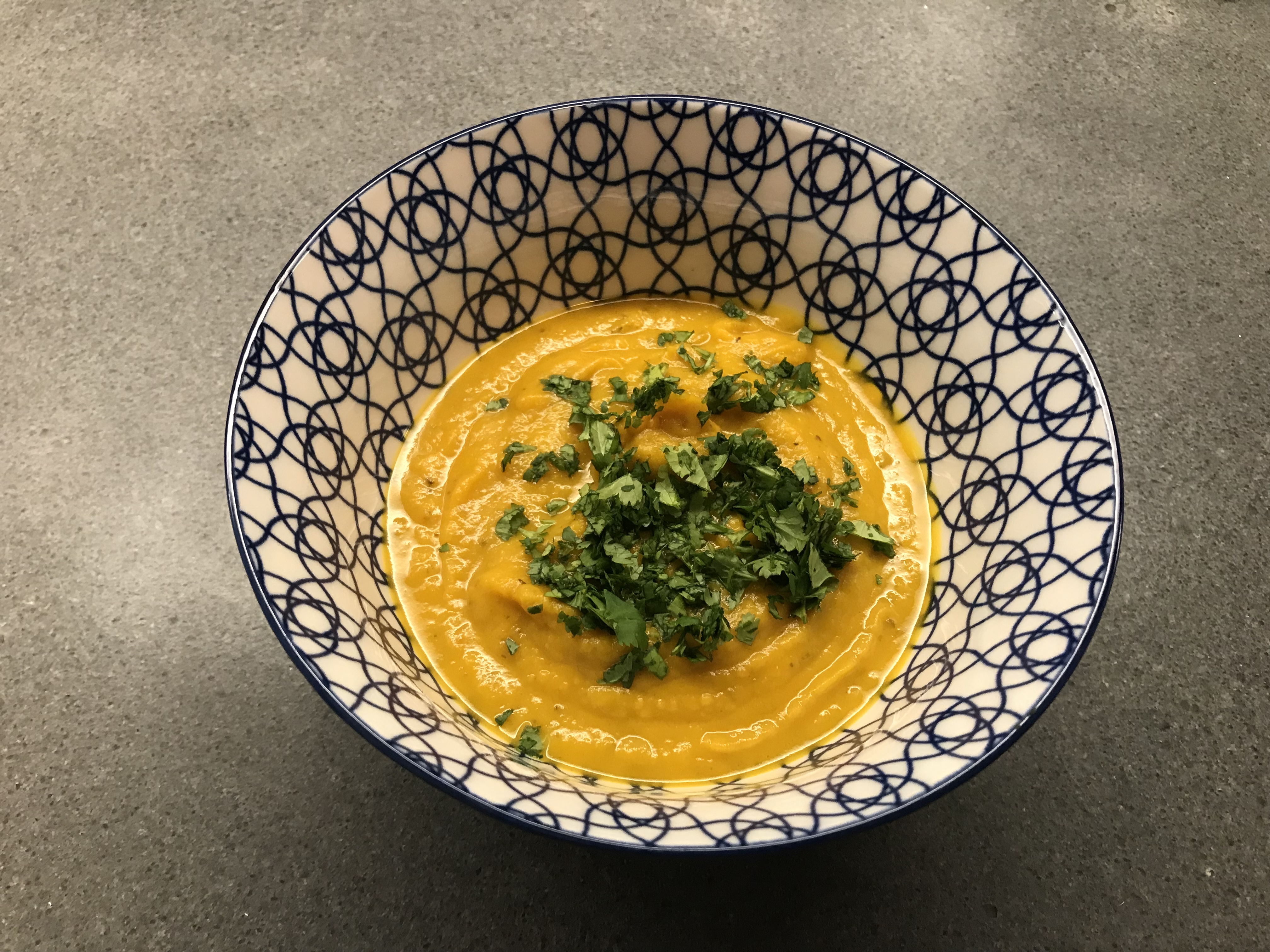
Such a simple, tasty, inexpensive and vegetarian soup! What more can you ask for? A bit of jus de truffe maybe?
Make sure to buy organic pumpkins. This allows you to use the skin; so two benefits: there is no need to peel the pumpkin and the soup will be better tasting.
Red lentils will become completely soft when cooked for 30 minutes; very different from green or black lentils. We add the lentils not only because of their taste, but also because they improve the texture of the soup.
Give the soup a finishing touch by adding pumpkin seed oil, jus de truffe or truffle flavoured olive oil (for instance produced by Moulins de la Brague).

Here is what you need

  • Small Pumpkin
  • Red Onion
  • Two Garlic Gloves
  • 6 cm Fresh Ginger
  • 2 Chilli Peppers
  • Tablespoon or more Red Lentils
  • Water
  • Olive oil
  • Pumpkin Seed Oil, Jus de Truffe or Truffle Flavoured Olive Oil
  • Cilantro

Chop de red onion in smaller but equal sized bits and put in a pan with olive oil. Put on moderate heat and give it some 5 to 10 minutes. Now add the chopped and seeded chilli pepper, the garlic and stir. Continue for 5 minutes on moderate heat. Add the chopped pumpkin and the lentils and stir for another 5 minutes. Peel the ginger, cut in cubes and put on a small wooden stick. This way you can easily remove the ginger later on. Now add boiling water and leave for 30 minutes to simmer or until the pumpkin is very, very soft.
When done remove the ginger. Taste the ginger and decide how much ginger you want to add to the soup. We just love fresh ginger so we would add most of it. Blender the remainder into a smooth soup. You could pass it through a sieve to make sure it’s like a lovely velouté. Cool and transfer to the refrigerator for the next day.
Warm the soup and add a splash of truffle flavoured olive oil or pumpkin seed oil and lots of cilantro before serving.
You can also make a milder version by reducing the amount of chilli and ginger. Then add jus de truffe, a bit of olive oil and maybe some pepper before serving.

Pumpkin Soup © cadwu

A Classic for you – 1

Ratatouille

Think summer vegetables, think Ratatouille! Which is also a comedy released in 2007 about a rat called Remy with a passion for cooking. If you want to see how he prepares ratatouille then simply enter Remy cooks ratatouille as search term in YouTube (or buy the DVD if you’re old fashioned like us).
Ratatouille brings back memories of summer, of the South of France, of the Mediterranean. Or for some, of their youth. It combines very well with a simple sausage, with lamb, with grilled chicken.
However you prepare your ratatouille, be sure to use courgette or zucchini, aubergine or eggplant, tomato and bell peppers. Also make sure you prepare it a day ahead. The taste becomes much more integrated after a day (or two) in the refrigerator.
Our recipe is very much the recipe of a dear friend. She taught us how to make ratatouille in her summer kitchen, overlooking the pool and the garden with herbs and vegetables. Indeed, fond memories.
To our surprise she added cilantro (you would expect thyme or basil) and many years later we are still grateful for this twist. The cilantro enhances the feeling of summer and it supports the various vegetables in a beautiful way.

We enjoyed our ratatouille with a glass of simple, red wine with lots of red and black fruits. Spicy. A wine that brings summer to your glass.

Here is what you need:

  • Aubergine
  • Courgette
  • Red Bell Pepper
  • Chili Pepper
  • Tomatoes
  • Cilantro
  • Garlic (optional)
  • Olive oil

If you combine 1 of each, with the exception of 3 tomatoes, this will serve 4 people.
Start by cutting the aubergine in small but not too small chunks. Drizzle with salt and mix. Let the mixture rest for a few hours, allowing for the aubergine to loose water and become firm. Best way to do this is by putting the aubergine in a sieve and let it rest above a bowl.
The tomatoes require some attention as well. You could peel them, but that’s optional. What is not optional is to separate the tomato meat and juices from the pits. First step is to remove the internal hard bits and the pits and put these aside. You now have the outer part of the tomato, which you can slice. Cut the remainder of the tomatoes roughly, add to a sieve and by using the back of a spoon make sure you capture the juices. Be surprised about the volume of tomato juice and the small amount of tomato bits that remain in your sieve.
Peel the courgette, slice in the way you sliced the aubergine and fry over medium heat in olive oil. In the mean time cut the bell pepper into long slices and add these to the pan. Continue frying. Add the finely chopped chilli pepper (not the seeds of course). Add the firm aubergine after having removed the remaining salt with water. After a few moments add the tomato chunks, fry a bit more, add the tomato juice (and the optional garlic) and leave on a medium heat for 30 minutes. Try not to stir too much; otherwise you risk creating mashed vegetables. Cool, set aside and store in the refrigerator.
The next day gently warm the ratatouille, add some chopped cilantro, mix and add more cilantro just before serving.