Mushroom Tapenade

Years ago our favourite green grocer was the shop of Joop and Trudi Petersen, close to Amsterdam’s China Town. Not only did they sell the tastiest vegetables, fruit and mushrooms, but they also sold homemade mash (the one made with potatoes and rapini (or broccoli rabe) was wonderful), desserts, ravioli with pumpkin and Trudi’s mushroom tapenade. When Joop turned 65 in 2008 they retired and closed the shop. Obviously, we asked for the tapenade recipe, but alas, all we got was a nice, friendly smile.

In our post about the Mushroom Book by Michael McLaughlin and Dorothy Reinhardt (Illustrator) we mentioned that the recipe for Mushroom Tapenade is amongst our favourites. His tapenade is a combination of mushrooms, garlic, various herbs, red wine, anchovies, black olives and capers. Very nice, tasty and powerful, but not as delicious as Trudi’s version.

Mushroom tapenade comes with lots of umami, thanks to the mushrooms and the olives. Thinking back of Trudi’s tapenade, we’re pretty sure she enhanced the umami flavor, probably by adding some oyster sauce from the toko next door. We think that the recipe below is very close to what she created.

What You Need

  • Fresh Button Mushrooms and Shiitake (ratio 2:1)
  • 2 Garlic Cloves
  • Olive Oil
  • Thyme and Rosemary
  • White Wine
  • Black Olives
  • Excellent Olive Oil
  • Black Pepper
  • Half a teaspoon of (Thai) Oyster Sauce

What You Do

Don’t use dried mushrooms. In general they have a nasty, bitter taste, not even close to the flavor, aromas and textures of fresh mushrooms.

  1. Clean and chop the mushrooms.
  2. Finely chop the rosemary, the thyme and the garlic.
  3. Fry the mushroom in olive oil in a heavy iron skillet.
  4. Reduce heat, add herbs and garlic.
  5. After 10 minutes add a splash of white wine.
  6. Continue on low heat and wait until the wine and juices have evaporated. No rush.
  7. Transfer the mushroom mix to a plate, let cool
  8. Chop a few black olives and add these to the mix.
  9. Transfer to a kitchen aid and on low-speed start adding excellent olive oil. The result should be a tapenade, so not smooth and not oily.
  10. Add black pepper to taste.
  11. Add a small amount (1/4 teaspoon to begin with) of (Thai) Oyster Sauce. Be very careful, it should only enhance the umami.
  12. Store in the refrigerator for at least one day before using.

Hilaire Walden

Some chefs love the limelight, some prefer to stay in the background, focusing on cooking and writing. Hilaire Walden is clearly one of them. 

She is author of some 40 books and she has written for prestigious magazines and newspapers about food, cooking and restaurants. She wrote The Great Big Cookie Book, The Book of Tapas and Spanish Cooking, the Book of French Provincial Cooking, The Singapore CookbookQuick After Work Summer Vegetarian CookbookThe Book of Fish and Shellfish and more recently I Love My Barbecue. Indeed, a broad culinary spectrum!

The Loire

One of our favourites is Loire Gastronomique. In this book she follows the course of the French river and describes the various regions, local products, local recipes and of course the wines that go with it. Cheese, cookies, pies, everything. The Loire region is known as the Garden of France. In this garden you’ll find wonderful castles (Azay-le-RideauChambordChinon), great wine (MuscadetSancerrePouilly-Fumé) and beautiful food (asparagus, lots of fruit, artichokes and of course Lentille Verte du Puy). The book is inspiring and it will make you dream of a walk along the Loire, with a view on Amboise and a glass Crémant de Loire in your hand.

Recipes

One of the benefits of Hilaire Walden’s recipes is that they are always correct. Sounds odd, but as we all know, unfortunately, often recipes are simply not complete or correct.
If you prepare a dish for the first time, simply follow her instructions and you’re fine.

She started publishing books around 1980, so perhaps your favourite book will be second hand, but don’t worry, it will not be outdated.

Mirepoix

A combination of three ingredients that is essential when preparing stocks, stews and sauces: onion, carrot and celery (ratio 2:1:1). It’s intriguing that this combination works so well. All three bring sweetness when cooked, the combination is balanced and it brings depth to the result.

The celery could be a bit confusing: should it be celeriac, the root (knob) or celery, the fibrous stalks? Some suggest using the root in winter and the stalks in summer. We suggest using the stalks in all cases. They are very aromatic and they come with a touch of saltiness, very different from the root.

When for instance you want to make a beef stew, then first sear the beef, remove it from the pan, perhaps add some oil or butter and then add the mirepoix. Leave to simmer on low heat for 15 minutes or so or until soft. It’s all about creating flavours and aromas. Make sure you don’t brown the mirepoix. 

Another approach is to add it to (cold) water. This works well when making a white stock. And of course, when you want to make a powerful, tasty vegetable stock.

What You Need

  • 1 Large Onion
  • 3 Celery Stalks
  • 1 Carrot
  • 1 Leek
  • 1 Small Tomato
  • 2 Garlic Cloves
  • 1 Bouquet Garni (Parsley, Bay Leaf, Thyme)

What You Do

In the Netherlands an extended version of Mirepoix is fairly standard: onion, carrot, celery and leek (ratio 1:1:1:1) , also known as WUPS (Wortel, Ui, Prei en Selder). We prefer this version because the leek seems to bring extra flavours. Or perhaps because we’re Dutch?
Clean and dice the celery, the carrot, the leek and the tomato. Peel and chop the onion and the garlic. Add all ingredients and the bouquet garni to a pan with cold water and allow to simmer for one hour or so. Pass through a sieve and decide if you want to reduce the liquid. It freezes very well, so ideal to make ice cubes for use in sauces.

Mirepoix ©cadwu
Mirepoix plus extra ingredients for vegetable stock ©cadwu

In the Kitchen with Alain Passard

It’s not often that we enjoy reading a cookbook from cover to cover. In the Kitchen with Alain Passard: Inside the World (and Mind) of a Master Chef is such an exception.
During a period of three years, illustrator Christophe Blain followed three-star Michelin chef Alain Passard through his kitchens and gardens. The result is a wonderful, funny, graphic cookbook that shows not only beautiful, colourful food and the way it’s prepared, but above all it shows the world and kitchen of a chef.

Vegetables

Around 1998 Alain Passard decided to focus on preparing and serving vegetables in his Parisian restaurant, L’Arpege. He set up two organic gardens, making sure he can cook with excellent, seasonal ingredients. Nowadays L’Arpege offers a inspiring menu with vegetables at the centre, but also room for lobster, chicken and duck. Take some time to browse his website and enjoy the wonderful pictures and combinations. Impressive, isn’t it?

Drawings

Unfortunately dining at L’Arpege is a well above our budget, so once in a while we open this wonderful book (published in 2013) and smile when reading the illustrated dialog between the Chef and the Illustrator. As if you can hear them talk about a dish that is being prepared by the Chef!
The drawings are simple, subtle, lively and colourful. They perfectly visualise the dining room, the reaction of the guests when tasting the dish, the movements of the Chef, his kitchen staff and the waiters.

Recipes

Then we start preparing one of the 15 recipes, for instance his Potato Paillasse with Sage and young Garlic or his combination of carrots, cinnamon and basil. We’re probably not even close to the dish as served at L’Arpege, but we’re enjoying it immensely.

Alain Passard speeches after having received the Johannes van Dam Prize 2019 © cadwu

Pumpkin Soup (with Kombu Dashi)

It’s autumn, so obviously we want to cook pumpkin soup. A nice and warm combination of pumpkin, ginger, chilli and orange lentils for instance. Or with Jus de Truffe for a bit of extra umami and exclusivity.  Both are excellent vegetarian dishes, perfect for lunch with some crusted bread or as a starter.
Having recently prepared kabocha with shrimps, we decided to prepare a vegetarian soup with it. The basis of the soup is Kombu Dashi (made with dried Kelp). The dashi and the soy sauce bring saltiness and umami to the soup, which combines very well with the exceptional sweetness of the pumpkin and the mirin.

You could prepare the soup with the skin of the kabocha, but we love the intense orange colour of the inside.

What You Need

  • 20 grams of Kelp
  • 1 litre Water
  • 1 Kabocha
  • Light Soy Sauce
  • Mirin
  • Purple Shiso

What You Do

Add the kelp to one litre of cold water. Put on low heat and wait until it has reached 80 °C or 175 °F. Overheating it will make the dashi bitter. In the meantime, wash and peel the kabocha, remove the seeds and dice. Remove the kelp from the pan, discard and add the kabocha. Allow to simmer on low heat for 20-30 minutes until the kabocha is soft. Remove some of the liquid and blender the kabocha. Add liquid until you have the right consistency. In our experience you will need one litre of water to cook the kabocha but it might be too much liquid for a nice, velvety consistency of your soup. Add 2 or 3 tablespoons of mirin and 1 or 2 tablespoons of light soy sauce.  It’s a matter of your preference, ripeness of the kabocha and the kelp.
Best to decorate with some purple shiso, or with sprouts (as we did), provided they’re not too spicy.

The Art of Sauces: Modern Tomato Sauce

We love a good sauce: it supports the flavours, it adds complexity to the dish and it brings components together. Orange sauce with duck, Béarnaise with beef, Sauce Mornay on a Croque Monsieur: the sauce is the key to the dish.

Marie-Antoine Carême (1784 – 1833) was the first chef to analyse sauces and create a classification. He identified four leading (mother) sauces and described how other sauces could be derived from these four. His four leading sauces are Espagnole (made with brown roux, roasted bones and brown stock), Velouté (white roux and light (veal) stock), Béchamel and Allemande (light roux with veal stock and thickened with egg yolks and cream). If for instance you want to make a Pepper Sauce, then you start by making a Sauce Espagnole.

Auguste Escoffier (1846 – 1935) refined the classification and replaced Sauce Allemande with Sauce Tomate as leading sauce. Later Hollandaise and Mayonnaise were added to the list of main sauces.

Sauce Tomate as prepared by Carême and Escoffier is very different from the sauce we use on pizza’s and pasta’s. It’s made with salted pork, veal stock, bones, various aromatic vegetables and of course tomatoes. Among the derived sauces are Sauce Portuguese and Sauce Provençal.
Next week we will share the Classic way of cooking Sauce Tomate in detail; today we share our modern (vegetarian) recipe.
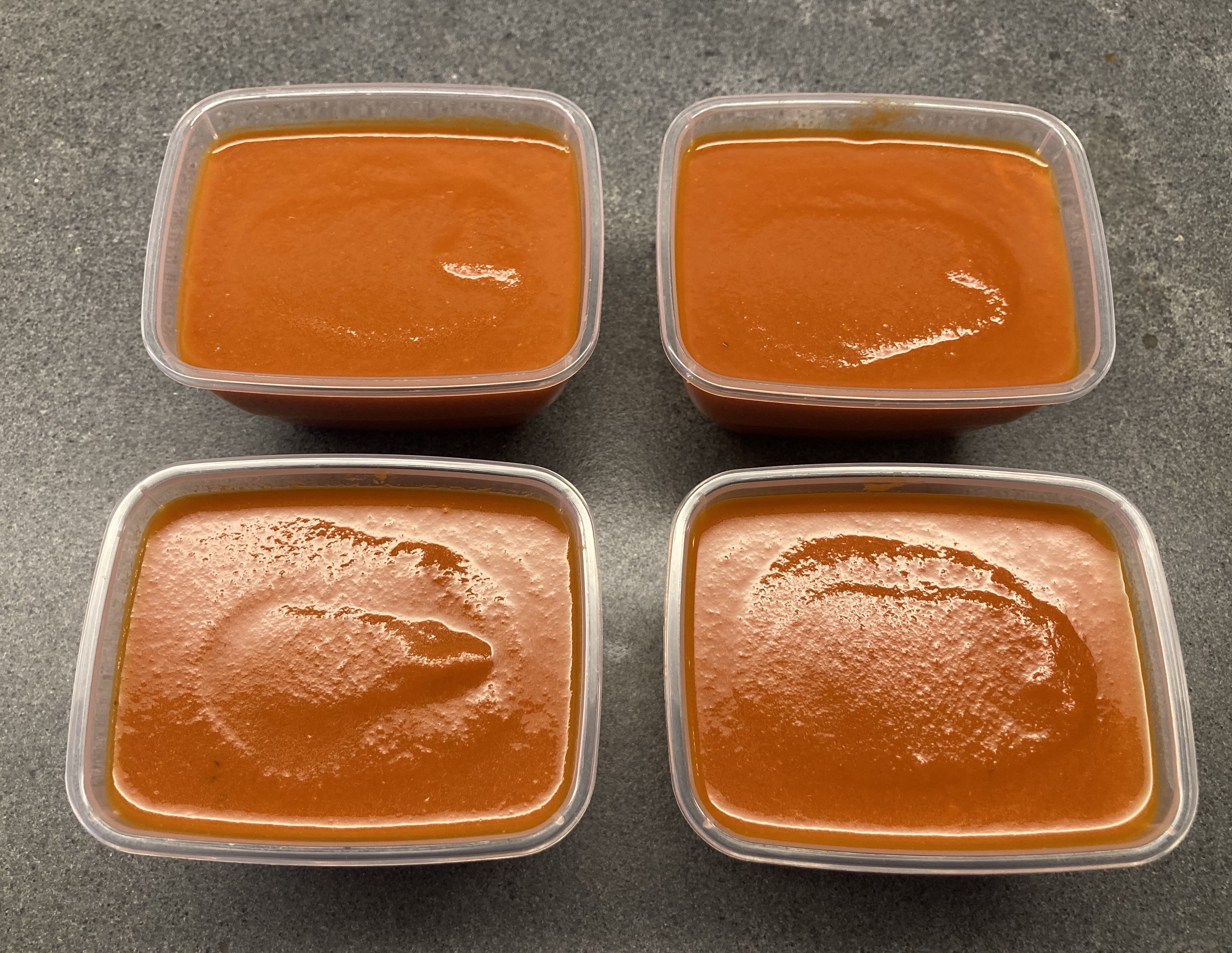
The sauce freezes very well, so ideal to make a nice quantity.

What You Need
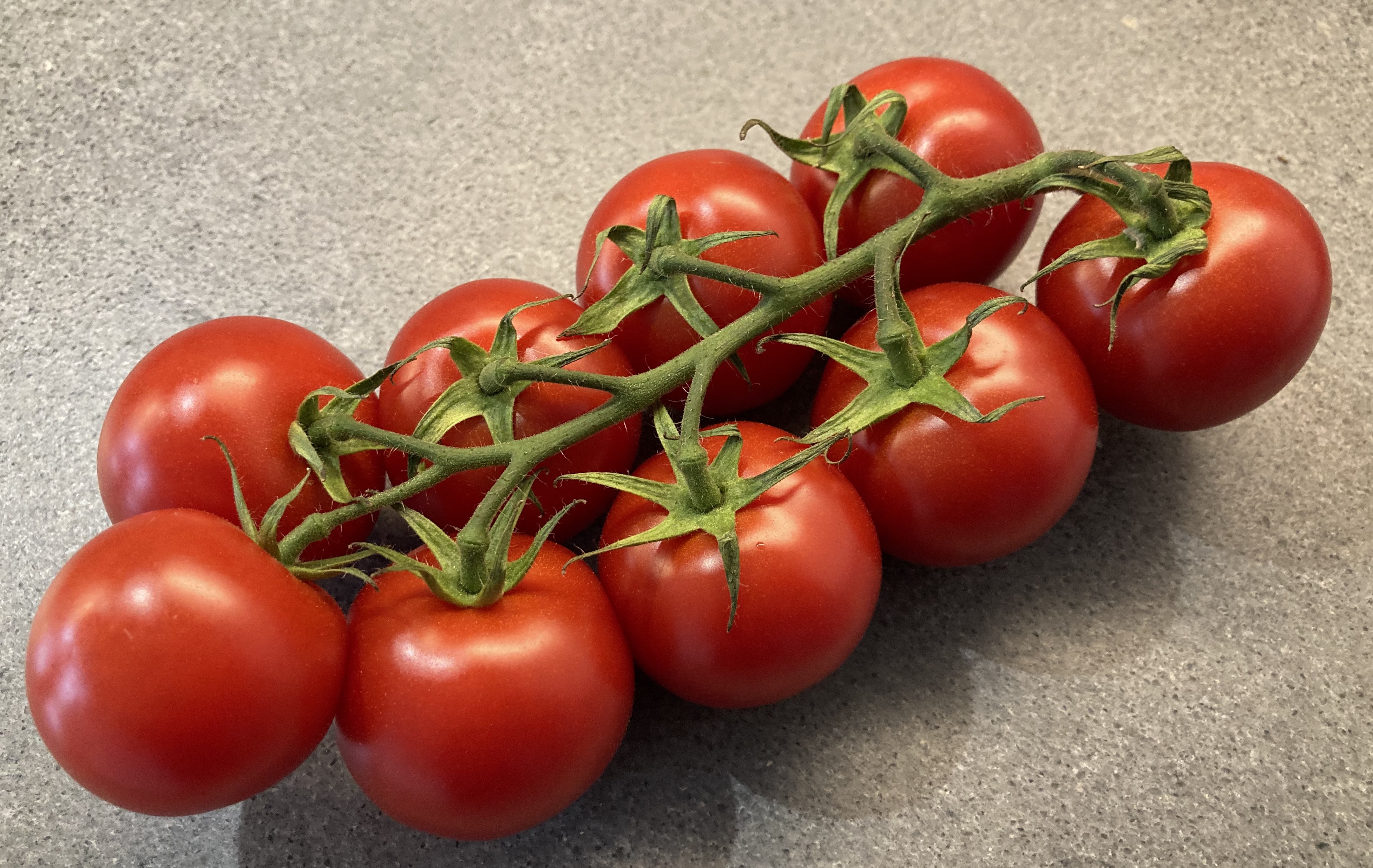
  • 4 – 6 Excellent Ripe Tomatoes (depending on the size)
  • 1 Red Bell Pepper (preferably grilled and peeled)
  • ½ Chilli
  • 1 Onion
  • 1 Garlic Clove
  • Olive oil
  • 1 Glass of Red Wine
  • Bouquet Garni (Parsley, Thyme, Rosemary, Bay Leaf)
What You Do
  1. Wash the tomatoes and slice in chunks
  2. Peel the onion and chop
  3. Add olive oil to the pan and glaze the onion for 10 minutes or so
  4. Stir and add the sliced bell pepper and the sliced and seeded chilli
  5. Let cook on medium heat for 5 minutes or so
  6. Reduce heat
  7. Add the chopped garlic clove
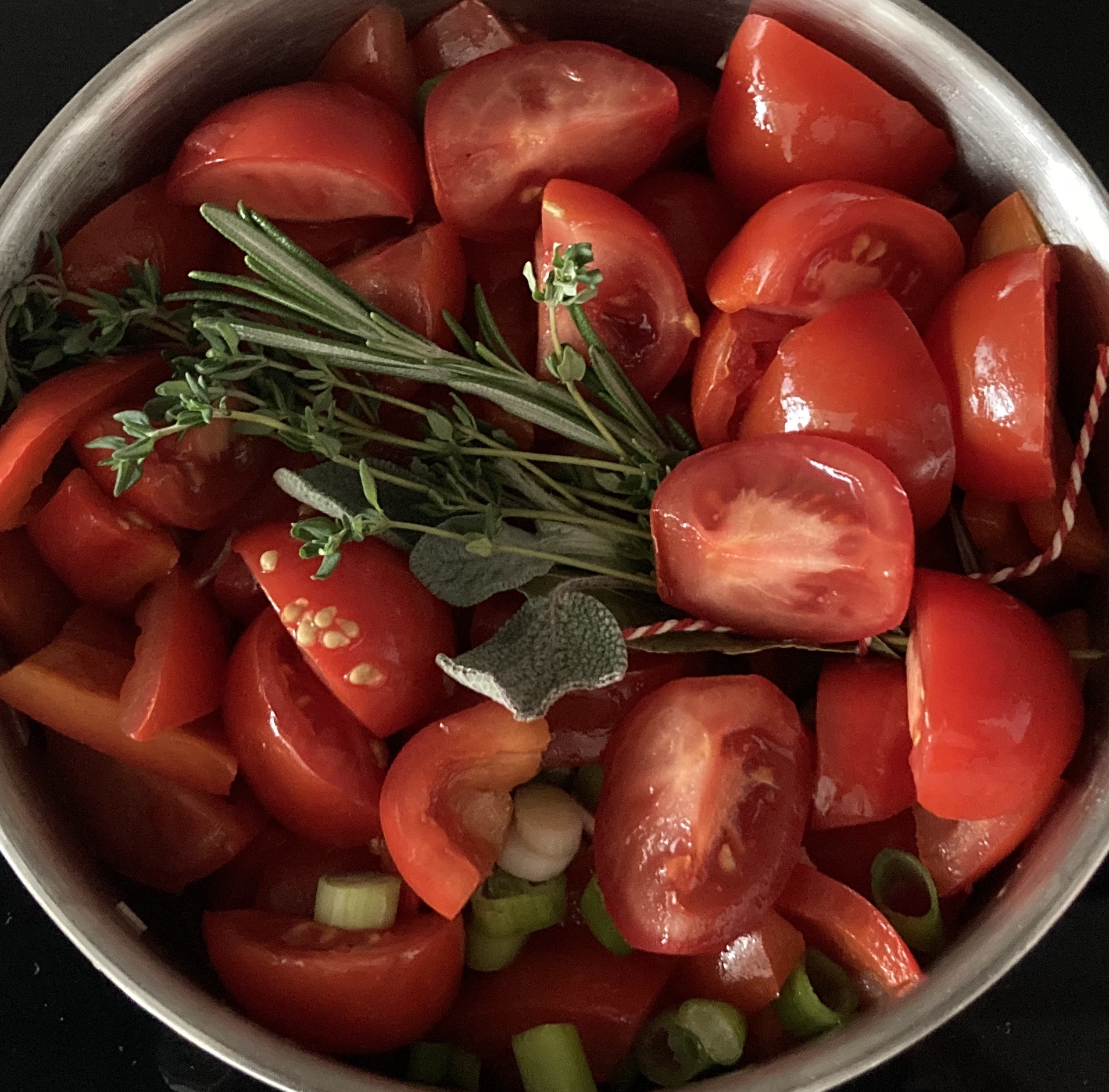
  8. After 5 minutes or so add the sliced tomatoes, the red wine and the bouquet garni
  9. Leave for 2 hours minimum to simmer
  10. Remove the bouquet garni and blender the mixture
  11. Pass through a sieve and leave to simmer for another 2 hours
  12. Cool and transfer to the refrigerator or freezer.
PS Grilling a Bell Pepper
  1. slice the pepper in large slices
  2. Set your oven to grill or broil, put a sheet of aluminium foil on the baking tray, put the slices on the foil, skin up and transfer to the oven, as close to the grill as possible
  3. Wait for 10 minutes or until the skin is seriously burned
  4. Transfer the slices to a plastic container and close the lid.
  5. Wait for an hour
  6. Use your fingers and perhaps a knife to peel of the skin
  7. Store the bell pepper and the juices in the refrigerator
  8. The taste is deeper and sweeter compared to raw bell pepper.

Pâté with Mushrooms

Let’s celebrate the season by preparing a Pâté! The combination of a crispy crust, a structured, colourful filling and various flavours is always a pleasure. Making a pâté (or better: a Pâté en Croûte) can be a bit intimidating (especially if you look at the pâté’s prepared during the World Championship!) but that should not stop you from giving it a try. It’s a pleasure to think about the ingredients, work on the construction and enjoy the wonderful aromas from your oven while baking the pâté. And the joy when slicing it: is the pâté as beautiful as you expected it to be?
Feel free to make your own puff pastry, but if you buy ready-made pastry, please check it’s made with butter, flower, salt and water only and not with rapeseed oil, palm oil, yeast etcetera.

Wine Pairing

A red, medium bodied wine will be a great accompaniment of this Pâté en Croûte. In general you’re looking for a red wine with aromas of black fruit, floral notes and delicate wood. The tannins should be soft or well-integrated. We enjoyed a glass of Pinot Noir from La Cour Des Dames

What You Need

  • 150 grams of Cèpes
  • 250 grams of Champignon de Paris
  • 1 small Shallot
  • Handful of Spinach
  • Half a cup of Rice
  • Parmesan Cheese
  • Parsley
  • One Egg
  • Puff Pastry
  • Black Pepper

What You Do

Start by cooking some rice, you will probably need a tablespoon of cooked rice. Clean the cèpes and see how they best fit in the pâté baking mould. Perhaps you need to trim the stems or the caps to have the best result when it’s ready. Set the cèpes aside.
Clean the champignons and wash the spinach. Peel and finely chop the shallot. Warm a heavy iron skillet, glaze the shallot, add the cleaned and lengthwise halved mushrooms (and the leftovers of the cèpes) and cook them on medium heat for 10 minutes or so. In parallel blanch the spinach, drain and squeeze. Also in parallel, coat the mould first with baking paper and then with puff pastry. Make sure you have some extra pastry to create the lids for the chimneys. Chop the cooked mushrooms. Chop the spinach. Add the egg to a large bowl and whisk. Add the cooked mushrooms to the bowl, add some black pepper, chopped parsley and finely grated Parmesan Cheese. Add some spinach, just to have some extra colour. Add the rice. The rice will help absorb additional juices from the cèpes, so how much rice you need is a matter of looking at the mixture and the cèpes.

Now it’s time to build the pâté: start by creating a bottom with the mixture, position the cèpes and add the remainder of the mixture. Make sure the mixture envelops the mushrooms. Close the pâté with the pastry. Make two holes in the roof of the pâté and use baking paper to create 2 chimneys. Transfer to the oven (180 °C or 355 °F) for 45 minutes. Use the remainder of the puff pastry to make 4 mini cookies that will function as lid on the chimney (of course, you only need 2, but baking 4 allows you to choose the best). After 45 minutes add the 4 cookies, bake for another 10 minutes. Mix some egg yolk and coat the pâté and the cookies. Cook for another 5 to 10 minutes. The duration and temperatures very much depend on the shape of the mould and the pastry.

Transfer from the oven, remove the chimneys, glue the lids on the chimneys using some egg yolk and let cool. Once cool, remove from the mould, transfer to the refrigerator and wait until the next day. 

Raspberry Vinegar

Many years ago, we had the pleasure of being regular guests at the Auberge des Seigneurs in Vence, France. In those days the restaurant offered a wide range of beautiful dishes from the days of King François I, such as blue trout, roasted chicken, quail with Pruneaux d’Agen and tender lamb cooked on a spit before an open fire in the dining room.
Ah, Madame Rodi, we treasure these evenings, the beautiful food, the local wine, your dog (known to regular guests as monsieur Tim) and your infinite hospitality. We also remember your wonderful Coca Cola Light, which you would serve after dinner. It came in a huge Biot bottle and to the surprise, astonishment, shock of most of your new guests it was everything but light. It was a strong grappa with Boutons de Fleur d’Oranger (orange blossom buds). We can still see the broad smile on your face when yet another guest would take too big a sip of your powerful concoction.

Adding fruit can be a disastrous idea (just think about strawberry tea or sole Picasso) but the touch of acidity of raspberries makes them ideal to combine with vinegar. We follow Madame Rodi’s approach when making raspberry vinegar: simply combine the two and enjoy.

Use the raspberry vinegar wisely, for instance combine it with strong flavours, preferably umami. We use it in our favourite autumn salad with Porcini and Smoked Duck. The colour, the aromas, the taste: the vinegar and the raspberries integrate perfectly.

What You Need

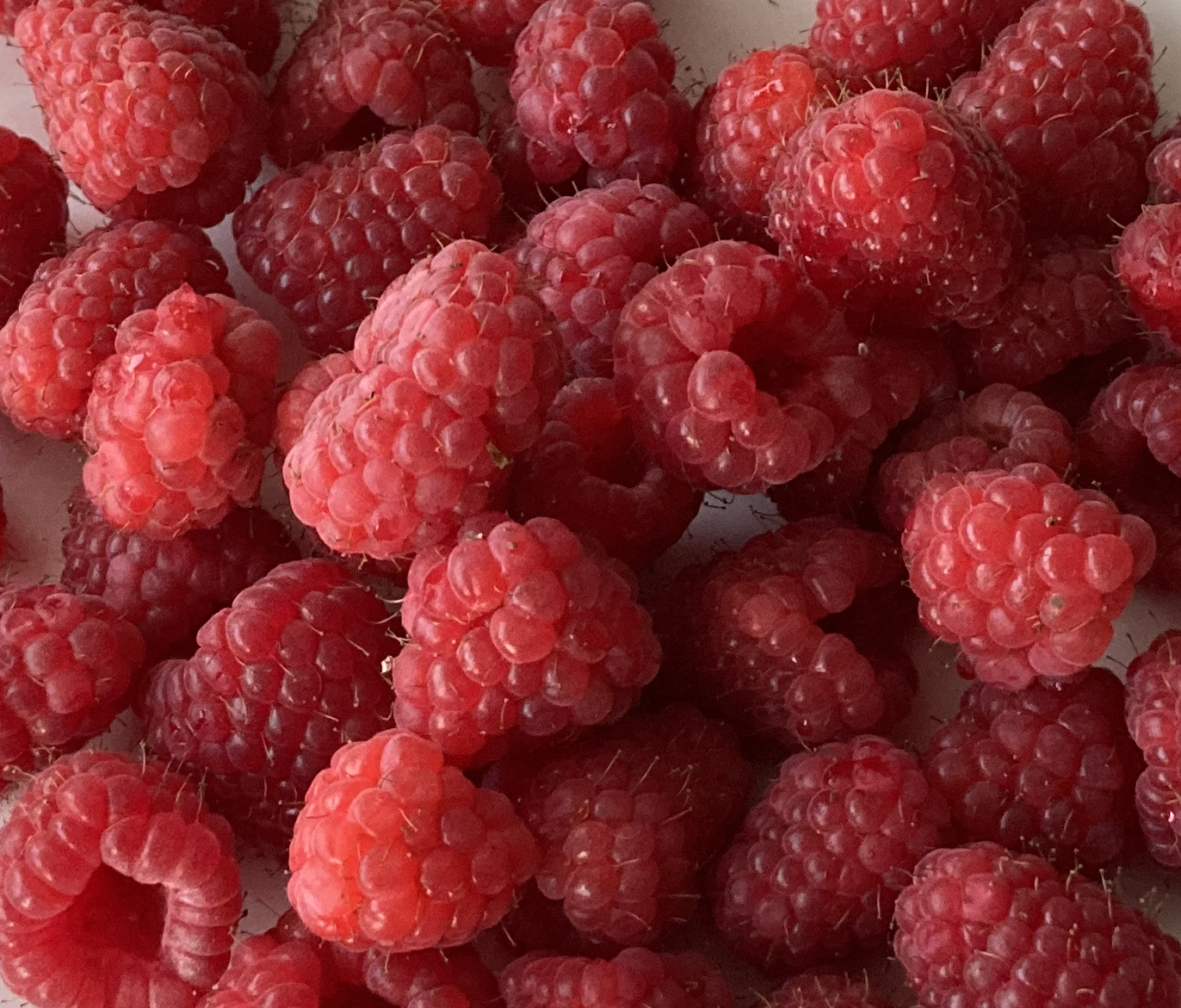
  • 250 grams of Excellent Organic Raspberries
  • 250 ml White Vinegar

What You Do

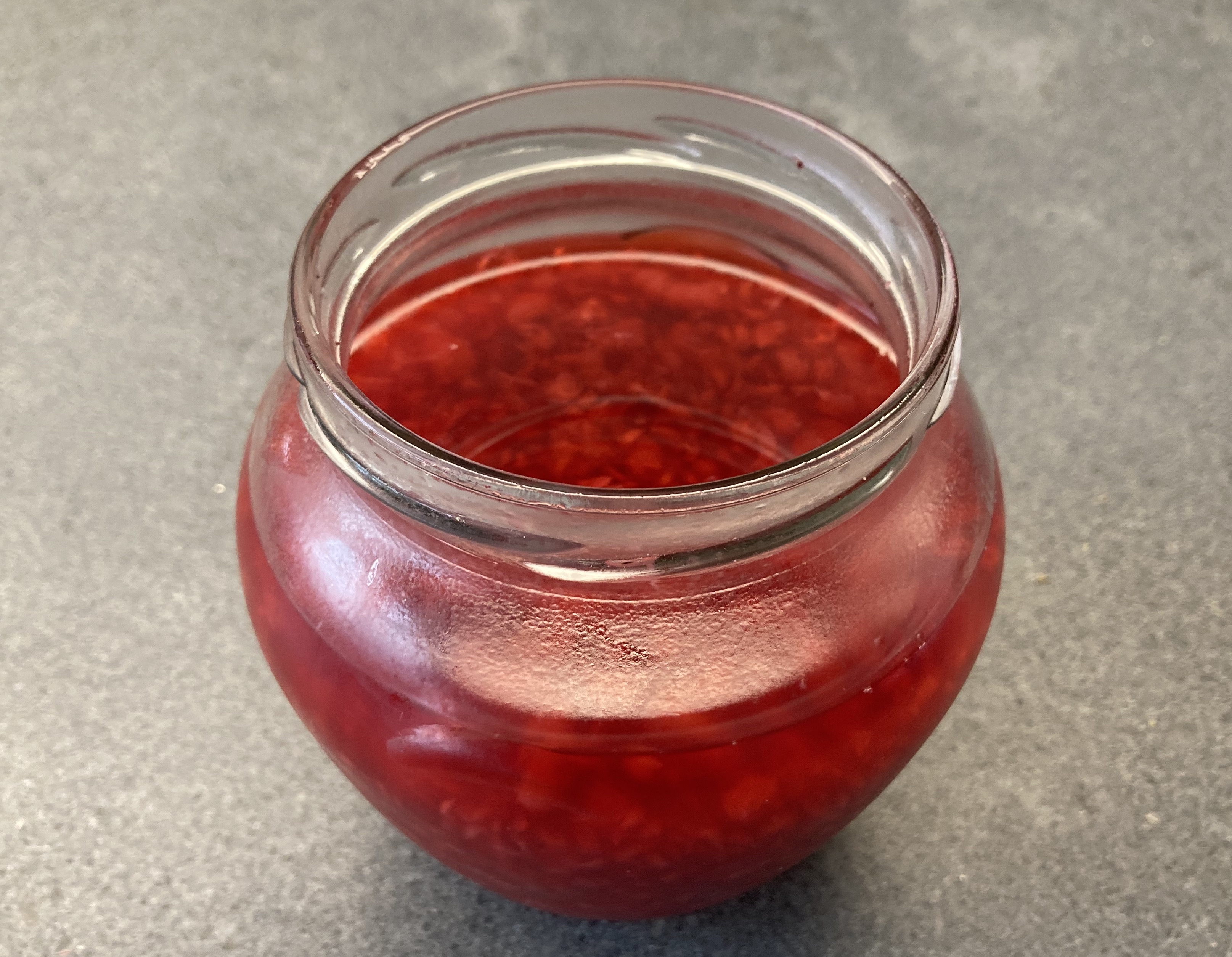
Clean the raspberries, crush them with a fork and combine with the vinegar. Put in a jar and transfer to the refrigerator for one week, making sure to stir at least once a day.
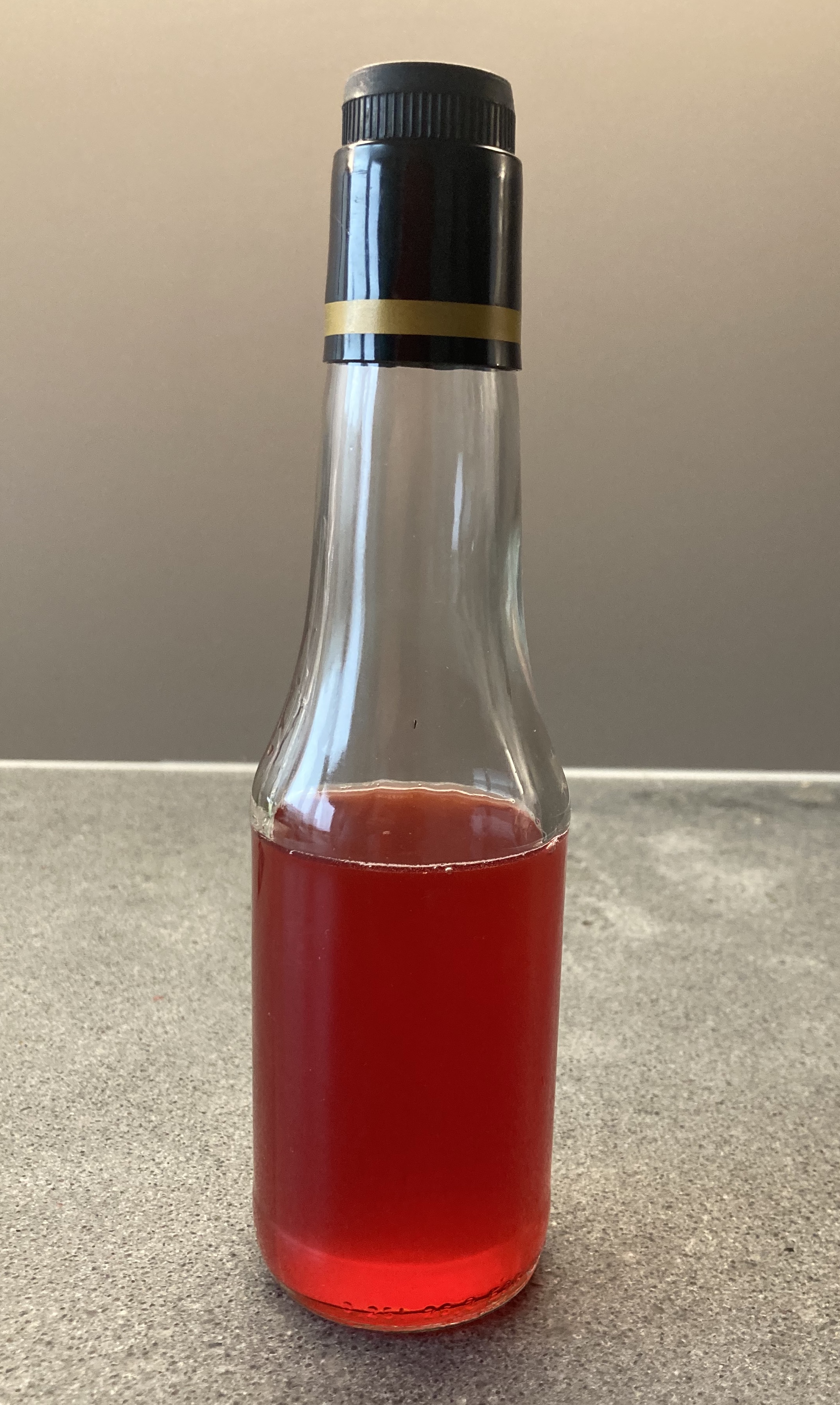
Pass the mixture through a sieve, applying light pressure only. Pass the vinegar through a white cloth, squeeze very gentle. The result is probably a bit cloudy, so leave for a few days before using.

Tomato Confit

A few years ago it was the obvious garnish to nearly every dish: oven roasted cherry tomatoes, preferably on the vine. It looks and tastes nice plus it is easy to make. Just heat your oven to 180 °C or 350 °F, add the tomatoes to a baking dish, sprinkle with salt, olive oil and 30 minutes later they’re ready to serve. When cold you can add them to a salad or a sandwich with soft cheese (mozzarella, burrata, ricotta). An alternative is to halve the tomatoes, sprinkle with salt and quickly roast and dry them in the oven. Another tasty result.

We prefer a slow alternative: Tomato Confit. The idea is that the skin doesn’t crack, so the tomatoes remain intact, and at the same time they absorb the flavours of the oil, herbs and garlic. The result is not just a great sweet and juicy tomato, it’s a taste explosion!

We use Tomato Confit to brighten up a simple pasta or salad, or a more complex dish like Lobster Mushroom with Udon.

What You Need

  • Excellent Cherry Tomatoes
  • Olive Oil
  • Rosemary
  • Thyme
  • 2 Garlic Gloves

What You Do

Wash and dry the tomatoes and add these to a baking dish. Chop the garlic. Add herbs, garlic and a generous amount of olive oil to the dish. No salt, honey or sugar required. Put in the oven for something like 2 hours on 90 °C or 200 °F. You could baste the tomatoes once or twice. Don’t forget to use the cooking liquid as well, it’s another pack of flavours!

  • Tomato Confit ©cadwu
  • Fresh Tomatoes ©cadwu

Cold Soup: Ajo Blanco

It’s September, time fo buy fresh almonds, walnuts and hazelnuts; time to make Spanish Almond Soup. It’s made of white almonds, water, old bread, garlic, olive oil, vinegar and perhaps a pinch of salt. And trust us, there is no need to add anything else. No cucumber, green apples, jalapeño, chicken stock, pepper, flowers, white grapes, milk, aioli, Balsamic vinegar, raisins, cream, yoghurt, pine nuts or melon. We love creativity, but the ingredients people suggest to brighten up Ajo Blanco, it’s amazing. Especially because there is no need to add anything to the original.

Mention Ajo Blanco and someone will say ‘white gazpacho’. Because both are cold soups, because both are from Spain? We can’t think of any other reason, so please, please don’t even think about gazpacho when you serve Ajo Blanco.

What You Need

  • 70 gram White Almonds
  • 200 ml ice-cold Water
  • 30 gram old stale White Artisanal Bread without the crust
  • 1 medium Garlic Clove
  • 1 tablespoon Jerez Vinegar
  • Pinch of Salt
  • 70 ml Olive Oil
  • 10 gram of Roasted Almonds

What You Do

Buy excellent almonds, so not the soft, bland ones from the supermarket. Start by very, very lightly roasting the white almonds in a dry non-stick pan. Let cool. Soak the bread for 10 minutes. Roughly chop the garlic. Using a heavy blender or food processor whizz the almonds, the garlic and some of the water until nearly smooth. Squeeze out the bread. Add bread and remaining water to the mixture. Continue blending. Add vinegar and salt. Check the mixture for taste and smoothness. It should be very smooth, cream like; this may take 1 minute on turbo! When happy with both smoothness and taste, slowly add olive oil with the blender running on low speed. Transfer the mixture to the refrigerator for at least two hours. Also cool the bowls you want to use.
Just before serving crush some roasted almonds and sprinkle these on the soup.