Tomato Confit

A few years ago it was the obvious garnish to nearly every dish: oven roasted cherry tomatoes, preferably on the vine. It looks and tastes nice plus it is easy to make. Just heat your oven to 180 °C or 350 °F, add the tomatoes to a baking dish, sprinkle with salt, olive oil and 30 minutes later they’re ready to serve. When cold you can add them to a salad or a sandwich with soft cheese (mozzarella, burrata, ricotta). An alternative is to halve the tomatoes, sprinkle with salt and quickly roast and dry them in the oven. Another tasty result.

We prefer a slow alternative: Tomato Confit. The idea is that the skin doesn’t crack, so the tomatoes remain intact, and at the same time they absorb the flavours of the oil, herbs and garlic. The result is not just a great sweet and juicy tomato, it’s a taste explosion!

We use Tomato Confit to brighten up a simple pasta or salad, or a more complex dish like Lobster Mushroom with Udon.

What You Need

  • Excellent Cherry Tomatoes
  • Olive Oil
  • Rosemary
  • Thyme
  • 2 Garlic Gloves

What You Do

  1. Wash and dry the tomatoes
  2. Add to a baking dish
  3. Chop the garlic
  4. Add herbs, garlic and a generous amount of olive oil to the dish. No salt, honey or sugar required
  5. Combine
  6. Leave in the oven for something like 2 hours on 90 °C or 200 °F
  7. You could baste the tomatoes once or twice
  8. Don’t forget to use the cooking liquid as well, it’s another pack of flavours!
  • Tomato Confit ©cadwu
  • Fresh Tomatoes ©cadwu

Cold Soup: Ajo Blanco

It’s September, time fo buy fresh almonds, walnuts and hazelnuts; time to make Spanish Almond Soup. It’s made of white almonds, water, old bread, garlic, olive oil, vinegar and perhaps a pinch of salt. And trust us, there is no need to add anything else. No cucumber, green apples, jalapeño, chicken stock, pepper, flowers, white grapes, milk, aioli, Balsamic vinegar, raisins, cream, yoghurt, pine nuts or melon. We love creativity, but the ingredients people suggest to brighten up Ajo Blanco, it’s amazing. Especially because there is no need to add anything to the original.

Mention Ajo Blanco and someone will say ‘white gazpacho’. Because both are cold soups, because both are from Spain? We can’t think of any other reason, so please, please don’t even think about gazpacho when you serve Ajo Blanco.

What You Need

  • 70 gram White Almonds
  • 200 ml ice-cold Water
  • 30 gram old stale White Artisanal Bread without the crust
  • 1 medium Garlic Clove
  • 1 tablespoon Jerez Vinegar
  • Pinch of Salt
  • 70 ml Olive Oil
  • 10 gram of Roasted Almonds

What You Do

Buy excellent almonds, so not the soft, bland ones from the supermarket. Start by very, very lightly roasting the white almonds in a dry non-stick pan. Let cool. Soak the bread for 10 minutes. Roughly chop the garlic. Using a heavy blender or food processor whizz the almonds, the garlic and some of the water until nearly smooth. Squeeze out the bread. Add bread and remaining water to the mixture. Continue blending. Add vinegar and salt. Check the mixture for taste and smoothness. It should be very smooth, cream like; this may take 1 minute on turbo! When happy with both smoothness and taste, slowly add olive oil with the blender running on low speed. Transfer the mixture to the refrigerator for at least two hours. Also cool the bowls you want to use.
Just before serving crush some roasted almonds and sprinkle these on the soup.

Ratatouille

Think summer vegetables, think Ratatouille! Which is also the title of a film released in 2007 about a rat called Remy with a passion for cooking. If you want to see how he prepares ratatouille then simply go to YouTube (or buy the DVD if you’re old fashioned like us).
Ratatouille brings back memories of summer, of the South of France, of the Mediterranean. It combines very well with a simple sausage, with lamb, with grilled chicken.
However you prepare your ratatouille, be sure to prepare it a day ahead. The taste becomes much more integrated after a day (or two) in the refrigerator. Unfortunately it doesn’t freeze well due to the eggplant.

Our recipe is very much the recipe of a dear friend. She taught us how to make ratatouille in her summer kitchen, overlooking the pool and the garden with herbs and vegetables. Indeed, fond memories.
To our surprise she added cilantro (you would expect thyme or basil) and many years later we are still grateful for this twist. The cilantro enhances the feeling of summer and it supports the various vegetables in a beautiful way.

Wine Pairing

We enjoyed our ratatouille with a glass of simple, red wine with lots of red and black fruits. Spicy with subtle tannins. A wine that brings summer to your glass. A glass of Syrah from the Languedoc-Roussillon are will be perfect.

What You Need (4 people)
  • 1 Eggplant or Aubergine
  • 1 Courgette or Zucchini
  • 1 Red Bell Pepper
  • 1 Chili Pepper
  • 4 Excellent Tomatoes
  • Cilantro
  • Olive oil
What You Do
  1. Cut the aubergine in small but not too small chunks
  2. Drizzle with salt and mix
  3. Let the mixture rest for a few hours, allowing for the aubergine to loose water and become firm. Best way to do this is by putting the aubergine in a sieve and let it rest above a bowl
  4. The tomatoes require some attention as well. You could peel them, but that’s optional. What is not optional is to separate the tomato meat and juices from the pits. First step is to remove the internal hard bits and the pits and put these aside. You now have the outer part of the tomato, which you can slice. Cut the remainder of the tomatoes roughly, add to a sieve and by using the back of a spoon make sure you capture the juices. Be surprised about the volume of tomato juice and the small amount of tomato bits and pits that remain in your sieve.
  5. Cut the bell pepper into long slices and fry these in the pan with olive oil
  6. Peel the courgette, slice in the way you sliced the aubergine and add to the pan. Continue frying
  7. Add the finely chopped chilli pepper (not the seeds of course)
  8. Add the firm aubergine after having removed the remaining salt with water
  9. After a few moments add the tomato chunks, fry a bit more, add the tomato juice and leave on low to medium heat for 60 minutes
  10. Try not to stir too much; otherwise you risk creating mashed vegetables
  11. Cool, set aside and store in the refrigerator
  12. The next day: if you have excess liquid, remove the vegetables from the liquid, reduce it until thickened and transfer the vegetables back into the pan. Otherwise gently warm the ratatouille, add some chopped cilantro, mix gently and add more cilantro just before serving

PS

Many years later we found the ‘original’ recipe of Ratatouille in Nice.

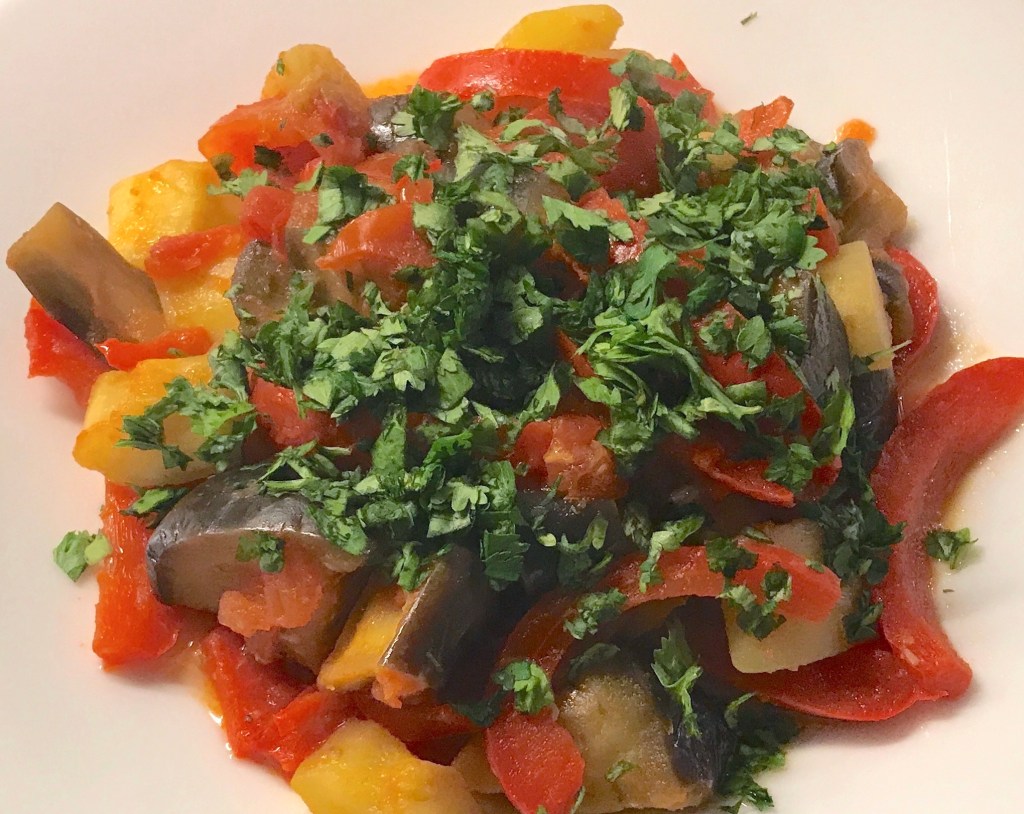
Ratatouille ©cadwu
Ratatouille ©cadwu

Fig Jam

Sometimes we dream of having a small garden, with perhaps a few roses, herbs, peonies and definitely a fig tree. Being able to pick figs, all summer long, and enjoy the abundance of the tree, it sounds like magic to us. Figs don’t do well in a pot on a balcony, so we depend on greengrocers and the market. And that’s where we struggle: when you want to buy figs, you’ll notice they’re fairly expensive and hard to find. The ones we bought yesterday were individually wrapped in paper, as if they were very exclusive chocolates. But since we love fig jam, we simply had to buy them.

Wine Pairing

Homemade fig jam combines very well with Foie Gras, toasted bread and a glass of Sauternes, for instance this very affordable Dourthe Grands Terroirs. This wonderful, sweet wine from the French Bordeaux region made from late-harvest grapes affected by noble rot, comes with flavors like apricot, tropical fruit, honey and gently toast. Drinking Sauternes has become less popular, also because it’s often positioned as a wine to accompany your dessert. A concept that seems to be a bit old fashioned. Why not try a glass of Sauternes with some excellent blue cheese, a chocolate cake or simply on its own as aperitif?

What You Need

  • 500 grams of Fresh Figs
  • 100 grams of Sugar
  • 1 Lemon

What You Do

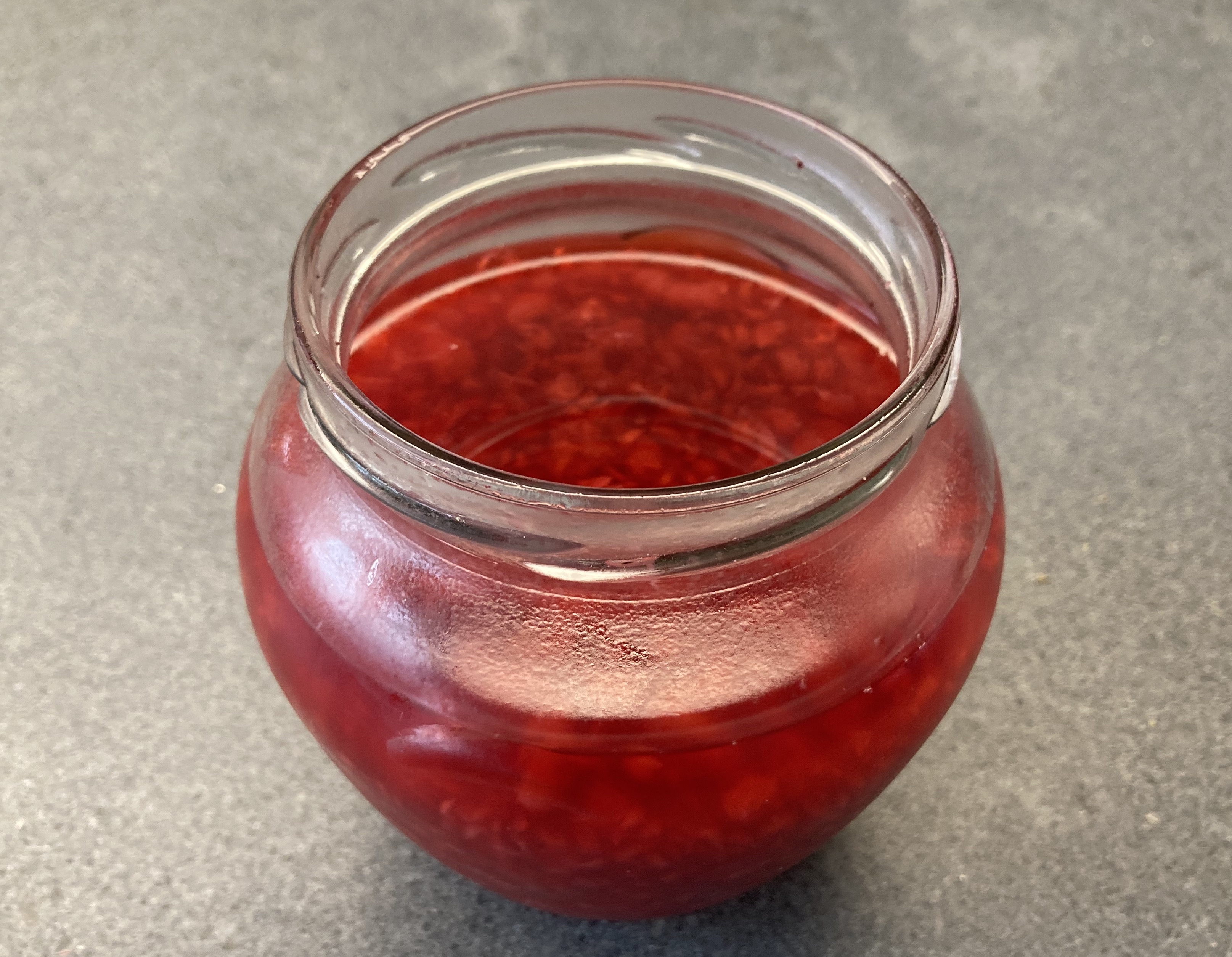
We recommend using only 100 grams of sugar, so 20% of the weight of the figs. Therefore the jam must be stored in the refrigerator and the jar must be finished shortly after opening it. That’s why we prefer using small jars and cooking small quantities of jam.
Start by washing the figs. Remove the stems. Cut the figs in small chunks, add to a pan. Add the sugar and the juice of one lemon. Put on medium heat, for at least 60 minutes, no lid needed (but be careful if the fruit is not ripe). During the cooking process the jam will become bright red. Use a fork to mash some of the figs. We think using a blender ruins the texture.
Make sure your jars are perfectly clean. Fill the jars, close the lid and cool in a cold-water basin. When cool, transfer to the refrigerator.

Time To Replace Your Non-Stick Pan

We all know that every few years we need to replace our non-stick pans. The surface has become less smooth, there are small scratches in the coating and it has become semi non-stick. Time to buy a new pan.
Perhaps you wonder what happened to your pan? Well, the truth is that not only have you eaten lovely fried food, you have also eaten bits of your pan.

Which is not great, because the coating contains PFAS. This substance may have very harmful effects, to your health and to the environment.

The abbreviation PFAS stands for Per- and Polyfluoroalkyl substances. These (artificial) substances don’t decompose, and once present they will not disappear and continue to be harmful.

Denmark, Germany, the Netherlands, Norway and Sweden announced the intention to submit a restriction proposal for PFAS to the European Chemicals Agency by July 2022. A restriction proposal is a first step towards a European ban on PFAS.

Great news for your health and the environment, but how about your beloved non-stick pan?

Fortunately, we have found an excellent alternative. The ceramic non-stick Prime-cook pans are 100% free of PFAS, PTFE, PFOA, GenX and nickel plus they are suitable for all cooking hobs. And given they last longer, it’s a sound investment.
Having tested it, we are convinced this is the future of healthy non-stick frying.

Bring your non-stick pan to the hazardous chemical waste disposal and buy a Prime-cook pan!

non-stick pan Prime-Cook ©cadwu

Field Peas with Summer Savory

Seasonal products, we simply love them! Fresh field peas are available for a few weeks in June and July only. They are easy to recognise by their purple pod. An old and forgotten vegetable, perhaps because the (older) peas tend to be starchy and not very tasteful.
Young field peas, however, are sweet and moist with a good texture. Combining them with summer savory is a great idea, but if you want to give your field peas a more modern twist, then replace the savory with fresh oregano.
Field peas, different from fresh green peas, require some fat or oil. The combination with for instance crispy fried pork belly works really well. Simple, a bit old fashioned and delicious.

Wine Pairing

We combined our field peas with pork fillet. The dish is robust, so we decided to drink a red wine from the Dão region in Portugal, to be more precise we enjoyed a glass of Prunus as produced by Gotawine. One of our favourites! It has lots of dark fruit (plums, blackberries, cherries), it is lightly oaked and its taste is fruity, long and well balanced. Grapes include Jaen (also known as Menci), Tempranillo and Touriga Nacional. In general you’re looking for a medium bodied, not too complex, yet elegant red wine.

What You Need

  • Fresh Field Peas
  • Sprigs of Summer Savory
  • Olive Oil

What You Do

Shell the peas and steam them for 4 minutes maximum. Let cool and set aside. Heat a small skillet, add olive oil, reduce heat and very gently fry the peas. Add some finely chopped summer savory. Mix. Just before serving add the remaining chopped savory, mix and serve.

If you combine the field peas with pork fillet, then use excellent organic fillet only. Fry the fillet in a heavy iron skillet until nearly done. Wrap in foil and leave to rest for 10 minutes. Add the meat juices to the pan, add some mustard and (vegetable, veal or chicken) stock. Reduce. Add some cold water to help the emulsification. Slice the fillet. It should be a touch pink. Serve with some black pepper and the jus.

  • Field Peas with Summer Savory ©cadwu
  • Fresh Field Peas ©cadwu
  • Prunus Label ©cadwu

All Our Recipes For You

A few years ago we created an overview of recipes per season, simply because it’s such a good idea to enjoy what is available in the season. Nice to eat strawberries in Winter, but isn’t it a much better idea to enjoy seasonal slow cooked pears?

We then introduced overviews per course, ranging from side dish to lunch. The categories didn’t always make sense, so we added a few more, making our admin more complicated, especially when we updated a recipe or a picture.

The obvious thing happened: we lost track of recipes, noticed some links were broken and the overviews became incomplete.

So how to organise this blog?

After much debate and intense workshops (not really) we’re pleased to present to you an old fashioned, up to date and very easy to use (and maintain) index of All Our Recipes For You!

All Our Recipes For You ©cadwu

Asparagus with Basil and Olives

End of June means end-of-season for asparagus, morels and ramson (wild garlic). But let’s not be sad! It’s also the beginning of Summer; time to dine al fresco and serve vibrant, light flavours. We combine the very last white asparagus with green asparagus, black olives and basil. Feel free to use green asparagus only. The dish will lose some of its bitterness and complexity but it’s still a great combination of flavours and aromas.

Wine Pairing

Best to enjoy with a full bodied and elegant red wine. Flavour-wise you’re looking for lots of fruit, mild tannins and a touch of wood. We enjoyed our asparagus with a glass of Cantine Due Palme Salento Il Passo Nero 2019. This wine from Puglia (Italy) is made from late harvested negroamaro grapes. Dark berry fruit, medium full tannins and a beautiful deep colour.

What You Need

  • Asparagus
    • Equal Amount of White and Green Asparagus
    • Basil
    • Black Olives (preferably Cailletier or Taggiasca)
    • Olive oil
  • Lamb Chops
    • Olive Oil
    • Thyme
    • Garlic
    • Black Pepper

What You Do

Peel the white asparagus and cut of the end. Wash the green asparagus and cut of the end. Slice the asparagus in nice chunks (4 centimetres or so). Combine the asparagus with olive oil and a nice amount of black olives. Transfer to the refrigerator.
When ready for your al fresco dinner, heat your oven to 190˚- 200˚ Celsius (or 375˚- 390˚ Fahrenheit). Mix after 10 minutes and again after 20 minutes. The asparagus should now be ready (if not, another 10 minutes should do the trick). Add half of the basil leaves.

If you serve the asparagus with lamb chops: leave the chops to marinate in olive oil, crushed garlic and thyme for 24 hours in the refrigerator. Remove thyme. Heat a heavy iron skillet and fry the chops in olive oil (4 minutes depending on the size). When ready keep the chops warm in aluminium foil. Fry the thyme in the remaining oil. In parallel add more basil leaves to the asparagus and mix.

  • Asparagus with Basil and Olives ©cadwu
  • Ingredients of Asparagus with Basil and Olives © cadwu
  • Asparagus with Basil and Olives Ready to go into the Oven© cadwu

Grilled Asparagus with Parmesan Cheese

We enjoyed this dish as a starter when in Milan, on a beautiful evening, eating al fresco and enjoying the wonderful combination of the sweetness and bitterness of the asparagus, the slightly caramelised sugars as a result of grilling the asparagus and the salty and sweet cheese. A glass of Pinot Grigio was all we wanted.
In Milan we enjoyed grilled green asparagus, but it works equally well with white asparagus.
This is typically a dish to prepare when the asparagus season is at its high and outside temperatures feel like summer.

Wine Pairing

Serve with a glass of Pinot Grigio, a Muscat or Pinot Gris from the Alsace region or a rosé with character. The wine needs to combine with a range of very diverse flavors so it should be a bit complex.

What You Need
  • 3 Asparagus per person
  • Olive Oil
  • Parmesan Cheese
  • Black Pepper
What You Do
  1. Peel the asparagus and cook or steam until slightly tender
  2. Depending on the size we would say 10-15 minutes in the Russel Hobss steamer
  3. Leave and let cool
  4. Take a plate, add some oil to the plate and use it to coat the asparagus with oil
  5. Heat the pan and grill the asparagus for 4*1 minute, making sure you have a lovely brown (not too dark) pattern
  6. Or use a contact grill for 2*2 minutes
  7. Serve on a plate, add some grated Parmesan cheese and pepper
  8. Add a generous drizzle of very excellent olive oil.

Pasta with Sage

We love using wonderful Mediterranean herbs such as basil, thyme, sage, marjoram, rosemary, oregano, saffron and tarragon. So we couldn’t resist buying a large bunch of sage and cooking this very tasteful, simple and uplifting starter. Sage has been around for many, many years and is an essential ingredient in many countries, both for medicinal and culinary purposes. Its taste is somewhat soapy, with a touch of acidity, a little bitterness, subtle eucalyptus and slightly peppery. Did we mention unique?
Preferably use fresh, thin pasta or Japanese udon, lots of butter and your best olive oil when preparing this dish.

Wine Pairing

We enjoyed our pasta with a glass of Bianco di Custoza 2020, made by Monte del Frà from Italy. It is a well-balanced, dry white wine, with a fruity nose. Its colour is straw yellow, with pale green highlights. In general you’re looking for a light, aromatic dry white wine.

What You Need

  • Pasta
  • Butter
  • Bunch of Sage
  • Olive Oil
  • Parmesan Cheese
  • Black Pepper

What You Do

Melt the butter in a large pan, devein and chop the leaves, add the sage to the butter, stir. The butter should embrace the flavours and aromas of the sage. When the mixture is nearly ready (this will take only a few minutes) cook the pasta. Grate some fresh Parmesan cheese. Keep a glass of the cooking liquid of the pasta, drain the paste, add it to the pan, mix, add some olive oil, mix, add a spoonful or two of the cooking liquid and make sure the pasta is fully coated with sage, butter and oil. Perhaps some black pepper. Garnish with Parmesan Cheese and serve on a warm plate.