Cèpes à la Bordelaise

Porcino, Steinpilz, Eekhoorntjesbrood, Cèpe de Bordeaux, Penny Bun, Seta (de) Calabaza, Herrenpilz: a diverse range of beautiful names referring to one of the tastiest and most common mushrooms (in Europe): the Boletus Edulis.

The French name refers to the city of Bordeaux and is linked to the classic dish Cèpes à la Bordelaise. It brings out the texture and the flavours perfectly. The standard ingredients of the dish are cèpes, (fresh of course, the dried version can’t be compared to the real, fresh mushroom), olive oil, pepper, shallot and parsley. Some people add breadcrumbs (which doesn’t add any flavour so forget about it).

The interesting aspect of the Bordelaise is that the caps and stalks are separated. The caps are cooked for some 15 minutes; the chopped stalks for 5 minutes. This is a really clever approach because the caps become very tasteful and moist, while the chopped stalks add volume and texture. The downside (we think) is that the shape of the mushroom is gone. That’s why we prefer to slice the mushroom vertically in six parts. Two slices of the side of the cap, two centres (stalk with cap) and two slices of stalk (to make the stalk-with-cap slices more even). We chop the last two slices.

Originally Cèpes à la Bordelaise is a starter, but we prefer to combine it, for instance with an omelet as a starter or with beef or fillet of deer as a main course.

Wine Pairing

This very much depends on how you serve your Cèpes à la Bordelaise. If served as a starter we could imagine a glass of Bordeaux (quelle surprise!). In general a full bodied red wine with gently fruit and present tannins will be a great choice.
With our omelet we drank a glass of Bodegas Mocén Selección Especial made from verdejo grapes. This Spanish wine has big aromas, for instance ripe tropical fruit. In the mouth it is fresh, fruity, round and balanced. Not too complex.
With our beef we enjoyed a classic Medoc: Château Moulin de Taffard with aromas and flavours of red fruit. It is well balanced, with rich, smooth tannins.

What You Need

  • For the Cèpes à la Bordelaise
    • 200 gram Cèpes (or 300 gram if you serve it as a starter)
    • Olive Oil
    • One Shallot
    • Parsley
    • Black Pepper
  • For the omelet
    • Two eggs
    • Parmesan Cheese
    • Butter
  • For the Beef
    • 150 gram of excellent Beef (we served Rib Eye)
    • Olive Oil

What You Do (Cèpes à la Bordelaise)

Clean the mushrooms and slice. Chop the remainder of the stalks. Chop the shallot and the parsley. Add olive oil to a relatively hot heavy iron skillet. Reduce the heat and fry the caps and centre slices of the mushrooms for 5 minutes. Turn and fry for another 5 minutes. Add the chopped stalks and the shallot. Cook on medium heat for 5 minutes. Stir gently, making sure the chopped stalks are nicely coloured. Add chopped parsley, stir and add fresh black pepper. Serve on a warm plate.

What You Do (Omelet)

Whisk the two eggs and add a bit of fresh Parmesan Cheese. Warm a very small heavy iron pan (or a non stick pan if that’s what you prefer) add the mixture and let it set on low heat. This could easily take 10-15 minutes. The omelet must be moist (baveuse) and the bottom may not be colored.
Quarter the omelet and serve with the Cèpes à la Bordelaise.

What You Do (Beef)

Transfer the beef from the refrigerator a few hours (not 30 minutes, that’s too short) before you start cooking. It’s important that the meat is at room temperature. Heat a heavy iron skillet, add olive oil and fry quickly. Let rest. Slice the beef and serve on top of the Cèpes à la Bordelaise.

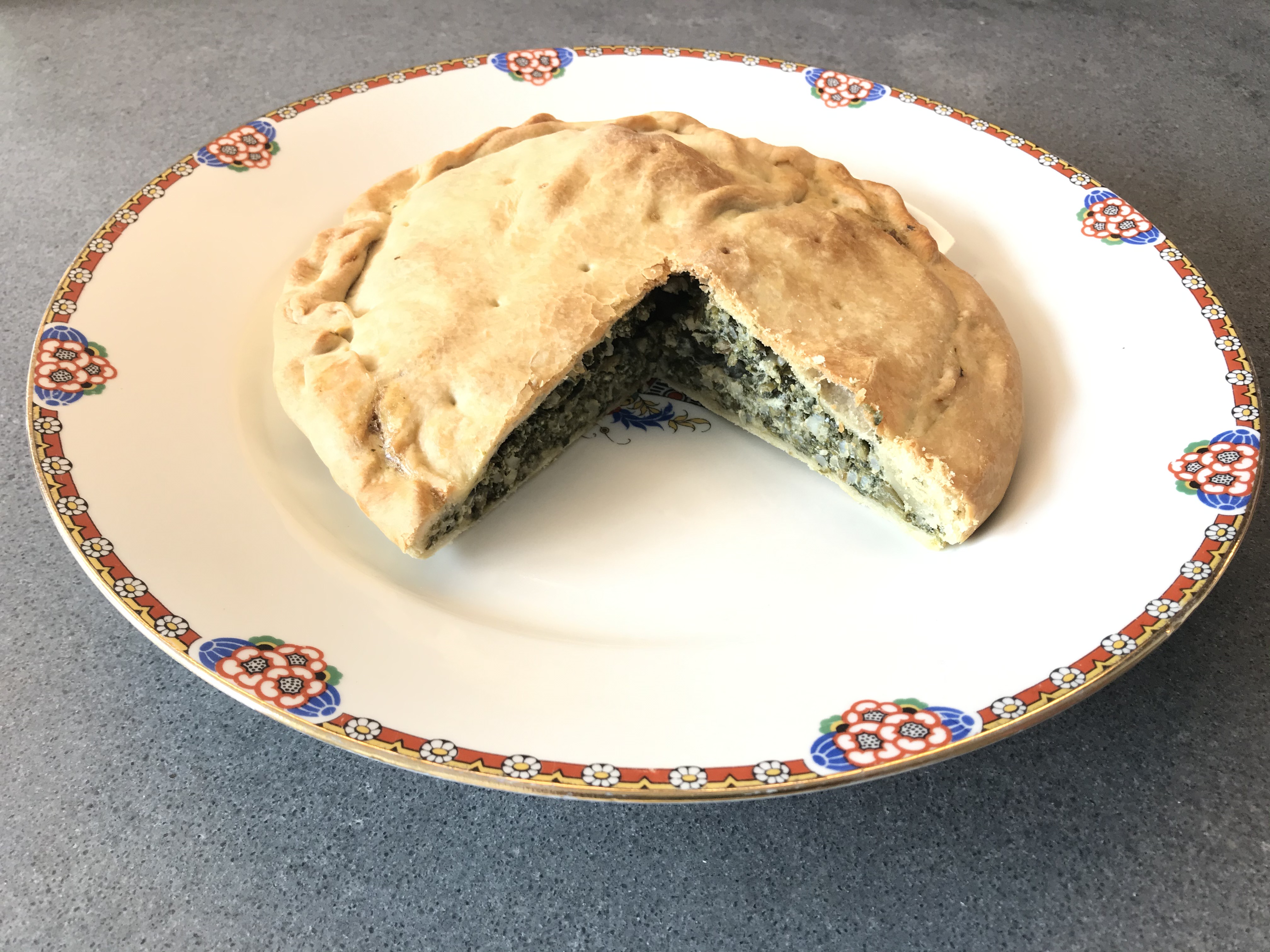
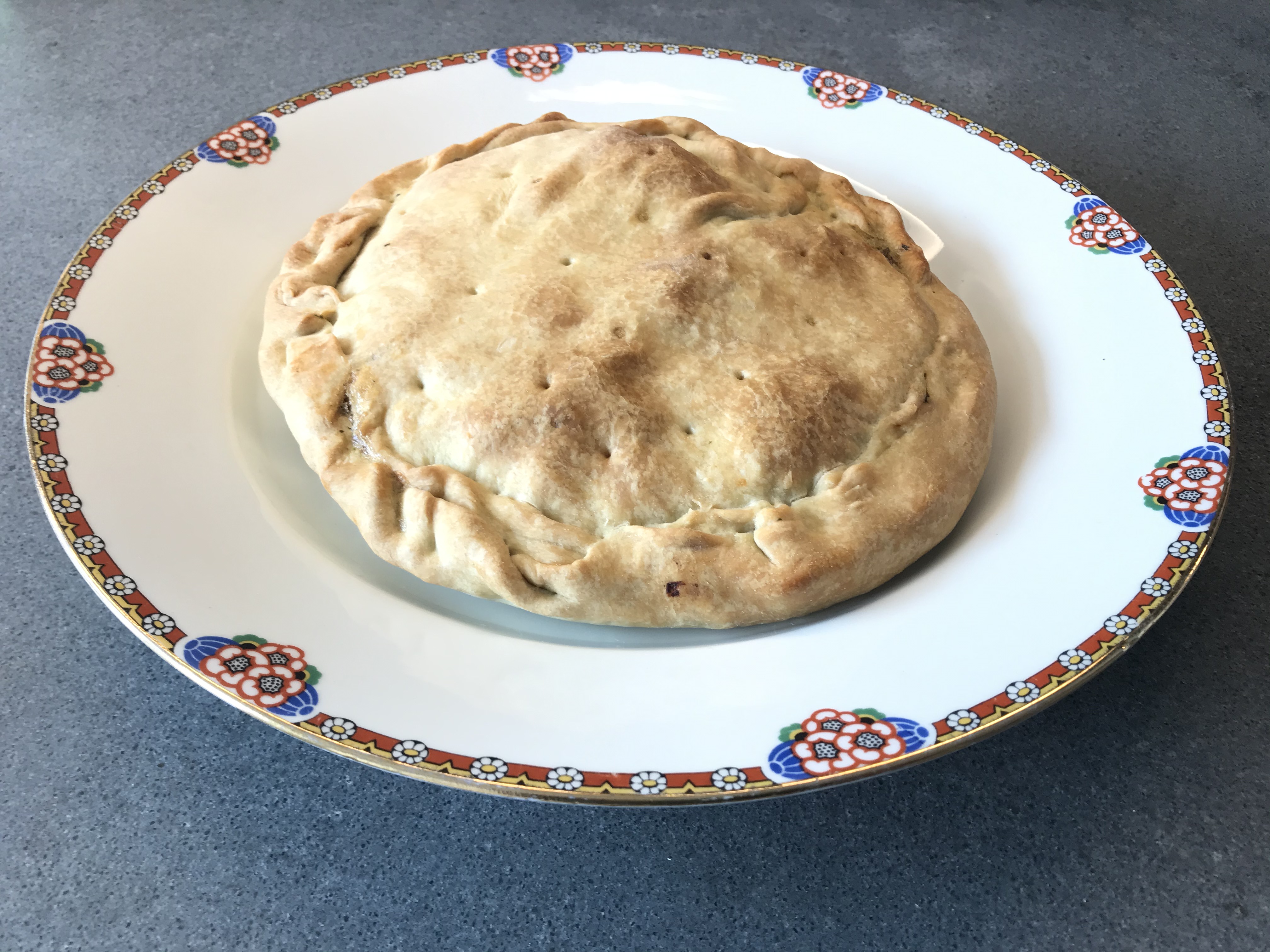
Tourte de Blette

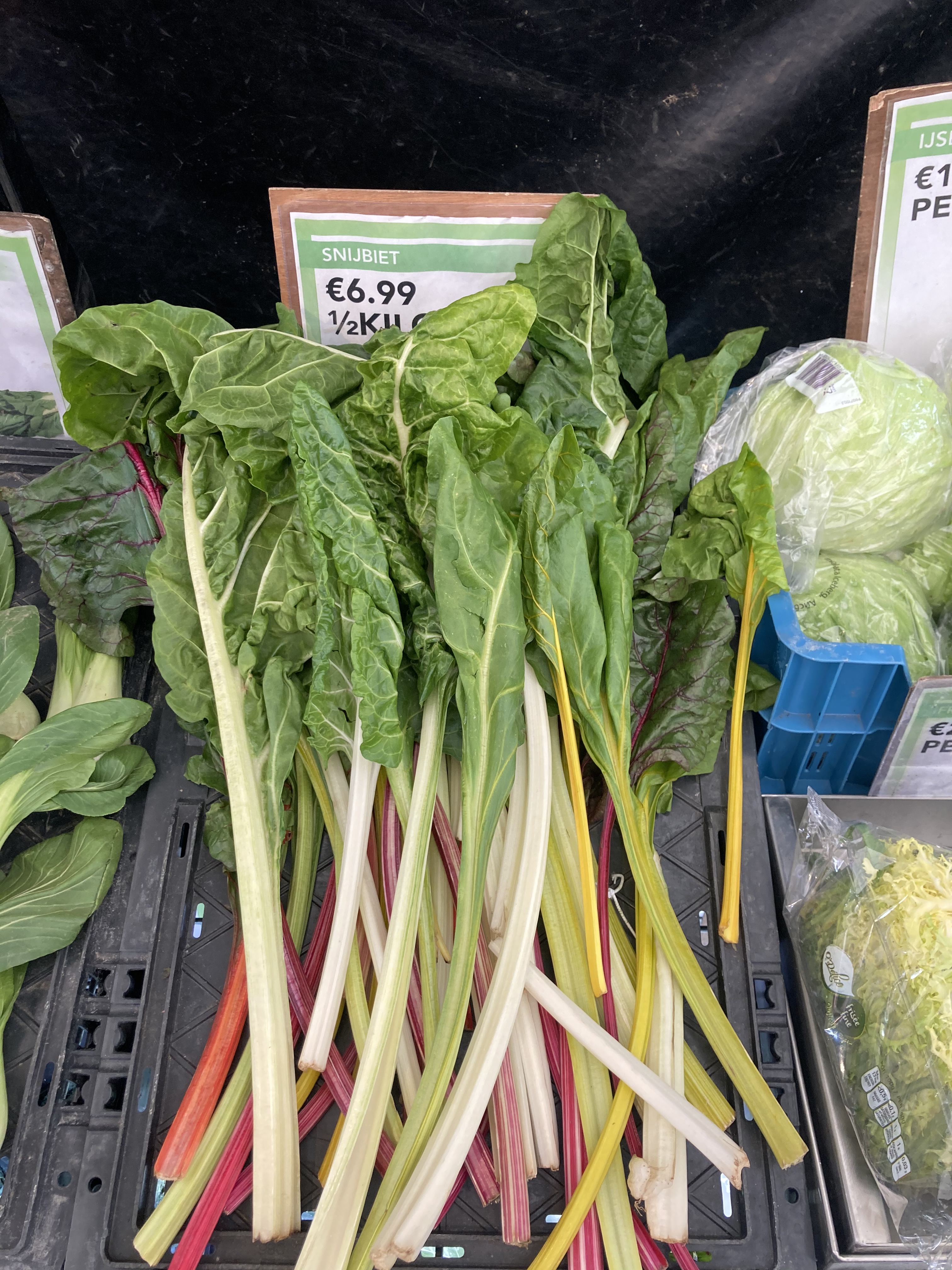
For many years Chard was a popular and cheap vegetable. It has many names, including Bietola (Italy), Blette, Bléa (France), Acelga (Spain), Krautstiel, Stielmangold, Mangold (Germany, Switzerland), Snijbiet (the Netherlands) and also Swiss Chard, Leaf Beet, Silver Beet, Spinach Beet and Seakale Beet.
Many names equals many recipes and easy to buy? Not at all. Nowadays it’s hard to find chard and the number of recipes is limited. According to Dutch Food Critic and Culinary Legend Johannes van Dam the chard leaves wither quickly, making it a difficult product for supermarkets. The image of chard is not positive: ‘Poor Man’s Asparagus’ for the stems for instance. Another reason is probably the fact that the leaves require a different preparation than the stems.
Johannes van Dam gives a number of recipes, including what he refers to as the primal recipe from Italy for Tourte de Blette and the recipe for Bledes amb panses I pinyons from Menorca.

Tourte de Blette

When in Nice we very much enjoyed our Tourte de Blette, locally known as Tourta de Bléa. It comes in two varieties: sweet and savoury. If you want to prepare the sweet one, please visit the inspiring Variations Gourmandes.

The crust of the Tourte de Blette is not straightforward. In most cases it’s a combination of flour, water, butter (or olive oil) and eggs. We were inspired by a dear friend who bases her Tourte on the Italian Torta Verde del Ponente Ligure. This is a very similar dish with zucchini, chard, basil, sage, rise, onion, Grana Padano or Parmesan and eggs. The dough of the Torta Verde is easy to work with and the result is both tasty and crunchy.

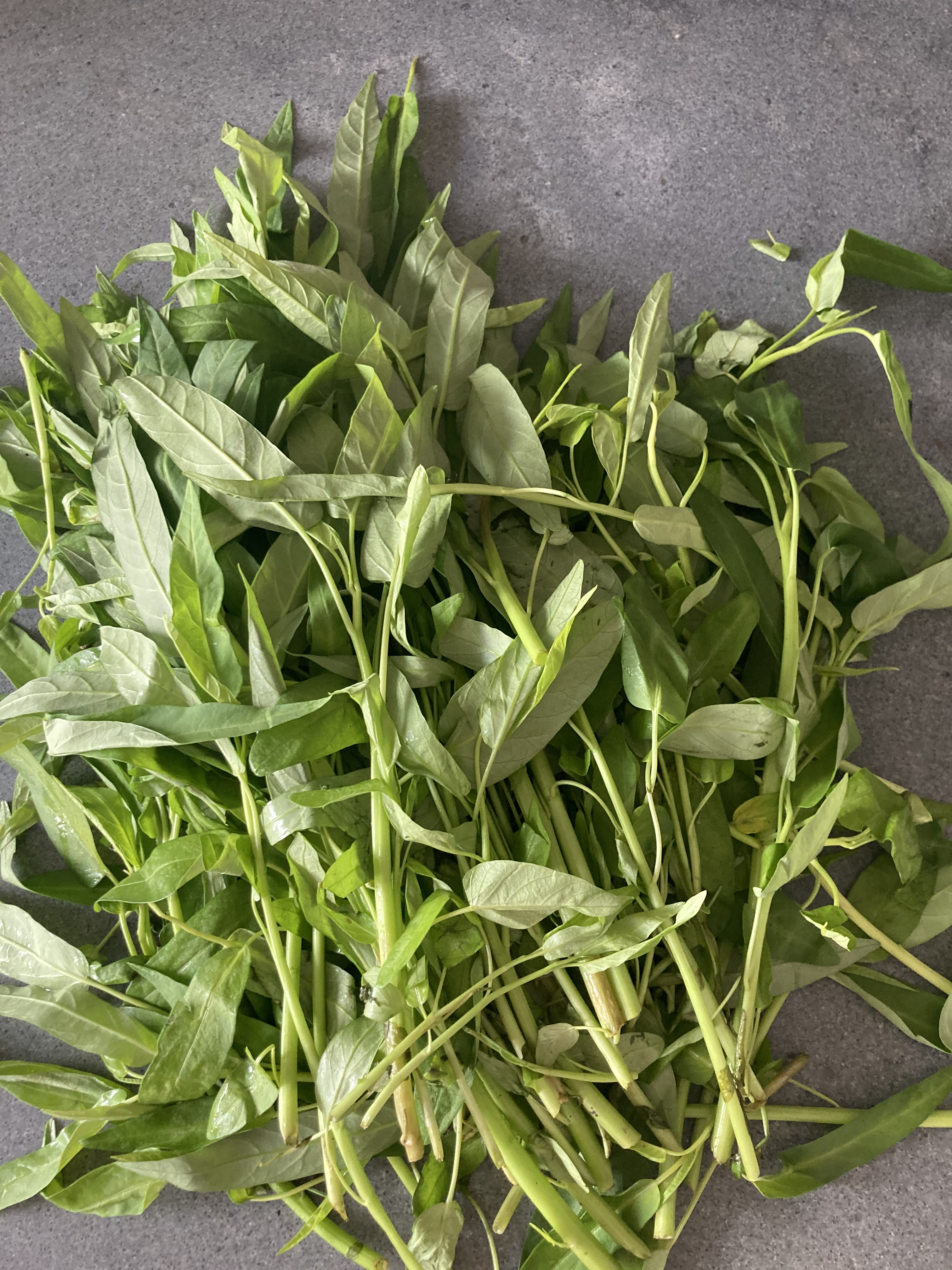
Back to the main ingredient of the Tourte de Blette: the chard. We found it on the Amsterdam Albert Cuyp market but were shocked by the price, so we had to look for an alternative. We decided not to use normal spinach because it doesn’t have the right structure. We choose water spinach (also know as Kang Koen or Ong Choy): a very popular vegetable in Asia. The leaves have lots of structure and the (hollow) stems are tasty and crunchy.

Wine Pairing

Obviously a wine from the region, for instance a Côtes de Provence (preferably rosé) or a more expensive Bellet Blanc.

What You Need

  • For the Dough
    • 200 gram of Flour
    • 100 gram of Water
    • 20 gram of Olive Oil
    • 2,5 gram of Salt
  • For the Mixture
    • 500 gram of Water Spinach
    • One Shallot
    • Olive Oil
    • 50 grams of Rice
    • 2 Eggs
    • Fresh Nutmeg
    • 75 gram Freshly Grated Parmesan Cheese

What You Do

  1. Cook the rice and leave to rest
  2. Combine flour, salt, water and olive oil
  3. Make the dough, kneed for a minute or so and store in the refrigerator for at least 30 minutes
  4. Remove the leaves from the stem and chop half of the stems. Best is to have the stem slices the size of cooked rice
  5. Same for the shallot
  6. Warm a large heavy skillet
  7. Gently fry the shallot
  8. After 10 minutes add the chopped stems
  9. Leave for 5 minutes and then add the leaves
  10. Cook for a few minutes until done
  11. Transfer to a plate and let cool
  12. Slice the leaves using a kitchen knife
  13. Whisk the two eggs
  14. Combine the vegetables, the egg, the rice and the freshly grated Parmesan cheese
  15. Generously add freshly grated nutmeg
  16. Cut the dough in two, one part slightly bigger than the other. The bigger part will be the bottom, the smaller part the top
  17. Roll out the bigger one with a rolling pin on a lightly floured surface
  18. Coat a 22 cm or 9 inch round baking form with oil (or use a sheet of baking paper)
  19. Place the first disk in the baking form, add filling and close with the second disk of dough
  20. Fold the edge of the top piece of dough over and under the edge of the bottom piece of dough, pressing together
  21. Make holes in the top, allowing for the steam to escape
  22. Transfer to the oven for 40 – 50 minutes on 180˚ – 200˚ Celsius or 355˚ – 390˚ Fahrenheit
  23. Immediately after having removed the tourte from the oven, brush the top with olive oil. This will intensify the colour of the crust
  24. Let cool and enjoy luke warm.

Duck Breast with Sichuan Pepper

Why call something pepper when actually it is not hot and spicy like black pepper or chili? Perhaps because of the shape? The Chinese name is huā jiāo, meaning something like flower pepper. Actually it is a dried berry from western China. Other names are Szechuan Pepper, Chinese Prickly Ash, Mala Pepper et cetera. The quality may vary, depending on the actual species used. The taste has two components: the aroma of citrus and an intriguing tingling effect on the tongue.
The Sichuan cuisine combines it with chili pepper, star anise and ginger.

Wine Pairing

A cup of Jasmine Tea is an excellent choice. You could also go for white wine, for instance a German Riesling or Gewurztraminer. We decided to go for a Pinot Noir from La Cour Des Dames. In general you’re looking for a red wine with aromas of berries, floral notes and delicate wood. The tannins should be soft or well-integrated.

What You Need

  • Duck Breast
  • Sichuan Pepper
  • Light Soy Sauce
  • Normal Soy Sauce
  • Mirin
  • Chicken Stock
  • Corn Starch

What You Do

  1. Start by warming a non-stick frying pan
  2. Add the Sichuan pepper (we suggest one or two teaspoons)
  3. Gently roast the peppers until you can smell their lovely aroma
  4. Transfer the berries to a mortar and let cool
  5. Take the duck breast from the refrigerator, clean it if necessary and transfer to the now hot non-stick frying pan. By starting with cold meat, you will get the best result: crispy fat, a golden brown colour and seignant meat
  6. Fry the duck breast for 2 minutes, then reduce the heat, give it 10 more minutes on the fat-side and finish with 2 or 3 minutes on the meat-side
  7. Wrap the breast in foil, making sure the fat is not covered
  8. Crush half of the Sichuan peppers
  9. Add stock to the pan, soy sauce, crushed Sichuan pepper and a teaspoon of mirin
  10. Stir and add liquid from the duck
  11. The duck must rest for 10 minutes, so occasionally add liquid and stir the sauce
  12. Taste the sauce and adjust
  13. When ready, make the sauce thicker using corn starch
  14. Coarsely crush the remaining Sichuan peppe.
  15. Slice the meat and serve with the sauce
  16. Sprinkle the remaining Sichuan pepper on top of the meat.

We served the duck breast with a combination of stir fried (Chinese, napa or oxheart) cabbage, spring onion, chili pepper and sesame oil.

Duck Breast with Sichuan Pepper ©cadwu

Cod with Kimizu Sauce

Fashion

Isn’t it interesting how our preferences for aromas and flavours change over time, influenced of course by producers, restaurants and chefs. In general we prefer dry white wine, we think a ragout made of pied de moutons, morels, Comté, oranges, bread crumbs and samphire is really intriguing and why not serve tea with your main dish?
Years ago we probably would have loved poached cod with Hollandaise Sauce and a small carrot sautéed in butter accompanied by a glass of Muscadet. But not today. No poached fish and no soft buttery carrots.
Fashion is about change; not improvement.

Let’s revisit the fish with Hollandaise Sauce and give it a ‘modern’ twist: we very gently fry the fish and serve it with a delightful Kimizu.

We mentioned Kimizu earlier when we wrote about White Asparagus. In this case we will make the sauce lighter by adding extra water. It’s wonderful to see and feel the consistency of the Kimizu in combination with the soft, opaque fish.

Wine Pairing

We enjoyed our fish with a glass of Chardonnay, produced by Antonin Rodet. The wine is made from 100% chardonnay grapes. Its aromas made us think of peach. It has clear floral notes. The taste is rich, with flavours of ripe fruit, subtle oak  and minerality.
In general we would suggest a chardonnay with a little oak and a long finish.

What You Need

  • For the Fish
    • Fresh Cod
    • Olive Oil
    • Butter
    • White Pepper
  • For the Kimizu
    • 2 Egg Yolks
    • 1,5 tablespoon of Rice Vinegar (depending on the size of the egg yolks and the acidity of the vinegar)
    • 3 tablespoons of Water
    • 2 teaspoons of Mirin (1 could also be fine, depending on your taste)

What You Do

Warm a non-stick frying pan. Lightly coat the pan with olive oil and butter and then place the pan over medium-high heat. Gently fry until nearly done. Best would be to buy tail end with the skin on, allowing you to fry the fish on its skin. Turn it for a few seconds, allowing for a light golden colour. The fish is ready when the flesh has become opaque.
In parallel whisk the two egg yolks, add the rice vinegar, the mirin and the water. Whisk well. Now set your microwave to 90 seconds and 30% power. Give the mixture 10 seconds and whisk, Repeat this with 5 seconds of warmth followed by whisking. You will notice the change in the consistency. Depending on the size of the eggs, the temperature of the ingredients and the quality of your microwave this may take something like 60 seconds.
Serve the fish with white pepper and a generous helping of kimizu. And if it makes you smile, please add some carrots, sautéed in butter!

Cod with Kimizu ©cadwu

Moules Marinière

A Delicious Classic

Moules Marinière, Mosselen met Look, Mussels in Beer, Mussels with Piri Piri and Mussels with Anise, served with crusted bread, with French Fries or just a glass of wine, as a starter or for lunch: mussels are great to combine. And did we mention delicious?
Preparing Moules Marinière is not difficult at all. Make sure you buy tasty mussels (we prefer small ones) and lots of tarragon and parsley. Don’t simply add the herbs; create a simple sauce. You want to coat the mussels with the powerful flavour of tarragon and parsley. A drop of Henri Bardouin’s award winning Pastis is recommended.

Wine Pairing

White wine of course: Pinot Blanc, Sylvaner, perhaps Pinot Gris or Riesling. In general a fresh, dry white wine with medium acidity and fruit aromas like citrus. Mussels are very flexible, both in preparation and accompagnement.

What You Need

  • 1 kilo of Mussels
  • 1 Shallot
  • 1 Garlic Clove
  • Olive Oil
  • White Wine
  • Bouquet Garni (Parsley, Bay Leaf, Thyme)
  • Tarragon
  • Parsley
  • Pastis
  • Black Pepper

What You Do

Start by finely chopping the shallot and the garlic. Take a large, heavy pan and heat the oil. Add the shallot and the garlic, cook for 5 minutes until soft and glazed. Add a glass of white wine and the bouquet garni. Cook on low heat for 10 minutes. In parallel clean the mussels. Increase the heat to (nearly) maximum, add the mussels, close the lid and cook until all mussels are open; perhaps 4 minutes. Shake the pan during the cooking process or give the mussels a quick stir with a wooden spoon. Remove the mussels with a slotted spoon, transfer to a large plate and put in a luke warm oven. Discard the bouquet garni, add chopped parsley and tarragon, a splash of pastis, some black pepper and leave to simmer for 1 or 2 minutes. Transfer mussels to two warm (soup) plates and pour the sauce over the mussels.

Moules Mariniere ©cadwu

Asparagus with Basil and Olives

Al Fresco

Finally, summer is here (more or less) and the time is right for outdoor dining. You want to enjoy the evening so you’re looking for something you can prepare in advance. Given you’re eating al fresco you want something with powerful flavours and present aromas. A salad is nice, easy and too obvious. Tasty vegetables and ingredients that will make you think of summer. Of course! Olives, basil and asparagus.  Time to begin working on the mise en place.

Wine Pairing

Best to combine with a full bodied and elegant red wine. Flavour-wise you’re looking for red fruit and a touch of spiciness. We enjoyed our asparagus with a glass of La Tour Beaumont Cabernet Franc. This wine is from the Loire region and it is made by Pierre Morgeau, who was awarded the title of Wine Maker of the year 2019 by the renowned Guide Hachette. His focus is on the vineyards, the terroir and the environment in combination with a vinification as natural as possible.

What You Need

  • Asparagus
    • Equal Amount of White and Green Asparagus
    • Basil
    • Black Olives (preferably Cailletier or Taggiasca)
    • Olive oil
  • Meat Balls
    • 250 gram minced meat of Lamb
    • Cilantro
    • Mustard
    • 1 Egg
    • 1 Slice of Old Bread
    • Cumin
    • Pinch of Salt
    • Black Pepper

What You Do

Peel the white asparagus and cut of the end. Wash the green asparagus and cut of the end. Slice the asparagus in nice chunks (4 centimetres or so). Combine the asparagus with olive oil and a nice amount of black olives. Transfer to the refrigerator.
Toast the old slice of bread and let cool. Chop and transfer to the blender. You’ll now have home made chapelure. Beat the egg. Chop the cilantro. Combine all ingredients and create small meatballs. Store in the refrigerator. Mise en place done.
When ready for your al fresco dinner, heat your oven to 190˚ – 200˚ Celsius (or 375˚ – 390˚  Fahrenheit). Add a few basil leaves to the asparagus mixture and transfer to the oven. After 10 minutes mix and add more basil leaves. After again 10 minutes heat a heavy iron skillet and start frying the meatballs in olive oil. In parallel add more basil leaves to the asparagus and mix. After 10 minutes transfer the meatballs to a plate covered with kitchen paper. Add some basil leaves to the asparagus, mix and serve a generous amount of vegetables on a hot plate. Top with 5 meatballs.
PS Feel free to use green asparagus only. The dish will lose some of its bitterness and complexity but it’s still a great combination of flavours and aromas.

The Art of Sauces: Gribiche

Sauce Gribiche is a classic French sauce, made with boiled egg yolks, oil, various herbs (chives, chervil, parsley, tarragon), cornichons and capers. Sauce Gribiche is ideal with cold meat and fish. It’s a great combination of flavours and textures, also thanks to the chopped egg white.
As with mayonnaise the oil you use is an important ingredient. The range of flavours in Sauce Gribiche allows you to use a combination of oils, depending on the dish it should accompany. For instance olive oil when you’re looking for a more powerful sauce or arachis (peanut) oil when the sauce should be more delicate.
In this case we use chives only because especially tarragon would be too much for the asparagus. Chives give it a touch of onion, which is exactly what the sauce needs.

Wine Pairing

We enjoyed our Asparagus with sauce Gribiche with a glass of Macon (Louis Jadot Mâcon Villages Grange Magnien). The wine (100% chardonnay) comes with some gentle acidity and minerality, which is great with the acidity of the Sauce Gribiche. It’s fruity with a floral scent.

What You Need

  • Sauce Gribiche
    • Two Eggs
    • Dijon Mustard (1 teaspoon)
    • Olive Oil (100 ml)
    • (White Wine) Vinegar (1 tablespoon)
    • Black Pepper
    • Chives
    • Cornichon
    • Capers (in brine)
  • Asparagus

What You Do

Start by boiling the eggs, making sure the yolk is completely set. Depending on the size add them to boiling water and leave them in simmering water for 12 minutes. We steamed them for 15 minutes. Cool quickly, peel and separate the white from the yolk.
Once cool cut the white in very small bits and store. Push the egg yolk through a sieve. It should be a powder-like substance. Add the mustard and stir well until it’s a smooth paste. Continue stirring and very slowly add the olive oil, as if making a mayonnaise. Which is basically what you’re doing anyway! Main difference is that cooked yolk is less powerful when it comes to emulsifying. So the amount of olive oil you can add is limited and the process is more challenging.
Once you’ve added the olive oil, add white wine vinegar, whisk, taste and decide if more mustard, vinegar or pepper is needed.
Now add the chopped egg white, the finely chopped chives, the drained and chopped capers and the thinly sliced cornichon.
The sauce should be ‘stable’ so feel free to store in the refrigerator.
Steam or cook the white asparagus and enjoy!
PS It’s actually a very tricky sauce, one that splits easily. If it does, no worries, just add a tea spoon of (home made) mayonnaise and the problem is solved.

Quail with Pruneaux d’Agen, Sage and Olives

Quail

We love our quails! They have a delicate taste, but they also allow you to add strong flavours like sage, bay leaf or black olives. We prefer small and tasty black olives (in oil) for instance Taggia olives from Italy. Prune-wise Pruneaux d’Agen are ideal, but in general the prune should be moist, sweet and full of flavours.

Wine Pairing

A medium bodied red wine, not too complex, will work very well; for instance a Shiraz. We enjoyed our quail with a glass of Puech d’Hortes from La Colombette made from syrah and grenache grapes. The wine should balance with the sweetness (sage, Pruneaux d’Agen), the nutty character of the pancetta and the bitterness of the olives and the sage.

What You Need

  • 2 Quails
  • 50 grams of Pancetta
  • Sage (fresh, 6 leaves or so)
  • 6 Pruneaux d’Agen
  • 10 or more Black Olives
  • Olive oil
  • Butter

What You Do

Make sure the quail is sufficiently fat, not damaged and not frozen. Clean the inside of the quails with kitchen paper and remove anything that’s left. We prefer it if the head is still attached to the body. This allows you to use the skin of the neck, after having removed the head and the spine. Cut 4 prunes, the pancetta, the sage and the olives in smaller bits and mix together. Now stuff the quail with the mixture and finish with a prune. Use kitchen string to close the quail. Pre-heat your oven to 220° Celsius or 430°  Fahrenheit. Put the quails in a skillet with olive oil. Put some butter on top of the quail. Make sure the breast is downward facing. This way the fat will go towards the breast, making sure these are nice and moist. Put in upper half of oven. After 10 minutes turn the quails and label fat over the breast. After another 10 minutes your quails should be ready and golden. This of course depends on your oven. You may want to give the quails a few extra minutes. Remove from the oven, cover the quails with aluminium foil and let them rest for 10 minutes. Remove the kitchen string before serving.


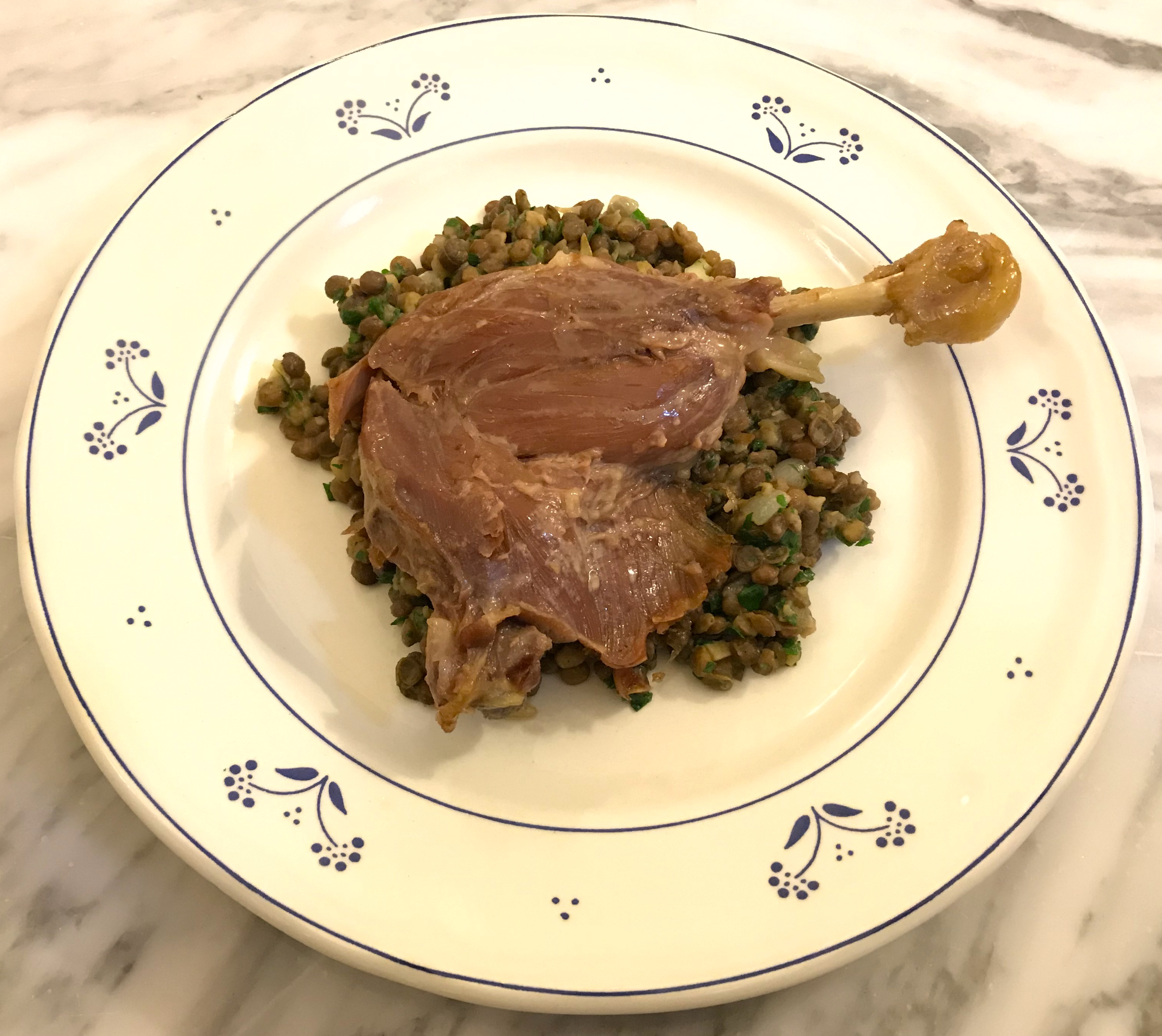
Lentils with Confit of Duck

A Nice Lunch

Think France, think a small restaurant in a small street, nice and simple, no Michelin star in sight. It’s 12.30, time for a quick lunch. You enter the restaurant, take a seat and order today’s dish, the plat du jour. It turns out to be a generous helping of lentils with confit de cuisse de canard and parsley. After having enjoyed your lunch, you think about the joy of good food and the beauty of lentils. Lentille Verte du Puy, such a treat! The combination of the confit, the lentils and the parsley with the sweetness of the shallot and the garlic is elegant, moist and full of flavours.

Feel free to buy ready-made confit. You could of course make it yourself but it is fairly time consuming and not something you would do for two confits only. In our experience most of the confits you can buy (tinned or vacuumed) will be fine. If you’re lucky your local butcher will make his or her own confits. We have included an alternative recipe below.

Wine Pairing

We suggest a glass of not too complex red wine; a well-balanced wine with notes of red fruit, gentle tannins and not too oaky. We enjoyed a glass of Bordeaux-Supérieur, Château Picon.

What You Need

  • 3 Shallots
  • 1 Garlic Glove
  • Coriander Seed
  • Lentils (Lentille Verte du Puy O.P & A.O.C. from Sabarot)
  • Chicken Stock
  • 2 Confits de Canard
  • Olive Oil
  • Parsley
  • Black Pepper
  • Optional: Green Salad

What You Do

Finely chop one shallot and glaze gently in olive oil. In the mean time check the lentils for small pebbles; wash them. Once the shallot is glazed add the crushed coriander seed and the lentils. Heat and stir for one minutes, as you would do with risotto rice. Add some chicken stock and water (the stock is only intended to give the lentils a small push) and leave to simmer on low heat. When the lentils are nearly done, finely chop the other two shallots and glaze gently in olive oil and in the fat that comes with the confit. In parallel warm the two confits. After a few minutes add the finely chopped garlic to the shallot. Chop the parsley. When the garlic and shallot are nicely soft and sweet, add the parsley, some black pepper and then mix with the lentils. Remove the skin from the confit and serve the duck on top of the lentils. Perhaps serve with a simple green salad.

Alternative Way of Making Confit of Duck

Start by crushing a nice amount of juniper berries. Take a sheet of strong aluminium foil, add some crushed berries, a bay leaf and put one duck leg (skin side up) on top. Drizzle with plenty of olive oil. Add the remainder of the berries and a second bay leaf. Wrap the meat in foil, making sure it is tightly closed and the foil intact. If not sure wrap with a second piece of foil. Transfer to a warm oven (90° Celsius or 200° Fahrenheit) for at least 8 hours.

Lentils with Confit of Duck © cadwu

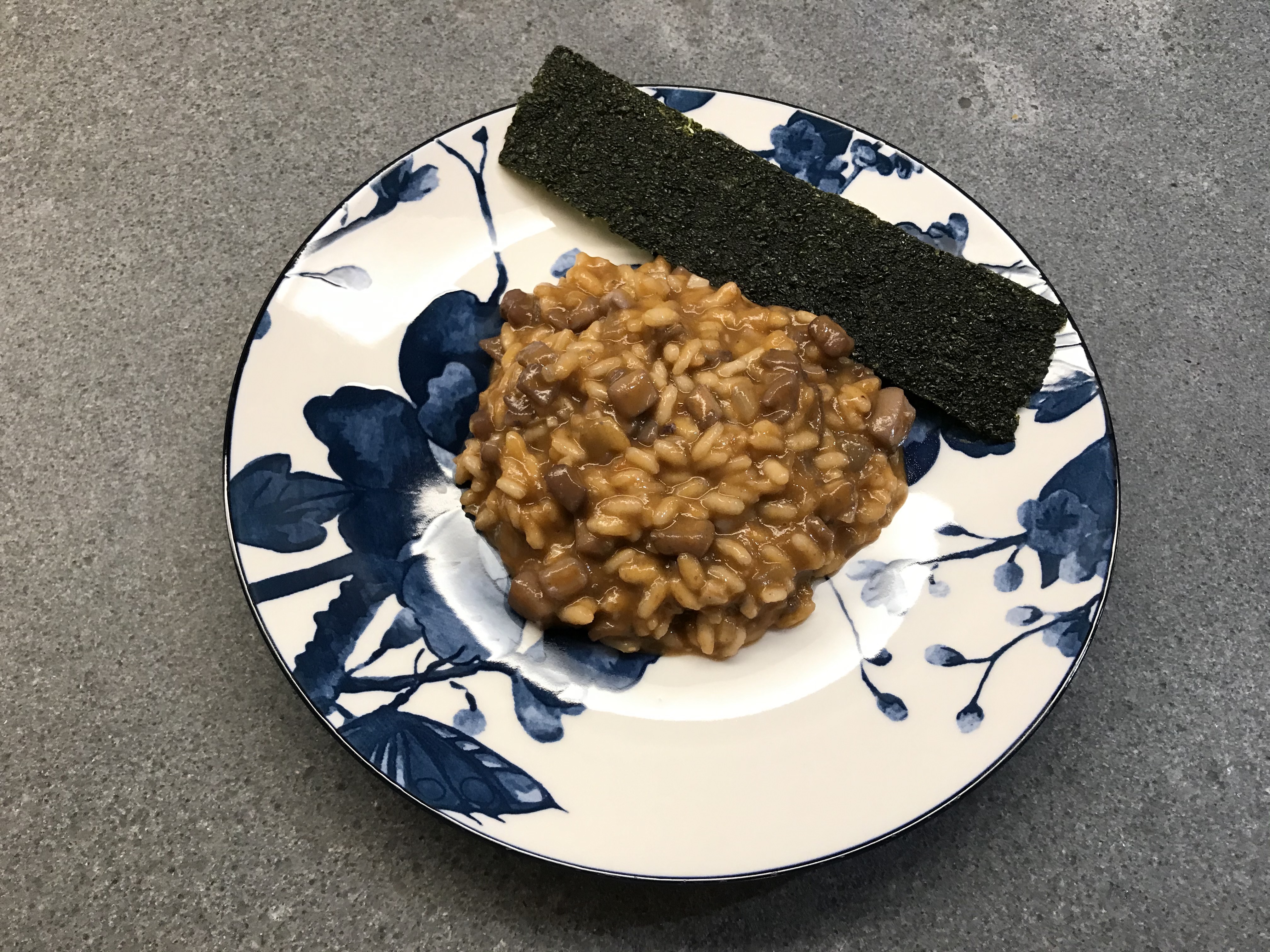
Risotto With Squid

A Tasty Bonus

Combining rice with squid is an excellent idea. Just think about Arroz Negro, the black rice from Valencia. We combine rice (Acquerello, of course!) with fresh (or frozen) squid. Cleaning squid can be a bit intimidating, but it’s not difficult at all. The result is much better than the already cleaned frozen tubes you can buy plus you get the tentacles as a tasty bonus. Becky Selengut’s video is very helpful. This is how we do it:

  • Start by removing the head from the body. When you do this gently, you will also remove most of the internal organs of the squid. You may want to secure the ink for later use.
  • Just below the eyes, cut off the tentacles using a knife or scissors. Remove the beak (located at the base of the tentacles). Discard internal organs and beak. Transfer the tentacles to a bowl.
  • With your fingers remove the cartilage (this is the part that looks like it is made of plastic).
  • Now you have a choice: you could leave the skin on; it does add extra colour to the stew. But you could also remove the skin of the tube and fins. Best is to start in the middle and then gently pull the skin towards the top and bottom.
  • Remove the fins and transfer to the bowl.
  • Turn the tube inside out by pushing the top into the tube. This allows you to remove all internal organs and the membrane.
  • Turn the tube outside in by pushing the top into the tube. Transfer to the bowl.
  • Wash the tube, fins and tentacles with cold water.

Wine Pairing

Best is to combine this seafood risotto with a light, aromatic white wine. One that is fresh and dry. We enjoyed our risotto with a glass of Bianco di Custoza 2018, made by Monte del Frà in Italy. It is a well-balanced, dry white wine, with a fruity nose. Its colour is straw yellow, with pale green highlights. It is made from a variety of grapes: Garganega, Trebbiano Toscano, Trebbianello and Cortese. An excellent combination with the seafood risotto.

What You Need

  • For the Squid Stew
    • 500 grams of Squid (to be cleaned)
    • Olive Oil
    • Shallot
    • 2 Garlic Gloves
    • 200 grams of Tomatoes (peeled, seeded and cut in chunks)
    • 1 Red Chilli
    • Red Wine
    • Two Fresh Bay Leaves
  • For the Risotto
    • 100 gram of Risotto Rice (Acquerello)
    • Fish Stock
    • Shallot
    • Butter
    • Parmesan cheese
    • Black Pepper
    • Crispy Japanese Seaweed

What You Do

A day before serving the risotto, prepare the stew: use a heavy, iron skillet. Cut the shallot in small bits and glaze gently in olive oil. Once the shallot is glazed add the garlic and the deseeded, chopped red chilli. After a few minutes add the squid (chopped tube and fins, tentacles ). Fry for a few minutes, add the tomatoes, a glass of red wine and the bay leaf. Allow to simmer for 4 hours. If necessary add a splash of water. Stir every 15 minutes. Remove the bay leaf, cool and store in the refrigerator.

The next day start by peeling and chopping the shallot. Add butter and olive oil to a pan and glaze the shallot. In another pan bring the light fish stock to a boil. After 5 minutes add the rice to the pan with the shallot and coat for 2 minutes. Add the squid stew and mix. Start adding the stock, spoon by spoon and stir the rice frequently. When using Acquerello rice it takes 18 minutes. Check the rice. When okay, transfer the pan to the kitchen counter top and leave to rest for 2 minutes. Add chunks of butter, stir, add a bit more butter and grated Parmesan cheese. Stir, a bit of black pepper, add more butter or Parmesan cheese if so required. Serve immediately with some crispy Japanese seaweed.

Risotto with Squid © cadwu