Risotto With Squid

A Tasty Bonus

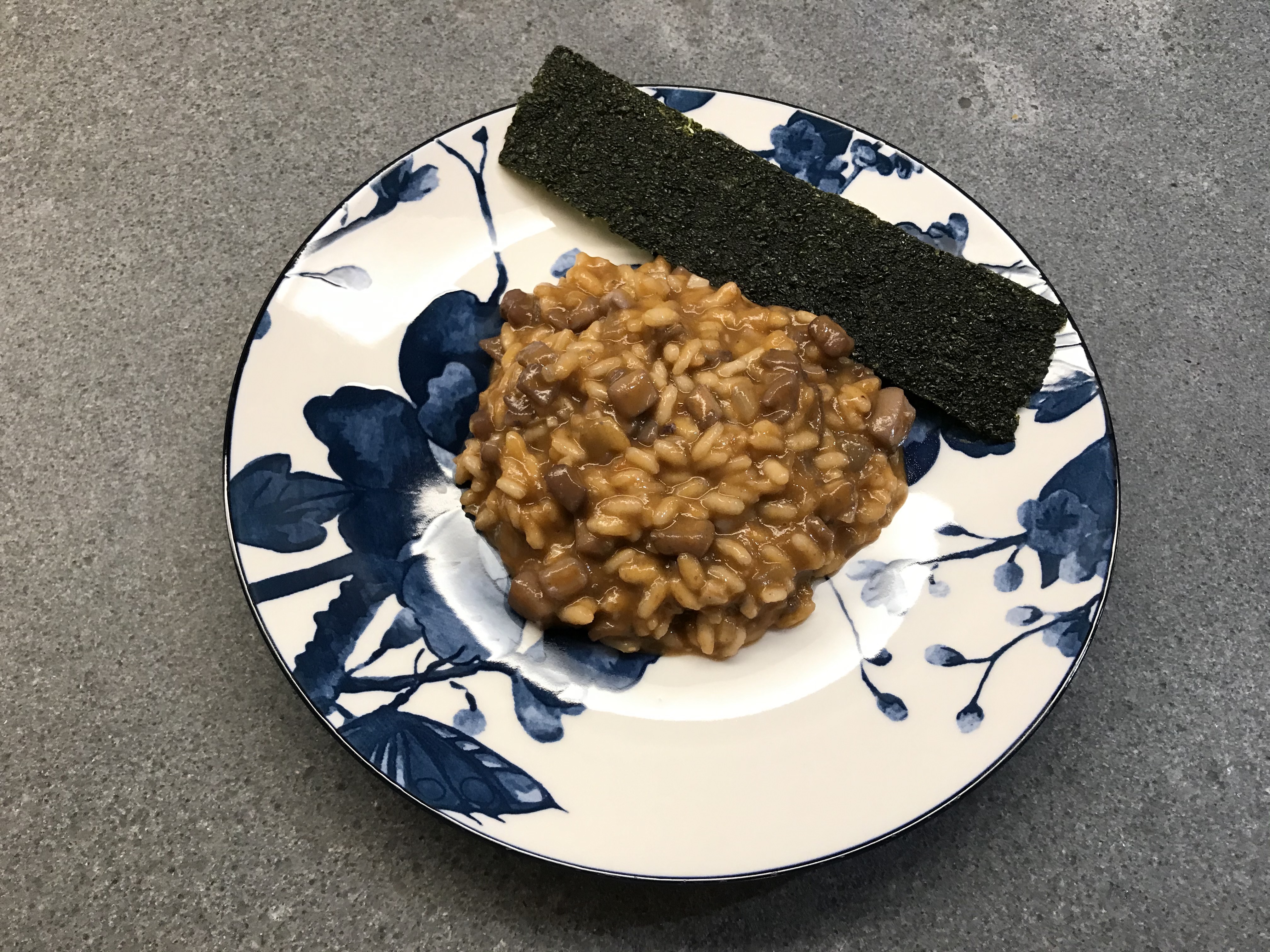
Combining rice with squid is an excellent idea. Just think about Arroz Negro, the black rice from Valencia. We combine rice (Acquerello, of course!) with fresh (or frozen) squid. Cleaning squid can be a bit intimidating, but it’s not difficult at all. The result is much better than the already cleaned frozen tubes you can buy plus you get the tentacles as a tasty bonus. Becky Selengut’s video is very helpful. This is how we do it:

  • Start by removing the head from the body. When you do this gently, you will also remove most of the internal organs of the squid. You may want to secure the ink for later use.
  • Just below the eyes, cut off the tentacles using a knife or scissors. Remove the beak (located at the base of the tentacles). Discard internal organs and beak. Transfer the tentacles to a bowl.
  • With your fingers remove the cartilage (this is the part that looks like it is made of plastic).
  • Now you have a choice: you could leave the skin on; it does add extra colour to the stew. But you could also remove the skin of the tube and fins. Best is to start in the middle and then gently pull the skin towards the top and bottom.
  • Remove the fins and transfer to the bowl.
  • Turn the tube inside out by pushing the top into the tube. This allows you to remove all internal organs and the membrane.
  • Turn the tube outside in by pushing the top into the tube. Transfer to the bowl.
  • Wash the tube, fins and tentacles with cold water.

Wine Pairing

Best is to combine this seafood risotto with a light, aromatic white wine. One that is fresh and dry. We enjoyed our risotto with a glass of Bianco di Custoza 2018, made by Monte del Frà in Italy. It is a well-balanced, dry white wine, with a fruity nose. Its colour is straw yellow, with pale green highlights. It is made from a variety of grapes: Garganega, Trebbiano Toscano, Trebbianello and Cortese. An excellent combination with the seafood risotto.

What You Need

  • For the Squid Stew
    • 500 grams of Squid (to be cleaned)
    • Olive Oil
    • Shallot
    • 2 Garlic Gloves
    • 200 grams of Tomatoes (peeled, seeded and cut in chunks)
    • 1 Red Chilli
    • Red Wine
    • Two Fresh Bay Leaves
  • For the Risotto
    • 100 gram of Risotto Rice (Acquerello)
    • Fish Stock
    • Shallot
    • Butter
    • Parmesan cheese
    • Black Pepper
    • Crispy Japanese Seaweed

What You Do

A day before serving the risotto, prepare the stew: use a heavy, iron skillet. Cut the shallot in small bits and glaze gently in olive oil. Once the shallot is glazed add the garlic and the deseeded, chopped red chilli. After a few minutes add the squid (chopped tube and fins, tentacles ). Fry for a few minutes, add the tomatoes, a glass of red wine and the bay leaf. Allow to simmer for 4 hours. If necessary add a splash of water. Stir every 15 minutes. Remove the bay leaf, cool and store in the refrigerator.

The next day start by peeling and chopping the shallot. Add butter and olive oil to a pan and glaze the shallot. In another pan bring the light fish stock to a boil. After 5 minutes add the rice to the pan with the shallot and coat for 2 minutes. Add the squid stew and mix. Start adding the stock, spoon by spoon and stir the rice frequently. When using Acquerello rice it takes 18 minutes. Check the rice. When okay, transfer the pan to the kitchen counter top and leave to rest for 2 minutes. Add chunks of butter, stir, add a bit more butter and grated Parmesan cheese. Stir, a bit of black pepper, add more butter or Parmesan cheese if so required. Serve immediately with some crispy Japanese seaweed.

Risotto with Squid © cadwu

Tournedos Rossini

Gioachino Rossini (1792 – 1868) was a gifted, talented and great composer. Not only did he compose some 40 operas, many songs and the beautiful Petite Messe Solennelle, he was also an expert with regard to food. Perhaps expert is not the right word: he was a gourmand, an excessive eater and drinker plus a culinary inspiration. Chefs would name dishes after him, such as Filets de Sole Rossini (poached Dover sole wrapped around goose liver and truffle served with a white wine sauce), Cocktail Rossini (strawberries and prosecco), Macaroni Soup alla Rossini (a soup with partridge quenelles and Parmesan cheese) and many others.

The soup was created by Marie-Antoine Carême, a very dear and close friend of Rossini. He was Roi des Cuisiniers et Cuisinier des Rois having been chef to Napoleon, the Prince of Wales (the later King George IV), Tsar Alexander 1st and Baron de Rothschild. He created the concept of the four mother sauces (Allemande, Béchamel, Espagnole, Velouté) and was an essential inspiration for Auguste Escoffier. Marie-Antoine Carême is one of the most influential chefs ever, a brilliant  patissier and author of several books on cookery, including L’Art de la Cuisine Française.

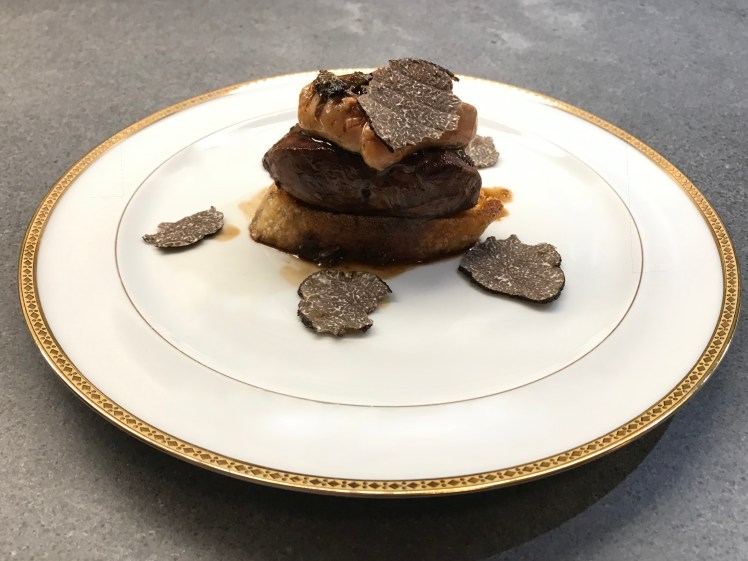
Very likely it was Escoffier who came up with the word tournedos, but the combination of bread, meat, goose liver, truffle and Madeira was a creation by Marie-Antoine Carême, inspired by and prepared for his friend Gioachino Rossini.

Tournedos Rossini is a culinary pleasure. It’s elegant, full of flavours and exquisite. It’s simply gorgeous.

Wine Pairing

A classic red Bordeaux will be a perfect match. Dry, full-bodied and fruity. We enjoyed a glass of Château Gaillard Saint-Émilion Grand Cru 2015. This is a dry, cherry-red coloured wine. It features medium woody, fruity and vegetal scents and offers a broad texture as well as medium tannins.

What You Need
  • 2 Tournedos (Fillet Steaks)
  • Butter
  • Madeira
  • Fresh Goose Liver
  • Winter Truffle
  • Stock (Chicken or Veal)
  • 2 Slices of Old Bread
What You Do

Originally you would need demi-glace sauce, but we take a short cut. Make sure you have everything ready. The oven should be at 70° Celsius (160° Fahrenheit), one heavy iron pan and one non-sticky pan both warm, nearly hot, through and through. Make sure the meat is at room temperature. We prefer a small steak (75 gram). Start by frying the two slices of bread in butter until golden. Transfer the bread to the oven. Clean the pan with kitchen paper and add butter. Quickly fry the meat, it must be saignant (no options here). Wrap in foil and set aside. Reduce heat. Add stock to the pan and deglaze. Add Madeira. Thinly slice the fresh winter truffle (no options here). Add the smaller slices and crumbles to the sauce. Put the beef on top of the bread. Keep warm. Fry the goose liver for just a few seconds in the hot non sticky pan until golden/brown. Now plate up: the bread with the beef and the goose liver on top. Pour over the sauce, add the bigger slices of truffle and serve immediately.

Tournedos Rossini ©cadwu


Seared Scallops with Truffle and Potato Mousseline

Truffles Are a Chef’s Best Friend

Truffles range from affordable summer truffles (€100 per 100 gram) via expensive winter truffle (€150 per 100 gram) to extremely expensive white truffles (starting at €375 per 100 gram). Cultivated truffles are considerably less expensive but unfortunately they have less flavour and taste.

Commercially it’s a clever idea to introduce high end products like Risotto with Truffle, Truffle Mayonnaise, Crisps with Truffle, Butter with Truffle Flavour or Black Angus Truffle Burger. The addition of truffle allows the producer to charge more compared to the regular product. So you wonder, how much truffle is actually added? Well, don’t be surprised: it ranges from hardly any truffle to absolutely no truffle at all.

The risotto rice for instance contains 0,2% of truffle per 100 gram. Probably it will be a cultivated truffle, so the impact of the 0,2% is zero. Especially if you take into account that summer truffle (and white truffle to be complete) loses its flavour when heated. Let’s look at the figures: the truffle risotto rice comes at €8,50 per kilo (containing 98,8% of rice) and the same rice without truffle at €2,75 per kilo. So for nearly 6 Euro difference you buy 2 gram of cheap truffle, 8 gram of porcine, parsley, garlic and chives. Yes, indeed, it’s Liza Minnelli singing Truffles makes the world go round, the world go round!

But I Did Taste Truffle!

Of course you didn’t. You imagined you tasted it because it said so on the pack and because the producer most likely added 2,4-dithiapentane, a synthetically produced, aromatic molecule. Products containing 2,4-dithiapentane taste and smell like a bad chemical version of the real thing. It’s especially sad because people confuse the smell of 2,4-dithiapentane with the smell of real truffle.
If people say they don’t like truffle they actually say they don’t like 2,4-dithiapentane, which is great.

Life is simple and truffles are expensive. So get rid of the truffle flavoured rice, oil, mayonnaise, preserved truffle and what have you and enjoy spending some real money on a good product!

An Exciting Combination

In this recipe we combine winter truffle with scallops and potatoes. Winter truffle improves in taste when warm. And it loves potatoes. Perhaps because both grow underground and have a similar odd shape?

Wine Pairing

You need a medium bodied wine to match the powerful taste and flavours. One that brings freshness, citrus, purity and character. We enjoyed a glass of Costieres de Nimes Nostre Pais 2016. You could also go for a Chardonnay with a touch of wood. Combining it with a Pinot Blanc, Pinot Gris or Picpoul de Pinet is not a good idea because you then miss out on the necessary earthy tones in the wine.

What You Need

  • 3 Fresh Scallops (preferably in the shell)
  • 1 Starchy Potato
  • Milk
  • Butter
  • White Pepper
  • Salt
  • 10+ Gram of Black (Winter) Truffle

What You Do

Start by making the mousseline: peal the potato and cook until done. Make a mash with a fork or a potato squeezer. Optional: pass potatoes through a fine sieve. Warm the milk and add to the mash. Add a generous amount of butter. Use a whisk to make the mousseline. Add white pepper. The mousseline must combine with the intense taste of the scallops, so a touch of salt is also needed. Keep warm. Half the scallops and fry quickly in a touch of butter in a non sticky pan. When nearly ready, grate the truffle. Take two warm plates, dress with the mousseline, add the three scallops and top with black truffle.

Quail with Pruneaux d’Agen and Bay Leaf

Fond Memories

Many years ago we enjoyed dinner at a restaurant called Auberge des Seigneurs in Vence, France. The menu included classic dishes such as blue trout, chicken, tian and tender lamb cooked on a spit before an open fire. Ah, Madame Rodi, we fondly remember those evenings, Monsieur Tim and your infinite hospitality.
One of the items on the menu was quail with prunes and bay leaf. Since that day we love our quails! They have a delicate taste, with a nice touch of fattiness. For some reason the meat goes very well with strong flavours like bay leaf, black olives, sage et cetera.
Make sure the quail is sufficiently fat and not frozen. We prefer it if the head is still attached because it allows you to use the skin of the neck, after having removed the head and the spine.
Buying Pruneaux d’Agen could be a challenge, but other prunes will be fine too, provided they are moist and tasty.

Wine Pairing

At the Auberge we enjoyed the red Rimauresq Classique, A.O.P. Côtes de Provence – Cru classé. In general a red wine will go very well with the quails, provided it comes with a bit of fruit and it is not too complex. It should balance with the sweetness and nuttiness (prunes, pancetta) of the dish and the beautiful smell of bay leaf.

What You Need

  • 2 Quails
  • 50 grams of Pancetta
  • 2 Bay Leaves
  • 6 Pruneaux d’Agen
  • Olive oil
  • Butter

What You Do

  1. Clean the inside of the quails with kitchen paper and remove anything that’s left
  2. Check the skin for feathers and hollow shafts
  3. Cut 4 pruneaux and the pancetta in smaller bits and mix together
  4. Stuff the quail with a bay leaf, then the mixture and finish with a pruneaux
  5. Use kitchen wire to close the quail
  6. Pre-heat your oven to 180° Celsius (355° Fahrenheit)
  7. Put the quails in a skillet with olive oil
  8. Make sure the breast is downward facing. This way the fat will go towards the breast, making sure these are nice and moist
  9. Put in upper half of oven
  10. After 15 minutes turn the quails, label fat over the breast and after another 15 minutes your quails should be ready and golden
  11. Remove from the oven and let the quails rest for 10 minutes
  12. You could cover the quails with aluminium foil, to make the meat juicer but you risk losing the crispy skin
  13. Remove the kitchen wire and serve with seasonal vegetables from the oven or with golden turnips

André Daguin

A Grand Chef

Le chef gascon André Daguin, roi du magret de canard, est mort.
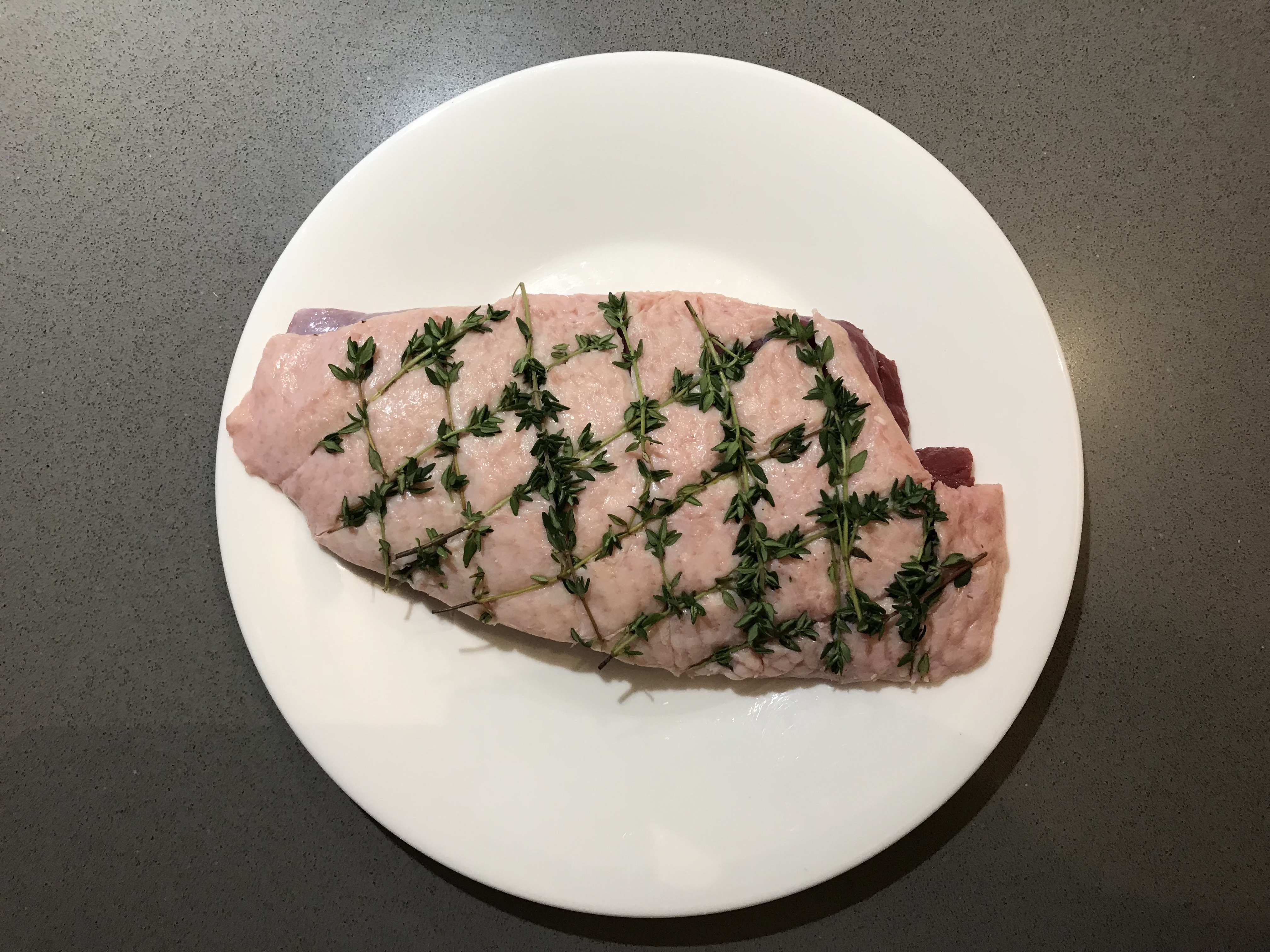
André Daguin passed away in December 2019 in Auch, France. From 1960 to 1997 he was owner and chef of the Hôtel de France in Auch. He was awarded two Michelin Stars and more importantly for us he put Gascogne on the culinary map. He was one of the leaders of the nouvelle cuisine and a master of foie gras. He was much appreciated by other French chefs and was elected President of Union des Métiers et des Industries de l’Hôtellerie, the French association of people working in hotels, restaurants and bars. His most significant and unparalleled contribution was the invention of Magret de Canard or grilled Duck Breast in 1959. It is one of many reasons why he was a grand chef.

A True Invention

The best known preparations of duck are confit de canard (the legs of the duck cooked in goose fat) and magret de canard, smoked or grilled. As if preparing the whole bird is not something you want to do. When you look for recipes in classic cookbooks like La Cuisinière Provençale by J.- B. Reboul (published in 1897) and in La Scienza in Cucina e l’Arte di Mangiare Bene by Pellegrino Artusi (publihed in 1891), then you will notice that all recipes are for complete birds. Braised if a young animal, stewed if older and larger. With olives, chipolata (small sausages), oranges or onions.
One day in 1959, after a busy lunch, a sales man arrived at the Hôtel. Not much was left in the kitchen, but André Daguin wanted to serve lunch to his late guest. He took a raw magret (ready to be made into confit) and prepared it quickly, like a steak. No doubt the surprised guest loved it. A nice and unconfirmed story.

Today grilled duck breast is one of France’s most popular dishes and many chefs offer recipes for it. With an orange sauce, with a green pepper sauce or with an Asian twist.
The original (!) by André Daguin is with foie gras. Obviously!

Breast of Duck with Thyme © cadwu


Salad with Various Beans and Swordfish

When in Valencia

The Mercat Central in Valencia is one of the largest markets in Europe. Its architecture is amazing, but even more stunning are the products: fruit, vegetables, mushrooms, wines, fresh meat, sausages, hams, herbs, spices, fish, bread, chickens, pickles, snails, weeds, offal, rice, nuts, beans: anything and everything you can dream of.
Albufera is a fresh water area not far from Valencia used for growing rice. It is of course the ideal rice for paella. If an original recipe of paella would exist, it would include rice, olive oil, rabbit, saffron and various beans such as broad beans, roget and garrofón.
Inspired by the classic Salade Niçoise we bought a slice of excellent swordfish, sweet onions, potatoes, eggs and of course: lots of beans. Shall we call it Salade Valençoise?

Wine Pairing

We served the salad as a main dish. Combining wine and salad is not straightforward because acidity is an important aspect of a dressing and therefore of a salad. In this case we have a range of flavours and textures so we would suggest a wine with a very present floral bouquet. The taste should be smooth and fruity. We enjoyed it with a glass of Albariño Rias Baixas 2018 produced by Bodegas Bouza do Rei, made from 100% Albariño grapes.
Another excellent choice would be Sericis, 2018 from the house of Murviedro. A wine from Utiel-Requena, so from the Valencia region. A wine made from 100% Merseguera grapes. Full bodied yet light, elegant and surprisingly low in its alcohol with only 12%. Well balanced acidity which is great when combining it with a salad.

What You Need

  • Mixed Salad
  • White Sweet Onion
  • Flat Beans (we also used the local red variety Roget)
  • Green Peas
  • Broad Beans
  • Garrofón (Lima Beans or Butter Beans)
  • Sword Fish
  • 2 Eggs
  • 2 Small (New) Potatoes
  • Olive Oil
  • Vinegar
  • Mustard
  • Black Pepper

What You Do

Start by pealing the broad beans, the green peas, the flat beans, the garrofón beans and the potatoes. Cook all five ingredients separately until al dente. Cook the eggs until just done. Let cool. Peel the broad beans and the garrofón beans again. Make a dressing by combining olive oil, vinegar and mustard. Slice the flat beans, the onion and the potatoes. Cut the egg in four. Fry the swordfish until just done. In parallel mix the salad with the onion, the flat beans, the green peas, the potatoes and the broad beans. Add the dressing and toss. Slice the swordfish and decorate the salad with egg, garrofón and swordfish. A touch of black pepper to finish.

Roulade of Pheasant with Mushrooms and Steamed White Cabbage

A Challenging Bird

Pheasant is not the simplest bird to prepare. It is too big to take the approach we prefer for partridge and it’s too low in fat to create a Faisan Rôti. The choice is between applying bacon on the outside and stuffing the bird. Both are not among our favourites: the bacon will overwhelm the taste of the pheasant and an old fashioned stuffing with chestnut, sausage meat, butter and onions is simply too much for us: we prefer a light, tasty cuisine. Our approach is to make a small roulade using the breast of pheasant. This is probably the driest part of the bird, but combining the meat with mushrooms will make it tender and moist. The mushrooms and thyme in the roulade support the delicate game-taste of the pheasant, making it into a most enjoyable dish for November and December.
Duxelles is an essential element of a Beef Wellington. We make a variation by using mushrooms, butter and thyme only. We don’t want the mushrooms too finely chopped, see picture, but feel free to give it more of a duxelles texture.
The right internal temperature for pheasant is between 60° and 65° Celsius (between 140° and 150° Fahrenheit). Best is to set your meat thermometer to 60° Celsius and allow the roulade to rest for 10 to 15 minutes. This way the meat will be lovely pink.

Wine Pairing

Both red and white are possible. The wine should not be too powerful, given the delicate taste of the pheasant. If you go for white, then Chardonnay and Chenin Blanc are a good choice. Given the white cabbage with cumin Riesling is also a nice idea. If red, then we would suggest a Beaujolais or a Pinot Noir.

What You Need

  • 2 Fillets of Pheasant
  • For the Duxelles
    • 150 grams of (Chestnut) Button Mushrooms
    • 50 grams of Porcini
    • Thyme
    • Butter
    • Black Pepper
  • Olive Oil
  • Crème Fraiche
  • Mustard
  • Chicken stock
  • For the Vegetables
    • White cabbage
    • Cumin
    • Excellent Olive oil

What You Do

Clean and chop the mushrooms and add to a warm pan with butter. The idea is to reduce the volume of the mushrooms but not to fry them. This may take 20 minutes. Halfway add the thyme. Take two sheet of foil and put one below a fillet and one on top. The former skin side of the breast should be visible. We use a small bottle to flatten the fillet. This does not require a lot of strength and be careful not to create holes in the meat. You’re looking for doubling the size, so not as thin as the veal for a Wiener Schnitzel or a Scaloppini a la Milanese. Now figure out how to combine the two flattened fillets, making sure you have some overlap. Spread the mushrooms on top, roll it up and create the roulade. Wrap it in foil and transfer to the refrigerator, allowing for the flavours to integrate and the roulade to set.
Heat your oven to 120° Celsius (250° Fahrenheit). Warm a heavy iron pan, add some olive oil and gently colour the roulade. Then transfer to the oven, add some butter and wait until the centre has reached 60° Celsius. When the roulade is ready, wrap it in aluminium foil and let it rest. Make a sauce of the cooking juices, mustard, crème fraiche and perhaps some chicken stock. Steam the cabbage for five minutes, add excellent olive oil and crushed cumin seeds and mix. Add the sauce to a warm plate, slice the roulade and serve with the cabbage.

Choucroute de la Mer with Riesling

The traditional Choucroute Garnie or d’Alsa­ce comes with various sausages, smoked pork belly, confit de canard, steamed potatoes and Dijon mustard. Combine it with a glass of Riesling and you will have a great dinner. Perhaps a bit heavy on the stomach, but the sauerkraut itself will make things lighter.
A very interesting variation is called Choucroute de la Mer. We have fond memories of restaurant Bofinger in Paris. They serve an excellent Choucroute de la Mer with haddock, salmon, sea bass, king prawns, boiled potatoes and horseradish butter. The haddock is actually smoked haddock, which works really well with the choucroute. The sharp horseradish is an excellent alternative for the Dijon mustard. When in Paris, go to Bofinger and order Choucroute de la Mer!

For some reason it’s hard to find smoked haddock where we live, so we tried smoked herring (kippers). Worked very well. And because we wanted to give the fish a deeper, fermented flavour (after all, the choucroute is fermented white cabbage) we marinated the fish in miso before frying it. Excellent result, deep and intense flavours and not to heavy on your stomach.

Wine Pairing

We very much enjoyed a glass of Riesling with our Choucroute de la Mer. We decided to buy a bottle of 2017 Riesling Kalkmergel, produced by Weingut Rings. It’s a classic, organic Riesling from the Pfalz in Germany. It is juicy and fresh with balanced acidity. Great combination with the sauerkraut, the fish and the umami from the miso.

What You Need
  • For the Marinated Fish
    • Salmon
    • Haddock
    • Miso
  • For the Choucroute
    • One Shallot
    • 500 grams of Sauerkraut
    • 10 – 20 Juniper Berries
    • Dry White Wine
    • Olive Oil
    • Bay Leaf
    • Butter
  • For the Horseradish Butter
    • Horseradish
    • Soft Butter
  • For the Mash
    • Parsnip
    • Jerusalem Artichoke
    • Parsley Root
    • Or a combination of these
    • White Pepper
    • Crème Fraiche
    • Olive Oil
  • 4 Large Shrimps
  • Kippers
What You Do

This recipe requires a bit of planning!
The fish needs to be marinated for five days. Use a shallow bowl, cover the bottom with miso and place the fish on top of it. Now cover the fish with miso, making sure it’s completely coated. It requires a bit of patience. Cover the bowl with foil and transfer to the refrigerator for 5 days. Check every day and if necessary add some miso. We use miso with less salt (and more flavours). After five days the salmon will have a deep red colour and the white haddock will be also have an beautiful red/brown colour. The miso marinate will also change the structure of the fish, so carefully monitor when frying. We have the best results with thinner pieces of fish.
Four days later (so one day before your want to serve the choucroute de la mer): taste the sauerkraut. If too much acidity, then squeeze and remove some of the liquid. Cut and slice a shallot. Crush the juniper berries (feel free to add a few more, we just love them). Now combine the sauerkraut with the shallot and the berries. Mix. Add white wine, a generous splash of olive oil and a bay leaf. Coat a heavy (iron) oven dish with butter and add the mix. Put aluminium foil on top of it, making sure you press it on the sauerkraut (as if it’s a cartouche). Leave for 4-6 hours in the oven on 80° Celsius or 175° Fahrenheit. Cool and store in the refrigirator for the next day.
Warm the dish in the oven (same temperature, let’s say one hour) and in parallel make the mash. Finish with some crème fraiche, a dash of excellent olive oil and white pepper. Keep warm.
Combine the soft butter with the grated horseradish. Taste and adjust. Set aside.
Clean the prawns without removing the head
Make sure you have three nice, warm pans. One heavy iron skillet for the prawns, two non-sticky ones for the salmon and the haddock.
Wash and dry the salmon and the haddock. Decide on the order of frying. We started with the salmon. We like to have a bit of caramelisation on the salmon.
In parallel (planning!) remove the skin from the kippers. Transfer to the the oven and grill two minutes on the former skin side. Turn, drizzle with some olive oil and grill for another three minutes.
Make sure salmon, haddock, shrimps and kippers are ready to be served at the same time.
Serve the sauerkraut on a warm plate and decorate with salmon, kippers, haddock and shrimps. Add the mash. And don’t forget the horseradish butter!

Choucroute de la Mer © cadwu

Partridge with Courgette and Thyme

Delicate

Partridge is perhaps the most delicate of game birds. They come in two sorts: the red-legged and the grey-legged. The grey-legged ones are more expensive and in general they may be hunted for a few days per year only. In all cases it is best to buy them early in the year (September until mid November). The season is short, so don’t wait too long!

The meat of a partridge is lean and tends to become very dry when preparing it. So what to do? Of course! Put a strip of bacon on each breast and transfer the poor bird to a hot oven.
Not really. The bacon will impact the characteristic taste of the partridge which is of course not something you want to do. And placing such a small, lean bird in a hot oven is a massive risk. Just a few minutes too long (simply because something else you are preparing takes a bit longer than expected) and the meat is bone dry. Stuffing the bird doesn’t help, the filling will be moist but the meat will be dry anyway.

The key to an excellent partridge is to be brave enough to use an oven on a really low temperature, meaning the temperature the meat should have when you serve it. Restaurant owner and celebrated Chef Peter Lute introduced this method in the Netherlands.

Another interesting aspect is that, different from many other birds, the legs of the partridge are not that special. They are fairly small and have lots of tendons.
So, no bacon, no hot oven and focus on the breast.

Partridge combines very well with a range of vegetables and herbs. The classic combination is with choucroute (Alsace style). We wanted to link our partridge to late summer by combing it with a thyme-courgette cake. Easy to make and full of flavours.

Wine Pairing

A red wine is preferred, one that is not overpowering, with hints of red fruit, a touch of oak and soft tannins. Our choice was a 2016 Shiraz from Australia: the River Retreat Murray Darling Shiraz. Great value for the price.

What You Need

  • For the partridge
    • One Partridge
    • Two Garlic Gloves
    • Bay Leaf
    • Butter
    • Olive Oil
  • For the thyme-courgette cake
    • One Courgette
    • One Egg
    • Thyme
    • Parmesan Cheese
    • Olive Oil
  • Black pepper

What You Do

Start with preparing the partridge. This means carefully cutting of the two legs and removing the lower part of the back of the bird (the tail bone area, see picture). Warm a heavy iron pan and add butter. Add bay leaf and halved garlic gloves. Coat the bird with butter, making sure you get a very light brown colour. Put the legs on a plate and cover with foil. Now transfer the pan and the plate to a warm oven: 70° Celsius or 160° Fahrenheit. Leave in the oven for 50 – 60 minutes. Since the oven is on the ideal temperature for the meat, it doesn’t really mater if you leave them in the oven for 70 minutes. Remove the two breasts from the bird. Remove the bigger bone from the leg. Coat the meat with the fat from the pan. Transfer to a plate and cover with plastic foil.

Grate the courgette, transfer to a bowl, add a teaspoon of salt, mix and transfer to a sieve. Let rest for at least two hours. Discard the liquid. Wash the courgette with cold water and put the grated courgette in a clean cloth. Squeeze out as much liquid as you can. Beat the egg slightly; mix with the courgette, the grated Parmesan cheese and a generous amount of thyme. Add olive oil to a fairly hot non-sticky pan and start frying the courgette mixture. This takes longer than expected! In the mean time make sure your heavy iron skillet is heated through and through. Flip the courgette cake and fry the other side. In parallel add olive oil to the skillet, and quickly brown the meat. Separate the tenderloin from the breast and remove the fleece before serving the breasts. If all is well you will see a beautiful pink colour, indicating your cuisson is perfect and your partridge as tasty and delicate as possible. Before serving add some black pepper and extra thyme.

Dashi

For most of us ‘stock’ begins with a combination of fish or meat with vegetables such as carrot, onion, leek and celery together with herbs like bay leaf, thyme and parsley. Dashi, the classic stock from the Japanese cuisine, is very different: it takes between one and four ingredients and takes only 30 minutes to prepare. The ingredients are kelp (kombu), dried small anchovies or sardines, dried shiitake and dried bonito flakes (katsuobushi). The simplest dashi is made from kombu only. Its taste is gentle with a touch of umami. Great vegetarian stock.
The best known is awase dashi and it’s made from kombu and katsuobushi. This one is the basis for Oden, miso soup and many other dishes. It’s also the basis of our Dashi with Matsutake and Shrimps and for Dashi with Nameko and Shrimps. If you add a splash of dashi and some Japanese mustard (karashi) to your mayonnaise you can make your own Japanese mayonnaise.

Katsuobushi is made from bonito or tuna. It’s a complex and time-consuming process, so don’t be surprised to pay between € 10,00 and € 15,00 per 100 gram. For one litre of dashi you only need 20 gram, so don’t worry too much about the costs. And you can make a ‘second’ dashi by repeating the process with the same kombu and katsuobushi.

A true Japanese chef will begin her or his day with shaving katsuobushi. We simply buy shaved katsuobushi. It comes in bags of 25 or 40 grams.

What You Need
  • 1 liter of Water
  • 20 gram of Kombu
  • 20 gram of Katsuobushi
What You Do
  1. With a wet cloth gently clean the kombu
  2. Put the kombu in the cold water and heat slowly to 80° Celsius or 175° Fahrenheit
  3. Take you time!
  4. When the temperature has reached 80° Celsius or 175° Fahrenheit, remove the kombu (and store for using it for a second dashi)
  5. Bring the liquid to the boil
  6. Immediately reduce heat
  7. Add the katsuobushi
  8. Bring to a boil
  9. Immediately remove from heat
  10. Let sit for 10 minutes or so until the katsuobushi has sunk to the bottom
  11. Pass the liquid through a sieve
  12. You can also use a clean cloth, but don’t squeeze it. You want a clear broth
  13. The dashi can be used immediately, stored in your refrigerator for a few days or kept in the freezer for a few weeks (not preferred)