Flan with Tofu, Dashi and Ginger

An Asian Coddler

Serving food prepared in a coddler is always good fun. Turn of the lid and be surprised! In this case it’s a light and elegant starter; one that you can prepare the day before. The ginger and spring onion bring spiciness and freshness, the dashi brings umami and the flan a velvety, rich feeling. Making the dish comes with two challenges: the flan should be smooth and the gel not too firm.

Sake Pairing

Sake is best with this dish. The taste of the flan is subtle with a nice fresh touch because of the ginger and spring onion. The gel is a bit salty, given the dish a nice edge. The sake should be straight and crisp (and cold of course).

What You Need

  • For the Flan
    • 8 Small Coddlers (so-called standard size)
    • 100 gram of Silken Tofu (light and soft)
    • 1 Egg
    • 1 Egg Yolk
    • 50 ml Dashi (preferably home-made)
    • Touch of Soy Sauce
    • 1 Teaspoon of Mirin
    • Butter
    • Dill
  • For the Gel
    • 75 ml Dashi
    • Cornstarch
    • Fresh Ginger
    • Spring Onion

What You Do

In a bowl mix the egg and the egg yolk. Use a blender to smoothen the tofu. After blendering it should look like yoghurt. In a second bowl mix the tofu, 50 ml dashi, a touch of soy sauce and mirin. Now combine the content of the two bowls and mix gently. Pass through a sieve. It’s important that the mixture is very smooth, so no lumps or bits of white from the egg. And no bubbles. If not, pass through a finer sieve.
Apply a very thin layer of butter to the coddler, just enough to cover the inside. Pour the mixture in the coddlers, but nor more than 2/3. The mixture will set but not raise (or only a little bit). Close the coddlers, but not too tight. You want to test one during the cooking process and you don’t want to burn your fingers.
Set your oven to ‘classic’ and to 170° Celsius or 340° Fahrenheit. Put the coddlers in a large oven tray and add boiling water. The water should reach ¾ of the coddler, leaving ¼ free. Once in the oven reduce the temperature to 120° Celsius or 250° Fahrenheit and cook for 25 to 30 minutes. The coddlers are done when a metal pin comes out clean.
Remove the coddlers from the oven and allow to cool. You can do this by putting them in cold water, but you can also give it a bit of time. Make sure you dry the inside of the metal lid (condense).
Reduce the dashi. The taste should be relatively strong because the cornstarch will soften it. Better to use agar agar, but cornstarch is perfectly fine in this case. Thicken the sauce with the starch and let it cool. It should work as a gel on top of the flan.
Grate the ginger and very thinly slice both white and green of the spring onion.
Put a bit of ginger in the middle of the flan; sprinkle the onion over the top of the flan and finish by pouring a bit of the gel. Ideally this will cover the top (and the ginger and spring onion) and flow between the coddler and the flan.
Put the coddlers in the refrigerator and let cool. Half an hour before serving take them out of the refrigerator, remove the lid, dry it and put it back on again. Decorate with dill.

Skate with Sauce Vierge

Butter and Lemon

Once upon a time, there was a simple sauce called Sauce Vierge. It wasn’t difficult to prepare, just beat some butter until soft, then add some lemon juice, salt and pepper and continue beating until fluffy. Serve with asparagus, leeks or other boiled vegetables. It was not the most exciting sauce ever and we could easily have forgotten Sauce Vierge.

But then, lo and behold, things changed. Sauce Vierge became hot and happening, thanks to the Nouvelle Cuisine and chef Michel Guérard. He replaced the butter with extra virgin olive oil. A Sauce Was Born!

Nouvelle Cuisine ruled the world and in its slipstream Sauce Vierge became a star. A now warm sauce with additional ingredients such as garlic, tarragon, basil, parsley and chervil. Sauce Vierge became the ideal sauce to accompany fish. Preparing it was fairly straightforward: flavour the oil with garlic, then remove the garlic and add lemon juice and chopped herbs.

Coriander and Tomatoes

In 1976 Michel Guérard published a recipe of Sauce Vierge, including crushed coriander seeds and diced tomatoes. His suggestion is to serve it with sea bass, cooked over seaweed (bladder wrack?), and a purée of watercress.

Antiboise

Sauce Vierge was a star, but from a marketing perspective the name isn’t ideal. The term Antiboise became popular, especially outside of France. Antiboise is named after the city of Antibes in the south of France. The name is clever and so is skipping the word ‘sauce’. So you could call Michel Guérard’s dish Sea Bass with Antiboise and a purée of Watercress.

A Warm Dressing

Let’s go back to the original Sauce Vierge. A simple sauce that combined fluffy butter with lemon. So a modern version with olive oil is a great idea. We also like the idea of flavouring the oil with garlic and chopped herbs.
Depending on the food that comes with the Sauce Vierge you could add chopped tomatoes, crushed coriander seeds, black olives or capers. Don’t add too much: today’s Sauce Vierge is more like a warm dressing then a classic sauce.

Wine Pairing

Given the powerful flavours (capers, olives, herbs, skate) we suggest a fresh white wine with a lots of fruit and easy to drink. Our choice was a Verdejo produced by Mocen (Spain). The tasting notes are described in this video.

What You Need

  • Skate (or Sea Bass)
  • Butter
  • Olive Oil
  • Garlic
  • Lemon
  • Excellent Tomatoes
  • Basil
  • Parsley
  • Chives
  • Black Olives
  • Capers
  • Black Pepper

What You Do

Heat some olive oil and add the crushed garlic glove. Let it rest on low temperature until the oil is infused. Peel and seed the tomatoes. Chop in small cubes. Cut the olives lengthwise in 8. Cut the capers. Roughly cut all the herbs. Fry the skate in oil and/or butter until brown. Remove the garlic, add lemon juice and tomatoes; mix. Serve the skate on a plate, add the herbs, the olives, the capers and black pepper to the sauce, mix and serve the sauce on top of the fish.

Skate with Sauce Vierge © cadwu

Halibut Marinated in White Miso

Saikyo Yaki

Grilling is an art in its own right in Japan. A simple way is Shioyaki: the fish is salted, left to chill overnight and grilled the next day. An essential element of a Japanese breakfast, together with pickled plums (Umeboshi),  sweet yet savoury omelet (Tamagoyaki), rice, a bowl of miso soup and green tea. As you can imagine a traditional Japanese breakfast is rather nutritious and packed with flavours.

A well known grilling method is Teriyaki: the fish is marinated in a combination of soy sauce, mirin and sake for a few hours and then grilled, with the fish dipped in the sauce several times during the grilling process.

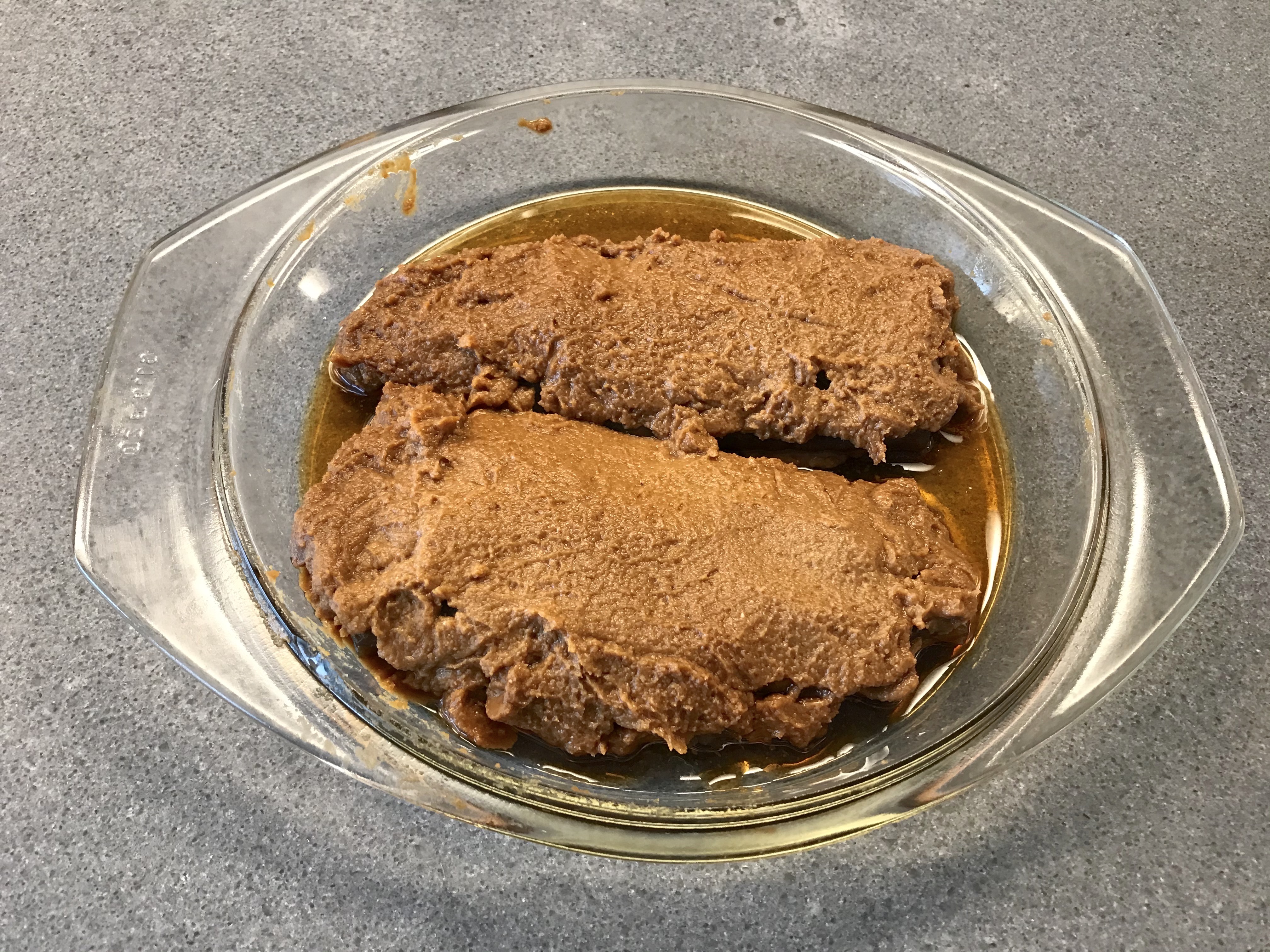
Another way is Saikyo Yaki: the fish is marinated in Saikyo miso for 5 days and then grilled. Saikyo miso is a white, slightly sweet, low sodium miso from Kyoto. The marinated and grilled fish is served with pickled ginger. Originally a way to preserve the fish, it’s now much liked because of the umami and the intriguing combination of flavours and aromas.

Sake Pairing

Best served with dry sake. We prefer Junmai Taru Sake as produced by Kiku-Masamune. The sake is matured in barrels made of the finest Yoshino cedar. The aroma has indeed clear hints of cedar. The sake will clear your palate and allow for a more intense taste of the marinated halibut.

What You Need

  • Two slices of fresh halibut (thin is best)
  • White Miso (preferable with less salt)
  • Pickled Ginger or Cucumber
  • Karashi (Japanese mustard)

What You Do

Start four or five days in advance. Coat the halibut with miso making sure the halibut is fully coated. Cover with foil and transfer to the fridge. Check on a daily basis if the fish is still covered.
Using a small spoon carefully remove most of the miso. Rinse the halibut with water and dry with kitchen paper. The white flesh should now be slightly orange. Heat a non sticky pan until warm, but not hot, through and through. If too hot, the fish will burn. We set our induction hob to 6 (where 9 is the maximum). Add a bit of olive oil and then fry the fish for 2*2 minutes. Serve on a warm plate with pickles and karashi.


Risotto with Beetroot and Gorgonzola

Contemporary Classic

Enrico Bartolini (Castelmartini, Italy, 1979) is an extremely talented chef with restaurants in Italy, Hong Kong and Dubai. He is the only chef to have been awarded four Michelin stars at the same time. In his restaurant Mudec in Milan he showcases his motto Contemporary Classic by exploring new worlds and new flavours, without forgetting origins and traditions. One of his many signature dishes is Risotto with Beetroot and Gorgonzola (Risotto alle rape rosse e salsa al gorgonzola). An intriguing combination because beetroot can be very sweet which could easily ruin the taste of the risotto. Which is exactly what happened the first time we prepared this dish. We did more research only to read recipes we didn’t like because the beetroot was added at the beginning of the preparation process (giving the risotto a gluey texture) or honey, mint, balsamic vinegar, oranges or salty goat cheese (to balance the sweetness of the risotto!) was added.

We decided to take a different approach and see this as a combination of two dishes with the gorgonzola as connection. Now we could focus on preparing a savoury beetroot puree that would be tasty in its own right and create a brilliant combination with the risotto.

Wine Pairing

We enjoyed our risotto with a glass of Bianco di Custoza 2018, made by Monte del Frà from Italy. It is a well-balanced, dry white wine, with a fruity nose. Its colour is straw yellow, with pale green highlights. In general you’re looking for a light, aromatic dry white wine.
You could also serve a glass of Chardonnay; one that has a touch of oak and vanilla plus a lightly buttery finish. Our choice would be the Chardonnay of La Cour des Dames

What You Need

  • For the Risotto
    • 70 gram Carnaroli Rice (for instance from Acquerello)
    • (Vegetable) Stock
    • 1 Bigger Shallot
    • Parmesan Cheese
    • Butter
  • For the Beetroot Puree
    • 1 Fresh Beetroot
    • 2 Tablespoons of White (Cider) Vinegar
    • 1 Tablespoon of White Wine
    • 3 Freshly Grated Cloves
    • Black Pepper
  • For the Sauce
    • Gorgonzola Dolce
    • Milk

What You Do

The day before wash the beetroot and wrap in aluminium foil. Leave in the oven on 180° Celsius (or 355° Fahrenheit) for 60+ minutes. Cool and store in the refrigerator.
Thinly chop the shallot and glaze in butter. In parallel peel the beetroot and chop. Combine a third of the shallots with the beetroot, the white wine, the vinegar and finely grated clove. Blend until smooth. Taste and adjust. In the mean time prepare the risotto. With a fork combine the soft Gorgonzola Dolce with the milk until it’s smooth and has the consistency of custard. Depending on the ‘blue’ in the cheese you may want to use a blender. Warm both the beetroot puree and the Gorgonzola sauce in the microwave or Au Bain Marie.
Time to start assembling the dish. Add butter and Parmesan to the risotto. Add more Parmesan than usual to create the right balance. Now start adding the beetroot puree, spoon for spoon. You’re looking for a balanced taste and a bright red colour. Perhaps add a drop of lemon and some black pepper. Transfer to the plate and using a spoon or a small sauce bottle add the sauce (drop-wise).

Risotto with Beetroot and Gorgonzola © cadwu

Haddock Marinated in Miso

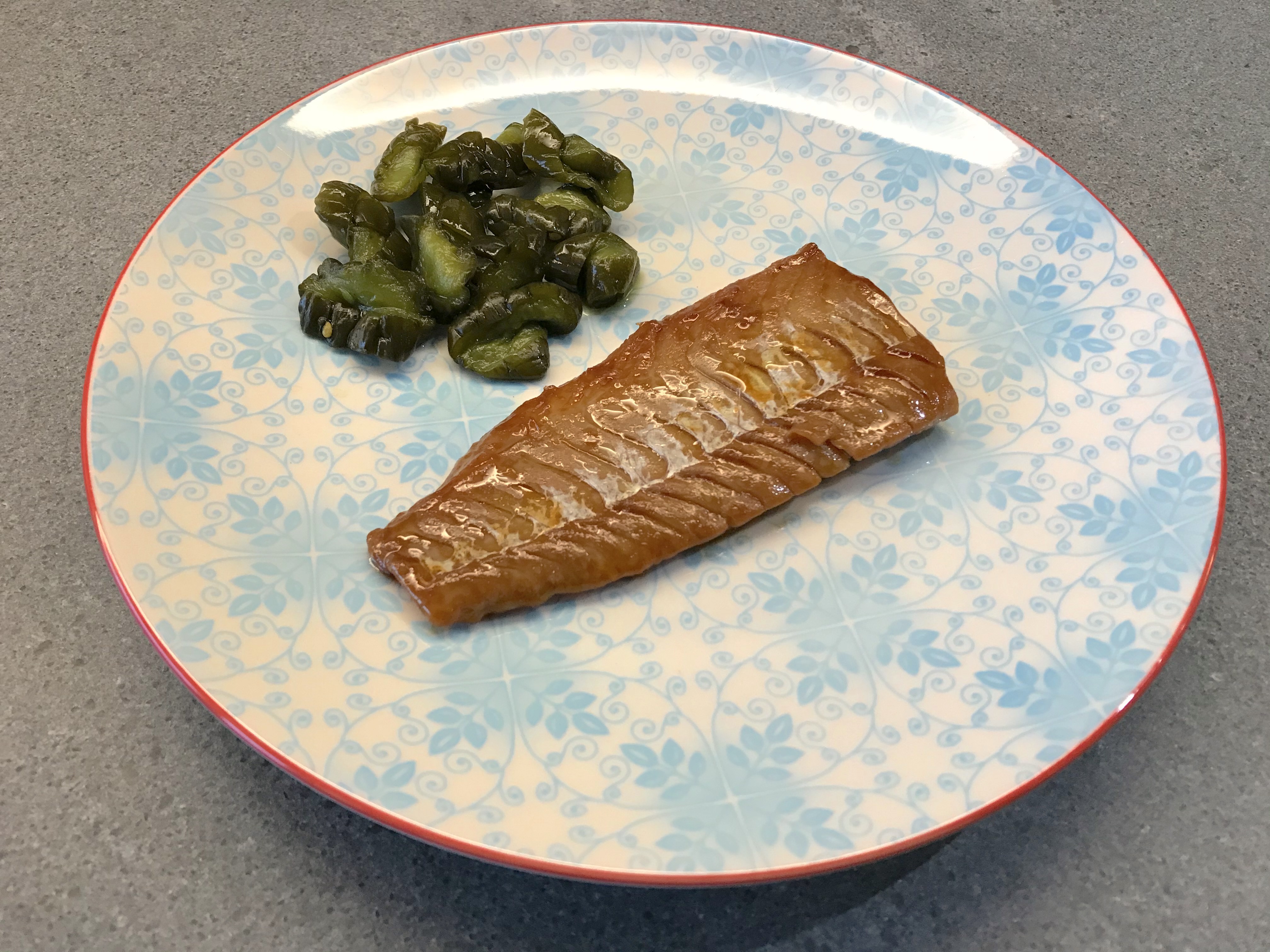
The original recipe is from Kyoto and combines fresh fish with Saikyo miso. This is a white, slightly sweet, low sodium miso. The fish is marinated in miso and then grilled and served with pickled ginger. Lots of umami of course and the intriguing combination of miso and fish. Nowadays salmon is often used when preparing this popular dish.

Our approach is slightly different. We use white fish (haddock preferred, but rouget, halibut or cod are also fine) and marinate it in red miso for four or five days. The flesh will become beautiful deep red and the miso will gently flavour the fish, without overwhelming it. It’s not a subtle starter but the taste is great especially when combined with pickled cucumber and karashi (Japanese mustard). 

Sake Pairing

Best served with a dry sake. We prefer Junmai Taru Sake as produced by Kiku-Masamune. This fine sake is matured in barrels made of the finest Yoshino cedar. The aroma has indeed clear hints of cedar. The sake will clear your palate and allow for a more intense taste of the marinated haddock.

What You Need
  • Two slices of Haddock (thin is best)
  • Red Miso (preferable with less salt)
  • Cucumber Pickles
  • Karashi
What You Do
  1. Start four or five days in advance
  2. (optional) Combine miso with some sake
  3. Fully coat the haddock with the mixture
  4. Cover the dish with foil and transfer to the fridge
  5. Check on a daily basis if the fish is still fully coated
  6. Use a small spoon to carefully remove most of the miso
  7. Rinse the haddock with water and dry it with kitchen paper
  8. The white flesh should now be red
  9. Heat a non sticky pan until warm, but not hot, through and through. If too hot, the fish will burn. We set our induction hob to 6 (where 9 is the maximum)
  10. Add a bit of olive oil and then fry the fish for 2*2 minutes
  11. Serve on a warm plate with pickles and karashi.

Baba Ghanoush

Eggplant

Baba Ghanoush is tasteful and easy to make. Combine it with olives, pickles and flat bread (naan) to create a delicious starter to share. Don’t be tempted to buy Baba Ganoush at the supermarket. Most of these products lack the typical taste as a result of charring the eggplant.
Sumac is an ingredient from the Levantine cuisine. Basically sumac powder is the result of crunching dried berries of the sumac plant. The taste vaguely resembles cranberries with a touch of lemon. In this case it adds fruitiness to the dish. The sweetness of the berries combines well with the garlic.

Wine Pairing

Enjoy Baba Ganoush with a glass of white Lebanese wine, but since that’s hard to find a nice glass of Cava is also a good choice.

What You Need

  • 1 Eggplant
  • 1 Garlic glove
  • 1 Tablespoon of Tahini
  • Olive Oil
  • Greek or Turkish yoghurt
  • Lemon Juice
  • Sumac
  • Pomegranate

What You Do

Start by grilling the eggplant (in the oven in our case) to the point of charring. Ideal would be a char coal grill, but an oven grill also does the trick. Then leave the eggplant in the hot oven until very soft; maybe 30-45 minutes in total, depending on the seize of the eggplant. Some suggest rubbing the eggplant with olive before grilling it that’s not necessary.
Transfer the eggplant to a plate and let cool. Now cut in half and use a spoon to separate the flesh from the skin. Use a kitchen knife to cut the flesh very thinly. Put the mixture in a sieve and reduce the amount of liquid in the mixture. Add the garlic and mix well.  Add tahini and while stirring slowly add olive oil to create a thick mixture. Add yoghurt and some lemon juice. Taste well and adjust by adding more tahini, yoghurt or lemon juice. Allow to integrate for at least 15 minutes before serving.
Spread the baba ghanoush on a small plate, add a splash of excellent olive oil and sprinkle some pomegranate seeds and sumac to finish.


Haddock with White Beech Mushrooms

Popular Fish

When you mention Haddock, Cod is never far away. Two of the world’s most popular fish. Many recipes and foodies describe the two as being very similar in terms of taste and preparation. We humbly disagree. We think Haddock is more flavourful and present compared to the mild taste of Cod. The structures differ as well, although both require your constant attention; they easily overcook.

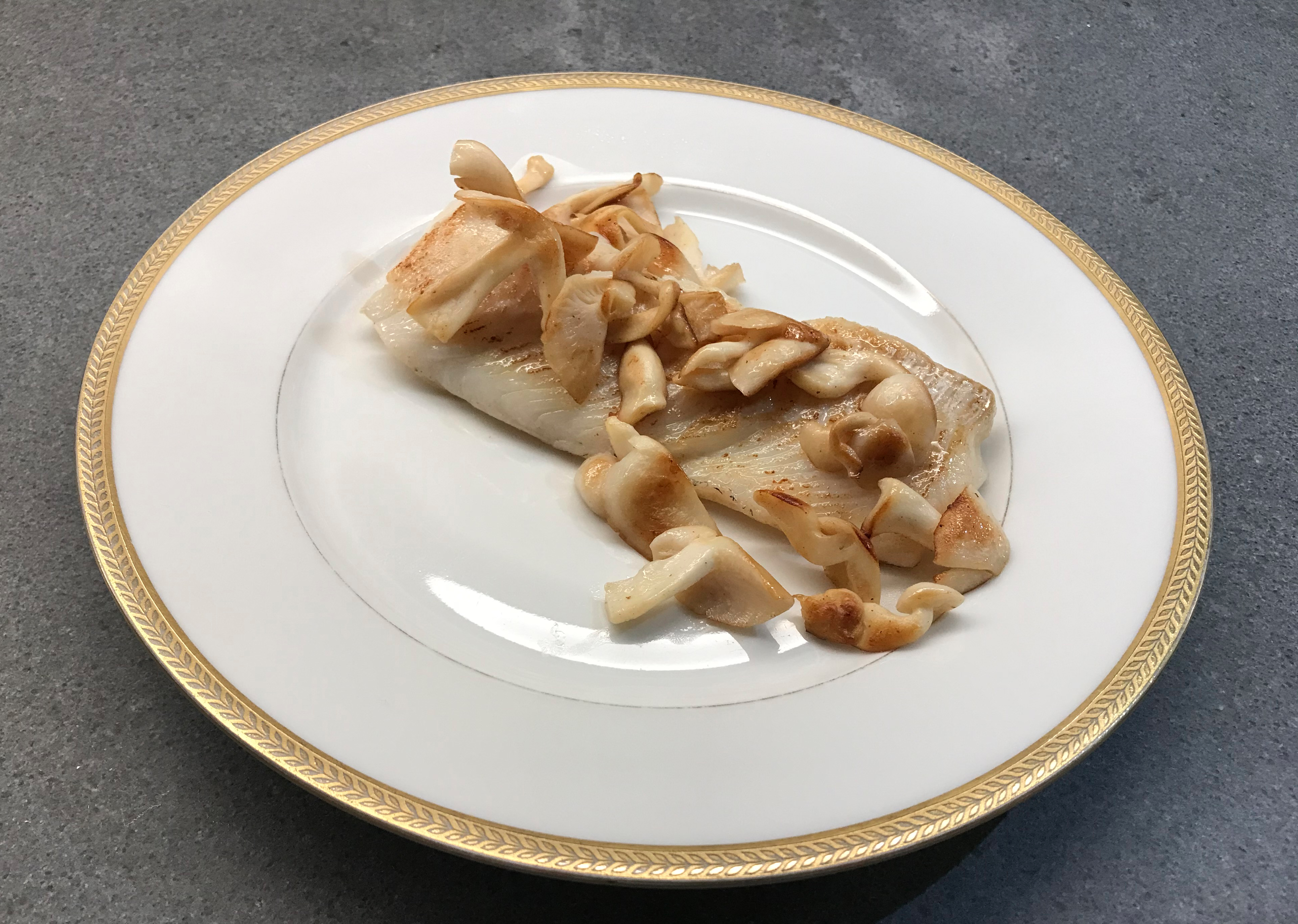
Beech Mushrooms are more and more widely available, which is great. The slightly nutty  taste in combination with their texture makes them ideal for this dish. And the golden colour of the fried white beech mushrooms is perfect with the golden colour of the fried haddock.

Wine Pairing

Our choice was a bottle of Pinot Grigio made by MezzaCorona. This is a dry and crispy white wine with a beautiful deep yellow colour. It’s an elegant wine with just the right acidity to relate to both the fish and the mushrooms.

What You Need

  • 200 grams of Haddock (without the skin)
  • 100 gram of Beech Mushrooms
  • Butter
  • White Pepper

What You Do

Clean the beech mushroom with kitchen paper and half. Check the fish for bits you don’t want to eat. Fry the fish in butter. Both sides should be beautiful golden brown. In parallel gently fry the beech mushrooms in butter.
Serve the beech mushrooms on top of fish. Perhaps a touch of white pepper.

Haddock with white Beech Mushrooms © cadwu

Homemade Bread

The Joy of Baking

We love baking in these challenging times. Baking no-knead bread is easy and straightforward and the result is amazing. Enjoy the homely and warm feel in your house after having baked a bread. Enjoy having lunch with freshly baked bread!
Baking is a great way of fighting stress and anxiety.

The perhaps oldest reference to no-knead bread is to Elizabeth Moxon who described a no-knead bread recipe in 1764 as shown in this nice instructive video. The recipe below is based on the recipe courtesy of Jim Lahey, owner of Sullivan Street Bakery, New York. It was published in the New York Times in 2006 and can also be found in his book My Bread.

The recipe is about slow rise fermentation. One gram of yeast (!) in combination with 19+3 hours of rest will do a wonderful job. The dough will be perfect and kneading, as you would expect, is not required.

What You Need

  • 400 gram of Flour (we use 200 gram of Whole Grain Flour and 230 gram of Plain White Flour)
  • 25 gram Blue Poppy Seed
  • 25 gram Brown Linseed
  • 1 gram Instant Yeast
  • 4 gram Salt
  • 355 gram Water
  • Additional Flour
  • Bran

What You Do

Start 24 hours before you want to eat your homemade bread.
Mix flour, seeds, yeast and salt. Add water and using a fork or spoon create one mixture. Let rest in a bowl covered with foil for 18 hours. Dust your worktop with a generous amount of additional flour. Remove dough from bowl and fold 4 times. Let rest on a towel also generously dusted with flour and bran for 3 hours. Heat your oven (with the pot inside) to 235˚ Celsius or 455˚ Fahrenheit. We used a 20 cm Le Creuset Cast Iron Round Casserole. Put the dough, seam side up, in the (very hot) pot, close it and bake for 30 minutes. Remove the lid and bake for 15 minutes until it is nicely browned. Let cool on a wire rack for at least an hour before slicing your no-knead with blue poppy seeds and brown linseed.
PS You can also follow the video as provided by the New York Times.

Quail with Pruneaux d’Agen, Sage and Olives

Quail

We love our quails! They have a delicate taste, but they also allow you to add strong flavours like sage, bay leaf or black olives. We prefer small and tasty black olives (in oil) for instance Taggia olives from Italy. Prune-wise Pruneaux d’Agen are ideal, but in general the prune should be moist, sweet and full of flavours.

Wine Pairing

A medium bodied red wine, not too complex, will work very well; for instance a Shiraz. We enjoyed our quail with a glass of Puech d’Hortes from La Colombette made from syrah and grenache grapes. The wine should balance with the sweetness (sage, Pruneaux d’Agen), the nutty character of the pancetta and the bitterness of the olives and the sage.

What You Need

  • 2 Quails
  • 50 grams of Pancetta
  • Sage (fresh, 6 leaves or so)
  • 6 Pruneaux d’Agen
  • 10 or more Black Olives
  • Olive oil
  • Butter

What You Do

Make sure the quail is sufficiently fat, not damaged and not frozen. Clean the inside of the quails with kitchen paper and remove anything that’s left. We prefer it if the head is still attached to the body. This allows you to use the skin of the neck, after having removed the head and the spine. Cut 4 prunes, the pancetta, the sage and the olives in smaller bits and mix together. Now stuff the quail with the mixture and finish with a prune. Use kitchen string to close the quail. Pre-heat your oven to 220° Celsius or 430°  Fahrenheit. Put the quails in a skillet with olive oil. Put some butter on top of the quail. Make sure the breast is downward facing. This way the fat will go towards the breast, making sure these are nice and moist. Put in upper half of oven. After 10 minutes turn the quails and label fat over the breast. After another 10 minutes your quails should be ready and golden. This of course depends on your oven. You may want to give the quails a few extra minutes. Remove from the oven, cover the quails with aluminium foil and let them rest for 10 minutes. Remove the kitchen string before serving.


Salade Niçoise

Pan Bagnat

The origin of the Salade Niçoise goes back to the days that life on the French Côte d’Azur was harsh. It was a remote and poor region and people tried making a living trough fishing, harvesting flowers for the perfume manufacturers and growing olives. Not a tourist in sight and no fancy lunches. Bread would be baked once every fortnight and people would soak the stale, day-old bread with water, olive oil or ripe tomatoes. Over the years this developed into what is known today as Pan Bagnat: bathed bread. Interestingly enough the stuffing became a dish in its own right: the Salade Niçoise.

Today’s Salade Niçoise is of course much more than water, olive oil and tomatoes. According to the founders of the label Nissarde Cuisine the Salade Niçoise is a combination of tomatoes, boiled eggs, salted anchovy, tuna in oil, spring onion, small black Niçoise olives, basil and olive oil. Optional ingredients are artichoke, broad beans, green pepper, garlic and radish.
And now I can hear you think: but how about the haricots verts and the potatoes? And haven’t you forgotten the vinegar?

Let’s start with the vinegar: a few drops are allowed but the idea goes back to the Pan Bagnat. So little or no vinegar and certainly no balsamic vinegar, mustard or mayonnaise. 

It was Auguste Escoffier who introduced the haricots verts and the potatoes as ingredients of the Salade Niçoise. For the guardians of the Nissarde Cuisine this is clearly a ‘no go’ (also because Escoffier was not from Nice). We were brave and did a small experiment by preparing both variations.

We expected the Escoffier version to be the winner of our small competition, but the stars clearly go to the Nissarde version: elegant, light, full of flavours and a tribute to the ingredients. Forget about haricots verts, potatoes, vinegar and grilled fresh tuna!

What You Need

  • Tomatoes
  • Salted Anchovy
  • Tuna in Oil
  • Spring Onion
  • 2 Boiled Eggs
  • Small Black (Niçoise) Olives
  • Basil
  • Olive oil
  • Optional
    • Artichoke
    • Broad Beans
    • Green Pepper
    • Garlic
    • Radish
  • Version Escoffier
    • Haricots Verts
    • Potatoes
    • Mesclun
    • Vinegar
    • Black Pepper

What You Do

For the Nissarde Cuisine version: cook the eggs until nearly set, clean the vegetables, wash and slice the anchovy. Then combine quartered tomatoes, sliced spring onion, tuna, anchovy, olives and basil. Drizzle with excellent olive oil and garnish with eggs. Toss briefly to make sure all ingredients are coated with oil.
For the Escoffier version: briefly cook the haricots verts and cool in cold water. Cook the potatoes until done. Cook the eggs until nearly set. Wash and slice the anchovy. Clean the vegetables. Combine quartered tomatoes, sliced spring onion, tuna, anchovy, olives, cubed potatoes, haricots verts and basil. Mix olive oil and vinegar. Drizzle with the dressing and garnish with eggs. Toss briefly to make sure all ingredients are coated with the dressing.
For a more luxurious version replace the canned tuna with grilled tuna.