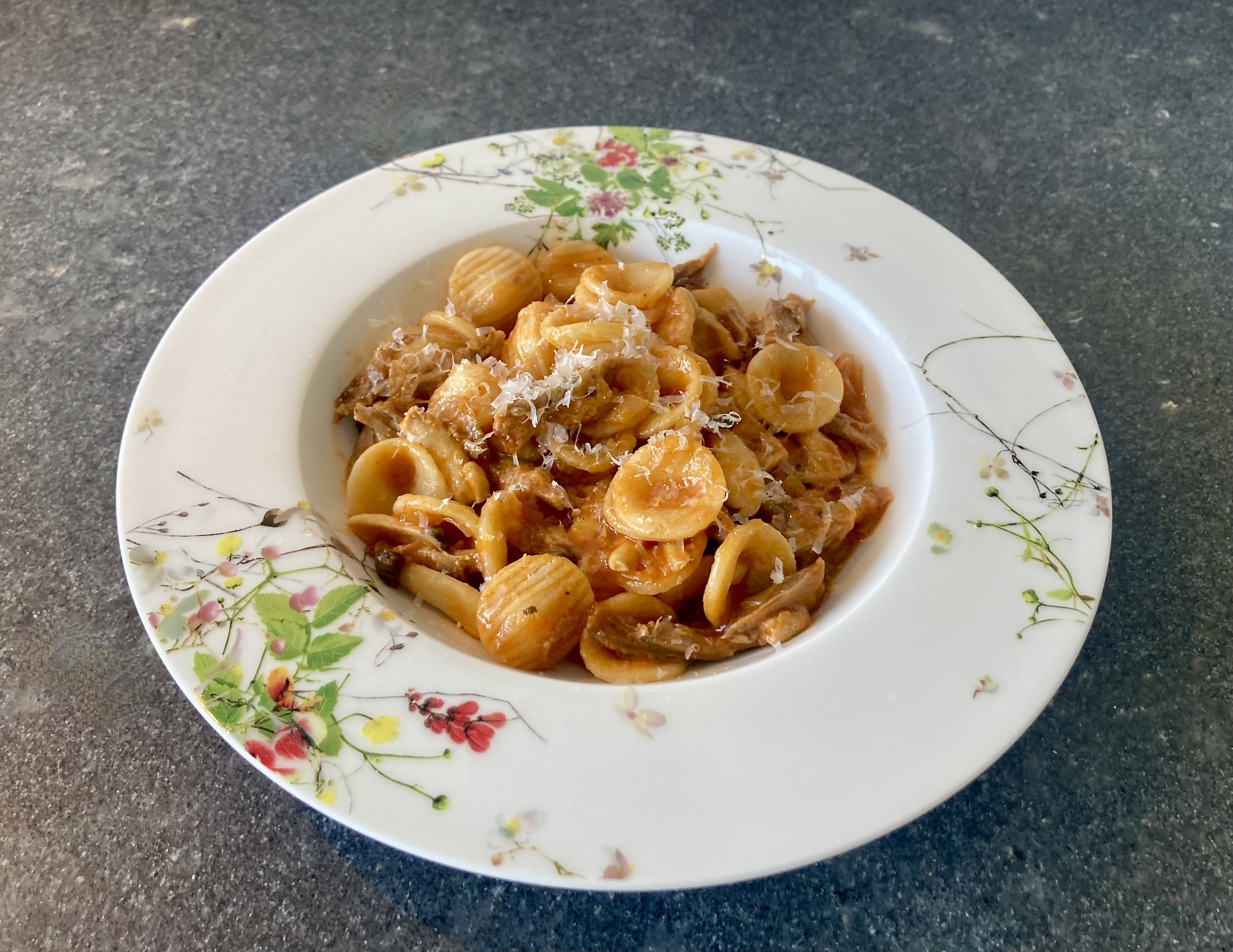
Orecchiette with Zucchini and Parsley

How about a delicious, vegetarian starter, one that is easy to make and requires only a handful of ingredients? It combines orecchiette, zucchini (courgette), parsley, olive oil, Parmesan cheese and black pepper.
Parsley is often used, as decoration, to add a touch of green to a dish. Which is such a pity, because parsley is not just a bit of green: it’s a delicate herb. In this dish it’s crucial: you will taste its slight bitterness and its peppery notes. At the same time, it enhances the flavour of the zucchini and it brings everything together. 
Pasta-wise we think orecchiette is perfect for this dish. The ‘ears’ allow you to taste everything in the dish, with every bite.

Wine Pairing

We suggest a white wine with the orecchiette with zucchini and parsley, for instance from the Lazio region in Italy. In general a light, refreshing wine with hints of green apple and citrus.
We enjoyed a glass of Prima Luna Frascati. This is a white wine made by Mauro Merz with malvasia bianca di candia and trebbiano grapes. Its freshness matched very well with the various flavours of the dish and, obviously, with the parsley!

What You Need
  • Zucchini
  • Flat Leave Parsley
  • Orecchiette
  • Olive oil
  • Parmesan cheese
  • Black Pepper
What You Do
  1. Wash the zucchini. Don’t peel. Chop (think of the size of the orecchiette)
  2. Chop the parsley
  3. Grate Parmesan cheese
  4. Heat a skillet, add olive oil and gently warm the zucchini; no colouring needed
  5. In parallel cook the orecchiette accoding to the instruction
  6. A few minutes before the orecchiette is ready, add half of the parsley to the zucchini, combine
  7. When the orecchiette is al dente, drain but keep some of the cooking liquid
  8. Add the orecchiette to the pan with zucchini and parsley
  9. Add some black pepper and combine
  10. Check if you’re happy with the result, feel free to add cooking liquid, olive oil and/or black pepper
  11. Serve on hot plates, sprinkle with Parmesan cheese
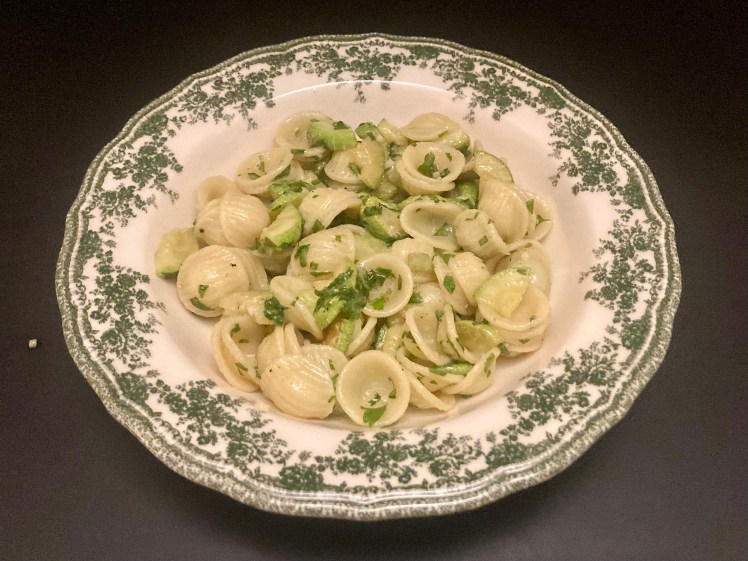
Orecchiette with Zucchini and Parsley ©cadwu is a great vegetarian starter that pays tribute to all ingredients, including the parsley.
Orecchiette with Zucchini and Parsley ©cadwu

Ratatouille Niçoise

It’s always hard to say what the original version of a dish is, assuming it even exists. In most cases recipes evolve over time, influenced by people, availability of ingredients and culinary trends. Ratatouille is a good example: it originates in the Provence, or more precisely: in the Niçoise region. Its local name is ratatolha. Ingredients are typical for this area: tomatoes, onions, garlic, zucchini, eggplants and herbs like thyme and marjoram. Meaning that we don’t really know what the ingredients were before the introduction of tomatoes and bell peppers in the region.

In 1976 chef Michel Guerard in his book Le Cuisine Minceur introduced Confit Bayaldi, a variation whereby the vegetables (and mushrooms) are thinly sliced and baked in the oven.
In 1999 chef Thomas Keller added a piperade and a vinaigrette to the Confit Bayaldi. This is the ratatouille that features in the classic film Ratatouille.

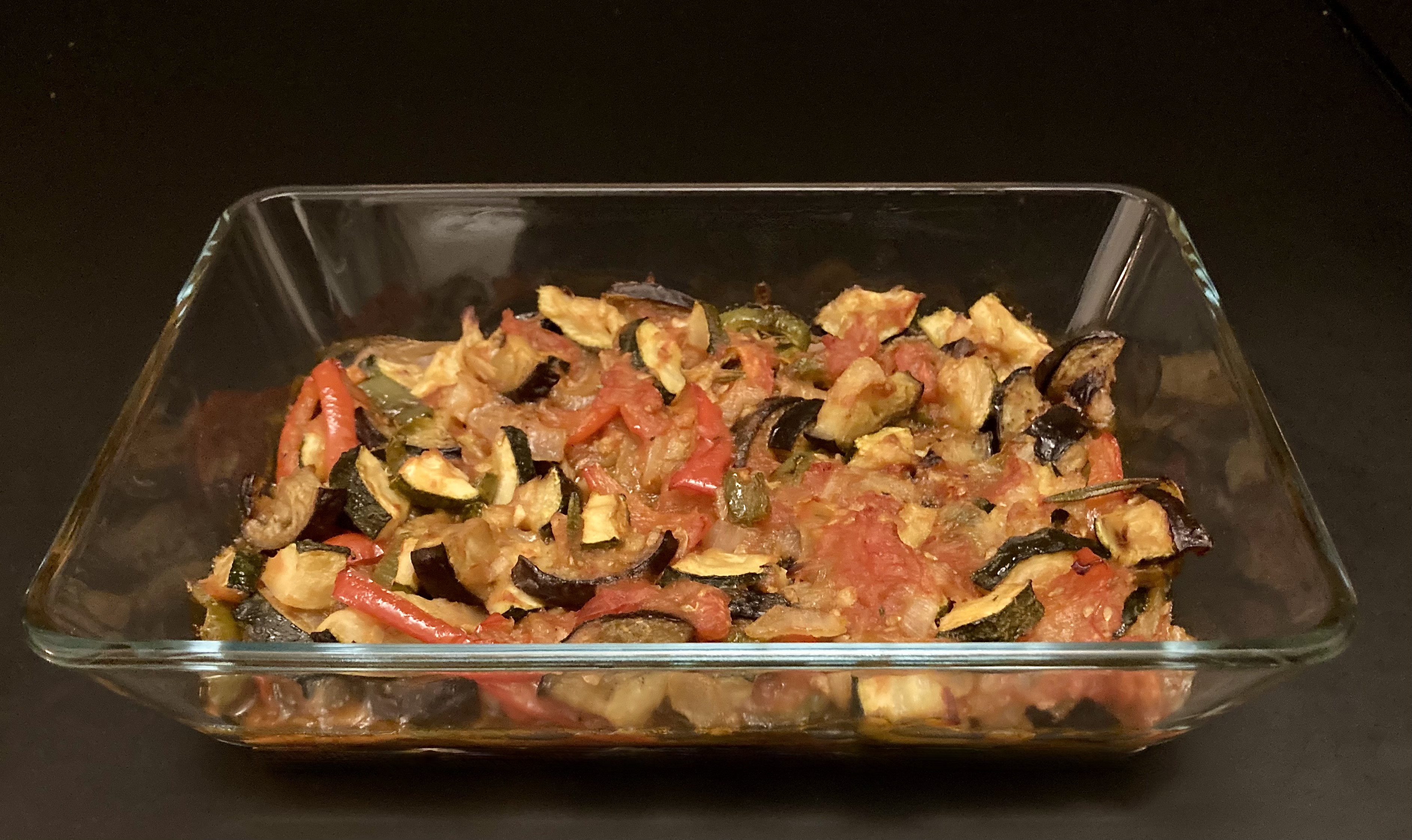
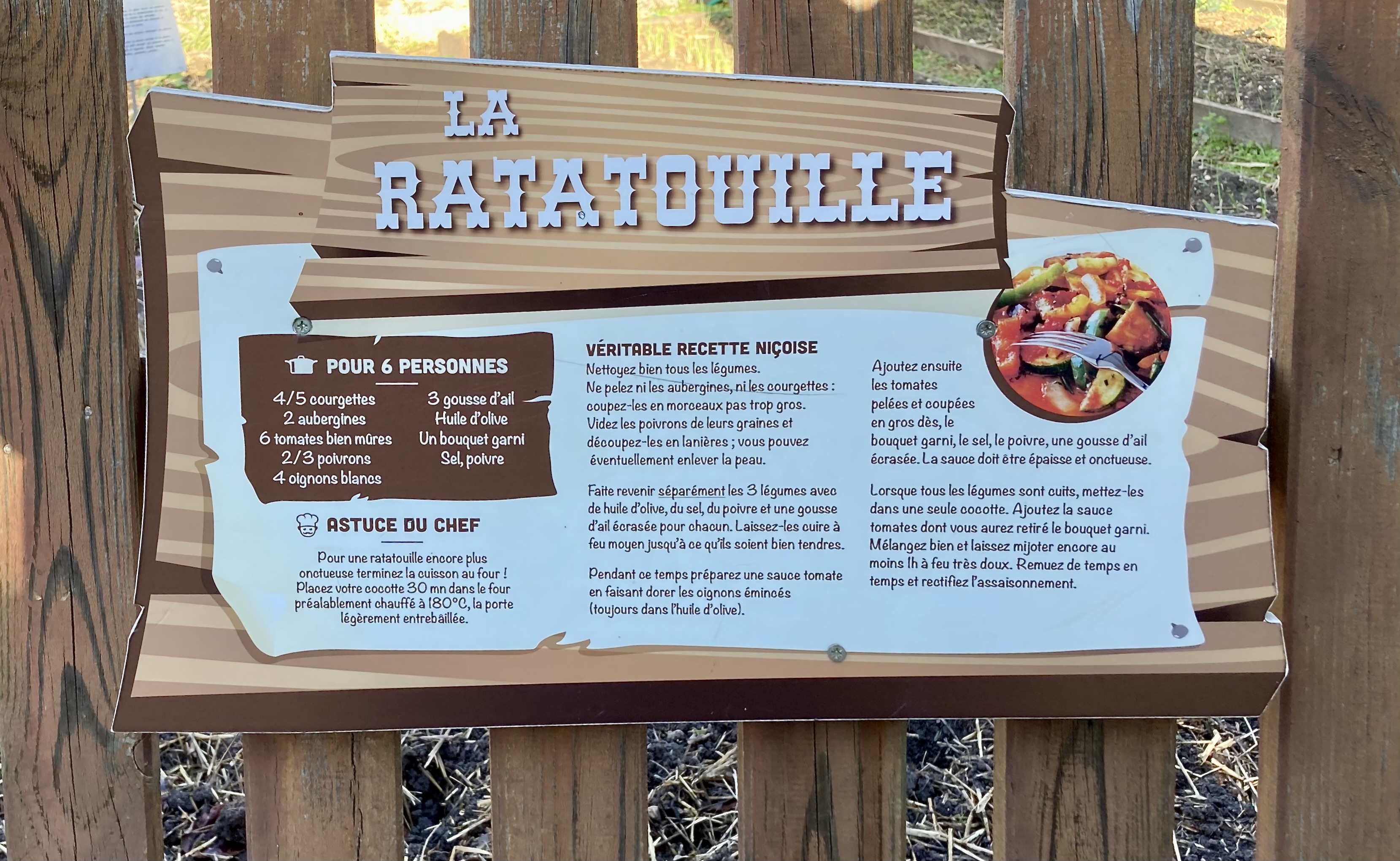
When reading the recipe for Ratatouille Niçoise, we noticed that the vegetables are fried separately, the onions are caramelised and the tomatoes are used to make a sauce that is added to the other vegetables towards the end.
The result is a very tasty, rich and powerful dish. Thanks to the way it’s prepared you will be able to taste the individual flavours and the combination. Making your ratatouille this way is perhaps a bit of work, but’s it’s not difficult and it’s worth the effort.
We served our Ratatouille Niçoise with grilled lamb chops.

Wine Pairing

We decided to enjoy a glass of red wine from the French Languedoc-Roussillon area, made with Syrah grapes by Les Jamelles. The wine has an intense dark colour and aromas of dark berries and a touch of vanilla. The flavour is a combination of some spiciness, dark fruit and mild tannins. In general, we suggest a not too complex red wine with some oak, dark fruit and character.

What You Need
  • 1 Zucchini (Courgette)
  • 1 Eggplant (Aubergine)
  • 4 Tomatoes
  • ½ Green Bell Pepper
  • ½ Red Bell Pepper
  • 1 large White Onion
  • 4 small Garlic Cloves
  • Olive Oil
  • Bouquet Garni (Thyme, Marjoram, Rosemary, Oregano)
  • Black Pepper
What You Do
  1. Clean the vegetables
  2. Coarsely chop the zucchini, the eggplant and the bell peppers
  3. Slice the onion
  4. Peel the tomatoes (heat a pan with water, dip 1 tomato in the hot water for 10 seconds and use a sharp knife to peel. If it doesn’t come off easily, dip for another 10 seconds)
  5. Chop the tomatoes
  6. Warm a Dutch oven, add olive oil and fry the onion until golden
  7. Add the chopped tomatoes, one crushed garlic clove, the bouquet garni and black pepper. Leave on low heat, no lid required. The sauce must become thick and smooth. This will take some time!
  8. In parallel: heat a skillet, add olive oil and fry the zucchini. When nicely coloured reduce the heat and add 1 crushed garlic clove and some black pepper. After a few minutes transfer to a plate and set aside
  9. In parallel: we used the same skillet to repeat step 8 twice, first with the bell peppers and then with the eggplant
  10. Once the vegetables are fried and the sauce is ready: warm a second Dutch oven, add the vegetables and combine with sauce
  11. Leave on low heat for one hour. No lid required
  12. Set your oven to traditional and 180 °C or 355 °F
  13. Transfer the pan to the oven for 30 minutes, leaving the door slightly open
  14. Just before serving remove the bouquet garni
PS

The recipe is on display in Parc Phoenix in Nice, so it must be the original! 

Duck and Zucchini

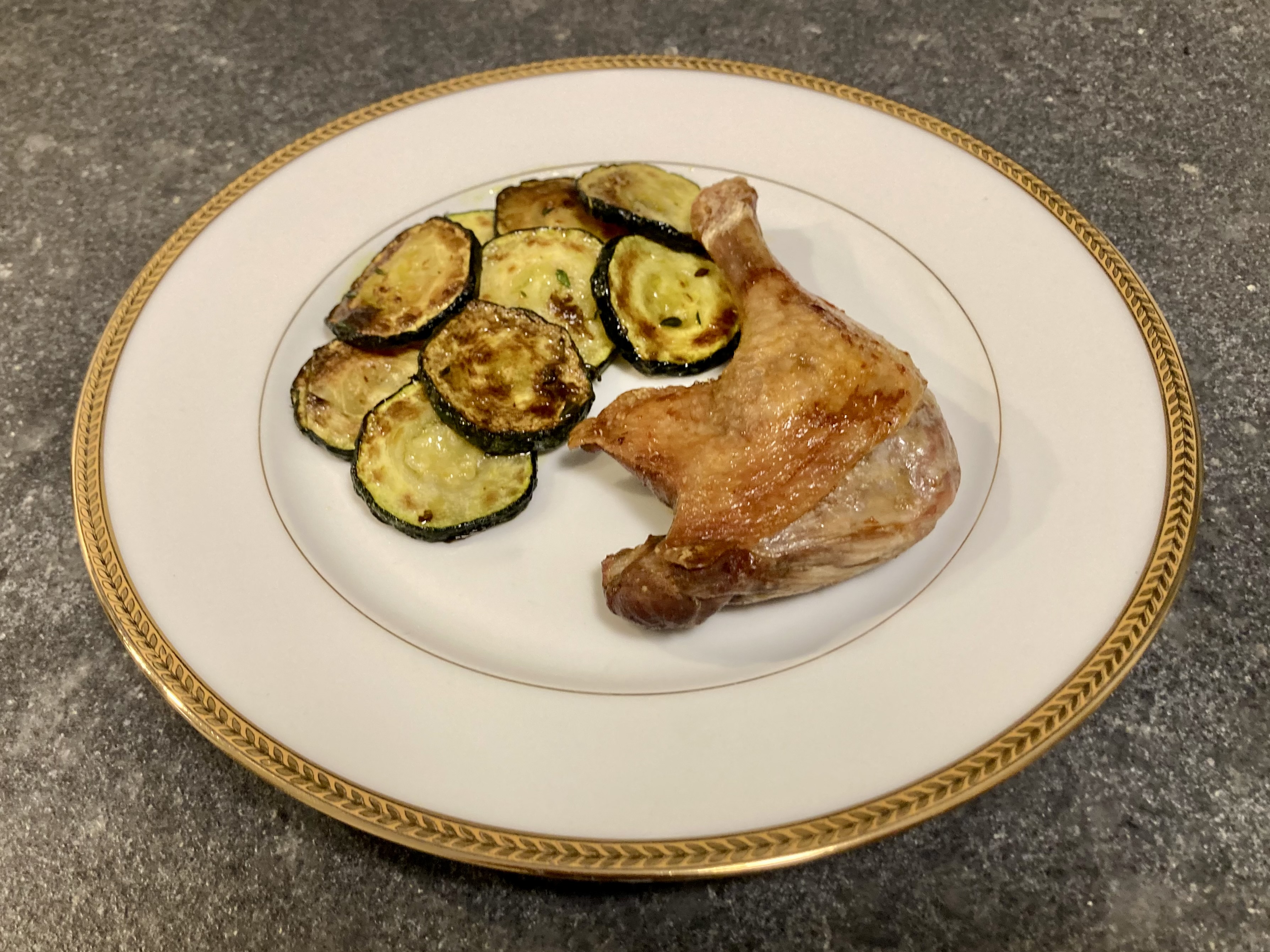
Fresh leg of duck is hard to find, which is a pity because it’s juicy and flavourful. We used it to prepare Pasta with Duck (Pappardelle al Ragù d’Anatra), a classic Italian dish that goes back to a recipe by Pellegrino Artusi, published in 1891. It inspired us to do more with leg of duck. This very simple dish combines fried leg of duck with excellent zucchini. Just a few ingredients, which means that quality is crucial.

Wine Pairing

We enjoyed our Duck and Zucchini with a glass of Chiroubles, produced by Didier Desvignes. The label of the wine shows a snail, indicating that the wine is made with respect for the environment. Chiroubles is one of the 12 appellations of the Beaujolais. All red Beaujolais wines are made with gamay grapes. Wines from the Chiroubles appellation are in general fresh, generous and expressive. They have flavours such as strawberry, raspberry and cherry. This Chiroubles had a hint of earthy and rustic aromas, which added to the complexity of the wine. Excellent pairing with the rich duck and the aromatic, slightly sweet and bitter zucchini.

What You Need
  • 2 Legs of Duck
  • Olive Oil
  • Zucchini
  • Black Pepper
What You Do
  1. Start by preparing the duck by removing the bits that you don’t like to eat
  2. Preheat the oven to 150 °C or 300 °F
  3. Heat a skillet, add olive oil and fry both sides of the legs until golden.
  4. Transfer the duck, skin on top, to the oven for 30 – 60 minutes depending on the size, 
  5. Bate every 15 minutes
  6. Remove from the oven and allow to rest for 10 minutes
  7. Wash, dry and slice the zucchini
  8. Warm a skillet, add olive oil and fry the zucchini until a touch golden
  9. Add black pepper to both the zucchini and the duck
  10. Serve the zucchini with some of the (green) oil and duck on a warm plate
PS

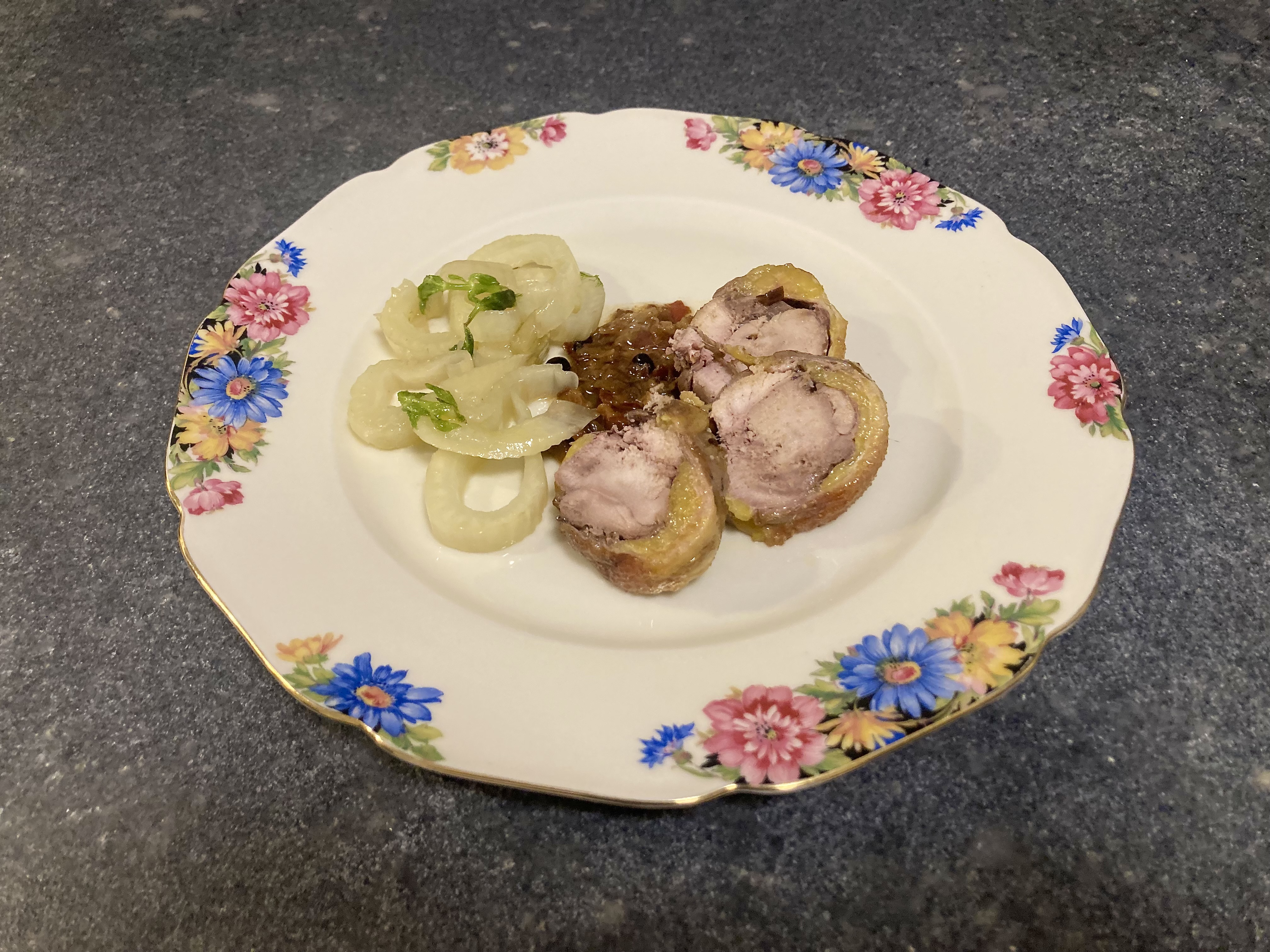
An alternative is to remove the bigger bone of the leg, season the meat and use kitchen wire to close the leg. Fry as above. When the meat is in the oven, slice the fennel and add to a pan with some olive oil. Leave on low heat. Alternatively for a lighter version you steam the fennel and add some olive oil just before serving. When the meat is resting, fry shallot, garlic, finely chopped carrot and/or celery and/or chopped pancetta. Add juices from the duck and make a sauce. Slice the meat and serve with fennel.
You could also fill the leg of duck with for instance a combination of thyme and chopped rosemary.

Zucchini with Taleggio

Zucchini, or courgette, is a favourite summer vegetable. Just think about sliced Trombetta’s, or Stuffed Flowers, or a combination with Farfalle and Fennel. Recently we bought beautiful round zucchinis, ideal to stuff and serve as a side dish. We’ve made these many times, with herbs like rosemary, thyme, oregano and Parmesan cheese. Tasty and not difficult to make. However, we think there’s room for improvement. How would it taste if we would use a richer, fatter, more aromatic cheese? We looked in the fridge. Perhaps Appenzeller? Or a traditional Dutch cheese? We decided to use Tallegio, a semi-soft cheese from Italy made from raw cow milk, with a mild taste. It melts easily, which makes it very suitable for this dish and for instance crostini.

Wine Pairing

The zucchini will be a great accompaniment with grilled lamb or chicken. You could also combine the zucchini with pasta or rice, making for a vegetarian meal.
We decided to drink a glass of red wine from the Douro region, produced by Quinta do Crasto. The wine is made from traditional Douro red grape varieties: tinta roriztouriga nacionaltinta barroca and touriga franca. The wine is fresh, fruity and very pleasant. Its colour is deep ruby and the wine has aromas of ripe red fruit.
In general, we suggest a red wine with flavours and aromas of red fruit and with light tannins.

What You Need
  • 2 round Zucchinis
  • One Garlic Clove
  • Thyme
  • Black Pepper
  • Taleggio
  • Olive Oil
What You Do
  1. Remove the top of the zucchinis
  2. Preheat your oven to 180 °C or 355 °F
  3. Use a teaspoon to remove the inside of the zucchini, also of the cap. Be careful not to damage the skin of the zucchini
  4. Use a knife to chop the ‘meat’
  5. Add olive oil to a pan
  6. When warm, add the meat and fry/glaze for a few minutes
  7. Finely chop the garlic and add to the pan
  8. Finely chop the thyme
  9. Add thyme and black pepper. Mix and leave on low/medium heat for a few minutes
  10. Let cool
  11. Fill the bottom half of the zucchini with the mixture
  12. Add a slice of taleggio
  13. Fill the zucchini with the mixture
  14. Add a second slice of taleggio on top
  15. Transfer the stuffed zucchinis and the tops to the oven and fry for 15 minutes or until golden
  16. Serve with the top on the zucchini
PS

The winemaker, Quinta Do Crasto, provides excellent background information. Interesting to read about the weather, the harvest, the production and the timing.

Zucchini with Taleggio ©cadwu

Farfalle with Fennel and Zucchini

It was our last evening in Paris and we wondered what to do? Book a table at a nice local restaurant? Or enjoy drinks and dinner in our lovely apartment? Obviously, we decided to stay in. We looked in our refrigerator, did some shopping and sat down with a nice glass of Pinot Blanc and some shrimps. The plan was to make a rich, creamy pasta dish with fennel, zucchini and pancetta.
Thanks to the mild aniseed flavour of the fennel, the dish has a surprisingly uplifting taste. The (peeled) zucchini also benefits from the aniseed flavour and remains tasty and present.

Wine Pairing

Being in France we opened a bottle of Côtes du Rhône produced by Maison M. Chapoutier. This is a red wine made with Grenache, Mourvèdre and Syrah grapes. The wine has some fruit, a touch of pepper and mild tannins. A traditional French red wine.

If you prefer an Italian wine with the pasta, then we would suggest a glass of Bardolino, for instance the one produced by Monte del Frà. The wine has a beautiful deep red colour, and the aromas made us think of red fruit and perhaps pepper. The wine is medium bodied with some acidity. It will combine very well with both the lightness in the dish and the creaminess.
In general, you’re looking for a fruity red wine with a touch of acidity, for example Chianti Classico, Montepulciano or Barbera.

What You Need

  • 1 small Fennel
  • 1 small Zucchini (Courgette)
  • 1 Shallot
  • 80 grams of organic Pancetta
  • 1 Garlic Clove
  • 1 Bay Leaf
  • Piment Doux
  • Cream
  • Parmesan Cheese
  • Black Pepper
  • Olive Oil
  • Farfalle

What You Do

  1. Finely chop the shallot and the fennel
  2. Add olive oil to a warm skillet and gently fry the shallot and the fennel
  3. Peel the zucchini, slice and quarter
  4. Dice the pancetta
  5. Chop the garlic
  6. Now add the zucchini and the pancetta to the pan
  7. Increase the heat and fry for one or two minutes, just to add colour
  8. Reduce the heat, add the garlic, the bay leaf and the piment doux
  9. Add the farfalle to the boiling water and cook according to the instruction on the package
  10. Leave the pan on low heat for a few minutes
  11. Now add the cream and the Parmesan cheese
  12. Stir and taste
  13. When the farfalle is ready, add it to the pan
  14. Combine and add some cooking liquid to the sauce if needed
  15. Remove the bay leaf, add some fresh black pepper and serve
  16. We decorated the dish with a slice of grilled pancetta
Farfalle with Fennel and Zucchini ©cadwu

Fleurs de Courgettes Farcie

Such a pleasure to see courgette flowers in your garden or at the greengrocers. The young courgette is firm and tasty; the flowers a beautiful yellow. Simply stuff the flowers, fry in a pan or cook in the oven and you have a great side dish or starter. And then you start wondering: ‘Stuff with what? Cheese? Salmon? Mushrooms? Tomatoes? Ricotta? Vegetable Mousse?’
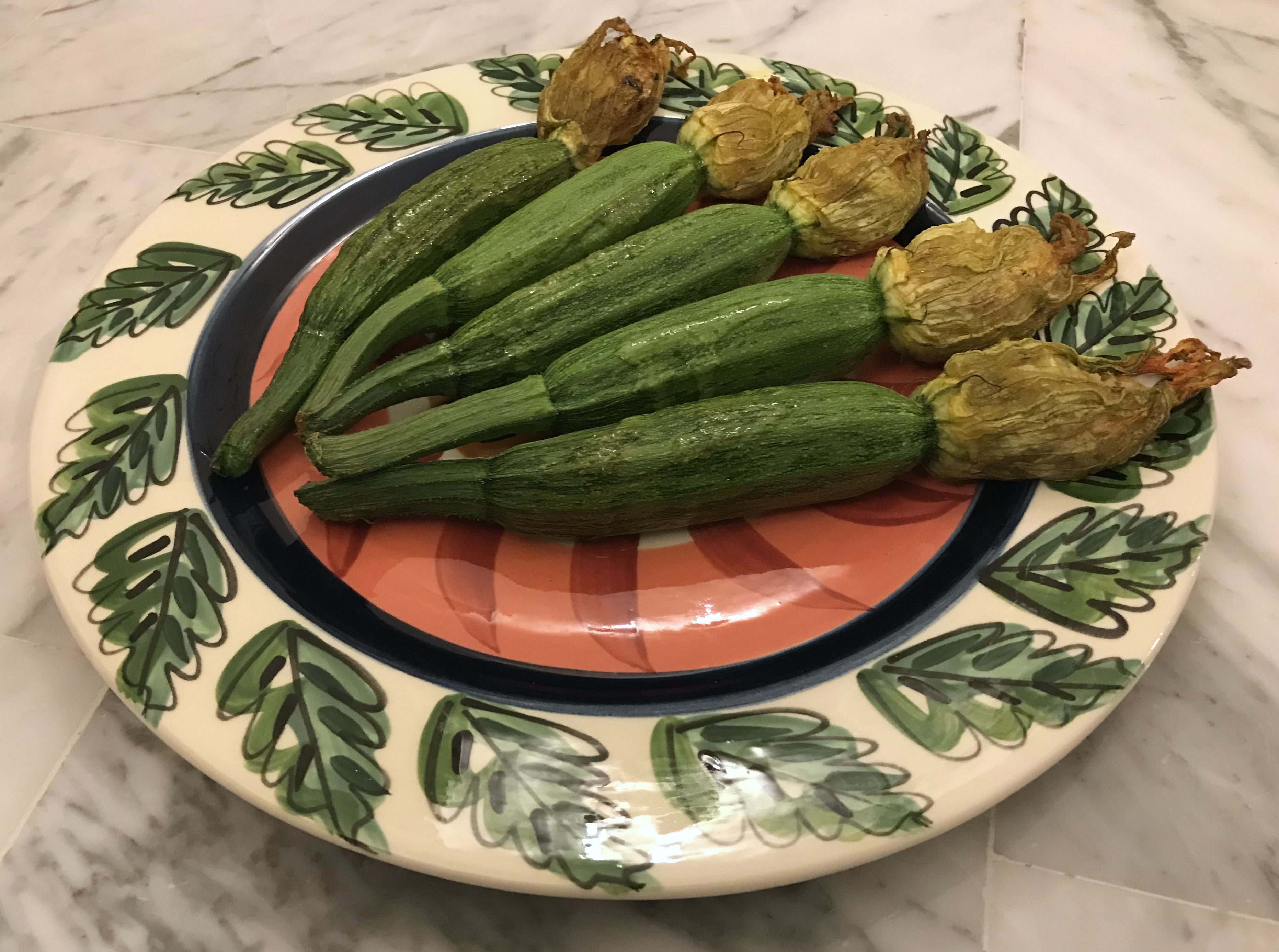
Earlier we described a simple, tasty vegetarian version. This recipe requires a bit more work, but the result is delicious and beautiful. Crab and courgette go together very well; it’s a well balanced combination with surprisingly delicate flavors.

Wine Pairing

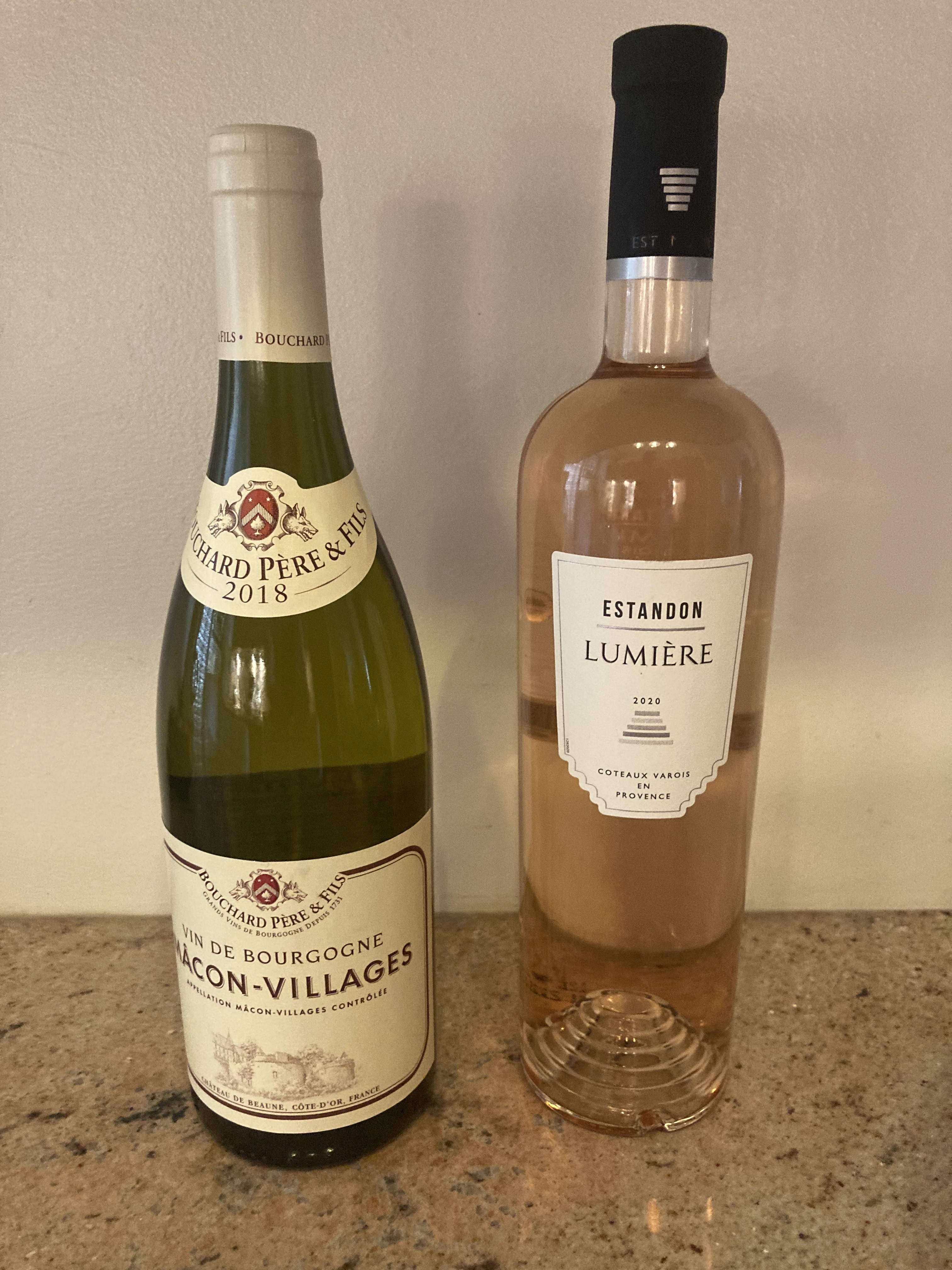
Obviously a nice glass of Côtes de Provence Rosé is an excellent choice. But you could also go for a white wine, for instance a Macon-Villages as produced by Bouchard Père & Fils. In general a subtle wine that goes well with the gentle flavors of both the crab and the courgette.

What You Need
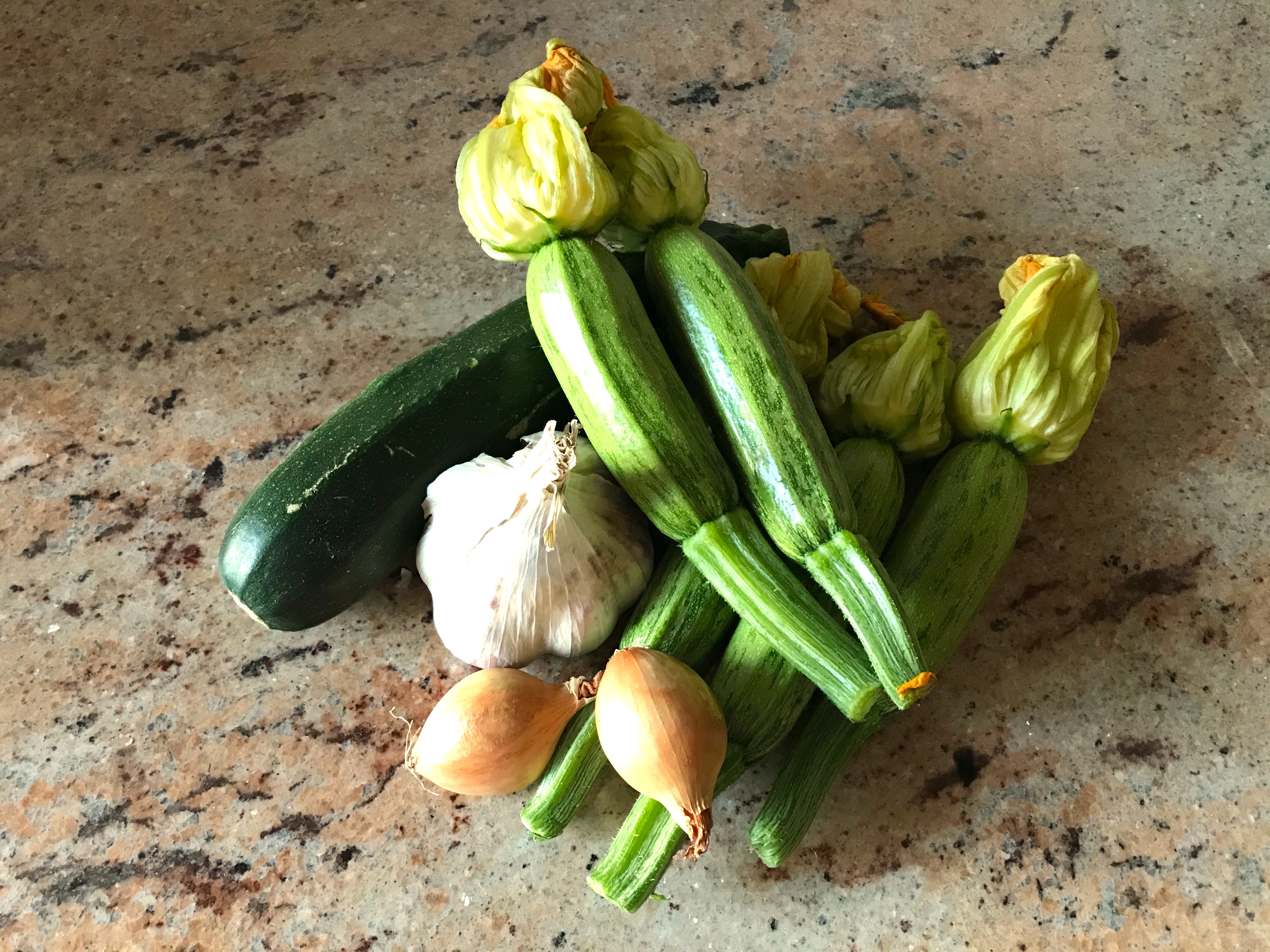
  • One Courgette (small and firm)
  • One Garlic Clove
  • Olive Oil
  • Six Small Courgettes with their flower
  • Crab
  • Black Pepper
What You Do
  1. Wash the courgette, dry and grate coarsely
  2. Warm a small cooking pan, add olive oil and the grated courgette
  3. Fineley grate the garlic and mix with the courgette
  4. Leave for 20 minutes minimum on low heat
  5. When ready, set aside and let cool.
  6. Best is to use a leg of a fresh (littoral) crab, but you could also buy a can of most excellent crab
  7. If using fresh crab, heat a pan with water, bay leaf and crushed black pepper corns; cook the crab for 10 minutes, remove from the water, set aside until cooler and then remove the meat from the shell. Be sure to remove all shards of shell. Set aside and let cool.
  8. Remove the stamens from the flowers
  9. Remove the end of the small courgette
  10. Use a very sharp knife to slice the courgettes lengthwise in 3, making it look like a fan
  11. Heat water in a pan and poach the small courgettes (not the flowers!) for 60-90 seconds depending on the size
  12. Add some crab meat to the courgette mixture and taste
  13. Keep adding crab until you’ve reached the perfect combination (or the end of the crab)
  14. Add some black pepper
  15. Stuff the flowers
  16. Close them by slightly twisting the leaves of the flower
  17. Sprinkle with olive oil, making sure they are completely coated with oil
  18. Heat your oven to 200° C or 390° F
  19. Using the broiler is a good idea
  20. Transfer to the oven and cook for 10 minutes
  21. The flowers should be crisp and perhaps a touch golden
  22. Allow to cool for a few minutes before serving.

Stuffed Courgette or Zucchini Flowers

Such a pleasure to see courgette flowers in your garden or at the greengrocers. The young courgette is firm and tasty; the flowers a beautiful yellow. Simply stuff the flowers, fry in a pan or cook in the oven and you have a great side dish or starter. And then you start wondering: ‘Stuff with what? Cheese? Salmon? Tomatoes? Egg? And how to make a filling that remains inside the flower and isn’t too firm?‘.
We prefer a simple approach: stuff the flowers with a perfect combination: courgette, thyme, shallot, garlic and Parmesan cheese. Firm, tasty and all about zucchini. Enjoy as a starter or combine the stuffed flowers with grilled lamb or chicken.

What You Need
  • Small Courgettes with their flower
  • One Courgette (small and firm; you need 1 small courgette to stuff 4 flowers)
  • One Shallot
  • One Garlic Clove
  • Olive Oil
  • Parmesan Cheese
  • Thyme or Herbes de Provence
  • Black Pepper
What You Do
  1. Remove the stamens from the flowers
  2. Peel the additional courgette, slice the shallot and the garlic very thinly
  3. Warm a heavy iron pan and gently glaze the shallot
  4. After a few minutes add the garlic
  5. Remove the seeds from the courgette and grate coarsely
  6. When the shallot and the garlic are sufficiently glazed, add the grated courgette and the thyme or Herbes de Provence
  7. Mix and warm for 15-20 minutes, making sure the liquid evaporates.
  8. ry to keep the structure of the coarsely grated courgette
  9. Add finely grated Parmesan cheese, mix and taste
  10. Adjust with cheese, black pepper and thyme or Herbes de Provence
  11. Set aside and let cool.
  12. Heat your oven to 180° Celsius or 360° Fahrenheit
  13. Stuff the flowers, close them and sprinkle with olive oil
  14. Transfer to the oven and cook for 15 – 20 minutes
  15. Depending on your oven you may need to use ‘traditional’ or a combination with a small broiler. You want the flowers to become crisp
  16. Allow them to cool for a few minutes before serving.
PS

In case the grated courgette looses its structure and the mixture becomes too dense, then beat an egg white until very firm and gently spoon this through the cold mixture before stuffing the flowers.


A Classic for you – 1

Ratatouille

Think summer vegetables, think Ratatouille! Which is also a comedy released in 2007 about a rat called Remy with a passion for cooking. If you want to see how he prepares ratatouille then simply enter Remy cooks ratatouille as search term in YouTube (or buy the DVD if you’re old fashioned like us).
Ratatouille brings back memories of summer, of the South of France, of the Mediterranean. Or for some, of their youth. It combines very well with a simple sausage, with lamb, with grilled chicken.
However you prepare your ratatouille, be sure to use courgette or zucchini, aubergine or eggplant, tomato and bell peppers. Also make sure you prepare it a day ahead. The taste becomes much more integrated after a day (or two) in the refrigerator.
Our recipe is very much the recipe of a dear friend. She taught us how to make ratatouille in her summer kitchen, overlooking the pool and the garden with herbs and vegetables. Indeed, fond memories.
To our surprise she added cilantro (you would expect thyme or basil) and many years later we are still grateful for this twist. The cilantro enhances the feeling of summer and it supports the various vegetables in a beautiful way.

We enjoyed our ratatouille with a glass of simple, red wine with lots of red and black fruits. Spicy. A wine that brings summer to your glass.

Here is what you need:

  • Aubergine
  • Courgette
  • Red Bell Pepper
  • Chili Pepper
  • Tomatoes
  • Cilantro
  • Garlic (optional)
  • Olive oil

If you combine 1 of each, with the exception of 3 tomatoes, this will serve 4 people.
Start by cutting the aubergine in small but not too small chunks. Drizzle with salt and mix. Let the mixture rest for a few hours, allowing for the aubergine to loose water and become firm. Best way to do this is by putting the aubergine in a sieve and let it rest above a bowl.
The tomatoes require some attention as well. You could peel them, but that’s optional. What is not optional is to separate the tomato meat and juices from the pits. First step is to remove the internal hard bits and the pits and put these aside. You now have the outer part of the tomato, which you can slice. Cut the remainder of the tomatoes roughly, add to a sieve and by using the back of a spoon make sure you capture the juices. Be surprised about the volume of tomato juice and the small amount of tomato bits that remain in your sieve.
Peel the courgette, slice in the way you sliced the aubergine and fry over medium heat in olive oil. In the mean time cut the bell pepper into long slices and add these to the pan. Continue frying. Add the finely chopped chilli pepper (not the seeds of course). Add the firm aubergine after having removed the remaining salt with water. After a few moments add the tomato chunks, fry a bit more, add the tomato juice (and the optional garlic) and leave on a medium heat for 30 minutes. Try not to stir too much; otherwise you risk creating mashed vegetables. Cool, set aside and store in the refrigerator.
The next day gently warm the ratatouille, add some chopped cilantro, mix and add more cilantro just before serving.