Pimientos de Padrón

Lovely and Simple Starter

Pimientos de Padrón are mild, sweet tasting and small green peppers, originally from the Galicia region in Spain, but now widely available in Spain and Portugal. Story has it that one in a hundred (or more?) is actually very spicy, but rest assured, we have eaten many more and never encountered a spicy one. Ask your greengrocer for these lovely peppers because we’re sure you will enjoy them.

Wine Pairing

We would suggest drinking a Vinho Verde with the Pimientos de Padrón. Vinho Verde is a wine from the most northern part of Portugal, between the Douro and Minho rivers. Verde refers to the fact that the grapes are harvested very early in the year. This implies that the grapes contain a fairly small amount of sugar. As a result of this the wine (in most cases) has a fairly low percentage of alcohol (think 10%). But don’t be surprised if you find one with a higher percentage.

About Vinho Verde

In general we feel Vinho Verde is undervalued. It’s a great, very taste wine; one that is not just wonderful on a summers evening.
Vinho Verde is not a wine to store, so make sure you buy one from the most recent harvest.
Most Vinho Verde wines are white. They tend to have a very subtle bubble. The taste is light, floral and the wine comes with some clear acidity.
We also found a rosé and a red Vinho Verde. Seldom have we seen a wine with such an intense colour! To balance the acidity of the red Vinho Verde you must be combined with fat meat or rich sauces. We combined it with grilled Secreto of Iberico pork, which is a treat in its own right. Secreto is a thin, juicy cut from acorn fed, free range Iberico pigs.

Secreto

As an extra: for two people buy 300 grams of Secreto. In a way the structure of the secreto resembles skate. One side of the secreto will look nice, fat and meaty, the other may look like if you have to remove extra fat. Which is exactly what you need to do! After having done that, heat a heavy grill pan (or the barbeque) and grill the meat for 4 times one minute, creating a nice pattern. The cuisson should be rosé. It’s not a problem if the thinner parts of the secreto are well done because the meat will be very juicy anyway, thanks to the fat. Serve with a sautéed courgette. The bitterness and the sweetness of the courgette combines really well with the juicy secreto. The red Vinho Verde will balance the fat and will turn the combination of secreto and courgette into an intriguing dish.

What You Need

  • Pimientos de Padrón
  • Olive Oil
  • Sea Salt

What You Do

Clean the Pimientos de Padrón and dry the peppers. Heat a heavy skillet, add olive oil and fry the peppers for a few minutes. Make sure they are fried but not cooked. Sprinkle some sea salt over the Pimientos de Padrón, fry for a few seconds making sure the salt is somewhat adsorbed in the olive oil. Serve immediately.

White Asparagus with Sauce Gribiche

This tends to be a combination we like to serve towards the end of the asparagus season. The combination of asparagus with capers, cornichons and chives is unusual but it works really well with both green and white asparagus.

In most countries the season for asparagus is well-defined. It starts around April 23rd (St.George’s Day) and finishes on June 24th (the nativity of Saint John the Baptist). Green asparagus tend to be available all year round, however we recommend being careful. It’s a bit silly to buy the very skinny ones grown in darkest Peru. Nothing wrong with Peru, we love Paddington, it’s just that following the season and focusing on local, organic products is our preferred approach, but not in a dogmatic way.

Sauce Gribiche

This sauce is made with chives, chervil, parsley and tarragon. In this case we use chives only because especially the tarragon would be too much for the asparagus. Chives give it a touch of onion, which is exactly what the sauce needs.
Two notes regarding the oil: when you want to make a true sauce Gribiche (so with chervil, parsley and tarragon plus more vinegar) you would add more oil to give it volume and smoothness. In this case you want a very rich sauces with clear presence of all ingredients. And (second note) because we use less oil we use excellent olive oil only. Otherwise you would use a combination of olive or grapeseed oil with a more neutral oil like sunflower or arachis (peanut) oil.

Wine Pairing

We enjoyed our Asparagus with sauce Gribiche with a glass of Macon (Louis Jadot Mâcon Villages Grange Magnien). The wine (100% chardonnay) comes with some gentle acidity and minerality, which is great with the acidity of the Sauce Gribiche. It’s fruity with a floral scent.

You can also combine the dish with wine made from Sauvignon Blanc grapes. We very much liked the combination with a glass of Menetou-Salon from the house of Clement Chatenoy. A remarkable Sauvignon with citrus and passion fruit, freshness and an exceptional length in the mouth. The wine has flavours and complexity very similar to the sauce and to the asparagus, making it a harmonious pairing of food and wine.

What You Need

  • Two Eggs
  • Dijon Mustard (1 tea spoon)
  • (White Wine) Vinegar (1 small tablespoon)
  • Olive Oil
  • Lemon Juice
  • Pepper
  • Chives
  • Cornichon
  • Capers (in brine)
  • Asparagus

What You Do

Start by boiling the eggs, making sure the yolk is completely set. Depending on the size add them to boiling water and leave them in the simmering water for 10-12 minutes. We steamed them for 12 minutes. Remove and let cool.
Once cold, peel the eggs, separate the white from the yolk. Cut the white in very small bits and store. Push the egg yolk through a sieve. It should be a powder-like substance. Add the mustard and stir well. Continue stirring and slowly add the olive oil, as if making a mayonnaise. Which is basically what you’re doing anyway! Main difference is that cooked yolk is less powerful when it comes to emulsifying. So the amount of olive oil you can add is (more) limited.
Once you’ve added the olive oil, add white wine vinegar, taste and decide if more mustard, vinegar or pepper is needed.
Now add the chopped egg white, the finely chopped chives, the drained and chopped capers and the thinly sliced cornichon.
The sauce should be ‘stable’ so feel free to store in the refrigerator.
Steam or cook the white or green asparagus and enjoy!

PS

It’s actually a rather tricky sauce, one that splits easily. No reason to panic, just add a teaspoon of (homemade) mayonnaise, whisk and the sauce is saved.

Red Gurnard with Shrimps

Red And Blue

Such a beautiful fish! The Red or Tub Gurnard (or Roter Knurrhahn, Rode Poon, Galinette or Grondin Perlon) has a bright red body with blue, greenish pectoral fins. And isn’t the armoured head with the big eyes impressive? And on top of this they are capable of making a drumming, grunting sound.

For some obscure reason they have a poor reputation in the kitchen. You may find them as an ingredient in a stew or soup, but on its own? Not really. A pity, because it’s actually a delicious fish with firm fillets that keep their shape when prepared. Perhaps the gurnard comes with a more acquired taste (meaning that it’s not the kind of fish that is suitable for people who enjoy eating fish fingers). Some say the taste reminds them of shrimps, which would be interesting, given the Gurnard feeds on crabs, shrimps and other invertebrates living in the sediment.

We combine the Gurnard with shrimps and a classic Bisque, made with the shells of unpeeled shrimps. Agreed, it’s a bit of extra work, but it’s worthwhile.

Wine Pairing

A glass of Pinot Blanc or Gris will be a nice accompaniment to the dish. Light and fresh with a touch of sweetness. Chablis will also be nice.

What You Need

  • 2 Gurnards (preferably cleaned)
  • Butter
  • For the Bisque
    • 200 grams of unpeeled small grey shrimps
    • 1 small Tomato
    • 1 Shallot
    • Olive oil
    • Bouquet Garni (thyme, bay leaf, parsley)
    • Cognac

What You Do

Start by peeling the shrimps. It’s a very simple, mindfulness exercise. Remove the heads and discard. Use the shells for the bisque and transfer the bodies of the shrimps to the refrigerator. Chop the shallot and the tomato. Gently glaze the shallot for 10 minutes or so in olive oil. Add the shells and increase the heat for a few seconds. Add the tomato, some water and the bouquet garni. Allow to simmer for 20 minutes. Pass the liquid through a fine sieve. Make sure you get all the lovely juices. Add a splash of cognac and reduce the liquid until it’s powerful. Cool and store in the refrigerator.
In a non-sticky pan heat some butter and fry the gurnards. Isn’t the colour beautiful? In parallel warm the bisque. Just before serving add the shrimps. Don’t cook them (cooking will make them rubbery), just a bit of warmth will do the trick.
Serve the gurnard on a warm plate and dress with the bisque and shrimps.


Mussels with Spicy Tomato Sauce

Moules marinière, Mosselen met Look, Mussels in Beer, Mussels with Anise, Mussels with Cream, served with crusted bread or with French fries: mussels are great to combine. Mussels with Spicy Tomato Sauce is a nice, spicy surprise, provided the mussels are really tasty. If not, then the spicy sauce will overwhelm the mussels and it will be an unbalanced dish. Best to make the tomato sauce a day before. You could also go for Piri Piri, but please make your own. The industry-made Piri Piri is never as tasteful.

Wine Pairing

We enjoyed our mussels with a glass of Picpoul de Pinet AOP les Flamants. Let’s explain the name: the grape is called Picpoul Blanc. And the vineyards belong to a village called Pinet; close to the Etang de Thau in the south of France between Narbonne and Montpellier. The terroir (think calcareous soil, clay, quartz) is influenced by the sea, which is reflected in the mineral taste of the wine. The story is that Picpoul could be read as pique poul which translates into something like ‘stings the lip’; a nice reflection of the high acidity of the grapes. This acidity guarantees a refreshing white wine, which is exceptional given the warm climate. The wine is bright yellow with a very subtle touch of green. It’s aromatic, floral and fruity. The taste has notes of citrus and hopefully some bitterness, which will make it into a really interesting wine. To be combined with oysters, mussels, fruit de mer, skate and fish in general.

What You Need

  • For the Mussels
    • 1 kilo of Mussels (we prefer small ones)
    • Olive Oil
    • 1 Shallot
    • 1 Garlic Glove
    • Bouquet Garni (Parsley, Bay Leaf, Thyme)
    • White Whine
  • For the Sauce
    • 4 Ripe Tomatoes
    • 1 Shallot
    • Olive Oil
    • 3 Garlic Gloves
    • 2 Chili Peppers
    • Red Wine
    • Bay Leaf
    • Black Pepper

What You Do

Please remember to read our mussel basics. Start by making the sauce. Remove the pits from the tomatoes and cut the meat in small chunks. Remove the seeds from the peppers and slice. Peel the onion and garlic gloves and chop these. Glaze the onion, garlic and chili pepper in olive oil. Ten minutes on low heat will do the job. Add the tomatoes , the tomato juice (simply put the pits and the left overs from the tomato in a sieve and use a spoon to squeeze out all the lovely juices and flavors), some red wine and the bay leaf. Cook for at least two hours, remove the bay leaf, transfer to the blender and make a very smooth sauce. Pass through a sieve. Transfer back to the pan and reduce until it’s a nice, rich sauce. Cool quickly and transfer to the refrigerator for the next day.

Warm a fairly big pan and gently glaze the sliced onion in olive oil. Then add the chopped garlic. Add a glass of white wine and the bouquet garni and cook on low heat for 10 minutes, allowing the flavours to integrate.
Turn up the heat to maximum and when really hot add the mussels and close the pan with the lid. Listen and observe: you will be able to hear when content of the pan is becoming hot again. You will see steam, more steam. Check the status of the mussels. Close the lid, listen and observe. Remove mussels with a slotted spoon, transfer to a warm soup dish and serve with the warm and spicy tomato sauce and crusted bread.

Scallops with Winter Truffle

Just One?

Scallops, or Coquilles Saint Jacques, can be delicate, special and tasty. But very often they are basic, chewy and tasteless. The reason is very simple: the ready-to-cook scallops were frozen, shipped from Canada or China and quickly defrosted, maybe days before you bought them as ‘fresh’. The result is on your plate.
The solution is also simple: buy fresh scallops. Then the flavours and aromas will overwhelm you. The structure of the meat (either raw or cooked) will be exactly as it should be.
Agreed, fresh scallops are much more expensive. But the advantage is that one per person is all you need, so yes, just one per person.

Combining fresh and thinly sliced raw scallops with thinly sliced black winter truffle is a marriage made in heaven. Just a few drops of olive oil and black pepper and your starter is ready. We go for a slightly more complex preparation, bringing various flavours together: earthiness and umami from the truffle with sweetness, light acidity and bitterness of the Noilly Prat, with the sweetness and sharpness of the leek, the crispiness of the leek and the truffle with the soft structure of the scallops. And of course: the colours are amazing as well.

You may also like

And in case you’re not sure how to open and clean a scallop: this is an excellent video that will show you how.

Wine Pairing

We enjoyed our scallops with a glass of Chablis, Antonin Rodet, Premier Cru, Montmains, 2016. It has a clear and pale golden colour. It comes with mineral notes and a touch of lemon. The taste is delicate and persistent with aromas of fresh citrus. It goes very well with the ‘long’ taste of the dish and the citrus is ideal with the scallop and the Noilly Prat. Combining the scallops with a Pinot Blanc or Pinot Gris will also work, as long as the wines are delicate, fresh and not sweet.

What You Need

  • 2 Scallops
  • Olive Oil
  • Butter
  • White of Leek
  • Noilly Prat
  • White Pepper
  • Black Winter Truffle

What You Do

Begin by opening and cleaning the scallops. Clean the two bottom shells because we will use them to serve the scallop. Now thinly slice the leek. Warm the Noilly Prat, allowing for the alcohol to evaporate. Add the leek and allow to cook very gently for 5 minutes. Use a non-sticky skillet with a dash of olive oil and a little butter to fry the scallops. The trick is to fry them until 1/3 has changed colour, then turn them and fry the other 1/3. Add some leek to the shell, a bit of sauce, then the scallop, a touch of white pepper and the thinly sliced black winter truffle on top.

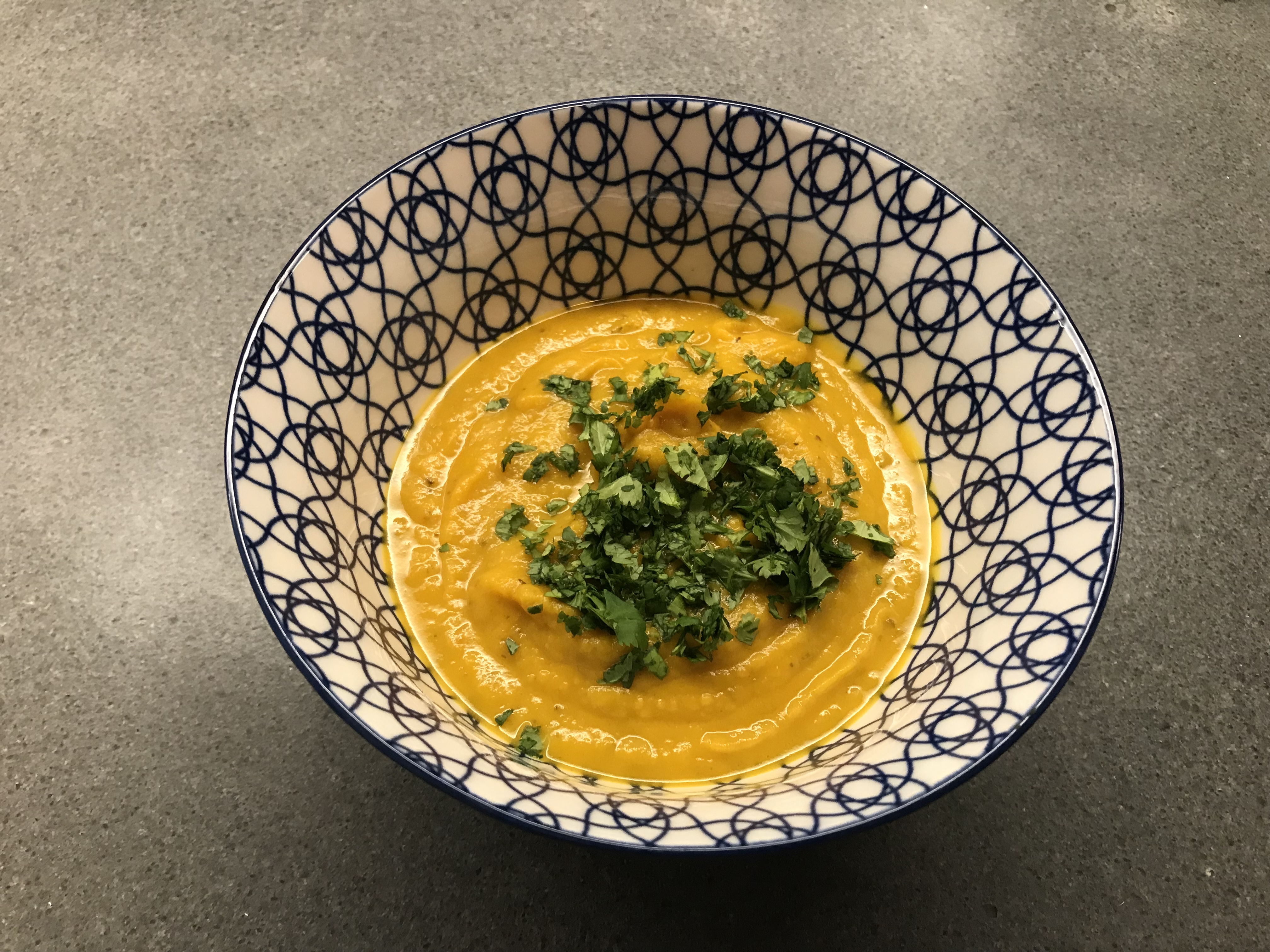
Pumpkin Soup

Pumpkin

Such a simple, tasty, inexpensive and vegetarian soup! What more can you ask for? A bit of jus de truffe maybe?
Make sure to buy organic pumpkins. This allows you to use the skin; so two benefits: there is no need to peel the pumpkin and the soup will be better tasting.
Red lentils will become completely soft when cooked for 30 minutes; very different from green or black lentils. We add the lentils not only because of their taste, but also because they improve the texture of the soup.
Give the soup a finishing touch by adding pumpkin seed oil, jus de truffe or truffle flavoured olive oil (for instance produced by Moulins de la Brague).

Here is what you need

  • Small Pumpkin
  • Red Onion
  • Two Garlic Gloves
  • 6 cm Fresh Ginger
  • 2 Chilli Peppers
  • Tablespoon or more Red Lentils
  • Water
  • Olive oil
  • Pumpkin Seed Oil, Jus de Truffe or Truffle Flavoured Olive Oil
  • Cilantro

Chop de red onion in smaller but equal sized bits and put in a pan with olive oil. Put on moderate heat and give it some 5 to 10 minutes. Now add the chopped and seeded chilli pepper, the garlic and stir. Continue for 5 minutes on moderate heat. Add the chopped pumpkin and the lentils and stir for another 5 minutes. Peel the ginger, cut in cubes and put on a small wooden stick. This way you can easily remove the ginger later on. Now add boiling water and leave for 30 minutes to simmer or until the pumpkin is very, very soft.
When done remove the ginger. Taste the ginger and decide how much ginger you want to add to the soup. We just love fresh ginger so we would add most of it. Blender the remainder into a smooth soup. You could pass it through a sieve to make sure it’s like a lovely velouté. Cool and transfer to the refrigerator for the next day.
Warm the soup and add a splash of truffle flavoured olive oil or pumpkin seed oil and lots of cilantro before serving.
You can also make a milder version by reducing the amount of chilli and ginger. Then add jus de truffe, a bit of olive oil and maybe some pepper before serving.

Pumpkin Soup © cadwu

Tellines with Parsley

This Week’s Special

Many, far too many years ago we were walking along the Mediterranean coast, enjoying the sea, the sun and the company of a dear friend. She asked us if we would like to eat tellines for dinner. Of course, we replied, but what are tellines? She smiled and said I’ll show you. She walked to the sea and kneeled down, just where the sand and the sea meet. All you needed to do was move your fingers through the sand, just under the surface and feel. She harvested a few tellines, opened them with her fingers, washed them in the sea and that’s how we enjoyed our very first tellines, fresh from the sea. So simple, to tasty, so good.
We harvested many more and went back to her house where we cooked the tellines in a hot skillet and enjoyed them with a beautiful local ro­sé.

Harvesting tellines (or in France tenilles) is simple; knowing where you can do this is the challenge. Fortunately you can (occasionally) find them on the market.

It’s possible to use other small clams, but the fun of tellines is that they open quickly when in the pan, making sure they remain juicy.

Here is what you need:

  • 300 grams of tellines
  • one Shallot
  • one Garlic glove
  • Olive Oil
  • Parsley
  • White Wine
  • Black Pepper

Wash the tellines, preferably using salted water. Discard ones with a small hole and ones that are broken. Chop the shallot (you probably need half of it) and the garlic very fine. Heat the skillet, add the oil, the shallot, the garlic and the tellines and cook until the tellines are open. You probably want to add a splash of white wine during the cooking process. Serve the tellines on a warm plate with black pepper. Sprinkle with chopped parsley. Enjoy with a glass of Cô­tes de Pro­ven­ce ro­sé, for instance an Estandon from the Var region. No cutlery needed!

Grilled Swordfish with a Spicy Tomato Sauce

Red List

Before we start cooking, be aware that Swordfish is on the Greenpeace red list, so try to find the origin of your swordfish. Having done that assess the quality of the swordfish. No doubt it was frozen, so an extra reason to look carefully and smell. As always: if fish smells like fish, then don’t buy it.
If swordfish looks it has been pre-prepared (sometimes salt or smoke are used) or the flesh is not transparent: don’t buy it. For some reason you need to be extra critical when buying swordfish. But once you’ve found good, fresh swordfish, you have found yourself a great starter.
Also note that swordfish is a predator. Some organisations mention the risk of mercury when eating swordfish, so don’t eat it too often we would say.

If you scan the various recipes for swordfish, you will notice the massive use of marinades. We would not suggest using a marinade when preparing swordfish. The fish has a delicate, slightly sweet taste, which begs for a clever combination, not for a taste bomb like a marinade.
Often the fish is brushed with a mixture of oil and lemon. Sorry, wrong idea. Lemon is probably used to hide a fishy taste (in which case you shouldn’t have bought the fish). The lemon juice will burn when grilling because of the sugar in the juice, so your grilled stake will not just be grilled, it will also show traces of burned sugar. Not tasty, not healthy, not pleasant.
There are only three things you need to do pre grilling swordfish: prepare your tomato sauce, transfer the steak 30 minutes prior to grilling from the fridge to a plate and brush generously with a decent olive oil.

Wine Pairing

We enjoyed our grilled swordfish with a glass of Radacini from the Codru region in Moldova. The wine is made from chardonnay grapes and comes with a beautiful yellow colour. It made us think of apricots and maybe a touch of vanilla. It is not oaked, which is an exception for chardonnay. A wine with a round, velvety taste, but also fresh and fruity. The mouth feel is coating. The velvety aspect goes really well with the fish and the fruitiness is a great combination with the sweetness of the sauce. As an alternative go for an un-oaked, fruit-forward chardonnay.

What You Need

  • Steak of Swordfish
  • Olive Oil
  • Shallot
  • Chilli
  • Red Bell Pepper
  • 2 Garlic gloves
  • 2 Anchovies fillets
  • 2 Tomatoes
  • Bouquet Garni (Sage, Thyme, Rosemary, Parsley)
  • Capers (in brine)

What You Do

Start by slicing the shallot and glaze it gently in olive oil. Cut half of the bell pepper and the chilli in smaller chunks and add to the pan. Stir and then add the garlic. Cut the tomatoes in quarters, add the tomato meat to the sauce and press the remainder through a sieve, making sure you get all the lovely juices. Add the juice to the sauce. Add the bouquet garni and the anchovies. Leave on small heat for two hours.
Remove the bouquet garni, blender the sauce very well and make sure it is a spicy combination of tomatoes and a touch of bell pepper.
Brush the steak generously with olive oil, heat your grill (we use a Le Creuset pan, see picture) and grill for maybe 8 minutes. The meat of swordfish is firm and needs longer than you would expect when grilling fish.
Serve the fish on a hot plate with the tomato sauce. The capers are crucial; they add a bit of acidity, which works really well with the spiciness of the sauce and the gentle sweetness of both the fish and the tomatoes.

PS In case your swordfish looks great but is from the wrong region according to Greenpeace, simply buy the fish, enjoy eating it and donate some money to Greenpeace.


Haddock with Shiitake

One of the Most Popular Fish

Well known of course as one of the most popular fish used for Fish and Chips. And when you mention Haddock, Cod is never far away. According to many recipes and foodies the two are very similar in terms of taste and way to prepare.
That’s where we disagree. We think Haddock has a much more delicate taste compared to Cod. Plus its structure is more compact. When frying Cod it’s not difficult to see and feel what the cuison is. The compact structure of Haddock implies that you have to test the cuison in a different way. Frying haddock requires your constant attention.

Shiitake is more and more widely available, which is great! The nutty taste with the firm structure makes them ideal for this dish. Powerful but not overwhelming. The classic White Mushroom (or the chestnut coloured variation) will not do the trick; too soft and not sufficiently intense. The Shiitake brings umami to the dish.

The white wine sauce is actually enriched with Classic Dry Noilly Prat, our favourite vermouth. Why favourite? Because Noilly Prat comes with a touch of bitterness, with umami, bringing the sauce and the Shiitake together. The vermouth is made with a number of botanicals, including chamomile. The white wine will bring acidity, but the dish also requires a hint of sweetness. The vermouth will enhance the natural sweetness of the Haddock. We use fish stock to create the sauce, obviously. Spend some money on buying a jar of excellent stock (or make your own).

So on your plate you have an intriguing combination of fish and mushrooms, with all five tastes represented. Nice isn’t it?

Wine Pairing

Our choice was a bottle of Pinot Grigio made by MezzaCorona. This is a dry and crispy wine with a beautiful deep yellow colour. It’s an elegant wine with just the right acidity to relate to both the fish and the sauce. The producer mentions hints of chamomile.

What You Need

  • 200 grams of Haddock (without the skin)
  • 100 gram of Shiitake
  • Shallot
  • Parsley
  • Butter
  • Olive Oil
  • Fish Stock
  • Noilly Prat
  • Dry White wine
  • White pepper

What You Do

Start by cutting the shallot. Fry gently in butter for a few minutes. Clean the Shiitake with kitchen paper and slice. Check the fish for bits you don’t want to eat. Add wine and Noilly Prat to the shallots and let the alcohol evaporate. Then add parsley and some fish stock. Leave for a few minutes and taste. Maybe add a bit more vermouth or fish stock. Be careful with the white wine. In parallel fry the fish in butter and olive oil. Both sides should be beautiful golden brown. Gently fry the shiitake in olive oil. When not yet completely ready (check the flexibility, feel how warm the fish is) transfer the fish to a sheet of aluminium foil. Don’t close it; you only want to keep it warm. Pass the sauce through a sieve and be ready to blender the sauce. Add all juices from the two pans and from the aluminium wrapping. Blend the liquid. You could add a small chunk of ice-cold butter to thicken the sauce. We didn’t.
Serve the fish on top of the sauce and add the shiitake. Perhaps a touch of white pepper.

Omelet with Oyster Mushrooms and Nasturtium

Try This at Home

Oyster mushrooms were among the first mushrooms to be cultivated. They grow very well on straw so great to grow at home. See pictures!
The vast majority of oyster mushrooms are grey, but we have seen and tasted the yellow and sensational pink oyster mushroom. Since you can eat oyster mushrooms raw, the pink and yellow variety is great in a salad. Oyster mushrooms can be a bit watery, which impacts the taste. A pity because the taste is delicate and soft anyway. Not a mushroom to combine with more powerful mushrooms like shiitake. Oyster mushrooms cook quickly, so great to use in a stir-fry or a soup. You can try using them in a stew, but make sure your chunks are not too small.

Wine pairing

A crisp, floral white wine goes very well with this omelet. Best would be a Pinot Grigio or a combination of Chardonnay and Viognier.

What You Need

  • 250 grams Oyster mushroom
  • 3 Eggs
  • 1 Spring Onion
  • Butter
  • Olive Oil
  • Black Pepper
  • Chives
  • Nasturtium

What You Do

Harvest your oyster mushrooms or buy really fresh and tasty ones. Tear the mushroom into smaller but not too small chunks. Slice the spring onion in small rings. Fry the oyster mushrooms in olive oil and butter for 3 minutes or so until slightly cooked. Add the white of the spring onion. Perhaps you want to add some butter to the pan. Now make sure the pan is nice and hot. Whisk the eggs well, add the green of the spring onion and add to the pan. After a few seconds reduce the heat to very low and wait 5 to 10 minutes until the egg is nearly set. Take your time but keep an eye on the surface and the consistency. Check with your fingers if the omelet is beginning to set. A good omelet must be baveuse so Timing is All. There is no alternative to baveuse!
Serve the omelet on warm dishes with black pepper, chives and nasturtium (not just for fun, also for the peppery taste of the nasturtium leaves).