Saffron Milk Cap with Octopus and Tomatoes

Saffron Milk Cap with Chorizo and roasted Bell Pepper is one of our favourites. More recently we followed a recipe by Antonio Carluccio for a combination with Halibut. Another great combination. They can also be combined with Squid, with gamba and with Potatoes and Eggplant.
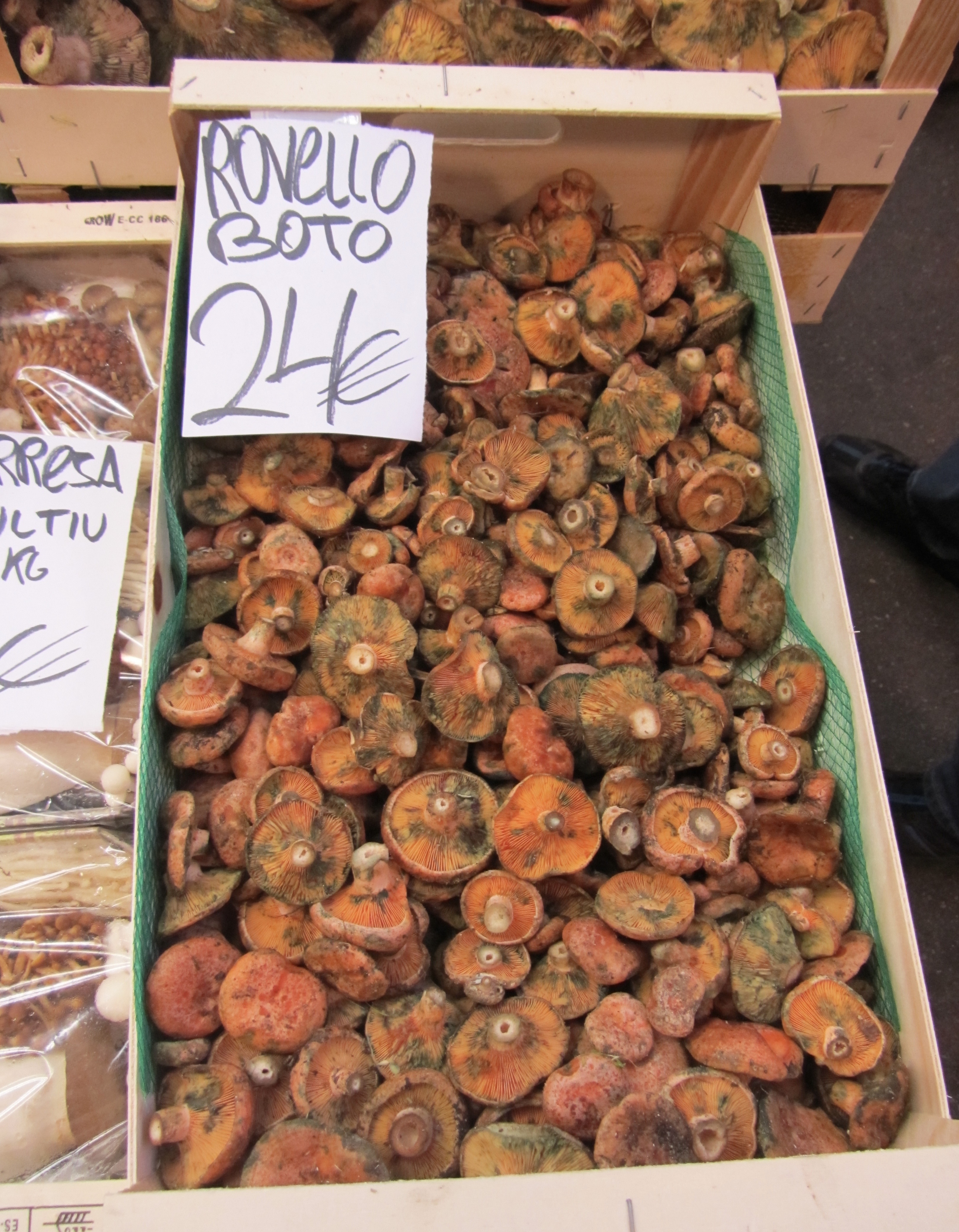
Saffron Milk Caps (Rovelló de Botó) are very popular in Spain. The picture below shows fresh Saffron Milk Caps on the Mercado Central in Valencia. Thinking about Spain we came up with the idea of combining the mushroom with octopus.

Wine Pairing

We opened a bottle of Domaine Font-Mars Picpoul de Pinet. Picpoul de Pinet (Son terroir c’est la mer) is a white wine from the South of France between Narbonne and Montpellier. The terroir (think calcareous soil) is influenced by the sea, which is reflected in the mineral taste of the wine. The story is that Picpoul could be read as pique poul which translates into something like ‘stings the lip’; a nice reflection of the high acidity of the grapes. This acidity guarantees a refreshing white wine, which is exceptional given the warm climate. The wine is bright yellow with a very subtle touch of green. It’s aromatic, floral and fruity. The taste has notes of citrus and apple.
In general we suggest drinking a refreshing, unoaked white wine that goes well with seafood.

What You Need

  • For the Sauce
    • 4 Tomatoes
    • 1 Shallot
    • 1 Garlic Clove
    • Red Wine
    • Thyme
    • Olive Oil
  • 150 grams of Saffron Milk Cap
  • 200 grams of pre-cooked Octopus Tentacles
  • Parsley
  • Cayenne Pepper
  • Olive Oil

What You Do

  1. Peel, seed and dice the tomatoes.
  2. Don’t discard the skin and the seeds: use a strainer to get as much tomato juice as possible
  3. Chop the shallot
  4. Chop the garlic finely
  5. Heat a skillet, add olive oil and add the shallot.
  6. Fry for a few minutes
  7. Add garlic and tomatoes
  8. Reduce heat
  9. After a few minutes add the tomato juice, half a glass of red wine and thyme
  10. Leave to simmer on low heat for 2 hours or until the sauce is ready both in flavour and texture
  11. Cool and transfer to the refrigerator
  12. The next day clean the mushrooms and slice (not too thin)
  13. Chop the parsley
  14. Heat a skillet, add olive oil
  15. Add the sliced mushroom
  16. Fry for one minute
  17. Reduce heat
  18. In parallel grill the pre-cooked octopus tentacles (4-6 minutes)
  19. Add the tomato mixture to the pan with mushrooms and cook for a few minutes
  20. Taste and add cayenne pepper. You’re looking for a fairly sharp, spicy taste
  21. Add parsley to the mixture and combine
  22. Slice the octopus
  23. After a few minutes add octopus to the mixture without combining,

Sea Snails

A Thursday afternoon, we were chatting to our fish monger when he pointed us at something new and would we like to try it? He pointed at Purple Dye Murex or Spiny Dye Murex. In Dutch these sea snails are called Brandhoren of Stekelhoren, in German Herkuleskeule or Brandhorn, in French Murex Épineux or Murex Tinctorial, in Spanish Cañaílla and in Catalan Corn Amb Pues.
The name is intriguing. The French ‘tinctorial’ and the English ‘purple dye’ clearly refer to the milky secretion of the snails. When exposed to air it turns into a powerful and lasting dye, which was used in ancient times to produce purple. You would need lots and lots of snails to get a decent amount of dye, hence the fact that purple is still associated with royalty, dignity and being expensive.
The German name Herkuleskeule refers to Hercules. One day our hero was walking his dog on the beach when the dog bit on a sea snail. The dog’s mouth turned purple and that’s how purple dye was discovered. We love stories like this!
A painting by Peter Paul Rubens shows this scene on the beach, although the snail in the painting looks more like an escargot.

Back to our culinary world. The sea snail is popular in Spain and Catalonia, so we think it’s best to combine a portion of snails with other food (for instance smoked almonds, chorizo, olives, manchego, pimientos de padrón) and serve as tapas.
Another option is to add the snails to a stew but then you wouldn’t see the impressive shells. 
We decided to combine the sea snails with a vinaigrette. A tasty, simple combination.
Next time we will combine the Purple Dye Murex with aioli because we think the snails can do with a more velvety sauce.

Wine Pairing

A glass of Cava, a cold beer or a glass of Vinho Verde will be wonderful. The wine shouldn’t be too complex, and it should bring sufficient acidity to the dish.

What You Need
  • For the snails
    • 200 grams of Purple Dye Murex
    • Small shallot
    • Thyme
    • One Garlic Clove
    • White wine
    • One bay leaf
  • For the dressing
    • Excellent Olive Oil
    • White Wine Vinegar
    • Lemon Juice
    • French Mustard
    • Red Onion
What You Do
  1. Ask your fish monger if the snails are clean
  2. If not, you will have to soak them a number of times for a few hours in salty water
  3. Heat a pan with water and add chopped shallot, thyme, chopped garlic, bay leaf and wine
  4. After 15 minutes add the snails
  5. Allow to simmer for between 10 to 30 minutes. We cooked our snails for 20 minutes, but that was perhaps too long. Ask your fish monger for advice
  6. In the meantime, finely chop the small red onion and make a vinaigrette
  7. Allow the snails to cool until lukewarm or at room temperature
  8. Serve with the vinaigrette and other tapas
Purple Dye Murex ©cadwu

Thank you Fred!

In 1965 Yolanda and Fred de Leeuw took over Slagerij De Leeuw, previously owned by his father. They turned it into not only the best butcher in Amsterdam, but also the place to go for excellent home-made pastrami, the most delicious Bresse chicken and their smoked sausages. They started importing truffles for Urbani, had the best US beef and later the prestigious Kobe beef. Every Christmas they would have a brochure with an overview of culinary products (all home-made) and exceptional food. How about Chapon de Bresse (en demi-deuil) or Pauillac Lamb?

For Fred and Yolanda it was not about extravagance or running an expensive shop. It was about quality. About offering the very best to their customers. And yes, it was expensive, but it’s better to enjoy excellent pork once a week than eating mediocre meat every day of the week from poor animals stuffed with antibiotics. They retired in 2000, but their philosophy continues to be important.

In an interview with Fred and Yolanda, published last year, they make a number of interesting comments, for instance: “It’s better for everybody to grow less animals on more ground during a longer period. Better for the farmer, better for the animal and better for the consumer.”

We couldn’t agree more. Such a pity we continue to rush to supermarkets, the cheapest salmon, the cheapest chicken, more for less, without worrying too much about animal welfare, quality, taste and the impact on the environment and the climate.

We can hear you thinking: “So you’re saying the poor should eat beans and turnips, leaving the meat for the rich and well to do?”

Of course we don’t.

We’re saying that we all should understand that meat is an expensive product. And that three chicken wings for just €2,90 is only possible if the chickens live an awful life.

We are part of a vulnerable eco-system and we should help protecting it.

Fred de Leeuw passed away on October 21st 2023. We will remember him for his passion for quality and we thank him and Yolanda for sharing it with us. The last time we met, summer 2023, Yolanda and Fred talked with so much enthusiasm about a new restaurant they discovered, a restaurant focused on vegetables.
Fred said: “We’re butchers and we will always be butchers, but you won’t believe how delicious their food is.”

Dorade

The Gilt-Head (Sea) Bream, better known as Daurade, Dorade (Royale) or Orata is a popular fish in France, Greece, Italy, Spain and many other Mediterranean countries. Delicious when stuffed with herbs such as thyme, rosemary or marjoram, grilled and served with a slice of lemon. The firm, juicy meat is aromatic and a culinary treat.
Serving a whole fish can be a bit uncomfortable. You must remove the head, dissect the fish and look carefully for hidden bones. Serving a fillet makes enjoying fish much easier. The downside is that a fillet is less tasty and perhaps a touch dry. When you buy a fillet, make sure it’s fresh and enjoy it the same day.
We combine the Dorade with typical Mediterranean ingredients. A combination that is both light and tasty.

Wine Pairing

The dish is full of flavours, so we would suggest a glass of Spanish Verdejo or Italian Custoza. In general you’re looking for a full, fragrant dry white wine with a fruity aroma and a round, long, full and dry taste.

What You Need

  • 200 grams of Dorade Fillet
  • 2 ripe Tomatoes
  • 1 Garlic Clove
  • Capers (in brine)
  • Basil
  • Black Pepper
  • Olive Oil

What You Do

Remove the pits from the tomato and dice. Chop the garlic. Coarsely slice the capers. Add olive oil to the pan, heat the garlic for a few seconds, add tomatoes. Leave for a few minutes, add the capers. Taste and adjust. One minute before serving add half of the basil. Add black pepper.
In parallel fry the dorade until golden. Serve on a hot plate and add the remaining basil.
PS When you use salted capers, wash these thoroughly to remove the salt. You need lemon juice to get the right acidity.

Dorade ©cadwu
Dorade ©cadwu

Pasta with Tomatoes and Octopus

Happy New Year! Let’s start 2023 with a flavourful pasta dish, inspired by the Portuguese cuisine. A cuisine that is all about food with great flavours, such as bacalhauCaldo Verde, octopus, cuttlefish, and the well known chicken piri-piri and pastel de nata. Octopus is very tasty and it comes with a great texture. The suction cups may be a bit unappealing, but don’t worry, the taste will make up for it.
In this case we use Orecchiette, small ear shaped pasta. The mixture of tomato and octopus is not like a sauce, so the paste should function as a carrier (a mini spoon) of the mixture. Enjoy quality pasta with slightly acidic tomatoes, rich octopus and refreshing parsley.

Wine Pairing

A Portuguese white wine will be a great idea, for instance a Vinho Verde. You could also go for a Spanish Verdejo from Rueda. Look for characteristics like fresh, fruity, clear acidity, subtle bitterness, minerality and full bodied. We enjoyed a glass of Pazo das Tapias Finca os Cobatos, from Monterrei in Spain made with Godello grapes.

What You Need

  • 2 Octopus Tentacles (cooked)
  • 2 Large Tomatoes
  • 2 Gloves of Fresh Garlic
  • Parsley
  • Jerez Vinegar
  • Black Pepper
  • Olive Oil
  • Pasta (Orecchiette)

What You do

Quarter the tomatoes, slice the garlic (not too small) and fry gently in a warm pan with olive oil. Set to low heat. In parallel heat a heavy iron skillet. Remove the gelatinous substance from the tentacles, dry them, coat with olive oil and fry. Cook the orecchiette according to the pack. With only 5 minutes to go for the pasta, slice the octopus in small chunks (depending on the size of the pasta), add the octopus to the tomato mixture and add half of the chopped parsley. Just before serving the dish, add some Jerez vinegar to the mixture. Add the remaining parsley and black pepper. Drain the pasta, keep some of the cooking liquid and add the pasta to the mixture. Combine, decide if you want to add some cooking liquid or perhaps some olive oil. Serve immediately on a hot plate.

Pasta with Tomatoes and Octopus ©cadwu

Saffron Milk Cap with Squid and Tomatoes

It’s nearly the end of the season for this delicious mushroom. And what better idea than to close the season with a new recipe! Normally we would combine Saffron Milk Cap with Chorizo and roasted Bell Pepper. Thinking more about Spain and its markets (the one in Valencia is our all-time favourite) we came up with the idea of combining the mushroom with fish? Or gambas? Or perhaps squid?

Wine Pairing

We opened a bottle of Domaine Font-Mars Picpoul de Pinet 2021. Picpoul de Pinet (Son terroir c’est la mer) is a white wine from the South of France between Narbonne and Montpellier. The terroir (think calcareous soil) is influenced by the sea, which is reflected in the mineral taste of the wine. The story is that Picpoul could be read as pique poul which translates into something like ‘stings the lip’; a nice reflection of the high acidity of the grapes. This acidity guarantees a refreshing white wine, which is exceptional given the warm climate. The wine is bright yellow with a very subtle touch of green. It’s aromatic, floral and fruity. The taste has notes of citrus and apple.
In general we suggest drinking a refreshing, unoaked white wine that goes well with seafood.

What You Need

  • For the Squid
    • 150 grams of Squid
    • 4 Tomatoes
    • One Garlic Clove
    • Red Wine
    • Thyme
    • Olive Oil
  • 150 grams of Saffron Milk Cap
  • Parsley and or Celery Leaves
  • Cayenne Pepper
  • Olive Oil

What You Do

The day before serving: clean the squid. Slice (not too thin). Peel, seed and dice the tomatoes, use a strainer to get as much tomato juice as possible. Chop the garlic finely. Heat a skillet, add olive oil and add the sliced squid. Fry for a few minutes, add the garlic and the tomatoes. Reduce the heat. After a few minutes add the tomato juice, half a glass of red wine and thyme. Leave to simmer for 2 hours or until the squid is ready both in flavours and texture. Cool and transfer to the refrigerator.

The next day clean the mushroom and slice (not too thin). Chop the parsley and or celery leaves. Heat a skillet, add olive oil and add the sliced mushroom. Fry for one minute, then reduce heat. Add the squid mixture and cook for a few minutes. Taste and add cayenne pepper. You’re looking for a fairly sharp, spicy taste. Add half of the chopped parsley/celery. After a few minutes serve the mixture and garnish with parsley/celery. The idea is to have a mixture (not a sauce) of squid and mushrooms, coated with tomatoes. 

Saffron Milk Cap with Red Bell Pepper and Chorizo

This mushroom is absolutely delicious, which is reflected in its Latin name Lactarius deliciosus. When you cut a thin slice of the stem, you will see the intense, orange colored milk of the mushroom.
The mushroom may be a bit green, which is the result of bruising, so nothing to worry about. Cleaning it may require rinsing with cold water because leaves and mud may be stuck to the cap.

It is a popular mushroom in Spain, Portugal, Turkey, Scotland, Poland, Russia and many other countries. In Spain they are combined with garlic and parsley, in Turkey with spinach to make börek or used in a rich tomato stew and in Poland and Russia they are salted with herbs such as dill and caraway.

Many recipes suggest blanching the mushrooms for 2, 3 or even 10 minutes, but that’s not necessary. Much better idea is to use them in stew like recipes, allowing for the flavours to integrate. Talking about flavours, Saffron Milk Cap is a touch nutty, sweet and mild.

The season is relatively short, from August until October, November. Which in a way makes the joy of buying and preparing these delicious mushrooms even greater!

Wine Pairing

We very much enjoyed a glass of Portuguese Segredos de São Miguel, a full bodied, warm red wine, made from grapes such as Alicante Bouschet, Aragonez, Touriga Nacional and Trincadeira. You will taste lots of fruit and a touch of toast.

In general you’re looking for a full bodied wine, with some acidity and smooth tannins. A glass of Malbec will also be a good choice.

What You Need

  • 150 grams of Saffron Milk Caps
  • Roasted Red Bell Pepper
  • 50 grams of Sliced Chorizo
  • Parsley
  • One Garlic Glove
  • Black Pepper
  • Olive Oil

What You Do

Clean the mushroom and slice (not too thin). Chop the garlic. Peel the skin of the roasted bell pepper and slice. Warm a skillet, add olive oil and gently add the sliced Spanish chorizo (yes, we know, it seems a bit odd. You would expect us to use fresh chorizo, which is great when you want to create something like a sauce or ragu, but we like the idea of being able to taste all three main elements, on their own and in combination). Add the garlic. After a minute or so add the mushrooms and the bell pepper. Fry gently. After 5 or 10 minutes add some chopped parsley. Leave on low heat. Add some more parsley. Just before serving add the remaining parsley and some black pepper.

PS

Roasting a red bell pepper before using it, is such a good idea. Simply slice the bell pepper in 4, put on the highest rack in the oven and grill for 10 minutes or until truly burned. Remove from the oven, put in a container, close it and wait for an hour or so. Remove the skin of the bell pepper and it’s ready to use. Roasted bell peppers are sweet and intense, with only a touch of smokiness.

Salmorejo

A delicious, rich, creamy, velvety, elegant, complex, delicious, cold tomato soup from Andalucía (southern Spain) with lots of generous flavours. It is ideal on a hot summer’s evening and great as a vegetarian starter. It is very simple to make: purée skinned, fresh, ripe tomatoes with stale, white bread, olive oil and garlic. Garnish with Jamón Serrano (also from Andalucía) and hard-boiled egg.

Salmorejo and Gazpacho are very different soups. Gazpacho comes with red bell pepper, chili and onions; Salmorejo is purely about tomatoes and is much creamier and softer, because bread is a key ingredient. It’s nice to decorate gazpacho; Salmorejo must be garnished. Salmorejo is a beautifully balanced soup.

Removing the skin is mandatory when making Salmorejo. The idea to roast the tomatoes is a twist that enhances the flavours of the tomatoes, but it is not part of the original Salmorejo, so feel free to skip this step.

What You Need

  • 500 grams of Excellent Ripe Tomatoes
  • Slice of stale White Artisanal Bread without the crust
  • 1 small Garlic Clove
  • 1 tablespoon of Jerez Vinegar
  • Olive Oil
  • 1 hard-boiled Egg
  • (optional) diced Serrano Ham
  • Black Pepper
  • (optional) Salt

What You Do

Peel the tomatoes. Soak the bread in water for 10 minutes. Optional: slice the tomatoes in two and transfer to an oven (200 °C or 390 °F) for 15 minutes and let cool. Chop the garlic clove. Blender the tomatoes, the bread (and the water) and the garlic until very smooth. It should be really smooth, cream like; this may take 1 minute on turbo! On low speed add the vinegar and slowly add the olive oil. Taste, add salt and pepper if required and perhaps some more olive oil. Allow to cool for at least 2 hours.
Serve in cold bowls and garnish with roughly chopped hard-boiled egg and diced Serrano ham.

PS

If you enjoy cold soups as much as we do, then we have more recipes for you: Gazpacho, Ajo Blanco and Avocado and Cucumber Soup.

Salmorejo ©cadwu
Salmorejo ©cadwu

Spanish Tortilla

We have fond memories of the Mercat Central in Valencia, one of the largest markets in Europe. Its architecture is amazing, but even more stunning are the products on sale: fruit, vegetables, mushrooms, chicken, fresh meat, sausages, hams, herbs, spices, fish, bread, wine, pickles, snails, weeds, offal, rice, nuts: anything and everything you can dream of.
And of course various bars with the tastiest tapas ever. We would go shopping early in the morning, buy what we needed that day (perhaps a bit more than just that) and buy two bocadillos de tortilla: a small crunchy roll with tortilla made with egg, onions and potato. We would run back to our apartment, make coffee, sit down and enjoy the rich, velvety, long taste of bread and tortilla.
Fond memories indeed.

Making Spanish tortilla is a matter of combining the best ingredients and being patient.

What You Need

  • 200 grams of Potato (waxy ones, we used Roseval)
  • 1 large Spanish (White) Onion
  • ½ Grilled Red Bell Pepper
  • 4 Eggs
  • Black Pepper
  • Olive Oil

What You Do

Heat a pan and gently fry the thinly sliced potatoes, slowly, in plenty of oil. You don’t want crunchy, golden potatoes, they should be nearly done, that’s all. In a separate pan glaze the quartered and sliced onion, also for let’s say 15 minutes. Let both cool. Dry the sliced grilled red bell pepper with kitchen paper. Beat the eggs and add potatoes and onions. Allow to rest for 15 minutes. For some reason this is a crucial step, one that should not be skipped. Add sliced red bell pepper and fresh black pepper. Warm a medium sized non-stick pan (22 cm or 9 inch), add oil and fry the tortilla until the top is slightly set. It could take 20 minutes so please don’t be tempted to increase the heat. Transfer to a plate, put the pan on top of the tortilla and flip. Fry a few minutes.
Serve lukewarm, perhaps with some chopped parsley and a crunchy roll.

PS

You could peel a fresh red bell pepper, but better is to clean it, slice in 4 to 6 chunks, flatten these and grill for 10 minutes. This should char the pepper significantly. Transfer to a plastic container and close. Leave for a few hours. Now you can easily remove the skin. This way a bell pepper has a richer, more complex taste and is easier to digest, but it is of course not as crunchy as a fresh bell pepper. 

Gazpacho

Simple, tasty, refreshing and quick: what more could you ask for on a summer’s evening? We love a cold soup, for instance Ajo Blanco or Avocado and Cucumber Soup.

Gazpacho, another Spanish classic, is not just a mixture of tomatoes, bell pepper, chili, garlic and white onion. It absolutely needs Jerez vinegar and excellent olive oil. The olive oil will give that velvety, rich feeling in your mouth and the vinegar with the chili gives the gazpacho that typical, sharp freshness.
You will need the very best of vegetables: ripe, tasty and with a firm structure.
The bell pepper should, according to some recipes, be a green Cubanelle pepper. Hard to find for us, so we’re happy to use a green bell pepper.

Prepare the Gazpacho 8 hours in advance and serve in cold bowls. 

What you need

  • 4 large, meaty, tasty red Tomatoes
  • ½ white (Spanish) Onion
  • 1 Green Bell Pepper
  • 2 Fresh Garlic Gloves
  • ½ Red Chili
  • 1 small Cucumber (optional in our view)
  • 3 tablespoons Olive Oil
  • 2 tablespoons Jerez Vinegar
  • Pinch of Salt

What You Do

Cut the tomatoes in 4 and remove the seeds. Transfer to a sieve and use the back of a spoon to squeeze out the liquid. Discard the seeds. Chop the tomato chunks, onion, bell pepper, gloves and chili. Use a blender to mix tomato chunks, tomato juice, onion, bell pepper, gloves and chili until you have a fairly smooth soup. Add olive oil and Jerez vinegar and pulse. Taste, add pinch of salt and more olive oil or vinegar if needed. Transfer to refrigerator to let cool. You could decorate with green bell pepper or chopped tomato (provided it’s peeled and seeded).

PS

Most recipes mention passing the mixture through a sieve. This way you will get a smoother, but also thinner soup. That’s probably why these recipes suggest adding white bread to the mixture.

Gazpacho ©cadwu
Gazpacho ©cadwu