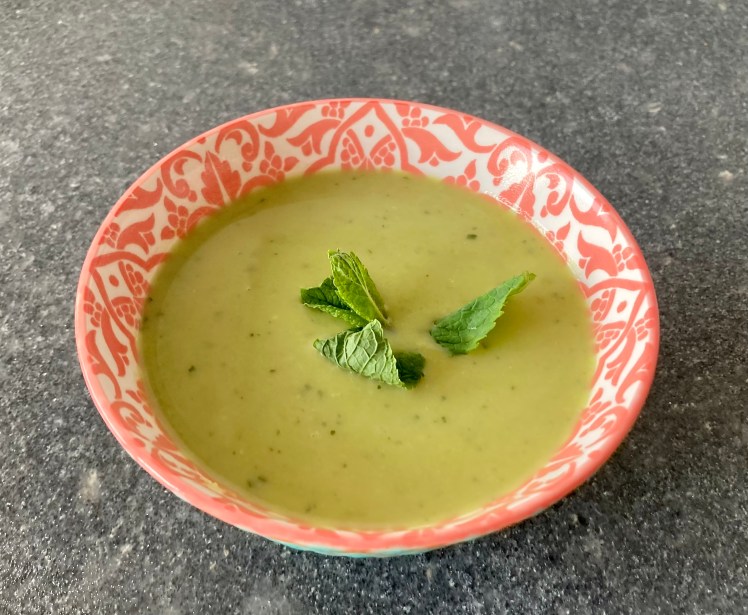
We love refreshing chilled soups during summer. Could be gazpacho, could be avocado and cucumber soup or this classic. It’s delicious and uplifting when it’s really warm. Serve with crusted bread for a lovely, light starter.
What You Need
1 small Shallot
1 clove of Garlic
400 ml of Vegetable Stock
175 grams of (frozen) Peas
handful of fresh Mint
Lemon Juice
Black Pepper
2 tablespoons of Cream
Olive Oil
What You Do
Chop the shallot, the garlic and the mint
Heat the oil in a large pan
Add shallot to the pan and glaze for a few minutes
Add garlic to the pan and gently sauté for one or two minutes
Pour in the stock and bring to the boil
Add peas and reduce heat
Leave for a few minutes until the peas are relatively soft
Add mint and cream
Allow to simmer for one or two minutes
Add some lemon juice and black pepper
Hand blender until smooth
Taste and adjust (mint, lemon juice, black pepper)
Pour into a large bowl and allow to cool
Cover and chill in the refrigerator for three or more hours
Spoon the soup into cold soup bowls and decorate with a sprig of mint
PS
Don’t overcook the peas. If you do, the soup will become too smooth and it will not be bright green.
You could add some olive oil just before serving and pulse with a hand blender. This will give the soup a velvety, rich feel plus it will make the taste more complex.
A few weeks ago John Rieber wrote about the miracle of garlic. He also explains the 10-minute rule and the way it creates additional benefits when using garlic. His post includes a recipe for a garlicky soup, a variation of Avgolemono.
The post made us think of ‘knofsoep’ (in English it would be ‘garsoup’) as described by author, poet and performer Johnny Van Doornin 1988. He was known for his ecstatic performances, enabled by the use of various substances. His knofsoep, based on a recipe from Roman times, helped him through the day. The soup is uplifting, supports overall health and more specifically the liver. It is to be served with crusted bread and a glass of wine. We adjusted the recipe slightly by using vegetable stock and adding some chives. The soup has a very mild, sweet garlic flavour (thanks to not roasting or frying the garlic) and complexity thanks to the herbs and the clove.
The original recipe (in Dutch) is available in his diary Door de Weken Heen, available for 5 euros, second hand only.
What You Need
500 ml Vegetable Stock
8 cloves of Garlic
1 starchy Potato
Olive Oil
Bouquet Garni (Thyme, Sage, Rosemary, Parsley, Bay Leaf)
1 Clove
2 crushed Black Peppers
Parmesan Cheese
Chives
(optional) Black Pepper
(optional) Salt
What You Do
Bring the stock to a boil
Add garlic and potato
Reduce the heat
Add a small tablespoon of olive oil
Add bouquet garni, clove and crushed black peppers
After 40 minutes pass the soup through a sieve
Use a spoon to capture all the flavours of the ingredients
A few weeks ago, we enjoyed a delicious vegan dinner at Lokaal, a small restaurant in the centre of Gent, Belgium. Friendly service, relaxed atmosphere and nice music. One of the specialties of Lokaal is fermentation, for instance homemade Tempeh from Bulgur. Lots of umami and length. We loved it! Our dinner at Lokaal started with a nice winter soup made with kale and kohlrabi. We’re not the biggest fans of kale, but in this case it worked very well. The kohlrabi gave a nice, uplifting touch to the soup.
It made us think of other winter soups, like parsnip and Jerusalem artichoke soup, and parsley root soup. Ah, those forgotten vegetables! They bring us new flavours and combinations.
We used vegetable stock for all three soups. It is made with Carrot, Onion, Leek, Celery and Black Pepper (and optional a bouquet garni). Easy to make and lots of flavour. It freezes well, which makes it an even more important asset.
What You Need (Kale and Kohlrabi soup)
500 ml Vegetable Stock
200 grams of Kohlrabi
50 grams of Kale
French Mustard
What You Do
Clean the vegetables
Devein the kale
Peel the kohlrabi
Coarsely chop the vegetables
Warm the stock
Add the kohlrabi
Leave to simmer for 10 minutes
Add the kale
Leave to simmer for 10 minutes
Use a blender to make a relatively smooth soup
Add mustard to taste
Serve
PS The soup doesn’t keep well, so not one for the refrigerator
What You Need (Parsnip and Jerusalem Artichoke soup)
500 ml Vegetable Stock
200 grams Parsnip
200 grams Jerusalem Artichokes
White Pepper (optional)
What You Do
Clean, peel and coarsely chop the vegetables
Warm the stock
Add the vegetables
Leave to simmer for 15 minutes or until the vegetables are done
Use a blender to make a smooth and creamy soup
Depending on the Jerusalem Artichokes the soup can become fairly thick. Add some stock if so required
Taste (optional: add some white pepper)
Serve
PS You can also enjoy the soup the next day, it keeps well in the refrigerator
What You Need (Parsley Root soup)
500 ml of Vegetable Stock
200 grams Parsley Root
1 small Shallot
½ Leek (white only)
1 small clove Garlic
Butter
Parsley
What You Do
Warm butter in a pan
Peel and coarsely chop parsley root
Coarsely chop leek and onion
Glaze onion and leek in butter
Add parsley root
Add garlic
Leave on low heat for 5 minutes
Add stock
Simmer for 20-30 minutes or until the parsley root is soft
It’s the time of year to enjoy simple, seasonal, rich and flavourful food, for instance spicy pumpkin soup. The trick in this case is in the coconut milk or cream. Coconut milk contains something like 15 grams of fat per 100ml. For this soup you need 25+ grams of fat per 100ml. The fat enhances the coconut flavour and it combines very well with the spicy and aromatic character of the soup (ginger, chili, djeroek poeroet).
What You Need (for 4)
Small Pumpkin
Large Shallot
2 large Garlic Cloves
4 cm Fresh Ginger
Chili Pepper
Olive Oil
8 leaves of Djeroek Poeroet
Coconut Cream
Cilantro
What You Do
Wash the pumpkin and chop. If the pumpkin is organic, then you don’t need to peel it. Peel and chop the shallot, garlic and the ginger. Ground dried chili pepper. Gently fry the shallot in olive oil. Add chilli pepper. Add ginger. Stir, mix and add pumpkin. Stir and add garlic. Now add the vegetable stock, the djeroek poeroet and allow to simmer for 30 minutes. If the pumpkin is soft, remove the djeroek poeroet and blender the mixture. Taste and adjust. Add 6 spoons of coconut cream, 1 by 1, mix and taste. When you’re happy with the flavours, leave the soup on low heat for 15 minutes. Serve with lots of chopped cilantro.
Watercress tastes fresh and somewhat peppery. In this soup we combine it with chervil and dill (hints of anise) making it an even more uplifting, delicious soup. Adding cream or olive oil is optional. Easy to make, quick and vegan!
Chop the shallot and the garlic. Peel and chop the potato. In a heavy iron pan heat the butter, glaze the shallot and later add the potato and garlic. Allow to simmer for a few minutes. In the meantime, remove the coarse stems of the watercress and the chervil. When the potato is done, remove some of the stock and blender this with the watercress, the dill and the chervil until very smooth. Transfer back to the pan and leave on low heat for a few minutes. Press the mixture through a sieve and continue on low heat for a few minutes. You could add some excellent olive oil or some double cream. If you add cream, make sure you give the soup a few more minutes, otherwise your soup will have the typical milky taste of cream.
PS
Many recipes for watercress soup suggest smoothing the mixture (including the potatoes) with a blender. Please don’t be tempted to do so! It will give the soup a gluey texture, not nice at all. Our method is perhaps a bit more work, but the result is much, much tastier.
Recently we reviewed An invitation to Indian Cooking (published in 1973) by Madhur Jaffrey as part of the ongoing cookbook review project by Bernadette. When we leaved through the book we were looking for something special, something new and exciting to prepare. Dal soup (the classic Indian soup made with red lentils, onion, various spices and perhaps ginger or orange) was not on our radar, until we read her recipe. Interesting! Yellow Split Peas? Cloves? Croutons? Let’s start cooking! The soup was very tasty and uplifting. The split peas brought structure to the soup, making this soup different compared to lentil-based dal soup. The combination of peas and cloves is one to remember.
We’re always interested in new ways to prepare mushrooms, so when we spotted a recipe with cumin and asafoetida (asafetida) we immediately knew we wanted to prepare this dish. But what is actually asafoetida and where to buy it? The first thing to know about asafoetida is that it has an extremely powerful aroma. Its taste and smell are a combination of onion and garlic. We bought 25 grams at Jacob Hooy which is Amsterdam’s premium shop for spices. The Dutch name is Duivels Drek and the German name Stinkasant. Both names are a clear indication of its pungent smell. Mushrooms, tomatoes, various spices and asafoetida: we didn’t know what to expect of the dish. The result was delicious, aromatic (in a subtle way) and a tribute to the tomatoes and mushrooms, with a long-lasting taste. We loved it. Mrs. Jaffrey suggest serving the mushrooms with chapatis or pooris. Recipes are included in her book, obviously!
An invitation to Indian Cooking by Madhur Jaffrey is a comprehensive introduction to the Indian kitchen, one with reliable, easy to follow, tasty recipes and useful background information. The book includes chapters on meat, chicken, fish, dal, soups, vegetables, chutneys, breads and desserts. Which reminds us of our plan to make Kulfi (ice cream with milk and cardamon pods). An invitation to Indian Cooking by Madhur Jaffrey is available via your local bookstore or the usual channels for 15 euro or 18 US$.
Earlier we wrote about the traditional way of making asparagus soup. It starts by using the skin and woody ends of the asparagus with leek or shallot to make a stock. Then extra flavour is added (the tips of the asparagus, cream or salmon and dill) and the consistency of the soup improved, for instance by making a roux. This way you will get a nice, thickened soup with a velvety mouthfeel. It’s still a bit one dimensional so if you want a more complex soup, you need to replace the water by chicken or vegetable stock.
Another way of thickening the soup is by blending the asparagus. Unfortunately, this doesn’t help a lot since asparagus do not contain starch, so yes, the soup is tastier, a touch more structured but its consistence remains watery. What to do? Egg yolk? Corn starch? A potato? Cream? More white asparagus? A roux after all?
First decide how you want to thicken the soup. A roux is not preferred because it will flatten, reduce the flavour plus we want a try a different approach. You could use a small starchy potato (not preferred because it will bring the typical potato flavour to the soup which is great in combination with leek but not with the subtle bitterness of asparagus), corn starch (great thickener but one that reduces flavours), egg yolk (classic, but we haven’t tried it yet with this soup) or potato starch (flavourless, simple, no impact flavour wise, only colour wise).
Peel the asparagus and cut of the woody ends. Peel and slice the shallot. Add butter to a pan, glaze the shallot. Now add the skin and woody ends of the asparagus, coat with the shallot and butter mixture and add the stock. Allow to simmer for 30 – 45 minutes. If you cook the stock too long, then it will become bitter. Pass the liquid through a sieve. Squeeze to capture all the lovely asparagus juices. Keep on low heat. Chop the asparagus, add the slices to the soup and keep the tips. After 20 minutes blender the soup. Add some cream, slice the tips lengthwise and add these to the soup. 10 more minutes later the soup is ready.
And The Winner Is…
We prefer the blended version to the roux version. The stock and the other ingredients support the asparagus flavour, making it into a tasty, light yet rich soup.
A few weeks ago we enjoyed dinner at l’Épicerie du Cirque “under the Palm Trees” in Antwerpen (Belgium). The restaurant is owned and run by Dennis Broeckx and Ellen Destuyver and offers contemporary Flemish cuisine with a focus on local products. Excellent choice of wines, great service, very original menu. One of the dishes was a combination of dashi, homemade kimchi, wasabi and Belgian mussels topped with foam. Lots of umami and great textures.
Back home we tried to replicate the dish, but the result was disappointing. The foam is a crucial aspect of the dish and sadly our foam collapsed after 2 seconds. But we did manage to buy some very tasty, mild Korean kimchi so the next day we prepared a dashi-based soup with mussels instead. Very tasty and the combination works really well.
We simply love soup! A traditional soup like Londonderry or Queen’s Soup, a rich Tomato Soup, Clam Chowder, perhaps a more challenging soup like Lettuce Soup or a refreshing Ajo Blanco. If you would look at our shelfs with cookbooks you would expect books like The Ultimate Soupbook, The Essential Soupbook or Soup of the Day. No doubt these are excellent books with great recipes, but we have only one book specific on soup: Cooking Soups for Dummies by Jenna Holst.
Why? Well, to be honest, it is one of these few cookbooks that is truly about ingredients, methods and recipes, with the aim to cook a tasty soup. Most cookbooks are a collection of recipes. Not this one. The first chapter of the book is about tools and utensils, basically explaining what equipment you need to make a soup. The second chapter is about the ingredients (spices, herbs, basic items) you need and where and how you should store them. Fun to read, good to know, especially because it’s very well written, comprehensive and clear. The third and fourth chapter are about basic techniques, and the fifth chapter explains how to make a broth (chicken, beef, vegetarian, fish, clam). Chapter six is about storing soup (again well written and very helpful) and then we move towards making fresh soup from the garden (Tomato Soup, Sweet Potato Bisque etcetera).
You could skip the background information and only look at the index of recipes. You’ll find lots of interesting recipes, ranging from Mulligatawny Soup to Cantaloupe-Orange Soup, but also less exotic ones like Creamy Potato Leek Soup and Split Pea Soup.
We bought the book many years ago and have always found it helpful and inspiring. What better way to start dinner, or lunch, than with soup? Let’s buy some fresh beets and cook Herbed Beet Soup. Yummy!
Cooking Soups for Dummies is available via your local bookstore or via the well-known channels for approximately US$ 30,00 or € 20,00. You’ll find specific recipes on Dummies.
We have fond memories of the food we enjoyed when in New England: local oysters, lobster, Boston cream pie and of course clam chowder. Ah, yes, fond memories indeed. Since then, clam chowder has become one of our favourite starters. Unfortunately, most restaurants (even in New England!) turn the clam chowder into a potato soup and even worse: they used canned clams. Help!
The main ingredients of New England clam chowder should of course be lots of fresh clams plus vegetables, bacon, cream and potato. The soup must be about clams, with all the other ingredients in a supporting role.
We’re not from New England, so our clam chowder is far from original. But being Dutch we love our seafood and most certainly do we love our kokkels, also known as the common cockle. You can find a probably more original Manhatten version (meaning: without cream) in The Silver Palate Cookbook.
Finding the right potato is a bit of a struggle, also because some recipes suggest using waxy potatoes, so potatoes that remain firm. Not a good idea because it means that the potato doesn’t thicken the soup and the potato is far too present. We prefer using a starchy potato, one you would use for a purée, mash or mousseline. If you can find one with a golden colour, that’s even better. If you’re familiar with vichyssoise, then use the same potato.
What You Need
500 grams of Clams, preferably washed
Chopped Carrot, Celeriac, Onion and Leek
Bouquet Garni (Parsley, Bay Leaf, some Thyme)
4 strips of Bacon
White Wine
Water
200 grams of Starchy Potato
50 ml Cream
Olive Oil
White pepper
What You Do
Check the clams: discard broken ones or ones that will not close. Add a little olive oil to a pan and then chopped carrot, celeriac, onion and leek. Leave for 20 minutes until soft and sweet. Add the chopped bacon, fry for a few minutes until slightly crispy. Now add white wine, water and the bouquet garni. Leave for another 20 minutes. Turn up the heat, add the clams quickly and certainly not too long. If you heat them too long, then they will become rubbery when heated for the second time. Use a slotted spoon to remove the ingredients from the stock. Keep the bacon, the clams (without the shells) and the bouquet garni. Discard all other ingredients: onions, leek, celeriac, carrot and shells. Transfer the bacon and the bouquet garni back to the liquid. Add the chopped potato. Let simmer until the potato has broken down. Use a fork to thicken the soup. Add cream. Feel free to add a bit more, it’s all about taste and consistency at this stage. If you’re not happy with it, then you could add some potato starch. Keep the soup warm for 10 minutes or so, turn up the heat, add the clams and quickly heat them. Add some freshly grounded white pepper. Serve immediately.