Your Favourites in 2025

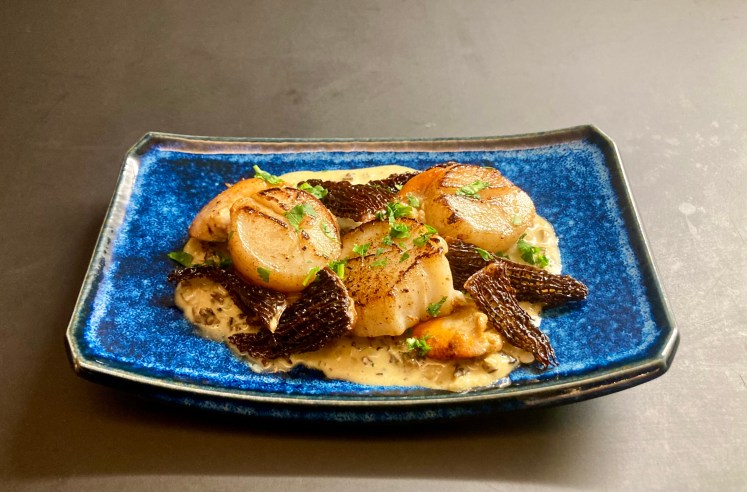
In 2025 the most popular recipe was Scallops with Roe. We were inspired by the great quality of the scallops on the market in Nice and we were not disappointed. The combination of scallops, roe and mashed potatoes is simple and delicious.

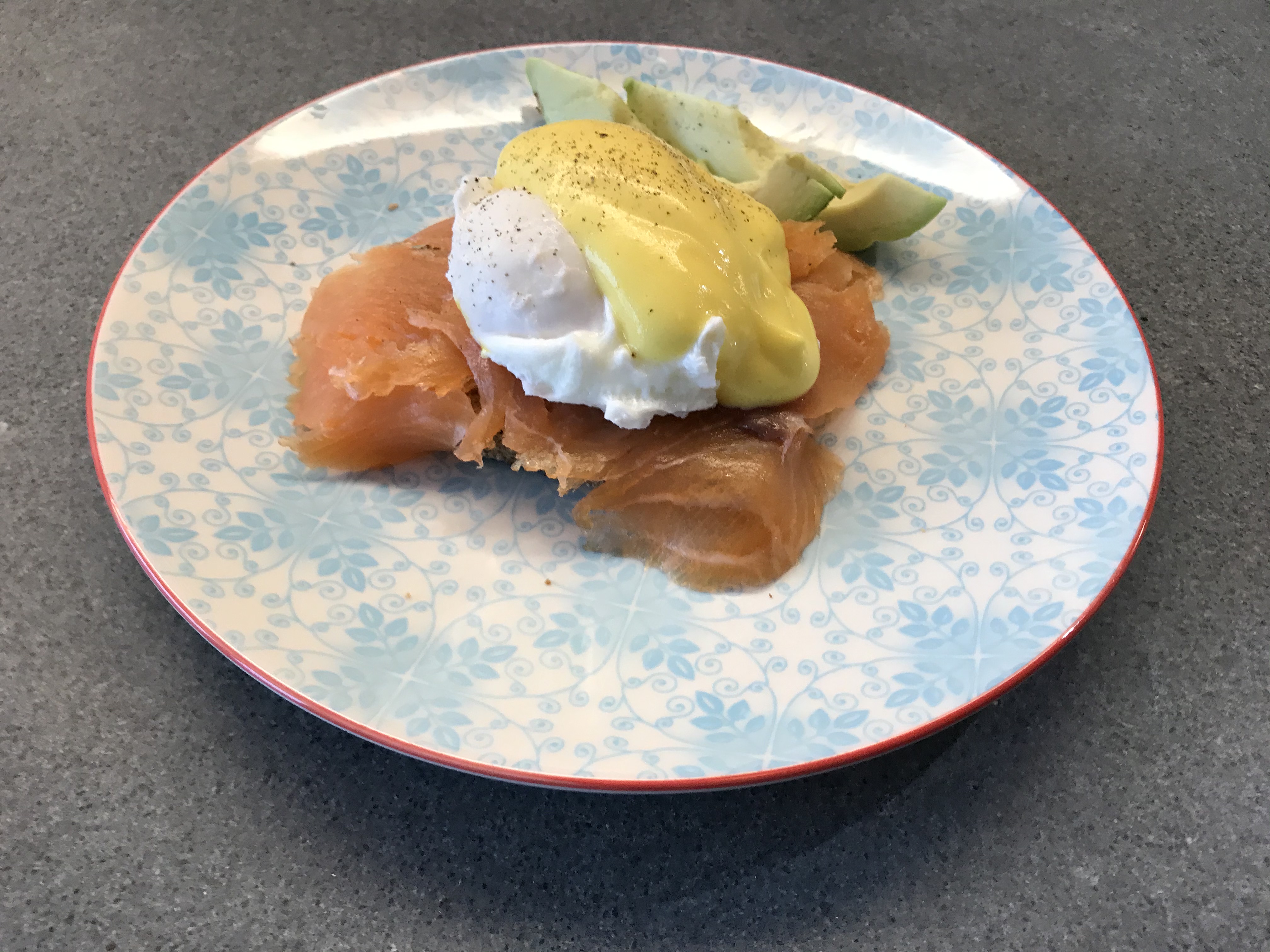
This year’s runner up is an all time favorite: Kimizu. This classic, golden sauce from Japan, is made with egg yolks, rice vinegar, water and mirin. We also made a version with tarragon, let’s say the Béarnaise version of Kimizu. Although it is a classic sauce, we use a microwave to prepare Kimizu and Kimizu with Tarragon. An easy and very effective way of controlling temperature and consistency.

Number three was another classic sauce: Ravigote. We served it with Pâté de Tête Persillé and crusted bread. The recipe we posted goes back to the more or less original version. The Ravigote is light, uplifting and flavorful.

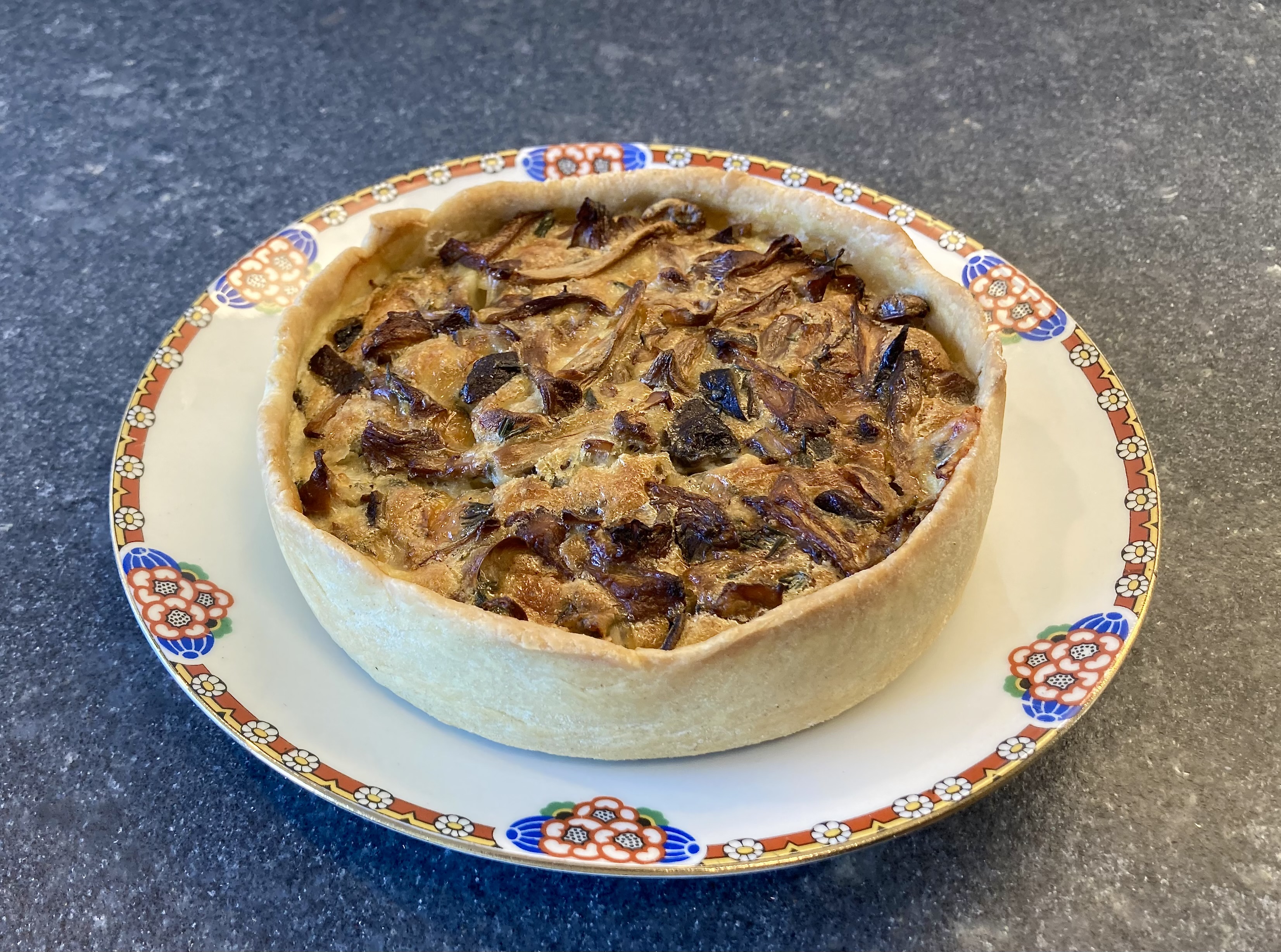
You’ve probably noticed we love mushrooms. Cultivated ones, like shiitake and oyster mushrooms and seasonal ones, such as morels and Caesar’s mushroom. This year we introduced a page with mushroom recipes in Dutch. It turned our to be a great success!

A few years ago we started exploring forgotten vegetables such as mashua and oca. We’re very pleased to see the popularity of this page. Clearly you’re as interested in these vegetables and their flavours as we are!

This year we will continue our series of sauces and of mushroom recipes, we will prepare dishes from illustrious Parisien restaurants and discuss wine pairing. We also plan to review cookbooks, with the help of our much loved tasting panel. In the meantime we look forward to your feedback, suggestions, likes and comments.

Let’s start cooking!

Scallop Gratin

Scallops (or Coquilles Saint-Jacques) are a seasonal product. In France they are available from October 1st until May 15th. In Nantucket the season runs from November 1st through March. Perhaps your fishmonger sells scallops all year round. Most likely they were frozen which massively impacts the flavour and texture. Scallops must be fresh. If possible, buy them in their shell (opening them is not difficult, cleaning them can be a bit messy, this video explains more) or ask your fishmonger to do so.

Recently John Rieber and Dorothy’s New Vintage Kitchen published great recipes with Nantucket Bay Scallops. We bought French scallops from the Normandy region and prepared three dishes, one following Dorothy’s recipe, one classic gratin and one modern gratin.

Earlier we wrote about Vacherin Fribourgeois. This cheese originates from the region around the Swiss city Fribourg. It’s a semi-hard, creamy cheese made with raw cow milk. It matures for some ten weeks in a damp cellar. Its taste is aromatic, floral, full-bodied and lasting, with a touch of sweetness, bitterness and umami. Unfortunately, it’s difficult to get hold of. It can be replaced by a combination of Gruyere and Appenzeller. Emmentaler is not an option because when you melt it, it gets stringy.

Wine Pairing

We enjoyed a glass of white Macon with our Gratin de Coquilles Saint-Jacques. In general you’re looking for a fresh, round white wine, with notes of citrus and pepper, minerality and a touch sweetness.

What You Need (Modern Gratin)
  • Scallops
  • Leek
  • Vacherin Fribourgeois
  • Olive Oil
  • Black Pepper
What You Do

This is our preferred version. The dish is an interesting combination of sweetness, richness, aromas and textures. It’s fun to serve in a shell, but it makes for challenging eating. Better to serve in ramekin, which also allows you to serve three scallops per person!

  1. Thinly slice the white of a leek and leave it for 30+ minutes in a pan with olive oil on very low heat.
  2. Taste the leek, it should have just a little bite and it should still have the distinct flavour and aroma of leek.
  3. Add some black pepper.
  4. Preheat the oven to 220 °C or 430 °F.
  5. Heat a small non-stick pan and quickly colour the scallops.
  6. Add some of the leek mixture to the shell.
  7. Place the scallops on top.
  8. Add grated cheese.
  9. Transfer to the oven and serve when the cheese has melted, probably after three minutes.
What You Need (Classic Gratin)
  • Scallops
  • Shallot
  • Double Cream
  • Breadcrumbs
  • Butter
  • White Wine
  • All Purpose Flour
  • Black Pepper
What You Do

The idea is to make a sauce, combine the sauce with the scallops, top with breadcrumbs and grill until golden. Alternative ingredients include fish fumet, parsley, cheese and mushrooms. If you coarsely chop the scallops, then the scallops are more evenly spread in the sauce. 

  1. Fry the scallops quickly in a hot pan with olive oil, just to give them extra flavour and colour.
  2. Set the scallops aside, reduce heat, add finely chopped shallot to the pan and glaze.
  3. Add some butter and flour to the pan; make a roux.
  4. Add white wine, let reduce a bit, add cream.
  5. If the sauce is too thick then add some liquid.
  6. Add some black pepper.
  7. Place the scallop(s) in a shell, add sauce and top with breadcrumbs.
  8. Grill for three minutes or until golden.
PS

Yes, we serve our scallops with roe. Why discard it? The roe is flavourful and brings another texture to the combination.
Other very tasty recipes: scallops with cauliflower or with potatoes and truffle.

Your Favourites in 2024

Happy New Year!
Let’s begin the new year with the 2024 highlights. For the past two years your favorite post was No-Knead Bread, This year’s most popular post was an all time favorite: Kimizu. This classic, golden sauce from Japan, is made with Egg Yolks, Rice Vinegar, Water and Mirin. We also have a version with Tarragon, let’s say the Béarnaise version of Kimizu. Although it is a classic sauce, we use a microwave to prepare Kimizu and Kimizu with Tarragon. An easy and very effective way of controlling temperature and consistency.

This year’s runner up is Scallops with Roe, a recipe we published in January 2023. We were inspired by the great quality of the scallops on the market in Nice and we were not disappointed. The combination of scallops, roe and mashed potatoes is simple and delicious.

On August 19th 2024 Michel Guérard passed away. He was a French chef, author, one of the founders of the Nouvelle Cuisine and the inventor of La Cuisine Minceur. We wrote about his version of sauce vierge and combined it with sea bass and with skate. Very happy to see so many people interested in this post.

You’ve probably noticed we love mushrooms. Cultivated ones, like Shiitake, Oyster Mushrooms, Enoki and Champignons de Paris and seasonal ones, such as Morels, St. George’s mushroom and Caesar’s Mushroom. One of the most popular posts is Cèpes à la Bordelaise. Also very tasty when prepared with button mushrooms. Always a pleasure to serve, for instance with eggs, with meat, with more present fish. Last year we created a special page with an overview of our mushroom recipes.

We were very impressed by the exhibition Food For Thought by Kadir van Loohuizen in the Maritime Museum in Amsterdam. Let’s summarize it by quoting Ralph Dahlhaus, Chef of the National Maritime Museum: “Your choice of food does not need to be perfect, but it must be responsible.”

We continued our series of Sauces. One of your favorites is another classic sauce: Ravigote. We served the sauce with Pâté de Tête Persillé and crusted bread. The recipe we posted goes back to the more or less original version: the Ravigote is light, uplifting and flavorful.

This year we are looking forward to the Amsterdam Symposium on the History of Food on June 5th and 6th. This year’s topic is Food and the City. The symposium takes place in the 750th anniversary year of the city of Amsterdam. The symposium will be organized during an exhibition on the history of food culture in Amsterdam, from April 11th until September 7th 2025 in the Allard Pierson.

Let’s start cooking!

The Art of Sauces: Beurre Blanc

We love the classic ways of eating white asparagus, served with a nice white wine from the Alsace region in France (Pinot Blanc, perhaps a dry Muscat). We were talking about different ways of preparing them. We browsed through various recipes and found a combination new to us: white asparagus with scallops (Coquilles Saint Jacques). Some add a tomato and tarragon sauce, others mayonnaise or (even) a tapenade. Not combinations we would like to see on our plate. Why not serve with a sauce that supports the subtle sweetness of both the asparagus and the scallops? Could be Hollandaise or Kimizu, but these are probably too rich for the scallops.

Beurre Blanc is an interesting sauce: it’s basically a reduction of white wine, vinegar and herbs, thickened with very cold butter.  The more butter you add, the thicker the consistency, although it will remain thinner than an emulsified sauce. The benefit of beurre blanc is that it comes with that lovely velvety mouthfeel without being too rich. And the acidity works beautifully with the asparagus and the scallops.

What You Need

  • 4 tablespoons Dry White Wine
  • 2 tablespoons White Wine Vinegar 
  • 4 tablespoons of Water
  • 1 Shallot
  • Thyme
  • Bay Leaf
  • Black Pepper
  • Double Cream
  • 75 (or more) grams very cold Butter

What You Do

Chop the shallot and crush the black pepper corns. Add the wine, the vinegar and the water to a pan. Add the shallot, the black pepper, thyme and one bay leaf to the pan. Allow to reduce to 1/3. Pass through a sieve. In total you should have 3 or 4 tablespoons of reduction. Warm the reduction. Add a splash of cream and reduce to 1/2 or 1/3. Whisk regularly. Remove the creamy reduction from the heat and start adding small cubes of ice cold butter, one by one, whisking constantly. Keep adding butter until you have the taste and the consistency you want.

Asparagus and Scallops

We served the Beurre Blanc with steamed white asparagus and scallops sautéed in butter. We opened a bottle of Mâcon-Vinzelles ‘En Paradis’ 2021, produced by Château Vitallis. The wine, made from 100% Chardonnay grapes, is vinified in stainless steel tanks. It has just the right level of citrusy acidity, it is fresh with floral aromas, and comes with minerality and a touch of butter. In general, you’re looking for an unoaked chardonnay, with freshness and some acidity.

Asparagus, Scallops and Beurre Blanc ©cadwu

Season’s Greetings

Perhaps you’re looking for some extra inspiration menu-wise for the Holiday Season? Let us help you with a few suggestions.

Apéretif

It’s of course great to serve a glass of Champagne, but why not start with a glass of Crémant de Bourgogne or Alsace? Or a Spanish Cava? The fun is that you can buy a slightly more expensive Crémant or Cava and enjoy a refined sparkling wine. Serve with Terrine de Foie Gras on toast or with a small prawn cocktail, served in a peeled tomato.

Starter

Scallops with fluffy cauliflower purée is a wonderful combination of flavours. The practical advantage is that you can prepare the purée a day ahead and grilling the pancetta is also something you can do in advance. Serve with a glass of Sauvignon Blanc. Dry, some acidity, touch of fruit.

Main Course

Canard à l’Orange, served with steamed Brussels sprouts and potatoes fried in butter: a dish that supports the festive character of your evening: sweetness, a touch of bitterness and crispy, rich potatoes. Enjoy with a beautiful Bordeaux. In general you’re looking for a powerful red wine, with aromas of berries and a touch of oak. The flavour must be round and long with subtle tannins.

Cheese

We tend to go for the classic combination of Stilton and Port. Spend some money and buy a Late Bottled Vintage Port.

Dessert

Continue the British tradition and enjoy a slice of Christmas Pudding with a coffee and a glass of Cognac or Calvados. No need to serve the pudding with brandy butter.

Season’s Greetings 2021 ©cadwu

Scallops with Cauliflower Purée

Three very different ingredients make for an excellent starter. The combination of seared scallops with soft, fluffy cauliflower purée and crispy grilled pancetta offers lots of flavours. For instance a touch of sweetness thanks to the caramelised scallops and the cauliflower plus lovely saltiness thanks to the scallops and the pancetta.

The combination of these three is not new and many recipes have been published. Various ingredients are added, for instance basil, lemon, capers, an infused oil (with for instance curcuma and fennel), a vinaigrette, apple beignets et cetera. But why would you add something if the combination is already close to perfection? And not difficult to make!

Wine Pairing

Best to combine with a wine with long, fruity aromas. Given the complexity of the combination the wine should be fresh and light. A Chardonnay with just a touch of oak could also be interesting because it will combine very well the grilled pancetta and seared scallop.
We enjoyed our scallops with a glass of Chateau Mourgues Du Gres Rosé. A wine with an intense pink colour, aromas that made us think of strawberries and lemon and with a fruity, long taste with a hint of pepper.

What You Need

  • For the Seared Scallops
    • 6 fresh Scallops (best if in their shell)
    • Olive Oil
    • White Pepper
  • For the Cauliflower Purée
    • One Cauliflower
    • Excellent Olive Oil
    • Crème Fraîche
    • White Pepper
  • For the Crispy Pancetta
    • 6 slices of Pancettta

What You Do

Clean and steam (or cook) the cauliflower until nearly done. Using a blender combine the cauliflower and some olive oil. When smooth pass through a sieve. Add some crème fraîche and fresh white pepper. If you’re happy with the purée, keep it warm and ready. You could prepare the purée a day in advance. Clean the scallops. In parallel set your oven to grill. Transfer the pancetta to the grill. 4 minutes? Heat a non stick pan and fry the scallops quickly. Add a last drop of excellent olive oil to the purée, mix with a spoon and plate up. Perhaps some white pepper on the scallops.

Seared Scallops with Truffle and Potato Mousseline

Truffles Are a Chef’s Best Friend

Truffles range from affordable summer truffles (€100 per 100 gram) via expensive winter truffle (€150 per 100 gram) to extremely expensive white truffles (starting at €375 per 100 gram). Cultivated truffles are considerably less expensive but unfortunately they have less flavour and taste.

Commercially it’s a clever idea to introduce high end products like Risotto with Truffle, Truffle Mayonnaise, Crisps with Truffle, Butter with Truffle Flavour or Black Angus Truffle Burger. The addition of truffle allows the producer to charge more compared to the regular product. So you wonder, how much truffle is actually added? Well, don’t be surprised: it ranges from hardly any truffle to absolutely no truffle at all.

The risotto rice for instance contains 0,2% of truffle per 100 gram. Probably it will be a cultivated truffle, so the impact of the 0,2% is zero. Especially if you take into account that summer truffle (and white truffle to be complete) loses its flavour when heated. Let’s look at the figures: the truffle risotto rice comes at €8,50 per kilo (containing 98,8% of rice) and the same rice without truffle at €2,75 per kilo. So for nearly 6 Euro difference you buy 2 gram of cheap truffle, 8 gram of porcine, parsley, garlic and chives. Yes, indeed, it’s Liza Minnelli singing Truffles makes the world go round, the world go round!

But I Did Taste Truffle!

Of course you didn’t. You imagined you tasted it because it said so on the pack and because the producer most likely added 2,4-dithiapentane, a synthetically produced, aromatic molecule. Products containing 2,4-dithiapentane taste and smell like a bad chemical version of the real thing. It’s especially sad because people confuse the smell of 2,4-dithiapentane with the smell of real truffle.
If people say they don’t like truffle they actually say they don’t like 2,4-dithiapentane, which is great.

Life is simple and truffles are expensive. So get rid of the truffle flavoured rice, oil, mayonnaise, preserved truffle and what have you and enjoy spending some real money on a good product!

An Exciting Combination

In this recipe we combine winter truffle with scallops and potatoes. Winter truffle improves in taste when warm. And it loves potatoes. Perhaps because both grow underground and have a similar odd shape?

Wine Pairing

You need a medium bodied wine to match the powerful taste and flavours. One that brings freshness, citrus, purity and character. We enjoyed a glass of Costieres de Nimes Nostre Pais 2016. You could also go for a Chardonnay with a touch of wood. Combining it with a Pinot Blanc, Pinot Gris or Picpoul de Pinet is not a good idea because you then miss out on the necessary earthy tones in the wine.

What You Need

  • 3 Fresh Scallops (preferably in the shell)
  • 1 Starchy Potato
  • Milk
  • Butter
  • White Pepper
  • Salt
  • 10+ Gram of Black (Winter) Truffle

What You Do

Start by making the mousseline: peal the potato and cook until done. Make a mash with a fork or a potato squeezer. Optional: pass potatoes through a fine sieve. Warm the milk and add to the mash. Add a generous amount of butter. Use a whisk to make the mousseline. Add white pepper. The mousseline must combine with the intense taste of the scallops, so a touch of salt is also needed. Keep warm. Half the scallops and fry quickly in a touch of butter in a non sticky pan. When nearly ready, grate the truffle. Take two warm plates, dress with the mousseline, add the three scallops and top with black truffle.

Scallops with Winter Truffle

Just One?

Scallops, or Coquilles Saint Jacques, can be delicate, special and tasty. But very often they are basic, chewy and tasteless. The reason is very simple: the ready-to-cook scallops were frozen, shipped from Canada or China and quickly defrosted, maybe days before you bought them as ‘fresh’. The result is on your plate.
The solution is also simple: buy fresh scallops. Then the flavours and aromas will overwhelm you. The structure of the meat (either raw or cooked) will be exactly as it should be.
Agreed, fresh scallops are much more expensive. But the advantage is that one per person is all you need, so yes, just one per person.

Combining fresh and thinly sliced raw scallops with thinly sliced black winter truffle is a marriage made in heaven. Just a few drops of olive oil and black pepper and your starter is ready. We go for a slightly more complex preparation, bringing various flavours together: earthiness and umami from the truffle with sweetness, light acidity and bitterness of the Noilly Prat, with the sweetness and sharpness of the leek, the crispiness of the leek and the truffle with the soft structure of the scallops. And of course: the colours are amazing as well.

You may also like

And in case you’re not sure how to open and clean a scallop: this is an excellent video that will show you how.

Wine Pairing

We enjoyed our scallops with a glass of Chablis, Antonin Rodet, Premier Cru, Montmains, 2016. It has a clear and pale golden colour. It comes with mineral notes and a touch of lemon. The taste is delicate and persistent with aromas of fresh citrus. It goes very well with the ‘long’ taste of the dish and the citrus is ideal with the scallop and the Noilly Prat. Combining the scallops with a Pinot Blanc or Pinot Gris will also work, as long as the wines are delicate, fresh and not sweet.

What You Need

  • 2 Scallops
  • Olive Oil
  • Butter
  • White of Leek
  • Noilly Prat
  • White Pepper
  • Black Winter Truffle

What You Do

Begin by opening and cleaning the scallops. Clean the two bottom shells because we will use them to serve the scallop. Now thinly slice the leek. Warm the Noilly Prat, allowing for the alcohol to evaporate. Add the leek and allow to cook very gently for 5 minutes. Use a non-sticky skillet with a dash of olive oil and a little butter to fry the scallops. The trick is to fry them until 1/3 has changed colour, then turn them and fry the other 1/3. Add some leek to the shell, a bit of sauce, then the scallop, a touch of white pepper and the thinly sliced black winter truffle on top.