Bucatini All’Amatriciana

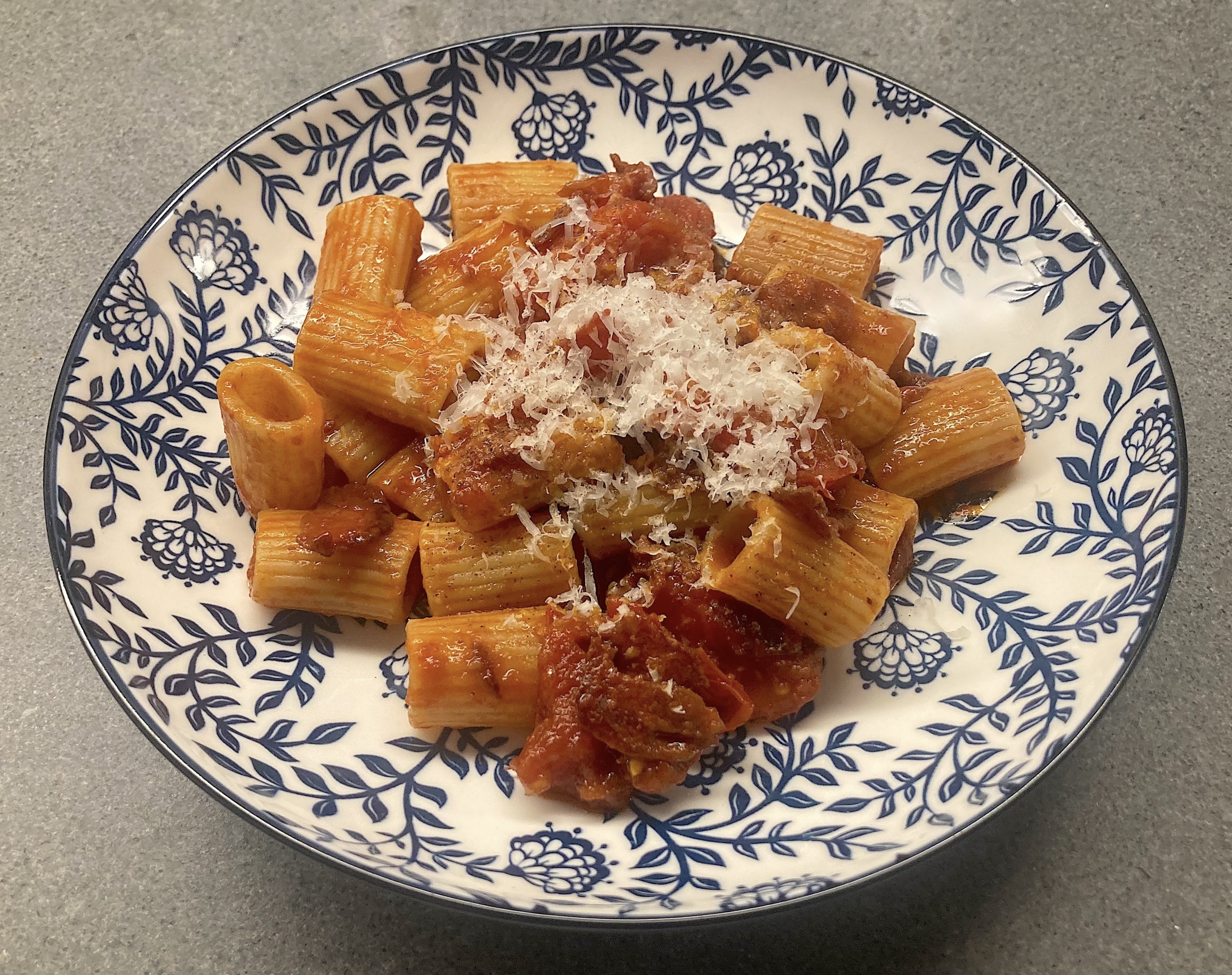
Let’s prepare a delicious and simple Italian dish, packed with flavours. The challenge when making Bucatini All’Amatriciana is with getting the right ingredients. You must have Guanciale, Bucatini, San Marzano tomatoes, dried Spanish pepper and Pecorino Romano. Five challenges actually…

Bucatini is an interesting pasta. It looks like thick spaghetti but has a hole running though the centre. Indeed, a dried tube. When cooked it’s different from spaghetti, thicker of course and you need to chew longer, making the dish more filling and the taste longer lasting, without the paste itself being chewy. Could you replace bucatini with spaghetti? Probably yes, although the dish will become simpler.

How about Guanciale (cured pork cheek)? It is the key ingredient of Spaghetti Carbonara. Could you replace it with Pancetta? Probably yes, even Antonio Carluccio uses pancetta when preparing Bucatini All’Amatriciana with Gennaro Contaldo in this video.

Parmesan Cheese? That’s a no-go. We tried the dish with both Parmesan and Pecorino. The version with Parmesan cheese (made from cow milk) was okay, the one made with Pecorino (made from sheep milk) was delicious. The cheese combined very well with the spiciness and sweetness of the sauce.

San Marzano tomatoes have lots of flesh, just a few seeds and the taste is sweet and not very acidic. They are often used for canned tomatoes. If you can’t find San Marzano, then ask your greengrocer for similar tomatoes.

Shopping for the ingredients of Bucatini All’Amatriciana may be a challenge, preparing it is simple. Just keep an eye on the pan and the pasta. Within 30 minutes you can enjoy a classic Italian dish.

Wine Pairing

A red Italian wine is the obvious choice. We opened a bottle of Villa Castello Terre di Chieti Sangiovese 2022. The wine is made with 100% Sangiovese grapes. A touch of oak, not too much alcohol, full bodied, smooth, and with aromas of dark fruit. We loved it with our Bucatini All’Amatriciana. In general, an (Italian) wine made with Sangiovese grapes will be a great choice.

What You Need

  • 150 grams of Guanciale
  • 300 grams San Marzano tomatoes
  • 1 small Yellow Onion
  • 1 dried Spanish Pepper
  • White Wine
  • Bucatini
  • Pecorino Romano

What You Do

  1. Remove the outer layer of the guanciale and dice
  2. Coarsely chop the onion
  3. Wash and dry the tomatoes
  4. Chop the tomatoes, also coarsely
  5. Finely chop the Spanish pepper. Depending on your taste you could use the seeds
  6. Heat a large pan, add the guanciale and fry gently, making sure you get some nice fat without frying the meat crispy
  7. Add the onion and some of the Spanish pepper *depending on your taste and its spiciness)
  8. Glaze the onion
  9. Add some white wine and reduce the heat
  10. Add the chopped tomatoes and leave to simmer
  11. Taste and perhaps add some more pepper
  12. In parallel cook the bucatini al dente, this will probably take some 10 minutes
  13. When ready transfer the bucatini straight from the water to the sauce, combine and leave for a minute or two
  14. Taste and if necessary, adjust by adding pepper
  15. Serve the Bucatini All’Amatriciana with some freshly grated Pecorino Romano.

Pork with Clams

A delicious classic dish from the Portuguese Alentejo region. A region known for its long coastal line, its beautiful nature and very small villages. Loved by sun seeking holiday makers and those who want to escape from busy metropolitan areas. A region not known for its culinary tradition except for Porco Alentejana, a very tasty combination of pork and clams, supported by red bell pepper paste, white wine and onion. Forget about those unlikely surf and turf combinations and enjoy Porco Alentejana!

Wine Pairing

Combining clams (and shellfish in general) with red wine is not the best idea. The tannins in the red wine can cause a metal-like taste, which is not very pleasant. Best is a full-bodied white wine with some acidity. We opened a bottle of Chateau Mourgues Du Gres Rosé. A wine with an intense pink colour, aromas that made us think of strawberries and lemon and with a fruity, long taste with a hint of pepper. The wine is made from syrah, grenache en mourvèdre grapes.

What You Need (for 4 persons)

  • 800 grams of Organic Pork with lots of lovely Fat (Tenderloin or Sirloin)
  • 1 Large White Onion
  • Red Bell Pepper Paste
  • White Wine
  • 2 Bay Leaves
  • 2 Garlic Cloves
  • 800 grams of Clams or Vongole
  • Cilantro
  • Olive Oil

What You Do

Cut the pork into 2-centimetre cubes. Finely chop the garlic. In a bowl combine the garlic, four tablespoons of red bell pepper paste, white wine, bay leaf and pork. Cover and transfer to the refrigerator for 24 hours. Gently mix every 2 – 4 hours.
The next day coarsely chop the onion. Use a slotted spoon to remove the meat from the marinade. Heat olive oil in a large pan and fry the meat until nicely brown. Remove the meat and add the chopped onion to the pan. Glaze.  Return the meat to the pan, add the marinade and leave to simmer for two or three hours, depending on the meat. Taste and perhaps add more red bell pepper paste. When the meat is ready, check the clams, discard broken ones and ones that remain open. Take a large pan, add some water and a tablespoon of red bell pepper paste. When the water is boiling, add the clams to the pan, close the lid and cook until the clams are open, perhaps 2 minutes. Use a slotted spoon to transfer the clams to the other pan. Use a large spoon to add some of the cooking liquid of the clams to the stew. Taste carefully; the liquid could be very salty and you don’t want to ruin the stew by adding too much. Decorate with cilantro and serve with crusted bread. We enjoyed a carrot salad with fennel seeds as a side dish.

Pork with Clams ©cadwu

Saithe with a Mild Curry

Saithe is a member of the haddock family, which in turn belongs to the cod family. Most of us think this fish is only processed into fish sticks, ready meals and cat food, but it is a real treat. However, it’s very likely that our cat enjoys it more often than we do!

Some background information: Saithe (or Coley, Coalfish, Lieu Noir, Köhler, Zwarte Koolvis, Pollachius Virens) and Pollock (or Pollack, Pollachius Pollachius) are very similar. The Alaska Pollock (Gadus Chalcogrammus) is also a widely available, very edible fish, and also one that you will probably see mentioned as an ingredient of a ready meal. Of the three Saithe is supposed to be the tastiest. If it’s your lucky day and the fish monger has fresh Saithe or Pollock, then don’t hesitate and buy it!

We combined Saithe with a mild Indian curry and green vegetables. The gentle flavours of the fish worked very well with the coriander and cumin in the curry. The mixed vegetables support the combination and bring freshness and bitterness.

Wine Pairing

A white wine with a touch of sweetness (Pinot Blanc, Pinot Gris) will be perfect with the Saithe. A rosé will also be a good accompaniment for the dish.

What You Need

  • Saithe
  • Mild Indian Curry Paste
  • Cream
  • Olive Oil
  • Green Peas
  • Fava Beans
  • Haricots Verts
  • Fresh Ginger (optional)

What You Do

Heat a small skillet, add some olive oil and fry the fish. Reduce the heat, add the curry and cream. Mix. Carefully coat the fish and cook until nearly done. In parallel cook the vegetables: the haricots verts and the fava beans perhaps five minutes, the green peas one minute. Combine the vegetables, add some olive oil and black pepper. You could also add some finely grated ginger. Serve the nicely coated saithe on top of the mixed vegetables.

Carrot Salad with Fennel Seeds

Inspired by the Portuguese and Moroccan cuisine we make a very tasty, quick and easy carrot salad. Ideal to accompany fish or a rich stew. The salad is full of flavours: fennel and carrot obviously, but you could also taste chervil and perhaps tarragon. Light, refreshing and the texture of the carrot is inviting.

We prefer preparing the salad with winter carrots because they seem to have more flavour and structure than the regular ones.
We use fennel seeds in this recipe. Alternatively, you could use cumin (always great with carrots) or coriander (cilantro) seeds.

What You Need

  • One Winter Carrot
  • Olive Oil
  • White Wine Vinegar
  • One Garlic Clove
  • Fennell Seeds
  • Parsley
  • Black Pepper

What You Do

Prepare 24 hours before serving.
Clean and thinly peel the carrot. Cook for 5-10 minutes until al dente. Let cool. Quarter lengthwise and slice. Make a dressing by combing olive oil and vinegar (ratio 2:1 or 3:1). Peel the garlic clove and finely chop. Take ¼ teaspoon of fennel seeds and use a mortar to crush the seeds until you have powder. Add the fennel seed powder and the garlic to the dressing and combine. Taste and adjust. Chop a nice amount of parsley. Add the carrots and the parsley to the dressing and combine. Use cling film to seal the bowl and transfer to the refrigerator. Gently mix the salad every 2-4 hours.
Just before serving add some fresh black pepper.

Red Bell Pepper Paste

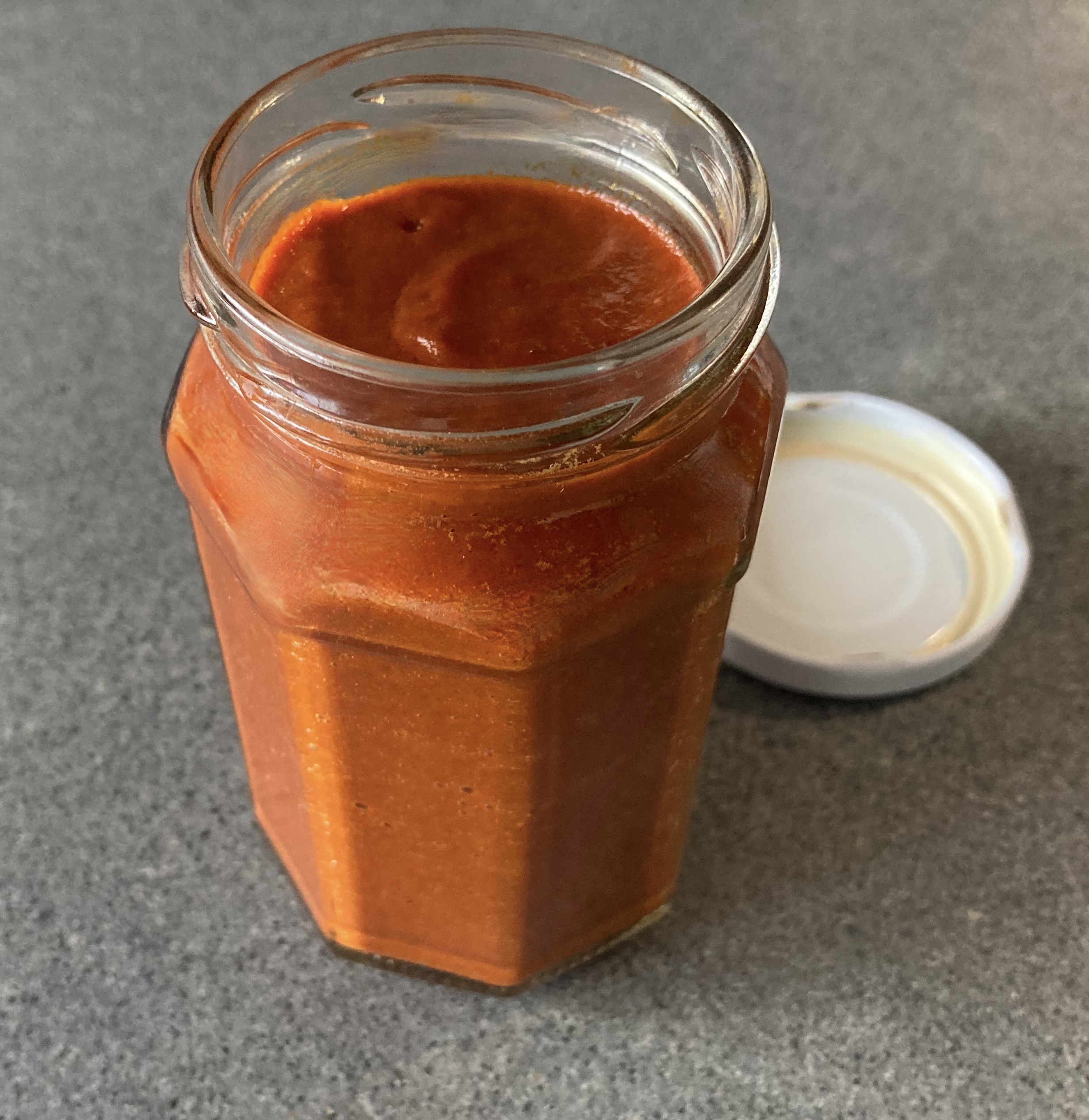
Sweet, smokey, mild, umami: red bell pepper paste is a great condiment when you’re making a pasta sauce with tomatoes, marinating pork or chicken for a stew or looking for a basis for a spread or dip. Very popular in the Portuguese kitchen (Pasta de Pimiento Rojo).

You could make the paste with red bell peppers only; you could add a pinch of salt or perhaps some garlic. Our alternative has a deeper colour and more intense flavours, thanks to the shallot, garlic and red wine. 

Red Bell Pepper Paste keeps very well in the refrigerator, especially when you store it in a jar under olive oil.

What You Need

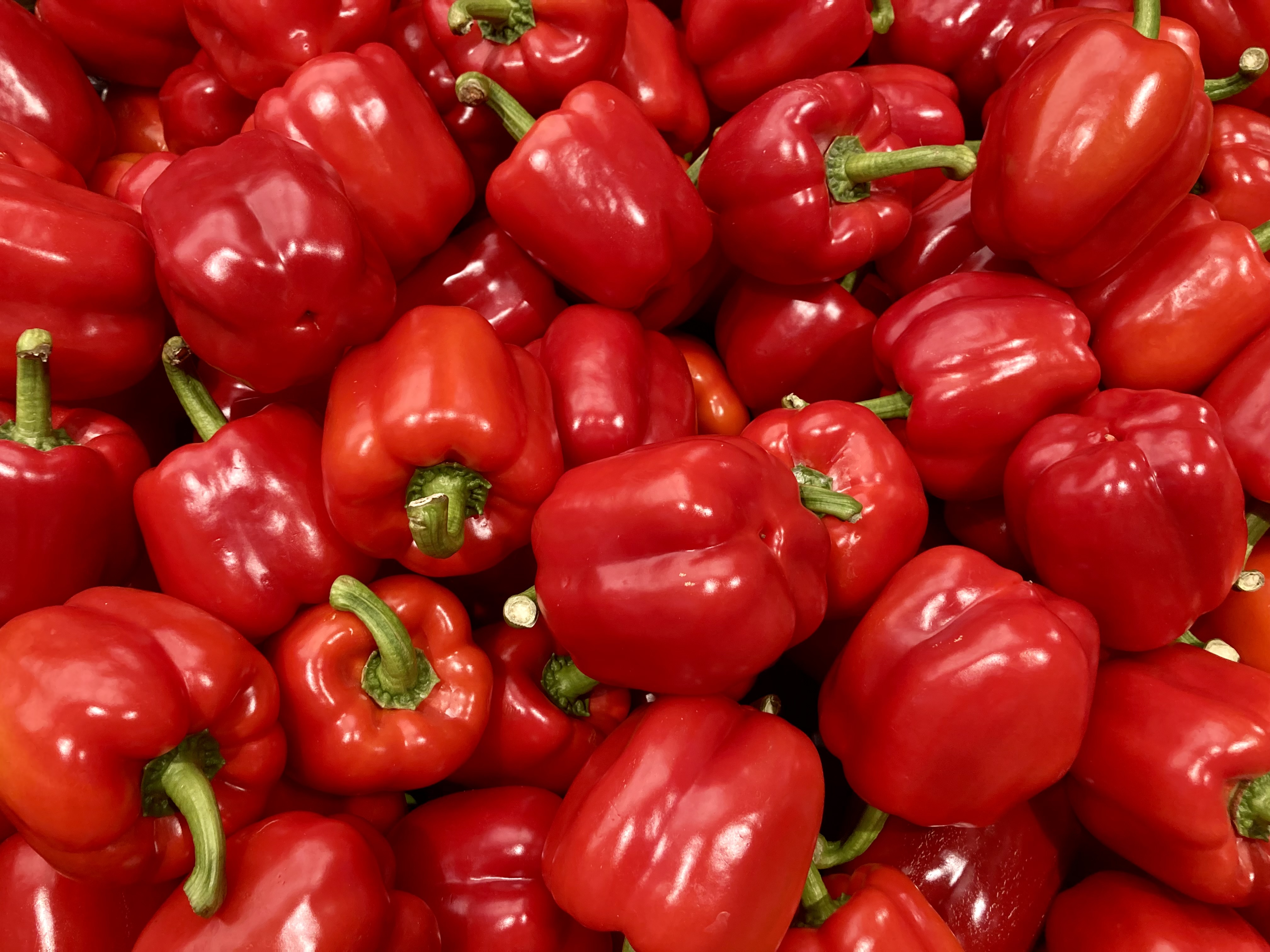
  • Red Bell Peppers
  • Optional: Salt, Garlic

What You Do

Clean the bell peppers, remove the seeds and the veins; cut in 4. Transfer to the oven and grill or roast for 10 minutes or until well charred. When still hot, put the bell peppers in a plastic container and close it. After one hour it’s easy to remove the skin of the bell pepper. Chop and blender until smooth and thick. You could add a pinch of salt or some grated garlic.

What You Need (Alternative)

  • Red Bell Peppers
  • Shallot
  • Garlic
  • Red wine
  • Olive Oil

What You Do

Clean the bell peppers, remove the seeds and the veins; cut in 4. Transfer to the oven and grill or roast for 10 minutes or until well charred. When still hot, put the bell peppers in a plastic container and close it. After one hour it’s easy to remove the skin of the bell pepper. Chop the shallot, the bell pepper and the garlic. Add olive oil to a pan, glaze the shallot. Add the garlic. After a few minutes add the chopped red bell pepper and any remaining liquid. Add some red wine and reduce. Repeat this step two or three times. Transfer the content to the food processor and blend until smooth and thick.

PS

We used our red bell pepper paste for a pasta dish with tomato confit.

Bouchée à la Reine

Crispy, fluffy, flaky puff pastry and a rich, warm filling with mushrooms and parsley, what better way to turn leftovers into a tasty starter. Bouchée a la Reine: a classic in Belgium and France. Not modern at all, but such fun to serve (and eat). You could fill the pastry with poultry, with mushrooms, shrimps, sweetbread, just about anything will go, as long as you use a rich roux as basis.
Making our own puff pastry is a bit too much for us, making your own bouchée is not too difficult, but buying them at the bakery is also fine. 

Wine Pairing

It all depends on the filling of your Bouchée a la Reine. It could be a light red wine if you have some left over veal, if it’s sweetbread then a lightly oaked chardonnay is fine et cetera. In all cases keep in mind that the filling comes with a generous amount of butter.

What You Need

  • 2 Bouchées
  • Some left over Veal or Chicken or Shrimps
  • Mushrooms
  • For the Roux
    • Butter
    • All Purpose Flour
    • Stock
  • Parsley
  • Lemon
  • Black Pepper
  • Butter

What You Do

Chop the (already cooked) meat and the mushrooms. Gently heat some butter in a pan, add the mushrooms and leave them for 10 minutes or so. Add the meat. Taste and add black pepper, perhaps some lemon juice, spices and herbs, definitely lots of parsley. In parallel make the roux. Warm the stock. Add butter to a pan, add the equal amount of flour plus a bit more (remember you also have some butter in the other pan). Softly fry the flour until you begin smelling that typical cookie aroma, then start adding the warm stock, slowly at first, constantly whisking. Add the meat, the mushrooms, some black pepper and the chopped parsley. Don’t turn the roux into a sauce, it must be ragout like. At this stage you could cool the filling for use later on.
Heat the bouchée in an oven at 180 °C or 355 °F for 10 minutes. Transfer from the oven onto a plate, add the filling and serve immediately.

Bouchée a la Reine ©cadeau

Small-Spotted Catshark with Dashi and Bok Choy

Earlier we wrote about small-spotted catshark, also known as lesser-spotted dogfish or rock salmon. It’s a very common fish, not endangered, it doesn’t have bones (sharks have a cartilaginous skeleton), it’s tasty and the texture of the meat is moist and pleasant. When we tasted the fish with a tomato and red bell pepper stew, we started talking about other ways of preparing it. Perhaps a Portuguese version with piri piri, tomatoes and potatoes? Or a fish stew with shark, mullet, monkfish and clams? Or with dashi, soy sauce, mirin, ginger and lemon?

Wine Pairing

A Pinot Gris or a Sylvaner from the Alsace region will be perfect, dry, floral and a touch of sweetness. In general a light bodied, aromatic, unoaked white wine will be a good choice.

What You Need

  • For the Fish
    • 200 grams of Small-Spotted Catshark
    • Dashi
    • Mirin
    • Light Soy Sauce
    • Sake (optional)
    • Lemon Juice
    • Olive Oil
  • For the Vegetables
    • Bok Choy
    • Oyster Sauce
    • Soy Sauce
    • Fresh Ginger

What You Do

Add some olive oil to a pan and fry the fish. Combine dashi, a teaspoon of mirin, soy sauce and sake. Taste and adjust. You’re looking for a firm, not too sweet mixture. After a few minutes add the mixture to the pan. The idea is to stew the fish in this mixture and when the fish is done (this will take some 20 minutes), reduce the liquid, add a splash of lemon juice and coat the fish with the reduction. In parallel chop the bok choy and simmer the white of the vegetable in a mixture of water, soy sauce and oyster sauce. Just before serving add some grated ginger and the chopped green of the bok choy to the pan. Serve the fish on top of the vegetables.

Small-Spotted Catshark with Dashi and Bok Choy ©cadwu

Bell Pepper Soup with Grains of Paradise

The first time we read about Grains of Paradise (or Melegueta Pepper) was when we prepared Sauce Cameline. The grains are common to the North and West African cuisine and were brought to Europe in the thirteenth century. According to some as a cheap substitute for black pepper. Recently we were fortunate to buy them and now we are impressed by their flavour: spicy, citrus and a touch of vanilla. When used in a stew it becomes less pungent. They gave a delicious and complex boost to the redd bell pepper soup.

Grains of Paradise are used to give flavour to craft beers, especially dark, seasonal beers. It can be a component of Has el Ranout. American chef Alton Brown uses Grains of Paradise in a stew with Okra and Tomatoes, in Apple Pie and in Lentil Soup.

For some reason it’s crucial to combine grains of paradise and lemon juice, As if the acidity amplifies the flavour of the grains?

What You Need

  • 2 Red Bell Peppers (or 1 Red and 1 Orange)
  • Shallot
  • 2 Garlic Cloves
  • 5 cm Carrot
  • 10 cm Celery Stalk
  • 250 ml Vegetable Stock
  • 5 cm of Fresh Rosemary
  • ¼ teaspoon of Grains of Paradise
  • Lemon Juice
  • Crème Fraîche
  • Olive Oil

What You Do

Clean the bell peppers and cut in 4. Transfer to the oven and grill or roast for 10 minutes or until well charred. When still hot, put the bell peppers in a plastic container and close it. After one hour it’s easy to remove the skin of the bell pepper. Chop and set aside.
Chop the shallot, the garlic, the celery and the carrot. Add olive oil to a pot and add the shallot. Glaze. Add the carrot, the celery and the garlic. Leave on low heat for a few minutes. Add the bell pepper. After a few minutes add the stock, the rosemary and the crushed grains of paradise. Leave on low heat for one hour. Remove the rosemary. Use a blender to make a smooth soup. Pass through a sieve. Taste the soup and decide if you want to add some extra grain of paradise. Leave the soup on low heat for 30 minutes. Just before serving add one or two teaspoons of fresh lemon juice, depending on the flavour and your taste. The soup should be smokey, aromatic, a touch spicy and refreshing. You could add more crushed grains of paradise, that will make the soup spicier. Make a swirl with crème fraîche an serve.

Red Bell Pepper Soup ©cadwu

Spaghetti Carbonara with Guanciale

This must be one of the tastiest dishes from the Italian cuisine. Creamy, rich, moist, salty, aromatic, delicious and not difficult to prepare. It’s also not difficult to ruin the dish, that’s why Antonio Carluccio recorded a video showing you exactly how to prepare it and how to make sure your Carbonara is creamy.

About the ingredients: If possible, use guanciale, cured pork cheek. It’s also used for another delicious recipe from the same Italian region: Bucatini all’amatriciana. The pork meat is rubbed with salt, pepper and various herbs and cured for a number of weeks. Guanciale is not smoked and therefore its taste is very different from bacon. Pancetta (made from pork belly) could be an alternative, provided it’s not smoked.

As emphasised by Carluccio, most certainly no cream. And no garlic, basil, parsley, onion or white wine we would like to add.

Wine Pairing

We enjoyed our Spaghetti Carbonara with a glass of Bardolino 2022, produced by Monte del Frà from Italy. The wine has a beautiful deep red colour and the aromas made us think of red fruit and perhaps pepper. The wine is medium bodied with some acidity and fruitiness. In general, you’re looking for a fruity red wine with a touch of acidity, for example Chianti Classico, Montepulciano or Barbera. If you prefer a white wine, then a Pinot Grigio or Soave is a good choice.

What You Need

  • 125 grams of Guanciale
  • Spaghetti
  • Parmesan Cheese
  • 2 organic Eggs
  • Olive Oil
  • Black Pepper

What You Do

Cut of the cured edge of the guanciale. Dice the meat. Heat a pan, add olive oil and reduce the heat to medium. Fry the guanciale. In parallel cook the spaghetti al dente, this will take some 10 minutes. Whisk the eggs, add some freshly grated Parmesan cheese and whisk again. When the pasta is ready, remove the pan from the heat and add the spaghetti straight from the water to the pan. Combine and make sure the spaghetti is nicely coated with the fat and juices from the meat. Now it’s time to create your creamy carbonara! Check if the spaghetti and the pan are not too hot. If so, better wait a minute. Add the egg mixture, combine, keep moving the spaghetti, add some freshly grated black pepper, keep stirring and then serve immediately on a warm plate with some extra Parmesan cheese.

Small-Spotted Catshark with Tomatoes

Once in a while your fishmonger will have small-spotted catshark, also known as lesser-spotted dogfish or rock salmon. Popular in Portugal (pata-roxa), less so in many other countries. It’s a very common shark, not endangered, it doesn’t have bones (sharks have a cartilaginous skeleton), it’s tasty and the texture of the meat is moist and pleasant. So why isn’t it more often on our menu?

We think the taste is very delicate so be careful withs herbs and spices. The structure of the meat made us think of monkfish. We know that some chefs compare catshark with sea eel, but that’s a big mistake as far as we are concerned. Catshark is much more refined.

Skinning a catshark requires special equipment, so the shark on sale is already skinned and cleaned, making it even more easy to prepare.  It looks a bit like a tube, long and round. Cut in chunks and start cooking!

Wine Pairing

The flavour and aroma of this dish are gentle. A not too complex, dry white wine with some acidity or a Provence rosé will be great with the cat shark stew.

What You Need

  • 200 grams of Small-Spotted Catshark
  • 2 ripe Tomatoes
  • 1 Red Bell Pepper
  • 1 Shallot
  • 1 Garlic Glove
  • Capers (in Brine)
  • A few Small Black Olives
  • Bouquet Garni (Thyme, Bay Leaf, Parsley)
  • Black Pepper
  • Olive Oil

What You Do

Clean the bell pepper, cut in large chunks and grill for 10 minutes until charred. Transfer to a small container, close it and leave for a few hours. Remove the skin of the bell pepper and dice. Clean the tomatoes, remove the seeds and dice. Chop the shallot and the garlic. Heat a pan, add olive oil and fry the catshark for a few minutes. Remove from the pan and keep warm in the oven at 50 °C or 120 °F. Add the shallot, fry gently on reduced heat, add the garlic, wait for one minute, add the tomatoes, half of the bell pepper and the bouquet. Allow to simmer for 5 minutes. Add the shark to the pan and allow to stew for 20-30 minutes, depending on the size of the fish. Five minutes before serving add the olives and the capers. Remove the bouquet.

Small-Spotted Catshark ©cadwu