Wild Garlic Soup

Only a few days to go before the end of the Wild Garlic season. The season starts early February when the first leaves appear. Mid-April the star shaped white flowers appear, beautiful and also edible. When the flowers go to seed it’s the end of the season and the leaves become bitter and chewy.

Wild Garlic can be used to make pesto, it can be added to a dish with white asparagus and morels and it’s delicious when combined with fennel and potato. Preparing Wild Garlic soup is also a good idea. The first time we tasted it, at Zum Fliegenden Holländer in Potsdam, Germany, we expected the soup to be a bit simple, probably we would taste onion, touch of garlic and potatoes. We were wrong, the soup was much more complicated and sophisticated than expected. The flavour was mild, we could clearly taste the Wild Garlic, but very gentle, with some sweetness. The overall taste was pleasant and lasting. Perhaps the potato was too present, but that was a minor detail. Bärlauchsuppe proofed to be delicious, refreshing and very much a tribute to spring.

What You Need

  • 150 grams of Wild Garlic Leaves
  • 500 ml of Stock
  • 1 Shallot
  • ½ Garlic Clove
  • Potato Starch
  • Cream
  • Olive Oil
  • Black Pepper
  • Nutmeg

What You Do

Wash and dry the leaves. Chop the shallot and the garlic. We were lucky, our bunch of leaves also contained a few flower buds. We chopped these as well. Warm a pan, add some olive oil and glaze the onions and the garlic (and the flower buds). After a few minutes add the stock. We used homemade quail stock, which brought additional sweetness to the soup. Leave to simmer for a few minutes. Coarsely chop the leaves, add these to the pan and leave for perhaps one minute. Be careful, you don’t want to discolour the leaves. Use a blender to make a smooth liquid. Pass the liquid through a sieve. Add one to two teaspoons of potato starch and mix very well. Add cream and leave for a few minutes. Just before serving add some excellent olive oil and black pepper, blender for 1 or 2 seconds and serve with some freshly grated nutmeg.

PS

We use potato starch to remain close to the basic idea of the Bärlauchsuppe in Potsdam. Potato Starch has a neutral taste and a high binding strength. If you use a (starchy) potato, then peel and cube it and add it to the stock. Remove the potato cubes when they are ready, add the chopped leaves, leave to simmer and then blender. Mash the potato cubes, combine with some of the liquid, add the mash to the soup and whisk well. If you blender the liquid with the potato, you risk ending up with a gluey, sticky soup.

John Dory or Saint-Pierre

Not the prettiest of fish, but according to some the most delicious. Its meat is delicate, moist, dense, melt-in-your-mouth, a touch sweet and flavourful. It is one of the ingredients of a traditional Bouillabaisse.
The head of a John Dory (Saint-Pierre, San Martiño) is relatively large. Saint-Pierre is a fairly expensive fish and knowing that you will discard a significant part of it makes the Saint-Pierre even more expensive.

The shape of a Saint-Pierre could give you the impression that it’s a flat fish, but actually it’s a round fish. You will also notice that the spines on its fins look rather nasty. These two aspects make filleting a Saint-Pierre difficult. Our fish monger offered to do this for us, which we happily accepted.

Given the price (we paid €125,00 per kilo fillet) you don’t want to make mistakes when preparing it. Fortunately frying Saint-Pierre only requires a bit of patience and attention (it’s easily overcooked). 

We enjoyed our Saint-Pierre as a main course with a rich mushroom-based sauce and slow cooked fennel.

Wine Pairing

A delicious Saint-Pierre requires an equally delicious wine. We opened a bottle of Louis Jadot – Bourgogne Couvent des Jacobins – Chardonnay. The wine has fruitiness and freshness as well as structure. It has aged for some 8 months in oak barrels, giving the wine more roundness. A perfect combination with the fish, the rich sauce and the soft anise flavours of both the fennel and the chervil.
Maison Louis Jadot, producteur et négociant, based in Beaune, France, produces various quality wines from the Burgundy region and exports these to several countries including the UK and the USA.

What You Need
  • For the Fish
    • One Fillet (preferably without the skin)
    • Butter
    • Olive Oil
  • For the Sauce
    • Champignons de Paris
    • Butter
    • Cream
  • For the Slow Cooked Fennel
    • Fennel
    • Olive Oil
  • Chervil
  • Black Pepper
What You Do
  1. Remove the outer leave(s) of the Fennel, slice top down in 4 or 8, making sure the fennel doesn’t fall apart
  2. Warm a pan, add some olive oil and cook on very low heat for some 6 hours. 8 is also fine
  3. Turn halfway to make sure both sides are caramelised
  4. In parallel, do some shopping, read the papers, watch your favourite series on Netflix and be patient.
  5. A John Dory fillet is really special, without any trouble you can divide it into three parts. One small, the other two perfect
  6. Heat a small skillet, add some butter and fry the quartered mushrooms until golden
  7. Reduce the heat, add cream and heat through and through
  8. Heat a bigger skillet, add some olive oil and butter, gently fry the fillets until brown and nearly done
  9. Transfer to the oven at 50 °C or 120 °F
  10. Fill a glass with water, add the creamy mushroom mixture to the pan and immediately add some water
  11. The sauce will thicken quickly so you need your glass of water on standby
  12. Add some black pepper and lots of chervil leaves. Mix. Happy with the sauce?
  13. Now it’s time to plate up. Some sauce, the John Dory on top, the quartered fennel, some extra black pepper and more chervil.

Asparagus

Both White and Green Asparagus are seasonal products. Waiting for the season to begin is part of the fun of enjoying asparagus.

Green Asparagus

Preparing Green Asparagus is simple. Wash them and cut off 1 or 2 centimetres or so from the bottom. You could steam or cook them but you risk getting soggy asparagus. Better to prepare them in a skillet or in the oven. They will only take 10-15 minutes. Great to combine with basil and black olives. You could also grill them, see below.

White Asparagus

Buying and preparing White Asparagus requires a bit more work, but once you know what to do, it’s not difficult at all.

Fresh

Make sure the white asparagus are fresh. Just look at the bottom, where they have been cut off. If the cut looks dry, wrinkly or even moldy, then don’t buy them. If you want to be sure they are super fresh, then rub two asparagus together. If you hear a squeaking sound, then they’re super fresh.

Peeling

Peel White Asparagus, using a peeler, as you would potatoes. In the old days White Asparagus would be peeled twice, but nowadays we like a bit of texture.
Cut off 1 or 2 centimetres from the bottom. If your White Asparagus are fresh, it’s just a matter of removing the original cut.

Cooking

The most popular approach is to cook White Asparagus. Add the asparagus to a pan with plenty of cold water. Wait for the water to just begin boiling, keep it simmering for 1 minute, then transfer the pan to the work top. Wait for 10 minutes before removing the asparagus from the water. If you prefer them a bit softer, then leave them in the hot water for 5 more minutes.
Many add butter, sugar, salt, lemon and/or the skin of the asparagus to the water. We could imagine adding the skin. Adding sugar is a big NO for us.
You could use a special asparagus pan when cooking the asparagus, but actually there is no need for it. As long as the pan can accommodate the asparagus, you’re fine.

Steaming

We prefer steaming White Asparagus for 20 minutes in our Russell Hobbs. The taste of the asparagus will be more intense and richer.

Wine Pairing

In general a Pinot Blanc, Riesling or Dry Muscat from the Elzas will be very nice with your asparagus.

Recipes

Over the years we have prepared asparagus in many ways. Bon Appétit!

PS

You’re probably aware of the side effect of eating asparagus, the typical smell when peeing. It doesn’t happen to everyone, and it also depends on the type of asparagus. The sulphurous by-products (the result of your body digesting the asparagus) that cause the smell, will disappear within a few hours. Could take a bit longer, but nothing to worry about, it’s perfectly harmless.

Potato, Fennel and Wild Garlic

So many names for this great plant: Ramson(s), Wild Garlic, Bear Leek, DaslookAil des OursBärlauchRamsløgAglio Orsino, Allium ursinum, it is one of the highlights of spring. Powerful, pure and tasty. It can be harvested from the wild, but fortunately some green grocers also sell Wild Garlic. The taste is a combination of onion and garlic, but much greener, longer lasting and with a touch of bitterness at the end. You can turn the leaves into a strong pesto, but better use it as herb with for instance potatoes or gnocchi. It is also great when used in a dish with white asparagus and morels. The flowers are also edible and are a great decoration for savory dishes and salads.

We combine Wild Garlic with potatoes and fresh fennel. The anise-taste and the light crunchiness of the fennel go very well with this rich, lightly onion flavoured potato mash.

What You Need

  • Potato
  • Butter
  • Cream
  • Fennel
  • Wild Garlic
  • Black Pepper
  • Salt (optional)

What You Do

Dice the peeled potatoes and cook until ready to mash. Very finely dice some fennel, let’s say one tablespoon per one large potato. Add cream, butter and diced fennel to the mashed potato, mix and leave on very low heat. Remove the veins from the wild garlic leaves and tear the leaves, as you would do with basil. Add some of them to the mash, add black pepper and perhaps a pinch of salt. Leave for a few minutes, add more butter or cream if so required and more leaves. If you’re happy with the consistency and the taste, it’s time to add some more torn leaves to the mash. Serve immediately.

PS

Other elements on the plate are Saucisse de Morteau, Frankfurter and petit farci. More about the latter in one of our next posts!

Bucatini All’Amatriciana

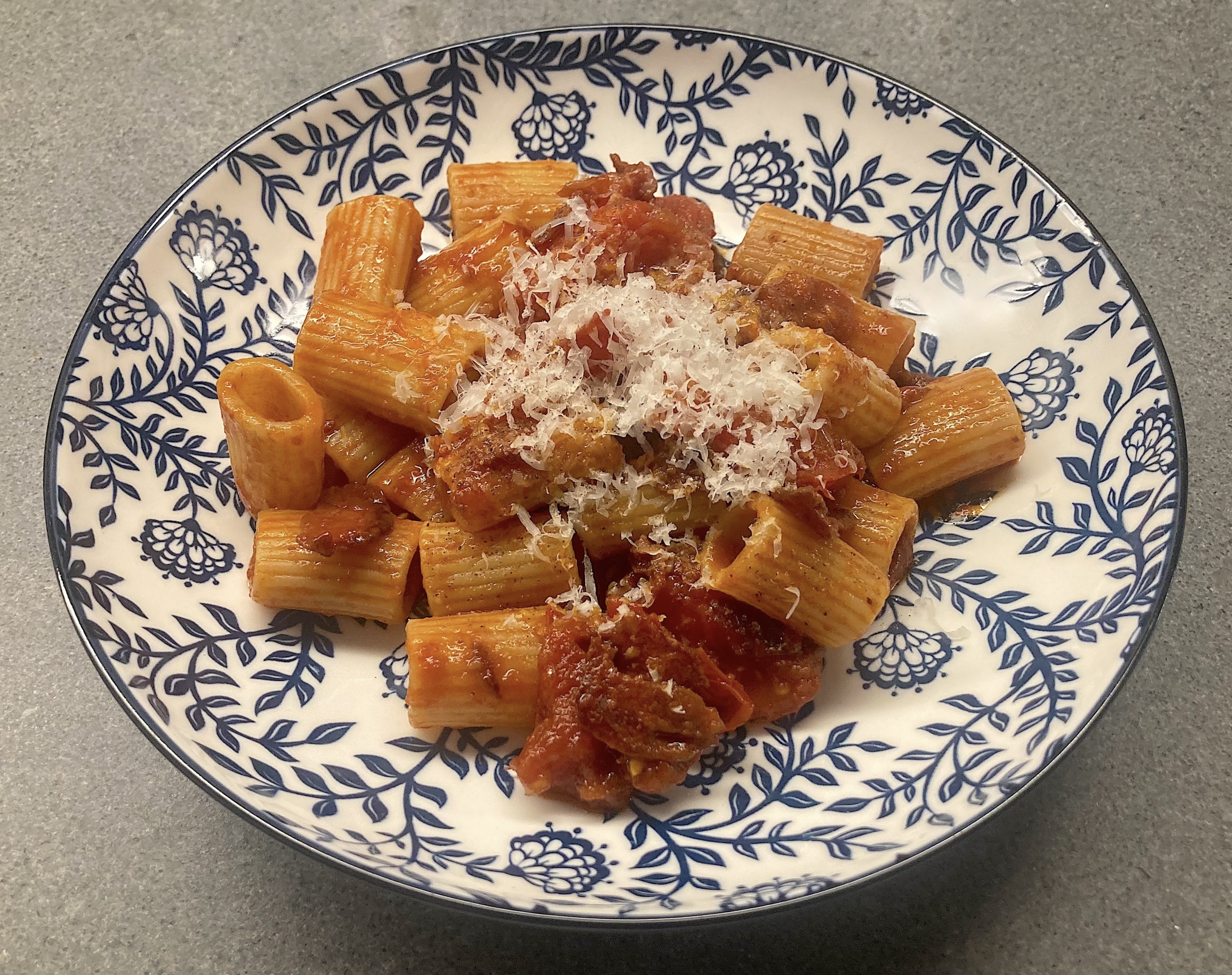
Let’s prepare a delicious and simple Italian dish, packed with flavours. The challenge when making Bucatini All’Amatriciana is with getting the right ingredients. You must have Guanciale, Bucatini, San Marzano tomatoes, dried Spanish pepper and Pecorino Romano. Five challenges actually…

Bucatini is an interesting pasta. It looks like thick spaghetti but has a hole running though the centre. Indeed, a dried tube. When cooked it’s different from spaghetti, thicker of course and you need to chew longer, making the dish more filling and the taste longer lasting, without the paste itself being chewy. Could you replace bucatini with spaghetti? Probably yes, although the dish will become simpler.

How about Guanciale (cured pork cheek)? It is the key ingredient of Spaghetti Carbonara. Could you replace it with Pancetta? Probably yes, even Antonio Carluccio uses pancetta when preparing Bucatini All’Amatriciana with Gennaro Contaldo in this video.

Parmesan Cheese? That’s a no-go. We tried the dish with both Parmesan and Pecorino. The version with Parmesan cheese (made from cow milk) was okay, the one made with Pecorino (made from sheep milk) was delicious. The cheese combined very well with the spiciness and sweetness of the sauce.

San Marzano tomatoes have lots of flesh, just a few seeds and the taste is sweet and not very acidic. They are often used for canned tomatoes. If you can’t find San Marzano, then ask your greengrocer for similar tomatoes.

Shopping for the ingredients of Bucatini All’Amatriciana may be a challenge, preparing it is simple. Just keep an eye on the pan and the pasta. Within 30 minutes you can enjoy a classic Italian dish.

Wine Pairing

A red Italian wine is the obvious choice. We opened a bottle of Villa Castello Terre di Chieti Sangiovese 2022. The wine is made with 100% Sangiovese grapes. A touch of oak, not too much alcohol, full bodied, smooth, and with aromas of dark fruit. We loved it with our Bucatini All’Amatriciana. In general, an (Italian) wine made with Sangiovese grapes will be a great choice.

What You Need

  • 150 grams of Guanciale
  • 300 grams San Marzano tomatoes
  • 1 small Yellow Onion
  • 1 dried Spanish Pepper
  • White Wine
  • Bucatini
  • Pecorino Romano

What You Do

  1. Remove the outer layer of the guanciale and dice
  2. Coarsely chop the onion
  3. Wash and dry the tomatoes
  4. Chop the tomatoes, also coarsely
  5. Finely chop the Spanish pepper. Depending on your taste you could use the seeds
  6. Heat a large pan, add the guanciale and fry gently, making sure you get some nice fat without frying the meat crispy
  7. Add the onion and some of the Spanish pepper *depending on your taste and its spiciness)
  8. Glaze the onion
  9. Add some white wine and reduce the heat
  10. Add the chopped tomatoes and leave to simmer
  11. Taste and perhaps add some more pepper
  12. In parallel cook the bucatini al dente, this will probably take some 10 minutes
  13. When ready transfer the bucatini straight from the water to the sauce, combine and leave for a minute or two
  14. Taste and if necessary, adjust by adding pepper
  15. Serve the Bucatini All’Amatriciana with some freshly grated Pecorino Romano.

Pork with Clams

A delicious classic dish from the Portuguese Alentejo region. A region known for its long coastal line, its beautiful nature and very small villages. Loved by sun seeking holiday makers and those who want to escape from busy metropolitan areas. A region not known for its culinary tradition except for Porco Alentejana, a very tasty combination of pork and clams, supported by red bell pepper paste, white wine and onion. Forget about those unlikely surf and turf combinations and enjoy Porco Alentejana!

Wine Pairing

Combining clams (and shellfish in general) with red wine is not the best idea. The tannins in the red wine can cause a metal-like taste, which is not very pleasant. Best is a full-bodied white wine with some acidity. We opened a bottle of Chateau Mourgues Du Gres Rosé. A wine with an intense pink colour, aromas that made us think of strawberries and lemon and with a fruity, long taste with a hint of pepper. The wine is made from syrah, grenache en mourvèdre grapes.

What You Need (for 4 persons)

  • 800 grams of Organic Pork with lots of lovely Fat (Tenderloin or Sirloin)
  • 1 Large White Onion
  • Red Bell Pepper Paste
  • White Wine
  • 2 Bay Leaves
  • 2 Garlic Cloves
  • 800 grams of Clams or Vongole
  • Cilantro
  • Olive Oil

What You Do

Cut the pork into 2-centimetre cubes. Finely chop the garlic. In a bowl combine the garlic, four tablespoons of red bell pepper paste, white wine, bay leaf and pork. Cover and transfer to the refrigerator for 24 hours. Gently mix every 2 – 4 hours.
The next day coarsely chop the onion. Use a slotted spoon to remove the meat from the marinade. Heat olive oil in a large pan and fry the meat until nicely brown. Remove the meat and add the chopped onion to the pan. Glaze.  Return the meat to the pan, add the marinade and leave to simmer for two or three hours, depending on the meat. Taste and perhaps add more red bell pepper paste. When the meat is ready, check the clams, discard broken ones and ones that remain open. Take a large pan, add some water and a tablespoon of red bell pepper paste. When the water is boiling, add the clams to the pan, close the lid and cook until the clams are open, perhaps 2 minutes. Use a slotted spoon to transfer the clams to the other pan. Use a large spoon to add some of the cooking liquid of the clams to the stew. Taste carefully; the liquid could be very salty and you don’t want to ruin the stew by adding too much. Decorate with cilantro and serve with crusted bread. We enjoyed a carrot salad with fennel seeds as a side dish.

Pork with Clams ©cadwu

Saithe with a Mild Curry

Saithe is a member of the haddock family, which in turn belongs to the cod family. Most of us think this fish is only processed into fish sticks, ready meals and cat food, but it is a real treat. However, it’s very likely that our cat enjoys it more often than we do!

Some background information: Saithe (or Coley, Coalfish, Lieu Noir, Köhler, Zwarte Koolvis, Pollachius Virens) and Pollock (or Pollack, Pollachius Pollachius) are very similar. The Alaska Pollock (Gadus Chalcogrammus) is also a widely available, very edible fish, and also one that you will probably see mentioned as an ingredient of a ready meal. Of the three Saithe is supposed to be the tastiest. If it’s your lucky day and the fish monger has fresh Saithe or Pollock, then don’t hesitate and buy it!

We combined Saithe with a mild Indian curry and green vegetables. The gentle flavours of the fish worked very well with the coriander and cumin in the curry. The mixed vegetables support the combination and bring freshness and bitterness.

Wine Pairing

A white wine with a touch of sweetness (Pinot Blanc, Pinot Gris) will be perfect with the Saithe. A rosé will also be a good accompaniment for the dish.

What You Need

  • Saithe
  • Mild Indian Curry Paste
  • Cream
  • Olive Oil
  • Green Peas
  • Fava Beans
  • Haricots Verts
  • Fresh Ginger (optional)

What You Do

Heat a small skillet, add some olive oil and fry the fish. Reduce the heat, add the curry and cream. Mix. Carefully coat the fish and cook until nearly done. In parallel cook the vegetables: the haricots verts and the fava beans perhaps five minutes, the green peas one minute. Combine the vegetables, add some olive oil and black pepper. You could also add some finely grated ginger. Serve the nicely coated saithe on top of the mixed vegetables.

Carrot Salad with Fennel Seeds

Inspired by the Portuguese and Moroccan cuisine we make a very tasty, quick and easy carrot salad. Ideal to accompany fish or a rich stew. The salad is full of flavours: fennel and carrot obviously, but you could also taste chervil and perhaps tarragon. Light, refreshing and the texture of the carrot is inviting.

We prefer preparing the salad with winter carrots because they seem to have more flavour and structure than the regular ones.
We use fennel seeds in this recipe. Alternatively, you could use cumin (always great with carrots) or coriander (cilantro) seeds.

What You Need

  • One Winter Carrot
  • Olive Oil
  • White Wine Vinegar
  • One Garlic Clove
  • Fennell Seeds
  • Parsley
  • Black Pepper

What You Do

Prepare 24 hours before serving.
Clean and thinly peel the carrot. Cook for 5-10 minutes until al dente. Let cool. Quarter lengthwise and slice. Make a dressing by combing olive oil and vinegar (ratio 2:1 or 3:1). Peel the garlic clove and finely chop. Take ¼ teaspoon of fennel seeds and use a mortar to crush the seeds until you have powder. Add the fennel seed powder and the garlic to the dressing and combine. Taste and adjust. Chop a nice amount of parsley. Add the carrots and the parsley to the dressing and combine. Use cling film to seal the bowl and transfer to the refrigerator. Gently mix the salad every 2-4 hours.
Just before serving add some fresh black pepper.

Red Bell Pepper Paste

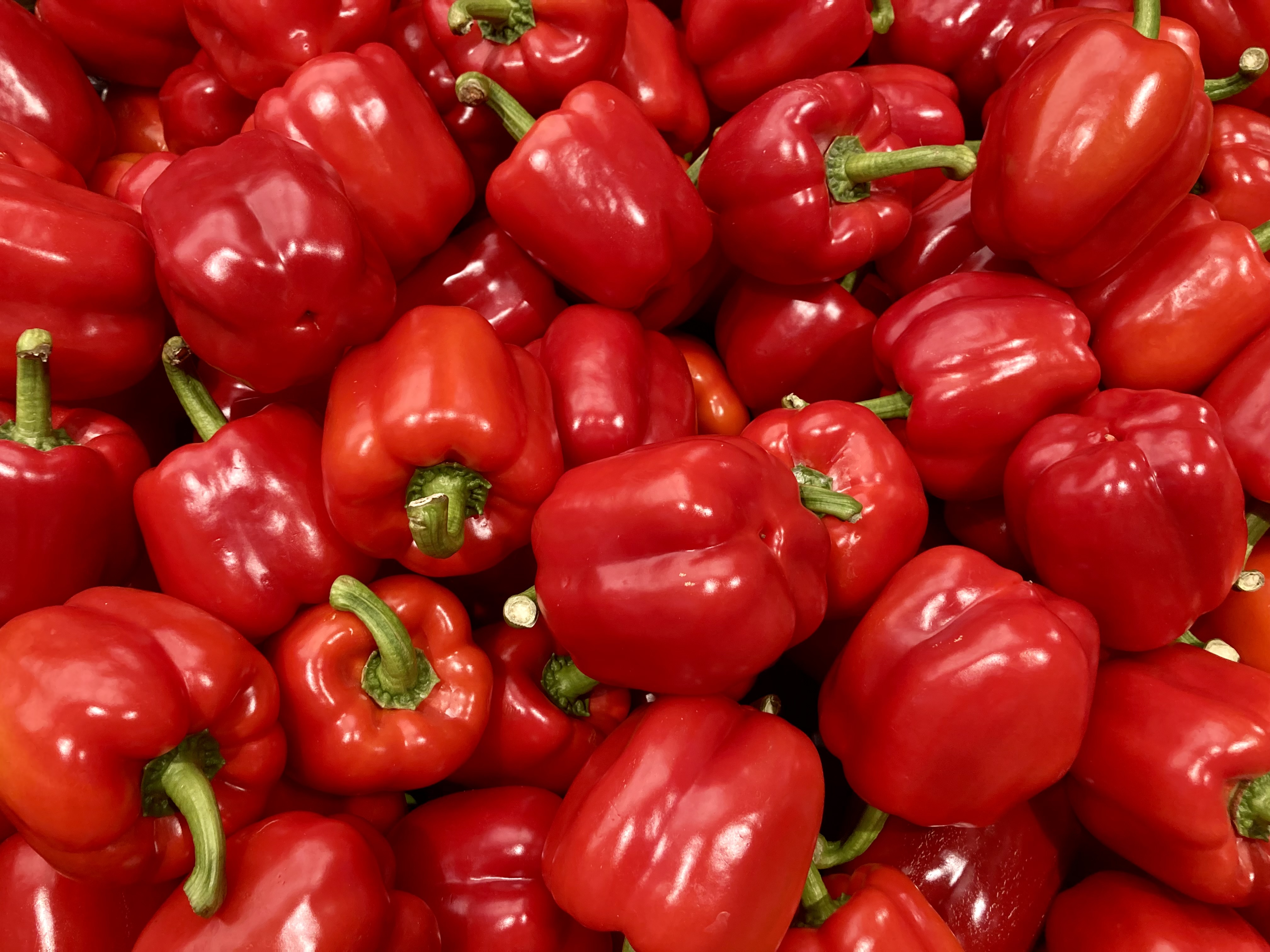
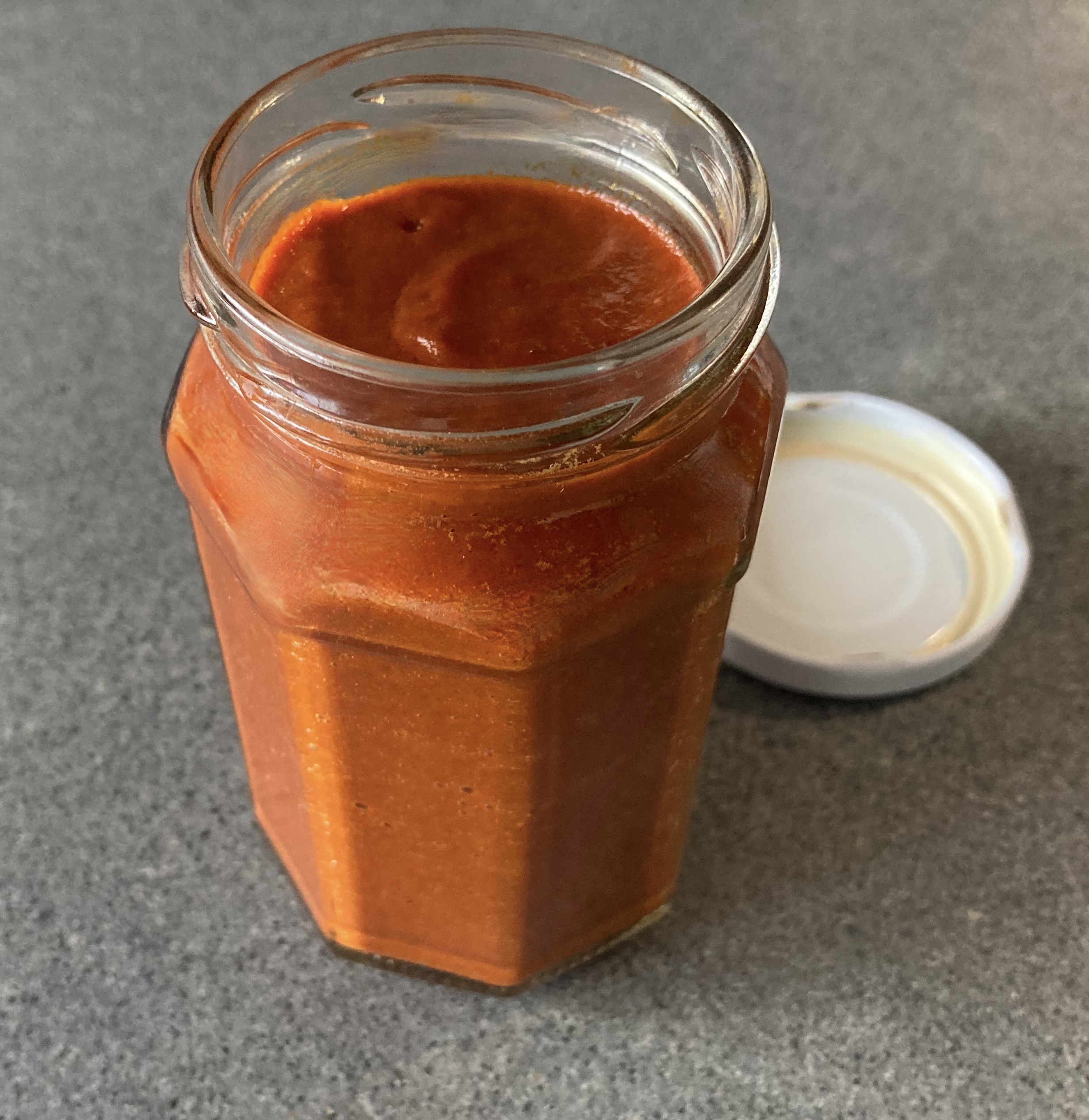
Sweet, smokey, mild, umami: red bell pepper paste is a great condiment when you’re making a pasta sauce with tomatoes, marinating pork or chicken for a stew or looking for a basis for a spread or dip. Very popular in the Portuguese kitchen (Pasta de Pimiento Rojo).

You could make the paste with red bell peppers only; you could add a pinch of salt or perhaps some garlic. Our alternative has a deeper colour and more intense flavours, thanks to the shallot, garlic and red wine. 

Red Bell Pepper Paste keeps very well in the refrigerator, especially when you store it in a jar under olive oil.

What You Need

  • Red Bell Peppers
  • Optional: Salt, Garlic

What You Do

Clean the bell peppers, remove the seeds and the veins; cut in 4. Transfer to the oven and grill or roast for 10 minutes or until well charred. When still hot, put the bell peppers in a plastic container and close it. After one hour it’s easy to remove the skin of the bell pepper. Chop and blender until smooth and thick. You could add a pinch of salt or some grated garlic.

What You Need (Alternative)

  • Red Bell Peppers
  • Shallot
  • Garlic
  • Red wine
  • Olive Oil

What You Do

Clean the bell peppers, remove the seeds and the veins; cut in 4. Transfer to the oven and grill or roast for 10 minutes or until well charred. When still hot, put the bell peppers in a plastic container and close it. After one hour it’s easy to remove the skin of the bell pepper. Chop the shallot, the bell pepper and the garlic. Add olive oil to a pan, glaze the shallot. Add the garlic. After a few minutes add the chopped red bell pepper and any remaining liquid. Add some red wine and reduce. Repeat this step two or three times. Transfer the content to the food processor and blend until smooth and thick.

PS

We used our red bell pepper paste for a pasta dish with tomato confit.

Bouchée à la Reine

Crispy, fluffy, flaky puff pastry and a rich, warm filling with mushrooms and parsley, what better way to turn leftovers into a tasty starter. Bouchée a la Reine: a classic in Belgium and France. Not modern at all, but such fun to serve (and eat). You could fill the pastry with poultry, with mushrooms, shrimps, sweetbread, just about anything will go, as long as you use a rich roux as basis.
Making our own puff pastry is a bit too much for us, making your own bouchée is not too difficult, but buying them at the bakery is also fine. 

Wine Pairing

It all depends on the filling of your Bouchée a la Reine. It could be a light red wine if you have some left over veal, if it’s sweetbread then a lightly oaked chardonnay is fine et cetera. In all cases keep in mind that the filling comes with a generous amount of butter.

What You Need

  • 2 Bouchées
  • Some left over Veal or Chicken or Shrimps
  • Mushrooms
  • For the Roux
    • Butter
    • All Purpose Flour
    • Stock
  • Parsley
  • Lemon
  • Black Pepper
  • Butter

What You Do

Chop the (already cooked) meat and the mushrooms. Gently heat some butter in a pan, add the mushrooms and leave them for 10 minutes or so. Add the meat. Taste and add black pepper, perhaps some lemon juice, spices and herbs, definitely lots of parsley. In parallel make the roux. Warm the stock. Add butter to a pan, add the equal amount of flour plus a bit more (remember you also have some butter in the other pan). Softly fry the flour until you begin smelling that typical cookie aroma, then start adding the warm stock, slowly at first, constantly whisking. Add the meat, the mushrooms, some black pepper and the chopped parsley. Don’t turn the roux into a sauce, it must be ragout like. At this stage you could cool the filling for use later on.
Heat the bouchée in an oven at 180 °C or 355 °F for 10 minutes. Transfer from the oven onto a plate, add the filling and serve immediately.

Bouchée a la Reine ©cadeau