Your Favourites in 2025

In 2025 the most popular recipe was Scallops with Roe. We were inspired by the great quality of the scallops on the market in Nice and we were not disappointed. The combination of scallops, roe and mashed potatoes is simple and delicious.

This year’s runner up is an all time favorite: Kimizu. This classic, golden sauce from Japan, is made with egg yolks, rice vinegar, water and mirin. We also made a version with tarragon, let’s say the Béarnaise version of Kimizu. Although it is a classic sauce, we use a microwave to prepare Kimizu and Kimizu with Tarragon. An easy and very effective way of controlling temperature and consistency.

Number three was another classic sauce: Ravigote. We served it with Pâté de Tête Persillé and crusted bread. The recipe we posted goes back to the more or less original version. The Ravigote is light, uplifting and flavorful.

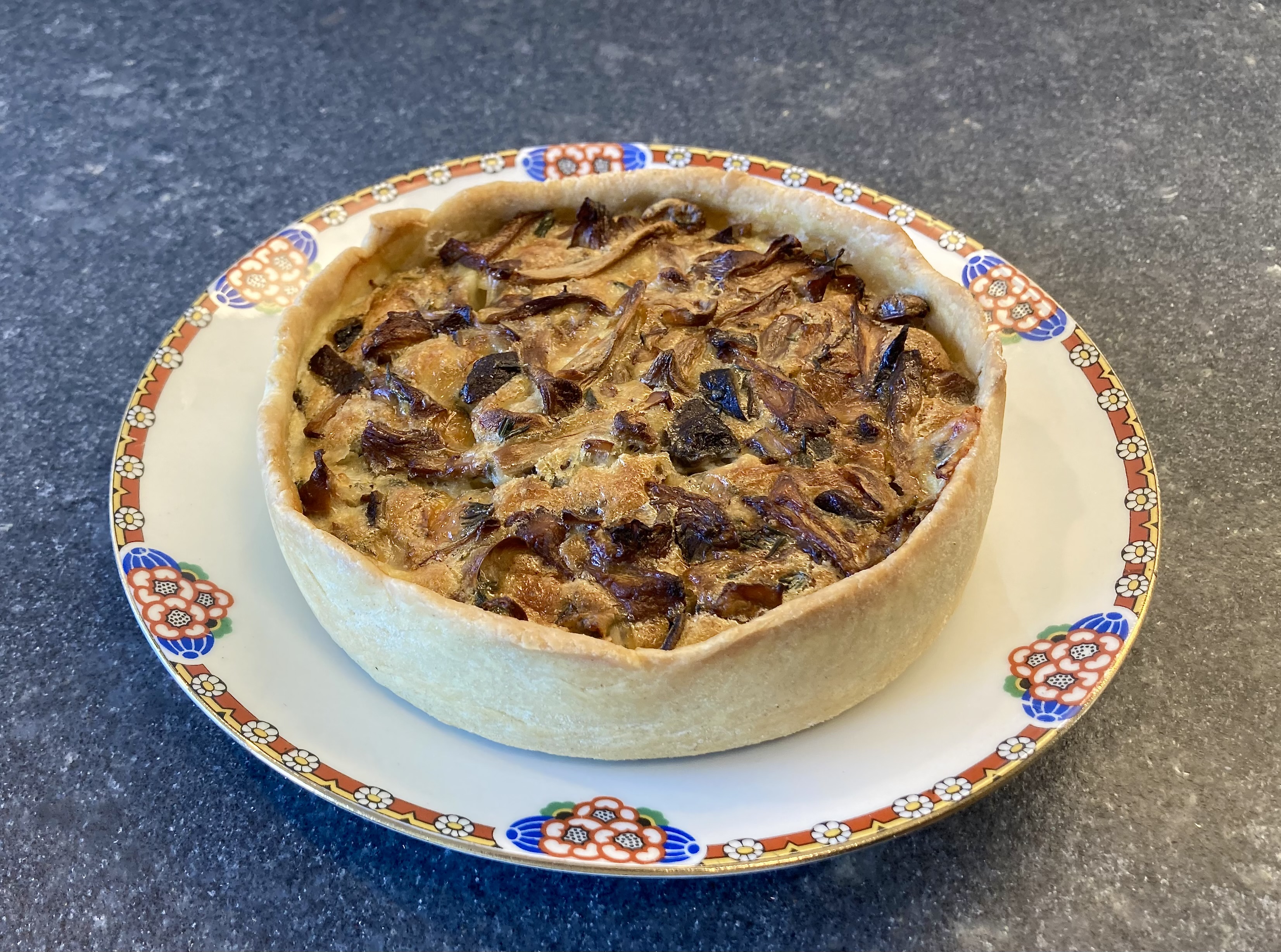
You’ve probably noticed we love mushrooms. Cultivated ones, like shiitake and oyster mushrooms and seasonal ones, such as morels and Caesar’s mushroom. This year we introduced a page with mushroom recipes in Dutch. It turned our to be a great success!

A few years ago we started exploring forgotten vegetables such as mashua and oca. We’re very pleased to see the popularity of this page. Clearly you’re as interested in these vegetables and their flavours as we are!

This year we will continue our series of sauces and of mushroom recipes, we will prepare dishes from illustrious Parisien restaurants and discuss wine pairing. We also plan to review cookbooks, with the help of our much loved tasting panel. In the meantime we look forward to your feedback, suggestions, likes and comments.

Let’s start cooking!

Your Favourites in 2024

Happy New Year!
Let’s begin the new year with the 2024 highlights. For the past two years your favorite post was No-Knead Bread, This year’s most popular post was an all time favorite: Kimizu. This classic, golden sauce from Japan, is made with Egg Yolks, Rice Vinegar, Water and Mirin. We also have a version with Tarragon, let’s say the Béarnaise version of Kimizu. Although it is a classic sauce, we use a microwave to prepare Kimizu and Kimizu with Tarragon. An easy and very effective way of controlling temperature and consistency.

This year’s runner up is Scallops with Roe, a recipe we published in January 2023. We were inspired by the great quality of the scallops on the market in Nice and we were not disappointed. The combination of scallops, roe and mashed potatoes is simple and delicious.

On August 19th 2024 Michel Guérard passed away. He was a French chef, author, one of the founders of the Nouvelle Cuisine and the inventor of La Cuisine Minceur. We wrote about his version of sauce vierge and combined it with sea bass and with skate. Very happy to see so many people interested in this post.

You’ve probably noticed we love mushrooms. Cultivated ones, like Shiitake, Oyster Mushrooms, Enoki and Champignons de Paris and seasonal ones, such as Morels, St. George’s mushroom and Caesar’s Mushroom. One of the most popular posts is Cèpes à la Bordelaise. Also very tasty when prepared with button mushrooms. Always a pleasure to serve, for instance with eggs, with meat, with more present fish. Last year we created a special page with an overview of our mushroom recipes.

We were very impressed by the exhibition Food For Thought by Kadir van Loohuizen in the Maritime Museum in Amsterdam. Let’s summarize it by quoting Ralph Dahlhaus, Chef of the National Maritime Museum: “Your choice of food does not need to be perfect, but it must be responsible.”

We continued our series of Sauces. One of your favorites is another classic sauce: Ravigote. We served the sauce with Pâté de Tête Persillé and crusted bread. The recipe we posted goes back to the more or less original version: the Ravigote is light, uplifting and flavorful.

This year we are looking forward to the Amsterdam Symposium on the History of Food on June 5th and 6th. This year’s topic is Food and the City. The symposium takes place in the 750th anniversary year of the city of Amsterdam. The symposium will be organized during an exhibition on the history of food culture in Amsterdam, from April 11th until September 7th 2025 in the Allard Pierson.

Let’s start cooking!

The Art of Sauces: Ravigote

A classic, French sauce, traditionally served with Tête de Veau, but in general great with cold meat and cold, poached fish. A very simple, easy to make sauce with just the right acidity to brighten up your cold starter. The warm version is made with a broth, the cold one with oil, vinegar and mustard, as you would prepare a vinaigrette.
No eggs?
Indeed, no eggs. If you look at the list of ingredients, you could think of Remoulade or Tartare Sauce (both mayonnaise based) or Gribiche (made with hard boiled eggs). Ravigote is different, it’s light and uplifting. Just give it a try next time you serve cold meat or fish as a starter. Forget about the mayonnaise and enjoy this delicious, flavourful sauce.
We served our Ravigote with Pâté de Tête Persillé and crusted bread.

Wine Pairing

We enjoyed a glass of white Pontificis, made with Viognier and Chardonnay grapes by Badet- Clément. This is an oaked dry wine from the Languedoc-Roussillon region in France. It is elegant, with some oak, clear acidity and some bitterness. Creamy, with some vanilla, butter and perhaps tropical fruit. In general you’re looking for a white wine with clear acidity, oak and balance.

What You Need

  • Coarse Mustard (Moutarde à l’Ancienne
  • White Wine Vinegar
  • Oil (Sunflower, Avocado)
  • 3 Cornichons
  • 8 Capers
  • 1 Shallot
  • Parsley
  • Tarragon
  • Chervil
  • Black Pepper

What You Do

  1. Finely chop the shallot, slice the cornichons, halve the capers
  2. Chop the herbs
  3. Combine a spoonful of mustard with the same amount of vinegar
  4. Slowly add the oil until you have the right consistency and flavour
  5. Add more vinegar to get the right acidity
  6. Happy? Add shallot, cornichons and capers
  7. Mix
  8. Add a generous amount of parsley, tarragon and chervil
  9. Finish the sauce with black pepper.

PS

The amount of tarragon depends on the type of tarragon and your personal preference. There are actually three types: French tarragon (intense and aromatic, the one to use in the kitchen), Russian tarragon (limited flavour, no complexity) and Mexican (a touch of anise, but not even close to French tarragon).