Asparagus with Chervil

One of the classic ways of serving asparagus is à la Flamande (Op Vlaamse wijze) with melted butter, boiled eggs, parsley and nutmeg. The mixture of melted butter and egg is like a sauce, delicious with the asparagus. In this case we add lots of chopped chervil to the mixture of melted butter and eggs, making it a light combination of bitter, crunchy and sweet (the asparagus) and velvety, anise-flavoured and savory (the mixture).

Wine Pairing

Serve the asparagus with a dry, white wine, for instance a glass of Silvaner produced by the German Winery Thörle. The wine comes with freshness, some acidity, minerality and fruit (pear, green apples). Excellent with our asparagus. A dry muscat will also be perfect.
We decided to take a different approach and balance the lightness in the dish with a Portuguese white wine, made from chardonnay grapes and aged for 4 months in oak barrels. It is produced by Casa Ermelinda, a winery some 20 kilometers south of Lisbon in the Setúbal region with over 550 hectares of vineyards and 29 different grape varieties. The barrel aged chardonnay is Intense and comes with a complex bouquet of exotic fruits. The wine is balanced, fresh, elegant and long..

What You Need

  • 4 Asparagus per person
  • 2 Eggs
  • Chervil
  • Butter
  • White Pepper

What You Do

We use our Russel and Hobbs food steamer to prepare the asparagus. An essential kitchen aid for only 50 euro or US dollar. 
Clean and peel the asparagus. Put butter in a cup. Steam them for 10+5+5 minutes. After 10 minutes add the eggs to the steamer basket. After 5 minutes, turn the eggs upside down and place the cup in the steamer basket. Another 5 minutes later everything is ready. Chop the chervil. Peel the egg and mash with a fork, creating a ‘mimosa’ of egg. Combine mimosa and chervil. Add some white pepper. Add the butter to the mixture and combine. Spoon the egg mixture on top of the asparagus.

Asparagus a la Flamande ©cadwu
Asparagus with Chervil ©cadwu

Oyster Mushroom Salad

A few weeks ago, we posted a recipe for a salad with fried and marinated white button mushrooms. A rich, velvety salad with some acidity and lots of umami. This mushroom salad combines raw oyster mushrooms with radishes, sesame oil, mirin and cilantro. It’s both colourful and flavourful!
In general eating raw mushrooms is not a good idea. Some mushrooms contain mycotoxin that could be carcinogenic to humans. If you want to be 100% sure, it’s best to cook your mushrooms (and forget about this delicious salad!).
The variety we used is the Golden Oyster Mushroom (Pleurotus Citrinopileatusand its colour makes the salad even more vibrant. This mushroom is native to China, Japan and Russia. The ones we bought are cultivated. Compared to the more common grey oyster mushroom the caps are smaller in size and their taste is sweeter.
Another colourful oyster mushroom is pink (Pleurotus Djamor). Its taste is somewhat bitter. Perhaps not the best choice for a salad. If cooked well, it is supposed to taste like bacon, but by then it has lost all its colour.
Cultivated oyster mushrooms can be eaten raw. If you’re not sure, ask your greengrocer.

Wine Pairing

The salad comes with a range of flavours and obviously some acidity, which is important when choosing your wine. Perhaps a white wine with even more acidity? Or a wine that adds flavours or aromas to the dish? We decided to drink a glass of Vinho Verde with our salad, produced by Adega De Monção. This Portuguese white wine is made from Alvarinho and Trajadura grapes. Some citrus, slightly tropical, with notes of apples and pear. Tasty, elegant and refreshing. In general, you’re looking for a refreshing, easy to drink wine that has some acidity and flavours that make you think of apple, apricot or peach.

What You Need
  • 100 grams Golden Oyster Mushrooms
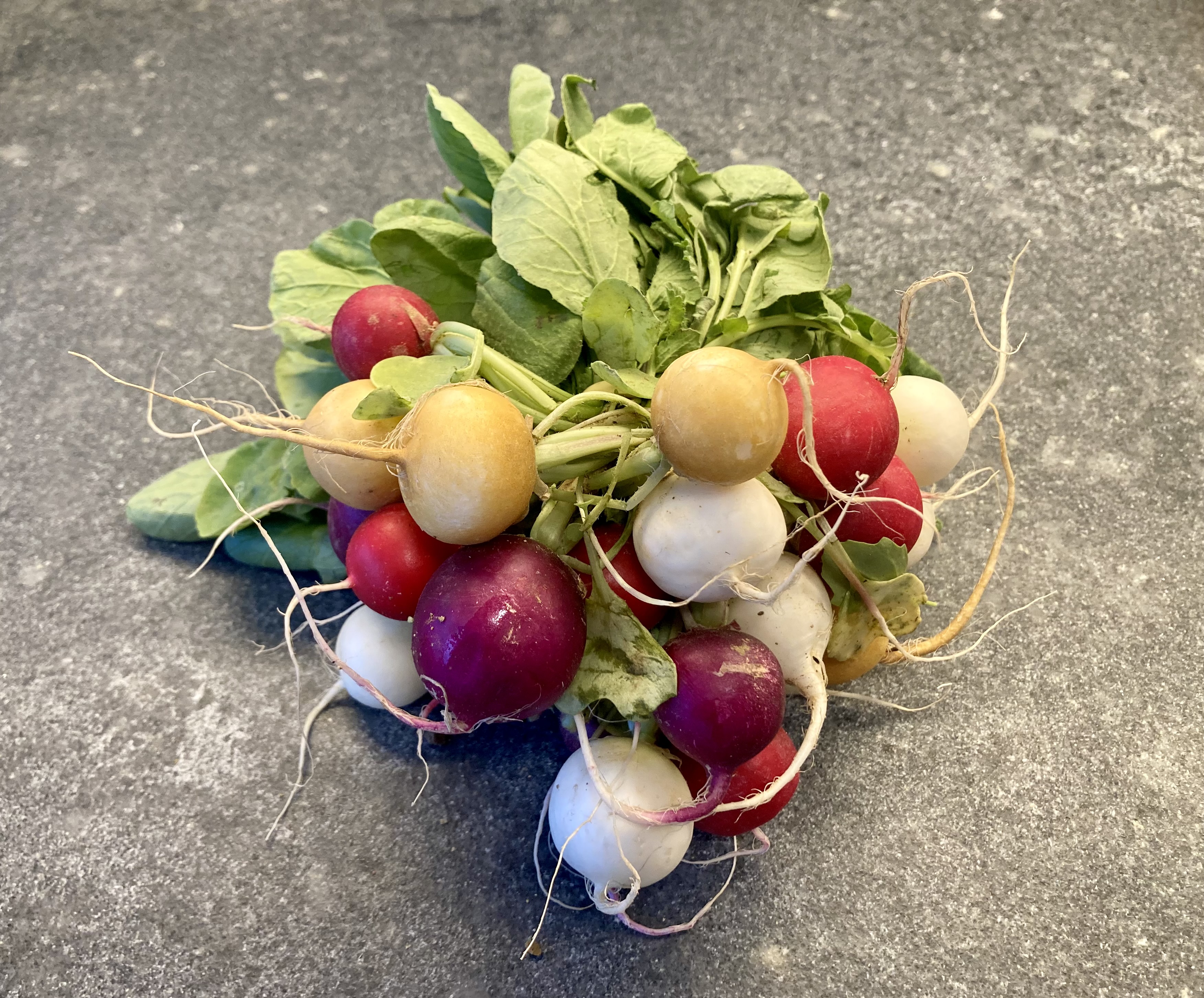
  • (Coloured) Radishes
  • For the Dressing
    • Excellent Olive Oil
    • Rice Vinegar
    • Mirin
    • Light Soy Sauce (we used Tsuyu)
    • Sesame Oil
  • Cilantro
What You Do

Wash the radishes and slice vertically in eight or six, depending on the size. Make the dressing. Add the sesame oil as the last ingredient because it’s very present. Combine the radishes with the dressing and the thinly sliced cilantro. Leave for a few minutes. Combine with the golden oyster mushrooms and serve immediately.

Pork with Clams

A delicious classic dish from the Portuguese Alentejo region. A region known for its long coastal line, its beautiful nature and very small villages. Loved by sun seeking holiday makers and those who want to escape from busy metropolitan areas. A region not known for its culinary tradition except for Porco Alentejana, a very tasty combination of pork and clams, supported by red bell pepper paste, white wine and onion. Forget about those unlikely surf and turf combinations and enjoy Porco Alentejana!

Wine Pairing

Combining clams (and shellfish in general) with red wine is not the best idea. The tannins in the red wine can cause a metal-like taste, which is not very pleasant. Best is a full-bodied white wine with some acidity. We opened a bottle of Chateau Mourgues Du Gres Rosé. A wine with an intense pink colour, aromas that made us think of strawberries and lemon and with a fruity, long taste with a hint of pepper. The wine is made from syrah, grenache en mourvèdre grapes.

What You Need (for 4 persons)

  • 800 grams of Organic Pork with lots of lovely Fat (Tenderloin or Sirloin)
  • 1 Large White Onion
  • Red Bell Pepper Paste
  • White Wine
  • 2 Bay Leaves
  • 2 Garlic Cloves
  • 800 grams of Clams or Vongole
  • Cilantro
  • Olive Oil

What You Do

Cut the pork into 2-centimetre cubes. Finely chop the garlic. In a bowl combine the garlic, four tablespoons of red bell pepper paste, white wine, bay leaf and pork. Cover and transfer to the refrigerator for 24 hours. Gently mix every 2 – 4 hours.
The next day coarsely chop the onion. Use a slotted spoon to remove the meat from the marinade. Heat olive oil in a large pan and fry the meat until nicely brown. Remove the meat and add the chopped onion to the pan. Glaze.  Return the meat to the pan, add the marinade and leave to simmer for two or three hours, depending on the meat. Taste and perhaps add more red bell pepper paste. When the meat is ready, check the clams, discard broken ones and ones that remain open. Take a large pan, add some water and a tablespoon of red bell pepper paste. When the water is boiling, add the clams to the pan, close the lid and cook until the clams are open, perhaps 2 minutes. Use a slotted spoon to transfer the clams to the other pan. Use a large spoon to add some of the cooking liquid of the clams to the stew. Taste carefully; the liquid could be very salty and you don’t want to ruin the stew by adding too much. Decorate with cilantro and serve with crusted bread. We enjoyed a carrot salad with fennel seeds as a side dish.

Pork with Clams ©cadwu

Red Bell Pepper Paste

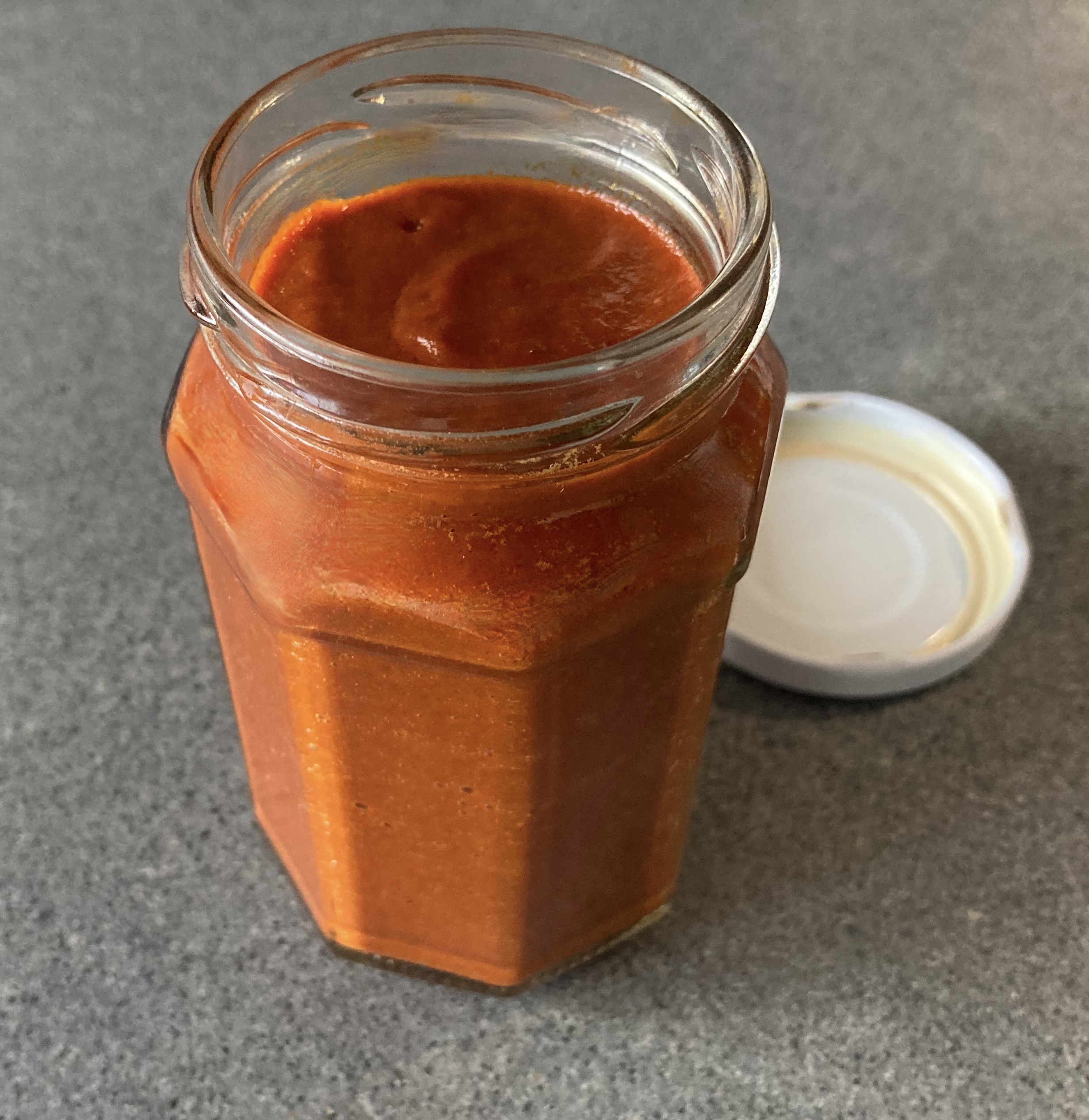
Sweet, smokey, mild, umami: red bell pepper paste is a great condiment when you’re making a pasta sauce with tomatoes, marinating pork or chicken for a stew or looking for a basis for a spread or dip. Very popular in the Portuguese kitchen (Pasta de Pimiento Rojo).

You could make the paste with red bell peppers only; you could add a pinch of salt or perhaps some garlic. Our alternative has a deeper colour and more intense flavours, thanks to the shallot, garlic and red wine. 

Red Bell Pepper Paste keeps very well in the refrigerator, especially when you store it in a jar under olive oil.

What You Need

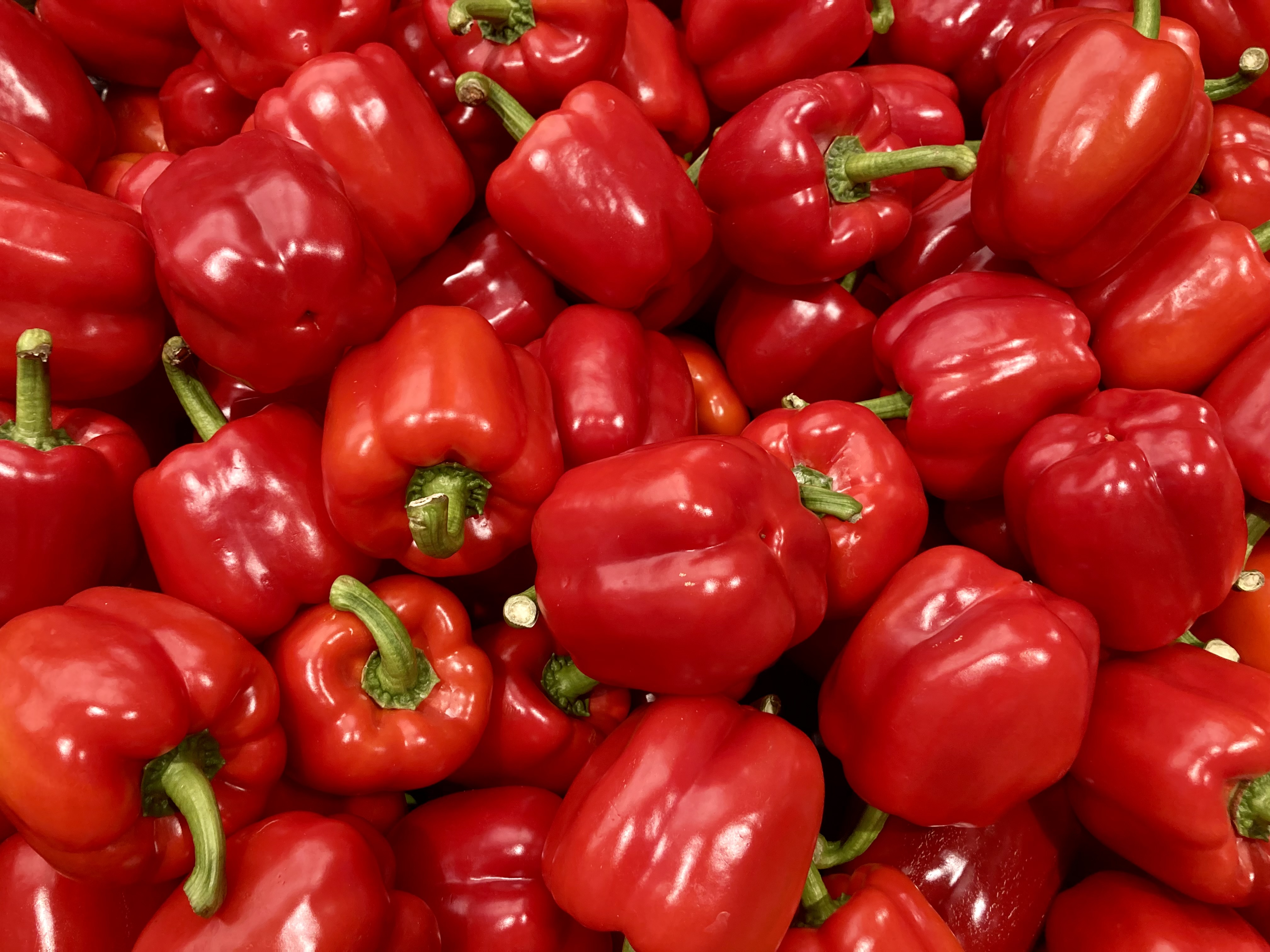
  • Red Bell Peppers
  • Optional: Salt, Garlic

What You Do

Clean the bell peppers, remove the seeds and the veins; cut in 4. Transfer to the oven and grill or roast for 10 minutes or until well charred. When still hot, put the bell peppers in a plastic container and close it. After one hour it’s easy to remove the skin of the bell pepper. Chop and blender until smooth and thick. You could add a pinch of salt or some grated garlic.

What You Need (Alternative)

  • Red Bell Peppers
  • Shallot
  • Garlic
  • Red wine
  • Olive Oil

What You Do

Clean the bell peppers, remove the seeds and the veins; cut in 4. Transfer to the oven and grill or roast for 10 minutes or until well charred. When still hot, put the bell peppers in a plastic container and close it. After one hour it’s easy to remove the skin of the bell pepper. Chop the shallot, the bell pepper and the garlic. Add olive oil to a pan, glaze the shallot. Add the garlic. After a few minutes add the chopped red bell pepper and any remaining liquid. Add some red wine and reduce. Repeat this step two or three times. Transfer the content to the food processor and blend until smooth and thick.

PS

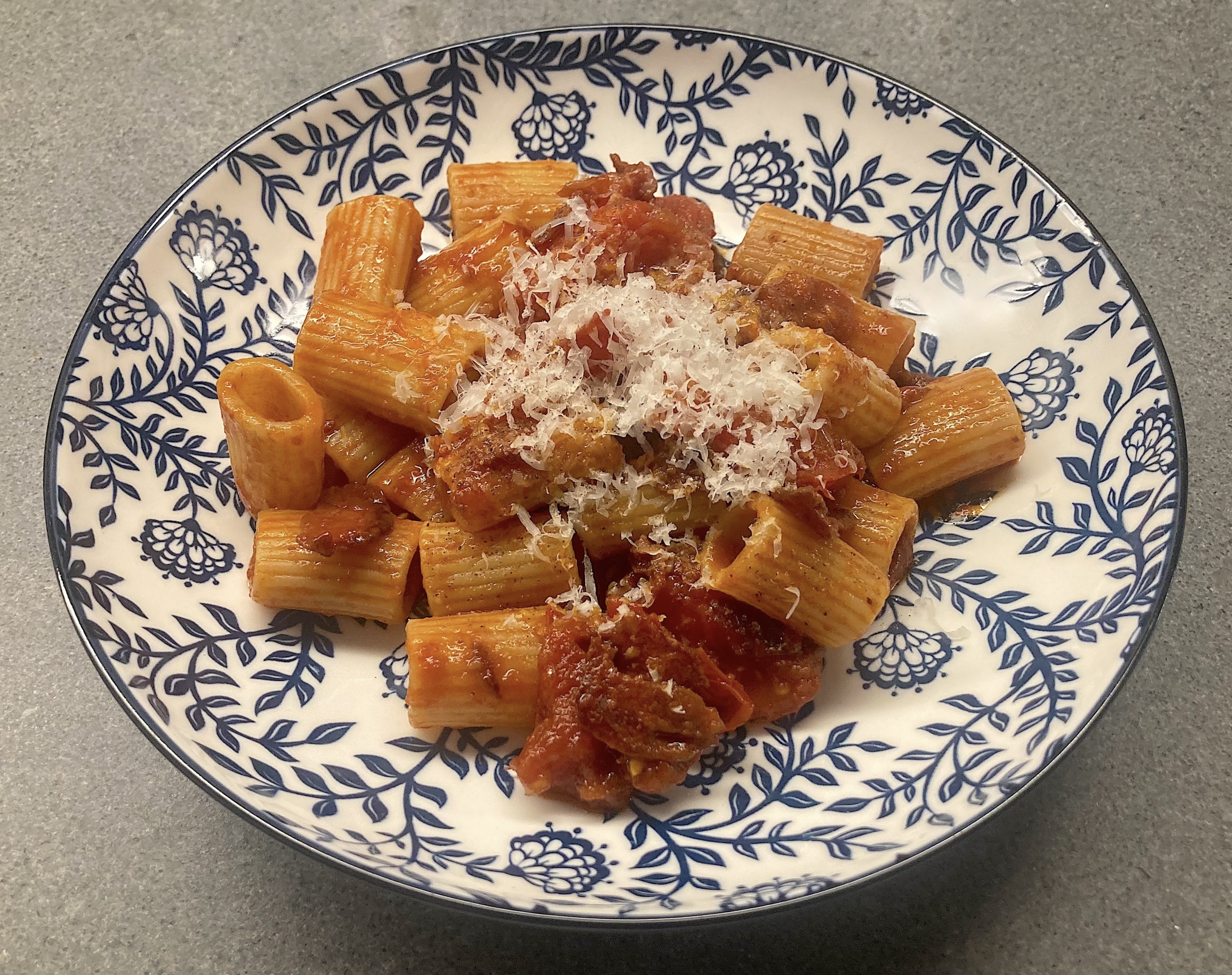
We used our red bell pepper paste for a pasta dish with tomato confit.

Dorade

The Gilt-Head (Sea) Bream, better known as Daurade, Dorade (Royale) or Orata is a popular fish in France, Greece, Italy, Spain and many other Mediterranean countries. Delicious when stuffed with herbs such as thyme, rosemary or marjoram, grilled and served with a slice of lemon. The firm, juicy meat is aromatic and a culinary treat.
Serving a whole fish can be a bit uncomfortable. You must remove the head, dissect the fish and look carefully for hidden bones. Serving a fillet makes enjoying fish much easier. The downside is that a fillet is less tasty and perhaps a touch dry. When you buy a fillet, make sure it’s fresh and enjoy it the same day.
We combine the Dorade with typical Mediterranean ingredients. A combination that is both light and tasty.

Wine Pairing

The dish is full of flavours, so we would suggest a glass of Spanish Verdejo or Italian Custoza. In general you’re looking for a full, fragrant dry white wine with a fruity aroma and a round, long, full and dry taste.

What You Need

  • 200 grams of Dorade Fillet
  • 2 ripe Tomatoes
  • 1 Garlic Clove
  • Capers (in brine)
  • Basil
  • Black Pepper
  • Olive Oil

What You Do

Remove the pits from the tomato and dice. Chop the garlic. Coarsely slice the capers. Add olive oil to the pan, heat the garlic for a few seconds, add tomatoes. Leave for a few minutes, add the capers. Taste and adjust. One minute before serving add half of the basil. Add black pepper.
In parallel fry the dorade until golden. Serve on a hot plate and add the remaining basil.
PS When you use salted capers, wash these thoroughly to remove the salt. You need lemon juice to get the right acidity.

Dorade ©cadwu
Dorade ©cadwu

Pasta with Tomatoes and Octopus

Happy New Year! Let’s start 2023 with a flavourful pasta dish, inspired by the Portuguese cuisine. A cuisine that is all about food with great flavours, such as bacalhauCaldo Verde, octopus, cuttlefish, and the well known chicken piri-piri and pastel de nata. Octopus is very tasty and it comes with a great texture. The suction cups may be a bit unappealing, but don’t worry, the taste will make up for it.
In this case we use Orecchiette, small ear shaped pasta. The mixture of tomato and octopus is not like a sauce, so the paste should function as a carrier (a mini spoon) of the mixture. Enjoy quality pasta with slightly acidic tomatoes, rich octopus and refreshing parsley.

Wine Pairing

A Portuguese white wine will be a great idea, for instance a Vinho Verde. You could also go for a Spanish Verdejo from Rueda. Look for characteristics like fresh, fruity, clear acidity, subtle bitterness, minerality and full bodied. We enjoyed a glass of Pazo das Tapias Finca os Cobatos, from Monterrei in Spain made with Godello grapes.

What You Need

  • 2 Octopus Tentacles (cooked)
  • 2 Large Tomatoes
  • 2 Gloves of Fresh Garlic
  • Parsley
  • Jerez Vinegar
  • Black Pepper
  • Olive Oil
  • Pasta (Orecchiette)

What You do

Quarter the tomatoes, slice the garlic (not too small) and fry gently in a warm pan with olive oil. Set to low heat. In parallel heat a heavy iron skillet. Remove the gelatinous substance from the tentacles, dry them, coat with olive oil and fry. Cook the orecchiette according to the pack. With only 5 minutes to go for the pasta, slice the octopus in small chunks (depending on the size of the pasta), add the octopus to the tomato mixture and add half of the chopped parsley. Just before serving the dish, add some Jerez vinegar to the mixture. Add the remaining parsley and black pepper. Drain the pasta, keep some of the cooking liquid and add the pasta to the mixture. Combine, decide if you want to add some cooking liquid or perhaps some olive oil. Serve immediately on a hot plate.

Pasta with Tomatoes and Octopus ©cadwu

Saffron Milk Cap with Red Bell Pepper and Chorizo

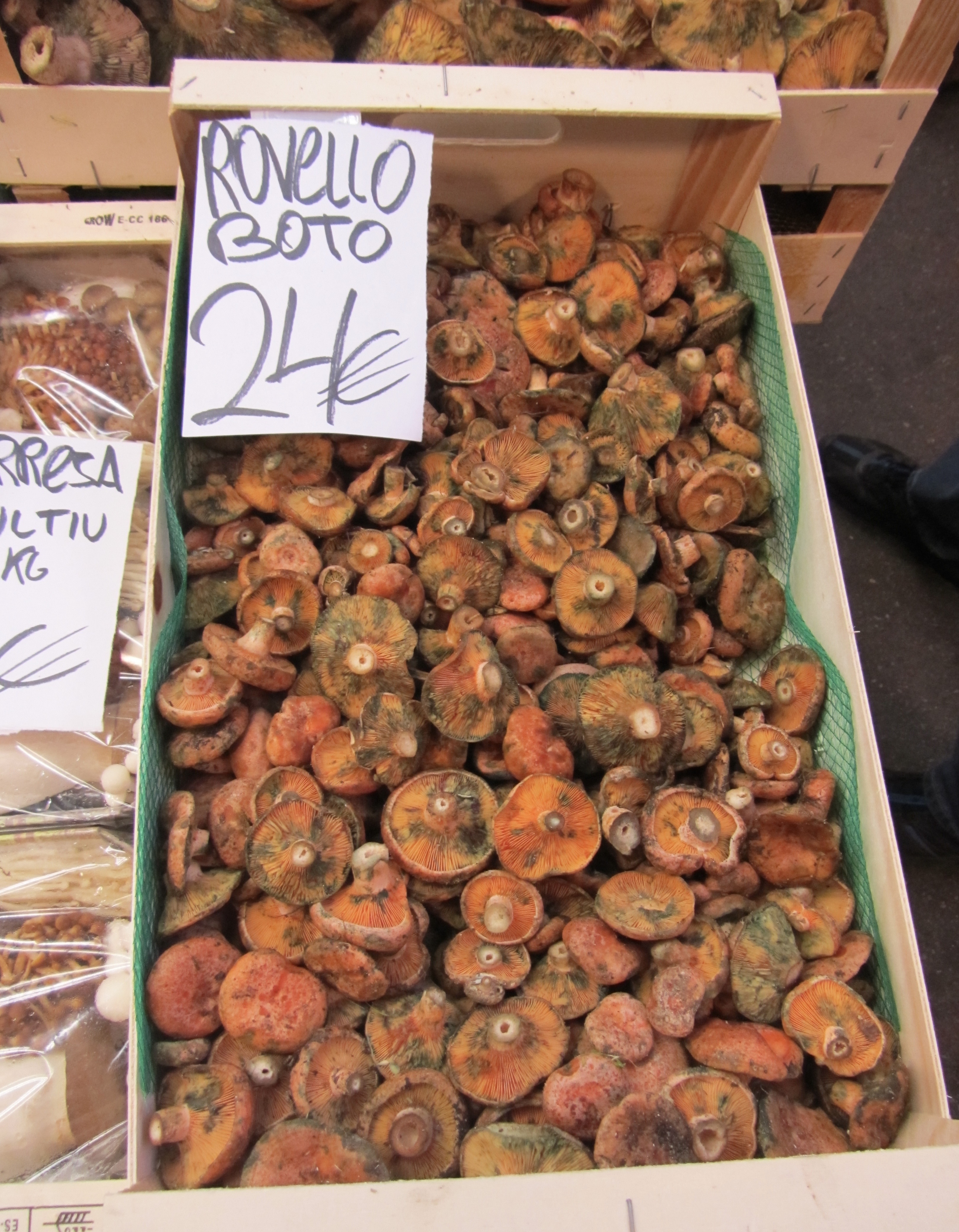
This mushroom is absolutely delicious, which is reflected in its Latin name Lactarius deliciosus. When you cut a thin slice of the stem, you will see the intense, orange colored milk of the mushroom.
The mushroom may be a bit green, which is the result of bruising, so nothing to worry about. Cleaning it may require rinsing with cold water because leaves and mud may be stuck to the cap.

It is a popular mushroom in Spain, Portugal, Turkey, Scotland, Poland, Russia and many other countries. In Spain they are combined with garlic and parsley, in Turkey with spinach to make börek or used in a rich tomato stew and in Poland and Russia they are salted with herbs such as dill and caraway.

Many recipes suggest blanching the mushrooms for 2, 3 or even 10 minutes, but that’s not necessary. Much better idea is to use them in stew like recipes, allowing for the flavours to integrate. Talking about flavours, Saffron Milk Cap is a touch nutty, sweet and mild.

The season is relatively short, from August until October, November. Which in a way makes the joy of buying and preparing these delicious mushrooms even greater!

Wine Pairing

We very much enjoyed a glass of Portuguese Segredos de São Miguel, a full bodied, warm red wine, made from grapes such as Alicante Bouschet, Aragonez, Touriga Nacional and Trincadeira. You will taste lots of fruit and a touch of toast.

In general you’re looking for a full bodied wine, with some acidity and smooth tannins. A glass of Malbec will also be a good choice.

What You Need

  • 150 grams of Saffron Milk Caps
  • Roasted Red Bell Pepper
  • 50 grams of Sliced Chorizo
  • Parsley
  • One Garlic Glove
  • Black Pepper
  • Olive Oil

What You Do

Clean the mushroom and slice (not too thin). Chop the garlic. Peel the skin of the roasted bell pepper and slice. Warm a skillet, add olive oil and gently add the sliced Spanish chorizo (yes, we know, it seems a bit odd. You would expect us to use fresh chorizo, which is great when you want to create something like a sauce or ragu, but we like the idea of being able to taste all three main elements, on their own and in combination). Add the garlic. After a minute or so add the mushrooms and the bell pepper. Fry gently. After 5 or 10 minutes add some chopped parsley. Leave on low heat. Add some more parsley. Just before serving add the remaining parsley and some black pepper.

PS

Roasting a red bell pepper before using it, is such a good idea. Simply slice the bell pepper in 4, put on the highest rack in the oven and grill for 10 minutes or until truly burned. Remove from the oven, put in a container, close it and wait for an hour or so. Remove the skin of the bell pepper and it’s ready to use. Roasted bell peppers are sweet and intense, with only a touch of smokiness.

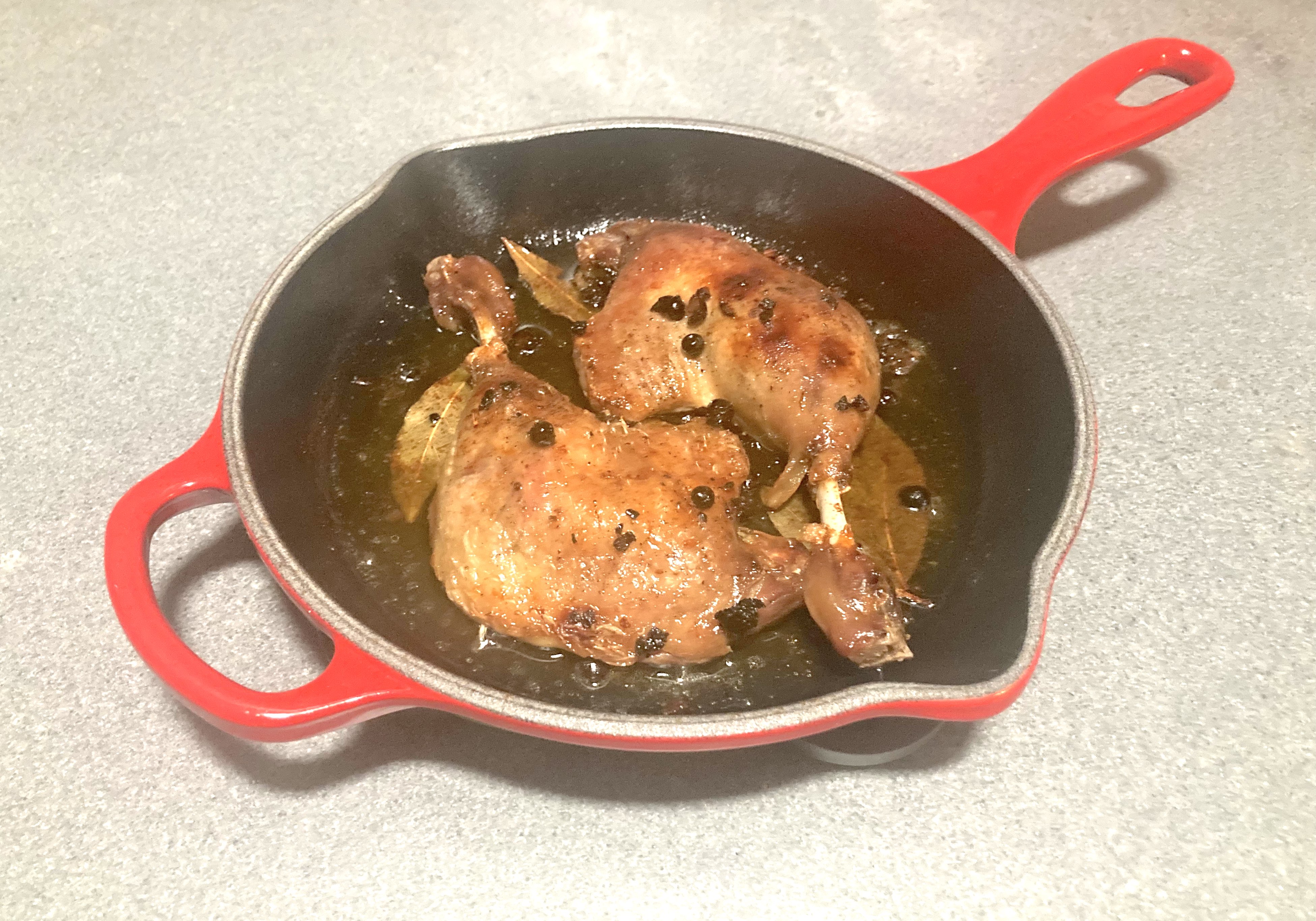
Confit of Duck: a home made alternative

The traditional way of making Confit of Duck is not complex. It’s a bit time consuming and it requires some planning, that’s all. The principle is to cure the meat in salt with various herbs (thyme, cumin, rosemary) and garlic. After 24 hours or so the duck is washed with water, patted dry and then slow cooked in goose or duck fat for several hours. When ready cool and store in fat.

We take a different approach by slow cooking the duck legs in olive oil. The result is remarkable: juicy, full of flavours and aromas, provided you use first class duck (label rouge for instance). If not, the meat can become dry and tough. Another benefit: we don’t cure the meat so it’s not salty at all.
We serve the confit with celeriac mash. It’s light, nutty and refreshing compared to a mash made with potatoes.

Wine Pairing

Best choice is a full bodied, red wine with ripe fruit and smoothness. We decided to open a bottle of Herdade de São Miguel Colheita Seleccionada 2020 as produced by Casa Relvas. Such a pleasure! Its colour is deep ruby and the aromas made us think of ripe black fruit and dark cherries with some spiciness. The wine is well balanced with a nice structure and smooth tannins. Works very well with the juicy duck and the mash with its creamy texture and lemonish, celery flavours.

What You Need

  • For the Confit
    • 2 Duck Legs
    • Juniper berries
    • 4 Bay Leaves
    • Olive Oil
    • (optional) Garlic
  • For the Celeriac Mash
    • 1 Celeriac
    • Slice of Lemon
    • Cream
    • White Pepper
    • Nutmeg

Confit

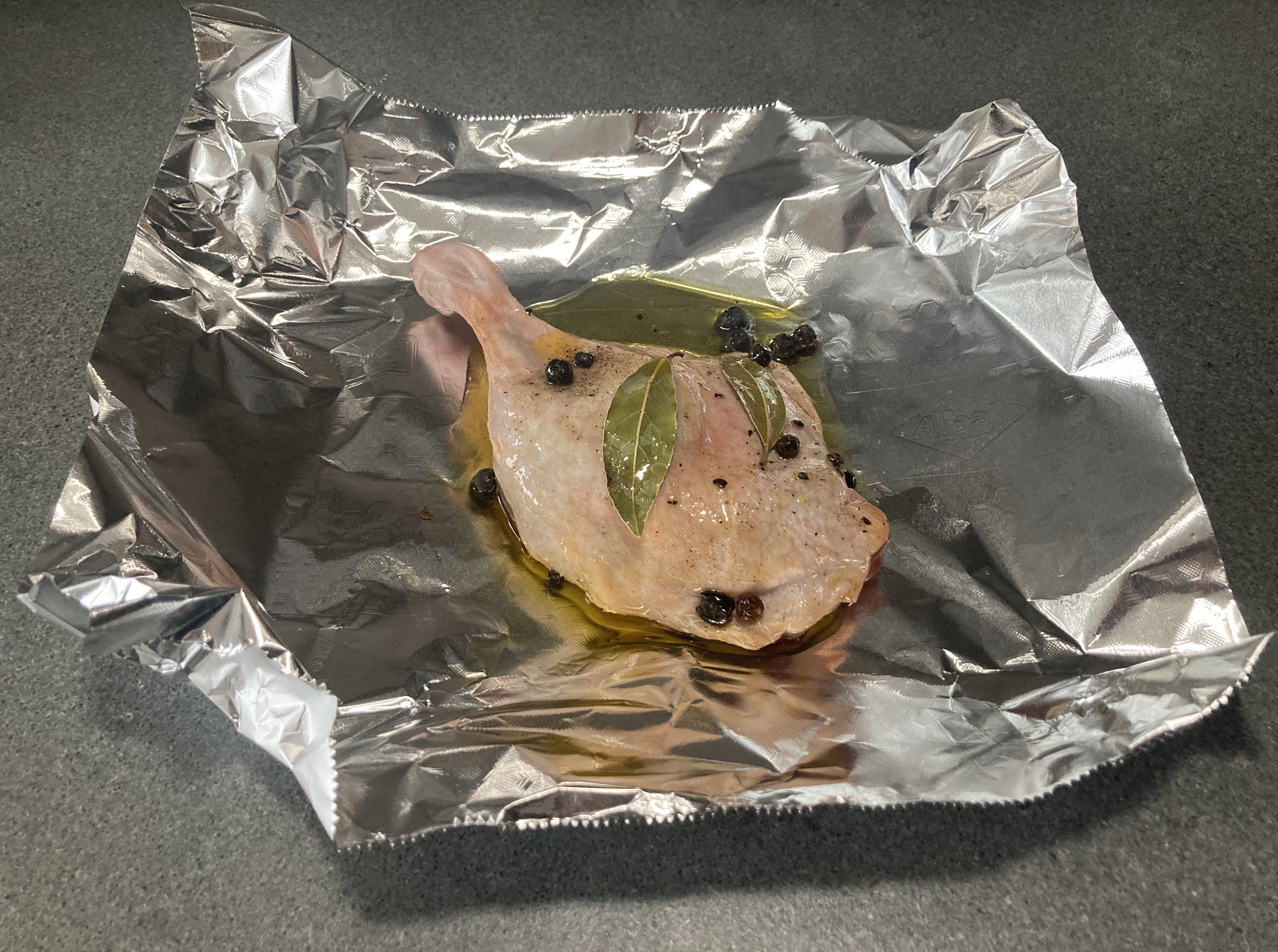
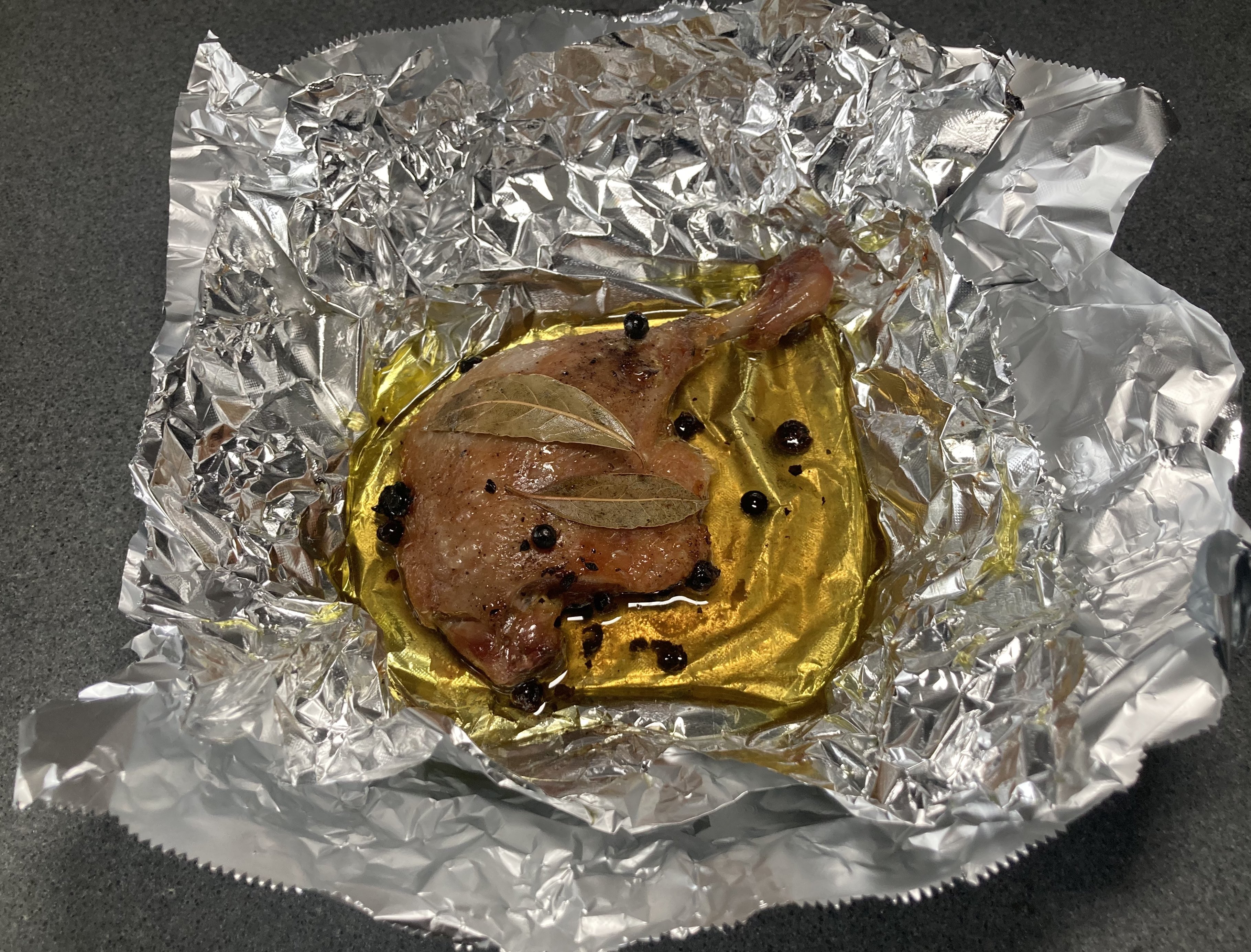
Take a sheet of aluminium foil and place the leg in the middle. Add lightly crushed juniper berries and two bay leaves. Perhaps some crushed garlic. Add a generous amount of olive oil and make sure everything is covered. Wrap foil around the duck. Take a second sheet of foil and wrap it around the package, making sure it’s closed. Repeat with the second leg. Transfer both packages to an oven at 120 °C or 240 °F. After one hour reduce the heat to 100 °C or 210 °F. After in total 4 to 5 hours, depending on the size of the legs, remove the legs from the oven, open the package and let cool. Then transfer to the refrigerator for use later on.

Heat the oven to 200 °C or 390 °F. Put the legs in an iron skillet, transfer to the oven and 15-20 minutes later the legs are ready. If the skin is not yet crispy, use the grill for 2 or 3 minutes.
Another idea is to pull the meat and use it to top a salad.

Mash

The Celeriac Mash: clean and dice the celeriac. Cook in minimum water with a nice slice of lemon until nearly done. Remove the lemon and drain. Add cream. Put on low heat for a few minutes; the celeriac should absorb the cream. When the celeriac is done, use a blender to create the puree. Pass through a sieve. Perhaps add extra lemon or cream. Just before serving add white pepper. Serve with freshly grated nutmeg.

Field Peas with Summer Savory

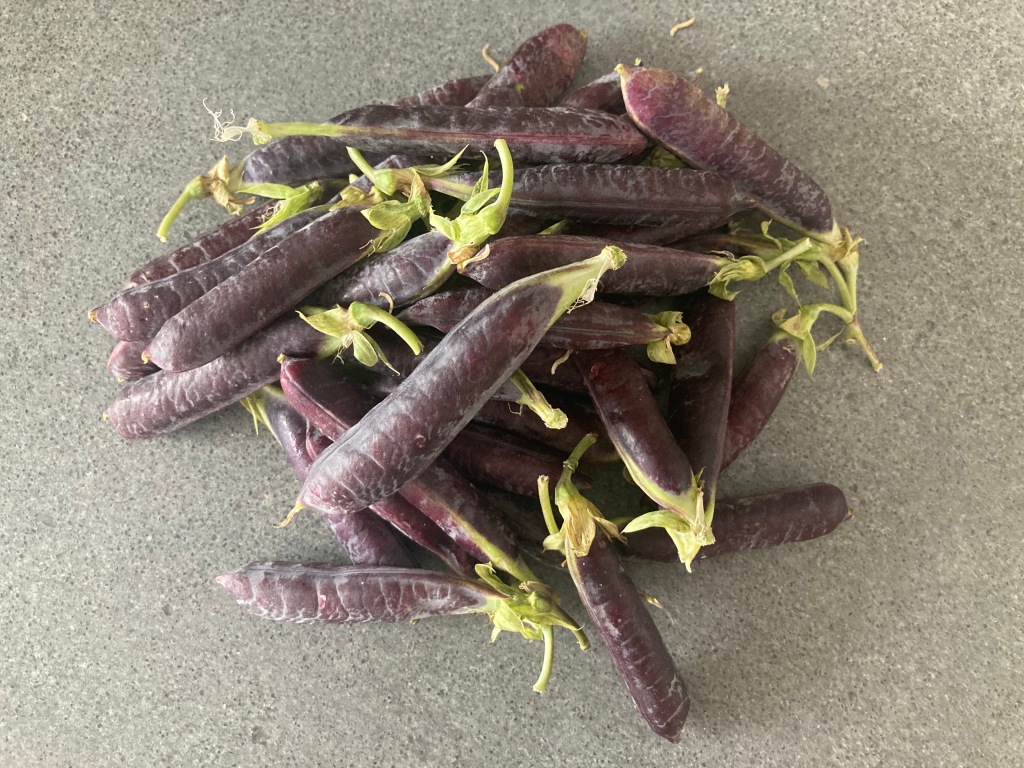
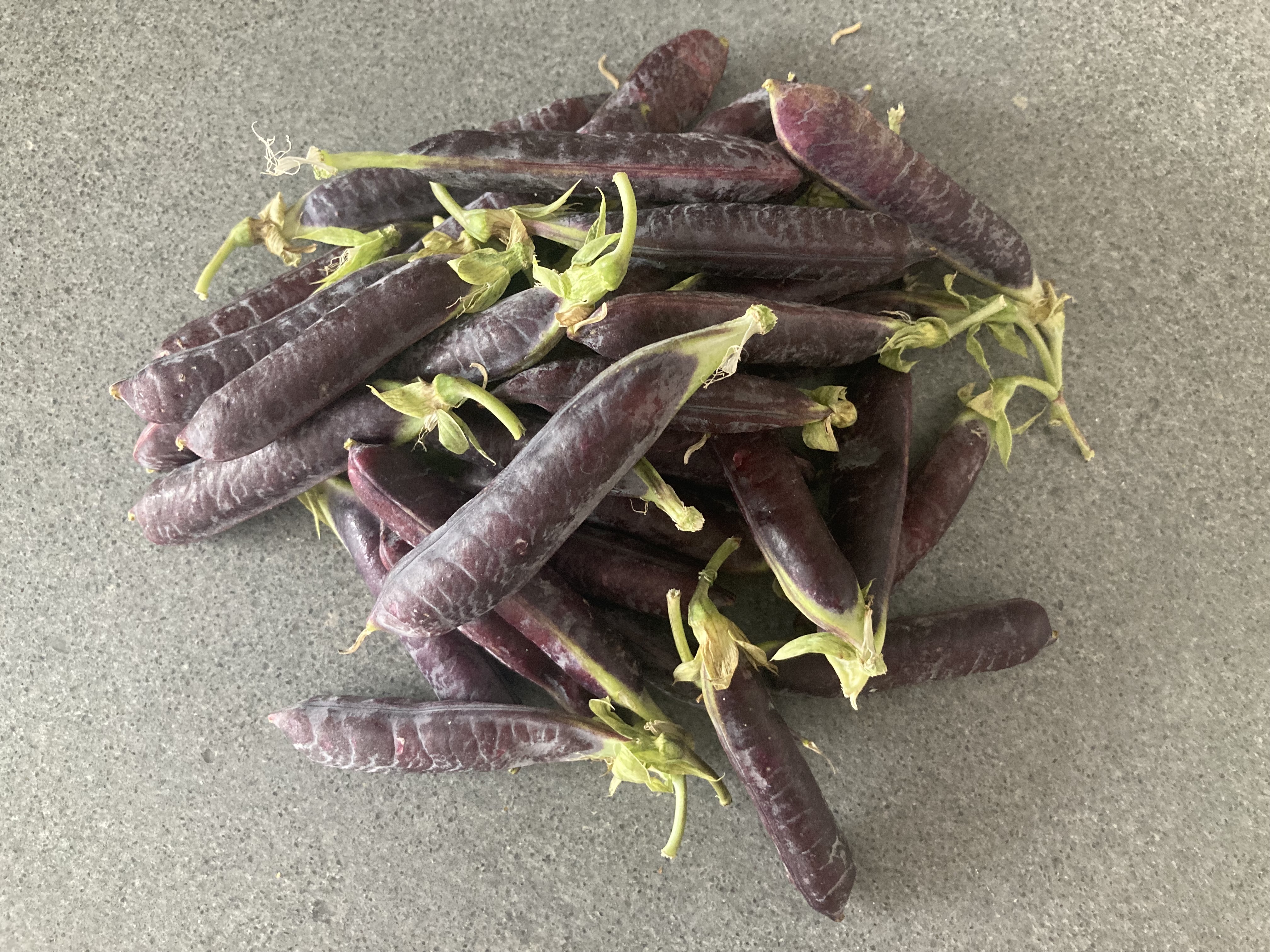
Seasonal products, we simply love them! Fresh field peas are available for a few weeks in June and July only. They are easy to recognise by their purple pod. An old and forgotten vegetable, perhaps because the (older) peas tend to be starchy and not very tasteful.
Young field peas, however, are sweet and moist with a good texture. Combining them with summer savory is a great idea, but if you want to give your field peas a more modern twist, then replace the savory with fresh oregano.
Field peas, different from fresh green peas, require some fat or oil. The combination with for instance crispy fried pork belly works really well. Simple, a bit old fashioned and delicious.

Wine Pairing

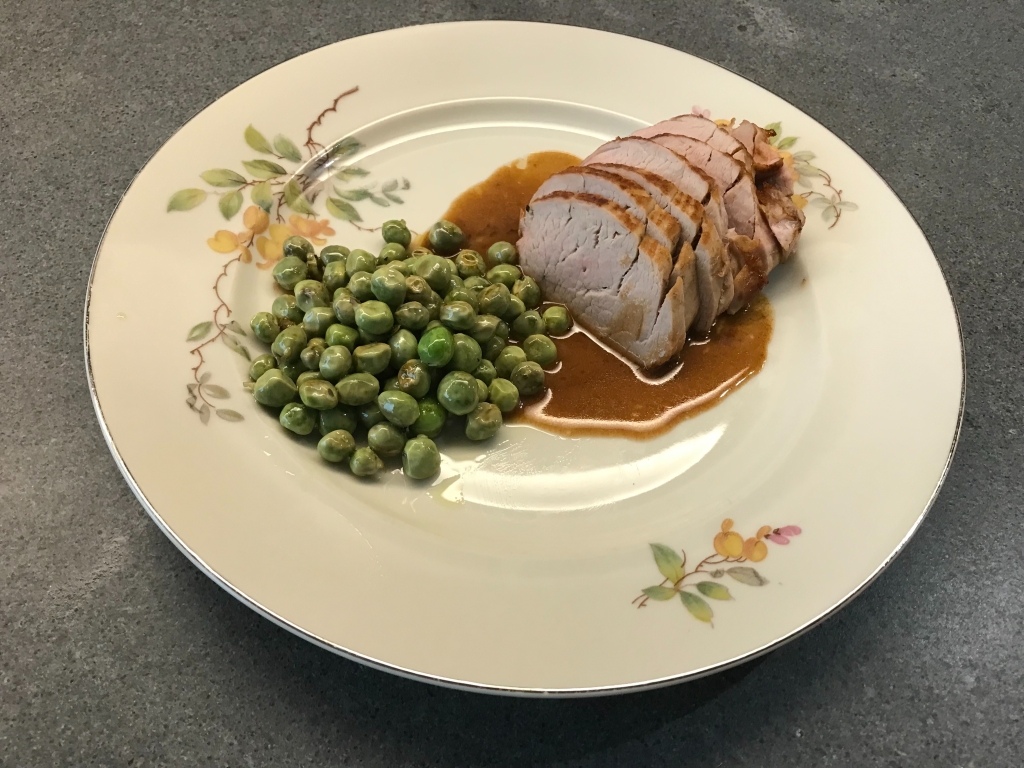
We combined our field peas with pork fillet. The dish is robust, so we decided to drink a red wine from the Dão region in Portugal, to be more precise we enjoyed a glass of Prunus as produced by Gotawine. One of our favourites! It has lots of dark fruit (plums, blackberries, cherries), it is lightly oaked and its taste is fruity, long and well balanced. Grapes include Jaen (also known as Menci), Tempranillo and Touriga Nacional. In general you’re looking for a medium bodied, not too complex, yet elegant red wine.

What You Need

  • Fresh Field Peas
  • Sprigs of Summer Savory
  • Olive Oil

What You Do

Shell the peas and steam them for 4 minutes maximum. Let cool and set aside. Heat a small skillet, add olive oil, reduce heat and very gently fry the peas. Add some finely chopped summer savory. Mix. Just before serving add the remaining chopped savory, mix and serve.

If you combine the field peas with pork fillet, then use excellent organic fillet only. Fry the fillet in a heavy iron skillet until nearly done. Wrap in foil and leave to rest for 10 minutes. Add the meat juices to the pan, add some mustard and (vegetable, veal or chicken) stock. Reduce. Add some cold water to help the emulsification. Slice the fillet. It should be a touch pink. Serve with some black pepper and the jus.

  • Field Peas with Summer Savory ©cadwu
  • Fresh Field Peas ©cadwu
  • Prunus Label ©cadwu

Grilled Octopus Tentacles

Portugal

The Portuguese kitchen is not known for its subtleness or refinement. But that should not stop you from enjoying it! Portuguese cuisine comes with powerful flavours, lots of fish of course, bacalhau, Caldo Verde, octopus, cuttlefish, and the well known chicken piri-piri and pastel de nata. Same for Portuguese wine: perhaps not the most subtle wine (apart from Madeiras and Port wines), but how about an excellent Vinho Verde, a red wine from the Dão region made with Touriga Nacional or a red wine from Alentejo? We love flavors and we very much enjoy the bold dishes from Portugal.

Recently when in Brussels we booked a table at Chez Luis, a Portuguese Bar à vin and Restaurant. Tasty dishes like Pasteis de bacalhau, Cassolette de palourdes and Polvo lagareiro. Served with Portuguese wine, of course. And Chez Luis has an excellent choice! So we drank a vibrant espumante and a refreshing Vinho Verde (Longos Vales Alvarinho 2016). The Polvo made us think of one of our favorites: Octopus with summer vegetables. And since one octopus is way too much for two people, we simply bought two cooked tentacles. Feel free to buy a whole octopus, clean it, cook it, braise it and then follow the recipe below.

Wine Pairing

A Portuguese white wine will be a excellent choice, for instance a Vinho Verde like we enjoyed at Chez Luis. You could also go for a Spanish Verdejo from Rueda. Look for characteristics like fresh, fruity, clear acidity, subtle bitterness and full bodied.

What You Need

  • 2 Octopus Tentacles (cooked)
  • 1 Tomato
  • 1 Red Bell Pepper
  • 2 gloves of fresh Garlic
  • 1 Spring Onion
  • Jerez Vinegar
  • Black pepper
  • (Optional) Parsley
  • Lemon
  • Olive oil

What You do

Clean the red bell pepper and slice in 4 to 6 chunks. Grill it in your oven until nicely burned. Transfer to a plastic container and close the lid. Wait a few hours before peeling the bell pepper. Slice it into cubes (not too small). Remove the pits from the tomato. Slice in similar cubes. Slice the garlic (again, not too small). Slice the spring onion. Mix the vegetables and fry gently in a hot pan with olive oil. Set to low heat. In parallel heat your grill pan. Remove the gelatinous substance from the tentacles, dry them, coat with olive oil and grill for 4*2 minutes, creating a nice brown criss-cross pattern. It will not be very visible, but it will be crunchy. Just before serving the dish, add some Jerez vinegar to the vegetables, turning it into something like a salsa. Perhaps some parsley and black pepper. Serve the hot tentacle on the vegetables and add a slice of lemon.

grilled octopus tentacles