How to Make a Roulade (Part 1)

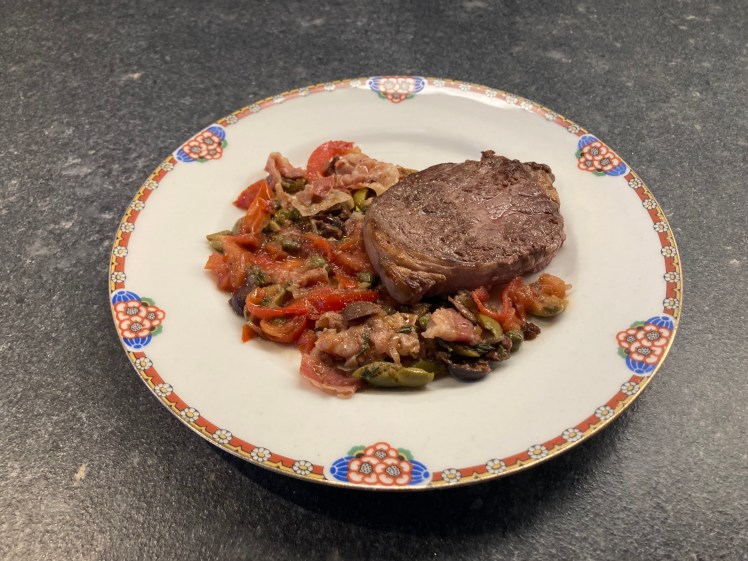
Butterflying meat is a technique that allows you to turn a thicker piece of meat (for instance pork tenderloin or turkey breast) into a piece that you can use to make a roulade, without damaging the texture. The first step is to slice the meat lengthwise, but not through and through. The second and third step are a bit more challenging: take your knife and half the meat, again lengthwise, from the centre to the right and then from the centre to the left. Basically, you have now quartered the meat but it still in one piece. Difficult? This helpful video shows you how to do it.
Some instructions stop after the first step and use a meat hammer to flatten the meat. Nice, but the result is not even close to the real thing.

Once the pork tenderloin is butterflied, it’s time to add the filling, on the outside. Sounds odd, but our butcher was right, if you fry the roulade inside-out, you get a much better result.

We have made pork tenderloin roulades with various fillings. This recipe is for a Mediterranean approach. You could also go for a spicy mixture with red pepper paste, garlic, onion, ginger and soy sauce.

Wine Pairing

In general both red and white wine can go very well with a roulade of pork tenderloin. It all depends on the filling. In case of this Mediterranean filling, we would suggest a more robust wine, for instance Syrah. This is a full-bodied red wine with medium to high levels of tannin. It has fruity flavors and a slightly peppery finish.
In case of a filling with red pepper paste, garlic, ginger and soy sauce you could pair the roulade with a more spicy red wine, for instance Zinfandel, or with a white wine with a touch of sweetness (Riesling, perhaps Viognier).

What You Need
  • Pork Tenderloin
  • Black garlic
  • Sage
  • Black Olives
  • Rosemary
  • Fennel Seed
  • Pancetta
  • Black Pepper
What You Do
  1. Butterfly the meat
  2. Devein and chop the sage
  3. Halve the black olives
  4. Crush the fennel seeds
  5. Make a mixture of black garlic, sage, black olives, rosemary, fennel seed and black pepper. It should be a powerful mixture
  6. Spread the mixture over the meat. Keep the edges free.
  7. Cover with slices of pancetta. 
  8. Roll up the meat
  9. Tie with kitchen twine
  10. Tightly wrap in plastic foil and transfer to the refrigerator for at least 2 hours
  11. Remove the roulade from the refrigerator and allow to rest at room temperature for 30 – 60 minutes
  12. Preheat your oven to 160 °C or 320 °F
  13. Fry in the oven until the internal temperature is between 65 °C and 75 °C, or 145 °F and 165 °F (pink and well-done respectively)
  14. Transfer to your worktop, wrap in aluminium foil and allow to rest for 10 minutes
  15. Slice and serve on a warm plate, for instance with green peas, or pommes dauphinois, or a salad or ratatouille. Just think about the filling and be inspired!

Ottolenghi’s SIMPLE

In 2017 during the Amsterdam Symposium on the History of Food, Yotam Ottolenghi was awarded the prestigious Johannes Van Dam prize, in recognition of his contribution to the culinary tradition. The prize is named after Dutch culinary author and critic Johannes van Dam who was not only known for his reviews of restaurants but also for his massive collection of books on food and drinks. The jury, chaired by Professor Louise O. Fresco, mentioned his passion for vegetables and his talent to bring colour and flavours to his food. She also mentioned his influence on what we eat in general and how he made bold, tasty Mediterranean ingredients and food popular and accessible through his books.
Yotam Ottolenghi is a well-known and very successful chef, patron, restaurateur and cookbook author. If someone says, “This is a recipe from Yotam Ottolenghi”, the suggestion is that the food will be exciting, colourful, vegetable focused, delicious and absolutely modern.
During one of the breaks, we leaved through his books. Great pictures, nice design, well written recipes and the food delectable. Perhaps we should buy one of his books?
For some reason we didn’t.

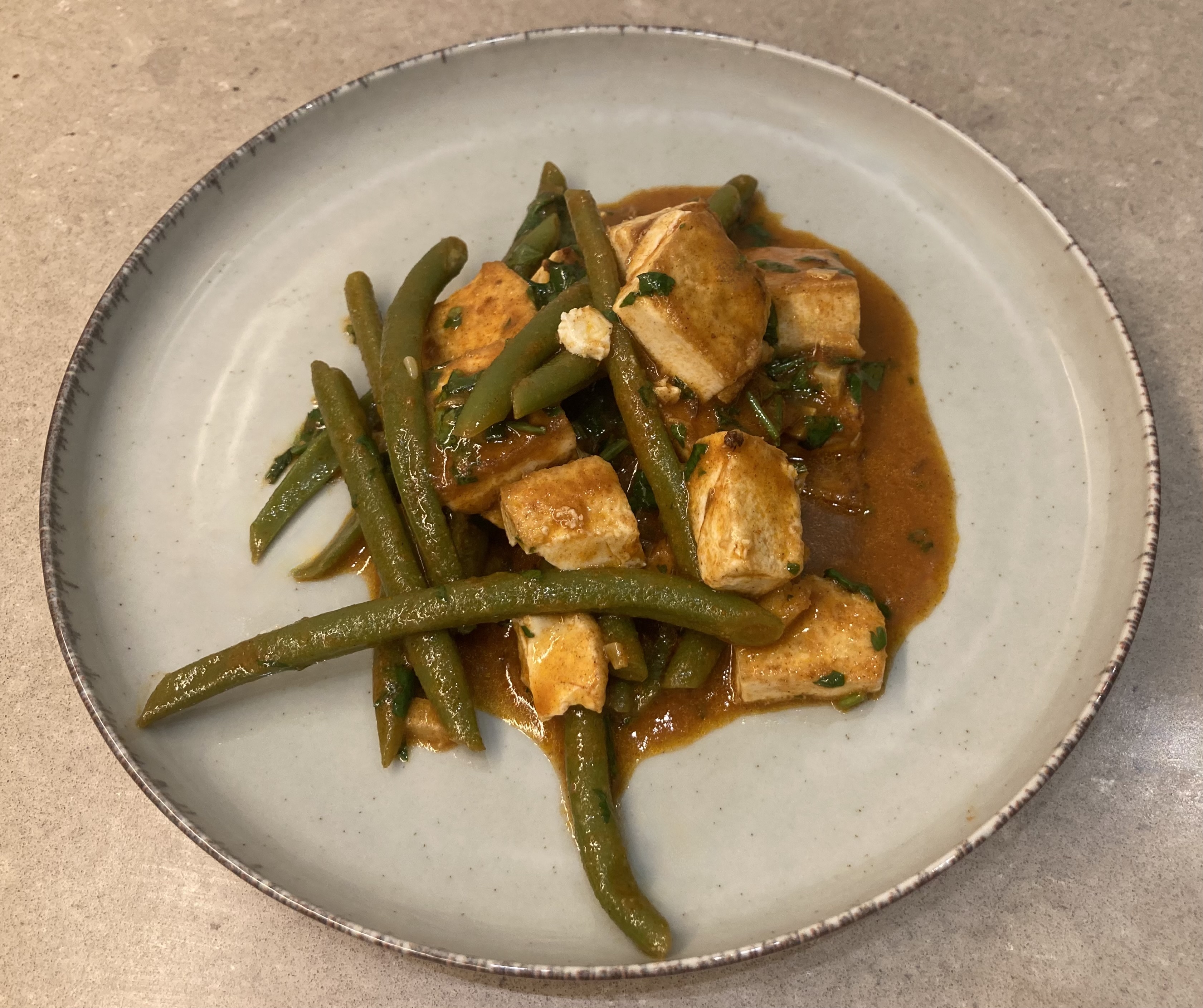
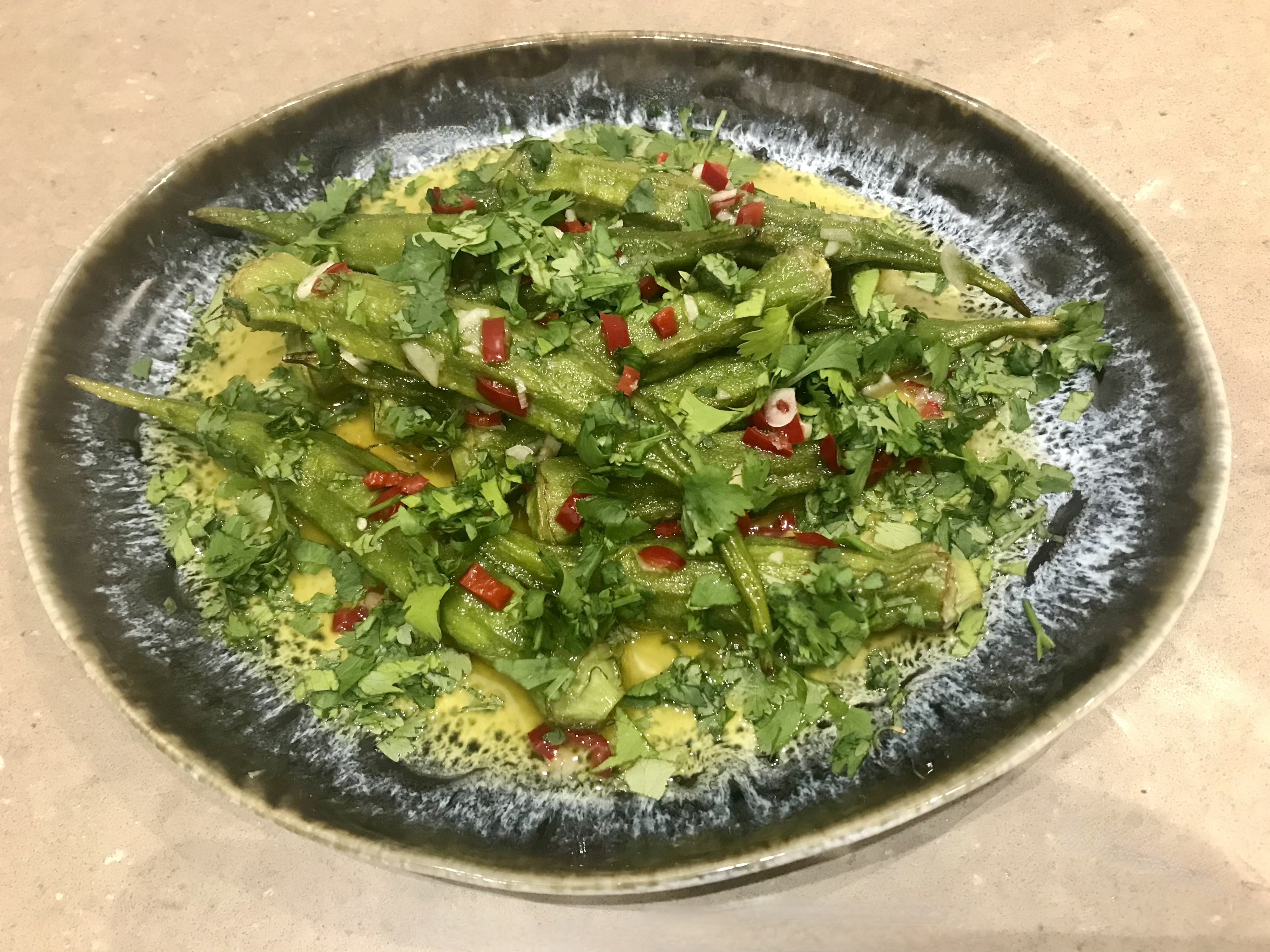
When Bernadette suggested to review SIMPLE, as part of her excellent series of cookbook reviews, we borrowed a copy and decided to make two recipes: Tofu and French beans with chraimeh sauce and Quick okra with sweet and sour dressing. The Tofu-dish is labelled with S, meaning it’s Short on Time. The Okra one is labelled with S and I, meaning it has 10 or less Ingredients and is Short on Time.

Tofu

The tofu dish is a combination of French beans, flour, tofu, sunflower oil, dill, black pepper, salt and coriander. The chraimeh sauce is made with garlic cloves, sweet paprika, caraway seeds, ground cumin, ground cinnamon, green chilli, sunflower oil, tomato paste, caster sugar and lime juice. The result is tasty and flavourful, although, honestly, we think it would be better to leave out the tofu. Then you would have a very nice side dish. The chraimeh sauce will probably combine very well with fish. The recipe for this dish was published in the Guardian.

Okra

We love okra, so we were keen to make the salad. It’s a combination of okra, olive oil, garlic cloves, red chilli, sweet chilli sauce, maple syrup, lime juice, sesame oil, coriander leaf and salted roasted peanuts. We didn’t add peanuts. The salad was very nice and balanced with lots of flavours. One to remember. This recipe was also published in the Guardian.

The Book

We enjoyed both dishes, but we haven’t bought SIMPLE for a number of practical reasons. For instance, the vast majority of the recipes requires you to preheat your oven to 180 °C or 200 °C. Not something you’d like to do on a regular basis if you cook for 2 persons as we do most days. Another practical point is the size of his books: they simply don’t fit in our bookcase. Fortunately he has published many recipes on his website and there are 60 videos available via his YouTube channel.

Should SIMPLE be on your shelf? Probably yes if you’re looking for very tasty dishes, clear instructions, inspirational combinations and beautiful pictures. But we could also imagine that you’re happy reading his weekly recipes in the Guardian! SIMPLE is available via your local bookstore or via the well known channels for 20 US$ or 26 Euro.

Dorade

The Gilt-Head (Sea) Bream, better known as Daurade, Dorade (Royale) or Orata is a popular fish in France, Greece, Italy, Spain and many other Mediterranean countries. Delicious when stuffed with herbs such as thyme, rosemary or marjoram, grilled and served with a slice of lemon. The firm, juicy meat is aromatic and a culinary treat.
Serving a whole fish can be a bit uncomfortable. You must remove the head, dissect the fish and look carefully for hidden bones. Serving a fillet makes enjoying fish much easier. The downside is that a fillet is less tasty and perhaps a touch dry. When you buy a fillet, make sure it’s fresh and enjoy it the same day.
We combine the Dorade with typical Mediterranean ingredients. A combination that is both light and tasty.

Wine Pairing

The dish is full of flavours, so we would suggest a glass of Spanish Verdejo or Italian Custoza. In general you’re looking for a full, fragrant dry white wine with a fruity aroma and a round, long, full and dry taste.

What You Need

  • 200 grams of Dorade Fillet
  • 2 ripe Tomatoes
  • 1 Garlic Clove
  • Capers (in brine)
  • Basil
  • Black Pepper
  • Olive Oil

What You Do

Remove the pits from the tomato and dice. Chop the garlic. Coarsely slice the capers. Add olive oil to the pan, heat the garlic for a few seconds, add tomatoes. Leave for a few minutes, add the capers. Taste and adjust. One minute before serving add half of the basil. Add black pepper.
In parallel fry the dorade until golden. Serve on a hot plate and add the remaining basil.
PS When you use salted capers, wash these thoroughly to remove the salt. You need lemon juice to get the right acidity.

Dorade ©cadwu
Dorade ©cadwu

Mushroom Caponata

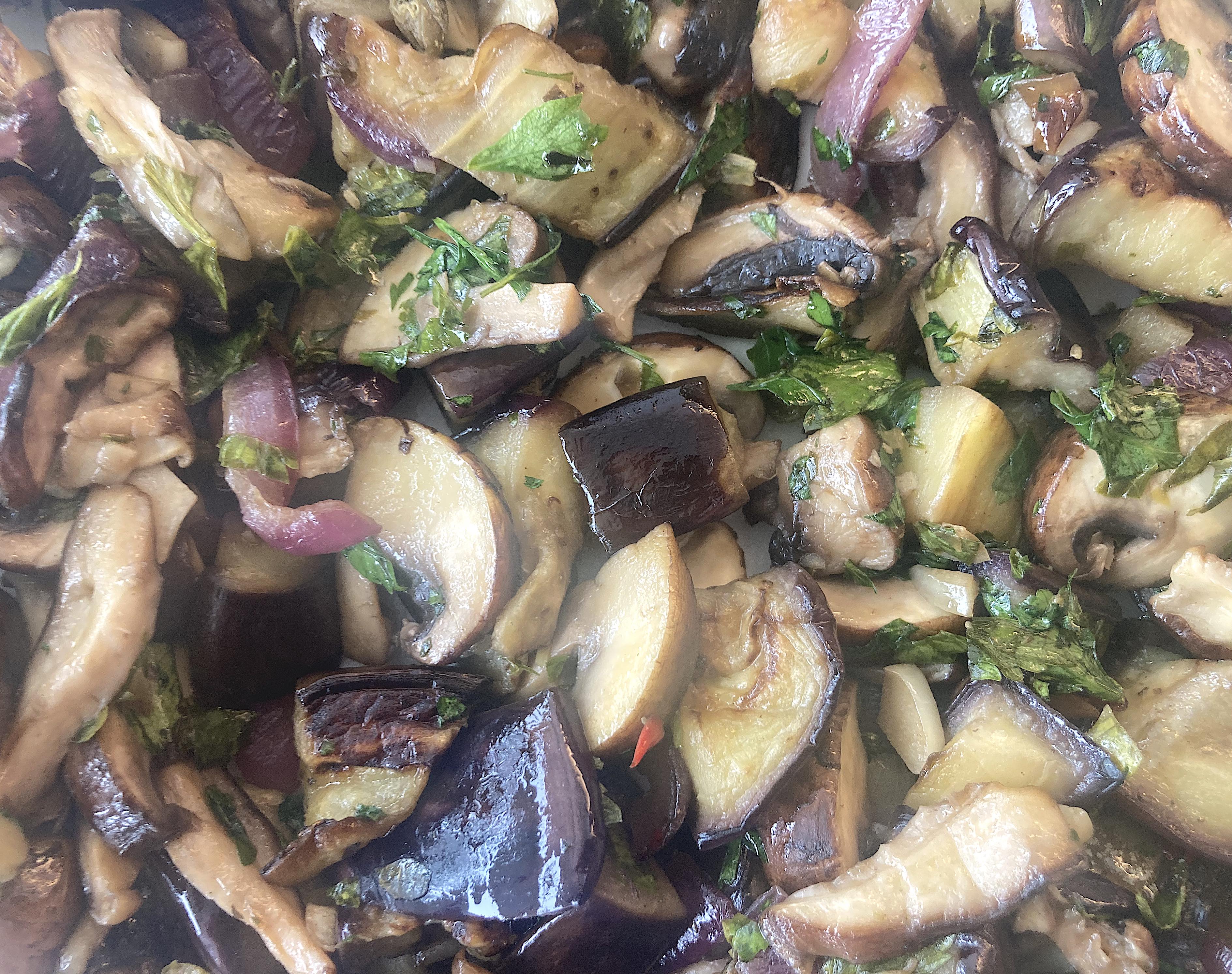
There must be hundreds of recipes for Caponata. The dish originates from Sicily and should contain (at least, we think so) eggplant (aubergine), celery and vinegar. Sugar is often added to enhance the sweetness and intensity. Nowadays it’s often a combination with tomatoes, shallot, capers, olives and perhaps raisins, pine nuts, oregano and basil.
The flavour of caponata should be slightly bitter (the eggplant) with a touch of sweetness (sugar, onion), acidity and saltiness (celery). The texture should be moist, but not sauce-like.
We love to enhance the flavours by adding mushrooms. And since we’re not keen on using sugar, we make sure the onions bring sufficient sweetness.

Enjoy your caponata as an appetizer, for instance with some crusted bread or bruschetta. A nice glass of white wine or rosé will be perfect with it. It’s also great as a side dish, with fish or even merguez.

Whatever the combination, caponata must be made one day ahead.

What You Need

  • 1 Aubergine
  • 200 grams of Mushrooms (preferably a mix with Shiitake)
  • 1 Red Onion
  • 1 Garlic Clove
  • 1 cm Red Chilli Pepper
  • Parsley
  • Celery
  • 2 tablespoons of White Wine Vinegar
  • Olive Oil
  • Fine Salt

What You Do

Wash the eggplant and slice. We slice the eggplant lengthwise in 8 and then we slice these strips. Salt them generously, transfer to a sieve and allow to drain for one or two hours. The more liquid they lose, the better! Rinse the eggplant with cold water and dry them with a kitchen cloth. Fry the aubergine in a heavy iron skillet until nicely golden brown. Set aside. Slice the red onion, clean and chop the mushrooms. Chop the garlic and the chilli pepper finely. Add some olive oil to the pan and fry the onion. Remove and set aside. Now fry the mushrooms. After 5 minutes or so add the garlic and the chilli pepper. After a few minutes add the mushrooms and the eggplant to the pan. Add chopped parsley and celery. Mix well. Add two spoons of white wine vinegar and leave on low heat for 10 minutes. Add black pepper to taste. Transfer to a plate and let cool. Keep in the refrigerator for the next day.

Chicken with Fresh Oregano

Thyme, Oregano, Basil, Rosemary, Saffron, Sage: all powerful Mediterranean herbs. Oregano, or Wild Marjoram, is an interesting one. Probably best known as the herbal ingredient of pizza. A dried herb, one to store in a jar, forget about and then use beyond its ‘use-by date’ and be disappointed.
Such a pity because fresh oregano is aromatic, slightly bitter, pungent and perhaps chemical, depending on the variety, of course. Great to combine with lamb, a tomato salad, grilled fish and of course chicken. It’s also great to flavour olive oil with oregano. So ask your supermarket or local greengrocer for fresh oregano!

Wine Pairing

We enjoyed our chicken and oregano with a glass of Rioja Paternina Reserva 2015 produced by Marques de la Concordia. Reserva means that the wine ages for a minimum of 3 years, with at least 1 year in oak barrels. The grapes are tempranillo, mazuelo and garnacha; very typical for Rioja. It’s a powerful, full-bodied red wine with aromas of black cherries and touch of vanilla and various spices. The wine goes very well with the velvety chicken and the very present flavours of the oregano.

What You Need

  • Chicken Thighs
  • Olive Oil
  • Black Pepper
  • Chicken Stock
  • Lots of Fresh Oregano

What You Do

Halve the thighs, heat a heavy iron skillet, add olive oil and quickly fry the meat on all sides. Reduce the heat and add two third of the chopped oregano. Keep on low to medium heat for 10 minutes or so. Add some chicken stock, just to deglaze the pan. You will notice that the juices becomes green thanks to the oregano, so please coat the meat with the cooking liquid. Just before serving add the remaining oregano, some freshly ground black pepper and mix.
Serve with green beans, cooked in water with fresh garlic, wrapped in pancetta (after having grated some nutmeg over the beans) and then fried for 5 minutes in some olive oil.

  • Chicken with Fresh Oregano ©cadwu
  • Federico Paternina Rioja Reserva 2015 ©cadwu
  • Fresh Oregano ©cadwu


Pasta with Sage

We love using wonderful Mediterranean herbs such as basil, thyme, sage, marjoram, rosemary, oregano, saffron and tarragon. So we couldn’t resist buying a large bunch of sage and cooking this very tasteful, simple and uplifting starter. Sage has been around for many, many years and is an essential ingredient in many countries, both for medicinal and culinary purposes. Its taste is somewhat soapy, with a touch of acidity, a little bitterness, subtle eucalyptus and slightly peppery. Did we mention unique?
Preferably use fresh, thin pasta or Japanese udon, lots of butter and your best olive oil when preparing this dish.

Wine Pairing

We enjoyed our pasta with a glass of Bianco di Custoza 2020, made by Monte del Frà from Italy. It is a well-balanced, dry white wine, with a fruity nose. Its colour is straw yellow, with pale green highlights. In general you’re looking for a light, aromatic dry white wine.

What You Need

  • Pasta
  • Butter
  • Bunch of Sage
  • Olive Oil
  • Parmesan Cheese
  • Black Pepper

What You Do

Melt the butter in a large pan, devein and chop the leaves, add the sage to the butter, stir. The butter should embrace the flavours and aromas of the sage. When the mixture is nearly ready (this will take only a few minutes) cook the pasta. Grate some fresh Parmesan cheese. Keep a glass of the cooking liquid of the pasta, drain the paste, add it to the pan, mix, add some olive oil, mix, add a spoonful or two of the cooking liquid and make sure the pasta is fully coated with sage, butter and oil. Perhaps some black pepper. Garnish with Parmesan Cheese and serve on a warm plate.

Mussels with Anise

A Recipe from Corsica

Mussels with Anise is light, tasty and refreshing; it is an excellent lunch, especially when overlooking the Mediterranean (as we did when we were in Corsica), but it’s also an excellent starter. Use crushed anise seeds for the sauce. Don’t use star anise, it has a much sweeter taste; something we don’t recommend for this sauce.
It’s possible (and recommended especially when you have guests) to cook the mussels the day before. It’s a matter of cooking until just ready and quickly removing them from the shell. Allow to cool and store in the refrigerator. The next day you simply add them to your sauce and warm the mussels.

Wine Pairing

We enjoyed our mussels with a glass of Picpoul de Pinet. Let’s explain the name: the grape is called Picpoul Blanc. And the vineyards belong to a village called Pinet; close to the Etang de Thau in the south of France between Narbonne and Montpellier. The terroir (think calcareous soil, clay, quartz) is influenced by the sea, which is reflected in the mineral taste of the wine. The story is that Picpoul could be read as pique poul which translates into something like ‘stings the lip’; a nice reflection of the high acidity of the grapes. This acidity guarantees a refreshing white wine, which is exceptional given the warm climate. The wine is bright yellow with a very subtle touch of green. It’s aromatic, floral and fruity. The taste has notes of citrus and hopefully some bitterness, which will make it into a really interesting wine. To be combined with oysters, mussels, fruit de mer, skate and fish in general.
We enjoyed our mussels with a glass of very nice Picpoul de Pinet AOP les Flamants.

What You Need

  • 1 kilo of Mussels (we prefer small ones)
  • Olive Oil
  • 1 Shallot
  • 1 Garlic Glove
  • Bouquet Garni (Parsley, Chives, Thyme)
  • White Whine for the Mussels
  • Fish Stock
  • White Wine for the sauce
  • Butter
  • Mustard
  • Cream

What You Do

Before you start, please read the basics about mussels.

Warm a fairly big pan and gently glaze the sliced onion in oil. Then add the chopped garlic and gently cook the garlic and the onion for another 5 minutes. Add a glass of white wine and the bouquet garni and cook on low heat for 10 minutes, allowing the tastes to integrate.

In parallel warm the fish stock and some white wine with the crushed anise seeds in a second pan. Add some mustard (to get a thicker sauce), butter and cream. gently warm the sauce on low heat for 5 minutes.

Turn the bigger pan to maximum heat and when really hot add the mussels and close the pan with the lid. Listen and observe: you will be able to hear when content of the pan is becoming hot again. You will see steam, more steam. Check the mussels, close the lid, listen and observe. Taste the sauce, maybe add a bit of the cooking liquid. Remove the mussels from the pan with a slotted spoon and quickly remove the mussels from their shells and transfer them to the sauce. Make sure the mussels are nicely coated with the sauce.

We prefer our anise seed mussels with crusted bread.


Tellines with Parsley

This Week’s Special

Many, far too many years ago we were walking along the Mediterranean coast, enjoying the sea, the sun and the company of a dear friend. She asked us if we would like to eat tellines for dinner. Of course, we replied, but what are tellines? She smiled and said I’ll show you. She walked to the sea and kneeled down, just where the sand and the sea meet. All you needed to do was move your fingers through the sand, just under the surface and feel. She harvested a few tellines, opened them with her fingers, washed them in the sea and that’s how we enjoyed our very first tellines, fresh from the sea. So simple, to tasty, so good.
We harvested many more and went back to her house where we cooked the tellines in a hot skillet and enjoyed them with a beautiful local ro­sé.

Harvesting tellines (or in France tenilles) is simple; knowing where you can do this is the challenge. Fortunately you can (occasionally) find them on the market.

It’s possible to use other small clams, but the fun of tellines is that they open quickly when in the pan, making sure they remain juicy.

Here is what you need:

  • 300 grams of tellines
  • one Shallot
  • one Garlic glove
  • Olive Oil
  • Parsley
  • White Wine
  • Black Pepper

Wash the tellines, preferably using salted water. Discard ones with a small hole and ones that are broken. Chop the shallot (you probably need half of it) and the garlic very fine. Heat the skillet, add the oil, the shallot, the garlic and the tellines and cook until the tellines are open. You probably want to add a splash of white wine during the cooking process. Serve the tellines on a warm plate with black pepper. Sprinkle with chopped parsley. Enjoy with a glass of Cô­tes de Pro­ven­ce ro­sé, for instance an Estandon from the Var region. No cutlery needed!