Mushroom Cream Sauce from 1790

This recipe for a rich and tasty sauce is included in Het Receptenboek van mevrouw Marselis (the recipe book of Mrs. Marselis), published in the Netherlands in 1790. The combination of mushrooms, cream and nutmeg works remarkably well. One to prepare more often!

Mrs. Marselis doesn’t mention what the sauce is supposed to accompany. In this case we decided to combine it with pasta, making it a nice vegetarian dish, but we could also imagine combining it with veal or chicken. 

Wine Pairing

We suggest drinking an excellent rosé with the sauce, one with flavour, fruit, depth and refreshing acidity. For instance Monte del Frà Bardolino Chiaretto. This is a very affordable, tasty rosé with just the right balance between serious flavours, freshness and fruitiness.

What You Need

  • Mushrooms
  • Nutmeg
  • Flour
  • Chicken Stock
  • Cream
  • One egg
  • Butter
  • Lemon
  • Spaghetti

What You Do

We used yellow chanterelles, but you could also use Champignons de Paris. Clean and chop the mushrooms (we didn’t peel them, sorry Mrs. Marselis) and glaze them in butter. When glazed, sprinkle some flour over the mushrooms and stir. After a few minutes, slowly start adding chicken stock to make the beginning of a sauce. Add cream to the pan and some freshly grated nutmeg. Leave on low heat for at least 10 minutes. Beat one egg yolk. Slowly add the mixture from the pan to the egg yolk (marrying the sauce). Then add the egg yolk and cream mixture back to the pan. Warm carefully, otherwise it will split, or you just cooked an omelette. Taste and add a drop of lemon to make the sauce a touch fresher and lighter. No need for pepper or parsley.

We served the sauce with spaghetti and used the cooking liquid to give the sauce the right consistency.

Cooking Soup

We simply love soup! A traditional soup like Londonderry or Queen’s Soup, a rich Tomato Soup, Clam Chowder, perhaps a more challenging soup like Lettuce Soup or a refreshing Ajo Blanco.
If you would look at our shelfs with cookbooks you would expect books like The Ultimate SoupbookThe Essential Soupbook or Soup of the Day. No doubt these are excellent books with great recipes, but we have only one book specific on soup: Cooking Soups for Dummies by Jenna Holst.

Why? Well, to be honest, it is one of these few cookbooks that is truly about ingredients, methods and recipes, with the aim to cook a tasty soup.
Most cookbooks are a collection of recipes. Not this one. The first chapter of the book is about tools and utensils, basically explaining what equipment you need to make a soup. The second chapter is about the ingredients (spices, herbs, basic items) you need and where and how you should store them. Fun to read, good to know, especially because it’s very well written, comprehensive and clear. The third and fourth chapter are about basic techniques, and the fifth chapter explains how to make a broth (chicken, beef, vegetarian, fish, clam). Chapter six is about storing soup (again well written and very helpful) and then we move towards making fresh soup from the garden (Tomato Soup, Sweet Potato Bisque etcetera).

You could skip the background information and only look at the index of recipes. You’ll find lots of interesting recipes, ranging from Mulligatawny Soup to Cantaloupe-Orange Soup, but also less exotic ones like Creamy Potato Leek Soup and Split Pea Soup.

We bought the book many years ago and have always found it helpful and inspiring. What better way to start dinner, or lunch, than with soup? Let’s buy some fresh beets and cook Herbed Beet Soup. Yummy!

Cooking Soups for Dummies is available via your local bookstore or via the well-known channels for approximately US$ 30,00 or € 20,00. You’ll find specific recipes on Dummies.

Fish Cakes

They are so tempting! The crunchy crust, the flaky texture and the flavour, especially when combined with mayonnaise and lemon. When we see them at the supermarket or at the fishmonger, we can’t always resist buying them. But we should resist the temptation because most fish cakes should be called salty potato cakes. Hardly any fish, limited herbs, the structure of mashed potato and lots of salt to disguise the lack of real flavour.

It’s not a lot of work to prepare your own fish cakes, so be brave and ignore the factory-made ones. The recipe is very flexible, you could make a Thai version (Tod Mun Pla) with lemon grass, red curry, onions and garlic, a traditional version with stockfish, or cakes with salmon, with shrimps etcetera. To be served with Tartar sauce, sweet chili sauce, dill sauce or perhaps hoisin. We prefer Jean Beddington‘s fish cakes (served with a beetroot chutney) or a more traditional version that focuses on the fish, with herbs and black pepper in a supporting role, breaded with our home-made breadcrumbs.

Wine Pairing

Let’s be flexible, a nice glass of beer or a not too complex white wine, it’s all fine. The salad, its dressing and the lemon will be rather present. Perhaps a Verdejo, Pinot Blanc or a Picpoul de Pinet?

What You Need

  • For the Cakes
    • 225 grams of Haddock
    • 100 grams of Potato
    • 1 egg yolk
    • Parsley
    • Chives
    • Black Pepper
    • Butter
  • 1 Egg
  • Breadcrumbs
  • Olive Oil and Butter
  • Salad with a dressing made of Olive Oil and White Wine Vinegar
  • Mayonnaise
  • Lemon

What You Do

It’s best to make the mixture one day ahead. This allows for the flavours to integrate.
Gently fry the haddock in butter. You’re looking for a light golden color, just to give it some extra flavour. When nearly done, transfer to a plate and let cool. Cook the potato until soft. Let cool. Use a fish knive to make fish flakes. Use a fork to mash the potato. Chop lots of parsley and chives. Combine fish (and its juices), potato, egg yolk, herbs and a generous amount of black pepper. Let cool and store in the refrigerator until the next day.
Beat the egg, add a few drops of lemon to the mayonnaise and heat a heavy iron skillet or a non-stick pan. Make 4 fish cakes. Coat them with egg, then cover with breadcrumbs and fry in butter and/or olive oil on all sides. In total 6-10 minutes. Serve with a salad, mayonnaise and a wedge of lemon.

PS

Making your own breadcrumbs is simple and worthwhile. The breadcrumbs at the supermarket are made of cardboard; yet another product you shouldn’t buy. Toast slices of old bread and let cool. Cut in smaller bits and then use a cutter or blender to make the crumbs. Done. They keep very well in the freezer.

Artichoke à la Barigoule

It’s the time of year to enjoy artichokes: steamed, as a salad, in a pie or perhaps à la Barigoule. This is a rather intriguing recipe from the French Provence region. There are lots of variations, so we looked in books like La Cuisinière Provençale and La Cuisine Niçoise d’Hélène Barale to find the ‘original’ recipe.

Obviously you want to know what ‘barigoule’ means. According to Hélène Barale ‘barigoule’ means thyme, which is odd because she doesn’t add thyme to her Artichoke à la Barigoule. Is it perhaps derived from the Latin word mauruculai (meaning morel according to some and saffron milk cap to others) as the Larousse suggests? But what is the link between artichokes and mushrooms?

Three Versions

We found three different ways of preparing Artichoke à la Barigoule: cooked with onions, white wine and carrot, stuffed and preserved with lots of citrus. The stuffed one is probably the original version because the artichoke is stuffed with a mixture of mushrooms, thyme and garlic. Which makes the Larousse explanation more likely.

Preparing Artichokes a la Barigoule is quite a bit of work and the result, we must admit, looks like an old fashioned underbaked meatball. We could imagine you serve the artichoke halfway the recipe. If you do, best is to use smaller artichokes.

Wine Pairing

It’s not straightforward to pair artichokes with wine. According to various researchers this is due to cynarin, a chemical especially found in the leaves of the artichoke. When the wine and the cynarin meet in your mouth, the natural sweetness of the wine is enhanced, making it taste too sweet. So you have to pair artichokes with a bone-dry, crisp, unoaked white wine with clear, present acidity. For instance Sauvignon Blanc, Grüner Veltliner or Albariño. 

What You Need

  • Artichokes
  • Cooking liquid
    • Shallot
    • Carrot
    • Olive oil
    • White wine
    • Water
    • Thyme
  • Filling
    • Mushrooms
    • Egg yolk
    • Garlic
    • Shallot
    • 2 Strips of Bacon
    • Thyme
    • Black Pepper
  • Excellent Olive Oil

What You do

Remove outer leaves and stem of the artichokes. Add oil to a large pan, gently fry the chopped shallot and the chopped carrot. After 10 minutes or so add white wine, thyme and some water. Leave to simmer for 10 minutes. Add the artichokes to the liquid, close the pan and allow to cook and steam on low heat for 45-60 minutes or until nearly done. You could decide to stop here and serve the artichoke with the (reduced) sauce.
Let the artichokes cool, remove the leaves and the centre choke (the hairy part).  Use a spoon to remove the ‘meat’ from the leaves (bracts) of the artichokes. Set aside. In a small skillet heat some oil, add chopped shallot, glaze, add sliced bacon, mushrooms, garlic and thyme. Leave for 10 minutes until done. Add the artichoke meat from the leaves, stir, add the egg yolk and mix. Add freshly grounded black pepper. Use a food processor to make the mixture smoother, but not too smooth. Fill the artichokes with the mixture. It should look like an oversized golf ball on top of the bottom of the artichoke. You will probably have too much filling, which is fine. Gently transfer the artichokes to the pan with cooking liquid and allow to steam and warm for 30 minutes. Now transfer the artichokes to a warm oven (60 ˚C or 140 ˚F).  Add the reaming mixture to the liquid, use a powerful blender to create a sauce. Pass through a sieve and blender some more. Set the blender to low speed and add excellent olive oil. Taste and adjust. Serve the filled artichokes on a small plate with the sauce.

Pasta with Mushrooms and Bell Pepper

Udon is such a wonderful noodle. What better comfort food than a warm soup made with dashi, vegetables, tofu, udon and thinly sliced spring onions? Perhaps some tempura on top of the soup? Or would you prefer a very simple dish, called Mori Udon? The cold udon is served with a sauce of mirin, dashi and soy sauce on the side.
Udon is also a great alternative to Italian pasta, for instance with Caesar’s Mushrooms.

In this recipe we combine udon with roasted bell pepper and Trompettes de la Mort. We’re not sure why, but this combination works really well. Is it because of the smokey aroma of the roasted bell pepper mixed with the aromas of the mushroom? The crispy pancetta in combination with the soft textures of the other ingredients, including the udon? The overall richness and umami thanks to the Trompettes de la Mort?

Wine Pairing

We enjoyed our pasta with a glass of Bianco di Custoza, made by Monte del Frà from Italy. It is a well-balanced, dry white wine, with a fruity nose. Its colour is straw yellow, with pale green highlights. A glass of Soave, made from the Garganega grape, will also be an excellent choice. In general you’re looking for a fresh, aromatic dry white wine. 

What You Need

  • 1 Red Bell Pepper
  • 1 Bunch of Udon
  • 100 grams of Trompettes de la Mort
  • 1 Glove of cooked Garlic
  • 4 slices of Pancetta
  • Black pepper
  • Olive Oil

What You Do

Clean the bell pepper and cut in 4. Transfer to the oven and grill or roast for 10 minutes or until well charred. When still hot, put the bell pepper in a plastic container and close it. After one hour it’s easy to remove the skin of the bell pepper. Slice lengthwise to make nice strips. Set aside.
Slice the mushrooms in two and clean them with a soft brush. Check carefully for grit and other things you don’t like to eat.
Fill a large pan with water (no salt!) and bring to a boil. Add the udon and cook it according to the instruction. When nearly done, add some cooking liquid to a cup and set aside. Drain the udon.
In parallel heat a large heavy iron skillet, add olive oil and fry the mushrooms. Once they become a bit dryer, add the sliced bell pepper. Add the cooked garlic, crush it with a fork and mix. Now add the udon and continue mixing. Add cooking liquid until the pasta is sufficiently moist.
Also in parallel: grill the strips of pancetta (perhaps 5 minutes).
Add some black pepper to the pasta and serve with the grilled pancetta.

Pasta with Mushrooms and Bell Pepper ©cadwu

Classic White Asparagus

One of the classic ways of serving white asparagus is with melted butter, boiled eggs, ham and parsley. Preparing the asparagus this way, will allow you to taste the slight bitterness and sweetness of the asparagus. The butter and egg bring a velvety feeling to your palate, and the parsley and white pepper give a touch of sharpness to the dish. A great way to celebrate spring!

We use our Russel and Hobbs food steamer to prepare this classic dish. An essential kitchen aid for only 50 euro or US dollar. In this case the steamer cooks the asparagus, boils the eggs and heats the butter. Amazing!

A few years ago we enjoyed white asparagus with béarnaise and a small veal schnitzel accompanied by a glass of Silvaner at Café Heider in Potsdam, Germany. When we ordered we were asked how we would like our asparagus. Al dente, of course! If you like them more cooked, then steam them for an extra 5 minutes. 

Wine Pairing

Preferably serve the white asparagus with a dry Muscat from the Elzas. The delicate, slightly sweet but dry taste, the hint of bitterness and the rich aromas work very well with the asparagus. Muscat to us means the smell of fresh fruit. When drinking it is if you’re tasting the original grape. Wonderful wine and wonderful combination.
Or a glass of Silvaner of course. Just make sure the white wine has a touch of sweetness and is aromatic.

What You Need

  • 3 or 5 white asparagus per person
  • 2 Eggs
  • 100 grams Organic Cooked Ham
  • Parsley
  • Butter
  • White Pepper

What You Do

Clean and peel the asparagus. Steam them for 10+5+5 minutes. After 10 minutes add the eggs to the steamer basket. After 5 minutes, turn the eggs upside down and add a cup with cold butter. Another 5 minutes later everything is ready. The eggs will be medium: the yolk is not set but also not running. Peel the egg and cut in four. Chop the parsley. Serve the asparagus and eggs on a plate. Pour the warm butter over the asparagus. Dress the plate with ham (please make sure it has a bit of fat), perhaps some extra butter and sprinkle the parsley over the plate. Add some white pepper. 

Classic white Asparagus ©cadwu

Oden

A traditional Japanese dish, often enjoyed in winter. It is tasty, light and full of surprises. Oden is a meal that requires a bit more work (and of course time) then you would expect. It also requires some shopping, given some of the ingredients are not easy to find. We enjoyed our first Oden at the Taishunken restaurant in the famous Sankeien Garden in Yokohama. Loved it!
We are not from Japan so we humbly present our version of this classic. We hope it inspires you to cook Oden and enjoy it as much as we did.

Pairing

A cup of Japanese green tea is the obvious choice.
You could also combine your oden with a glass of Chardonnay (with a touch of oak perhaps), for instance if you serve it for dinner. Oden is rich in flavours, umami of course, but not spicy, so we would not suggest a Gewürztraminer or a Sauvignon Blanc.
A glass of cold, dry sake will also be great.

What You Need

  • For the Dashi
    • 1 litre of Water
    • 20 grams of Dashi Kombu (Rishiri Kombu)
    • 20 grams of Katsuobushi (Bonito Flakes)
  • For the Stew
    • One Daikon
    • One Pack of Konnyaku
    • 1 sheet of Hayani Kombu
    • Chikuwa Fish Cakes
    • One Pack of Gobo Maki Burdockroot Fish Cakes
    • 2 boiled eggs
    • Abura Age Fried Tofu
    • Mochi (Sticky Rice Cake)
    • Soy Sauce (preferably one with less salt)
    • Mirin
  • Karashi
  • Rice with ginger

What You Do

First step is to peel the daikon and slice it (2 centimeters is best). Now use a sharp knife to plane of the edge of the daikon. This improves the presentation, and it is supposed to stop the daikon from falling apart. Cook the daikon for one hour in water. Drain and set aside.
In parallel: cut the konnyaku in triangles and cook these in water for 15 minutes. Konnyaku is made from the konjac plant and is specific for the Japanese cuisine.
Also in parallel: cook the sheet of Hayani Kombu for 5 minutes. This is young kombu and edible, different for the one you use when preparing dashi. Let cool a bit, slice and knot ribbons. Not sure why but is looks great when you serve it. (Yes, well spotted, it’s not in the picture; unfortunately, we couldn’t find Hayani when we prepared our oden.)
Make 1 litre of dashi. This seems simple but requires precision. Clean the kombu with a wet cloth and put into one litre of cold water. Gently raise the temperature to 80 °C or 175 °F. Remove and discard the kombu. Bring the liquid to a boil, add the katsuobushi, bring to a boil and immediately set heat to zero. Wait 5 minutes or so. The katsuobushi will sink to the bottom of the pan. Now very gently pass the liquid through a wet towel or a sieve. Do not squeeze, just give it time. The result will be a great, clean dashi.

Now it’s time to add the dashi to the pan (should be a clay pot, but we stick to our Le Creuset), add one tablespoon of mirin, one (or two, depending on your taste) of light soy sauce, add the daikon, the konnyaku, the chikuwa fish cakes and the gobo maki burdockroot fish cakes.
Allow to simmer for at least 2 hours. 30 minutes before serving add boiled eggs, two Hayani ribbons, fried tofu and mochi. The last two ingredients must be combined by putting the mochi into the tofu.
Serve with karashi (Japanese mustard, which is different from wasabi by the way) on the side.

  • Oden ©cadwu
  • Oden with names of Ingredients ©cadwu

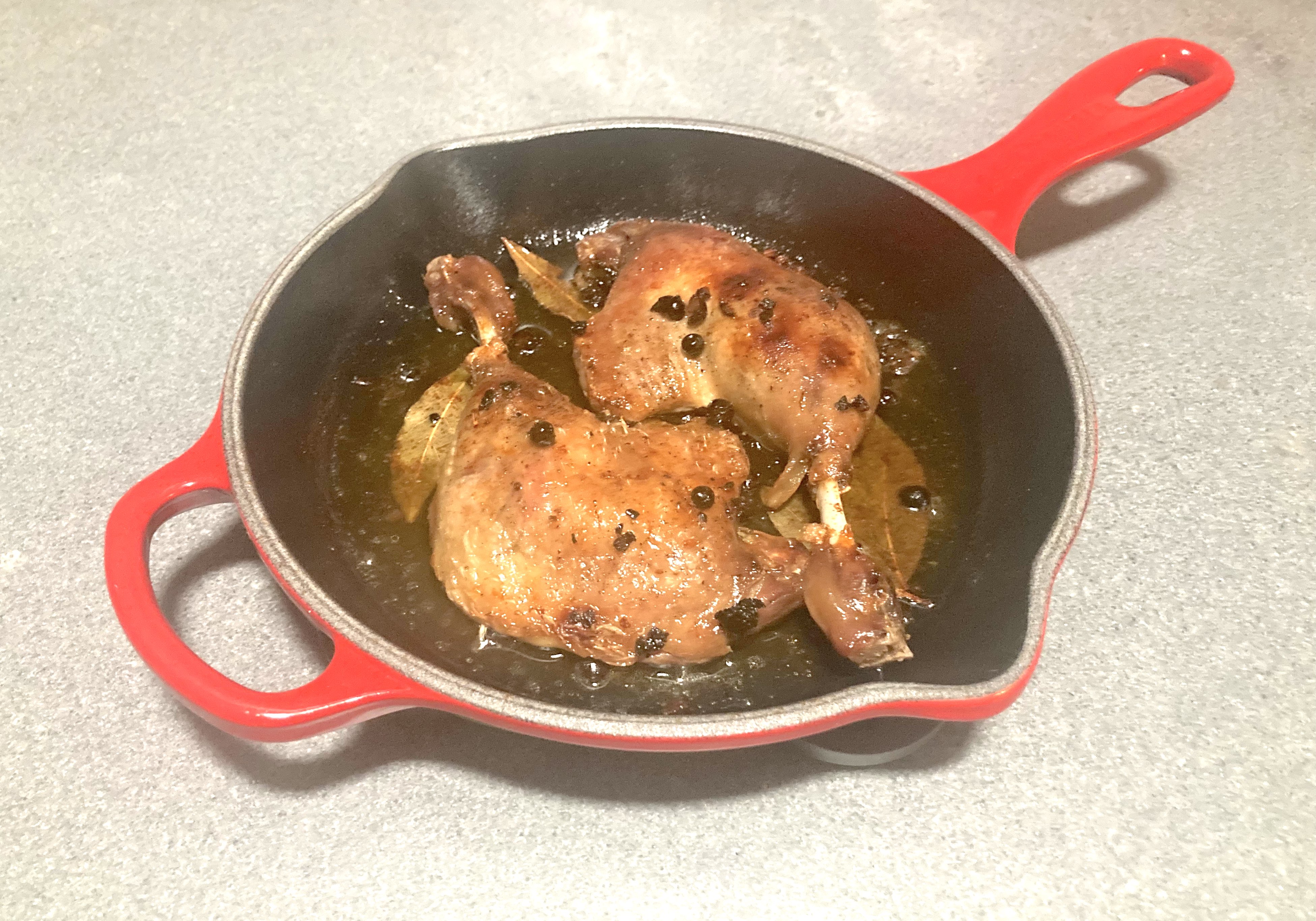
Confit of Duck: a home made alternative

The traditional way of making Confit of Duck is not complex. It’s a bit time consuming and it requires some planning, that’s all. The principle is to cure the meat in salt with various herbs (thyme, cumin, rosemary) and garlic. After 24 hours or so the duck is washed with water, patted dry and then slow cooked in goose or duck fat for several hours. When ready cool and store in fat.

We take a different approach by slow cooking the duck legs in olive oil. The result is remarkable: juicy, full of flavours and aromas, provided you use first class duck (label rouge for instance). If not, the meat can become dry and tough. Another benefit: we don’t cure the meat so it’s not salty at all.
We serve the confit with celeriac mash. It’s light, nutty and refreshing compared to a mash made with potatoes.

Wine Pairing

Best choice is a full bodied, red wine with ripe fruit and smoothness. We decided to open a bottle of Herdade de São Miguel Colheita Seleccionada 2020 as produced by Casa Relvas. Such a pleasure! Its colour is deep ruby and the aromas made us think of ripe black fruit and dark cherries with some spiciness. The wine is well balanced with a nice structure and smooth tannins. Works very well with the juicy duck and the mash with its creamy texture and lemonish, celery flavours.

What You Need

  • For the Confit
    • 2 Duck Legs
    • Juniper berries
    • 4 Bay Leaves
    • Olive Oil
    • (optional) Garlic
  • For the Celeriac Mash
    • 1 Celeriac
    • Slice of Lemon
    • Cream
    • White Pepper
    • Nutmeg

Confit

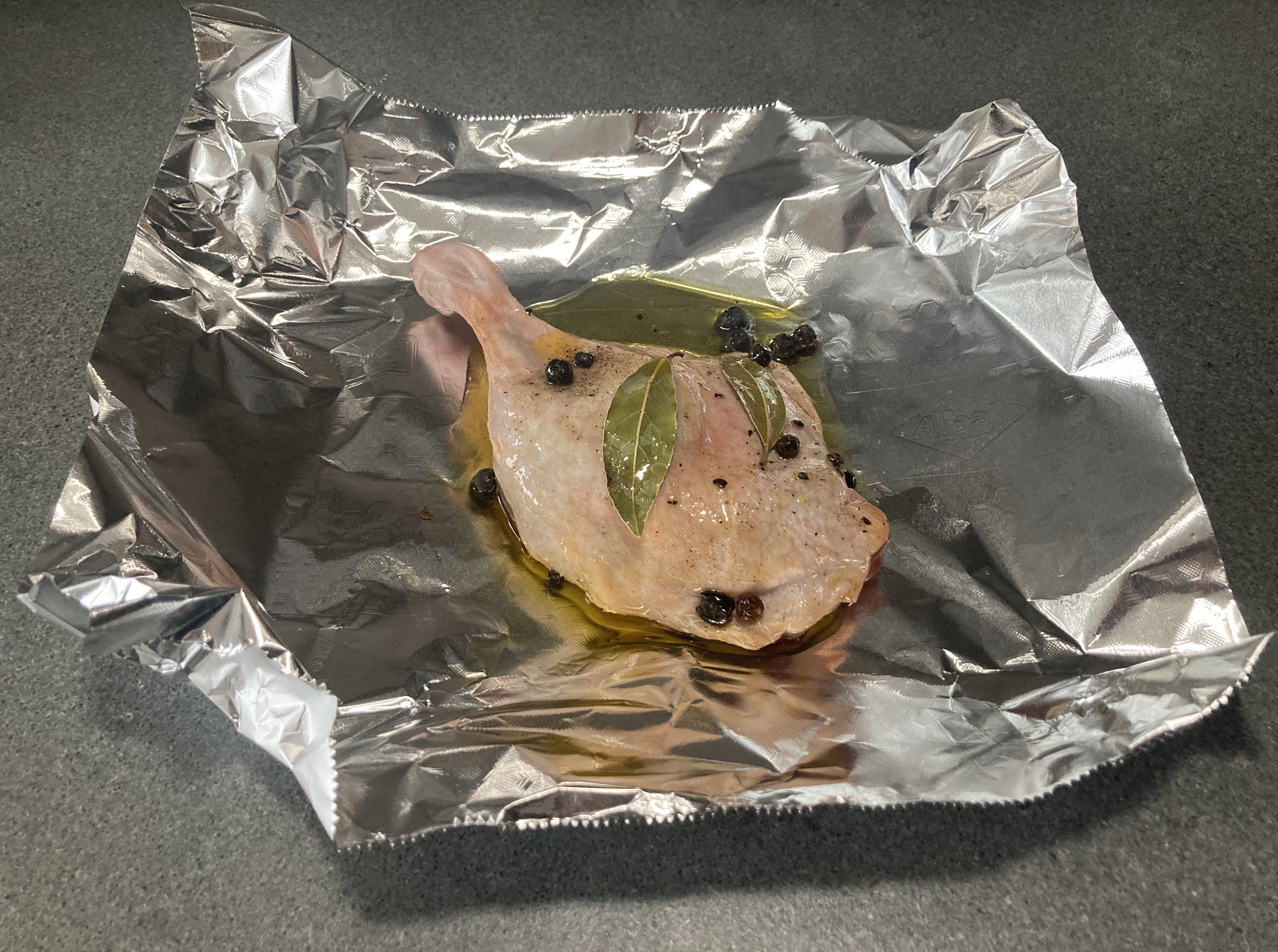
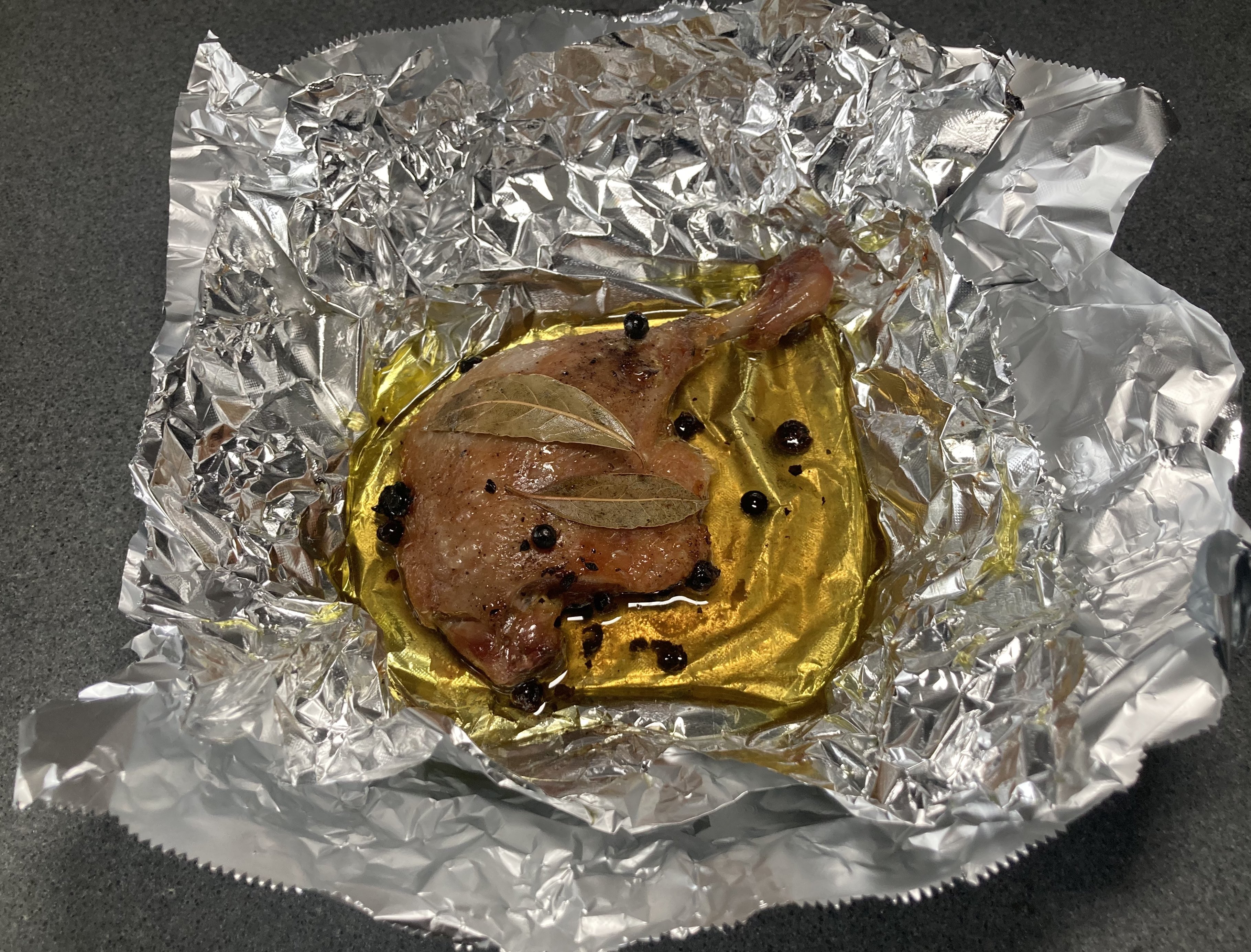
Take a sheet of aluminium foil and place the leg in the middle. Add lightly crushed juniper berries and two bay leaves. Perhaps some crushed garlic. Add a generous amount of olive oil and make sure everything is covered. Wrap foil around the duck. Take a second sheet of foil and wrap it around the package, making sure it’s closed. Repeat with the second leg. Transfer both packages to an oven at 120 °C or 240 °F. After one hour reduce the heat to 100 °C or 210 °F. After in total 4 to 5 hours, depending on the size of the legs, remove the legs from the oven, open the package and let cool. Then transfer to the refrigerator for use later on.

Heat the oven to 200 °C or 390 °F. Put the legs in an iron skillet, transfer to the oven and 15-20 minutes later the legs are ready. If the skin is not yet crispy, use the grill for 2 or 3 minutes.
Another idea is to pull the meat and use it to top a salad.

Mash

The Celeriac Mash: clean and dice the celeriac. Cook in minimum water with a nice slice of lemon until nearly done. Remove the lemon and drain. Add cream. Put on low heat for a few minutes; the celeriac should absorb the cream. When the celeriac is done, use a blender to create the puree. Pass through a sieve. Perhaps add extra lemon or cream. Just before serving add white pepper. Serve with freshly grated nutmeg.

Eggs Poached in Tomato Sauce

Poaching eggs in water requires a bit of technique or a nice tool. Poaching eggs in tomato sauce is slightly different: you want to keep the white close to the yolk, but it should not envelope it: the yolk must remain visible.

The combination of tomato sauce and egg seems to be a bit odd, but the rich, runny egg in combination with the slightly acidic, aromatic tomato sauce is really nice. Great suggestion for lunch or a hearty breakfast. Feel free to create your own version of this dish, for instance by adding some parsley or cheese. Serve with crusted bread.

In most cases the result is shown in a pan. For good reasons: it does not look very attractive when served on a plate. The fun is definitely in the flavours and aromas.

What You Need

What You Do

Warm the tomato sauce and reduce. Increase the heat until the sauce is nearly boiling, gently add the eggs (as you would do when poaching eggs in water) and reduce heat. Using a small spoon make sure the white remains close to the yolk, without covering it. Wait until the white is set. Perhaps add some freshly grounded black pepper.

Eggs Poached in Tomato Sauce ©cadwu

Mushroom Soup with Pancetta and Thyme

This morning when we looked outside, we saw a grey, foggy city. Knowing it would take hours for the fog to clear, we started thinking about something warm for lunch. Perhaps some soup with crusty bread? We opened our refrigerator. Various mushrooms, thyme, rosemary, cream, a carrot, some left over stock. Yes! We knew what we wanted to cook for lunch: Mushroom Soup with Pancetta. A hearty, rich soup, ideal for a cold, grey day. The combination of mushrooms, pancetta and cream works very well; the celery and leek add complexity and the thyme brings character.

Wine Pairing

It was much later that afternoon before the fog left the city, but since we also had some left over Chardonnay in the fridge, which we enjoyed with our soup, we didn’t mind that much.

What You Need

  • Pancetta
  • Shallot
  • Mushrooms (Best is a Mix of Champignons, Shiitake etcetera)
  • Celery
  • Leek
  • Carrot
  • Garlic
  • Stock (Chicken or Vegetable)
  • Bouquet Garni (Thyme, Rosemary and Bay Leaf)
  • Black pepper
  • Cream
  • Fresh Thyme
  • Olive Oil

What You Do

Keep two strips of pancetta apart (to be grilled just before serving). You probably need 4-6 strips in total. Slice the remaining pancetta and fry in olive oil on medium heat. Remove the pancetta from the pan, chop the shallot and glaze it in the fat and perhaps some extra olive oil. Clean and slice the mushrooms, slice half a stalk of celery, half a leek, a small carrot, chop two gloves of garlic and add this to the shallot. Gently fry for a few minutes. Add the pancetta, the stock and the bouquet garni. Allow to simmer for 30 minutes. Remove the bouquet garni. Blender the soup, pass through a sieve and leave on low heat for 10 minutes. The mushrooms will emulgate the soup, so no need to add a roux. Now it’s time to taste the soup and perhaps add some black pepper. Add cream and fresh thyme and leave for another 5-10 minutes. In the meantime grill the two strips of pancetta until brown and crispy. Cut the stripes in five pieces depending on the size. Serve the soup in a warm bowl with the pancetta on top of it.