Together: Our Community Cookbook

Food is much more than just food, it’s about culture, about being with friends, family, about learning from other cultures, about talking and sharing memories, about emotions, about special days and celebrations. It brings people together and enhances our understanding of others.

We take part in Jo Stacy’s BKD Cookbook Club and this month the focus is on Christmas recipes for us all to make and share. Our choice is a recipe for a Casserole from Together: Our Community Cookbook.

The book is written by a group of residents, gathering in the aftermath of the Grenfell Tower tragedy in London to cook food for their families, friends and neighbours. They began using the kitchen at the Al-Manaar Muslim Cultural Heritage Centre and used the kitchen for two days per week, preparing food and eating together. Gradually more local women began to join in, embracing the community and supporting their neighbours. This was the beginning of the Hubb Community Kitchen (‘hubb’ meaning ‘love’ in Arabic).
In 2018 the group published Together: Our Community Cookbook with 50 simple and tasty recipes from the Middle East, North Africa, Europe and other countries.
Food that brings people together, food you prepare for your loved ones.

The book features mouthwatering recipes including Shakshouka (Algeria), Potato Fritters with Cilantro (India), Spicy Peanut Dip (Uganda), Green Rice (Iraq), Fennel and Orange Salad (Italy) and many more.

Food that helped restore hope and provided a sense of home.

Casserole

We decided to prepare Tepsi Baytinijan. To quote Intlak Alsaiegh, the author of this recipe: “Tepsi translates as ‘casserole’ and this is a traditional Persian dish of meatballs in tomato sauce with eggplant. It’s quite rich. You could make it with less oil, I suppose, but then it wouldn’t be so traditional—or taste so good.”

The dish is indeed a rich, tasty combination of small meat balls (ground beef, garlic, curry powder), fried egg plant, fried potatoes, onion, green pepper, tomatoes, tomato paste and tamarind paste, served with basmati rice or crusted bread.
The detailed recipe can be found in Together: Our Community Cookbook or on Food52.

Together: Our Community Cookbook is dear to us, because it shows us that food can unite people. Preparing food from this book will bring you closer to the hope and strength of the Grenfell community.

The book is available via the usual channels and your local bookstore. A portion of the proceeds from the sales will help the Hubb Community Kitchen to strengthen lives and communities through cooking.

We wish you Happy Holidays and a Wonderful 2025!
Mr. Cook and Mr. Drink

Girolle and Guineafowl

The Girolle (or Chanterelle) season in Europe runs from late summer until late autumn. It’s a much-loved mushroom, especially the golden (common) girolle, but let’s not forget the chanterelle jaune, the chanterelle grise and the trompette de la mort. The common girolle remains tender and somewhat meaty when cooked, which makes it ideal when thinking of a rich sauce. You will taste delicate nutty, buttery and earthy flavours. Delicious when combined with the gentle flavours of guineafowl. The sauce we made is fairly simple: it’s all about enhancing the texture and the flavours of the mushroom. The parsley will bring a freshness and bitterness to the sauce.

Guineafowl meat is leaner, somewhat darker and more flavourful compared to chicken. It is not difficult to prepare, but due to the low-fat content you must be careful not to overcook. In this recipe we use guineafowl supreme (the breast fillet with the skin on plus the wing bone) which is perhaps the tastiest part of the guineafowl. 

Wine Pairing

We enjoyed a glass of Le Jardin de Fleur La Mothe made by Château Fleur la Mothe with merlot and cabernet sauvignon grapes. An affordable wine from the French Médoc region. The wine has a beautiful deep red colour, the tannins are balanced and the fruit nicely present, both in the aroma and the flavour. In general, we suggest a smooth, medium bodied red wine with fruity aromas. 

What You Need
  • For the Guineafowl
    • 2 Guineafowl Supremes
    • Pancetta
    • Olive Oil
  • For the Sauce
    • 150 grams of Golden Girolle
    • One small Shallot
    • One small Garlic Clove
    • Double Cream
    • Crème Fraîche
    • Dijon Mustard
    • Vegetable Stock
    • Parsley
    • Butter
    • Black Pepper
What You Do
  1. Pre-heat your oven to 180 °C or 355 °F
  2. Thinly slice the pancetta
  3. Open the supreme, add pancetta and then close the supreme, using kitchen twine
  4. Fry the supreme in olive oil in a heavy iron skillet until golden
  5. Transfer the skillet to the oven. The internal temperature of the meat should be minimum 70°C or 160°F.
  6. Clean the mushrooms with kitchen paper.
  7. Halve or quarter the mushrooms, depending on the size
  8. Finely chop the shallot and the garlic.
  9. When the guineafowl is ready, transfer the pan to your kitchen top, cover the meat with aluminium foil and allow to rest. This way the meat will be moist and not over-cooked.
  10. Now it’s time to prepare the sauce. Add butter to a warm pan, add the shallot, gently fry for a few minutes, add the girolles, fry, reduce heat, add the garlic.
  11. After a few minutes add the vegetable stock. Stir.
  12. After a few minutes add double cream, crème fraîche and some Dijon mustard.
  13. Stir well and create a thick creamy sauce. Taste and add some black pepper.
  14. wo minutes before serving add the parsley.
  15. Slice the guineafowl and serve 3 or 4 slices on top of the sauce.
Girolle and Guineafowl ©cadwu
PS

More mushroom recipes on our mushroom page.

Shiitake Salad

We love mushrooms and are always keen to explore new recipes and ideas. This recipe for a salad is very much about the nutty flavour and the moist texture of the shiitake. An easy to make and delicious, aromatic salad with lots of umami and citrus.
We used Grains of Paradise (also known as Maniguette or Awisa). This West African spice was introduced in Europe in the 14th or 15th century as a substitute for black pepper. We like its peppery, citrusy flavour.

Wine Pairing

The fish sauce brings briny, caramel-like flavours with obviously some fishiness. The cilantro is very present with notes of citrus and pepper. The result is an aromatic, umami rich salad, best enjoyed with a glass of Pinot Blanc. We decided to open a bottle produced by Dr. Loosen. The winery was founded over 200 years ago and is well known for its Riesling and other excellent wines from the German Mosel region. In general, you’re looking for a white wine that is fruity and easy to drink, with gently acidity and some minerality.

What You Need
  • 150 grams of Shiitake
  • 2 cloves of Garlic
  • Olive Oil
  • Rice Vinegar
  • Thai Fish Sauce
  • Grains Of Paradise (Maniguette) or Black Pepper and Lemon Juice
  • Cilantro (Coriander)
  • Smoked Breast of Duck
What You Do
  1. Remove the stems of the shiitake (they are chewy and fibrous)
  2. If necessary, clean the caps with kitchen paper
  3. Slice
  4. Finely chop the garlic
  5. Warm a heave iron skillet, add olive oil and gently fry the shiitake
  6. After a few minutes add the garlic
  7. Keep on medium/low heat for a few minutes
  8. Combine olive oil, rice vinegar and fish sauce
  9. Ground grains of paradise and add to the dressing
  10. The grains of paradise can be replaced with freshly grounded black pepper and a few drops of lemon juice
  11. Taste the dressing and adjust
  12. Add the shiitake to the dressing and mix
  13. Allow to cool somewhat
  14. Add a generous amount of chopped cilantro
  15. Mix again
  16. Garnish with slices of smoked duck breast.
PS

More mushroom recipes on our mushroom page.

Roasted Bell Peppers

The recipe of Peperoni alla Piemontese goes back to 1954 when Elizabeth David published it in her (third) book Italian Food. The dish is a true classic. Super simple, tasty, uplifting and a tribute to summer.  The recipe as published by Elizabeth David was popularised by Delia Smith in her TV series and her book Summer Collection, published in 1993. A helpful video is available via her website.
Bell peppers are popular in Piemonte and it seems they were originally prepared with anchovies and parsley only. It was probably Elizabeth David who came up with the idea to add tomatoes. Later others added tuna, which we think takes away the lightness of the dish. Another option is to replace the anchovies with black olives, making it a vegetarian dish.
We prefer using sweet long bell peppers. They combine very well with the flavour of the tomatoes and the juices. Delia Smith uses quartered, peeled tomatoes which helps to brings the flavours and textures together. Our alternative is a bit more work: we use tomato confit. The tomatoes are very tasty with hints of garlic, rosemary and thyme.

Wine Pairing

Enjoy the roasted peppers with a crisp white wine or rosé. If you want to spend some money, then buy a bottle of white Piemonte wine, made with the arneis grape. The wine is made in the Roero area close to the village of Canale. A wine with a bright, intense yellow colour, present aromas of ripe fruit (especially apples), very fragrant. The taste is delicate and fruity with good acidity and a long finish.

What You Need
  • 2 Sweet Bell Peppers
  • 8 Tomato Confit
  • 4 Anchovies
  • 1 Clove of Garlic
  • Black Pepper (optional)
  • Olive Oil
What You Do

Preheat your oven to 180 °C or 350 °F. Halve the bell peppers lengthwise. Slice the garlic. Chop the anchovies. Use a shallow baking dish. Add 2 tomatoes, some garlic, some anchovies and a generous amount of olive oil (and/or cooking juices of the confit) to each halved bell pepper. Transfer to the oven. The peppers will be ready in 30+ minutes. Enjoy with crusted bread. No need to serve with basil!

Salad with Truffle and Asparagus

Sometimes a dish is all about seasonal products, for instance the combination of white asparagus, morels and wild garlic. Sometimes it’s about a winning combination, for instance truffle and potato, or truffle and egg. This dish has a bit of both aspects because this year the end of the Dutch white asparagus season coincides with the beginning of the summer truffle season. And since both combine very well with egg, why not make an extravagant salad?

Wine Pairing

The salad has a velvety, rich mouthfeel. You will taste subtle truffle, some bitterness and sweetness of the asparagus and a hint of acidity thanks to the mayonnaise. The salad will combine very well with a Chardonnay with subtle oak. We enjoyed our salad with a glass of Mâcon-Bussières, produced by Thierry Drouin. The white wine is made from 100% chardonnay grapes and comes with a touch of oak, aromas of apple and citrus and a rich flavour with hints of toast and butter. An excellent wine and a perfect accompaniment of the salad.

What You Need
  • 3 Eggs
  • 12 Asparagus (tips only)
  • (home-made) Mayonnaise
  • 30 grams of Summer Truffle
  • 1 or 2 teaspoons of Excellent White Truffle Oil
  • White Pepper
What You Do

Cook or steam the eggs until slightly runny. We steamed the eggs for 9 minutes. Peel and leave to cool. Steam the tips of the asparagus for 9 minutes. No need to peel them. Leave to cool. Mix two tablespoons of mayonnaise with one or two teaspoons of truffle oil. Roughly chop the eggs and crunch the truffle. Gently combine the asparagus tips, the truffle, the eggs and some white pepper with the mayonnaise. Transfer to the refrigerator for one or two hours.

Salad with Truffle and Asparagus ©cadwu

Oyster Mushroom Salad

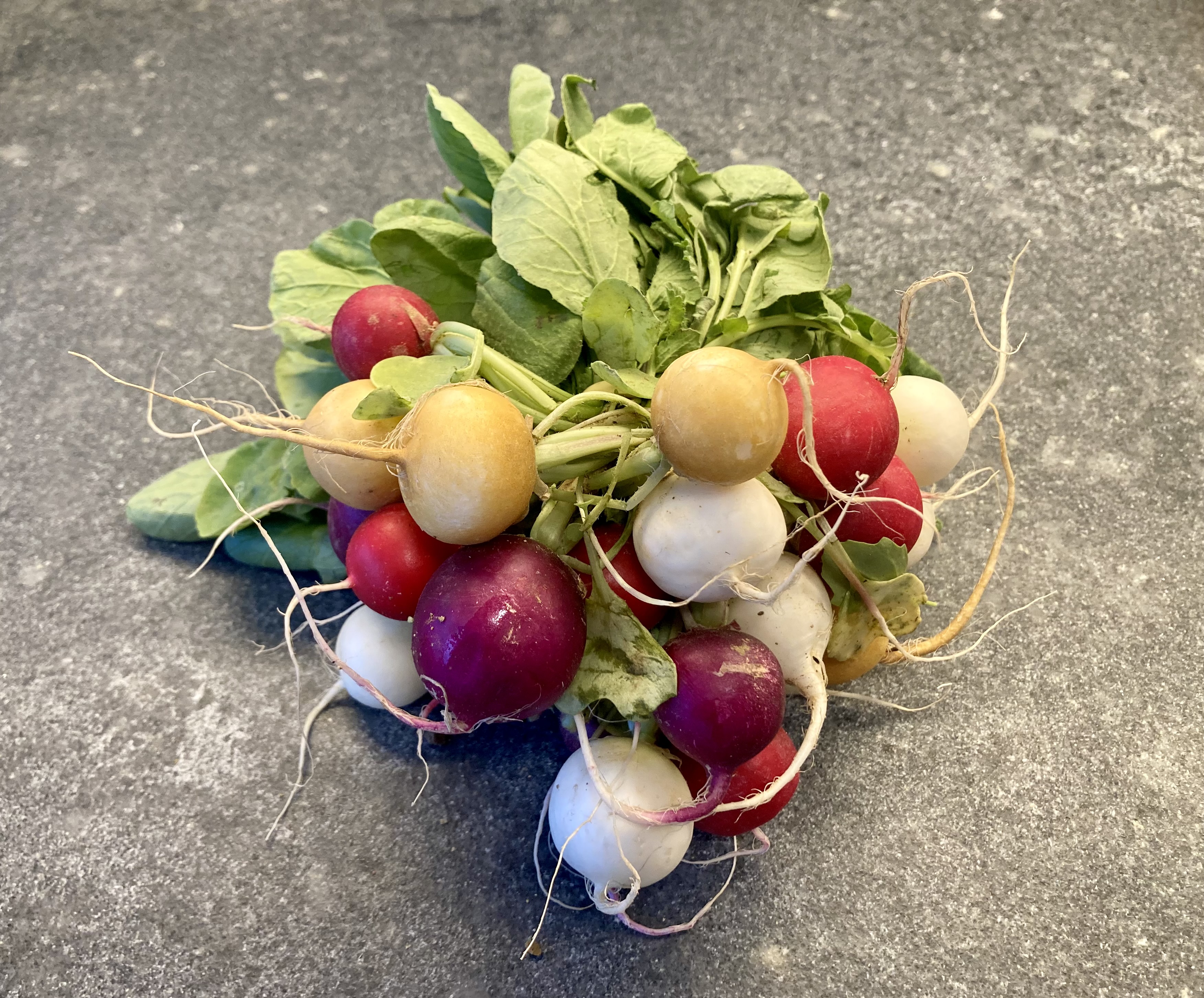
A few weeks ago, we posted a recipe for a salad with fried and marinated white button mushrooms. A rich, velvety salad with some acidity and lots of umami. This mushroom salad combines raw oyster mushrooms with radishes, sesame oil, mirin and cilantro. It’s both colourful and flavourful!
In general eating raw mushrooms is not a good idea. Some mushrooms contain mycotoxin that could be carcinogenic to humans. If you want to be 100% sure, it’s best to cook your mushrooms (and forget about this delicious salad!).
The variety we used is the Golden Oyster Mushroom (Pleurotus Citrinopileatusand its colour makes the salad even more vibrant. This mushroom is native to China, Japan and Russia. The ones we bought are cultivated. Compared to the more common grey oyster mushroom the caps are smaller in size and their taste is sweeter.
Another colourful oyster mushroom is pink (Pleurotus Djamor). Its taste is somewhat bitter. Perhaps not the best choice for a salad. If cooked well, it is supposed to taste like bacon, but by then it has lost all its colour.
Cultivated oyster mushrooms can be eaten raw. If you’re not sure, ask your greengrocer.

Wine Pairing

The salad comes with a range of flavours and obviously some acidity, which is important when choosing your wine. Perhaps a white wine with even more acidity? Or a wine that adds flavours or aromas to the dish? We decided to drink a glass of Vinho Verde with our salad, produced by Adega De Monção. This Portuguese white wine is made from Alvarinho and Trajadura grapes. Some citrus, slightly tropical, with notes of apples and pear. Tasty, elegant and refreshing. In general, you’re looking for a refreshing, easy to drink wine that has some acidity and flavours that make you think of apple, apricot or peach.

What You Need
  • 100 grams Golden Oyster Mushrooms
  • (Coloured) Radishes
  • For the Dressing
    • Excellent Olive Oil
    • Rice Vinegar
    • Mirin
    • Light Soy Sauce (we used Tsuyu)
    • Sesame Oil
  • Cilantro
What You Do

Wash the radishes and slice vertically in eight or six, depending on the size. Make the dressing. Add the sesame oil as the last ingredient because it’s very present. Combine the radishes with the dressing and the thinly sliced cilantro. Leave for a few minutes. Combine with the golden oyster mushrooms and serve immediately.

Caponata

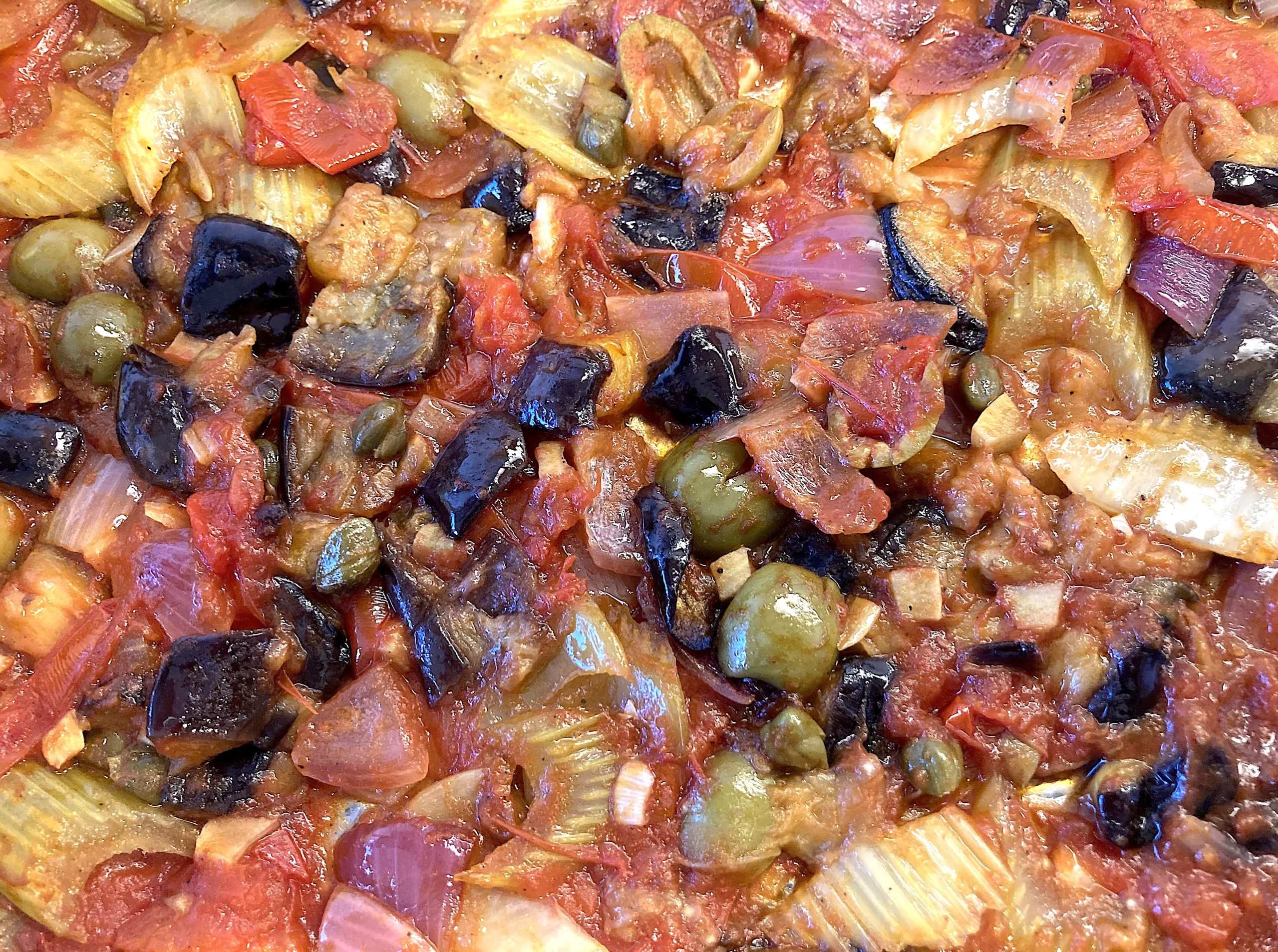
This very tasty dish originates from Sicily and is a mixture of chopped and fried vegetables. Eggplant (Aubergine), Tomatoes, Celery, rRed Onion and Green Olives are the main ingredients. The vegetables are prepared and served in an agrodolce sauce, so sweet and sour. Although we’re not keen on using sugar in a salad, in this case the combination of sugar and vinegar is perfect.
Perhaps the ingredients make you think of Ratatouille. Caponata and Ratatouille are very different dishes. Capanota is about fried vegetables, about crunchy celery, about sweet and sour.

Food and Wine Pairing

We served our Caponata with a roulade of pork with sage, rosemary, pancetta, black olives and black garlic. A dish we enjoyed with a glass of Barbera del Monferrato 2022, produced by Livio Pavese. In general, we suggest a full-bodied red wine with perhaps a touch of oak. Some acidity to balance the caponata and dark fruit (plums, blueberries).

The next day we served the Caponata with a roulade of chicken with pancetta, Parmesan Cheese and sage. A dish we enjoyed with a glass of Spätburgunder from the Pfalz area in Germany. In general, we suggest a medium bodied red wine with aromas of red fruit. Medium tannins and balanced acidity. Its taste dry, aromatic, fruity, juicy with a touch of strawberry.

You could also add some canned tuna (in olive oil) and serve the Caponata with crusted bread as a starter, perhaps accompanied with charcuterie and a glass of Crémant or Prosecco.

What you Need (recipe for 4)
  • 2 Aubergines
  • 400 grams excellent ripe Tomatoes
  • 10 Green Olives
  • Capers
  • 30 grams Tomato Puree
  • 4 cloves of Garlic
  • 4 small Red Onions
  • 3 stalks Celery
  • Tablespoon of Caster Sugar
  • Tablespoon of White Wine Vinegar
  • Black Pepper.
What You Do

Best to prepare Caponata one day ahead.

  1. Wash the vegetables.
  2. Slice the eggplant lengthwise in 8 and then in chunks. Drizzle with salt and mix. Put the chunks in a sieve and let rest above a bowl for one or two hours.
  3. Coarsely chop the onion.
  4. Quarter the tomatoes. Remove the internal hard bits and the pits and put these aside. Slice the outer part of the tomato lengthwise in three.
  5. Roughly cut the remainder of the tomatoes, add to a sieve and use the back of a spoon to capture the juices.
  6. Coarsely chop the garlic.
  7. Halve the olives.
  8. Use a knife to peel the back of the celery stalks, or ribs. Slice.
  9. Combine the tomato puree, black pepper, the caster sugar, the vinegar and the tomato juice.
  10. Set your oven to 140 °C or 285 °F.
  11. Discard the liquid of the eggplants, wash of the salt, dry with kitchen paper and fry the chunks in a generous amount of olive oil until golden.
  12. Transfer to a baking tray in your oven.
  13. Fry the onions and the celery until somewhat translucent. Add these to the baking tray.
  14. Now add the olives, the capers, the garlic, the tomato mixture and the tomatoes. Mix. Perhaps add a splash of water.
  15. Cover the baking tray with aluminium foil.
  16. After 20 minutes it’s time to mix the vegetables. Check if you need to add extra water.
  17. After another 20 minutes, remove and discard the foil, mix and increase the temperature to 160 °C or320 °F.
  18. Now you need to keep an eye on the mixture. It may take 10 to 20 minutes for the liquid to somewhat evaporate, but you don’t want the dish to become dry.
  19. When ready, let cool and transfer to the refrigerator.

Your Favourites in 2023

Happy New Year! Let’s begin the new year with the 2023 highlights. Your favorite post was No-Knead Bread, We have been baking our own bread for several years, based on the method of no-knead bread (see Jim Lahey’s book My Bread for more detail) and using the ingredients (Blue Poppy Seeds, Linseed) of the French Talmière. The result is delicious!

Another very popular post is the one showing you how to make Kimizu. This is a classic, golden sauce from Japan, made with Egg Yolks, Rice Vinegar, Water and Mirin. We also have a version with Tarragon, let’s say the Béarnaise version of Kimizu. The recipes for Kimizu and Kimizu with Tarragon continue to be very popular. Although this is a classic sauce, we use a microwave to prepare it. An easy and very effective way of managing temperature and consistency.

We love mushrooms. Cultivated ones, like Shiitake, Oyster Mushrooms, Enoki and Champignons de Paris and seasonal ones, such as Morels, St. George’s mushroom, and Caesar’s Mushroom. One of the most popular posts is about Cèpes à la Bordelaise. You can also use more available mushrooms for this great combination. Always a pleasure to serve, with eggs, with meat, with more present fish.
Last year we had lots of Bay Boletes, which was such a pleasure. It’s a fairly common mushroom, as tasty as Cèpes, but much more affordable.

And finally The Queen’s Soup. We didn’t expect too much of this post, but the soup turns out to be very popular.

We were of course very pleased and honored to receive an award for our Pear and Almond pie in the Great Bloggers’ Bake Off.

Let’s start cooking!

Your Favourites in 2023 ©cadwu

The Art of Sauces: Ravigote

A classic, French sauce, traditionally served with Tête de Veau, but in general great with cold meat and cold, poached fish. A very simple, easy to make sauce with just the right acidity to brighten up your cold starter. The warm version is made with a broth, the cold one with oil, vinegar and mustard, as you would prepare a vinaigrette.
No eggs?
Indeed, no eggs. If you look at the list of ingredients, you could think of Remoulade or Tartare Sauce (both mayonnaise based) or Gribiche (made with hard boiled eggs). Ravigote is different, it’s light and uplifting. Just give it a try next time you serve cold meat or fish as a starter. Forget about the mayonnaise and enjoy this delicious, flavourful sauce.
We served our Ravigote with Pâté de Tête Persillé and crusted bread.

Wine Pairing

We enjoyed a glass of white Pontificis, made with Viognier and Chardonnay grapes by Badet- Clément. This is an oaked dry wine from the Languedoc-Roussillon region in France. It is elegant, with some oak, clear acidity and some bitterness. Creamy, with some vanilla, butter and perhaps tropical fruit. In general you’re looking for a white wine with clear acidity, oak and balance.

What You Need

  • Coarse Mustard (Moutarde à l’Ancienne
  • White Wine Vinegar
  • Oil (Sunflower, Avocado)
  • 3 Cornichons
  • 8 Capers
  • 1 Shallot
  • Parsley
  • Tarragon
  • Chervil
  • Black Pepper

What You Do

  1. Finely chop the shallot, slice the cornichons, halve the capers
  2. Chop the herbs
  3. Combine a spoonful of mustard with the same amount of vinegar
  4. Slowly add the oil until you have the right consistency and flavour
  5. Add more vinegar to get the right acidity
  6. Happy? Add shallot, cornichons and capers
  7. Mix
  8. Add a generous amount of parsley, tarragon and chervil
  9. Finish the sauce with black pepper.

PS

The amount of tarragon depends on the type of tarragon and your personal preference. There are actually three types: French tarragon (intense and aromatic, the one to use in the kitchen), Russian tarragon (limited flavour, no complexity) and Mexican (a touch of anise, but not even close to French tarragon). 

Cèpes, Lentils and Duck

Let’s celebrate the season by preparing a very simple, tasty starter with cèpes, the all-time favourite mushroom of many people. It is great when fried in olive oil with garlic and parsley, wonderful in a risotto and equally tasty when prepared à la Bordelaise. This starter is a bit more complex. It combines the nutty, rustic flavour of lentils with the fatty richness of foie gras and smokiness. The dish is a true appetizer.

Wine Pairing

We would suggest a white wine with some floral notes and only a touch of sweetness. A pinot gris or perhaps a gewürztraminer? Sweetness will go very well with the foie gras and the smoked duck, but it’s not a great match with the cèpes.

We could also imagine opening a bottle of Arbois Savagnin 2018. This complex, white wine is made from the Savagnin grape and is produced in the far east of France, the Jura. It comes with aromas that will make you think of nuts, curry and even umami. When tasting it, you may think the wine is off, given it is slightly oxidized. In this case it’s a good thing. Enjoy the savoury, nutty taste of the wine in combination with the various flavours in the dish.

What You Need

  • 150 grams of Cèpes
  • Du Puy Lentils (from Sabarot)
  • Smoked Breast of Duck
  • Terrine de Foie Gras de Canard
  • Neutral Oil (we used Avocado Oil)
  • Butter
  • Black Pepper

What You Do

Remove the smoked breast of duck from the refrigerator. Wash the lentils and cook for some 20 minutes. Drain and allow to cool. Add one or two teaspoons of oil, to coat the lentils and enhance their flavour. Add some black pepper. Clean the mushrooms and slice. Not too thin, the idea is to have a moist mushroom with a thin crust.  Fry the mushrooms in butter. Plate up by making a circle of lentils and decorate with slices of smoked duck, cèpes and very thin slices of terrine.

PS

Avocado oil seems a bit exotic, but actually it has a very high smoking point so it’s great for frying and baking. When used in a salad, you will notice the oil is light and fresh.