Oyakodon

Hope you enjoyed Netflix’s The Makanai: Cooking for the Maiko House as much as we did. Two friends (Kiyo and Sumire) move from rural Japan to Kyoto, following their dream of becoming maiko’s. Once in Kyoto it turns out that their dreams are very different. Kiyo is passionate about food and becomes the person to prepare the makanai, the food for the people living in the Maiko house. Every episode shows Japanese food, from dumplings in red bean soup to baked sweet potato and onigiri (rice balls).

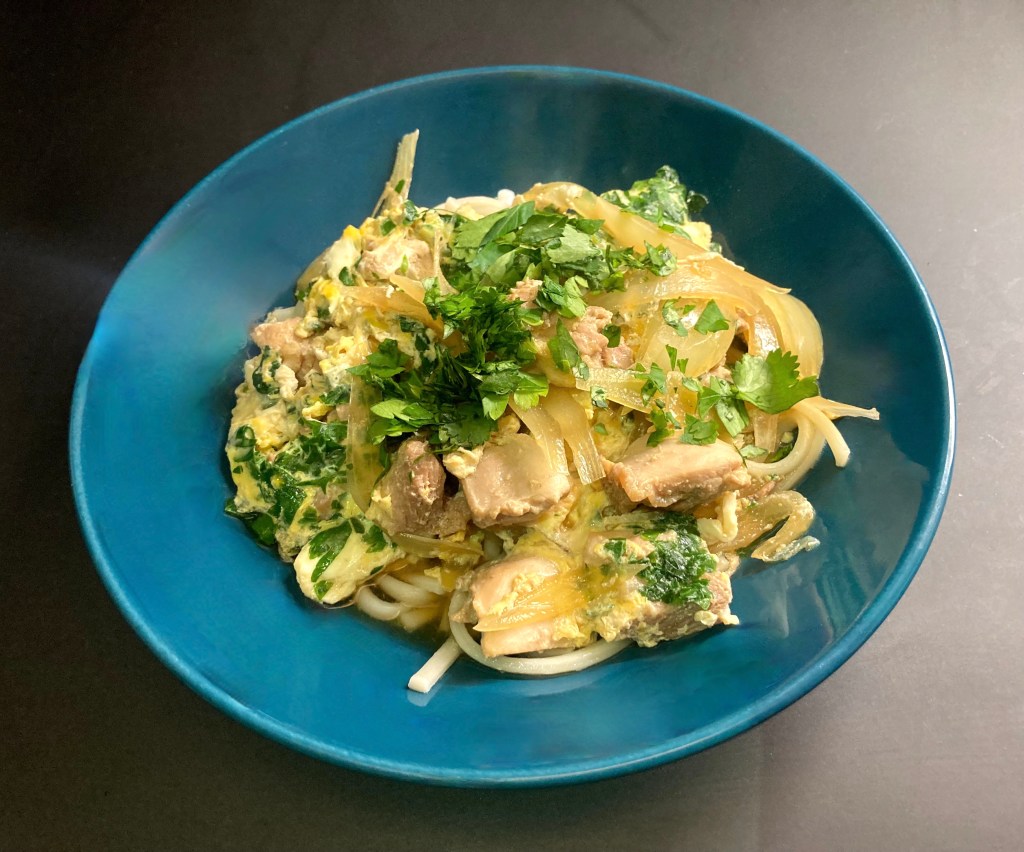
The first dish Kiyo prepares for the house is Oyakodon, a rice dish with egg and chicken, a popular dish in Japan. Easy to make, nutritious and the flavours and aromas are very satisfying. On Cooking With Dog you’ll find a helpful video showing you how to make Oyakodon. 

San Francisco based chef Namiko Hirasawa Chen (founder of Just One Cookbook, an award winning blog about food) was brave enough to cook all the food shown in the series. Obviously you’ll find all makanai recipes on their website.

What You Need
  • 100 grams of Chicken Breast (skin off)
  • 1 medium White Onion
  • 2 Eggs
  • 100 ml Dashi
  • 2 tablespoons Mirin
  • 2 tablespoons Soy Sauce
  • Mitsuba (or a mix of Parsley and Cilantro)
  • Rice
What You Do
  1. Make sure your dashi is full of flavours, perhaps a bit stronger than usual
  2. Make a broth with mirin and soy sauce
  3. Peel the onion and slice from top to bottom (banana shaped slices)
  4. Chop the chicken breast in comfortable slices
  5. Add the onion and the chicken to the broth, cover the pan with a lid and cook until nearly done
  6. Add half of the mitsuba (or the combination of parsley and cilantro)
  7. Add the eggs to a bowl and lightly beat the eggs but don’t mix. You should be able to distinguish the white and the yolk easily
  8. Add the first half to the broth and use chopsticks to distribute the combination in the pan
  9. Wait for a few moments and add the second half
  10. Serve over a bowl of warm rice
  11. Decorate with mitsuba.
PS

Perhaps you noticed that we used udon for our oyakodon, basically because we love udon, but it should be served with rice. Most (all?) recipes suggest adding sugar. We think the mirin brings sufficient sweetness to the dish, but feel free to add just a bit of sugar.
Walnut Sauce

Michelin Award winning Japanese chef Akira Oshima is author of Yamazato, Kaiseki Recipes: Secrets of the Japanese Cuisine. The book contains recipes from the kitchen of the Yamazato restaurant in Amsterdam. It is amongst our favourite cookbooks. The recipes can be very challenging and time consuming as is getting hold of the right ingredients.
One of the recipes is for Takiawase, a mouth-watering combination of vegetables and fish. Every ingredient requires its own preparation and is simmered in its own dashi-based stock. The recipe of chef Oshima combines kabocha, eggplant, okra and shrimp. Indeed: four different kinds of homemade stock.

When shopping at Amazing Oriental we saw Garland Chrysanthemum, which made us think of another tasty dish, a combination of walnut sauce, chrysanthemum and shiitake called Shungiku Kurumiae. It’s actually two recipes, one for walnut sauce and one for chrysanthemum. The walnut sauce is a combination of roasted and blended walnuts, white miso, dashi, sake, light soy sauce and mirin (in that exact order). Very tasty with lots of umami and depth. It serves as a vinaigrette for the salad which is a combination of blanched and in dashi marinated chrysanthemum and grilled shiitake.

Yamazato, Kaiseki Recipes: Secrets of the Japanese Cuisine is available via the well-known channels, both in English and Dutch, second hand. The Dutch version is available via the webshop of the publisher for €34,50.

Drink Pairing

We prefer a glass of sake with our Shungiku Kurumiae, for instance a Junmai sake with fresh aromas and good acidity. The sake must be dry and well-balanced with a clean finish. You could enjoy a glass of white wine with the dish, provided it’s dry and mineral.

PS

We made too much walnut sauce for the salad, so we stored what was left in the refrigerator. But we were out of garland chrysanthemum (we wanted to use the remainder for our Matsutake dish) so what to do? The next day we fried some excellent organic pork belly and served it with Brussels sprouts and walnut sauce. Lovely combination!

Umami

Sweet, sour, bitter, salty and umami are the five basic tastes. The term umami originates in Japan; it’s probably close to savoury. Recognizing sweet or bitter is something we learn as a child, recognizing umami is not something we have learned and that’s perhaps why some people in the past argued that umami is not a taste in its own right. It’s now clear that we have taste receptors that respond to the components that make umami.

Science

Danish professor emeritus in biophysics at the University of Southern Denmark, Ole G. Mouritsen, writes about the gastronomical, historical, scientific and cultural aspects of umami in his book Umami: Unlocking the Secrets of the Fifth Taste (available via your local bookstore or the well-known channels for approximately 40 US$). He also published cookbooks, for instance about seaweeds. Several scientific studies were conducted, trying to unravel the secrets of umami. One of the findings is that umami is the result of two components: glutamate and nucleotide. Bringing them together creates synergy and the umami taste is amplified.

Three Examples

Classic Japanese dashi is a combination of kombu (seaweed) and katsuobushi (bonito flakes). Kombu contains amino acid glutamate and Katsuobushi contains nucleotides inosinate and guanylate. Together they create a synergy, and the result is the clear taste of umami in dashi.
Same story for oysters and champagne. The oysters contain both glutamate and nucleotides (meaning that they are full of umami) and the champagne, due to the way it’s produced, contains glutamate, making oysters and champagne into a very tasty, umami rich combination.
Also the same story for tomatoes (amino acid glutamate) and beef (inosinate). Combining them should create the beautiful synergy of umami.

Ragù

Enough chemistry for one day. We decided to prepare Ragù Napoletano. It is one of the great dishes of Italy, or to be more precise of Campania. It is a combination of rolled up well marbled beef (rump cap, rump tail), an intense tomato sauce and hours of careful slow cooking and reducing. 
The result is a two-course meal: the sauce is served with pasta as a starter and the sliced meat with some sauce and vegetables as a main. 
Will you able to taste the umami? The answer is yes, absolutely, especially when you prepare the dish one or two days ahead.

Recipe for Ragù Napoletano in our next post.

Inari Sushi

Sushi has become such a mainstream product! We all seem to enjoy Nigiri (sushi rice topped with fish or egg, sometimes held together with a ribbon of nori), Maki (rice and stuffing rolled in nori), Uramaki (as maki but with rice on the outside), Temaki (in the shape of a cone) and Oshi (pressed rice, in the shape of a block).

Inari and Nare sushi are clearly the less known kinds of sushi.
Nare Sushi is made with fish and is fermented for 6 months. Impossible to buy where we live.

Inari Sushi is made with a pouch of deep-fried tofu (inari age) and sushi rice, originally without a topping. The tofu pouch is fried in oil, then cooked in water to remove excess oil, then cooked in dashi with soya, squeezed to remove most of the cooking liquid and then stuffed with hand-warm sushi rice. Fortunately, the pouches you can buy are ready to be stuffed, so making inari sushi is not too much work. The challenge is of course in cooking the rice and turning it into shari (the vinegar seasoned rice that is the key to tasty sushi). Another challenge is eating Inari Sushi because the pouches tend to be rather oversized.

The art of cooking rice, regardless if you make risotto or sushi, starts with the right rice. Cutting corners will lead to a disappointing result. You need short grain Japonica rice (uruchimai) when making sushi.

Drink Pairing

A dry, cold, crisp sake will be very nice with your Inari Sushi.

Choosing the right wine is not straightforward. You could think of a sparkling wine (great with the sweetness of the sushi), for instance a prosecco from Italy. We would suggest a prosecco produced by Corvezzo. An affordable, vegan, organic wine with just a touch of sweetness.

Another approach is to serve a sweeter wine, for instance a glass of Pacherenc du Vic-Bilh from the Southwest of France. Wine that comes with aromas of fruit and honey. The wine has freshness and is well balanced.

What You Need
  • Tofu Pouches
  • Sushi Rice
  • Rice Vinegar
  • Salt
  • Sugar
  • (optional) Topping
What You Do
  1. Gently wash the rice, until the water is clear
  2. Leave to soak for 30 minutes
  3. Cook the rice according to the instructions on the package but use less water
  4. Leave to rest for 15 minutes.
  5. Make awasezu by adding some salt and sugar to the vinegar
  6. If it doesn’t dissolve, heat the mixture gently.
  7. Now transfer the rice to a low bowl (a hangiri) and add the vinegar to the rice
  8. After 30 seconds use a broad spoon (or spatula) to combine the rice and the vinegar
  9. This is the moment to use a fan. According to some this is to cool the rice, according to others it should be done to remove excess vinegar
  10. Leave the rice to rest at room temperature under a damp cloth for one hour.
  11. Depending on the package you may want to wash or squeeze the pouches
  12. Stuff them with rice, serve on a plate with the open side down and enjoy your traditional Inari Sushi.
  13. We love to combine the rice with some sliced kimchi, stuff the pouch and top it with fish eggs.
PS

Ratios are very important when preparing shari. We suggest using the following:

  • 1 cup of rice
  • 1 cup of water (or a bit less, depending on the instructions)
  • 30 cc of rice vinegar
  • pinch of salt
  • ½ – 1 tablespoon of sugar (depending on your taste)

Mussels with Dashi and Kimchi

A few weeks ago we enjoyed dinner at l’Épicerie du Cirque “under the Palm Trees” in Antwerpen (Belgium). The restaurant is owned and run by Dennis Broeckx and Ellen Destuyver and offers contemporary Flemish cuisine with a focus on local products. Excellent choice of wines, great service, very original menu. One of the dishes was a combination of dashi, homemade kimchi, wasabi and Belgian mussels topped with foam. Lots of umami and great textures.

Back home we tried to replicate the dish, but the result was disappointing. The foam is a crucial aspect of the dish and sadly our foam collapsed after 2 seconds. But we did manage to buy some very tasty, mild Korean kimchi so the next day we prepared a dashi-based soup with mussels instead. Very tasty and the combination works really well.

What You Need

  • 500 ml of Dashi
  • Handful of Mussels
  • Kimchi (mild)
  • ½ tablespoon of Sake
  • Light Soy Sauce

What You Do

  1. Prepare the dashi
  2. Clean the mussels and discard broken ones
  3. Quickly cook the mussels
  4. Add kimchi, sake and a drop of light soy sauce to the dashi, keep warm, remove the mussels from the shell and add to the soup
  5. Serve immediately on warm plates.

Oden

A traditional Japanese dish, often enjoyed in winter. It is tasty, light and full of surprises. Oden is a meal that requires a bit more work (and of course time) then you would expect. It also requires some shopping, given some of the ingredients are not easy to find. We enjoyed our first Oden at the Taishunken restaurant in the famous Sankeien Garden in Yokohama. Loved it!
We are not from Japan so we humbly present our version of this classic. We hope it inspires you to cook Oden and enjoy it as much as we did.

Pairing

A cup of Japanese green tea is the obvious choice.
You could also combine your oden with a glass of Chardonnay (with a touch of oak perhaps), for instance if you serve it for dinner. Oden is rich in flavours, umami of course, but not spicy, so we would not suggest a Gewürztraminer or a Sauvignon Blanc.
A glass of cold, dry sake will also be great.

What You Need
  • For the Dashi
    • 1 litre of Water
    • 20 grams of Dashi Kombu (Rishiri Kombu)
    • 20 grams of Katsuobushi (Bonito Flakes)
  • For the Stew
    • One Daikon
    • One Pack of Konnyaku
    • 1 sheet of Hayani Kombu
    • Chikuwa Fish Cakes
    • One Pack of Gobo Maki Burdockroot Fish Cakes
    • 2 boiled eggs
    • Abura Age Fried Tofu
    • Mochi (Sticky Rice Cake)
    • Soy Sauce (preferably one with less salt)
    • Mirin
  • Karashi
  • Rice with ginger
What You Do
  1. Peel the daikon and slice it (2 centimeters is best)
  2. Use a sharp knife to plane of the edge of the daikon. This improves the presentation, and it is supposed to stop the daikon from falling apart
  3. Cook the daikon for one hour in water
  4. Drain and set aside
  5. In parallel: cut the konnyaku in triangles and cook these in water for 15 minutes. Konnyaku is made from the konjac plant and is specific for the Japanese cuisine
  6. Also in parallel: cook the sheet of Hayani Kombu for 5 minutes. This is young kombu and edible, different for the one you use when preparing dashi. Let cool a bit, slice and knot ribbons. Not sure why but is looks great when you serve it. (Yes, well spotted, it’s not in the picture; unfortunately, we couldn’t find Hayani when we prepared our oden.)
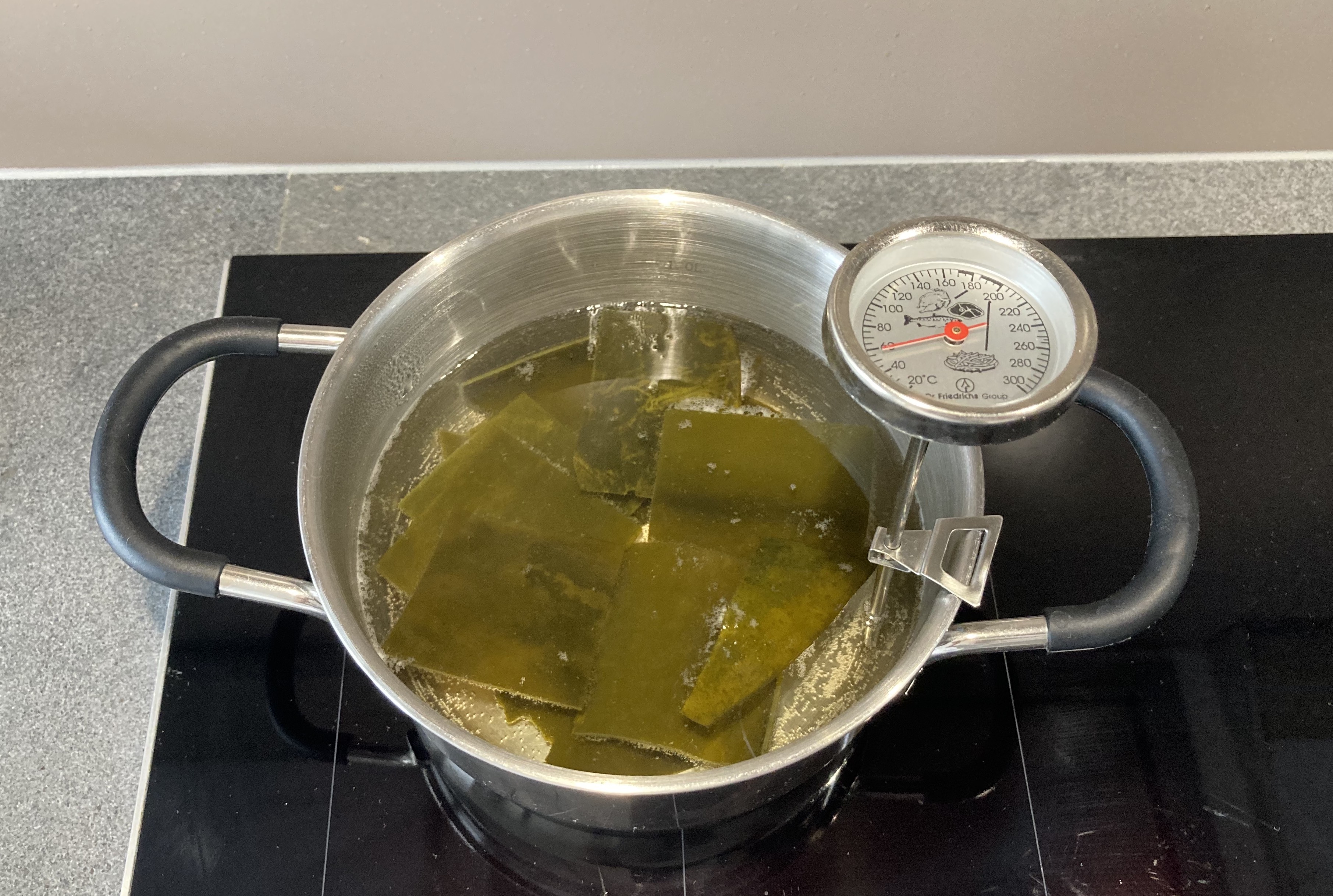
  7. Make 1 liter of dashi. This seems simple but requires precision. Clean the kombu with a wet cloth and put into one litre of cold water. Gently raise the temperature to 80 °C or 175 °F. Remove and discard the kombu. Bring the liquid to a boil, add the katsuobushi, bring to a boil and immediately set heat to zero. Wait 5 minutes or so. The katsuobushi will sink to the bottom of the pan. Now very gently pass the liquid through a wet towel or a sieve. Do not squeeze, just give it time. The result will be a great, clean dashi.
  8. Now it’s time to add the dashi to the pan (should be a clay pot, but we stick to our Le Creuset)
  9. Add one tablespoon of mirin
  10. One (or two, depending on your taste) of light soy sauce
  11. Add the daikon, the konnyaku, the chikuwa fish cakes and the gobo maki burdockroot fish cakes
  12. Allow to simmer for at least 2 hours
  13. 30 minutes before serving add boiled eggs, two Hayani ribbons, fried tofu and mochi
  14. The last two ingredients must be combined by putting the mochi into the tofu
  15. Serve with karashi (Japanese mustard, which is different from wasabi by the way) on the side
  • Oden ©cadwu
  • Oden with names of Ingredients ©cadwu

Japanese Pumpkin with Shrimps

The traditional Japanese way of preparing Kabocha (Japanese Pumpkin) requires a bit of work but is not overly complex. The result is a combination of delicate, fresh pumpkin flavours with clear umami as a result of simmering the pumpkin in a dashi-based stock. You could replace the Japanese Pumpkin with a more common winter squash or with a red Hokkaido pumpkin.

Combining shrimps and pumpkin seems a bit odd, but it’s actually very nice. The combination is colourful and the various flavours come together nicely, also thanks to the dashi.
The first time we enjoyed this combination was when we prepared Takiawase, following the recipe from author and Michelin Award winning chef Akira Oshima. The recipe is included in his book Yamazato, Kaiseki Recipes: Secrets of the Japanese Cuisine. It’s a mouth-watering dish but unfortunately fairly difficult to prepare. Typically, Takiawase is a combination of vegetables and fish. Every ingredient requires its own preparation and is simmered in its own dashi-based stock. Indeed: four different kinds of homemade stock. The recipe of Akira Oshima combines kabocha, eggplant, okra and shrimp.

Drink Pairing

We prefer a glass of sake with our Kabocha with Shrimps, for instance a Junmai sake with fresh aromas and good acidity. The sake must be dry and well-balanced with a clean finish. You could enjoy a glass of white wine with the dish, provided it’s dry and mineral. Or a more adventurous choice: a glass of Manzanilla or Fino sherry. Manzanilla is a dry sherry with a flowery bouquet, a delicate palate and subtle acidity. It works beautifully with the dashi and the sweetness of both the kabocha and the shrimps.

What You Need                                                                         
  • For the Dashi
    • 10 grams of Kelp
    • 10 grams of Katsuobushi
  • For the Kabocha
    • Mirin
    • Light Soy Sauce (Usukuchi)
    • Sake
  • For the Shrimps
    • Sake
    • (Olive) Oil
    • Mirin
    • Light Soy Sauce (Usukuchi)
  • Pickled Cucumber
What You Do
  1. Start by preparing 500 ml of dashi
  2. Peel and devein the six shrimps, we prefer to leave the tail on
  3. Transfer the shrimps to a bowl, add some sake and transfer to the refrigerator for a few hours
  4. Peel the Kabocha, remove the seeds
  5. Halve and then slice in 6 equal parts
  6. Combine 400 ml of dashi with 25 ml of mirin, 25 ml of light soy sauce and a tablespoon of sake
  7. Add the slices of kabocha and let is simmer for some 10 minutes or until nearly done
  8. In parallel heat a heavy iron skillet, add oil, dry the shrimps with kitchen paper and then fry them quickly, let’s say 4 minutes
  9. Transfer to a warm oven
  10. Remove the oil from the pan with kitchen paper
  11. Reduce the heat to low
  12. Mix 50 ml of dashi with 25 ml of mirin and a small spoon of light soy sauce
  13. Deglaze the pan and let the mixture reduce
  14. Transfer the shrimps back the pan and coat them quickly with the mixture
  15. Serve the slices of kabocha with the fried, coated shrimps and the pickled cucumber

Maitake Soup

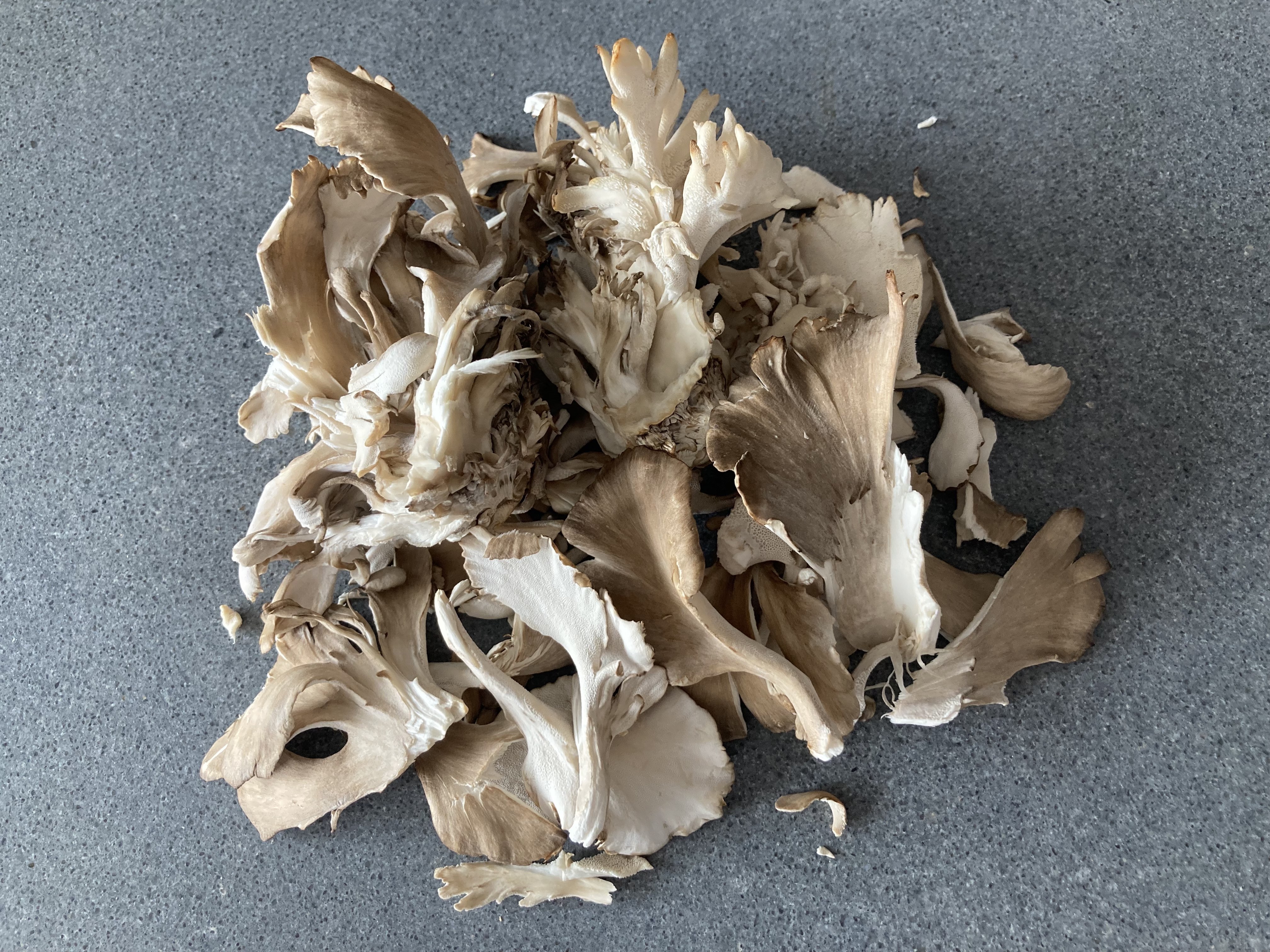
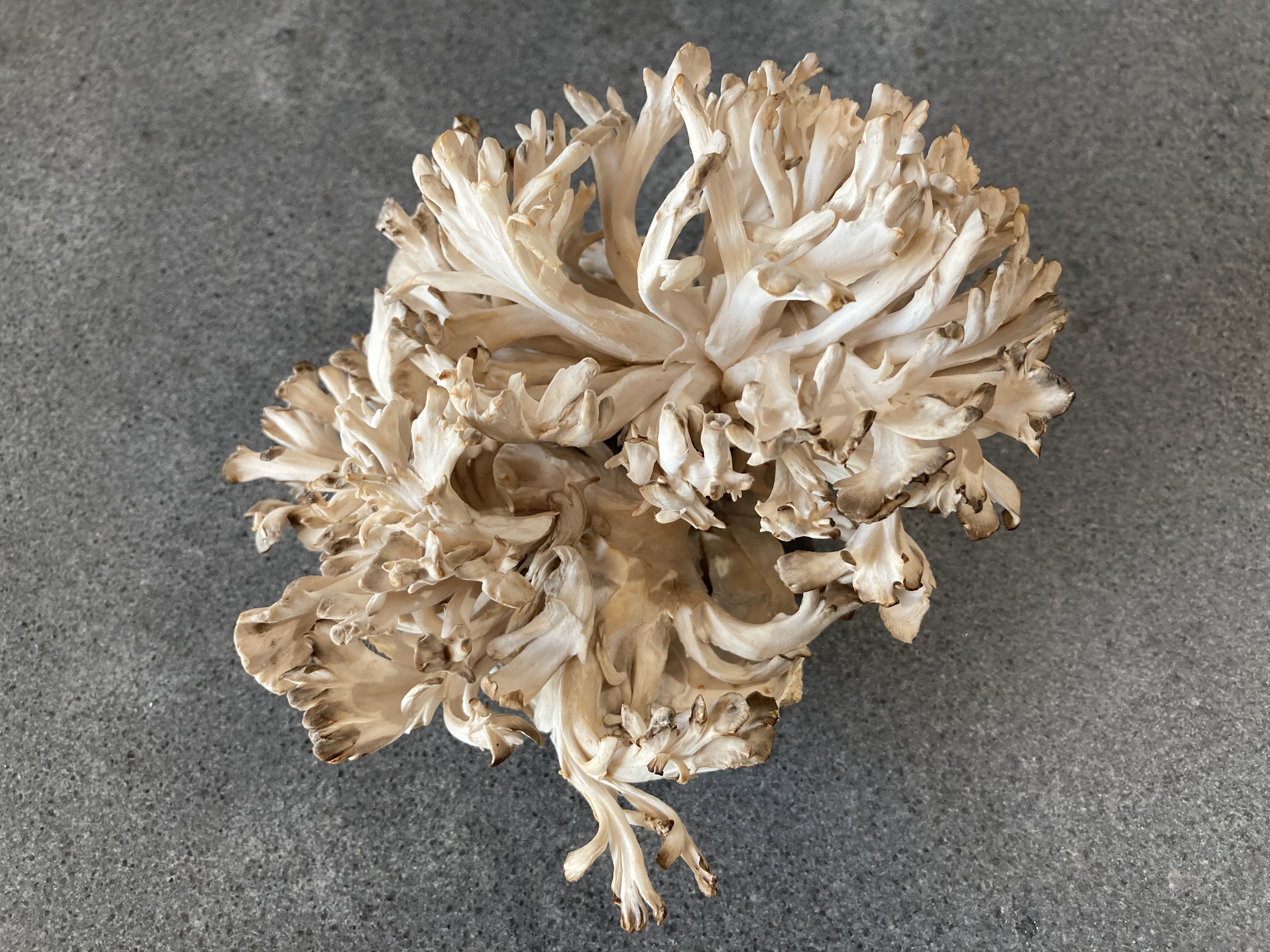
Welcome to the wonderful world of the Dancing Mushroom, better known as Maitake, Hen of the Woods or Ram’s Head. Enjoy the powerful, intense and nutty flavours and be intrigued by the aroma. No wonder it’s a much loved culinary mushroom!

Legend has it that maitake got its name because foragers danced with happiness when finding it. Nowadays maitake can be wild or cultivated. Both are fine; we actually prefer the cultivated ones. Make sure you cook maitake through and through, otherwise you may upset your stomach (and other parts of your body).

Maitake combines very well with beef and thyme. It is also great when combined with shrimps, crab, coquilles St Jacques, coriander, dill and parsley; a salad created by Antonio Carluccio and published in 2003 in the Complete Mushroom Book. The book has a wealth of wonderful, simple recipes.

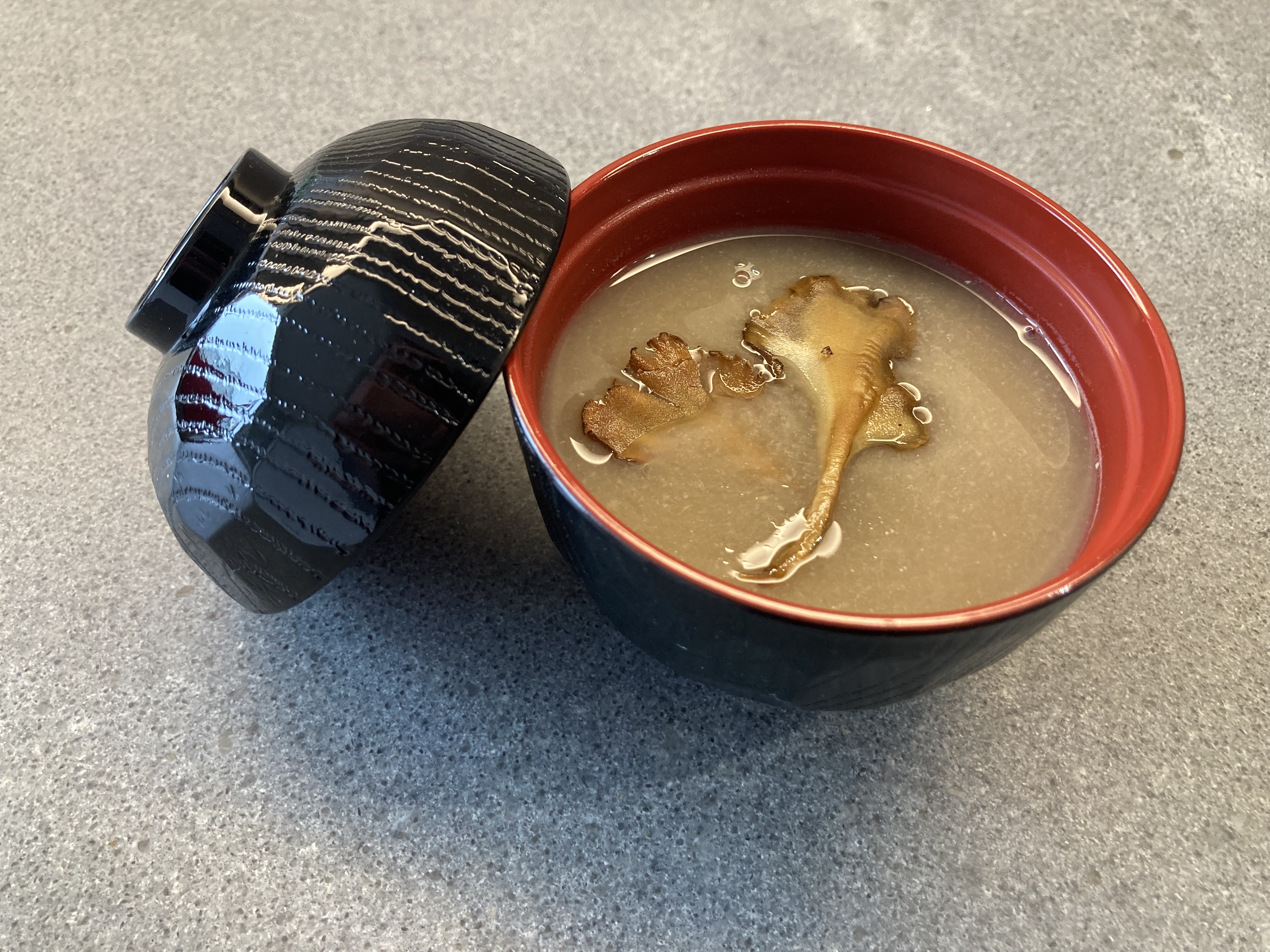
Our soup is perhaps a bit odd, because it’s a thickened soup, something you would perhaps not expect given dashi is the base of the soup. It’s a gentle soup, with some umami and bitterness. The fried maitake amplifies the flavours.

What You Need
  • For the Dashi
    • 500 ml Water
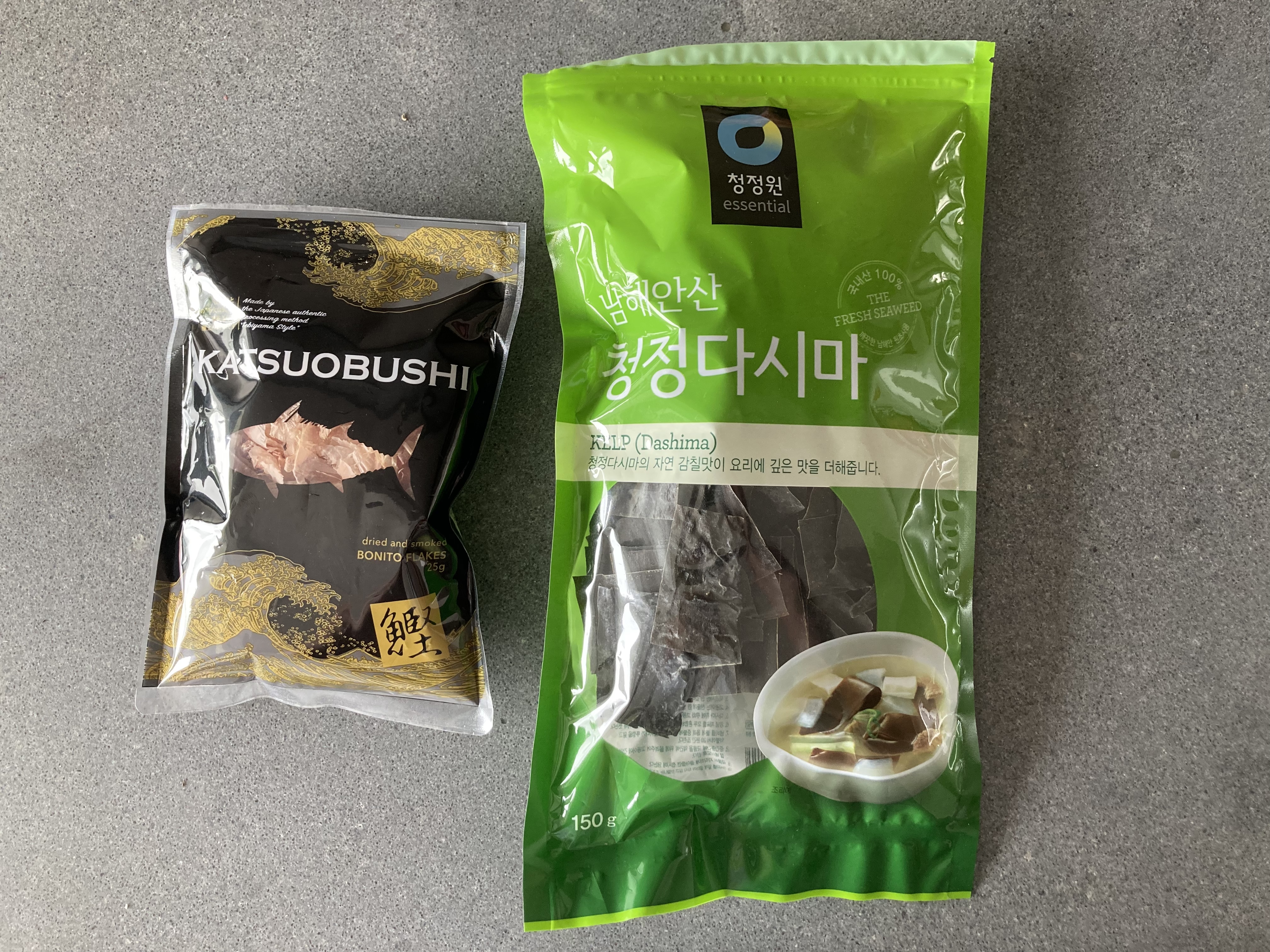
    • 10 grams Konbu
    • 10 grams Katsuobushi 
  • 150 grams of Maitake
  • 5 cm Fresh Ginger
  • Soy Sauce
  • Sake
  • Mirin
  • Tablespoon of Cooked Plain Rice
  • Olive Oil
What You Do
  1. Prepare the dashi
  2. Remove the base of the maitake
  3. Set a few ‘leaves’ aside (to be fried later)
  4. Peel and quarter the ginger
  5. Add the remaining ‘leaves’ of the maitake, the ginger and the cooked rice to the dashi
  6. Leave for 20 minutes on low heat
  7. Remove the ginger and use a blender to create a smooth mixture
  8. You will notice that the maitake doesn’t thicken the soup, as a classic Champignon de Paris would do, the rice should do the trick
  9. Pass through a sieve
  10. Keep on low heat for another 10 minutes
  11. Add a tablespoon of sake, some soy sauce and mirin
  12. Taste and adjust if necessary. The quanities very much depend on the flavour of the maitake and your personal taste. You’re looking for umami, bitterness and depth
  13. Leave for another 10 minutes on low heat
  14. Add olive oil to a small heavy iron skillet and fry the remaining maitake; initially on medium heat, later on low heat. This may take 5 minutes
  15. Use the blender for the second time to make sure the soup is perfectly smooth
  16. Serve in a miso bowl.

Duck with Soy Sauce and Mushrooms

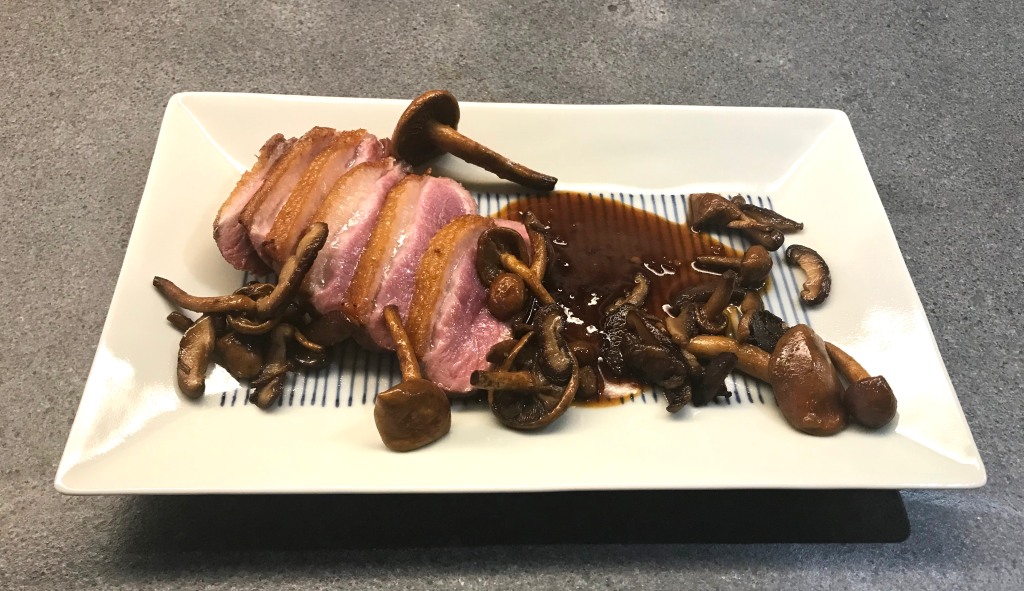
eIn his book Yamazato, Kaiseki Recipes: Secrets of the Japanese Cuisine, author and Michelin Award winning chef Akira Oshima includes a recipe for breast of duck, marinated in a soy-based sauce, served with Belgian endive (chicory) and karashi (Japanese mustard). A mouth-watering dish. The book contains some 20 recipes that are technically challenging (at least, we think so) and well written.

In general the combination of duck and soy sauce works really well. It’s all about sweetness and umami. The Japanese mushrooms (shiitake, enoki, nameko and/or shimeji) add nuttiness and texture to the dish.
We use soy sauce and tentsuyu: a mix of soy sauce, mirin and dashi, the clasic tempura dip.

Wine Pairing

We enjoyed our duck with a glass of gewurztraminer (full bodied and long lasting with aromas of lychees and roses) but there are many options in this case. Perhaps a nice rosé or a sake with a touch of sweetness?

What You Need
  • Breast of Duck
  • Japanese Mushrooms
  • Soy Sauce (preferably with less salt)
  • Tentsuyu
  • Chicken Stock
  • (Olive) Oil
  • Mirin
  • (optional) Sake
What You Do
  1. Start by cleaning the breast of duck
  2. Heat a non-stick pan
  3. Fry the duck, straight from the fridge, for 12 minutes on the skin-side and 2 minutes on the meat-side in a non-stick pan
  4. Wrap in foil, making sure the skin is not covered.
  5. Clean the pan with kitchen paper and fry the sliced mushrooms for 5 minutes or so in oil until ready
  6. Set aside and keep warm
  7. Add soy sauce, tentsuyu and chicken stock to the pan and reduce
  8. Add a splash of sake and some mirin
  9. Add liquid of the duck
  10. Let simmer for a few minutes, add the mushrooms and make sure they are coated with the sauce
  11. Let simmer for 5 minutes
  12. Slice the duck, add liquid to the sauce, stir and serve.
Duck with Soy Sauce and Mushrooms ©cadwu

White Asparagus with Sauce Périgueux à la Kimizu

The French Périgord is the truffle heart of France. The region is also known for its culinary products, such as Confit de Canard, wines from Bergerac and Monbazillac, Foie Gras and Sauce Périgueux. This sauce is a classic in the French kitchen. Its basis is a white sauce made with shallot, a reduction of white wine, (goose) fat, stock and lots of truffle. The ‘original’ recipe of this truffle sauce can be found in La Bonne Cuisine du Périgord written in 1929 by La Mazille. The sauce works beautifully with Tournedos and Magret de Canard. And since white asparagus love truffles, why not combine them with Sauce Périgueux?

We don’t think a roux-based sauce will go very well with asparagus, so we combined two recipes: the flavors of Sauce Périgueux with the lightness and consistency of Japanese Kimizu.

Wine Pairing

We enjoyed our asparagus with a glass of Riesling, produced by Bott Geyl in the French Alsace. This fresh, aromatic, dry white wine with a hint of sweetness and high acidity combines very well with the sweetness of the asparagus and the intense, rich flavor of the sauce. The wine supports the dish perfectly.

What You Need

  • 6 White Asparagus
  • 1 Small Truffle
  • For the Sauce
    • 1 Shallot
    • 1 Glass of Dry White Wine
    • 3 Black Peppercorns
    • ½ tablespoon Simple White Vinegar
    • Two Cubes of Jus de Truffe*
    • 2 egg yolks
  • White Pepper

What You Do

  1. Chop the shallot, crush the peppercorns coarsely, add to a pan and add a glass of white wine
  2. Leave to simmer for 20 minutes
  3. Add a splash of white vinegar
  4. Leave to simmer for 10 minutes
  5. Add two cubes of jus de truffe and leave to simmer for another 10 minutes
  6. Pass through a sieve
  7. If all is well you should have 4 tablespoons of liquid. If necessary reduce
  8. Set aside and leave to cool
  9. Peel the asparagus and steam for 20 minutes, depending on the size
  10. When there is still 10 minutes on the clock, start working on the sauce
  11. Whisk the two egg yolks well, add the 4 tablespoons of liquid, mix and heat in the microwave on 30% power
  12. Start with one interval of 10 seconds, stir, followed by an interval of 5 seconds, stir and continue with intervals of 5 seconds until you have the right consistency
  13. Total time in the microwave will be approximately 60 seconds
  14. Allow to cool for a minute or two
  15. In the meantime grate the truffle
  16. Serve the sauce over the asparagus, add some white pepper and sprinkle the truffle over the sauce and the asparagus.

* Best to buy a can of jus de truffe and freeze the content in an ice cube bag.

  • White Asparagus with Sauce Périgueux à la Kimizu ©cadwu
  • White Asparagus and Truffle ©cadwu
  • Bott Geyl Riesling ©cadwu
  • Jus de Truffes (Chabert-Guillot) ©cadwu