Black Pearl

Remember the Black Pearl, the ship captained by Jack Sparrow, portrayed by Jonny Depp? The ship had black sails and it was faster than the infamous Flying Dutchman. Films such as the Curse of the Black Pearl and At World’s End, characters such as Davy Jones and captain Barbossa, all good. We lost track when watching the third film and, in the end, we gave up on the series, despite the hilarious eccentricity of Jack Sparrow.

When shopping at our favourite mushroom stall, we noticed a cultivated mushroom, one we hadn’t seen before, called Black Pearl
The background of the Black Pearl mushroom (or Shimofuri) is as confusing as the story line of the Pirates-movies. According to some it’s a Japanese hybrid between King Trumpet and Black Oyster Mushrooms, others claim it’s a hybrid between a European and an Asian Oyster Mushroom and some say it’s a combination with Pearl Oyster mushrooms. Or perhaps a Marbled Oyster Mushroom? In all cases the Latin name seems to be Pleurotus Ostreatus, which is the name of the common oyster mushroom. 

Let’s forget about the background and enjoy its earthy, sweet, slightly peppery flavour and its firm texture. We combined the mushroom with an omelette, inspired by Tamagoyaki, the rolled Japanese omelette. We added Kashimiri pepper to the mushrooms, to emphasize their spiciness.

Drink Pairing

We enjoyed a glass of our favourite sake: Junmai Taru Sake as produced by Kiku-Masamune. The sake matured in barrels made of the finest Yoshino cedar, which is reflected in its aroma and flavour.
An aromatic, fresh and fruity white wine, with aromas of citrus and apple will also pair very well. The wine should be uplifting and juicy with a light character.

What You Need
  • 100 grams Black Pearl
  • 1 scallion, white only
  • 1/3 Kashmiri Pepper
  • 2 Eggs
  • ½ teaspoon Dashi Powder
  • teaspoon Mirin
  • teaspoon Soy Sauce
  • Olive Oil
What You Do
  1. Serve the omelette with the mushrooms on a warm plate
  2. Clean the mushrooms and cut in 2 or 4
  3. Thinly slice the white of the scallion
  4. Combine egg, dashi, mirin and soy sauce
  5. Warm a small heavy iron skillet
  6. Add some olive oil
  7. Add the egg mixture to the pan and bake a bavuese omelette
  8. In parallel: heat a small heavy iron skillet
  9. Crush pepper
  10. Add olive oil to the pan and fry the pepper, for a minute or so
  11. Reduce heat
  12. Add mushrooms to the pan
  13. Just before serving add the scallion
  14. Slice the omelette in two
Black Pearl Mushrooms served with an omelette. the omelette is flavored with dashi, soy suace and mirin. we also added crushed Kashmiri pepper ©cadwu
Black Pearl Mushrooms ©cadwu

Kimizu (with a Twist)

A few years ago we enjoyed an excellent Kaiseki dinner at Yamazato in Amsterdam. One of the dishes on the menu was Kimizu-Ae: a combination of white asparagus and Kimizu. A few days later we prepared Kimizu, a rich and light sauce. It comes with a velvety mouthfeel, a natural note of sweetness, a bright yellow colour and perfect acidity. Over the years we used it as a base for Béarnaise and Sauce Perigord.

Kimizu combines rice vinegar, mirin and egg. Compared to Hollandaise, Kimizu is lighter, easier to digest and fresher, because it does not contain butter (the egg yolk being the only source of fat).
The vinegar used to prepare Hollandaise or Béarnaise is often a flavoured vinegar, for instance with tarragon, shallot and black pepper. An idea we simply had to try when making Kimizu, with a twist!

Using a microwave oven to make Kimizu is a great idea (see our recipe for Hollandaise), although it does require more whipping and more attention compared to making Hollandaise.

What You Need
  • For the Castric (35 ml)
    • 5 ml Vinegar
    • 50 ml dry White Wine
    • 20 ml Noilly Prat
    • One corn of Black Pepper
    • One small Shallot
  • For the Kimizu
    • 35 ml Castric
    • 25 ml Water
    • 1 teaspoon Mirin
    • 2 Egg Yolks
What You Do
  1. Start by making the Castric
    • Chop the shallot
    • Combine all ingredients and leave to reduce by 1/2 on low heat
    • Pass through a sieve; try to capture the juices of the shallot
    • Set aside
  2. Make the Kimizu
    • The castric should be at room temperature
    • Whisk the egg yolks
    • Add the castric, the mirin, the water and whisk some more
    • Now transfer to the microwave and give it let’s say 10 seconds of 30%. Power and duration very much depend on your microwave
    • Remove from oven and whisk
    • Repeat
    • You will now feel the consistency changing. If not, don’t worry, just keep repeating the step
    • You may want to reduce the power or the duration
    • Whisk, whisk again and feel free to find your own way
    • When the Kimizu is ready, take it out of the oven and serve immediately
  3. We served the Kimizu with excellent beef and pommes dauphinois
Kimizu, the Japanese golden sauce
Kimizu with a Twist ©cadwu

Panna Cotta with Yuzu

When you shop at an Asian supermarket, you will see many products with yuzu: ponzu, yuzu dressing, jelly with yuzu flavour, yuzu marmalade, yuzu soy sauce, yuzu tea and even yuzu skincare. Probably the shop will also sell fresh yuzu juice. And if you’re lucky, they will have the real thing: yuzu!

Yuzu (Citrus Junos) is a citrus fruit and it looks like a small lemon or clementine, with an uneven skin. It is of Chinese origin and it was introduced in Japan during the Nara period (710-794). It’s expensive (we saw them on the market for 5 euro a piece), they have lots of seeds and very little juice. The flavour is tart but gentle, very aromatic and will make you think of mandarin, only different. The peel is as delicious as the juice. The combination of flavors and fragrancy makes it a unique citrus. Not a fruit to eat on its own. Use it to add freshness and aroma to a dish or sauce.

Yuzu juice costs between 30 and 100 euro per liter (because of the small amount of juice per yuzu) and therefore products with yuzu tend to be expensive. If not, check the label and make sure it contains yuzu. Especially ponzu shoyu (made with mirin, rice vinegar, katsuobushi, kombu, yuzu and soy sauce) is often made with lemon.

We also noticed the term ‘yuzu style’ which is a clear indication no yuzu is used. We spotted a bottle of Yuzu Style Dressing. It contains mandarin, lemon, apple, vinegar and lots of other ingredients, but no yuzu.

We bought our yuzu at a farmers’ market and on our way back home we thought about things to make with it. Perhaps our own yuzu kosho (a paste made with chili, yuzu and salt)? Or combine it with miso and cod? Or yuzu syllabub (with cream and sugar)?

Why not panna cotta?

What You Need
  • 500 ml Cream
  • 30 ml Yuzu Juice
  • 10 ml Lemon Juice
  • Yuzu Zest
  • 25 grams of Sugar
  • 3,5 leaves of Gelatine (5,25 grams)
What You Do (for 4)
  1. Slowly bring the cream to the boil.
  2. Keep close to boiling for 15 minutes. Stir when necessary.
  3. Add the juice and some of the zest.
  4. Remove from the heat and while stirring add sugar until totally dissolved.
  5. Follow the instruction of the gelatine and add the leaves.
  6. Stir well until homogeneous.
  7. Cool the liquid somewhat before filling the forms. We used a silicone mold. Nice and easy! The only thing you need to do is to make the mold a bit moist with water.
  8. Let the panna cotta cool and then store in the refrigerator until set.
  9. Don’t forget to seal with cling foil, otherwise your panna cotta will absorb aromas from other food in the refrigerator.
  10. Decorate with yuzu zest.
PS
  • If you can’t find yuzu or find them too expensive, then use 30 ml Lemon Juice and 10 ml Mandarin (or Clementine) Juice.
  • The amount of gelatine you need is a bit tricky. The acidity of the yuzu will thicken the cream and it will reduce the gelling effect of the gelatine. We decided to use the normal quantity.

Mushrooms and Miso

Shiitake is becoming more and more available. It has a unique flavour, savoury, meaty, earthy and it is rich in umami. The name is a combination of shii (a tree native to Japan and Korea, also known as the Japanese Chinquapin) and take (meaning mushroom, as in matsutake and maitake). The mushroom grows on decaying wood, not only on shii but also on other trees such as oaks and chestnuts. It’s fun to buy a shiitake log and grow your own mushrooms. 
In this dish we combine shiitake and oyster mushrooms. These two have very different structures, which adds value to the dish.

Wine Pairing

Enjoy your Mushrooms with Miso with a lightly oaked chardonnay. The oakiness of the wine will match well with the umami and miso flavours. The richness of the chardonnay will be very nice with the mushrooms.

What You Need
  • 100 grams Shiitake
  • 100 grams Oyster Mushrooms
  • Fresh Ginger
  • One Garlic Clove
  • One Scallion
  • Miso
  • Mirin
  • Soy Sauce (light)
  • Olive Oil
  • Black pepper
What You Do

Remove the stem of the shiitake, slice the caps and tear the oyster mushrooms. Fry in olive oil. Add thinly sliced white of the scallion. Add chopped garlic. Combine a teaspoon of miso with one tablespoon of mirin and one tablespoon of light soy sauce. If using thicker soy sauce, add some water. Mix and taste. It should be both salty and umami. Add some of the mixture to the mushroom. Coat the mushrooms with the miso mixture. Add more mixture if required. Be careful, you don’t want a sauce. When ready to serve add some black pepper, freshly grated ginger, the thinly sliced green of the scallion. Combine and serve. 

PS

Don’t throw the stems away! Simply add them to a pan with water, bring to a boil and leave to simmer for 30-60 minutes. Strain and store the broth. It freezes well.

Burdock

Wintery weather in Amsterdam, cold and sunny. Time to enjoy some seasonal vegetables, such as beet root, fennel, leek, kale, turnips and Brussels sprouts. Our favourite vegetable and fruit stall on the market sells Burdock. We all know about forgotten vegetables (such as rutabaga, kohlrabi, parsnips and Jerusalem artichoke), but Burdock is not one of them. It’s an ignored vegetable.
According to chef Alan Bergo in his excellent book The Forager Chef’s Book of Flora, Burdock root is delicious with a mild and slightly nutty flavour. Native in Europe and Asia, and introduced worldwide. He offers six recipes with Burdock, using the flower stalks in summer and the root in winter. One of the recipes is for Kinpira Gobō, a common side dish in Japan in which Burdock is combined with carrots, lotus root, mirin and sesame seeds. All his Burdock-dishes look delicious. Which raises the question why we don’t eat Burdock more often. 
We prepare a Japanese dish called Ume Gobō (ごぼうの梅煮) which translates to Burdock with Plums, which is basically what it is.
We served our Ume Gobō with Tamagoyaki, which turned out to be a very tasty, uplifting combination.

Wine Pairing

We enjoyed a glass of Crémant d’Alsace, produced by Arthur Metz. A very pleasant dry sparkling wine, with hints of apple, almonds and peach. Excellent combination with the Ume Gobō and the Tamagoyaki. In general, we suggest a not too complex unoaked white wine.

What You Need
  • 250 ml of Dashi
  • 1 Burdock Root
  • 3 salted Plums
  • 2 teaspoons of Mirin
  • 2 teaspoons of light, reduced sodium Soy Sauce
What You Do

Wash the burdock to remove the dirt. If necessary use a knife. Trim off the ends. Warm the dashi and slice the root in 5 cm long chunks. Quarter these lengthwise. If the root is thick, slice again. Transfer the chunks immediately to the dashi to stop the root from discolouring. Remove the pits of the plums and add one plum to the dashi. Use a cartouche to cover the vegetables. Leave to simmer for approximately one hour. By then all the liquid should be evaporated and the vegetables relatively soft. You could cook it longer if you prefer them really soft. Keep an eye on the pan, you may have to add some extra dashi.
Finely chop the remaining plums and add the paste-like substance to a bowl with mirin and soy sauce. Mix. When the burdock is lukewarm, it’s time to add the chunks to the bowl and mix.

Burdock with Salted Plums ©cadwu

Miso Sauce and Asparagus

Miso is made by combining soybeans, salt and koji, a fungus that is cultivated on rice. The fermentation process may take months. Additional ingredients include (brown) rice, barley or wheat. Originally from Japan, it is now used in many other countries. In general miso is intense, salty and deep. Expect lots of umami!
In this recipe we use white miso, because of its mildness, its delicacy and because it has some sweetness. Ideal for a sauce, marinade or dressing. Red miso combines well with oily fish and hearty vegetables.
More information about miso, the manufacturing process and how to use it (including recipes by chef Nobu Matsuhisa) on the website of Hikari Miso.
When buying miso we suggest to focus on organic miso and if possible a miso with less salt. Normally miso contains 12% salt.
A starter with miso and asparagus was not on our radar until we saw the menu of Restaurant Green in Amsterdam. One of their dishes combines white asparagus with miso, wild garlic, hazelnuts and yuzu. We planned to enjoy the very last white asparagus of the season in a classic way, but why not end the season with something completely new? Unfortunately, the season for wild garlic finished a few weeks ago, so we replaced this flavourful component with chives.

Wine Pairing

A Pinot Grigio will be perfect with this dish. Light, crisp, citrus and apple. We opened a bottle of Pinot grigio produced by Zenato. An affordable wine that combined very well with both the asparagus and the sauce.

What You Need
  • White Asparagus
  • Crushed Hazelnuts
  • Chives
  • For the Sauce
    • White Miso
    • Yuzu
    • Mirin
    • Light Soy Sauce (we used Tsuyu)
    • (optional) Rice Vinegar
    • (optional) Water
    • Potato Starch
What You Do

Clean and peel the asparagus. Steam them for 10-20 minutes, depending on the size. We use our Russel and Hobbs food steamer. An essential kitchen aid for only 50 euro or US dollar. Combine 2 teaspoons of white miso with a tablespoon of mirin, a tablespoon of tsuyu and a teaspoon of Yuzu. Gently warm the sauce and thicken with some potato starch until it is silky. Now it’s a matter of tasting and adjusting. Probably add more tsuyu; perhaps add some water and/or rice vinegar. Also taste the combination with the asparagus before serving. The asparagus make the sauce milder. Serve the asparagus with the sauce. Add crushed hazelnuts. Add chopped chives.

Miso Sauce and Asparagus ©cadwu

Tataki

Over the years tataki has become increasingly popular: beef, tuna, salmon, trout and even veal and deer tataki. But what is tataki actually? And what is tataki sauce?

Tataki originates from the Kōchi prefecture in Japan. The original dish is called katsuo-no-tataki. Katsuo (also known as Oceanic Bonito or Skipjack Tuna) is an important ingredient in the Japanese kitchen, for instance raw as sashimi and dried as katsuobushi (the flakes you need when making dashi).

The fish is seared very briefly in a huge rice straw fire. This way the fish becomes nicely coloured, the centre remains raw, and the flavour will be enhanced with smokiness. It is then sliced and served with a garlic, lemon (ponzu), soy and onion sauce, making Katsuo-no-tataki very different from other sashimi.

Unfortunately, most of us don’t have a straw fire at home, so you need a very hot pan to sear the fish. Bonito is not widely available where we live, but tuna is a great alternative. Beef is a good idea, salmon is a possibility, veal and trout are definitely not good alternatives.

What You Need

  • Bonito (or Tuna or Beef Tenderloin)
  • Light Soy Sauce (Tsuyu)
  • Mirin
  • Rice Vinegar
  • Lemon
  • ½ Garlic Clove
  • Sesame Seeds
  • Spring Onion
  • Olive Oil

What You Do

We added lightly roasted sesame seeds to the dish. There are not included in the original katsuo-no-tataki so feel free to leave them out.
Combine light soy sauce, mirin and rice vinegar (ratio 3:1:1), add some lemon juice and the grated garlic. The garlic must be grated; it should nearly dissolve in the sauce. Quickly sear the bonito (tuna, beef) in a hot non-stick pan with just a touch of oil. When ready transfer to an ice bath. Wait for a minute or so. Remove from the water and use kitchen paper to dry the fish. Slice, serve on a plate, drizzle with the dressing, then add thinly sliced white spring onion, then sesame seeds (if using) and finish with some dressing.

PS

And the answers are: tataki is a method to sear katsuo (or in general fish or beef) in a straw fire (or over a grill or in a hot pan). Tataki Sauce doesn’t actually exist; it may refer to the sauce that is served with katsuo-no-tataki.

Tataki (Tuna) ©cadwu


Oyakodon

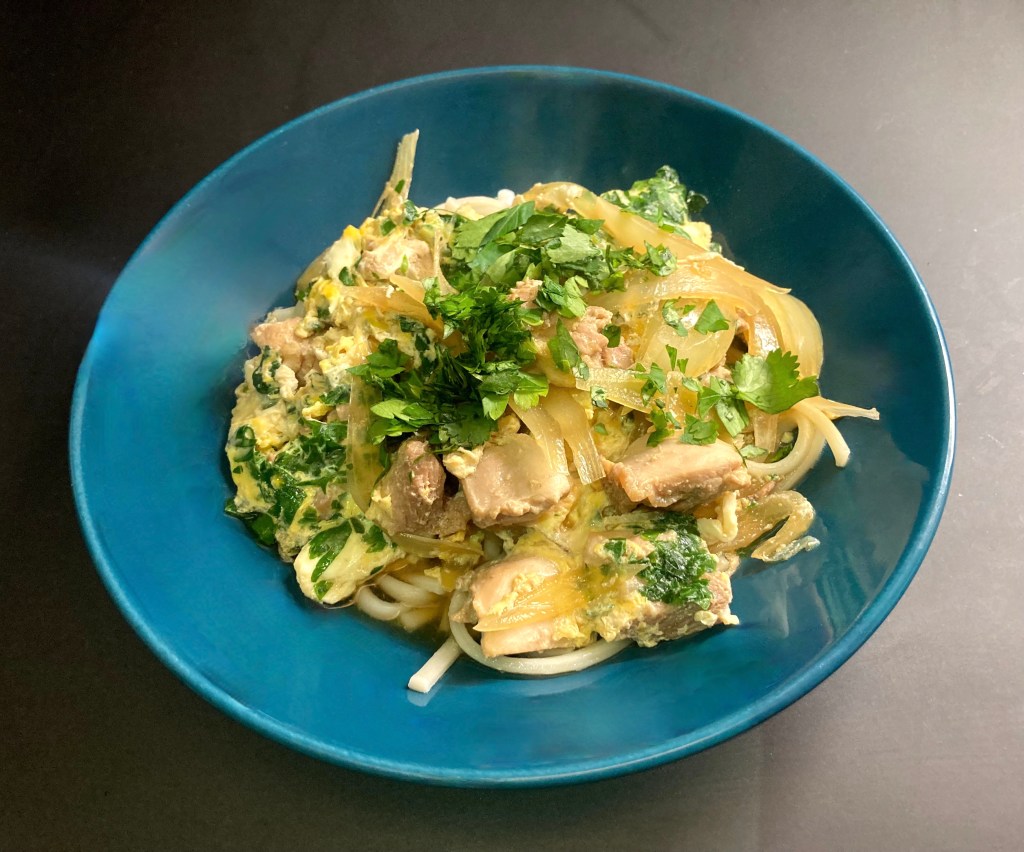
Hope you enjoyed Netflix’s The Makanai: Cooking for the Maiko House as much as we did. Two friends (Kiyo and Sumire) move from rural Japan to Kyoto, following their dream of becoming maiko’s. Once in Kyoto it turns out that their dreams are very different. Kiyo is passionate about food and becomes the person to prepare the makanai, the food for the people living in the Maiko house. Every episode shows Japanese food, from dumplings in red bean soup to baked sweet potato and onigiri (rice balls).

The first dish Kiyo prepares for the house is Oyakodon, a rice dish with egg and chicken, a popular dish in Japan. Easy to make, nutritious and the flavours and aromas are very satisfying. On Cooking With Dog you’ll find a helpful video showing you how to make Oyakodon. 

San Francisco based chef Namiko Hirasawa Chen (founder of Just One Cookbook, an award winning blog about food) was brave enough to cook all the food shown in the series. Obviously you’ll find all makanai recipes on their website.

What You Need

  • 100 grams of Chicken Breast (skin off)
  • 1 medium White Onion
  • 2 Eggs
  • 100 ml Dashi
  • 2 tablespoons Mirin
  • 2 tablespoons Soy Sauce
  • Mitsuba (or a mix of Parsley and Cilantro)
  • Rice

What You Do

Make sure your dashi is full of flavours, perhaps a bit stronger than usual. Make a broth with mirin and soy sauce. Peel the onion and slice from top to bottom (banana shaped slices). Chop the chicken breast in comfortable slices. Add the onion and the chicken to the broth, cover the pan with a lid and cook until nearly done. Add half of the mitsuba (or the combination of parsley and cilantro). Add the eggs to a bowl and lightly beat the eggs but don’t mix. You should be able to distinguish the white and the yolk easily. Add the first half to the broth and use chopsticks to distribute the combination in the pan. Wait for a few moments and add the second half. Serve over a bowl of warm rice. Decorate with mitsuba.

PS

Perhaps you noticed that we used udon for our oyakodon, basically because we love udon, but it should be served with rice. Most (all?) recipes suggest adding sugar. We think the mirin brings sufficient sweetness to the dish, but feel free to add just a bit of sugar.

Walnut Sauce

Michelin Award winning Japanese chef Akira Oshima is author of Yamazato, Kaiseki Recipes: Secrets of the Japanese Cuisine. The book contains recipes from the kitchen of the Yamazato restaurant in Amsterdam. It is amongst our favourite cookbooks. The recipes can be very challenging and time consuming as is getting hold of the right ingredients.
One of the recipes is for Takiawase, a mouth-watering combination of vegetables and fish. Every ingredient requires its own preparation and is simmered in its own dashi-based stock. The recipe of chef Oshima combines kabocha, eggplant, okra and shrimp. Indeed: four different kinds of homemade stock.

When shopping at Amazing Oriental we saw Garland Chrysanthemum, which made us think of another tasty dish, a combination of walnut sauce, chrysanthemum and shiitake called Shungiku Kurumiae. It’s actually two recipes, one for walnut sauce and one for chrysanthemum. The walnut sauce is a combination of roasted and blended walnuts, white miso, dashi, sake, light soy sauce and mirin (in that exact order). Very tasty with lots of umami and depth. It serves as a vinaigrette for the salad which is a combination of blanched and in dashi marinated chrysanthemum and grilled shiitake.

Yamazato, Kaiseki Recipes: Secrets of the Japanese Cuisine is available via the well-known channels, both in English and Dutch, second hand. The Dutch version is available via the webshop of the publisher for €34,50.

Drink Pairing

We prefer a glass of sake with our Shungiku Kurumiae, for instance a Junmai sake with fresh aromas and good acidity. The sake must be dry and well-balanced with a clean finish. You could enjoy a glass of white wine with the dish, provided it’s dry and mineral.

PS

We made too much walnut sauce for the salad, so we stored what was left in the refrigerator. But we were out of garland chrysanthemum (we wanted to use the remainder for our Matsutake dish) so what to do? The next day we fried some excellent organic pork belly and served it with Brussels sprouts and walnut sauce. Lovely combination!

Umami

Sweet, sour, bitter, salty and umami are the five basic tastes. The term umami originates in Japan; it’s probably close to savoury. Recognizing sweet or bitter is something we learn as a child, recognizing umami is not something we have learned and that’s perhaps why some people in the past argued that umami is not a taste in its own right. It’s now clear that we have taste receptors that respond to the components that make umami.

Science

Danish professor emeritus in biophysics at the University of Southern Denmark, Ole G. Mouritsen, writes about the gastronomical, historical, scientific and cultural aspects of umami in his book Umami: Unlocking the Secrets of the Fifth Taste (available via your local bookstore or the well-known channels for approximately 40 US$). He also published cookbooks, for instance about seaweeds. Several scientific studies were conducted, trying to unravel the secrets of umami. One of the findings is that umami is the result of two components: glutamate and nucleotide. Bringing them together creates synergy and the umami taste is amplified.

Three Examples

Classic Japanese dashi is a combination of kombu (seaweed) and katsuobushi (bonito flakes). Kombu contains amino acid glutamate and Katsuobushi contains nucleotides inosinate and guanylate. Together they create a synergy, and the result is the clear taste of umami in dashi.
Same story for oysters and champagne. The oysters contain both glutamate and nucleotides (meaning that they are full of umami) and the champagne, due to the way it’s produced, contains glutamate, making oysters and champagne into a very tasty, umami rich combination.
Also the same story for tomatoes (amino acid glutamate) and beef (inosinate). Combining them should create the beautiful synergy of umami.

Ragù

Enough chemistry for one day. We decided to prepare Ragù Napoletano. It is one of the great dishes of Italy, or to be more precise of Campania. It is a combination of rolled up well marbled beef (rump cap, rump tail), an intense tomato sauce and hours of careful slow cooking and reducing. 
The result is a two-course meal: the sauce is served with pasta as a starter and the sliced meat with some sauce and vegetables as a main. 
Will you able to taste the umami? The answer is yes, absolutely, especially when you prepare the dish one or two days ahead.

Recipe for Ragù Napoletano in our next post.