Pasta with Mushrooms

Most historical recipes are about meat, fish and poultry, using a range of herbs and spices. Vegetables were not considered to be a healthy (slimy and wet) or were seen as food for the poor. Afterall, the recipes were to be used by cooks and chefs for the upper class and the gentry. Eating meat, drinking wine and using spices also illustrated wealth.

Today’s food culture is very different: meat is seen by many as the most important aspect of a meal, we tend to eat far too much of it and we’re not willing to pay a decent price for it. Go to your local supermarket, visit your local snack restaurant and feel sorry for the animals. From happy pig in the mud to intensive farming where the animals are kept in gestation crates.
On the other hand, hurray, we see more and more vegetarian alternatives, with lentils, beans, vegetables etcetera inspired by, for instance, traditional vegetarian cuisine from India.

We were pleasantly surprised when Manon Henzen and Jeroen Savelkouls published their Historisch Kookboek Vega, discussing historical vegetarian cuisine. The book includes 14 recipes, for instance dishes like Surprise Honey Cake and Chick Pea Soup. Plus one for Pasta with Mushrooms. Sounds very much 21st century but is actually based on a Venetian recipe from the 14th century. It’s a nice combination of homemade pasta (a bit chewy perhaps), mushrooms and spices. We tweaked it a bit. The original recipe is included in the book which is available via the webshop for €12,50 (Dutch only). On the website you will also find a range of videos, helping you to cook historical vegetarian food.

Wine Pairing

You can be flexible in this case. We enjoyed a glass of Côtes de Provence rosé with our pasta, but a glass of not too complex, red or white wine will also be fine.

What You Need

  • Dough
    • 125 grams of All Purpose Flour
    • 2 Eggs
    • 50 grams of Parmesan Cheese
  • Spices
    • Black Pepper
    • 3 Cardamom Seed Pods
    • Cinnamon Powder
    • Laos Powder
    • Nutmeg
  • Shallot
  • 150 grams of Mixed Mushrooms
  • 4 Sage Leaves
  • Parsley
  • White Wine Vinegar
  • White Wine
  • Olive Oil

What You Do

Crush and combine the spices. Add 2 teaspoons of the mixture and the grated Parmesan cheese to the flour and mix. Whisk two eggs and add these to the mixture. A bit of kneading is required to make the dough. Set aside for an hour or so.
Knead the dough a bit more, flour your hands and make finger-long, thin pasta.
Chop the shallot, glaze in a large heavy iron pan, add the sliced mushrooms and fry these gently for a few minutes. Now add half of the deveined sage leaves and roughly chopped parsley plus some white wine. You could add a splash of white wine vinegar. Cook the pasta in a pan with boiling water for 10 minutes or until done. It behaves very similar to gnocchi. Five minutes before serving add the remaining sage and parsley. Drain the pasta, add to the pan and combine. Serve with some extra Parmesan cheese.

Pasta with Mushrooms ©cadwu

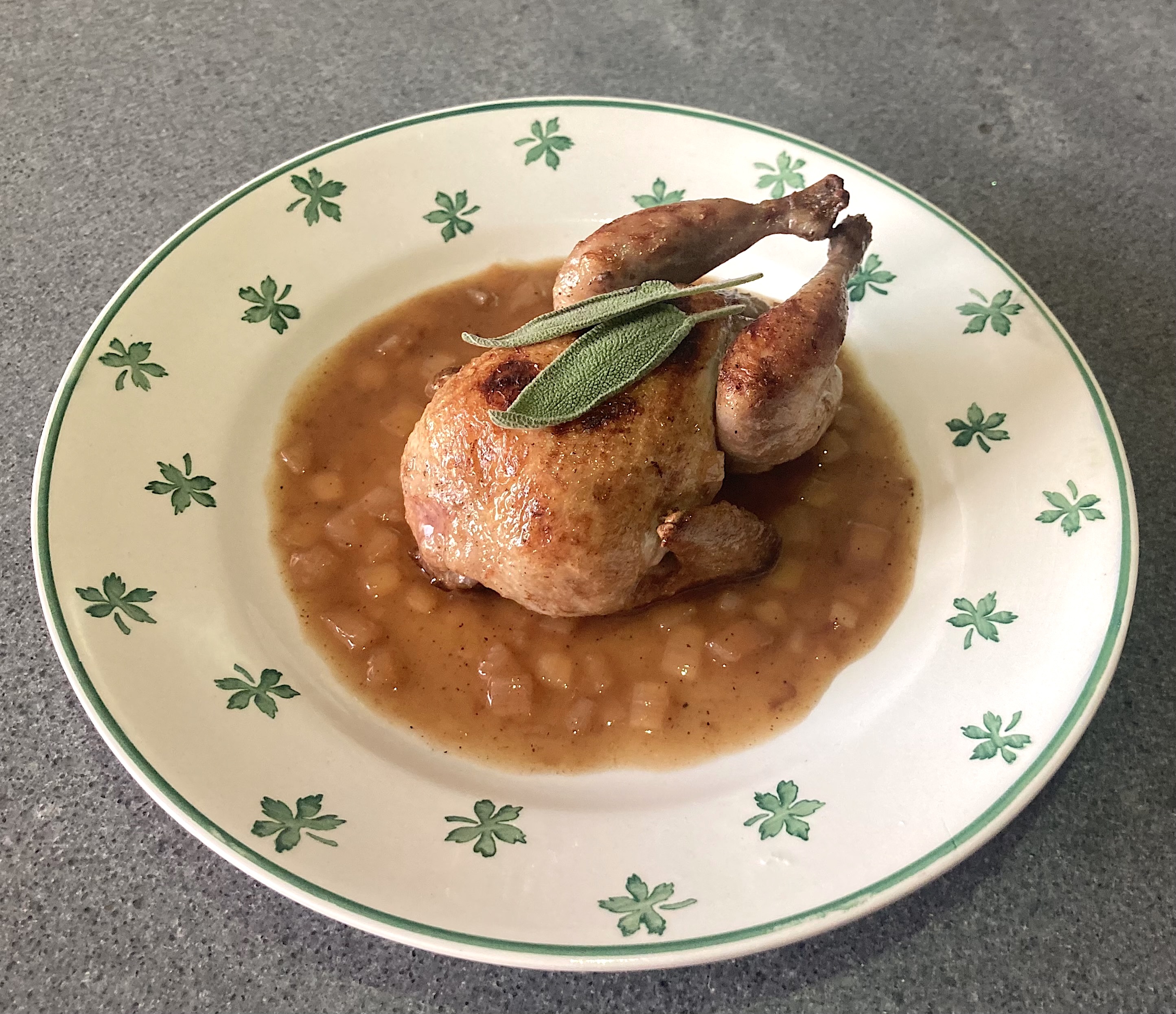
Quail à la Roden

A few excellent ingredients is sometimes all you need to cook a wonderful dish. In this case you need quail, shallot, olive oil, butter, sage and Marsala.
We love the delicate, pleasantly intense flavour of quails. They are great to combine with strong flavours like bay leaf, pancetta and prunes but in this case, we follow a recipe by Claudia Roden, as published in her excellent book The Food of Italy. We tweaked it a bit, so please buy Claudia Roden’s book when you want to make the original.
Marsala is a fortified wine from Sicily. Perhaps you know it as something sold in small bottles, especially for cooking purposes. Never buy this nasty product because it can’t be compared to real Marsala. Same story for the small ‘Madeira’ bottles.
Quails must be sufficiently fat and undamaged. We prefer the French label rouge quails. Not cheap, but a wealth of flavours. 

Wine Pairing

The dish comes with a gentle, intense and slightly sweet taste thanks to the sage, the marsala and the quail. You could go for a medium bodied red wine. We enjoyed a glass of Domaine Vico Corse Le Bois du Cerf Rosé 2021 with our quail. This is an exceptional rosé from Corsica. It is made from grenache and sciacarello grapes. It is medium bodied and fresh with aromas of red fruit. Its taste is complex, long and fruity.

What You Need

  • 2 Quails
  • 1 Shallot
  • Olive Oil
  • Butter
  • 4 Leaves of Sage
  • Dry or Medium Dry Marsala
  • Chicken Stock
  • Black Pepper

What You Do

Clean the inside of the quail with a bit of kitchen paper and remove anything that’s left. Check for remaining feathers and shafts. Gently fry the chopped shallot in butter and olive oil until soft. Remove the shallot from the pan, increase the temperature and fry the quails until golden-brown. Reduce the heat, add shallot and sage. Pour in marsala and stock. Cook the quails for 20 minutes until done, turning them over regularly. Transfer the quails to a warm oven (60˚ C or 140˚ F). Reduce the sauce, taste, add black pepper, perhaps some freshly chopped sage and diced cold butter to thicken the sauce. Serve the quail on top of the sauce.
Claudia Roden serves the quails with risotto. 

The Food of Italy

In 1990 Claudia Roden published The Food of Italy, a book based on her articles in the Sunday Times. She researched Italian cuisine for over a year, traveling throughout the country, visiting cities and villages, talking to people and enjoying their way of preparing food. 

If you open The Food of Italy, you will notice that the table of contents is very much a list of regions. Every chapter begins with an introduction that helps you understand the region. For instance, when she writes about Lombardy, she writes about themes like economy, the countryside (Lago Maggiore, Lago di Como), the cuisine, the renaissance, its main products (rice), meat (Lombardy is known for its pigs), cities (Milan being its main city) and of course its wine (sparkling wine from Franciacorta). After having read the introduction, you will have a much better understanding of the dishes from that region.

Traditional and Local

The book is about traditional local food. When she was once asked why she would write such a book when all the world is changing and cooking is becoming more global and becoming the same all over the world, she answered “What appeals and fascinates and touches the heart is that what distinguishes Italy, which recalls her past and is part of the prestigious heritage and traditions.” We couldn’t agree more!

We prepared a dish from Lombardy, a simple and very tasty combination of Quail, Shallot, Sage, Butter, Oil and (dry) Marsala. It is served with Risotto. In one of our next posts we will describe the dish in more detail.

The Food of Italy is available via your local bookshop or the usual channels for something like 20 euro or US dollar (paperback). A beautifully illustrated hardcover is also available. Other publications by Claudia Roden include books on Mediterranean Food (thus paving the way for chefs like Yotam Ottolenghi), on the joy of Outdoor Eating, on Picnics, Coffee and Spanish Food. 

PS

Marsala is a fortified wine from Sicily. Perhaps you know it as something sold in small bottles, especially for cooking purposes. Never buy this nasty product. It has nothing to do with Marsala. Same story for the small ‘Madeira’ bottles. It’s a bit of a challenge but try to buy dry Marsala for this dish and next time you’re making Tiramisu, use sweet Marsala.

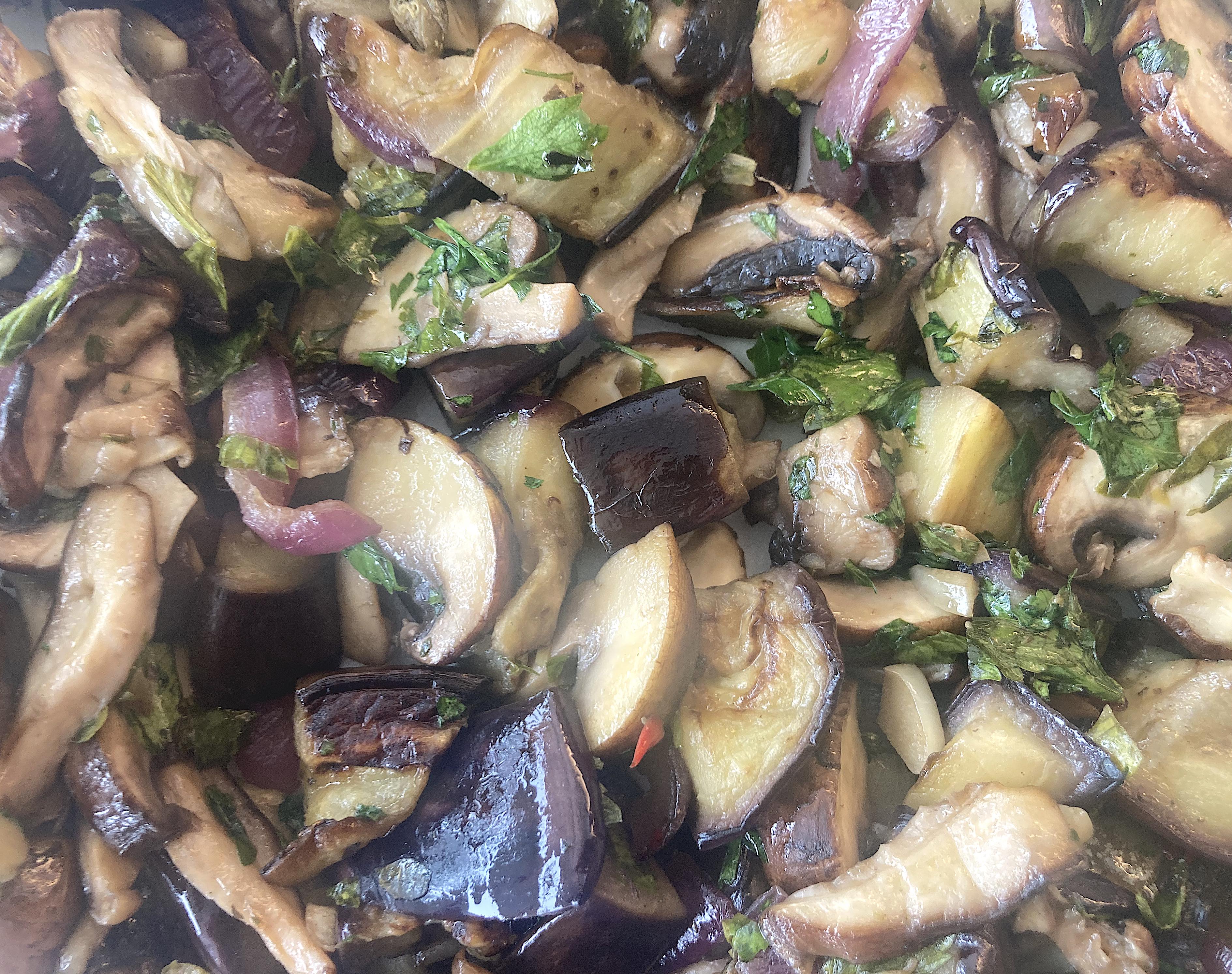
Mushroom Caponata

There must be hundreds of recipes for Caponata. The dish originates from Sicily and should contain (at least, we think so) eggplant (aubergine), celery and vinegar. Sugar is often added to enhance the sweetness and intensity. Nowadays it’s often a combination with tomatoes, shallot, capers, olives and perhaps raisins, pine nuts, oregano and basil.
The flavour of caponata should be slightly bitter (the eggplant) with a touch of sweetness (sugar, onion), acidity and saltiness (celery). The texture should be moist, but not sauce-like.
We love to enhance the flavours by adding mushrooms. And since we’re not keen on using sugar, we make sure the onions bring sufficient sweetness.

Enjoy your caponata as an appetizer, for instance with some crusted bread or bruschetta. A nice glass of white wine or rosé will be perfect with it. It’s also great as a side dish, with fish or even merguez.

Whatever the combination, caponata must be made one day ahead.

What You Need

  • 1 Aubergine
  • 200 grams of Mushrooms (preferably a mix with Shiitake)
  • 1 Red Onion
  • 1 Garlic Clove
  • 1 cm Red Chilli Pepper
  • Parsley
  • Celery
  • 2 tablespoons of White Wine Vinegar
  • Olive Oil
  • Fine Salt

What You Do

Wash the eggplant and slice. We slice the eggplant lengthwise in 8 and then we slice these strips. Salt them generously, transfer to a sieve and allow to drain for one or two hours. The more liquid they lose, the better! Rinse the eggplant with cold water and dry them with a kitchen cloth. Fry the aubergine in a heavy iron skillet until nicely golden brown. Set aside. Slice the red onion, clean and chop the mushrooms. Chop the garlic and the chilli pepper finely. Add some olive oil to the pan and fry the onion. Remove and set aside. Now fry the mushrooms. After 5 minutes or so add the garlic and the chilli pepper. After a few minutes add the mushrooms and the eggplant to the pan. Add chopped parsley and celery. Mix well. Add two spoons of white wine vinegar and leave on low heat for 10 minutes. Add black pepper to taste. Transfer to a plate and let cool. Keep in the refrigerator for the next day.

The Quiet Hunt

Antonio Carluccio’s The Complete Mushroom book is more than a cookbook. The first part of the book discusses foraging and collecting mushrooms, with clear descriptions of each mushroom and poisonous look-alikes. It’s a pleasure to read, but we’re not brave enough to start our own quiet hunt.

Fortunately, mushrooms are becoming more popular and greengrocers and supermarkets have started selling chestnut mushrooms, button mushrooms and shiitake. Asian supermarkets in most cases sell (king) oyster mushrooms, shiitake, enoki and shimeji.
Don’t be tempted to buy dried mushrooms: expensive, no aroma, nasty taste and not even close to a fresh mushroom.

Recipes

The second part of the book includes some 150 mushroom recipes, ranging from classic Italian dishes to culinary treats. Carluccio’s recipes are well written and informative. You’ll get the feeling that he lets you in on some of his secrets. And given he started foraging mushrooms as a young child, there are a lot of secrets to share!

One of our favourites is a salad made with maitake, fresh scallops, crab and shrimps. It’s an amazing result, with lots of pleasant flavours, also thanks to the cilantro, dill and parsley. Part of the fun is that the scallops are not seared but prepared like ceviche. Maitake is also available as a cultivated mushroom.

Caponata

More favourites? Of course! How about Mushroom Caponata or Tagliolini with black truffle? The caponata is a combination of mushrooms, egg plant and various herbs, so if you can buy button mushrooms and for instance shiitake, you’re ready to go.

Our all-time favourite from this book is the combination of fresh oysters with white truffle (bianchetti). A starter we prepare once or twice a year, depending on the availability of the truffle. Always a pleasure…

The Mushroom Book – the Quiet Hunt was published in 2001. It’s available (in most cases second hand) via channels such as Amazon and e-Bay for prices between 25 and 50 euro.

One of the very best books on mushrooms, written by a true expert.

PS

Later we found an earlier book by Antonio Carlucci called A Passion for Mushrooms, published in 1989. Very little overlap in recipes. A must-have for mushroom lovers!

Antonio Carluccio’s Oysters with Bianchetto

Last Saturday we were extremely lucky. Not only did we buy the very first fresh morels of the season, we also bought a small bianchetto. This affordable white truffle is available from mid January to the end of April. It is also called March truffle (marzuolo).

In his book Complete Mushroom Book, Italian chef Antonio Carluccio combines fresh oysters with a white wine sabayon and white truffle: Ostriche con zabaglione e tartufo bianco. The result is spectacular. The combination of the distinct aroma of the white truffle with the oyster is intriguing. The sabayon brings everything together in terms of taste, consistency and structure. And just to show you how clever Carluccio’s combination is: the sabayon in itself is not pleasant. We prepared the dish with bianchetto. Maybe less subtle than when prepared with a white truffle, but the result is nevertheless wonderful.

Wine Pairing

With such a great dish you many want to drink a glass of Chablis or Champagne. We enjoyed a glass of Crémant de Bourgogne, produced by Vitteaut-Alberti. A refined wine, soft and with delicate fruit. The bubbles are small and pleasant.

Oysters a la Carluccio © cadwu
Oysters à la Carluccio © cadwu

Carpaccio

Carpaccio has evolved into an anything-goes combination of something sliced (beef, veal, (smoked) salmon, beetroot) with a dressing and garnished with for instance pine nuts, cheese, lettuce, capers, tomatoes, spring onion etcetera, which is a pity because the original Carpaccio is actually rather perfect.
We’re not culinary puritans but nevertheless we were slightly shocked when we found the next version of Carpaccio in our local supermarket: with wasabi mayonnaise, teriyaki glaze and roasted sesame seeds. Help?

Original Version

Let’s go back to the original Carpaccio as it was created (in 1950) by chef Giuseppe Cipriani of Harry’s Bar in Venice for one of his regular guests, the Contessa Amalia Nani Mocenigo. Her doctor had ordered her to eat uncooked food, especially raw, red meat. Most likely she suffered from anemia. The poor Contessa was used to excellent food, so something raw on a plate wasn’t very appealing. Chef Cipriani created a special dish for her, which he named after, indeed, the Venetian painter Vittore Carpaccio. Some say this was a tribute to the whites and reds as used by Carpaccio.

Sauce

The sauce is a very clever combination of mayonnaise, Worcester sauce, lemon juice, white pepper and milk. The velvety mayonnaise works very well with the lean meat, the acidity of the lemon is a perfect match for the sweetness of the beef and the Worcester sauce brings umami and depth. The milk gives the sauce the right consistency.

Next time when you think about preparing Carpaccio, why not try the original version and forget about all the extra’s.

Wine Pairing

We suggest enjoying your Carpaccio with a glass of Pinot Grigio or a Soave. It should be a fruity, not too powerful wine. Carpaccio is about the flavour of the meat. The sauce and the wine should simply support this. You could also go for a Pinot Noir, provided it has a light character.

What You Need

  • 50 grams of Excellent Tenderloin or Sirloin (per person) thinly sliced, cold but not frozen.
  • (Homemade) Mayonnaise
  • Worcester Sauce
  • Lemon
  • White Pepper
  • Milk

What You Do

Take one or two spoons of mayonnaise and add two teaspoons of Worcester sauce, one or two teaspoons of lemon juice and freshly ground white pepper. Taste and adjust until you have the perfect balance. Now add milk, creating a thinner sauce. Remove the meat from the refrigerator, flatten the meat if so required and transfer to a cold plate. Create a nice pattern with the sauce, using a sauce bottle. Serve immediately.

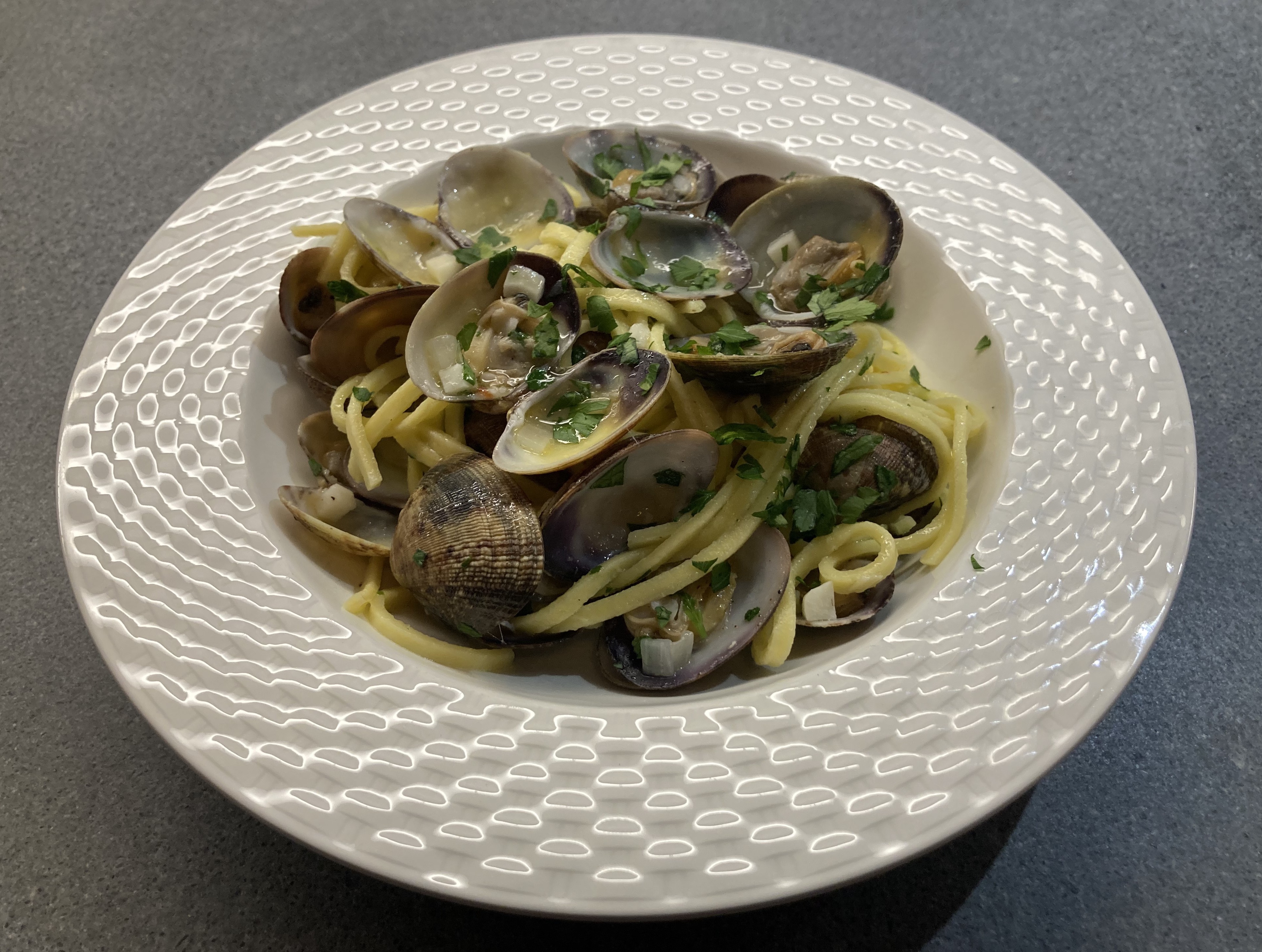
Pasta Alle Vongole

This is a truly delicious and simple starter, one that will only take a few minutes to prepare. The dish comes with two challenges: you need fresh, excellent vongole and you need to resist the temptation to add shallot, tomato, chilli, wine, lemon or butter.

Hey, we can hear you thinking, no wine? Indeed, no wine. We’re not fan of the acidity that comes with the wine plus we don’t want too much liquid. Basically we’re happy with the liquid as provided by the vongole. The idea is to steam the vongole in their own juices. This requires closely monitoring the cooking process. Next time you prepare Pasta Alle Vongole, please try to forget the wine.

Another ingredient to forget: salt. No need to cook the pasta with salt because the vongole will bring enough saltiness.

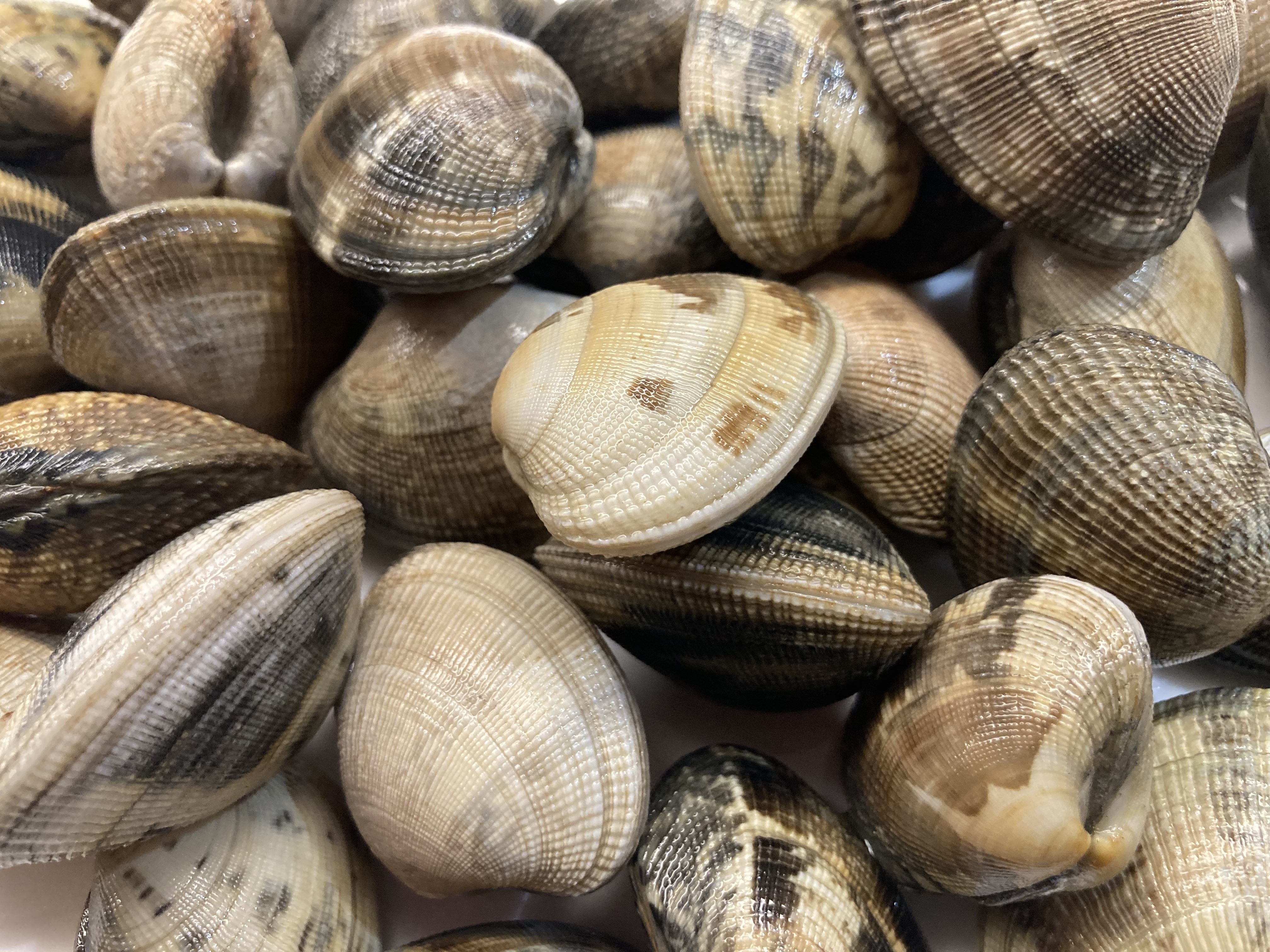
Obviously the vongole need to be clean, meaning without sand. Sometimes we’re lucky and our fishmonger offers washed vongole. If not lucky, we wash the vongole a few times with salted water.

Wine Pairing

Enjoy this classic Italian dish with a Soave: a beautiful, dry, crisp white wine from Italy. We opened a bottle of Cuvée XX, Soave Classico DOC, produced by Guerrieri Rizzardi. It proved to be ideal with the clams: refreshing and dry with floral and mineral notes.

What You Need

  • 500 grams of super fresh, washed Vongole
  • 2 Gloves of Garlic
  • Parsley
  • Spaghetti
  • Olive Oil
  • Black Pepper

What You Do

  1. Make sure you have everything ready: crushed garlic, chopped parsley, a pan with boiling water, a heavy pan (warm through and through), two warm plates
  2. Discard vongole that are broken or damaged
  3. Ready?
  4. Cook the pasta as mentioned on the package
  5. Increase heat, add a generous amount of olive oil to the heavy pan, add garlic, count 30 seconds, add vongole, close the pan and cook the vongole for 3-5 minutes in total
  6. After 1 minute (so 2-4 minutes to go) check if all is okay
  7. If too dry, then add extra olive oil or a splash of water
  8. When clams have opened, drain the pasta, remove the pan with the vongole from the heat, add pasta, chopped parsley and black pepper, mix and serve on two warm plates
  9. You could remove some, but not all, of the shells to make eating the dish a bit more elegant, although it’s fun eating the vongole with your hands
  10. Discard shells that have not opened
  11. PS Some recipes suggest cooking the vongole, preparing a sauce and then reheating the vongole with the pasta. If you do, the poor vongole will become rubbery, so not a good idea.

The Art of Sauces: Classic Tomato Sauce

This recipe goes back to the days of Antonina Latini who published a recipe for a tomato sauce in his Lo Scalco alla Moderna (The Modern Steward, or The Art of Preparing Banquets Well) in 1692. Marie-Antoine Carême wrote about Latini’s recipes and Auguste Escoffier positioned the sauce as a leading (mother) sauce.

The sauce is different from a modern, vegetarian tomato sauce, for instance because one of the ingredients is salted pork, which obviously brings saltiness and depth to the sauce, in a very natural way. 
The sweetness of the tomato is supported by carrots, onions and various herbs, making it a much more complex sauce. The flavours and aromas of the tomatoes benefit from the rich and tasteful context. This also supports the concept of a leading sauce: you can use it as a starting point for other sauces.
The texture of the sauce (it’s not smooth) in combination with the fat creates a very pleasant mouthfeel.

Sauce Tomate has many derivatives, such as Sauce PortugueseSauce Marinara and even Ketchup. In one of our next posts we will describe how to make Sauce Provençal and Oeuf à la Provençal (eggs poached in tomato sauce).

What You Need

  • 200 grams of Salted Organic Pork (not smoked)
  • ½ Leek
  • 1 Carrot
  • 1 Celery Stalk
  • 1 Shallot
  • 2 gloves of Garlic
  • 4 – 6 Excellent Ripe Tomatoes
  • White Stock (Veal preferably)
  • Bouquet Garni (Parsley, Thyme, Bay Leaf, Rosemary)

What You Do

  1. Start by cleaning and chopping the vegetables
  2. Wash, dry and dice the salted pork
  3. Render the pork meat on medium heat in a Dutch oven
  4. Once lightly coloured add the leek, carrot, celery and shallot
  5. Allow to cook for 5 to 10 minutes
  6. You’re looking for a bit of colour, but not too much
  7. Add the tomatoes and the garlic
  8. Once warm, wait for a few minutes before adding some white stock
  9. This is a tricky part: if you add too much stock your sauce will be thin. Therefore some recipes suggest adding flour. We decided against it because we want a natural consistency
  10. Now it’s a matter of simmering, either in the oven or on low heat
  11. Allow to simmer for 90 minutes.
  12. Remove the pork meat from the sauce
  13. Pass the sauce through a sieve, making sure you capture all those lovely juices
  14. It’s hard work, but the remainder in your sieve should be as dry as possible.

Fleurs de Courgettes Farcie

Such a pleasure to see courgette flowers in your garden or at the greengrocers. The young courgette is firm and tasty; the flowers a beautiful yellow. Simply stuff the flowers, fry in a pan or cook in the oven and you have a great side dish or starter. And then you start wondering: ‘Stuff with what? Cheese? Salmon? Mushrooms? Tomatoes? Ricotta? Vegetable Mousse?’
Earlier we described a simple, tasty vegetarian version. This recipe requires a bit more work, but the result is delicious and beautiful. Crab and courgette go together very well; it’s a well balanced combination with surprisingly delicate flavors.

Wine Pairing

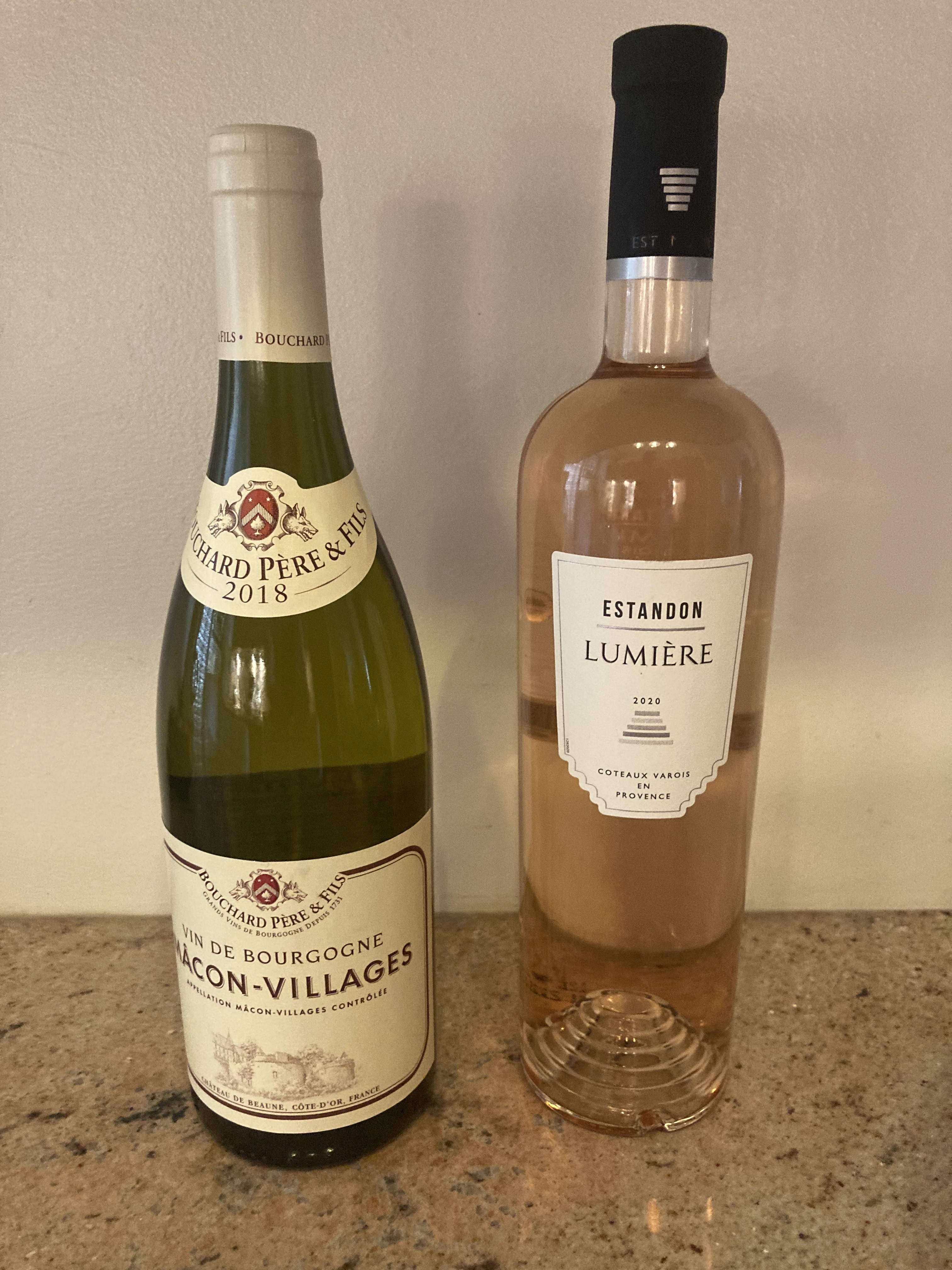
Obviously a nice glass of Côtes de Provence Rosé is an excellent choice. But you could also go for a white wine, for instance a Macon-Villages as produced by Bouchard Père & Fils. In general a subtle wine that goes well with the gentle flavors of both the crab and the courgette.

What You Need
  • One Courgette (small and firm)
  • One Garlic Clove
  • Olive Oil
  • Six Small Courgettes with their flower
  • Crab
  • Black Pepper
What You Do
  1. Wash the courgette, dry and grate coarsely
  2. Warm a small cooking pan, add olive oil and the grated courgette
  3. Fineley grate the garlic and mix with the courgette
  4. Leave for 20 minutes minimum on low heat
  5. When ready, set aside and let cool.
  6. Best is to use a leg of a fresh (littoral) crab, but you could also buy a can of most excellent crab
  7. If using fresh crab, heat a pan with water, bay leaf and crushed black pepper corns; cook the crab for 10 minutes, remove from the water, set aside until cooler and then remove the meat from the shell. Be sure to remove all shards of shell. Set aside and let cool.
  8. Remove the stamens from the flowers
  9. Remove the end of the small courgette
  10. Use a very sharp knife to slice the courgettes lengthwise in 3, making it look like a fan
  11. Heat water in a pan and poach the small courgettes (not the flowers!) for 60-90 seconds depending on the size
  12. Add some crab meat to the courgette mixture and taste
  13. Keep adding crab until you’ve reached the perfect combination (or the end of the crab)
  14. Add some black pepper
  15. Stuff the flowers
  16. Close them by slightly twisting the leaves of the flower
  17. Sprinkle with olive oil, making sure they are completely coated with oil
  18. Heat your oven to 200° C or 390° F
  19. Using the broiler is a good idea
  20. Transfer to the oven and cook for 10 minutes
  21. The flowers should be crisp and perhaps a touch golden
  22. Allow to cool for a few minutes before serving.