Tamagoyaki (Japanese Omelette)

Tamagoyaki is best described as a Japanese rolled omelette and it is often served for breakfast or included in a bento box. It’s made by rolling multiple thin layers of egg; let’s say the concept of a Swiss roll but with much thinner layers. Making Tamagoyaki requires years of practice and a special rectangular pan (a makiyakinabe) using chopsticks only. But we, as western cooks with little patience, we use a round small, non-stick pan and two spatulas. The result is very tasty and it will make you think of a real Tamagoyaki.

The ingredients are a bit of a puzzle. Eggs, soy sauce and mirin for sure. Other ingredients include sugar (for a sweet version), sake and dashi (for a savoury version called Dashimaki Tamago).

The technique of rolling thin layers of egg is a great way of making an omelette. Feel free to replace the Japanese ingredients with some chicken stock and finely grated Parmesan cheese. You will love it!

Wine Pairing

Tamagoyaki comes with some umami thanks to the dashi and a touch of sweetness. Enjoy with a sparkling wine, for instance a Crémant de Bourgogne. Our choice was a glass of Blanc de Blanc Brut made by Vitteaut Alberti. Its aromas are fresh and flowery; the flavours suggest honey and pear. You could also serve a dry Riesling or Sylvaner.
Serving sake is also a good idea; our choice would be a Ginjo-Shu because of its delicate and light flavour.

What You Need
  • 2 Eggs
  • 2 Tablespoons of (Light) Dashi
  • 1 Teaspoon of Mirin
  • 1 Teaspoon of Light Soy Sauce
  • Oil
What You Do
  1. Heat a small non-stick pan (10 -15 centimetre) until warm but not hot
  2. Whisk the eggs, add dashi and mirin
  3. Use kitchen paper soaked with oil to coat the pan
  4. Use a (small) sauce spoon to add a bit of the mixture
  5. Make sure you can repeat this as often as possible, so it has to be a really thin layer of egg
  6. When nearly set, roll it up and move to the side
  7. Coat the pan with oil
  8. Add some of the mixture, make sure it connects to the roll, wait until nearly set and roll it up
  9. Repeat until the mixture is used up
  10. The tamagoyaki should be yellow with perhaps a touch of golden brown
  11. When done, feel free to shape the tamagoyaki by rolling it in a bamboo sushi mat
  12. Slice and serve, perhaps with some grated daikon on the side.

Flan with Tofu, Dashi and Ginger

Serving food prepared in a coddler is always good fun. Turn of the lid and be surprised! In this case it’s a light and elegant starter; one that you can prepare the day before. The ginger and spring onion bring spiciness and freshness, the dashi brings umami and the flan a velvety, rich feeling. Making the dish comes with two challenges: the flan should be smooth and the gel not too firm.

Sake Pairing

Sake is best with this dish. The taste of the flan is subtle with a nice fresh touch because of the ginger and spring onion. The gel is a bit salty, given the dish a nice edge. The sake should be straight and crisp (and cold of course).

What You Need
  • For the Flan
    • 8 Small Coddlers (so-called standard size)
    • 100 gram of Silken Tofu (light and soft)
    • 1 Egg
    • 1 Egg Yolk
    • 50 ml Dashi (preferably home-made)
    • Touch of Soy Sauce
    • 1 Teaspoon of Mirin
    • Butter
    • Dill
  • For the Gel
    • 75 ml Dashi
    • Cornstarch
    • Fresh Ginger
    • Spring Onion
What You Do
  1. In a bowl mix the egg and the egg yolk
  2. Use a blender to smoothen the tofu
  3. After blendering it should look like yoghurt
  4. In a second bowl mix the tofu, 50 ml dashi, a touch of soy sauce and mirin
  5. Now combine the content of the two bowls and mix gently
  6. Pass through a sieve
  7. It’s important that the mixture is very smooth, so no lumps or bits of white from the egg. And no bubbles. If not, pass through a finer sieve
  8. Apply a very thin layer of butter to the coddler, just enough to cover the inside
  9. Pour the mixture in the coddlers, but nor more than 2/3. The mixture will set and raise only a little
  10. Close the coddlers, but not too tight. You want to test one during the cooking process and you don’t want to burn your fingers
  11. Set your oven to ‘classic’ and to 170° Celsius or 340° Fahrenheit
  12. Put the coddlers in a large oven tray and add boiling water
  13. The water should reach ¾ of the coddler, leaving ¼ free. Once in the oven reduce the temperature to 120° Celsius or 250° Fahrenheit and cook for 25 to 30 minutes
  14. The coddlers are done when a metal pin comes out clean.
  15. Remove the coddlers from the oven and allow to cool. You can do this by putting them in cold water, but you can also give it a bit of time
  16. Make sure you dry the inside of the metal lid (condense).
  17. Reduce the dashi. The taste should be relatively strong because the cornstarch will soften it. Better to use agar agar, but cornstarch is perfectly fine in this case
  18. Thicken the sauce with the starch and let it cool. It should work as a gel on top of the flan.
  19. Grate the ginger and very thinly slice both white and green of the spring onion
  20. Put a bit of ginger in the middle of the flan; sprinkle the onion over the top of the flan and finish by pouring a bit of the gel
  21. Ideally this will cover the top (and the ginger and spring onion) and flow between the coddler and the flan.
    Put the coddlers in the refrigerator and let cool
  22. Half an hour before serving take them out of the refrigerator, remove the lid, dry it and put it back on again. Decorate with dill.

Dashi with Matsutake and Shrimps

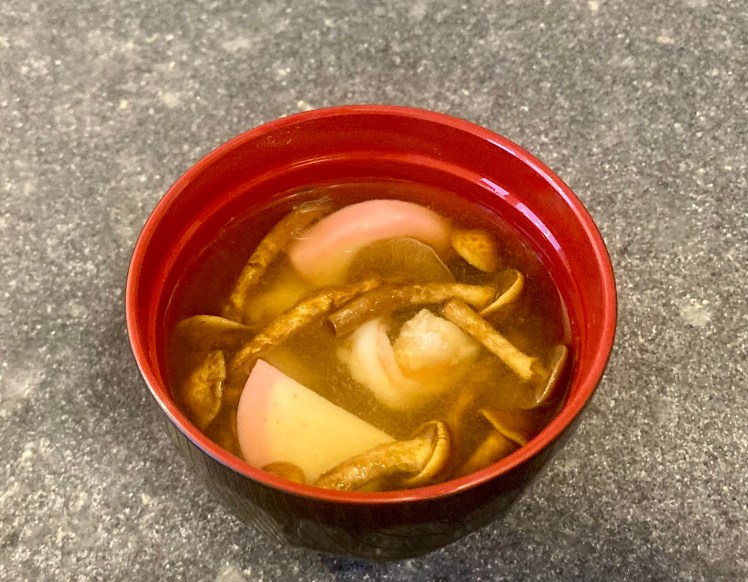
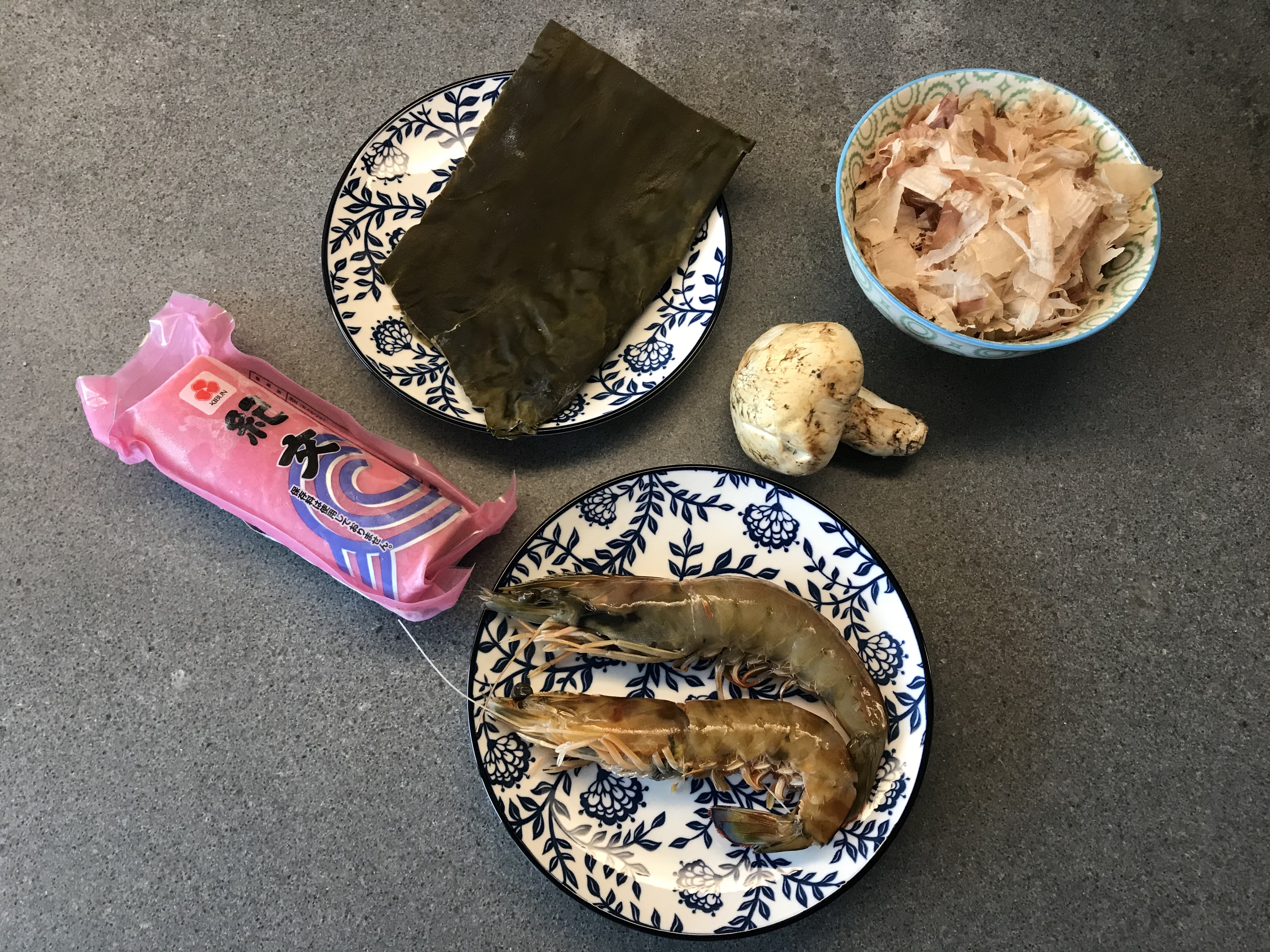
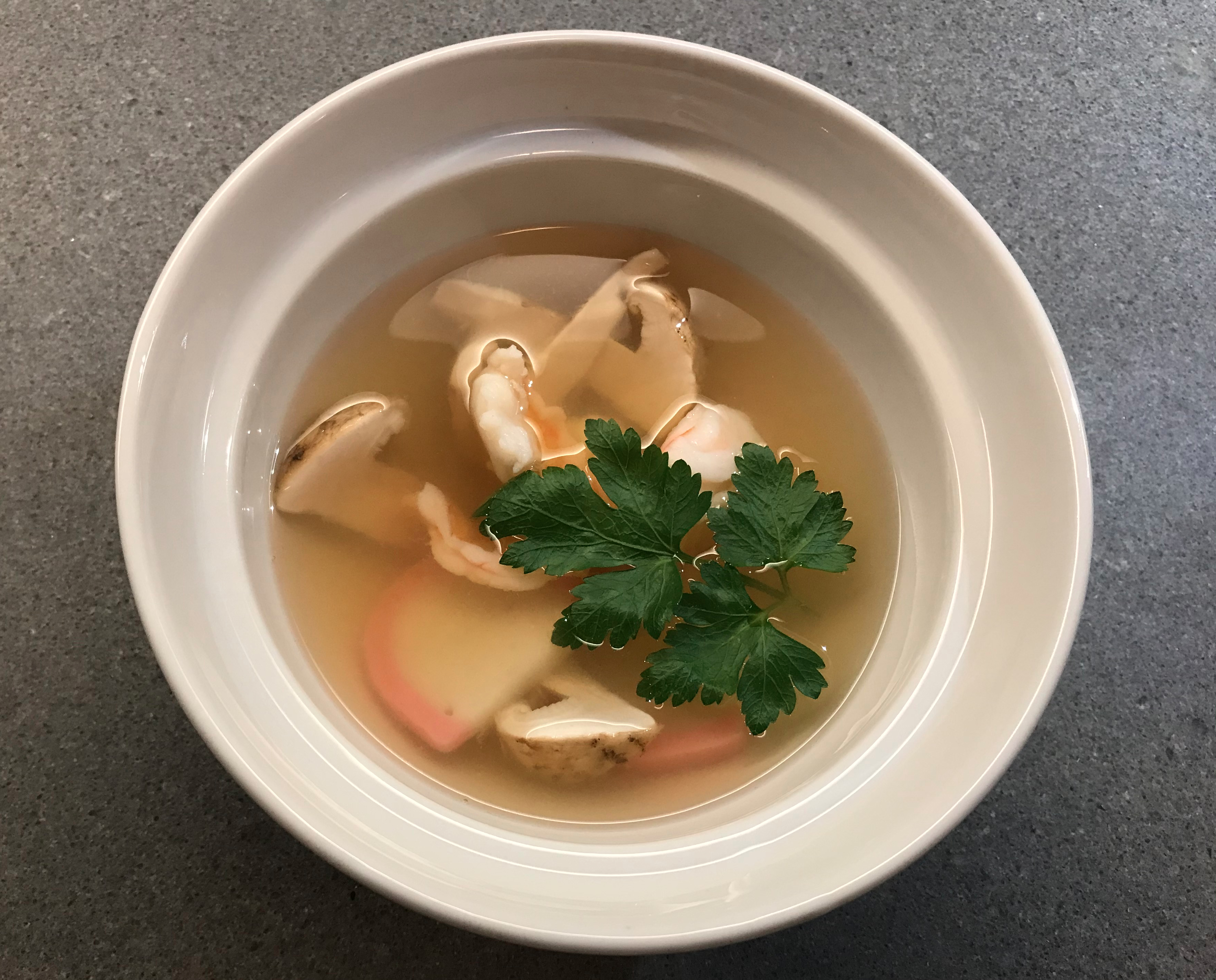
Antonio Carluccio once described it is a much-overrated mushroom but we dare to disagree. Just smell it! Pine, pine, pine. A unique mushroom. We tried making this soup with shiitake, but the result is not as refined, delicate and well-balanced. The key elements are of course the (home-made) dashi, the matsutake and the shrimps. Kamaboko (made from processed seafood) and Mitsuba (Japanese parsley) add colour (and some extra flavour) to the dish.

What You Need
  • Dashi
    • 0,5 l of Water
    • 10 grams of Kombu
    • 10 grams of Katsuobishi
  • 75 grams of Matsutake
  • 2 Shrimps
  • Taru Sake
  • Light Soy Sauce
  • Yuzu
  • Kamaboko
  • (Mitsuba)
Sake Pairing

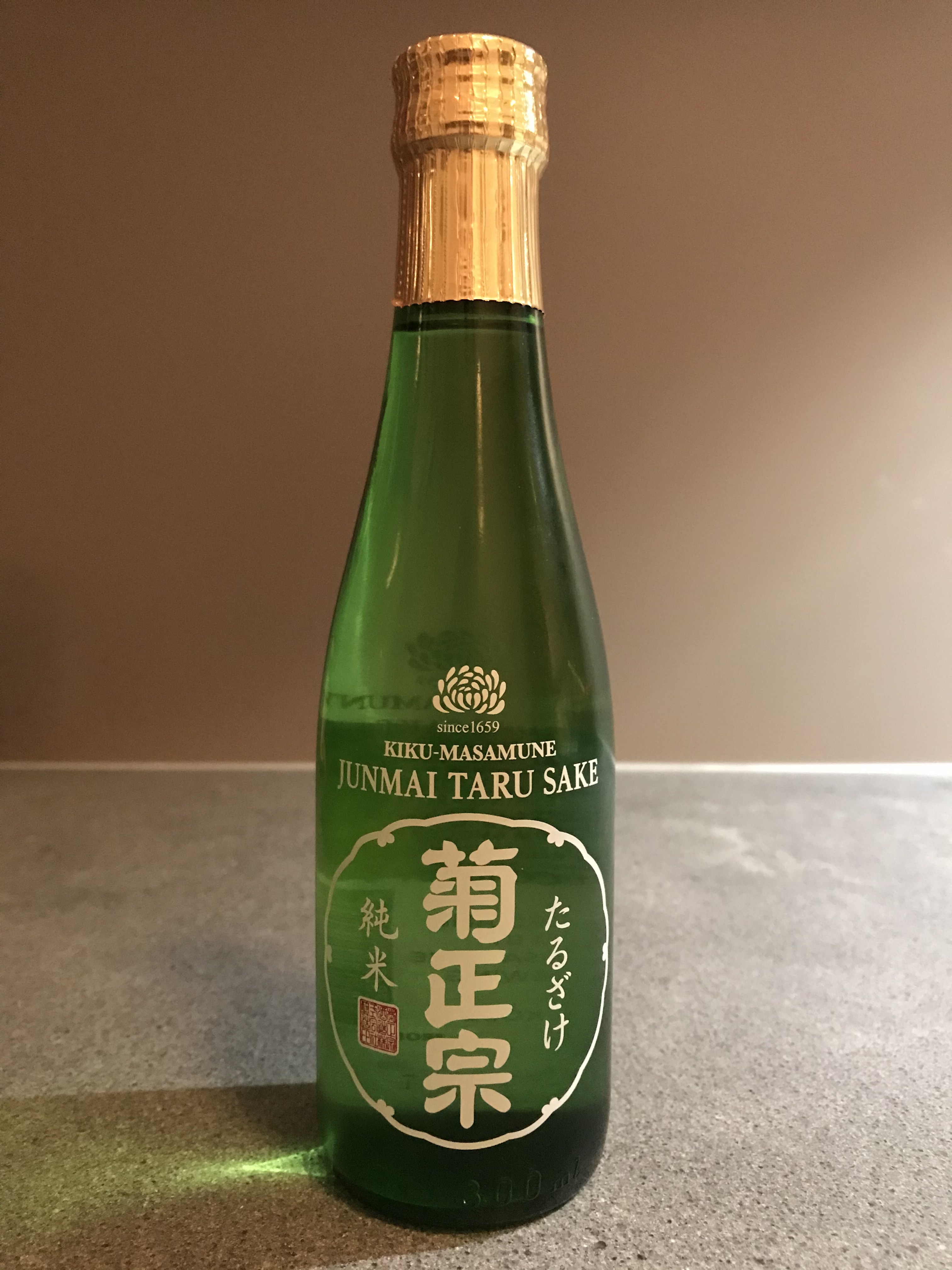
If you want to serve a drink with the soup, then serve taru sake. This is a dry sake characterized by its refreshing taste and the wooden aroma of Yoshino cedar. A wonderful link to the matsutake. And if you bought a bottle of taru sake, then please use this sake for marinating the shrimps.

What You Do
  1. With a damp cloth clean the matsutake
  2. Be careful not to remove the skin
  3. The root should be cut like a pencil
  4. Clean the shrimps and cut lengthwise in two
  5. Let marinade in two tablespoons of sake and transfer to the refrigerator for an hour
  6. Gently warm the dashi, add a small tablespoon of sake and a similar quantity (or less) of soy sauce
  7. Cut the matsutake in 8 similar slices and add to the soup
  8. After a few minutes (depending on the size of the matsutake) add four slices of kamaboko and the shrimp
  9. Taste and add some more soy sauce and or yuzu if needed
  10. Serve immediately when the shrimps are ready
  11. If available add some mitsuba.