Risotto with Porcini

Risotto is amongst our favourite dishes, especially risotto with mushrooms. Preparing risotto is not difficult, as long as you pay attention to the cooking process and use the right ingredients.
It’s nearly the end of the porcini-season. We enjoyed them several times this year, but not yet in a risotto. Time to start cooking!

Wine Pairing

We enjoyed a nicely oaked, buttery South African chardonnay with our risotto with porcini. A full-bodied white wine with aromas of tropical fruit and toast. A wine that paired very well with the earthiness of the risotto and its rich flavours.

What You Need
  • 90 grams of Carnaroli or Arborio rice
  • 1 Shallot
  • Olive Oil
  • 150 grams of fresh Porcini
  • Chicken or Vegetable Stock
  • Parmesan Cheese
  • Butter
  • Black Pepper
What You Do
  1. Peel and chop the shallot
  2. Clean the porcini
  3. Slice the porcini; cube smaller parts
  4. Warm the stock
  5. Add olive oil to a pan and glaze the shallot
  6. Add the smaller parts of the porcini
  7. Add the rice to the pan and coat for 2 minutes
  8. Keep the pan on medium heat; be patient
  9. Start adding stock, spoon by spoon and stir frequently
  10. Heat a heavy iron skillet and fry the sliced porcini in butter and oil
  11. In total it may take 15 – 18 minutes before the rice is al dente
  12. 5 Minutes before the risotto is al dente, coarsely cut some of the fried porcini, making sure you have a few nice slices for decoration
  13. Add the coarsely cut and fried porcini to the risotto
  14. When the risotto is ready, transfer the pan to the kitchen countertop and leave to rest for 2 minutes.
  15. Add grated Parmesan cheese and combine
  16. Add butter and combine
  17. Add some black pepper, taste, add more Parmesan cheese and/or butter if so required.
  18. Decorate with slices of porcini
  19. Serve immediately.
PS

We have four other risotto recipes, with squid, with beetroot, with mushrooms and with peas.

Risotto with Porcini is a delicious combination of creamy, rich rice and nutty, umami flavours. Risotto is not difficult to make if you use the right ingredienst and follow the instruction.
Risotto with Porcini ©cadwu

Mushroom Balls

We were asked to prepare a vegetarian main dish for a buffet style dinner. We immediately knew what we wanted to cook: mushroom balls and oven baked vegetables. Tasty and colourful. Could we make it gluten free? Which in this case means not adding breadcrumbs to the mushroom mixture, so we needed to think about an alternative. We tried well cooked rice, but that didn’t do the trick. Next idea was to blender the rice and make a very sticky paste. It did what we hoped it would do: the mushrooms balls are firm, but not dense. Great! Plus, they go very well with the vegetables!

Wine Pairing

We enjoyed a glass of French Malbec with the Mushroom Balls. In general you’re looking for a long, full bodied red wine, smooth, with hints of berries and ripe dark fruit.

What You Need
  • 25 grams of dried Porcini
  • 150 grams of fresh Mushrooms (Button Mushrooms, Shiitake)
  • 1 Shallot
  • 2 cloves of Garlic
  • 1 sprig of fresh Oregano
  • 2 sprigs of Thyme
  • 1 sprig of Rosemary
  • 1 sprig of Sage
  • 40 grams of Rice
  • ½ beaten Egg
  • Parmesan Cheese
  • Black Pepper
What You Do
  1. Boil the rice in water (with a pinch of salt) or in vegetable stock for 40 minutes. The rice should be thoroughly cooked.
  2. Soak the dried mushrooms in hot water for 30 minutes. Drain and check for sand.
  3. Chop the shallot and fry in oil until translucent.
  4. Clean the fresh mushrooms, chop, add to the pan and fry on a higher heat.
  5. When the mushrooms are somewhat fried, add the chopped garlic for five minutes. Be careful not to colour the garlic.
  6. Transfer the mixture to a bowl and allow to cool.
  7. Chop the soaked mushrooms. Add to the mixture.
  8. Use a kitchen knife to chop all herbs and then add these to the mixture.
  9. Blender half of the rice until it’s a sticky paste.
  10. Add remaining rice, paste and a relatively large amount of pepper to the mixture.
  11. Beat ½ egg and grate a generous amount of Parmesan Cheese.
  12. Add cheese and egg to the mixture.
  13. Pulse with a blender. The mixture should have granularity.
  14. Taste and add pepper and/or Parmesan if necessary.
  15. Allow the mixture to cool and transfer to the refrigerator.
  16. Preheat the oven to 180 °C or 355 °F.
  17. Use your hands to make balls, line a rack with baking paper and place the balls on the paper.
  18. Bake for 15-25 minutes until the balls are slightly coloured and firm.
  19. Allow to cool and leave for a few hours at room temperature.
  20. Preheat oven to 160 °C or 320 °F.
  21. Bake mixed, chopped vegetables (beetroot, parsnips, sweet potato, potato, butternut squash, parsley root, kohlrabi) by placing them in a large oven dish with plenty of olive oil and sprigs of rosemary, thyme, sage, marjoram in the oven for 20 minutes under aluminium foil at 160 °C or 320 °F and then 15-20 minutes at 180 °C or 355 °F without foil.
  22. Warm the mushroom balls in the oven in a separate oven dish.
  23. Combine just before serving.
  24. If gluten are okay, use half the rice (no need to make the sticky paste) and add breadcrumbs. The mixture will firmer and drier, so perhaps use 1 egg.
PS

This recipe is for two. The picture shows the result of the recipe times 2.

 
Mushroom Balls ©cadwu

Your Favourites in 2023

Happy New Year! Let’s begin the new year with the 2023 highlights. Your favorite post was No-Knead Bread, We have been baking our own bread for several years, based on the method of no-knead bread (see Jim Lahey’s book My Bread for more detail) and using the ingredients (Blue Poppy Seeds, Linseed) of the French Talmière. The result is delicious!

Another very popular post is the one showing you how to make Kimizu. This is a classic, golden sauce from Japan, made with Egg Yolks, Rice Vinegar, Water and Mirin. We also have a version with Tarragon, let’s say the Béarnaise version of Kimizu. The recipes for Kimizu and Kimizu with Tarragon continue to be very popular. Although this is a classic sauce, we use a microwave to prepare it. An easy and very effective way of managing temperature and consistency.

We love mushrooms. Cultivated ones, like Shiitake, Oyster Mushrooms, Enoki and Champignons de Paris and seasonal ones, such as Morels, St. George’s mushroom, and Caesar’s Mushroom. One of the most popular posts is about Cèpes à la Bordelaise. You can also use more available mushrooms for this great combination. Always a pleasure to serve, with eggs, with meat, with more present fish.
Last year we had lots of Bay Boletes, which was such a pleasure. It’s a fairly common mushroom, as tasty as Cèpes, but much more affordable.

And finally The Queen’s Soup. We didn’t expect too much of this post, but the soup turns out to be very popular.

We were of course very pleased and honored to receive an award for our Pear and Almond pie in the Great Bloggers’ Bake Off.

Let’s start cooking!

Your Favourites in 2023 ©cadwu

Cèpes, Lentils and Duck

Let’s celebrate the season by preparing a very simple, tasty starter with cèpes, the all-time favourite mushroom of many people. It is great when fried in olive oil with garlic and parsley, wonderful in a risotto and equally tasty when prepared à la Bordelaise. This starter is a bit more complex. It combines the nutty, rustic flavour of lentils with the fatty richness of foie gras and smokiness. The dish is a true appetizer.

Wine Pairing

We would suggest a white wine with some floral notes and only a touch of sweetness. A pinot gris or perhaps a gewürztraminer? Sweetness will go very well with the foie gras and the smoked duck, but it’s not a great match with the cèpes.

We could also imagine opening a bottle of Arbois Savagnin 2018. This complex, white wine is made from the Savagnin grape and is produced in the far east of France, the Jura. It comes with aromas that will make you think of nuts, curry and even umami. When tasting it, you may think the wine is off, given it is slightly oxidized. In this case it’s a good thing. Enjoy the savoury, nutty taste of the wine in combination with the various flavours in the dish.

What You Need

  • 150 grams of Cèpes
  • Du Puy Lentils (from Sabarot)
  • Smoked Breast of Duck
  • Terrine de Foie Gras de Canard
  • Neutral Oil (we used Avocado Oil)
  • Butter
  • Black Pepper

What You Do

Remove the smoked breast of duck from the refrigerator. Wash the lentils and cook for some 20 minutes. Drain and allow to cool. Add one or two teaspoons of oil, to coat the lentils and enhance their flavour. Add some black pepper. Clean the mushrooms and slice. Not too thin, the idea is to have a moist mushroom with a thin crust.  Fry the mushrooms in butter. Plate up by making a circle of lentils and decorate with slices of smoked duck, cèpes and very thin slices of terrine.

PS

Avocado oil seems a bit exotic, but actually it has a very high smoking point so it’s great for frying and baking. When used in a salad, you will notice the oil is light and fresh.

Mushroom Season

So far this year’s mushroom season has been great with lots of delicious Cèpes, Bay Boletes, Birch Boletes and Chanterelles. This Saturday we bought a very tasty autumn Truffle and a day earlier we treated ourselves to Matsu Take. Such a special mushroom. We’re waiting for the Saffron Milk Cap, Spain’s favourite mushroom, and the Caesar’s mushroom, a mushroom much appreciated in Italy. 

Since it’s a great year for the Bay Bolete, we thought it would be nice to share some recipes with this mushroom. Its taste is similar to that of the Cèpes or Penny Bun. Perhaps more intense?

Pâté with Mushrooms ©cadwu

Pâté en Croûte

A few years ago we celebrated the mushroom season by preparing a Pâté with bay boletes. The combination of a crispy crust, a structured, colourful filling and various flavours is always a pleasure. It’s good fun to think about the ingredients, work on the construction and enjoy the wonderful aromas from your oven while baking the pâté. And the joy when slicing it: is the pâté as beautiful as you expected it to be?

A red, medium bodied wine will be a great accompaniment of this Pâté en Croûte. In general you’re looking for a red wine with aromas of black fruit, floral notes and delicate wood. The tannins should be soft or well-integrated. We enjoyed a glass of Pinot Noir from La Cour Des Dames

Bay Boletes with Veal and Sage ©cadwu

Sauce

Earlier this year we prepared a rich sauce with bay boletes, sage, mustard en crème fraîche. We served the sauce with excelltn veal rib eye and turnip cabbage. The turnip brings frsshness and lightness to the dish, creating a lovely balance.
A fruity, slightly chilled red wine will be great with the dish. We opened a bottle of German Spätburgunder from the Pfalz area. Some dark fruit, strawberries, touch of earthiness, not too complex. One that supported the flavours and aromas of the dish very well.

Guineafowl and Bay Bolete ©cadwu

Guineafowl

Bay boletes combine very well with guineafowl. The meat is leaner, somewhat darker and more flavourful compared to chicken. It is not difficult to prepare, but due to the low-fat content you must be careful not to overcook. In this recipe we use guineafowl supreme (the breast fillet with the skin on plus the wing bone), rosemary, thyme, pancetta and garlic.
Enjoy with a glass of Chiroubles, a cru from the Beaujolais, produced by Domaine Montangeron. The wine has floral notes, aromas of cherries and strawberries. Its colour is pale ruby. Rich, elegant and long. It brings freshness and fruitiness to the dish and is sufficiently complex to remain present when enjoying the guineafowl and the bay bolete.
In general you’re looking for a red wine with freshness, fruity aromas and complexity. Perhaps a Pinot Noir?

More recipes on our website dedicated to mushrooms.

Bay Boletes with Veal and Sage

We continue celebrating the season: we create a rich sauce with Bay Bolete, Mustard, Sage and Crème Fraîche and combine it with excellent veal. The sweetness of both the sauce and the veal makes for an delicious combination. The aromatic sage brings length and depth to the dish.

It’s not always clear what umami is, but trust us, when you taste this dish, you will taste it. Meaty, deep and savoury. A very powerful and intense dish.

The taste of the Bay Bolete (Imleria badia, Bolet Bai, Kastanjeboleet, Maronen-RöhrlingBoleto Bayo) is similar to that of the Cèpes or Penny Bun. Perhaps the taste is more intense? In most cases you must discard the stem of the bay bolete because it’s not soft (and it will remain chewy when cooked), different from the stem of the cèpes. The colour of the cap is dark brown, like a chestnut.

Wine Pairing

A fruity, slightly chilled red wine will be great with the dish. We opened a bottle of German Spätburgunder from the Pfalz area. Some dark fruit, strawberries, touch of earthiness, not too complex. One that supported the flavours and aromas of the dish very well.

What You Need

  • 100 grams Bay Boletes
  • Butter
  • Olive Oil
  • 4 Sage leaves
  • Stock (Chicken or Vegetable)
  • Black Pepper
  • Mustard
  • Crème Fraîche
  • 200 grams of excellent organic Veal Ribeye

What You do

Make sure the meat is at room temperature. Add some butter and oil to a heavy iron skillet and fry the meat until golden brown and pink. Transfer to the oven at 50 °C or 125 °F. Cover with aluminium foil. In parallel remove the dry stems of the mushrooms. Clean the remaining mushrooms with kitchen paper. Chop half of the mushrooms. Slice the other half. Start by frying the halves in the pan. When ready transfer to the oven. Add some butter and oil to the pan and fry the chopped mushrooms. Add chopped sage leaves and allow to simmer. Use mustard, stock and crème fraiche to make the sauce. Leave on low heat for 5 minutes or so. Add more stock if so required. Add some extra sage and black pepper. Add the meat juices to the sauce. Slice the meat, plate up with sauce, meat and sliced bay bolete.

Other Recipes with Bay Boletes

You may also enjoy them with Brussels Sprouts, Jerusalem Artichoke or with Guineafowl.

Your Favourites in 2022

We have been baking our own bread for several years, based on the method of no-knead bread (see Jim Lahey’s book My Bread for more detail) and using the ingredients of the French Talmière. The technique is a bit challenging, so we were very pleased to test the simplified method described by Le Creuset. You were also pleased to learn about this easier method for No-Knead Bread, because it’s our number one post this year!

Kimizu is the classic, golden sauce from Japan, made from Egg Yolks, Rice Vinegar, Water and Mirin. The recipes for Kimizu and Kimizu with Tarragon continue to be very popular. Although this is a classic sauce, we use a microwave to prepare it. A great tool to be in control of temperature and consistency.

If you’ve been following this blog for a few months, perhaps years, then you’ll know we love mushrooms. We are especially interested in the seasonal ones, such as Morels, St. George’s mushroom, and Caesar’s Mushroom. We combine these with Japanese Udon, creating a very tasty starter, full of flavours and texture. Also one of our personal favourites.
Another favorite is the Bay Bolete. Actually a fairly common mushroom, as tasty as Cèpes, but much more affordable.
During the season we saw lots of interests in Bay Boletes and Caeser’s Mushroom, so next season we will publish new recipes with these two delicious mushrooms.

The classic Cèpes à la Bordelaise was also amongst your favourites. You can also use more available mushrooms for this great combination. Always a pleasure to serve, with eggs, with meat, with more present fish.

Ajerkoniak was a dish we looked into when we were exploring dishes/drinks based on egg yolks, such as caudle, eggnog and advocaat. Perhaps not our personal favourite, but why nog give it a try?

We wish you a happy and inspiring 2023!

Your Favourites in 2022 ©cadwu

Guineafowl and Bay Bolete

It seems to be a great year for the Bay Bolete! Earlier we wrote about this delicious mushroom and its name. The Bay Bolete is a fairly common mushroom and its flavour can be compared to that of the more expensive Cèpes or Porcini. It’s a bit more intense and especially when served with meat it is a culinary treat. We combined the Bay Bolete with guineafowl, rosemary, thyme, garlic and pancetta. Lots of flavours and aromas. An intense and great way to celebrate autumn.

Guineafowl meat is leaner, somewhat darker and more flavourful compared to chicken. It is not difficult to prepare, but due to the low-fat content you must be careful not to overcook. In this recipe we use guineafowl supreme (the breast fillet with the skin on plus the wing bone) which is perhaps the tastiest part of the guineafowl. 

Wine Pairing

We opened a bottle of Chiroubles, a cru from the Beaujolais, produced by Domaine Montangeron. The wine has floral notes and aromas of cherries and strawberries. Its colour is pale ruby. Rich, elegant and long. It brings freshness and fruitiness to the dish and is sufficiently complex to remain present when enjoying the guineafowl and the Bay Bolete.
In general you’re looking for a red wine with freshness, fruity aromas and complexity. Perhaps a Pinot Noir?

What You Need

  • 2 Guineafowl Supremes
  • Pancetta
  • Rosemary
  • Thyme
  • Olive Oil
  • 150 grams of Bay Bolete
  • One Garlic Clove

What You Do

Pre-heat your oven to 180 °C or 355 °F. Clean the mushrooms with kitchen paper. Put a sprig of thyme and rosemary on the meat side of the fillet and close it with two strings of red/white kitchen twine. Add some olive oil to an iron oven dish, add the guineafowl, meat side up, and cover with strips of pancetta (or bacon). Leave in the oven for 10-15 minutes depending on the size. Transfer the pancetta to the side of the pan, turn the meat and leave for another 10-15 minutes until done (and golden). The temperature of the meat should be minimum 70 °C or 160 °F. When the guineafowl is done, transfer from the oven, remove the kitchen twine and allow to rest for 10 minutes. Halve or quarter the mushrooms, chop the garlic very fine, fry the mushrooms in olive oil and add the garlic seconds before the mushrooms are ready. Add the mushroom mixture to the sizzling guineafowl juices in the pan and stir. Serve the guineafowl with the bay bolete on a warm plate.

Classic Cèpes

What better way to start the mushroom season than serving Classic Cèpes? The recipe is very simple and the result is about cèpes and cèpes alone. The stems a bit firm, the caps moist, the flavours intense and the taste rich and earthy, with a touch of freshness from the parsley. It’s a classic in Germany (Steinpilze auf klassische Art), France (similar to Cèpes a la Bordelaise), Italy and many other countries. 

Wine Pairing

If you want to enjoy the cèpes with a glass of white wine, then we suggest drinking one that is fresh, fruity, round and balanced, for instance of a glass of Bodegas Mocén Selección Especial made from verdejo grapes. A glass of rosé with similar flavours is also a good idea. The idea is to support the cèpes by adding fruitiness and freshness to the dish.

When you decide to drink a glass of red wine, then we suggest a full-bodied red wine with gently fruit and present tannins. 

What You Need

  • 200 gram Cèpes
  • Butter
  • One small Shallot
  • Parsley
  • Black Pepper

What You Do

Clean the mushrooms and slice lengthwise. Finely chop the shallot and the parsley. Add butter to a relatively hot heavy iron skillet. Reduce the heat and fry the cèpes for a few minutes. Add the shallot. Cook on medium heat for 2 minutes. Add chopped parsley, add more butter, black pepper and stir. Serve on a warm plate.

Mushroom Season

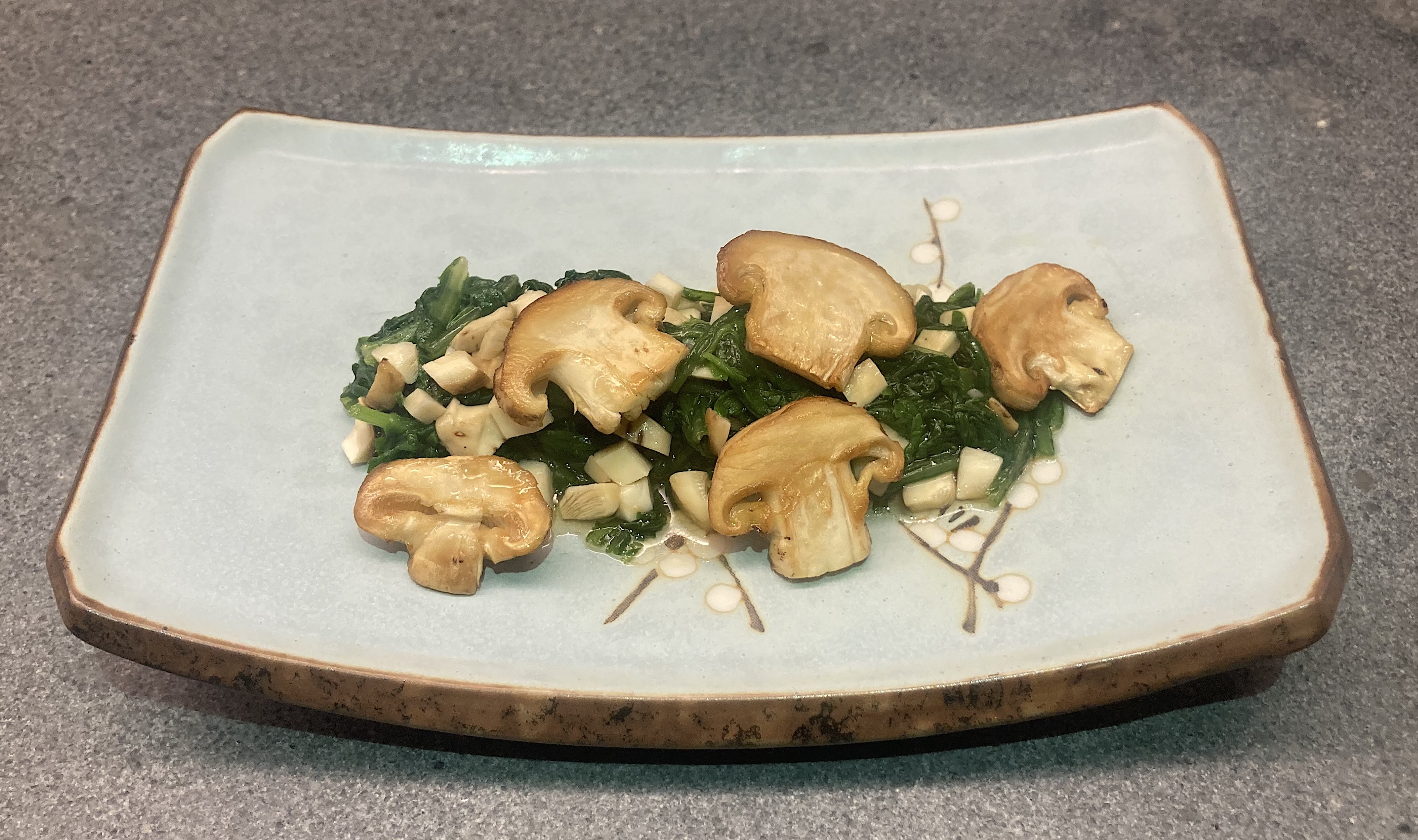
Hurray! The mushroom season has started! Last Saturday we bought delicious cèpes and chanterelles. Such a treat. It does of course mean that summer is over, which makes us a bit sad, but it also means the joy of eating wonderful dishes such as Cèpes à la Bordelaise or Salad with Mushrooms and smoked Duck (see below). Last year we prepared a Pâté with bay boletes, which was both beautiful and delicious. Will we be able to buy them this year? Or perhaps the intriguing Japanese Matsutake? It’s been some time since we last saw them on the market, and we would really love to make Matsutake with Spinach and Ginger again. How about Caesar’s mushroom with Udon?

Books

If you’re looking for useful mushroom recipes, then we suggest Antonio Carluccio’s The Quiet Hunt or Mushroom by Johnny Acton and Nick Sadler. Or look at our list of mushroom recipes.

Wine Pairing

Combining wine and salad is never obvious. In the case of a salad with mushrooms and duck we need to consider umami (mushrooms, duck), a touch of sweetness (smoked or cured meat) and the acidity of the dressing. We choose Domaine de Rimauresq Côtes de Provence Cru Classé rosé. A classic wine from the French Provence with grapes such as grenache noirmourvèdreugni blanc and rolle. The wine comes with delicate fruity, fresh flavours and aromas. It is very well balanced, dry and mouth filling and it combines beautifully with all aspects of the salad.
In general you’re looking for a white or rosé wine that has complexity and length, without being overpowering.

What You Need

  • 150 grams of Mushrooms (Cèpes preferred but also great with Oyster Mushrooms or a mix of Champignon de Paris, Shiitake and others)
  • Mesclun
  • Dried or Smoked Breast of Duck
  • Olive Oil
  • Vinegar (Red Wine, Jerez or Raspberry)

What You Do

Clean and slice the mushrooms. Heat a heavy iron skillet and fry the mushrooms in olive oil. Make a dressing of oil and vinegar. Toss the mesclun and the dressing. Transfer the salad to a plate, add mushrooms and finish with 3 or 5 slices of duck.