Your Favourites in 2025

In 2025 the most popular recipe was Scallops with Roe. We were inspired by the great quality of the scallops on the market in Nice and we were not disappointed. The combination of scallops, roe and mashed potatoes is simple and delicious.

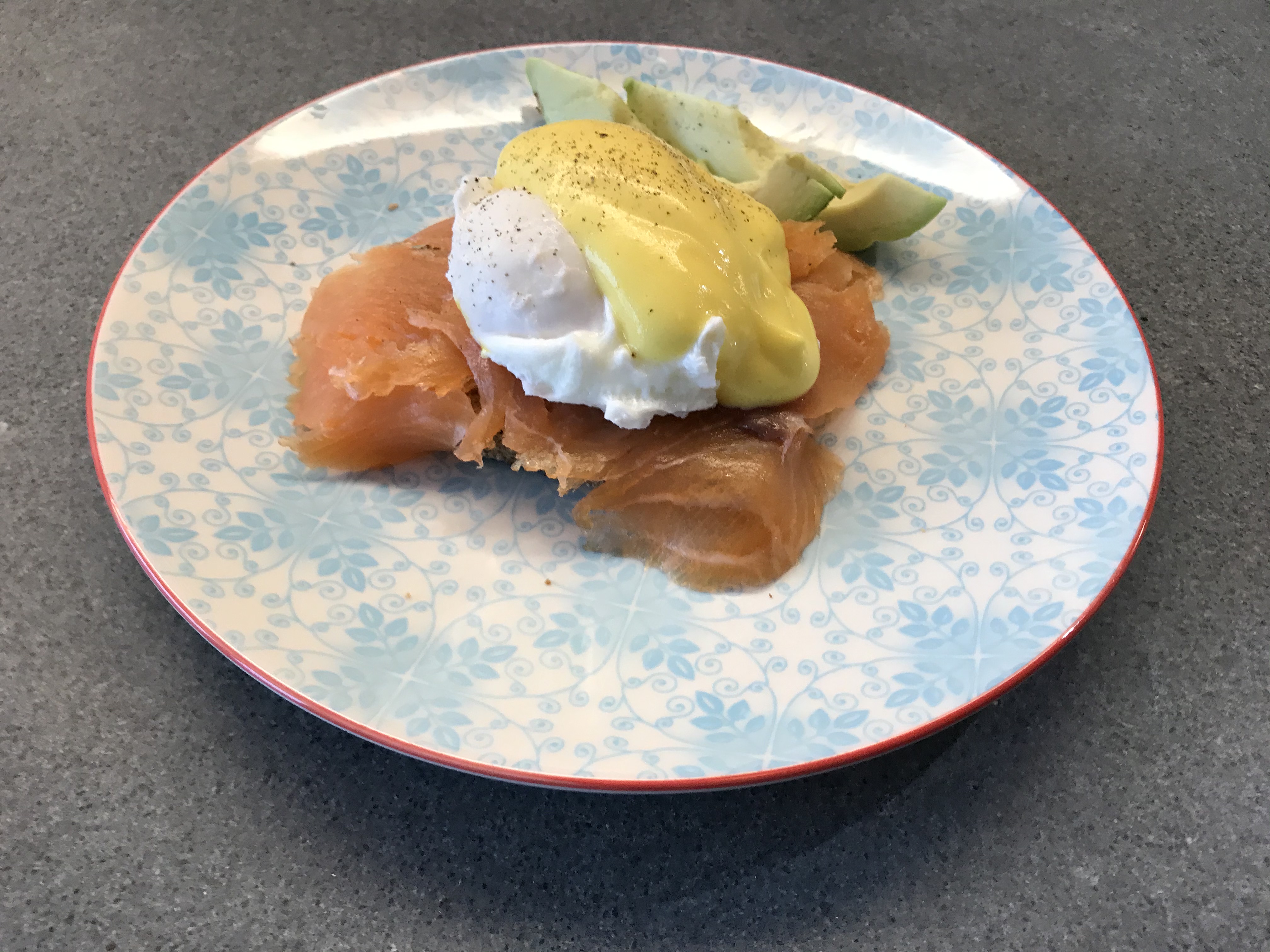
This year’s runner up is an all time favorite: Kimizu. This classic, golden sauce from Japan, is made with egg yolks, rice vinegar, water and mirin. We also made a version with tarragon, let’s say the Béarnaise version of Kimizu. Although it is a classic sauce, we use a microwave to prepare Kimizu and Kimizu with Tarragon. An easy and very effective way of controlling temperature and consistency.

Number three was another classic sauce: Ravigote. We served it with Pâté de Tête Persillé and crusted bread. The recipe we posted goes back to the more or less original version. The Ravigote is light, uplifting and flavorful.

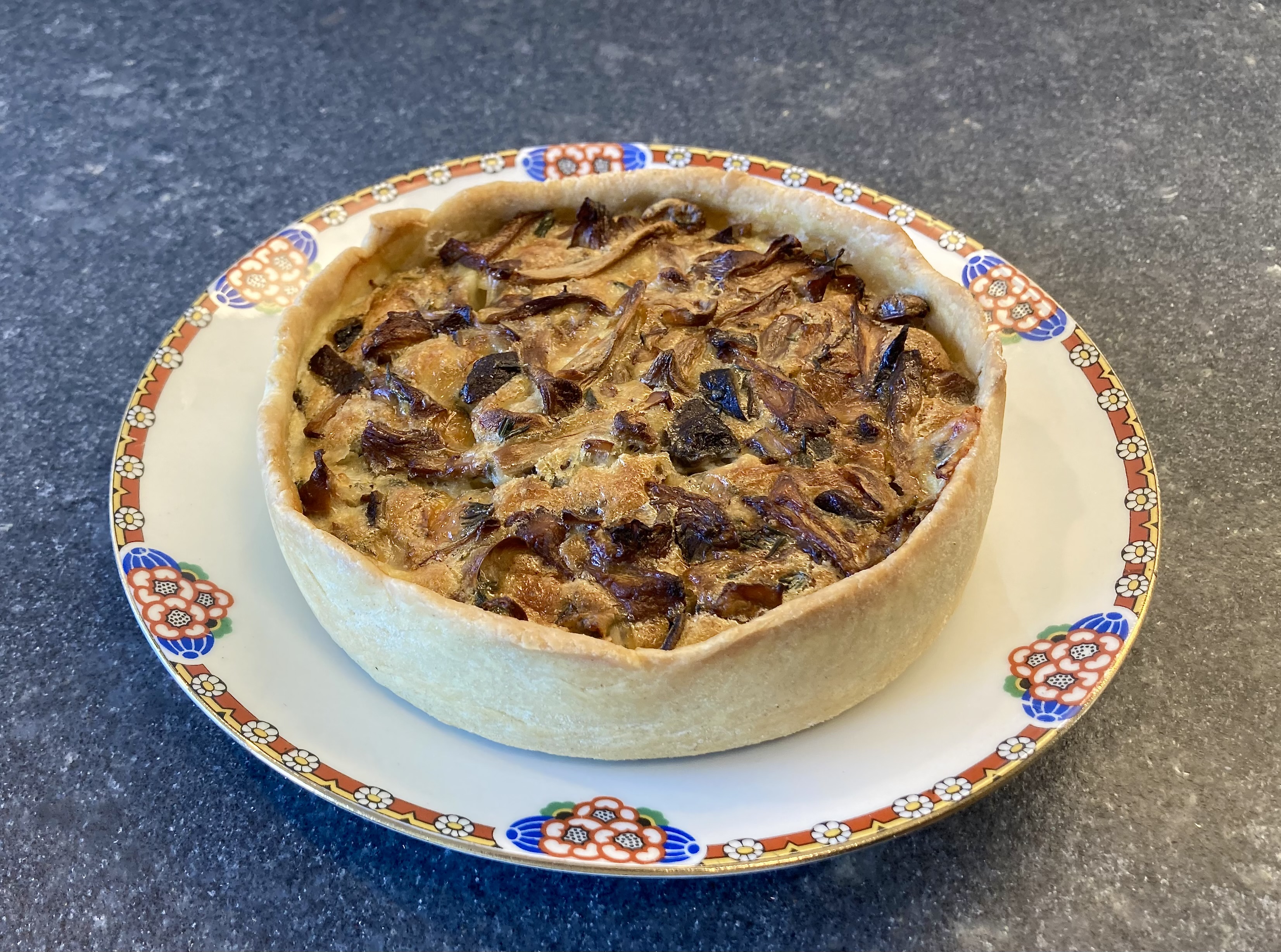
You’ve probably noticed we love mushrooms. Cultivated ones, like shiitake and oyster mushrooms and seasonal ones, such as morels and Caesar’s mushroom. This year we introduced a page with mushroom recipes in Dutch. It turned our to be a great success!

A few years ago we started exploring forgotten vegetables such as mashua and oca. We’re very pleased to see the popularity of this page. Clearly you’re as interested in these vegetables and their flavours as we are!

This year we will continue our series of sauces and of mushroom recipes, we will prepare dishes from illustrious Parisien restaurants and discuss wine pairing. We also plan to review cookbooks, with the help of our much loved tasting panel. In the meantime we look forward to your feedback, suggestions, likes and comments.

Let’s start cooking!

Your Favourites in 2024

Happy New Year!
Let’s begin the new year with the 2024 highlights. For the past two years your favorite post was No-Knead Bread, This year’s most popular post was an all time favorite: Kimizu. This classic, golden sauce from Japan, is made with Egg Yolks, Rice Vinegar, Water and Mirin. We also have a version with Tarragon, let’s say the Béarnaise version of Kimizu. Although it is a classic sauce, we use a microwave to prepare Kimizu and Kimizu with Tarragon. An easy and very effective way of controlling temperature and consistency.

This year’s runner up is Scallops with Roe, a recipe we published in January 2023. We were inspired by the great quality of the scallops on the market in Nice and we were not disappointed. The combination of scallops, roe and mashed potatoes is simple and delicious.

On August 19th 2024 Michel Guérard passed away. He was a French chef, author, one of the founders of the Nouvelle Cuisine and the inventor of La Cuisine Minceur. We wrote about his version of sauce vierge and combined it with sea bass and with skate. Very happy to see so many people interested in this post.

You’ve probably noticed we love mushrooms. Cultivated ones, like Shiitake, Oyster Mushrooms, Enoki and Champignons de Paris and seasonal ones, such as Morels, St. George’s mushroom and Caesar’s Mushroom. One of the most popular posts is Cèpes à la Bordelaise. Also very tasty when prepared with button mushrooms. Always a pleasure to serve, for instance with eggs, with meat, with more present fish. Last year we created a special page with an overview of our mushroom recipes.

We were very impressed by the exhibition Food For Thought by Kadir van Loohuizen in the Maritime Museum in Amsterdam. Let’s summarize it by quoting Ralph Dahlhaus, Chef of the National Maritime Museum: “Your choice of food does not need to be perfect, but it must be responsible.”

We continued our series of Sauces. One of your favorites is another classic sauce: Ravigote. We served the sauce with Pâté de Tête Persillé and crusted bread. The recipe we posted goes back to the more or less original version: the Ravigote is light, uplifting and flavorful.

This year we are looking forward to the Amsterdam Symposium on the History of Food on June 5th and 6th. This year’s topic is Food and the City. The symposium takes place in the 750th anniversary year of the city of Amsterdam. The symposium will be organized during an exhibition on the history of food culture in Amsterdam, from April 11th until September 7th 2025 in the Allard Pierson.

Let’s start cooking!

Classic Cèpes

What better way to start the mushroom season than serving Classic Cèpes? The recipe is very simple and the result is about cèpes and cèpes alone. The stems a bit firm, the caps moist, the flavours intense and the taste rich and earthy, with a touch of freshness from the parsley. It’s a classic in Germany (Steinpilze auf klassische Art), France (similar to Cèpes a la Bordelaise), Italy and many other countries. 

Wine Pairing

If you want to enjoy the cèpes with a glass of white wine, then we suggest drinking one that is fresh, fruity, round and balanced, for instance of a glass of Bodegas Mocén Selección Especial made from verdejo grapes. A glass of rosé with similar flavours is also a good idea. The idea is to support the cèpes by adding fruitiness and freshness to the dish.

When you decide to drink a glass of red wine, then we suggest a full-bodied red wine with gently fruit and present tannins. 

What You Need

  • 200 gram Cèpes
  • Butter
  • One small Shallot
  • Parsley
  • Black Pepper

What You Do

Clean the mushrooms and slice lengthwise. Finely chop the shallot and the parsley. Add butter to a relatively hot heavy iron skillet. Reduce the heat and fry the cèpes for a few minutes. Add the shallot. Cook on medium heat for 2 minutes. Add chopped parsley, add more butter, black pepper and stir. Serve on a warm plate.

Cèpes à la Bordelaise

Porcino, Steinpilz, Eekhoorntjesbrood, Cèpe de Bordeaux, Penny Bun, Seta (de) Calabaza, Herrenpilz: a diverse range of beautiful names referring to one of the tastiest and most common mushrooms (in Europe): the Boletus Edulis.

The French name refers to the city of Bordeaux and is linked to the classic dish Cèpes à la Bordelaise. It brings out the texture and the flavours perfectly. The standard ingredients of the dish are cèpes, (fresh of course, the dried version can’t be compared to the real, fresh mushroom), olive oil, pepper, shallot and parsley. Some people add breadcrumbs (which doesn’t add any flavour so forget about it).

The interesting aspect of the Bordelaise is that the caps and stalks are separated. The caps are cooked for some 15 minutes; the chopped stalks for 5 minutes. This is a really clever approach because the caps become very tasteful and moist, while the chopped stalks add volume and texture. The downside (we think) is that the shape of the mushroom is gone. That’s why we prefer to slice the mushroom vertically in six parts. Two slices of the side of the cap, two centres (stalk with cap) and two slices of stalk (to make the stalk-with-cap slices more even). We chop the last two slices.

Originally Cèpes à la Bordelaise is a starter, but we prefer to combine it, for instance with an omelet as a starter or with beef or fillet of deer as a main course.

Wine Pairing

This very much depends on how you serve your Cèpes à la Bordelaise. If served as a starter we could imagine a glass of Bordeaux (quelle surprise!). In general a full bodied red wine with gently fruit and present tannins will be a great choice.
With our omelet we drank a glass of Bodegas Mocén Selección Especial made from verdejo grapes. This Spanish wine has big aromas, for instance ripe tropical fruit. In the mouth it is fresh, fruity, round and balanced. Not too complex.
With our beef we enjoyed a classic Medoc: Château Moulin de Taffard with aromas and flavours of red fruit. It is well balanced, with rich, smooth tannins.

What You Need

  • For the Cèpes à la Bordelaise
    • 200 gram Cèpes (or 300 gram if you serve it as a starter)
    • Olive Oil
    • One Shallot
    • Parsley
    • Black Pepper
  • For the omelet
    • Two eggs
    • Parmesan Cheese
    • Butter
  • For the Beef
    • 150 gram of excellent Beef (we served Rib Eye)
    • Olive Oil

What You Do (Cèpes à la Bordelaise)

Clean the mushrooms and slice. Chop the remainder of the stalks. Chop the shallot and the parsley. Add olive oil to a relatively hot heavy iron skillet. Reduce the heat and fry the caps and centre slices of the mushrooms for 5 minutes. Turn and fry for another 5 minutes. Add the chopped stalks and the shallot. Cook on medium heat for 5 minutes. Stir gently, making sure the chopped stalks are nicely coloured. Add chopped parsley, stir and add fresh black pepper. Serve on a warm plate.

What You Do (Omelet)

Whisk the two eggs and add a bit of fresh Parmesan Cheese. Warm a very small heavy iron pan (or a non stick pan if that’s what you prefer) add the mixture and let it set on low heat. This could easily take 10-15 minutes. The omelet must be moist (baveuse) and the bottom may not be colored.
Quarter the omelet and serve with the Cèpes à la Bordelaise.

What You Do (Beef)

Transfer the beef from the refrigerator a few hours (not 30 minutes, that’s too short) before you start cooking. It’s important that the meat is at room temperature. Heat a heavy iron skillet, add olive oil and fry quickly. Let rest. Slice the beef and serve on top of the Cèpes à la Bordelaise.