Chioggia Beet Salad

An elegant Starter

What better way to start a nice long dinner than a dish that is light, colourful, surprising and refreshing? A Consommé of Yellow Tomatoes for instance? Or Scallops with Winter Truffle? Or would you prefer a salad made with Bietola da orto tonda di Chioggia? Sounds exotic, but actually it’s a salad made with Chioggia beet: a delicious beet with deep pink and white spirals. It originates from Italy or, to be more precise, from the coastal town of Chioggia, not far from Venice. When cooking the beet its colours fade, creating an even more enticing dish.

Another forgotten vegetable that is worth remembering when you do your Christmas shopping.

Wine Pairing

The dressing comes with firm acidity, balanced by the sweetness of the beet and the spring onion. Wine pairing is a not straightforward because of this combination. Our suggestion would be a Sauvignon Blanc. We enjoyed a glass of Domaine La Tour Beaumont Haut-Poitou Sauvignon Blanc 2019. It has clear fruity and citrus notes and it is well balanced with a good combination of freshness and roundness.

What You Need

  • One Chioggia Beet
  • Excellent Olive Oil
  • White Wine Vinegar
  • Spring Onion (or Scallion)
  • White Pepper

What You Do

The day before wash the beetroot and wrap in aluminium foil. Leave in the oven on 180° Celsius or 355° Fahrenheit for 60+ minutes. Cool and store in the refrigerator.
The next day peel the beet and use a vegetable slicer (or mandoline) to make ridges. This will not only make the dish look more inviting, it will also enhance the taste given there is more coated surface and more air when chewing it. Make a simply, relatively acidic dressing with olive oil and vinegar. Thinly slice the spring onion; best to use the green part only. Test a small slice of beet with the dressing and adjust when necessary. Perhaps some fresh white pepper? If you’re happy with the combination, toss the slices with the dressing making sure everything is nicely coated. Plate up and sprinkle the sliced spring onion on top of it.

Salad of Chioggia Beet ©cadwu

Pears (Slow Cooked)

In 1850 the Gieser Wildeman pear was created by Mr. Gieser Wildeman. The pear is hard, full of tannins and its texture is granulated. Not nice at all. However when cooked slowly, the unappealing pear turns into a red and refined pear. Its taste is sweet with a touch of vanilla. A true Gieser Wildeman will become red (through and through) without any problem, provided it’s cooked slowly.
Belle Angevine, Virulam, Black Worcester, Certeau, Sarrasin, Martin Sec and Saint Rémy (amongst others) will also do the trick although some will turn light red or pink. And perhaps you will have to add some sugar or honey to enhance the flavour.

If a pear doesn’t turn red, then you need to add port, crème de cassis or red wine. The colour of the outside will be red; the colour of the centre a disappointing white. Some people add cloves, prunes and vanilla to give additional flavour to their pears in red wine. No need for this, just buy the right slow cooking pear.

What You Need
  • Pears
  • One Cinnamon Stick
  • Water
What You Do
  1. Peel the pear and leave the stalks on
  2. Add some water to a heavy pan, add the pears and the cinnamon stick
  3. Allow to cook on low heat for at least 6 hours
  4. We cooked ours for 8 hours
  5. Cool and serve, perhaps the next day, for instance with home-made vanilla ice cream

Artichoke Pie

A few days after we published our recipe for Tourte de Blette a friend told us about the great taste of artichoke pie and how popular this dish is in Italy, especially in Liguria. Since we love artichokes, we dived into our cooking library, looking for recipes.
Interestingly most recipes refer to canned or marinated artichokes. But wouldn’t it be much better to use fresh, young artichokes? Other ingredients are cheese (Prescinsêua, or a combination of Parmesan or Pecorino and Ricotta, perhaps some Crème fraîche or even Feta), herbs (parsley, thyme or oregano) and eggs.
We like the combination of artichoke and thyme (as we did in our salad), but we could imagine oregano to be a good choice as well.
We remained close to Tourte de Blette and prepared a rustic, open pie, but feel free to create one with pastry on top.

Wine Pairing

It’s not straightforward to pair artichokes with wine. According to various researchers this is due to cynarin, a chemical especially found in the leaves of the artichoke. When the wine and the cynarin meet in your mouth, the natural sweetness of the wine is amplified, making it taste too sweet. So you have to pair freshly cooked or steamed artichokes with a bone-dry, crisp, unoaked white wine with clear, present acidity. For instance Sauvignon Blanc, Grüner Veltliner or Albariño.
We enjoyed our Artichoke Pie with a glass of Château Pajzos Tokaj “T” Furmint, a dry, bright, fresh wine with zesty, nutty and mineral flavours made from the Hungarian Furmint grape. A unique wine and perfect in combination with the artichokes.
Cynarin and wine are not a match made in heaven but the good news is that cynarin seems to protect your liver and even helps it regenerate.

What You Need

  • For the Dough
    • 100 gram of Flour
    • 50 gram of Water
    • 10 gram of Olive Oil
    • 1 gram of Salt
  • For the Mixture
    • 4-6 young Artichokes
    • One Shallot
    • Olive Oil
    • 30 grams of Rice
    • 2 Eggs
    • Fresh Thyme
    • 20 gram Freshly Grated Parmesan Cheese
    • Black Pepper

What You Do

Cook the rice and leave to rest.  Combine flour, salt, water and olive oil. Make the dough, kneed for a minute or so and store in the refrigerator for at least 30 minutes.
Clean the artichokes, steam for 30-45 minutes depending on the size and let cool. Chop the shallot. Warm a heavy skillet, add olive oil and gently fry the shallot. Transfer to a plate and let cool. Using a spoon remove the ‘meat’ from the leaves (bracts) of the artichokes. Chop the hearts in four. You may need to remove the centre choke (the hairs). Strip a generous amount of thyme.
Whisk two eggs and combine with the artichokes, the shallot, the rice, the thyme and the freshly grated Parmesan cheese. Add some black pepper.
Roll out the dough with a rolling pin on a lightly floured surface. Coat a 15 cm or 6 inch round baking form with oil (or use a sheet of baking paper). Place the dough in the baking form and add the filling. Transfer to the oven for 40-50 minutes on 180˚-200˚ Celsius or 355˚-390˚ Fahrenheit. Immediately after having removed the pie from the oven, brush the outside with olive oil. This will intensify the colour of the pastry. Let cool and enjoy luke warm.

Cèpes à la Bordelaise

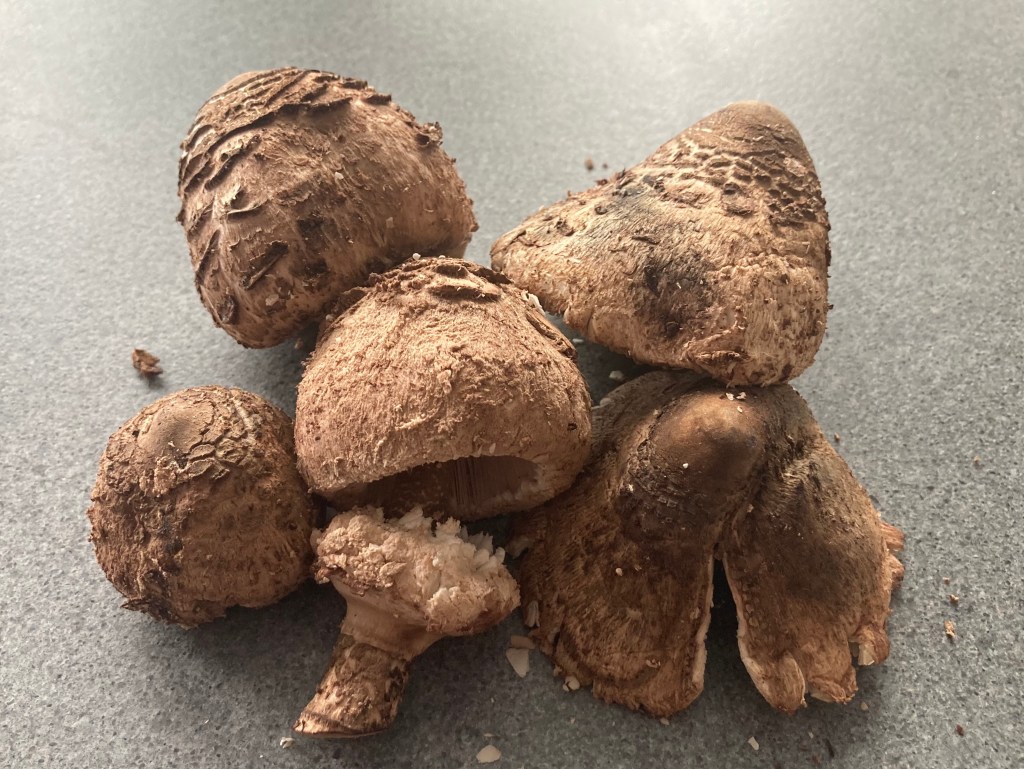
Porcino, Steinpilz, Eekhoorntjesbrood, Cèpe de Bordeaux, Penny Bun, Seta (de) Calabaza, Herrenpilz: a diverse range of beautiful names referring to one of the tastiest and most common mushrooms (in Europe): the Boletus Edulis.

The French name refers to the city of Bordeaux and is linked to the classic dish Cèpes à la Bordelaise. It brings out the texture and the flavours perfectly. The standard ingredients of the dish are cèpes, (fresh of course, the dried version can’t be compared to the real, fresh mushroom), olive oil, pepper, shallot and parsley. Some people add breadcrumbs (which doesn’t add any flavour so forget about it).

The interesting aspect of the Bordelaise is that the caps and stalks are separated. The caps are cooked for some 15 minutes; the chopped stalks for 5 minutes. This is a really clever approach because the caps become very tasteful and moist, while the chopped stalks add volume and texture. The downside (we think) is that the shape of the mushroom is gone. That’s why we prefer to slice the mushroom vertically in six parts. Two slices of the side of the cap, two centres (stalk with cap) and two slices of stalk (to make the stalk-with-cap slices more even). We chop the last two slices.

Originally Cèpes à la Bordelaise is a starter, but we prefer to combine it, for instance with an omelet as a starter or with beef or fillet of deer as a main course.

Wine Pairing

This very much depends on how you serve your Cèpes à la Bordelaise. If served as a starter we could imagine a glass of Bordeaux (quelle surprise!). In general a full bodied red wine with gently fruit and present tannins will be a great choice.
With our omelet we drank a glass of Bodegas Mocén Selección Especial made from verdejo grapes. This Spanish wine has big aromas, for instance ripe tropical fruit. In the mouth it is fresh, fruity, round and balanced. Not too complex.
With our beef we enjoyed a classic Medoc: Château Moulin de Taffard with aromas and flavours of red fruit. It is well balanced, with rich, smooth tannins.

What You Need

  • For the Cèpes à la Bordelaise
    • 200 gram Cèpes (or 300 gram if you serve it as a starter)
    • Olive Oil
    • One Shallot
    • Parsley
    • Black Pepper
  • For the omelet
    • Two eggs
    • Parmesan Cheese
    • Butter
  • For the Beef
    • 150 gram of excellent Beef (we served Rib Eye)
    • Olive Oil

What You Do (Cèpes à la Bordelaise)

Clean the mushrooms and slice. Chop the remainder of the stalks. Chop the shallot and the parsley. Add olive oil to a relatively hot heavy iron skillet. Reduce the heat and fry the caps and centre slices of the mushrooms for 5 minutes. Turn and fry for another 5 minutes. Add the chopped stalks and the shallot. Cook on medium heat for 5 minutes. Stir gently, making sure the chopped stalks are nicely coloured. Add chopped parsley, stir and add fresh black pepper. Serve on a warm plate.

What You Do (Omelet)

Whisk the two eggs and add a bit of fresh Parmesan Cheese. Warm a very small heavy iron pan (or a non stick pan if that’s what you prefer) add the mixture and let it set on low heat. This could easily take 10-15 minutes. The omelet must be moist (baveuse) and the bottom may not be colored.
Quarter the omelet and serve with the Cèpes à la Bordelaise.

What You Do (Beef)

Transfer the beef from the refrigerator a few hours (not 30 minutes, that’s too short) before you start cooking. It’s important that the meat is at room temperature. Heat a heavy iron skillet, add olive oil and fry quickly. Let rest. Slice the beef and serve on top of the Cèpes à la Bordelaise.

Parasol Mushrooms alla Milanese

A Personal Favourite

The Parasol Mushroom is a fairly common mushroom in many countries. It is very tasty and easy to prepare. It has a beautiful juicy and meaty texture and its flavour is delicate with a touch of lemon. Simply fry the caps alla Milanese or stuff young parasol mushrooms with onion, sage or minced meat. Another great recipe is for sandwiched parasol mushrooms.

Yesterday’s Bread

Cotoletta alla Milanese and Wiener Schnitzel are based on a similar concept: breaded and pan fried thin slices of veal or pork, served with a slice of lemon. A very special variation is Cotoletta di vitella di latte alla Milanese, as described in 1891 by Pelligrino Artusi (1820-1911) in his book La Scienza in Cucina e l’Arte di Mangiar Bene (The Science in the Kitchen and the Art of Eating Well). Before breading the meat Mr. Artusi coats one side of the veal with a mixture of finely chopped fat ham, parsley, grated Parmesan cheese and truffle. Delicious no doubt!

The key to an excellent Alla Milanese are the breadcrumbs. Make your own breadcrumbs with yesterday’s bread and compare the result with the cardboard crumbs you can buy. Flavour! Texture!

Wine Pairing

A fresh, not too complex white wine will be great with the fried parasol mushrooms. Soave, Burgundy, Loire: all good.

What You Need

  • 100 grams of Parasol Mushrooms
  • One Egg
  • Three Slices of Yesterday’s Bread
  • Olive Oil
  • Butter
  • Parsley
  • Black Pepper

What You Do

  1. Start by making the breadcrumbs. Toast the slices of bread and let cool. Cut in smaller bits and then use a cutter or blender to make the crumbs.
  2. Whisk the egg. Feel free to add some water if you need more volume.
  3. Remove the stems from the mushrooms.
  4. Cut the caps in two if the mushroom is young.
  5. Make sure your pan is hot
  6. Add the oil and the butter
  7. Start breading: dip the mushroom in the egg, then coat with breadcrumbs
  8. Quickly add to the pan and fry
  9. Add black pepper and finely chopped parsley.
  10. Serve immediately on a warm plate.

Tourte de Blette

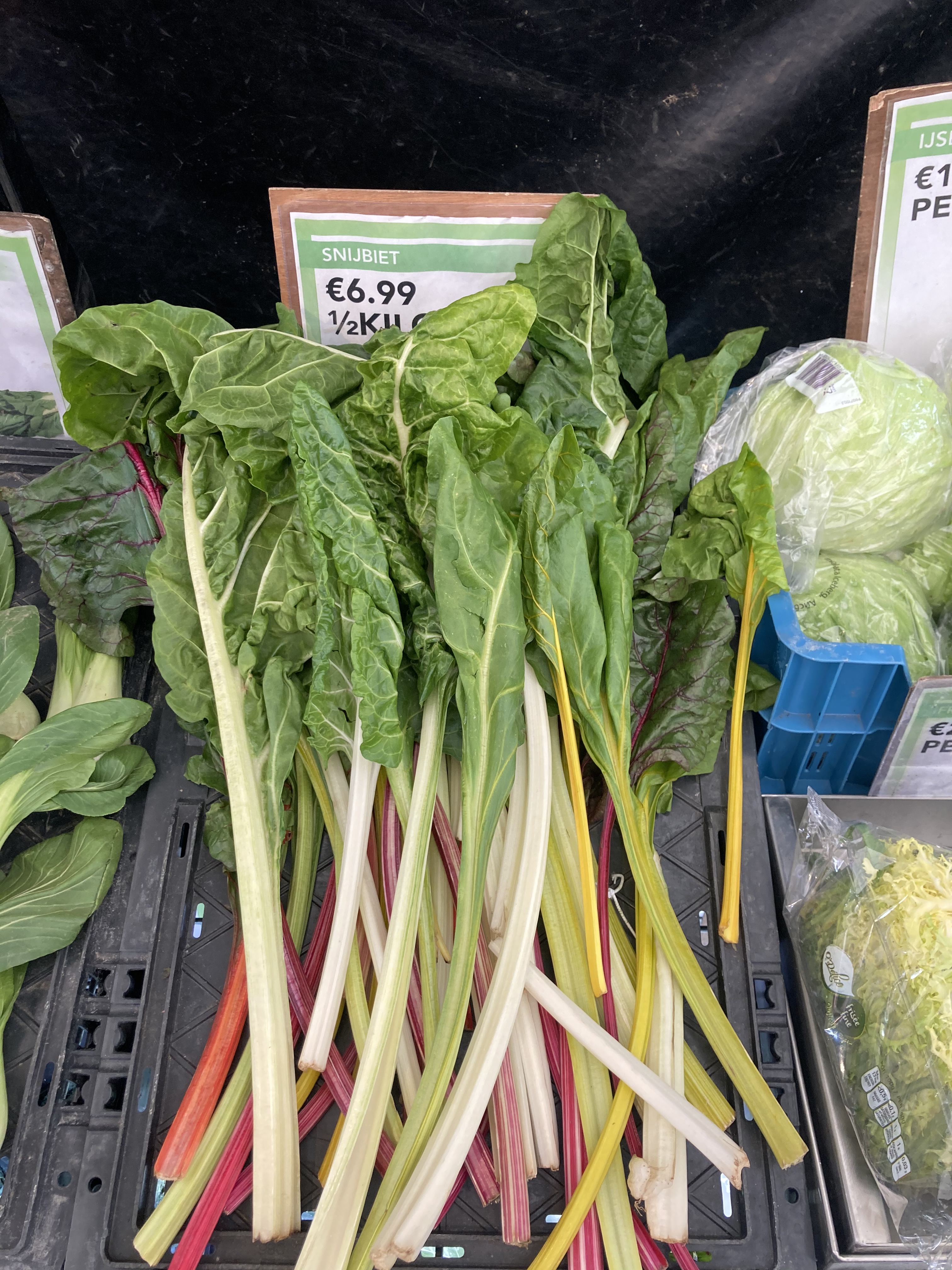
For many years Chard was a popular and cheap vegetable. It has many names, including Bietola (Italy), Blette, Bléa (France), Acelga (Spain), Krautstiel, Stielmangold, Mangold (Germany, Switzerland), Snijbiet (the Netherlands) and also Swiss Chard, Leaf Beet, Silver Beet, Spinach Beet and Seakale Beet.
Many names equals many recipes and easy to buy? Not at all. Nowadays it’s hard to find chard and the number of recipes is limited. According to Dutch Food Critic and Culinary Legend Johannes van Dam the chard leaves wither quickly, making it a difficult product for supermarkets. The image of chard is not positive: ‘Poor Man’s Asparagus’ for the stems for instance. Another reason is probably the fact that the leaves require a different preparation than the stems.
Johannes van Dam gives a number of recipes, including what he refers to as the primal recipe from Italy for Tourte de Blette and the recipe for Bledes amb panses I pinyons from Menorca.

Tourte de Blette

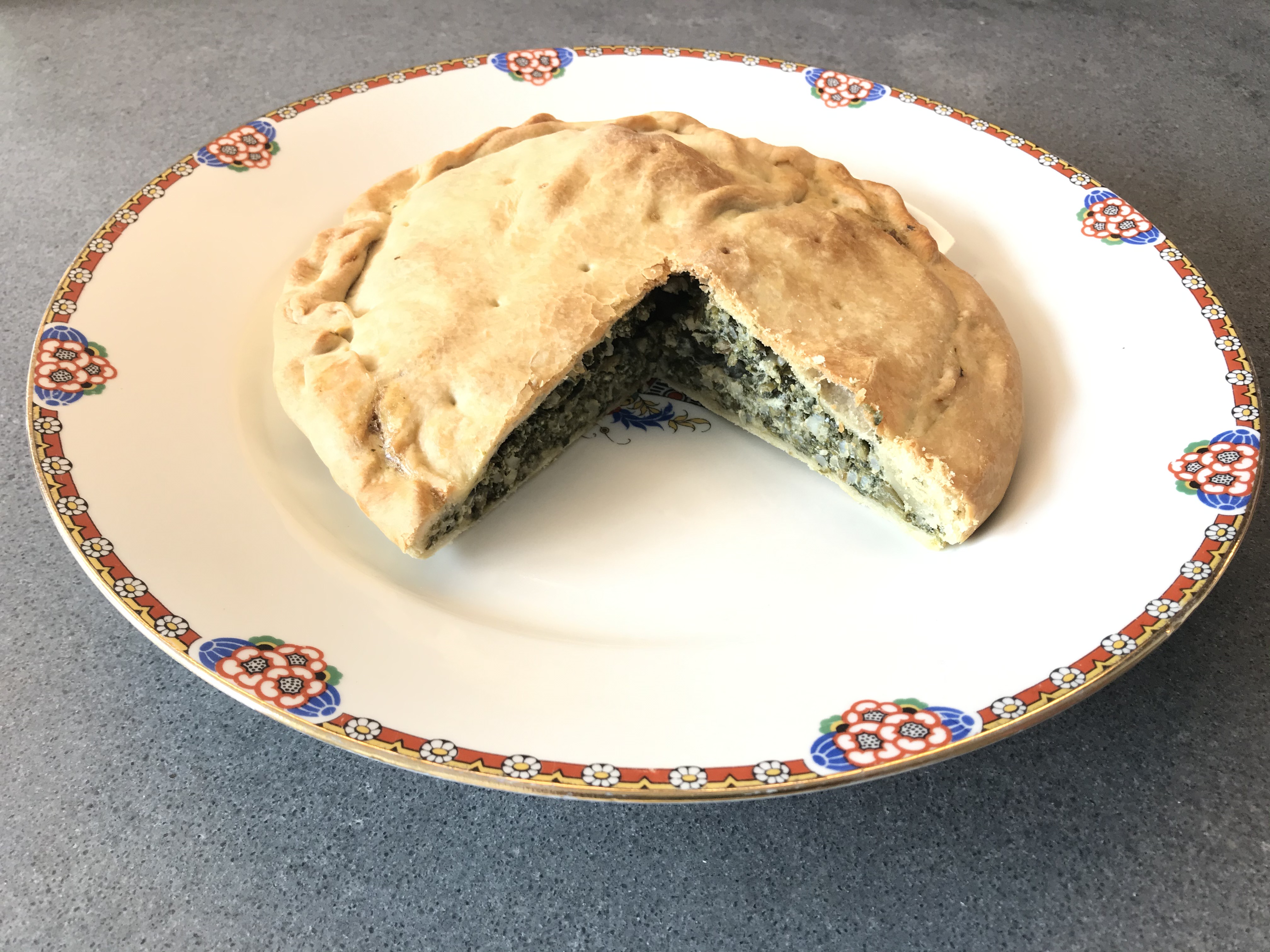
When in Nice we very much enjoyed our Tourte de Blette, locally known as Tourta de Bléa. It comes in two varieties: sweet and savoury. If you want to prepare the sweet one, please visit the inspiring Variations Gourmandes.

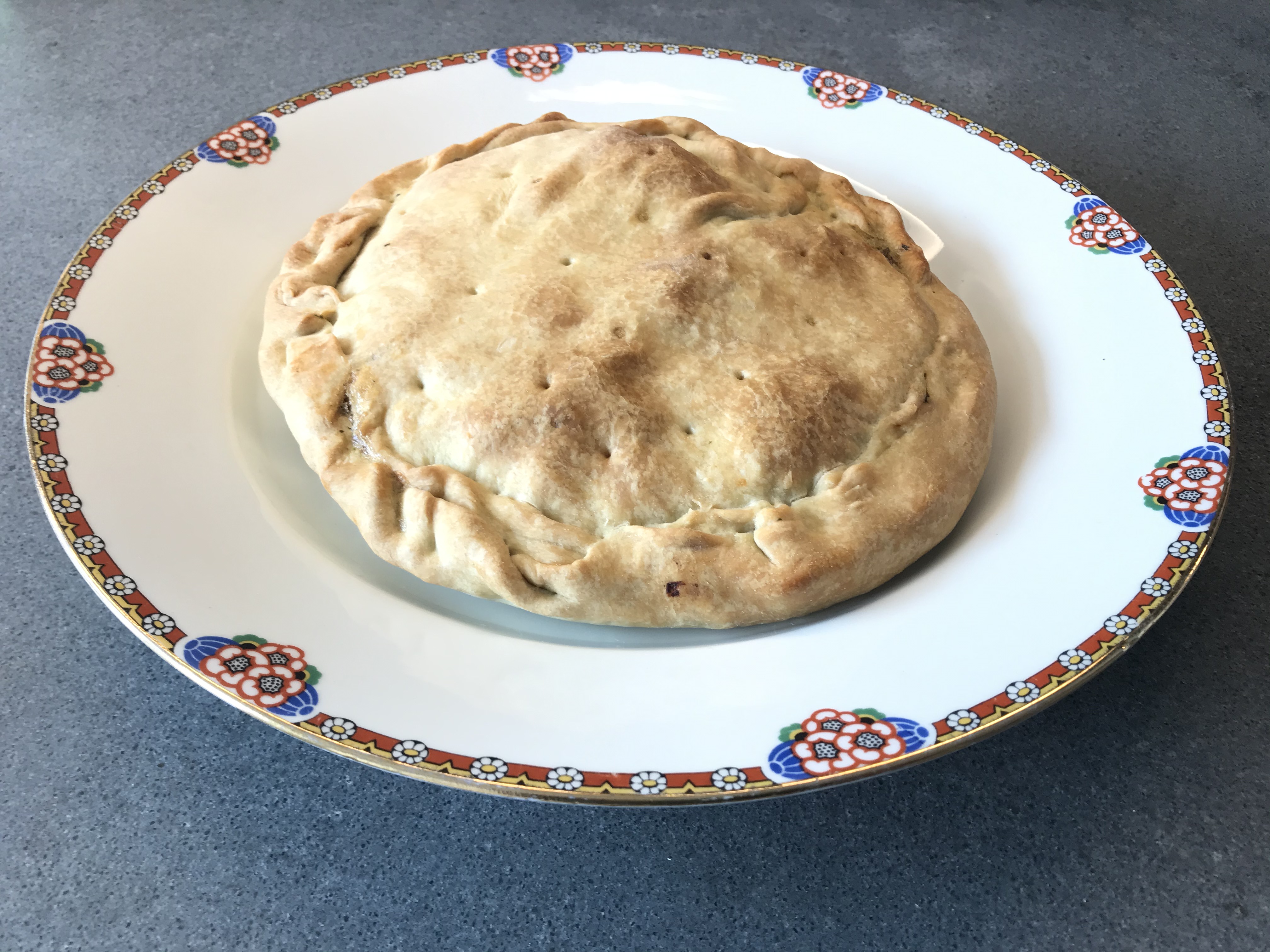
The crust of the Tourte de Blette is not straightforward. In most cases it’s a combination of flour, water, butter (or olive oil) and eggs. We were inspired by a dear friend who bases her Tourte on the Italian Torta Verde del Ponente Ligure. This is a very similar dish with zucchini, chard, basil, sage, rise, onion, Grana Padano or Parmesan and eggs. The dough of the Torta Verde is easy to work with and the result is both tasty and crunchy.

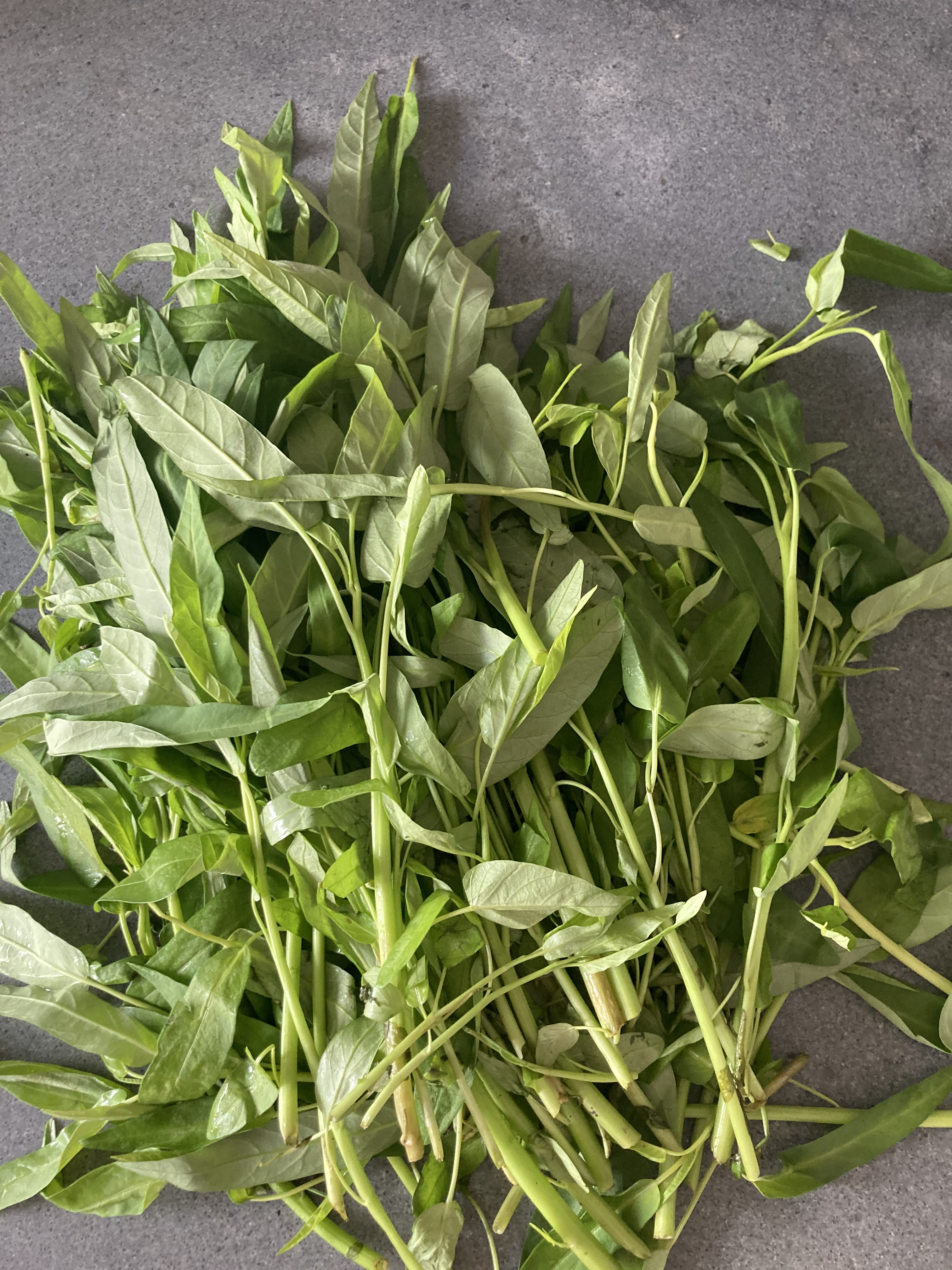
Back to the main ingredient of the Tourte de Blette: the chard. We found it on the Amsterdam Albert Cuyp market but were shocked by the price, so we had to look for an alternative. We decided not to use normal spinach because it doesn’t have the right structure. We choose water spinach (also know as Kang Koen or Ong Choy): a very popular vegetable in Asia. The leaves have lots of structure and the (hollow) stems are tasty and crunchy.

Wine Pairing

Obviously a wine from the region, for instance a Côtes de Provence (preferably rosé) or a more expensive Bellet Blanc.

What You Need

  • For the Dough
    • 200 gram of Flour
    • 100 gram of Water
    • 20 gram of Olive Oil
    • 2,5 gram of Salt
  • For the Mixture
    • 500 gram of Water Spinach
    • One Shallot
    • Olive Oil
    • 50 grams of Rice
    • 2 Eggs
    • Fresh Nutmeg
    • 75 gram Freshly Grated Parmesan Cheese

What You Do

  1. Cook the rice and leave to rest
  2. Combine flour, salt, water and olive oil
  3. Make the dough, kneed for a minute or so and store in the refrigerator for at least 30 minutes
  4. Remove the leaves from the stem and chop half of the stems. Best is to have the stem slices the size of cooked rice
  5. Same for the shallot
  6. Warm a large heavy skillet
  7. Gently fry the shallot
  8. After 10 minutes add the chopped stems
  9. Leave for 5 minutes and then add the leaves
  10. Cook for a few minutes until done
  11. Transfer to a plate and let cool
  12. Slice the leaves using a kitchen knife
  13. Whisk the two eggs
  14. Combine the vegetables, the egg, the rice and the freshly grated Parmesan cheese
  15. Generously add freshly grated nutmeg
  16. Cut the dough in two, one part slightly bigger than the other. The bigger part will be the bottom, the smaller part the top
  17. Roll out the bigger one with a rolling pin on a lightly floured surface
  18. Coat a 22 cm or 9 inch round baking form with oil (or use a sheet of baking paper)
  19. Place the first disk in the baking form, add filling and close with the second disk of dough
  20. Fold the edge of the top piece of dough over and under the edge of the bottom piece of dough, pressing together
  21. Make holes in the top, allowing for the steam to escape
  22. Transfer to the oven for 40 – 50 minutes on 180˚ – 200˚ Celsius or 355˚ – 390˚ Fahrenheit
  23. Immediately after having removed the tourte from the oven, brush the top with olive oil. This will intensify the colour of the crust
  24. Let cool and enjoy luke warm.

Kohlrabi with Pickled Radish

A Vegetable to Remember

A cabbage or a turnip? Or both? Kohlrabi (or turnip-rooted cabbage, German cabbage) is a bit different from other vegetables. It’s the swollen stem of a plant. It looks like a turnip, but it actually grows above the ground, hence the leaves and the fairly thick skin. Kohlrabi is not the most popular of vegetables, probably because it requires rather long cooking and the taste is a bit bland. The good news is that when you prepare the kohlrabi in a hot oven, you will have an easy to peel and very tasty vegetable. Its flavour is sweet, it comes with a touch of spiciness and its texture is a real surprise: juicy and crunchy!
The thinly sliced and lightly coated kohlrabi in combination with pickled dried radish is a great vegetarian starter, one that you will remember.

Sake or Wine Pairing

Best choice is a mild, dry, floral sake but a glass of white wine is also a good idea. Go for a Pinot Blanc or a German Grauburgunder. In general a white wine with medium body and aromas of ripe white fruit and flowers.

What You Need

  • Kohlrabi
  • Light and Normal Soy sauce
  • Rice Vinegar
  • Mirin
  • Pickled Dried Radish

What You Do

Set your oven to 200˚ Celsius or 390˚ Fahrenheit. Transfer the kohlrabi to the oven without wrapping it in foil, so ‘as is’. Leave it for 60 minutes. Now turn your oven to 235˚ Celsius or 455˚ Fahrenheit for 15 minutes or until the kohlrabi is slightly charred (see picture). Let cool, transfer to the refrigerator and use the next day.
Start making the dressing by adding light soy sauce to a small bowl. Add a teaspoon of mirin and a teaspoon of rice vinegar. We also add a teaspoon of normal soy sauce to give the dressing a bit more oomph. Remove the skin of the kohlrabi (be generous) and thinly slice the kohlrabi, either with a mandoline slicer or with a cheese slicer. Now it’s time to improve the dressing: combine small slices of kohlrabi with the dressing, taste and keep adjusting (soy sauce, mirin, rice vinegar) until you’re happy. Coat each slice with the dressing, plate up and serve immediately with the chopped pickled dried radish.