Last Saturday we were extremely lucky. Not only did we buy the very first fresh morels of the season, we also bought a small bianchetto. This affordable white truffle is available from mid January to the end of April. It is also called March truffle (marzuolo).
In his book Complete Mushroom Book, Italian chef Antonio Carluccio combines fresh oysters with a white wine sabayon and white truffle: Ostriche con zabaglione e tartufo bianco. The result is spectacular. The combination of the distinct aroma of the white truffle with the oyster is intriguing. The sabayon brings everything together in terms of taste, consistency and structure. And just to show you how clever Carluccio’s combination is: the sabayon in itself is not pleasant. We prepared the dish with bianchetto. Maybe less subtle than when prepared with a white truffle, but the result is nevertheless wonderful.
Wine Pairing
With such a great dish you many want to drink a glass of Chablis or Champagne. We enjoyed a glass of Crémant de Bourgogne, produced by Vitteaut-Alberti. A refined wine, soft and with delicate fruit. The bubbles are small and pleasant.
A few years ago we enjoyed an excellent Kaiseki dinner at Yamazato in Amsterdam. The menu featured many wonderful dishes, one of them being Kimizu-Ae: a combination of white asparagus and Kimizu. We were immediately intrigued because Kimizu is a rich and light sauce. It comes with a velvety feeling, a natural note of sweetness, a bright yellow colour and perfect acidity. So yes, the next day we prepared our own Kimizu.
Kimizu brings together two ingredients: egg yolk and rice vinegar. You could add some mirin (or sugar) and a pinch of salt. Within two minutes you will have created a beautiful, golden sauce; one that combines very well with fish and asparagus. Kimizu does not contain butter (the egg yolk being the only source of fat) so Kimizu, although it seems similar to Hollandaise, is lighter, easier to digest and fresher.
Many recipes include starch, probably because the cook has trouble making a warm, emulgated sauce. Our advice: never use starch or beurre manié. The consistency is an essential element of the sauce and must be the result of the combination of egg, liquid and warmth. Same for a sabayon.
Using a microwave oven to make Kimizu is a great idea (see our recipe for Hollandaise), although it does require more whipping and more attention compared to making Hollandaise.
Wine Pairing
We enjoyed our Asparagus and Kimizu with a glass of Sancerre, 2017, Domaine Merlin Cherrier. This classic wine reflects the chalky terroir of Sancerre beautifully. The combination of Sauvignon Blanc (citrus, minerals) and Kimizu (touch of sweetness, present but not overpowering acidity) works really well. A wine of true class and complexity with a long finish.
Now embrace your microwave and start using if for making Kimizu.
What You Need
For the Kimizu
2 Egg Yolks
1,5 tablespoon of Rice Vinegar (depending on the size of the egg yolks and the acidity of the vinegar)
3 tablespoons of Water
Mirin (optional, we suggest adding 1 or 2 teaspoons)
pinch of Salt (very optional)
6 Asparagus
What You Do
Peel the asparagus
Steam the asparagus (depending on the size 20 or 25 minutes; they should be well done for this dish)
After 10 minutes start making the sauce
Whisk the two egg yolks
Add rice vinegar, mirin, water and whisk some more
Transfer to the microwave and give it let’s say 10 seconds of 30%
Remove from oven and whisk well
Repeat steps 6 and 7
You will now feel the consistency changing
If not, don’t worry, just repeat step 6 and 7
After 2*10 or 3*10, move to steps of 5 seconds on 30% power
Whisk, whisk again and feel free to find your own way
When the kimizu is ready, take it out of the oven and continue whisking gently
Serve the asparagus with a generous helping of Kimizu
Such a pleasure to see courgette flowers in your garden or at the greengrocers. The young courgette is firm and tasty; the flowers a beautiful yellow. Simply stuff the flowers, fry in a pan or cook in the oven and you have a great side dish or starter. And then you start wondering: ‘Stuff with what? Cheese? Salmon? Mushrooms? Tomatoes? Ricotta? Vegetable Mousse?’ Earlier we described a simple, tasty vegetarian version. This recipe requires a bit more work, but the result is delicious and beautiful. Crab and courgette go together very well; it’s a well balanced combination with surprisingly delicate flavors.
Wine Pairing
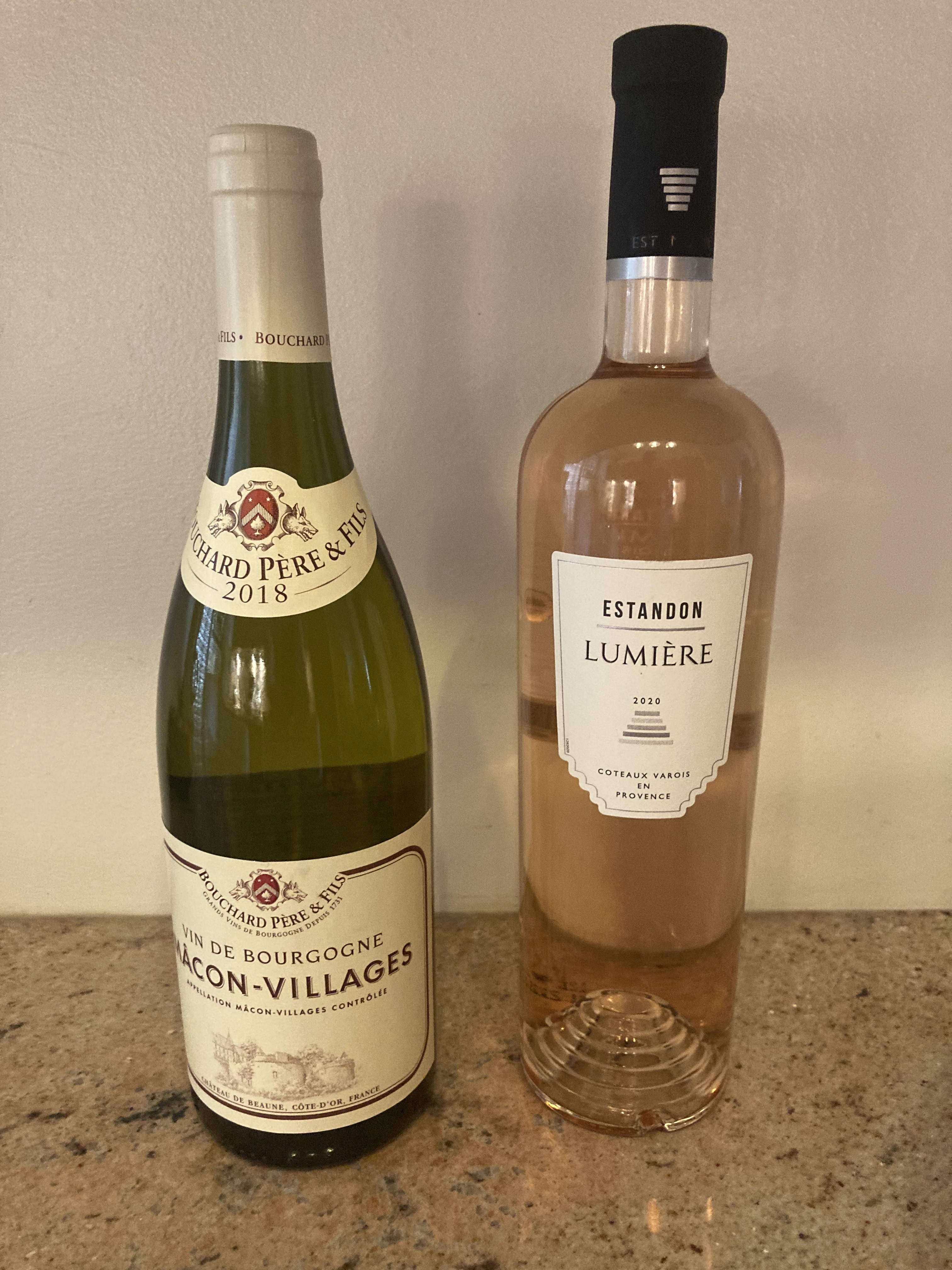
Obviously a nice glass of Côtes de Provence Rosé is an excellent choice. But you could also go for a white wine, for instance a Macon-Villages as produced by Bouchard Père & Fils. In general a subtle wine that goes well with the gentle flavors of both the crab and the courgette.
What You Need
One Courgette (small and firm)
One Garlic Clove
Olive Oil
Six Small Courgettes with their flower
Crab
Black Pepper
What You Do
Wash the courgette, dry and grate coarsely
Warm a small cooking pan, add olive oil and the grated courgette
Fineley grate the garlic and mix with the courgette
Leave for 20 minutes minimum on low heat
When ready, set aside and let cool.
Best is to use a leg of a fresh (littoral) crab, but you could also buy a can of most excellent crab
If using fresh crab, heat a pan with water, bay leaf and crushed black pepper corns; cook the crab for 10 minutes, remove from the water, set aside until cooler and then remove the meat from the shell. Be sure to remove all shards of shell. Set aside and let cool.
Remove the stamens from the flowers
Remove the end of the small courgette
Use a very sharp knife to slice the courgettes lengthwise in 3, making it look like a fan
Heat water in a pan and poach the small courgettes (not the flowers!) for 60-90 seconds depending on the size
Add some crab meat to the courgette mixture and taste
Keep adding crab until you’ve reached the perfect combination (or the end of the crab)
Add some black pepper
Stuff the flowers
Close them by slightly twisting the leaves of the flower
Sprinkle with olive oil, making sure they are completely coated with oil
Heat your oven to 200° C or 390° F
Using the broiler is a good idea
Transfer to the oven and cook for 10 minutes
The flowers should be crisp and perhaps a touch golden
A few years ago we created an overview of recipes per season, simply because it’s such a good idea to enjoy what is available in the season. Nice to eat strawberries in Winter, but isn’t it a much better idea to enjoy seasonal slow cooked pears?
We then introduced overviews per course, ranging from side dish to lunch. The categories didn’t always make sense, so we added a few more, making our admin more complicated, especially when we updated a recipe or a picture.
The obvious thing happened: we lost track of recipes, noticed some links were broken and the overviews became incomplete.
So how to organise this blog?
After much debate and intense workshops (not really) we’re pleased to present to you an old fashioned, up to date and very easy to use (and maintain) index of All Our Recipes For You!
End of June means end-of-season for asparagus, morels and ramson (wild garlic). But let’s not be sad! It’s also the beginning of Summer; time to dine al fresco and serve vibrant, light flavours. We combine the very last white asparagus with green asparagus, black olives and basil. Feel free to use green asparagus only. The dish will lose some of its bitterness and complexity but it’s still a great combination of flavours and aromas.
Wine Pairing
Best to enjoy with a full bodied and elegant red wine. Flavour-wise you’re looking for lots of fruit, mild tannins and a touch of wood. We enjoyed our asparagus with a glass of Cantine Due Palme Salento Il Passo Nero 2019. This wine from Puglia (Italy) is made from late harvested negroamaro grapes. Dark berry fruit, medium full tannins and a beautiful deep colour.
What You Need
Asparagus
Equal Amount of White and Green Asparagus
Basil
Black Olives (preferably Cailletier or Taggiasca)
Olive oil
Lamb Chops
Olive Oil
Thyme
Garlic
Black Pepper
What You Do
Peel the white asparagus and cut of the end. Wash the green asparagus and cut of the end. Slice the asparagus in nice chunks (4 centimetres or so). Combine the asparagus with olive oil and a nice amount of black olives. Transfer to the refrigerator. When ready for your al fresco dinner, heat your oven to 190˚- 200˚ Celsius (or 375˚- 390˚ Fahrenheit). Mix after 10 minutes and again after 20 minutes. The asparagus should now be ready (if not, another 10 minutes should do the trick). Add half of the basil leaves.
If you serve the asparagus with lamb chops: leave the chops to marinate in olive oil, crushed garlic and thyme for 24 hours in the refrigerator. Remove thyme. Heat a heavy iron skillet and fry the chops in olive oil (4 minutes depending on the size). When ready keep the chops warm in aluminium foil. Fry the thyme in the remaining oil. In parallel add more basil leaves to the asparagus and mix.
We enjoyed this dish as a starter when in Milan, on a beautiful evening, eating al fresco and enjoying the wonderful combination of the sweetness and bitterness of the asparagus, the slightly caramelised sugars as a result of grilling the asparagus and the salty and sweet cheese. A glass of Pinot Grigio was all we wanted. In Milan we enjoyed grilled green asparagus, but it works equally well with white asparagus. This is typically a dish to prepare when the asparagus season is at its high and outside temperatures feel like summer.
Wine Pairing
Serve with a glass of Pinot Grigio, a Muscat or Pinot Gris from the Alsace region or a rosé with character. The wine needs to combine with a range of very diverse flavors so it should be a bit complex.
What You Need
3 Asparagus per person
Olive Oil
Parmesan Cheese
Black Pepper
What You Do
Peel the asparagus and cook or steam until slightly tender
The Fairy Ring Mushroom is a very common mushroom in many countries. The name is not very helpful since many mushrooms grow in the pattern of a ring. The German and Dutch names (Rasen-Schwindling and Weidekringzwam) are more helpful; these refer to the fact that they grow in meadows and lawns.
In France the Mushroom of Saint George is called mousseron and the Fairy Ring Mushroom faux mousseron. But becauseof the limited availability of the Mushroom of Saint George the faux (false) is dropped in the second name and the Fairy Ring Mushroom is often referred to and sold as mousseron.
It’s a small, very edible mushroom, available from early spring until late autumn. Its taste is a bit sweet and perhaps that’s why some people suggest using them to make sweet cookies. Hm, we think you can do better than that!
We combine the Fairy Ring Mushroom with excellent organic pork (also a touch of sweetness), cream, white wine, fresh sage and a splash of cognac to give the dish a nutty component.
Wine Pairing
We enjoyed our Fairy Ring Mushrooms and pork with a glass of Austrian Zweigelt, produced by Weingut Prechtl. This red wine is fruity and elegant with notes of blackberry and cherry. The tannins are well structured but not overly present. In general you’re looking for a full bodied red wine with fruit and not too much acidity.
What You Need
2 Organic Pork Chops with lots of nice fat (Sirloin or Shoulder)
Start by cleaning the mushrooms with kitchen paper. Remove the stems. Fry the caps in olive oil. When the liquid has evaporated, add some dry white wine and two finely chopped leaves of sage. Allow to simmer for 5 minutes or so. Add some crème fraîche and a few moments later a splash of cognac. Stir and leave to simmer for another 5 minutes. In parallel fry the pork chops until brown and leave to rest in aluminium foil. Remove the pork fat from the pan and deglaze with chicken stock. Reduce. Now add the liquid from the pan to the mushrooms, add more finely chopped sage and some black pepper.
Asparagus and eggs, it’s a match made in heaven. For instance à la Flamande(with boiled egg, butter, parsley and ham) or more exotic with Kimizu or with scrambled eggs, chives and shrimps.
Shrimps?
Indeed, with small excellent shrimps, preferably freshly peeled; not used as an ingredient but as an element of flavour. The first time we tasted this combination we were surprised by the role of the shrimps. The salty, intense taste, balanced with the very rich eggs and the sweet-bitter asparagus is a very clever idea. The chives in the scrambled eggs lift the dish to a higher level. Unfortunately we don’t know who created it, so we offer the recipe with a caveat.
Scrambled eggs?
Preparing scrambled eggs, it seems obvious and simple, but actually we are looking for a version that is more like a sauce. Gordon Ramsey’s instructive and hilarious video shows you how to make scrambled eggs, so no need for us to explain. You need to stop a bit earlier, given it needs to have a sauce-like consistency.
Wine Pairing
We decided to drink a glass of Rivaner from the house Gales in Luxembourg. The aroma made us think of grapefruit, ripe melon and apple. The taste is elegant with a touch of sweetness, acidity and minerality. Ideal with our dish! The sweetness with the asparagus, the acidity in combination with the scrambled eggs and chives, the minerality with the shrimps. And the taste is surprisingly long lasting, which is perfect with such a rich dish.
What You Need
6 White Asparagus
2 Eggs
Butter
Chives
Crème Fraiche
White Pepper
A Few Small (unpeeled) Shrimps
What You Do
Peel the asparagus and steam for 20 minutes or so. They should have a bite. Prepare scrambled eggs à la Ramsay. Serve the asparagus with the scrambled eggs and just a few shrimps. Done!
Spring brings us several edible or even delicious mushrooms, such as the Mushroom of Saint George, Morels and the Fairy Ring Mushroom.
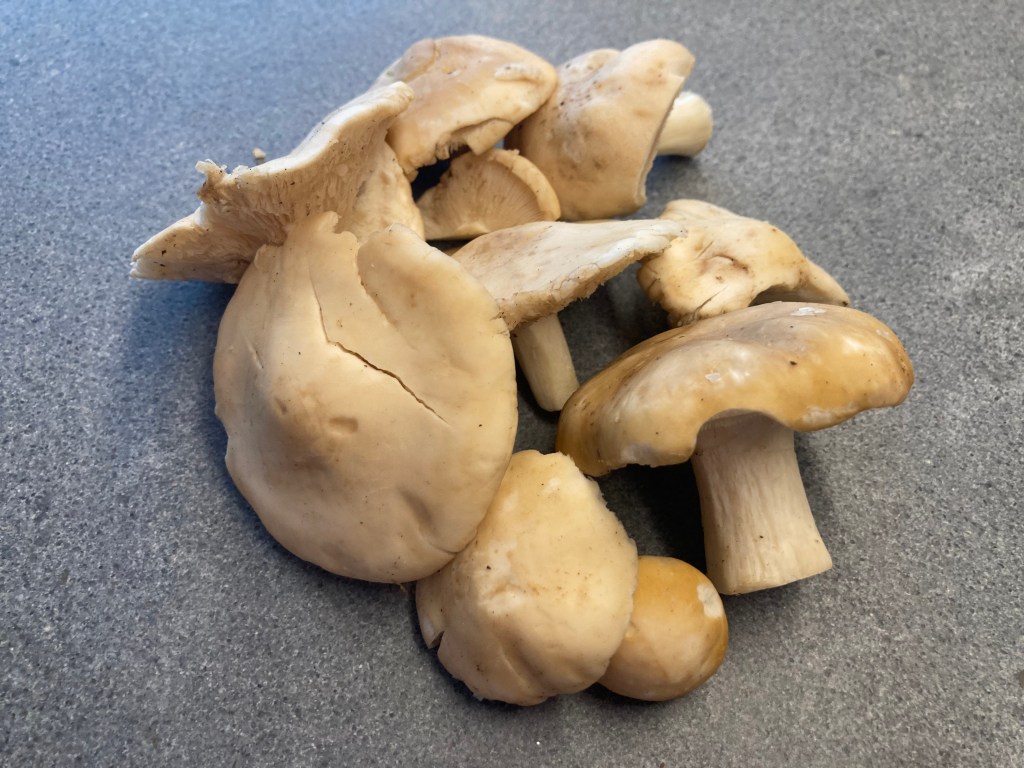
The mushroom of Saint George (Calocybe gambosa) is usually the first edible mushroom to appear. Its name derives from St George’s Day, 23rd April, by which date it can be found in the UK. Its French and Italian name (for instance Tricholome de la Saint-Georges in France) also refer to this day. Its Dutch name (Voorjaarspronkridder) and its Swedish name (Vårmusseron meaning spring mushroom) refer to the fact that the mushroom is available for a short period only.
Famous chef and author Jane Grigson isn’t a fan of the mushroom. In her classic book The Mushroom Feast she writes “I have omitted one or two which our mushroom books follow each other in praising too highly. One of these is the Saint George’s Mushroom.”
Perhaps because the smell is so rare? Some say the mushroom smells of cucumber; others say melon rind or refer to a mealy scent. We think it’s more like overripe zucchini or even ghee that is a bit offish. In all cases, a not-very-pleasant-smell to remember. The good news is that the smell disappears as soon as you heat the mushrooms.
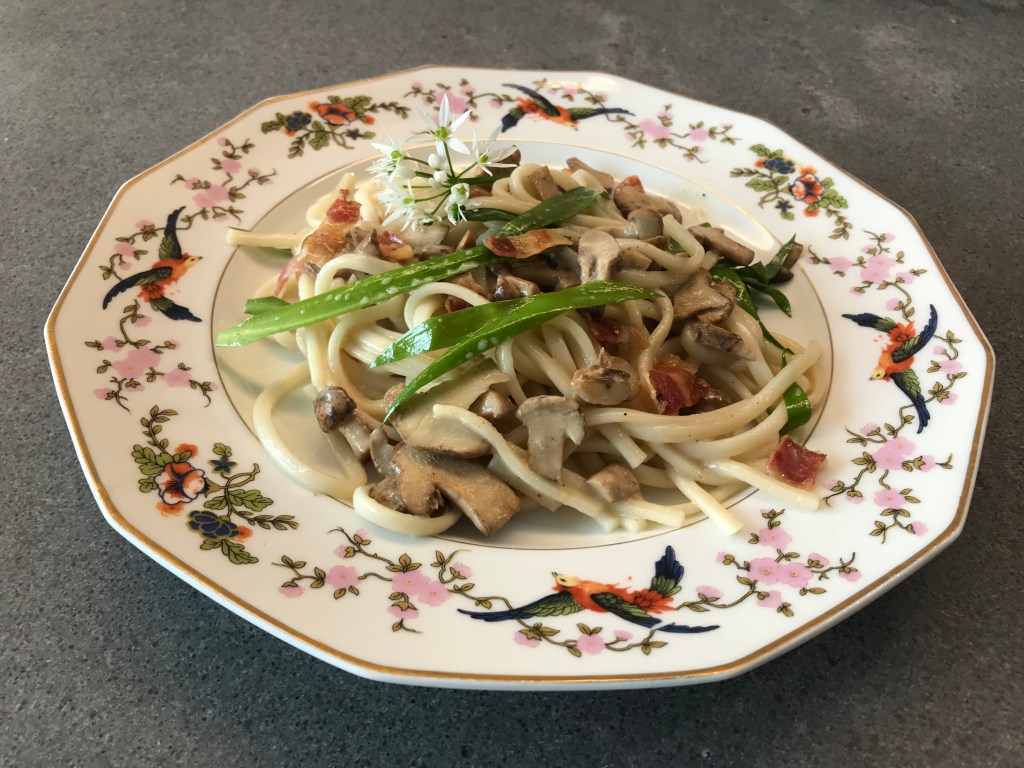
The mushroom of Saint George is clearly a spring-mushroom, but we think that you will have some reminiscence of autumn when eating this dish. A hint of earthiness. Intense but not overwhelming. However, the combination of ramson (wild garlic) and Saint George’s mushroom is 100% spring.
Confused? Perhaps that’s part of the fun of eating Saint George’s mushroom.
Wine Pairing
We suggest an oaked chardonnay, for instance Domaine De La Prade from the Languedoc region in France. The wine has a pale, yellow colour, aromas of ripe tropical fruit and its taste is intense, buttery and comes with a touch of oak. The wine has a long lasting taste.
Feel free to go for a US or Australian Chardonnay. A full-bodied, gently oaked chardonnay will go very well with the mushroom and the udon.
What You Need
1 bunch of Udon
150 grams of Saint George’s Mushroom
Fresh Ramson (or Wild Garlic, 5 Leaves and Flowers)
The French Périgord is the truffle heart of France. The region is also known for its culinary products, such as Confit de Canard, wines from Bergerac and Monbazillac, Foie Gras and Sauce Périgueux. This sauce is a classic in the French kitchen. Its basis is a white sauce made with shallot, a reduction of white wine, (goose) fat, stock and lots of truffle. The ‘original’ recipe of this truffle sauce can be found in La Bonne Cuisine du Périgord written in 1929 by La Mazille. The sauce works beautifully with Tournedos and Magret de Canard. And since white asparagus love truffles, why not combine them with Sauce Périgueux?
We don’t think a roux-based sauce will go very well with asparagus, so we combined two recipes: the flavors of Sauce Périgueux with the lightness and consistency of Japanese Kimizu.
Wine Pairing
We enjoyed our asparagus with a glass of Riesling, produced by Bott Geyl in the French Alsace. This fresh, aromatic, dry white wine with a hint of sweetness and high acidity combines very well with the sweetness of the asparagus and the intense, rich flavor of the sauce. The wine supports the dish perfectly.
What You Need
6 White Asparagus
1 Small Truffle
For the Sauce
1 Shallot
1 Glass of Dry White Wine
3 Black Peppercorns
½ tablespoon Simple White Vinegar
Two Cubes of Jus de Truffe*
2 egg yolks
White Pepper
What You Do
Chop the shallot, crush the peppercorns coarsely, add to a pan and add a glass of white wine
Leave to simmer for 20 minutes
Add a splash of white vinegar
Leave to simmer for 10 minutes
Add two cubes of jus de truffe and leave to simmer for another 10 minutes
Pass through a sieve
If all is well you should have 4 tablespoons of liquid. If necessary reduce
Set aside and leave to cool
Peel the asparagus and steam for 20 minutes, depending on the size
When there is still 10 minutes on the clock, start working on the sauce
Whisk the two egg yolks well, add the 4 tablespoons of liquid, mix and heat in the microwave on 30% power
Start with one interval of 10 seconds, stir, followed by an interval of 5 seconds, stir and continue with intervals of 5 seconds until you have the right consistency
Total time in the microwave will be approximately 60 seconds
Allow to cool for a minute or two
In the meantime grate the truffle
Serve the sauce over the asparagus, add some white pepper and sprinkle the truffle over the sauce and the asparagus.
* Best to buy a can of jus de truffe and freeze the content in an ice cube bag.