Beef Stew with Djeroek Poeroet

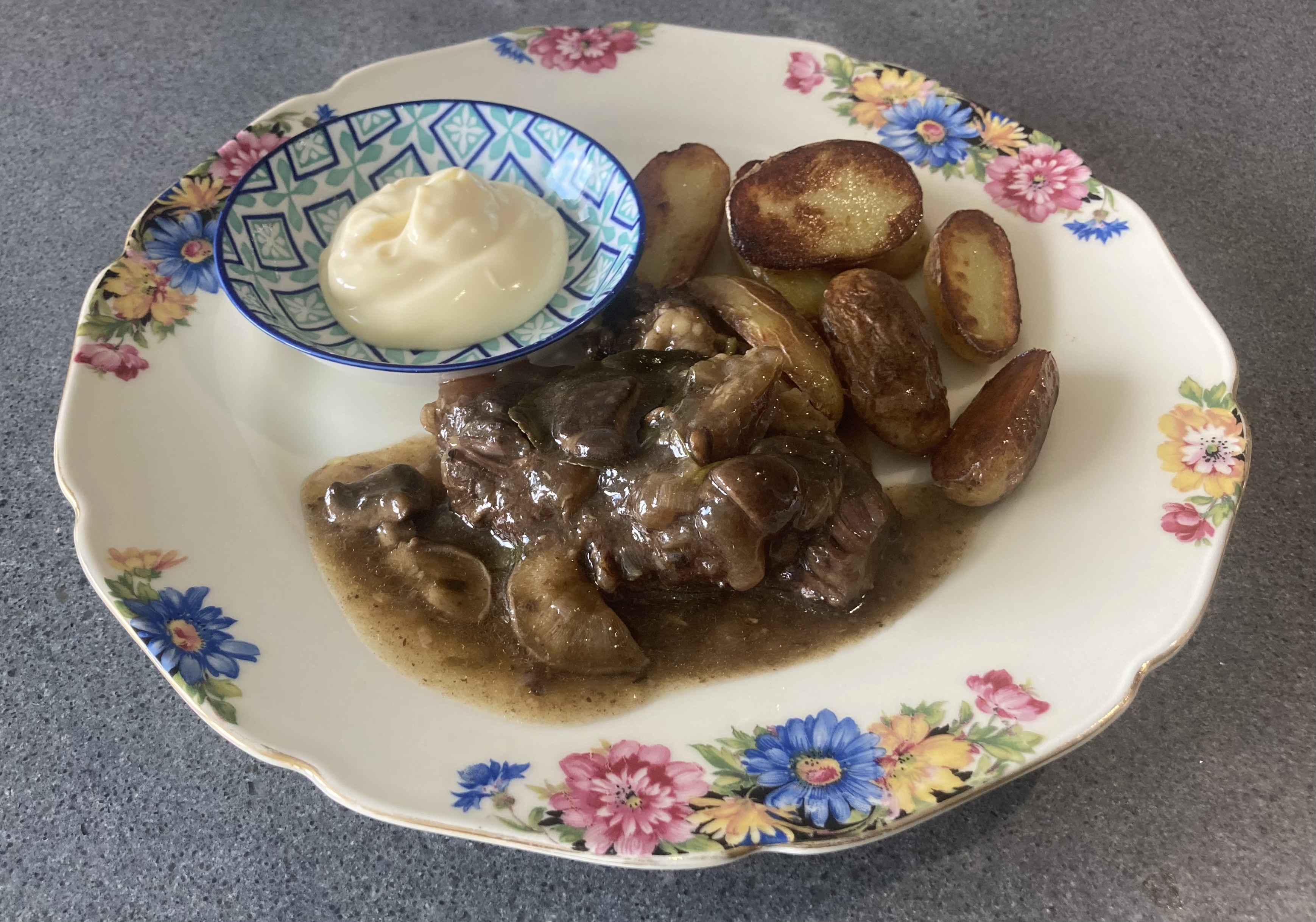
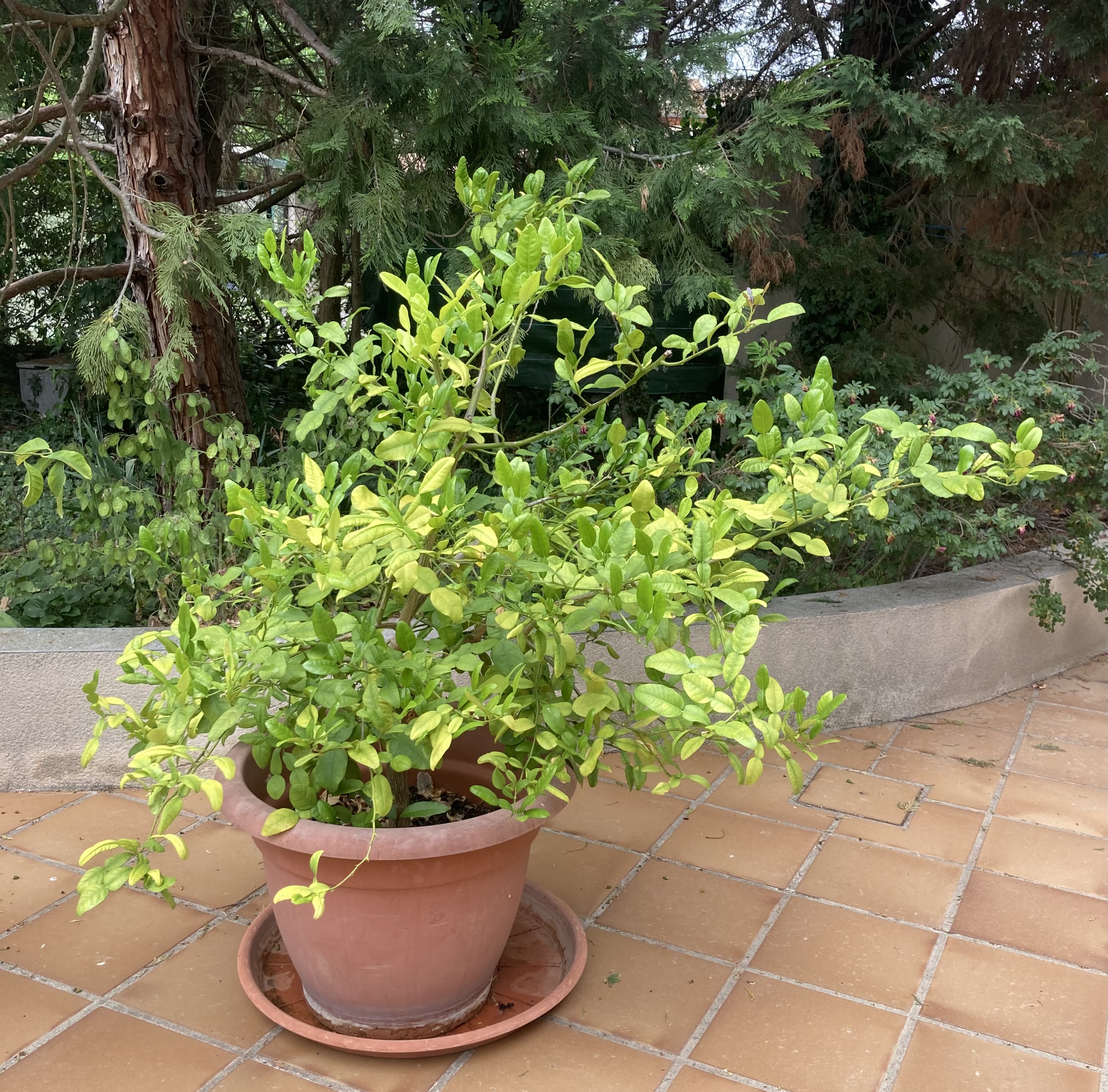
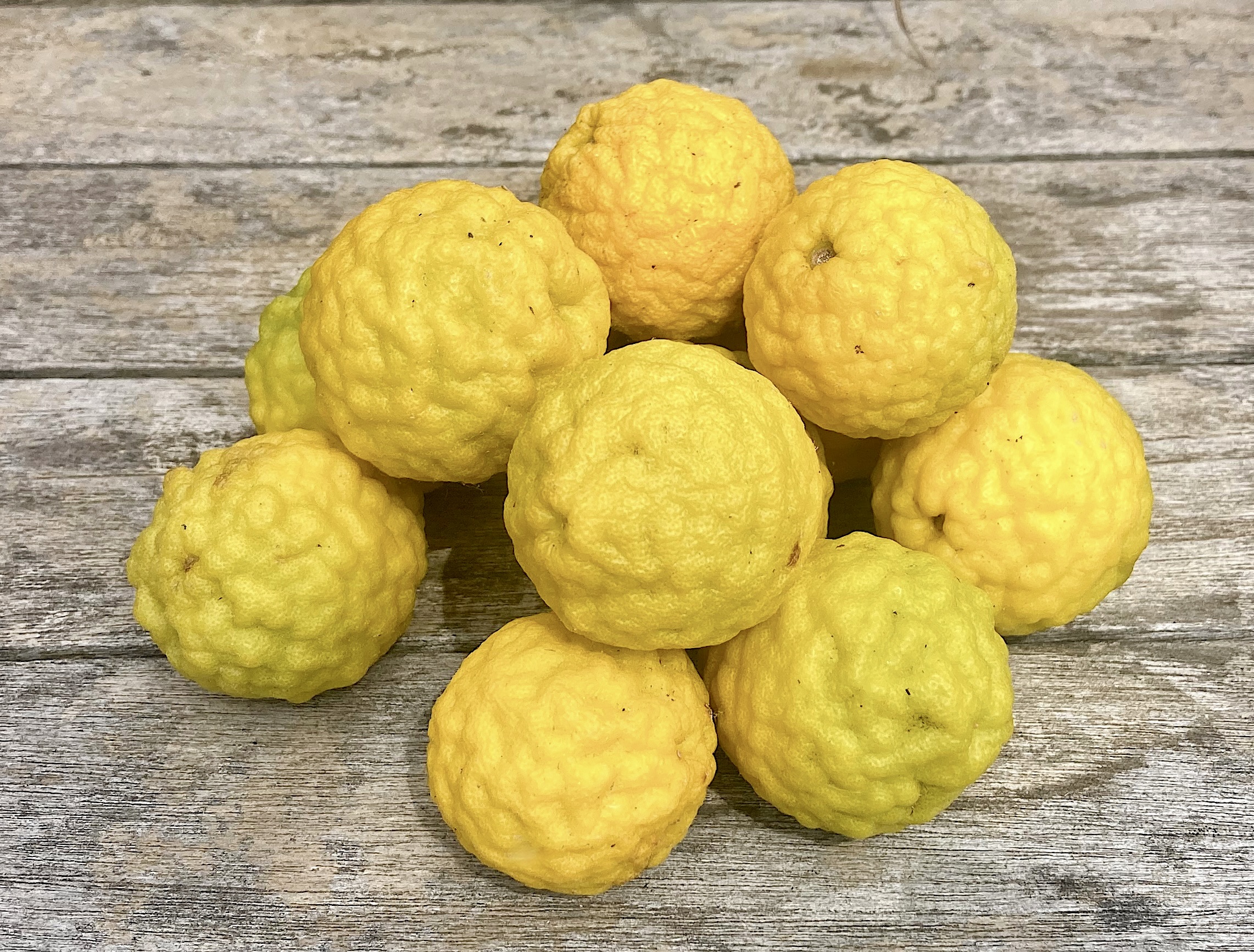
A few weeks ago we were looking for a nice restaurant, one where we could enjoy a quick, tasty meal and a nice beer. We looked at the menu of De Volkslust and decided this was exactly what we’re looking for. The restaurant originates from Antwerp, Belgium. Some 15 minutes later they brought us a Flemish Beef Stew, served with fried potatoes. It looked and smelled great. And it tasted, eh, slightly different? Of course! Chef used Djeroek Poeroet! Interesting, you would expect bay leaf in a Flemish Stew, but this was definitely djeroek poeroet (or jeruk purut, the leaves of the Makrut or Thai Lime). Great idea. Aromatic, refreshing, light. A few days later we made our version of it.
And typical for a good stew: make it a day in advance.

Wine Pairing

The obvious choice is a nice, cold beer. Perhaps the one you used for the stew? We used Affligem Blond, an award winning Belgian Blond beer with pleasant bitterness and fruitiness.
If you go for a glass of red wine, make sure it is full-bodied and rich; a wine with dark fruit and a touch of oak.

What You Need (for 4 persons)

  • 1 kilo of excellent, fat, marbled Beef
  • 2 Shallots
  • 250 grams of Button Mushrooms (Champignon de Paris)
  • Olive Oil
  • 2 bottles (33 cl) of Blond Belgian Beer
  • Bouquet Garni (Thyme, Parsley, Chives)
  • 6 leaves of Djeroek Poeroet (frozen preferred)
  • Black Pepper

What You Do

Slice the meat by following its structure. We prefer bigger parts, so not cubes. They will take longer to cook, but the meat benefits from this approach. Clean the mushrooms and slice the bigger ones in half. Coarsely shop the onion. Heat olive oil in a large pan and fry the meat. You probably will have to do this in 2 or 3 batches. Make sure the meat is nicely colored. Remove the meat from the pan and fry the mushrooms. Remove them when nicely golden, add some more olive oil and caramelize the sliced onions. When ready, add the mushrooms, the beef, the beer, the Bouquet Garni and 6 leaves of djeroek poeroet. Heat through and through. Close the pan and keep on a low heat for 5 to 6 hours. Stir every hour. Check the taste during the cooking process, perhaps you want to remove the djeroek poeroet (or add more!).
When you’re happy withe the cuisson, remove the meat from the pan, discard the bouquet Garni and reduce the sauce. Transfer the meat back into the pan, reheat, then cool and transfer to the refrigerator until the next day.
Serve with unpeeled potatoes fried in olive oil and (homemade) mayonaise.

Tomato Burger

Recently we reviewed Oh She Glows for Dinner by Angela Liddon as part of the Cookbook project by Bernadette. A well designed book with lots of colourful pictures of tempting plant based food. Unfortunately we think the food is not always as tasty as Angela Liddon claims it to be, which is unfortunate if you want to enjoy vegan cooking. We made Vegetarian Pasta with Black Beans (not a dish we would recommend) and Bruschetta Veggie Burgers topped with avocado and Perfect Basil Pesto.
The Veggie Burger was colourful and absolutely nutritious, perhaps a bit too sweet for our taste. The original recipe suggests using basil and canned lentils for the patties. The basil didn’t add much flavour and canned lentils are a no-go for us. Based on our experience we changed the recipe, focussing on the tomatoes.

Oh She Glows for Dinner by Angela Liddon is available via your bookstore or the usual channels for € 35,00 or US$20.00.

What You Need

  • 30 grams Green or Brown Lentils
  • Vegetarian Stock
  • Bouquet Garni (optional)
  • 25 grams Sun Dried Tomatoes
  • 1 small Red Onion
  • 1 Garlic Clove
  • 60 grams Roasted Cashews
  • Fresh of Dried Oregano
  • Teaspoon Lemon Juice
  • Black Pepper
  • Breadcrumbs
  • Olive Oil

What You Do

Start by washing and cooking the lentils in vegetarian stock, perhaps with a bouquet garni. Set aside and let cool. Prepare the dried tomatoes: if they are salted, then wash them thoroughly. If they are oil-packed, drain them. Chop the red onion, the garlic clove and the dried tomatoes coarsely. Glaze the onion and the garlic in olive oil. Use a food processor to make a coarse mixture of the cashews and oregano. Add the chopped tomatoes, the onion, the garlic, the lentils and the lemon juice. Pulse a few times. Taste and decide if you want to add pepper or lemon juice. Now it’s time to check the consistency. Is it possible to turn the mixture into patties? A bit soggy probably? Add breadcrumbs. Leave the mixture for 10 minutes. Divide the mixture in 4 (or 2) portions and make patties, using your hands. Bake the patties in a non-stick pan with some olive oil until they are ready and golden.Serve with a nice bun, some salad, sliced tomato, avocado and pesto.

The Art of Sauces: Beurre Blanc

We love the classic ways of eating white asparagus, served with a nice white wine from the Alsace region in France (Pinot Blanc, perhaps a dry Muscat). We were talking about different ways of preparing them. We browsed through various recipes and found a combination new to us: white asparagus with scallops (Coquilles Saint Jacques). Some add a tomato and tarragon sauce, others mayonnaise or (even) a tapenade. Not combinations we would like to see on our plate. Why not serve with a sauce that supports the subtle sweetness of both the asparagus and the scallops? Could be Hollandaise or Kimizu, but these are probably too rich for the scallops.

Beurre Blanc is an interesting sauce: it’s basically a reduction of white wine, vinegar and herbs, thickened with very cold butter.  The more butter you add, the thicker the consistency, although it will remain thinner than an emulsified sauce. The benefit of beurre blanc is that it comes with that lovely velvety mouthfeel without being too rich. And the acidity works beautifully with the asparagus and the scallops.

What You Need

  • 4 tablespoons Dry White Wine
  • 2 tablespoons White Wine Vinegar 
  • 4 tablespoons of Water
  • 1 Shallot
  • Thyme
  • Bay Leaf
  • Black Pepper
  • Double Cream
  • 75 (or more) grams very cold Butter

What You Do

Chop the shallot and crush the black pepper corns. Add the wine, the vinegar and the water to a pan. Add the shallot, the black pepper, thyme and one bay leaf to the pan. Allow to reduce to 1/3. Pass through a sieve. In total you should have 3 or 4 tablespoons of reduction. Warm the reduction. Add a splash of cream and reduce to 1/2 or 1/3. Whisk regularly. Remove the creamy reduction from the heat and start adding small cubes of ice cold butter, one by one, whisking constantly. Keep adding butter until you have the taste and the consistency you want.

Asparagus and Scallops

We served the Beurre Blanc with steamed white asparagus and scallops sautéed in butter. We opened a bottle of Mâcon-Vinzelles ‘En Paradis’ 2021, produced by Château Vitallis. The wine, made from 100% Chardonnay grapes, is vinified in stainless steel tanks. It has just the right level of citrusy acidity, it is fresh with floral aromas, and comes with minerality and a touch of butter. In general, you’re looking for an unoaked chardonnay, with freshness and some acidity.

Asparagus, Scallops and Beurre Blanc ©cadwu

John Dory or Saint-Pierre

Not the prettiest of fish, but according to some the most delicious. Its meat is delicate, moist, dense, melt-in-your-mouth, a touch sweet and flavourful. It is one of the ingredients of a traditional Bouillabaisse.
The head of a John Dory (Saint-Pierre, San Martiño) is relatively large. Saint-Pierre is a fairly expensive fish and knowing that you will discard a significant part of it makes the Saint-Pierre even more expensive.

The shape of a Saint-Pierre could give you the impression that it’s a flat fish, but actually it’s a round fish. You will also notice that the spines on its fins look rather nasty. These two aspects make filleting a Saint-Pierre difficult. Our fish monger offered to do this for us, which we happily accepted.

Given the price (we paid €125,00 per kilo fillet) you don’t want to make mistakes when preparing it. Fortunately frying Saint-Pierre only requires a bit of patience and attention (it’s easily overcooked). 

We enjoyed our Saint-Pierre as a main course with a rich mushroom-based sauce and slow cooked fennel.

Wine Pairing

A delicious Saint-Pierre requires an equally delicious wine. We opened a bottle of Louis Jadot – Bourgogne Couvent des Jacobins – Chardonnay. The wine has fruitiness and freshness as well as structure. It has aged for some 8 months in oak barrels, giving the wine more roundness. A perfect combination with the fish, the rich sauce and the soft anise flavours of both the fennel and the chervil.
Maison Louis Jadot, producteur et négociant, based in Beaune, France, produces various quality wines from the Burgundy region and exports these to several countries including the UK and the USA.

What You Need
  • For the Fish
    • One Fillet (preferably without the skin)
    • Butter
    • Olive Oil
  • For the Sauce
    • Champignons de Paris
    • Butter
    • Cream
  • For the Slow Cooked Fennel
    • Fennel
    • Olive Oil
  • Chervil
  • Black Pepper
What You Do
  1. Remove the outer leave(s) of the Fennel, slice top down in 4 or 8, making sure the fennel doesn’t fall apart
  2. Warm a pan, add some olive oil and cook on very low heat for some 6 hours. 8 is also fine
  3. Turn halfway to make sure both sides are caramelised
  4. In parallel, do some shopping, read the papers, watch your favourite series on Netflix and be patient.
  5. A John Dory fillet is really special, without any trouble you can divide it into three parts. One small, the other two perfect
  6. Heat a small skillet, add some butter and fry the quartered mushrooms until golden
  7. Reduce the heat, add cream and heat through and through
  8. Heat a bigger skillet, add some olive oil and butter, gently fry the fillets until brown and nearly done
  9. Transfer to the oven at 50 °C or 120 °F
  10. Fill a glass with water, add the creamy mushroom mixture to the pan and immediately add some water
  11. The sauce will thicken quickly so you need your glass of water on standby
  12. Add some black pepper and lots of chervil leaves. Mix. Happy with the sauce?
  13. Now it’s time to plate up. Some sauce, the John Dory on top, the quartered fennel, some extra black pepper and more chervil.

Asparagus

Both White and Green Asparagus are seasonal products. Waiting for the season to begin is part of the fun of enjoying asparagus.

Green Asparagus

Preparing Green Asparagus is simple. Wash them and cut off 1 or 2 centimetres or so from the bottom. You could steam or cook them but you risk getting soggy asparagus. Better to prepare them in a skillet or in the oven. They will only take 10-15 minutes. Great to combine with basil and black olives. You could also grill them, see below.

White Asparagus

Buying and preparing White Asparagus requires a bit more work, but once you know what to do, it’s not difficult at all.

Fresh

Make sure the white asparagus are fresh. Just look at the bottom, where they have been cut off. If the cut looks dry, wrinkly or even moldy, then don’t buy them. If you want to be sure they are super fresh, then rub two asparagus together. If you hear a squeaking sound, then they’re super fresh.

Peeling

Peel White Asparagus, using a peeler, as you would potatoes. In the old days White Asparagus would be peeled twice, but nowadays we like a bit of texture.
Cut off 1 or 2 centimetres from the bottom. If your White Asparagus are fresh, it’s just a matter of removing the original cut.

Cooking

The most popular approach is to cook White Asparagus. Add the asparagus to a pan with plenty of cold water. Wait for the water to just begin boiling, keep it simmering for 1 minute, then transfer the pan to the work top. Wait for 10 minutes before removing the asparagus from the water. If you prefer them a bit softer, then leave them in the hot water for 5 more minutes.
Many add butter, sugar, salt, lemon and/or the skin of the asparagus to the water. We could imagine adding the skin. Adding sugar is a big NO for us.
You could use a special asparagus pan when cooking the asparagus, but actually there is no need for it. As long as the pan can accommodate the asparagus, you’re fine.

Steaming

We prefer steaming White Asparagus for 20 minutes in our Russell Hobbs. The taste of the asparagus will be more intense and richer.

Wine Pairing

In general a Pinot Blanc, Riesling or Dry Muscat from the Elzas will be very nice with your asparagus.

Recipes

Over the years we have prepared asparagus in many ways. Bon Appétit!

PS

You’re probably aware of the side effect of eating asparagus, the typical smell when peeing. It doesn’t happen to everyone, and it also depends on the type of asparagus. The sulphurous by-products (the result of your body digesting the asparagus) that cause the smell, will disappear within a few hours. Could take a bit longer, but nothing to worry about, it’s perfectly harmless.

Potato, Fennel and Wild Garlic

So many names for this great plant: Ramson(s), Wild Garlic, Bear Leek, DaslookAil des OursBärlauchRamsløgAglio Orsino, Allium ursinum, it is one of the highlights of spring. Powerful, pure and tasty. It can be harvested from the wild, but fortunately some green grocers also sell Wild Garlic. The taste is a combination of onion and garlic, but much greener, longer lasting and with a touch of bitterness at the end. You can turn the leaves into a strong pesto, but better use it as herb with for instance potatoes or gnocchi. It is also great when used in a dish with white asparagus and morels. The flowers are also edible and are a great decoration for savory dishes and salads.

We combine Wild Garlic with potatoes and fresh fennel. The anise-taste and the light crunchiness of the fennel go very well with this rich, lightly onion flavoured potato mash.

What You Need

  • Potato
  • Butter
  • Cream
  • Fennel
  • Wild Garlic
  • Black Pepper
  • Salt (optional)

What You Do

Dice the peeled potatoes and cook until ready to mash. Very finely dice some fennel, let’s say one tablespoon per one large potato. Add cream, butter and diced fennel to the mashed potato, mix and leave on very low heat. Remove the veins from the wild garlic leaves and tear the leaves, as you would do with basil. Add some of them to the mash, add black pepper and perhaps a pinch of salt. Leave for a few minutes, add more butter or cream if so required and more leaves. If you’re happy with the consistency and the taste, it’s time to add some more torn leaves to the mash. Serve immediately.

PS

Other elements on the plate are Saucisse de Morteau, Frankfurter and petit farci. More about the latter in one of our next posts!

Bucatini All’Amatriciana

Let’s prepare a delicious and simple Italian dish, packed with flavours. The challenge when making Bucatini All’Amatriciana is with getting the right ingredients. You must have Guanciale, Bucatini, San Marzano tomatoes, dried Spanish pepper and Pecorino Romano. Five challenges actually…

Bucatini is an interesting pasta. It looks like thick spaghetti but has a hole running though the centre. Indeed, a dried tube. When cooked it’s different from spaghetti, thicker of course and you need to chew longer, making the dish more filling and the taste longer lasting, without the paste itself being chewy. Could you replace bucatini with spaghetti? Probably yes, although the dish will become simpler.

How about Guanciale (cured pork cheek)? It is the key ingredient of Spaghetti Carbonara. Could you replace it with Pancetta? Probably yes, even Antonio Carluccio uses pancetta when preparing Bucatini All’Amatriciana with Gennaro Contaldo in this video.

Parmesan Cheese? That’s a no-go. We tried the dish with both Parmesan and Pecorino. The version with Parmesan cheese (made from cow milk) was okay, the one made with Pecorino (made from sheep milk) was delicious. The cheese combined very well with the spiciness and sweetness of the sauce.

San Marzano tomatoes have lots of flesh, just a few seeds and the taste is sweet and not very acidic. They are often used for canned tomatoes. If you can’t find San Marzano, then ask your greengrocer for similar tomatoes.

Shopping for the ingredients of Bucatini All’Amatriciana may be a challenge, preparing it is simple. Just keep an eye on the pan and the pasta. Within 30 minutes you can enjoy a classic Italian dish.

Wine Pairing

A red Italian wine is the obvious choice. We opened a bottle of Villa Castello Terre di Chieti Sangiovese 2022. The wine is made with 100% Sangiovese grapes. A touch of oak, not too much alcohol, full bodied, smooth, and with aromas of dark fruit. We loved it with our Bucatini All’Amatriciana. In general, an (Italian) wine made with Sangiovese grapes will be a great choice.

What You Need

  • 150 grams of Guanciale
  • 300 grams San Marzano tomatoes
  • 1 small Yellow Onion
  • 1 dried Spanish Pepper
  • White Wine
  • Bucatini
  • Pecorino Romano

What You Do

  1. Remove the outer layer of the guanciale and dice
  2. Coarsely chop the onion
  3. Wash and dry the tomatoes
  4. Chop the tomatoes, also coarsely
  5. Finely chop the Spanish pepper. Depending on your taste you could use the seeds
  6. Heat a large pan, add the guanciale and fry gently, making sure you get some nice fat without frying the meat crispy
  7. Add the onion and some of the Spanish pepper *depending on your taste and its spiciness)
  8. Glaze the onion
  9. Add some white wine and reduce the heat
  10. Add the chopped tomatoes and leave to simmer
  11. Taste and perhaps add some more pepper
  12. In parallel cook the bucatini al dente, this will probably take some 10 minutes
  13. When ready transfer the bucatini straight from the water to the sauce, combine and leave for a minute or two
  14. Taste and if necessary, adjust by adding pepper
  15. Serve the Bucatini All’Amatriciana with some freshly grated Pecorino Romano.

Small-Spotted Catshark with Dashi and Bok Choy

Earlier we wrote about small-spotted catshark, also known as lesser-spotted dogfish or rock salmon. It’s a very common fish, not endangered, it doesn’t have bones (sharks have a cartilaginous skeleton), it’s tasty and the texture of the meat is moist and pleasant. When we tasted the fish with a tomato and red bell pepper stew, we started talking about other ways of preparing it. Perhaps a Portuguese version with piri piri, tomatoes and potatoes? Or a fish stew with shark, mullet, monkfish and clams? Or with dashi, soy sauce, mirin, ginger and lemon?

Wine Pairing

A Pinot Gris or a Sylvaner from the Alsace region will be perfect, dry, floral and a touch of sweetness. In general a light bodied, aromatic, unoaked white wine will be a good choice.

What You Need

  • For the Fish
    • 200 grams of Small-Spotted Catshark
    • Dashi
    • Mirin
    • Light Soy Sauce
    • Sake (optional)
    • Lemon Juice
    • Olive Oil
  • For the Vegetables
    • Bok Choy
    • Oyster Sauce
    • Soy Sauce
    • Fresh Ginger

What You Do

Add some olive oil to a pan and fry the fish. Combine dashi, a teaspoon of mirin, soy sauce and sake. Taste and adjust. You’re looking for a firm, not too sweet mixture. After a few minutes add the mixture to the pan. The idea is to stew the fish in this mixture and when the fish is done (this will take some 20 minutes), reduce the liquid, add a splash of lemon juice and coat the fish with the reduction. In parallel chop the bok choy and simmer the white of the vegetable in a mixture of water, soy sauce and oyster sauce. Just before serving add some grated ginger and the chopped green of the bok choy to the pan. Serve the fish on top of the vegetables.

Small-Spotted Catshark with Dashi and Bok Choy ©cadwu

Small-Spotted Catshark with Tomatoes

Once in a while your fishmonger will have small-spotted catshark, also known as lesser-spotted dogfish or rock salmon. Popular in Portugal (pata-roxa), less so in many other countries. It’s a very common shark, not endangered, it doesn’t have bones (sharks have a cartilaginous skeleton), it’s tasty and the texture of the meat is moist and pleasant. So why isn’t it more often on our menu?

We think the taste is very delicate so be careful withs herbs and spices. The structure of the meat made us think of monkfish. We know that some chefs compare catshark with sea eel, but that’s a big mistake as far as we are concerned. Catshark is much more refined.

Skinning a catshark requires special equipment, so the shark on sale is already skinned and cleaned, making it even more easy to prepare.  It looks a bit like a tube, long and round. Cut in chunks and start cooking!

Wine Pairing

The flavour and aroma of this dish are gentle. A not too complex, dry white wine with some acidity or a Provence rosé will be great with the cat shark stew.

What You Need

  • 200 grams of Small-Spotted Catshark
  • 2 ripe Tomatoes
  • 1 Red Bell Pepper
  • 1 Shallot
  • 1 Garlic Glove
  • Capers (in Brine)
  • A few Small Black Olives
  • Bouquet Garni (Thyme, Bay Leaf, Parsley)
  • Black Pepper
  • Olive Oil

What You Do

Clean the bell pepper, cut in large chunks and grill for 10 minutes until charred. Transfer to a small container, close it and leave for a few hours. Remove the skin of the bell pepper and dice. Clean the tomatoes, remove the seeds and dice. Chop the shallot and the garlic. Heat a pan, add olive oil and fry the catshark for a few minutes. Remove from the pan and keep warm in the oven at 50 °C or 120 °F. Add the shallot, fry gently on reduced heat, add the garlic, wait for one minute, add the tomatoes, half of the bell pepper and the bouquet. Allow to simmer for 5 minutes. Add the shark to the pan and allow to stew for 20-30 minutes, depending on the size of the fish. Five minutes before serving add the olives and the capers. Remove the bouquet.

Small-Spotted Catshark ©cadwu

Oyakodon

Hope you enjoyed Netflix’s The Makanai: Cooking for the Maiko House as much as we did. Two friends (Kiyo and Sumire) move from rural Japan to Kyoto, following their dream of becoming maiko’s. Once in Kyoto it turns out that their dreams are very different. Kiyo is passionate about food and becomes the person to prepare the makanai, the food for the people living in the Maiko house. Every episode shows Japanese food, from dumplings in red bean soup to baked sweet potato and onigiri (rice balls).

The first dish Kiyo prepares for the house is Oyakodon, a rice dish with egg and chicken, a popular dish in Japan. Easy to make, nutritious and the flavours and aromas are very satisfying. On Cooking With Dog you’ll find a helpful video showing you how to make Oyakodon. 

San Francisco based chef Namiko Hirasawa Chen (founder of Just One Cookbook, an award winning blog about food) was brave enough to cook all the food shown in the series. Obviously you’ll find all makanai recipes on their website.

What You Need

  • 100 grams of Chicken Breast (skin off)
  • 1 medium White Onion
  • 2 Eggs
  • 100 ml Dashi
  • 2 tablespoons Mirin
  • 2 tablespoons Soy Sauce
  • Mitsuba (or a mix of Parsley and Cilantro)
  • Rice

What You Do

Make sure your dashi is full of flavours, perhaps a bit stronger than usual. Make a broth with mirin and soy sauce. Peel the onion and slice from top to bottom (banana shaped slices). Chop the chicken breast in comfortable slices. Add the onion and the chicken to the broth, cover the pan with a lid and cook until nearly done. Add half of the mitsuba (or the combination of parsley and cilantro). Add the eggs to a bowl and lightly beat the eggs but don’t mix. You should be able to distinguish the white and the yolk easily. Add the first half to the broth and use chopsticks to distribute the combination in the pan. Wait for a few moments and add the second half. Serve over a bowl of warm rice. Decorate with mitsuba.

PS

Perhaps you noticed that we used udon for our oyakodon, basically because we love udon, but it should be served with rice. Most (all?) recipes suggest adding sugar. We think the mirin brings sufficient sweetness to the dish, but feel free to add just a bit of sugar.