Tomato Confit

A few years ago it was the obvious garnish to nearly every dish: oven roasted cherry tomatoes, preferably on the vine. It looks and tastes nice plus it is easy to make. Just heat your oven to 180 °C or 350 °F, add the tomatoes to a baking dish, sprinkle with salt, olive oil and 30 minutes later they’re ready to serve. When cold you can add them to a salad or a sandwich with soft cheese (mozzarella, burrata, ricotta). An alternative is to halve the tomatoes, sprinkle with salt and quickly roast and dry them in the oven. Another tasty result.

We prefer a slow alternative: Tomato Confit. The idea is that the skin doesn’t crack, so the tomatoes remain intact, and at the same time they absorb the flavours of the oil, herbs and garlic. The result is not just a great sweet and juicy tomato, it’s a taste explosion!

We use Tomato Confit to brighten up a simple pasta or salad, or a more complex dish like Lobster Mushroom with Udon.

What You Need

  • Excellent Cherry Tomatoes
  • Olive Oil
  • Rosemary
  • Thyme
  • 2 Garlic Gloves

What You Do

  1. Wash and dry the tomatoes
  2. Add to a baking dish
  3. Chop the garlic
  4. Add herbs, garlic and a generous amount of olive oil to the dish. No salt, honey or sugar required
  5. Combine
  6. Leave in the oven for something like 2 hours on 90 °C or 200 °F
  7. You could baste the tomatoes once or twice
  8. Don’t forget to use the cooking liquid as well, it’s another pack of flavours!
  • Tomato Confit ©cadwu
  • Fresh Tomatoes ©cadwu

Cod and Horn of Plenty

The magic of a great combination: only two ingredients supported by butter, olive oil and white pepper. It made us think of James Tanner’s inspiring Take 5 Ingredients. Sometimes you need various cooking techniques and lots of ingredients. Sometimes the combination of only 5 ingredients is all you need to make a perfect dish.

Why perfect? Both the fish and the mushroom are clearly present and nicely balanced. As if the combination brings out the best of both. The butter supports the richness of the fish and the aromas are delicate. The texture of the cod is soft and a touch flaky; the Trompettes de la Mort have a more fibrous and chewy texture. Excellent mouthfeel!

Wine Pairing

You’re looking for a wine that has minerality, a touch of oak and has sufficient body and length, for instance a Chardonnay.
We enjoyed our Cod and Horn of Plenty with a glass of Chablis, Antonin Rodet, Premier Cru, Montmains. It has a clear and pale gold colour. It comes with mineral notes and a touch of lemon. The taste is delicate and persistent with aromas of fresh citrus. It goes very well with the ‘long’ taste of the dish and the citrus is ideal with the cod and butter.

What You Need

  • 150 grams of Cod
  • 100 grams of Horn of Plenty
  • Butter
  • Olive Oil
  • White Pepper

What You Do

Make sure the mushrooms are fresh and dry. They become soggy and smelly easily. Clean the mushrooms thoroughly with a piece of kitchen paper. This can be time consuming. You may want to cut the cod in two. Fry the cod in olive oil with some butter in a non-stick pan. In a second pan fry the mushrooms in olive oil. This may take 5 minutes or so. Transfer the mushrooms from the pan to a warm plate with kitchen paper. When the cod is ready, serve immediately on a warm plate with some white pepper and sprinkle the mushrooms on top.

  • Cod and Horn of Plenty ©cadwu
  • Horn of Plenty ©cadwu

Guineafowl with Ras el Hanout

Preparing guineafowl can be a bit of a challenge: easily overcooked and quickly dry. Guineafowl has more structure and less fat compared to chicken plus it’s much firmer. The good news is that guineafowl has lots of flavour, perhaps a bit gamey, but not overpowering. So great to combine with nice ingredients such as morels or with grappa, junipers, sage, white wine and pancetta (as included in The River Cafe Classic Italian Cookbook, written by Rose Gray and Ruth Rogers).

Ras el Hanout is a mix of some twenty plus spices such as coriander, cumin, cinnamon, nutmeg, fenugreek, fennel, cardamom, turmeric and many more. Ras el Hanout is complex, layered, warm, a touch sweet and bitter. It works beautifully with the guineafowl and the various vegetables. 

Wine Pairing

Enjoy your guineafowl with a not too complex, medium bodied, fruity red wine. Grapes such as Grenache, Carménère, Carignan. We enjoyed a glass of Merlot, produced by Les Ormes de Cambras from the French Pays d’Oc region. A round, fruity wine with aromas of berries and subtle tannins. Also available as Bag in Box!

What You Need

  • Guineafowl
    • Guineafowl (Supreme preferred, but Leg is also fine)
    • Teaspoon of Ras el Hanout
    • 2 Garlic Gloves
    • Olive Oil
    • White Onion or Shallot
  • Vegetables
    • 1 Sweet Potato
    • 1 Carrot
    • Cinnamon
    • Olive oil
    • Teaspoon of Soy Sauce
  • Ratatouille

What You Do

Crush the two garlic gloves and mix with some olive oil and ras el hanout. Rub the meat with the mixture and leave to marinate in the refrigerator for a few hours.
Pre-heat the oven to 180 ˚C or 355 ˚F. Add the two legs of guineafowl to a shallow dish with generous olive oil and chopped onion. Cook for 10 minutes. Turn the legs upside down and cook for another 10 minutes. Turn them a second time, skin up, for 10 more minutes. If you want a bit more colour, then set the oven to 200 ˚C or 390 ˚F.
In parallel peel the potato and the carrot. Dice and slice. Cook separately (the carrot needs more time) until tender but firm. Combine the vegetables, add olive oil, a teaspoon of grated cinnamon and a teaspoon of soy sauce. Mix well, making sure the vegetables are nicely coated. Leave on very low heat for 10 minutes. This will help integrate the flavours. (You wonder why we add soy sauce? Its umami will bring the flavours of the potato and the carrot together plus the saltiness will give the dish the required push. And because it’s one teaspoon only, you will not be able to recognise it).
The ratatouille is optional. Make it the day before, with relatively small slices and cubes of vegetables, add some tomato puree, making it nearly paste like.

Guineafowl with Ras el Hanout ©cadwu

Lamb with Rosemary, Garlic and Anchovies

A powerful and uplifting combination, one that works very well on a summer’s evening, eating al fresco. Using anchovies is not a semi-modern twist (the Surf and Turf cliché), it’s a way of adding flavor and salt to the dish. It made us think of the Roman Garum or Liquamen, a sauce made with fish and salt. The recipe for Garum is simple: just combine fish, lots of salt and leave to ferment for a couple of weeks, until you have a clear liquid. This fish sauce (but it doesn’t taste like fish) will bring umami and depth to the dish. In this case the anchovies will have a similar effect. During the cooking process they will practically dissolve and what is remains is flavor.
We enjoyed our lamb with Ratatouille. Make sure you prepare it one day ahead.

Wine Pairing

This combination requires a red wine that will not be blown away. We enjoyed a glass from the Corbières region in France, produced by Château Coulon and made from Syrah, Mourvedre, Carignan and Grenache grapes. Flavors such as cassis, black fruit with a hint of pepper. The wine is dark red, with a liquoricey edge, a touch of smokiness, firm but supple tannins and a minerally character.

What You Need

  • For the Lamb with Rosemary, Garlic and Anchovies
    • 400 gram Leg of Lamb
    • 1 Rosemary Sprig
    • 4 Garlic Gloves
    • 2 Anchovies
    • Olive Oil
  • For the Ratatouille
    • 1 Red Bell Pepper
    • 1 Red Pepper
    • 1 Courgette
    • 1 Aubergine
    • 4 Excellent Tomatoes
    • Thyme
    • Cilantro
    • Olive oil

What You Do

  1. The day before prepare the Ratatouille.
  2. Make 4 slices in the meat, preferably in the fatty part
  3. Remove the needles from the rosemary and chop very fine (using a herb chopper)
  4. Peel the gloves and press them
  5. In your mortar, mix the garlic and chopped rosemary with some olive oil, creating a paste
  6. Cut the anchovies in 4
  7. Add paste and anchovies to slices
  8. Cover with foil and leave to rest for at least 12 hours
  9. Remember to remove it from the refrigerator one hour before cooking
  10. Heat the oven to 235 °C or 455 °F
  11. Transfer the meat to the oven for 10 to 15 minutes, until it has the right colour
  12. Open the oven, allow to cool and set the oven to a low temperature
  13. You could go for 80 °C or 175 °F.
  14. Remove from the oven when the internal (core) temperature is 60 °C or 140 °F
  15. Cover with foil (not tight) and allow to rest for 10 minutes
  16. In parallel warm the ratatouille
  17. Slice the meat at a right angle to the direction of the stuffed slices
  18. Mix the ratatouille with lots of fresh cilantro
  19. Serve on a warm plate

Time To Replace Your Non-Stick Pan

We all know that every few years we need to replace our non-stick pans. The surface has become less smooth, there are small scratches in the coating and it has become semi non-stick. Time to buy a new pan.
Perhaps you wonder what happened to your pan? Well, the truth is that not only have you eaten lovely fried food, you have also eaten bits of your pan.

Which is not great, because the coating contains PFAS. This substance may have very harmful effects, to your health and to the environment.

The abbreviation PFAS stands for Per- and Polyfluoroalkyl substances. These (artificial) substances don’t decompose, and once present they will not disappear and continue to be harmful.

Denmark, Germany, the Netherlands, Norway and Sweden announced the intention to submit a restriction proposal for PFAS to the European Chemicals Agency by July 2022. A restriction proposal is a first step towards a European ban on PFAS.

Great news for your health and the environment, but how about your beloved non-stick pan?

Fortunately, we have found an excellent alternative. The ceramic non-stick Prime-cook pans are 100% free of PFAS, PTFE, PFOA, GenX and nickel plus they are suitable for all cooking hobs. And given they last longer, it’s a sound investment.
Having tested it, we are convinced this is the future of healthy non-stick frying.

Bring your non-stick pan to the hazardous chemical waste disposal and buy a Prime-cook pan!

non-stick pan Prime-Cook ©cadwu

Horn of Plenty with Cumin and Pork Fillet

The name Horn of Plenty refers to the shape (very much like a funnel without a stem) of the mushroom and to the mythical goat Amaltheia, whose horn would be filled with everything you whished for. It’s also called Black Chantarelle, which is very appropriate because it’s a chantarelle and truly black when cooked. The more morbid name is Trompette de la Mort, as if the buried use the mushrooms to play the Marche Funèbre.

More importantly to us: they are very edible with a pleasant fibrous and chewy texture. The only downside is that they quickly become soggy and smelly, so make sure you buy (or harvest) dry ones and use them the same day or the next.

For some reason Horn of Plenty simply loves cumin. We also added coriander and fennel seed to give some additional lightness and freshness to the combination.
And as always, only use the very best organic pork.

Wine Pairing

A medium bodied, not too complex, red wine will be perfect. Think Merlot, Tempranillo, Grenache, Cabernet Franc, Carménère.

What You Need

  • 150 grams Horn of Plenty
  • One Red Onion
  • Cumin, Coriander and Fennel (seeds)
  • Black pepper
  • Olive Oil
  • Pork Fillet

What You Do

Clean the mushrooms thoroughly. This can be time consuming. Slice the pork fillet to create 6 medallions. Heat a heavy iron skillet and fry the medallions in olive oil until just underdone. Wrap in aluminium foil and leave to rest. Slice the red onion, add some olive oil to the pan and fry the onion. Grind cumin, coriander and fennel seeds and fry the spices. Lower the heat, perhaps add some more olive oil and fry the mushrooms for 5-10 minutes. Taste, adjust and add some black pepper. Add the juices from the pork to the pan, deglaze and serve.

  • Horn of Plenty with Cumin and Pork Fillet ©cadwu
  • Horn of Plenty ©cadwu

Lentils with Sausage and Beetroot

Think France, think a nice small bistro in a small street, off centre, nothing posh, no Michelin star in sight. It’s 12.30, time for a quick lunch. You enter the restaurant, take a seat and order today’s dish, the plat du jour. It turns out to be a generous helping of lentils, fried sausages, mashed potatoes and mustard. A beer works beautifully with it. After having enjoyed your lunch, you think about the joy of good food, French mustard and the beauty of lentils. Time for a coffee. And perhaps a glass of Calvados?

In our recipe for Cod with Lentils and Cilantro we mentioned the joy of lentils, especially the joy of eating Lentille Verte du Puy A.O.P & A.O.C. from Sabarot.

We’re not too keen on mashed potatoes so we decided to combine the lentils and sausage with a beetroot salad.

Sausage wise we suggest coarsely ground (so not minced) organic porc sausages with sage, for instance Lincolnshire sausages. The texture of the sausages is great in combination with the size of the lentils. 

Wine Pairing

We enjoyed our lentils with a glass of red Pays d’Oc wine, with grapes such as Grenache and Syrah. The Syrah brings an intense colour, aromatic strength and structure. The Grenache reveals red berry flavours. For instance wine from Domaine La Colombette. This producer is well known for its innovative light wines and its Super Bio wines, made with grapes (Cabernet Noir, Souvignier Gris) that have a natural resistance to various diseases, meaning that no pesticides are needed in the vineyard.

What You Need
  • For the Lentils
    • Shallot
    • Olive Oil
    • Green or Du Puy Lentils
    • Chicken Stock
    • Parsley
  • For the Sausages
    • 2 or 4 Sausages (organic pork with sage, coarsely ground)
    • Olive Oil
  • For the Salad
    • Beetroot
    • Spring Onion
    • Vinegar (plain and white wine)
  • French Mustard
What You Do
  1. One day before serving, wash the beetroot, wrap in aluminium foil and put in the oven on 180° Celsius or 365° Fahrenheit for 45-60 minutes, depending on the size
  2. Transfer, remove foil and let cool
  3. Cut the shallot in small bits and glaze gently in olive oil
  4. In the mean time check the lentils for small pebbles; wash the lentils
  5. Once the shallot is glazed, add the lentils and heat them for a few minutes, as you would do with risotto rice
  6. Add some chicken stock and water (the stock is only intended to give the lentils a small push) and leave to simmer on low heat
  7. Fry the sausages in olive oil in a heavy iron skillet
  8. Remove the skin of the beetroot, slice the beetroot and combine with thinly sliced spring onion and vinegar
  9. Mix
  10. Drain the lentils, chop the parsley and add to the lentils.
  11. Serve the sausage on top of the lentils
  12. Definitely a good dash of French mustard on the side!
  • Lentils with Sausage and Beetroot ©cadwu
  • Du Puy Lentils AOP AOC © cadwu

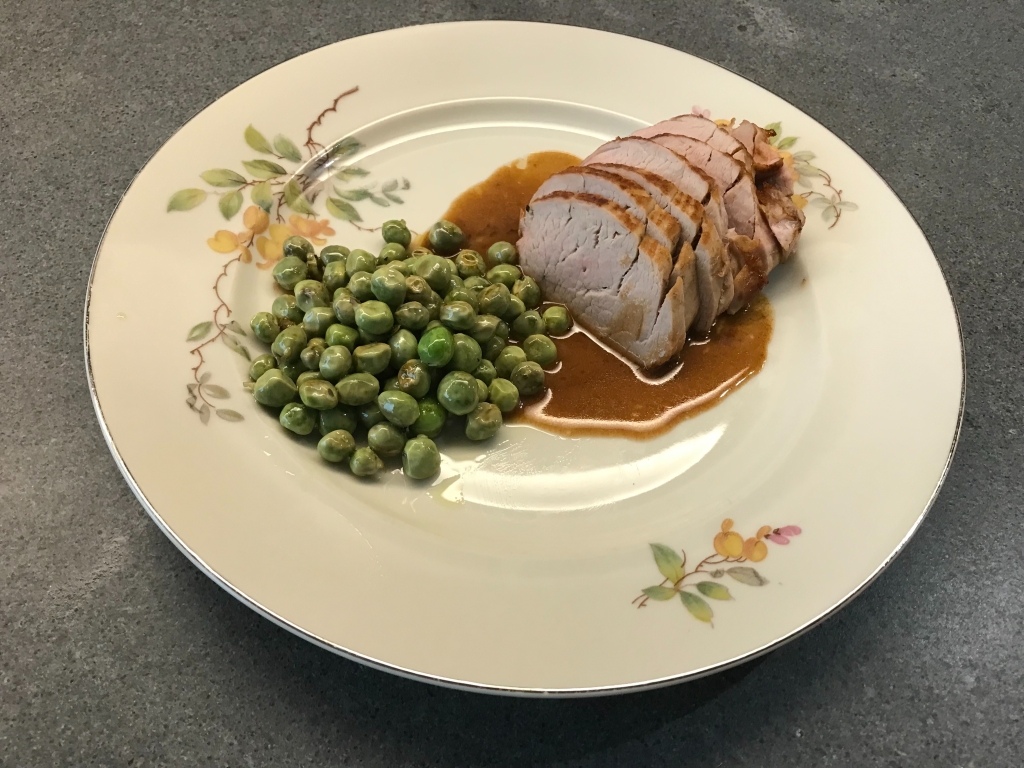
Field Peas with Summer Savory

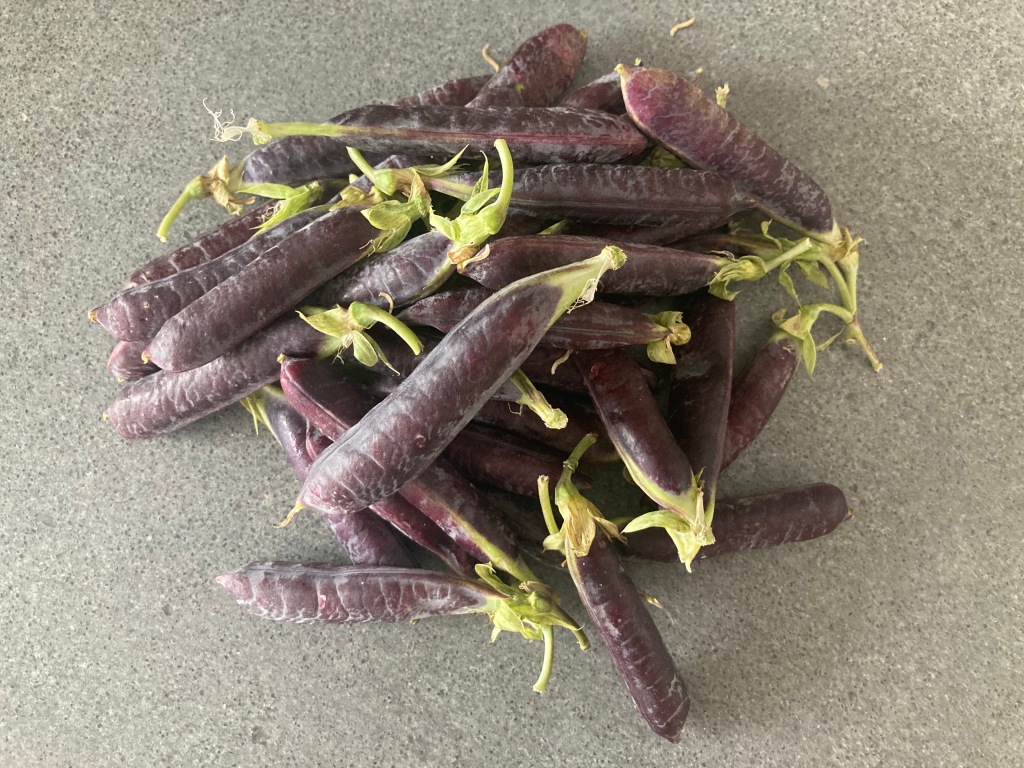
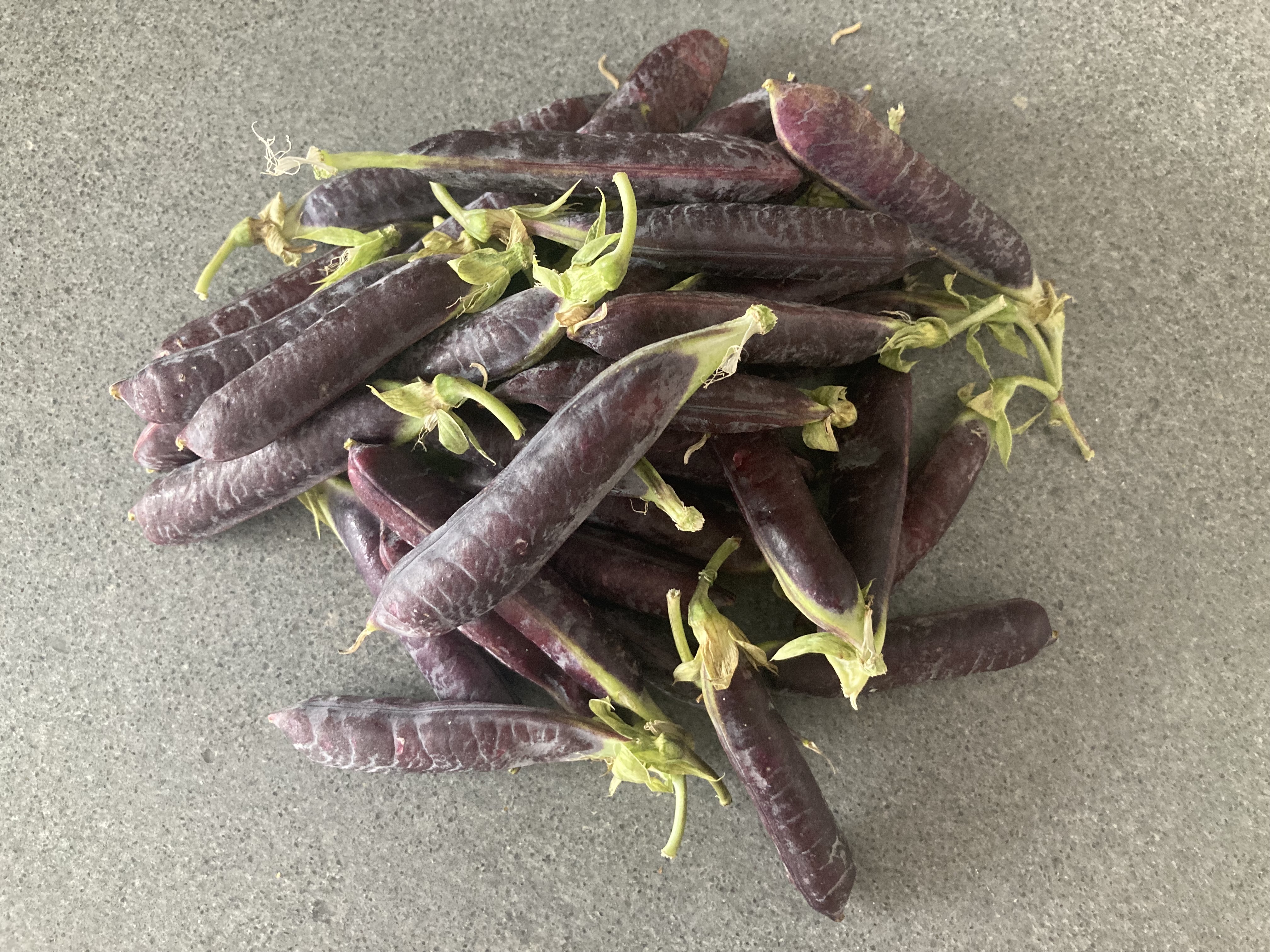
Seasonal products, we simply love them! Fresh field peas are available for a few weeks in June and July only. They are easy to recognise by their purple pod. An old and forgotten vegetable, perhaps because the (older) peas tend to be starchy and not very tasteful.
Young field peas, however, are sweet and moist with a good texture. Combining them with summer savory is a great idea, but if you want to give your field peas a more modern twist, then replace the savory with fresh oregano.
Field peas, different from fresh green peas, require some fat or oil. The combination with for instance crispy fried pork belly works really well. Simple, a bit old fashioned and delicious.

Wine Pairing

We combined our field peas with pork fillet. The dish is robust, so we decided to drink a red wine from the Dão region in Portugal, to be more precise we enjoyed a glass of Prunus as produced by Gotawine. One of our favourites! It has lots of dark fruit (plums, blackberries, cherries), it is lightly oaked and its taste is fruity, long and well balanced. Grapes include Jaen (also known as Menci), Tempranillo and Touriga Nacional. In general you’re looking for a medium bodied, not too complex, yet elegant red wine.

What You Need

  • Fresh Field Peas
  • Sprigs of Summer Savory
  • Olive Oil

What You Do

Shell the peas and steam them for 4 minutes maximum. Let cool and set aside. Heat a small skillet, add olive oil, reduce heat and very gently fry the peas. Add some finely chopped summer savory. Mix. Just before serving add the remaining chopped savory, mix and serve.

If you combine the field peas with pork fillet, then use excellent organic fillet only. Fry the fillet in a heavy iron skillet until nearly done. Wrap in foil and leave to rest for 10 minutes. Add the meat juices to the pan, add some mustard and (vegetable, veal or chicken) stock. Reduce. Add some cold water to help the emulsification. Slice the fillet. It should be a touch pink. Serve with some black pepper and the jus.

  • Field Peas with Summer Savory ©cadwu
  • Fresh Field Peas ©cadwu
  • Prunus Label ©cadwu

All Our Recipes For You

A few years ago we created an overview of recipes per season, simply because it’s such a good idea to enjoy what is available in the season. Nice to eat strawberries in Winter, but isn’t it a much better idea to enjoy seasonal slow cooked pears?

We then introduced overviews per course, ranging from side dish to lunch. The categories didn’t always make sense, so we added a few more, making our admin more complicated, especially when we updated a recipe or a picture.

The obvious thing happened: we lost track of recipes, noticed some links were broken and the overviews became incomplete.

So how to organise this blog?

After much debate and intense workshops (not really) we’re pleased to present to you an old fashioned, up to date and very easy to use (and maintain) index of All Our Recipes For You!

All Our Recipes For You ©cadwu

Asparagus with Basil and Olives

End of June means end-of-season for asparagus, morels and ramson (wild garlic). But let’s not be sad! It’s also the beginning of Summer; time to dine al fresco and serve vibrant, light flavours. We combine the very last white asparagus with green asparagus, black olives and basil. Feel free to use green asparagus only. The dish will lose some of its bitterness and complexity but it’s still a great combination of flavours and aromas.

Wine Pairing

Best to enjoy with a full bodied and elegant red wine. Flavour-wise you’re looking for lots of fruit, mild tannins and a touch of wood. We enjoyed our asparagus with a glass of Cantine Due Palme Salento Il Passo Nero 2019. This wine from Puglia (Italy) is made from late harvested negroamaro grapes. Dark berry fruit, medium full tannins and a beautiful deep colour.

What You Need

  • Asparagus
    • Equal Amount of White and Green Asparagus
    • Basil
    • Black Olives (preferably Cailletier or Taggiasca)
    • Olive oil
  • Lamb Chops
    • Olive Oil
    • Thyme
    • Garlic
    • Black Pepper

What You Do

Peel the white asparagus and cut of the end. Wash the green asparagus and cut of the end. Slice the asparagus in nice chunks (4 centimetres or so). Combine the asparagus with olive oil and a nice amount of black olives. Transfer to the refrigerator.
When ready for your al fresco dinner, heat your oven to 190˚- 200˚ Celsius (or 375˚- 390˚ Fahrenheit). Mix after 10 minutes and again after 20 minutes. The asparagus should now be ready (if not, another 10 minutes should do the trick). Add half of the basil leaves.

If you serve the asparagus with lamb chops: leave the chops to marinate in olive oil, crushed garlic and thyme for 24 hours in the refrigerator. Remove thyme. Heat a heavy iron skillet and fry the chops in olive oil (4 minutes depending on the size). When ready keep the chops warm in aluminium foil. Fry the thyme in the remaining oil. In parallel add more basil leaves to the asparagus and mix.

  • Asparagus with Basil and Olives ©cadwu
  • Ingredients of Asparagus with Basil and Olives © cadwu
  • Asparagus with Basil and Olives Ready to go into the Oven© cadwu