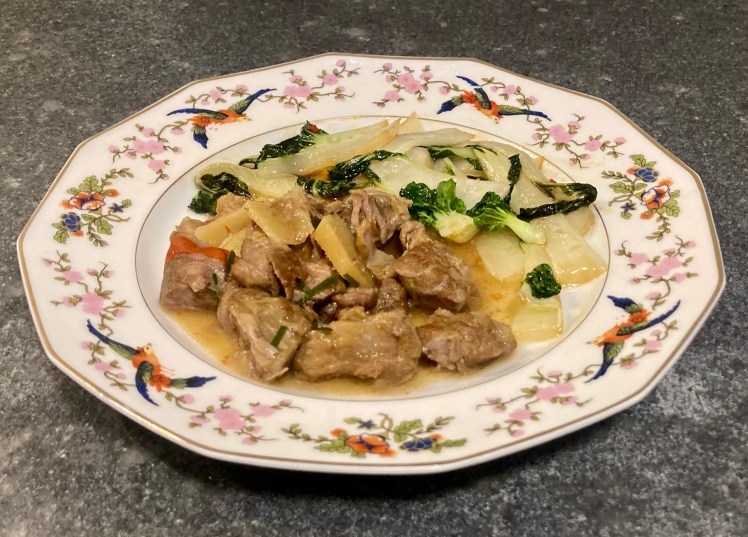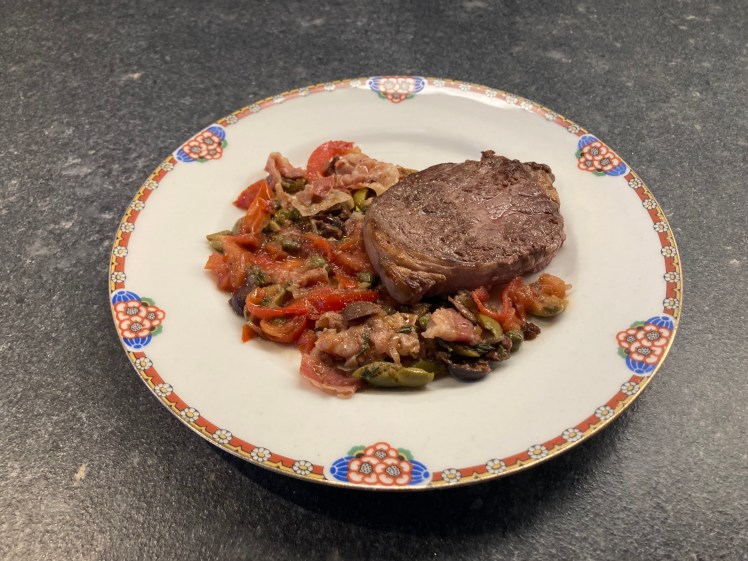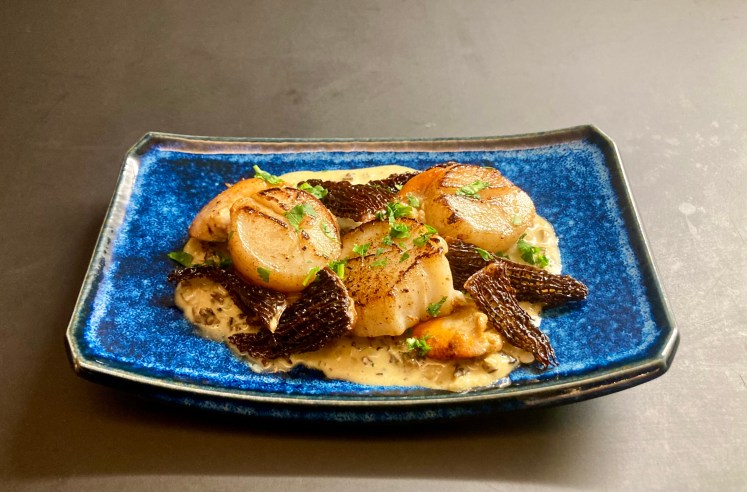
Duck with Garlic Thyme Sauce

Breast of Duck (Margret de Canard) is often paired with sweet ingredients, such as figs and oranges. We love the combination of duck with a green pepper sauce, because the sharpness emphasises the natural sweetness of the duck meat. In this recipe we do something similar. The sauce with thyme and mustard is aromatic and a touch sharp, which is very nice with the duck. The grated garlic adds spiciness to the sauce, making the dish more complex and bold. Delicious when combined with the sweet and sour caponata and crunchy fried polenta.

Wine Pairing

To balance the flavours of the dish, we suggest a fruity, dry red wine, one with subtle tannins and lots of freshness. We enjoyed a glass of Nero d’Avola, made in Sicily. The unoaked wine had a ruby red colour and aromas of cherries and plum. Serving the wine slightly chilled (meaning 15°C or 16°C (59°F or 61°F)) enhanced the freshness, acidity and fruitiness of the wine.

What You Need
  • 1 Breast of Duck
  • Thyme
  • Chicken Stock
  • Garlic
  • Mustard
  • Crème Fraîche
  • ½ grated clove Garlic
  • Black Pepper
  • To serve with the Duck
What You Do
  1. Check the breast for remainders of feathers
  2. Remove the vein on the meat side of the breast (and other bits you don’t like)
  3. Place on a dish, cover with foil and transfer to the refrigerator
  4. Leave in the refrigerator for one hour, making sure it’s nice, firm and cold
  5. Fry the duck in a hot, non-sticky skillet for 10-12 minutes on the skin side. Reduce the heat after a few minutes. You don’t need oil or butter, the ducks fat will do the trick
  6. Now fry for 2-3 minutes on the meat side and remove
  7. Cover with aluminum foil in such a way that the crispy skin is not covered. The foil should only cover the meat
  8. Remove most of the fat from the pan, but not all
  9. Add chicken stock and thyme
  10. Deglaze the pan
  11. Start building the sauce by adding juices from the duck
  12. Add mustard. This will not only add complexity and sharpness to the sauce, it will also make it thicker
  13. Add crème fraîche
  14. Add stock, mustard and crème fraîche to taste
  15. After 10 – 15 minutes add grated garlic, this will give a boost to the sauce
  16. Slice the duck (we like fairly big slices; you may prefer thinner ones)
  17. Add the last juices to the sauce and serve the duck with the sauce, caponata and fried polenta
Duck with Garlic Thyme Sauce ©cadwu served with caponata and polenta
Duck with Garlic Thyme Sauce ©cadwu

Black Pearl

Remember the Black Pearl, the ship captained by Jack Sparrow, portrayed by Jonny Depp? The ship had black sails and it was faster than the infamous Flying Dutchman. Films such as the Curse of the Black Pearl and At World’s End, characters such as Davy Jones and captain Barbossa, all good. We lost track when watching the third film and, in the end, we gave up on the series, despite the hilarious eccentricity of Jack Sparrow.

When shopping at our favourite mushroom stall, we noticed a cultivated mushroom, one we hadn’t seen before, called Black Pearl
The background of the Black Pearl mushroom (or Shimofuri) is as confusing as the story line of the Pirates-movies. According to some it’s a Japanese hybrid between King Trumpet and Black Oyster Mushrooms, others claim it’s a hybrid between a European and an Asian Oyster Mushroom and some say it’s a combination with Pearl Oyster mushrooms. Or perhaps a Marbled Oyster Mushroom? In all cases the Latin name seems to be Pleurotus Ostreatus, which is the name of the common oyster mushroom. 

Let’s forget about the background and enjoy its earthy, sweet, slightly peppery flavour and its firm texture. We combined the mushroom with an omelette, inspired by Tamagoyaki, the rolled Japanese omelette. We added Kashimiri pepper to the mushrooms, to emphasize their spiciness.

Drink Pairing

We enjoyed a glass of our favourite sake: Junmai Taru Sake as produced by Kiku-Masamune. The sake matured in barrels made of the finest Yoshino cedar, which is reflected in its aroma and flavour.
An aromatic, fresh and fruity white wine, with aromas of citrus and apple will also pair very well. The wine should be uplifting and juicy with a light character.

What You Need
  • 100 grams Black Pearl
  • 1 scallion, white only
  • 1/3 Kashmiri Pepper
  • 2 Eggs
  • ½ teaspoon Dashi Powder
  • teaspoon Mirin
  • teaspoon Soy Sauce
  • Olive Oil
What You Do
  1. Serve the omelette with the mushrooms on a warm plate
  2. Clean the mushrooms and cut in 2 or 4
  3. Thinly slice the white of the scallion
  4. Combine egg, dashi, mirin and soy sauce
  5. Warm a small heavy iron skillet
  6. Add some olive oil
  7. Add the egg mixture to the pan and bake a bavuese omelette
  8. In parallel: heat a small heavy iron skillet
  9. Crush pepper
  10. Add olive oil to the pan and fry the pepper, for a minute or so
  11. Reduce heat
  12. Add mushrooms to the pan
  13. Just before serving add the scallion
  14. Slice the omelette in two
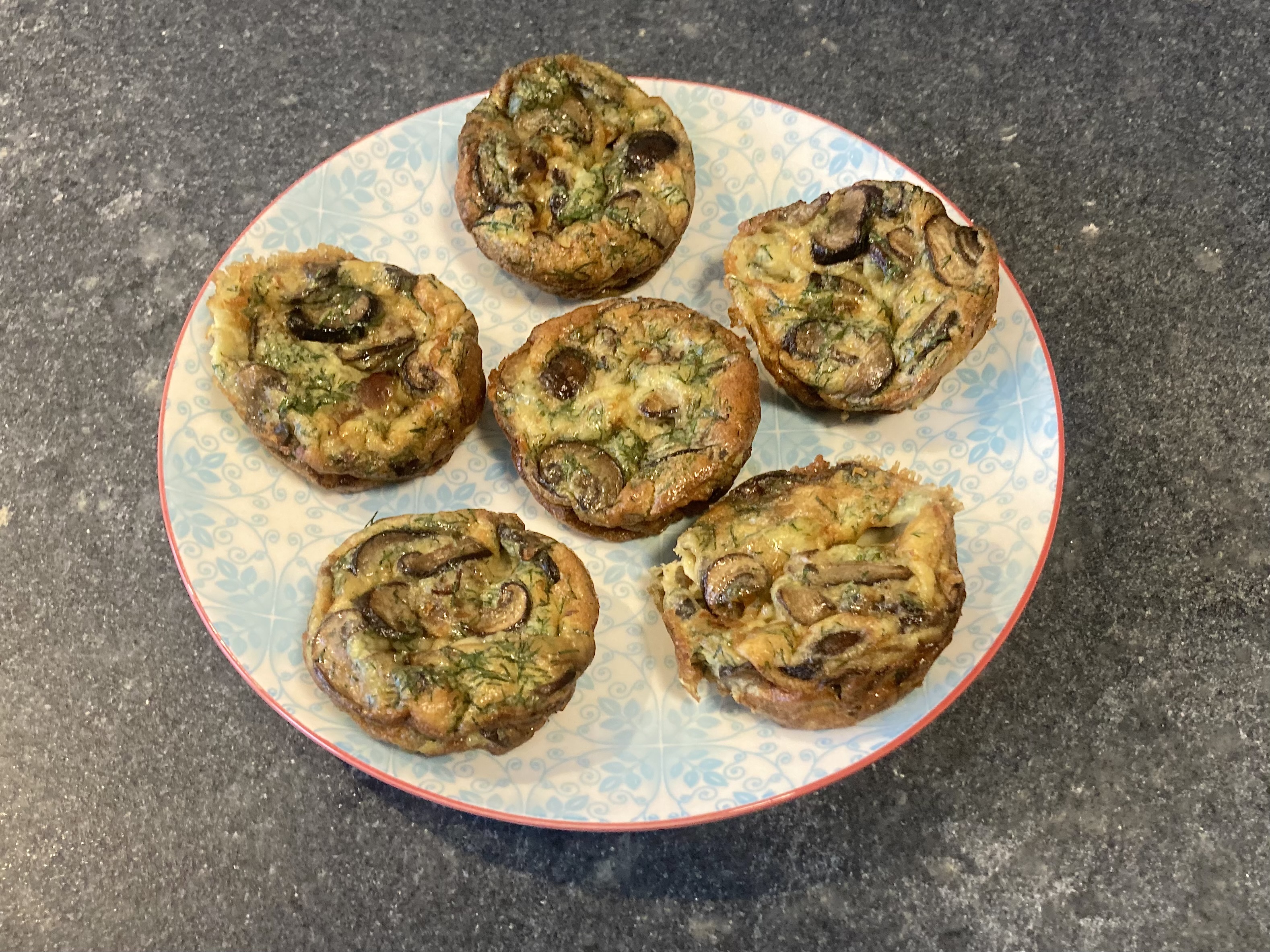
Black Pearl Mushrooms served with an omelette. the omelette is flavored with dashi, soy suace and mirin. we also added crushed Kashmiri pepper ©cadwu
Black Pearl Mushrooms ©cadwu

Artichoke Pie

A few weeks ago, we were shopping at the Albert Cuyp market in Amsterdam. We saw excellent, very large artichokes. We simply had to buy them. They were far too big to be served as a starter. What to do? Let’s make an artichoke pie! Other ingredients? Egg? Crème Fraîche? Parmesan Cheese? Pancetta? Herbs, of course, parsley, thyme or perhaps fresh oregano?

Wine Pairing

It’s not straightforward to pair artichokes with wine, due to cynarin, a chemical especially found in the leaves of the artichoke. When the wine and the cynarin meet in your mouth, the natural sweetness of the wine is enhanced, making it taste too sweet. Pair freshly cooked or steamed artichokes with a bone-dry, crisp, unoaked white wine with clear, present acidity. For instance Sauvignon Blanc, Grüner Veltliner or Albariño. 
Cynarin and wine are not a match made in heaven but the good news is that cynarin seems to protect your liver and even helps it regenerate.
We enjoyed a glass of white Rioja made by Vivanco. This is a bright, intense white wine with aromas of citrus fruit and green apples. Fresh, tasty and a great match with the Artichoke Pie.

What You Need
  • For the Dough
    • 100 grams of Flour
    • 50 grams of Water
    • 10 grams of Olive Oil
    • 1 gram of Salt
  • For the Filling
    • 2 large Artichokes
    • 1 shallot
    • Olive Oil
    • 1 Egg
    • Crème Fraîche
    • Fresh Thyme
    • Freshly Grated Parmesan Cheese
    • Black Pepper
What You Do
  1. Combine flour, salt, water and olive oil
  2. Make the dough, kneed for a minute or so and store in the refrigerator for at least 30 minutes
  3. Clean the artichokes
  4. Steam the artichokes for 45+ minutes depending on the size and let cool
  5. Chop the shallot
  6. Warm a heavy skillet, add olive oil and gently fry the shallot
  7. Transfer to a plate and let cool
  8. Use a spoon remove the ‘meat’ from the leaves (bracts) of the artichokes
  9. Remove the centre choke (the hairs)
  10. Chop the hearts
  11. Strip a generous amount of thyme
  12. Whisk the egg and combine with the artichoke, the shallot, the crème fraîche, the thyme and some freshly grated Parmesan cheese
  13. Add black pepper
  14. Taste and adjust
  15. Coat a 15 cm or 6 inch round baking form with oil (or use a sheet of baking paper)
  16. Roll out the dough with a rolling pin on a lightly floured surface
  17. Place the dough in the baking form and add the filling
  18. Transfer to the oven for 40 minutes on 180˚ – 200˚ Celsius or 355˚ – 390˚ Fahrenheit
  19. Remove the pie from the oven
  20. Brush the outside with olive oil. This will intensify the colour of the pastry
  21. Let cool and enjoy luke warm
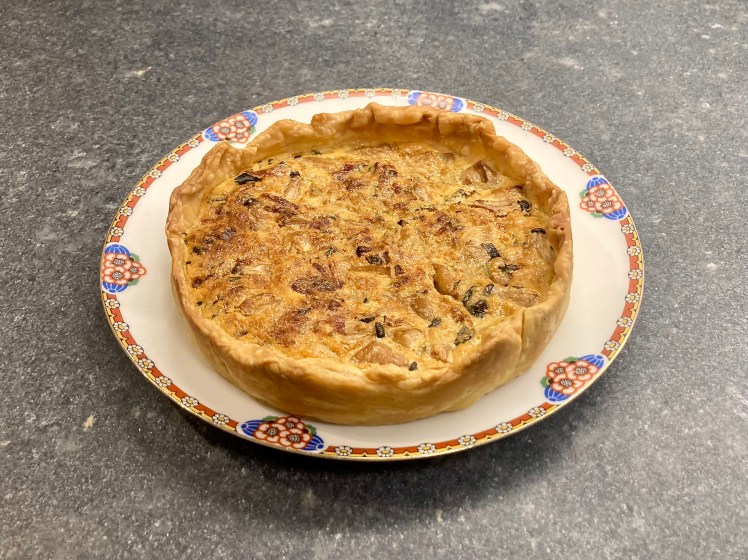
A delicious vegetarian Artichoke Pie ©cadwu with lots and lots of steamed artichoke, egg, creme fraiche and thyme.
Artichoke Pie ©cadwu

Mushroom Ketchup or Catsup

Recently we made Banana Ketchup, a popular condiment in the Philippines. Very tasty by the way! Sheryl (who runs a great blog with recipes and food-related information from a hundred years ago) commented that banana ketchup was new to her. She mentioned recipes for cucumber ketchup and mushroom ketchup in Lowney’s Cookbook, published in 1921.
It seems that mushroom ketchup originated in the UK and that it could be considered the original ketchup. It was used to flavour soups, marinades and meat dishes. The first reference we could find is from 1818 in a book called Apicius redivivus, the Cook’s Oracle by William Kitchiner (pages 475-477). The catsup is made by fermenting mushrooms with salt. Black pepper, allspice and brandy are the other ingredients.

Modern Version

One of the intriguing aspects of mushrooms is that you can use them to thicken a sauce. We used to do this when preparing Daube Provençale. Blender some of the cooked mushrooms until very smooth and transfer the paste back to the pan. The sauce will get a better consitency without becoming velvety or buttery, although the downside is that the mushroom paste reduces the flavour of the dish as a whole.
The recipe for modern mushroom ketchup is about cooking mushrooms and shallot with various spices (mace, clove, nutmeg) and herbs. After an hour sugar and vinegar are added. Blender the mixture until very smooth. The consistency of the ketchup is rather jelly (like wallpaper paste) and its flavour bland. We had to add more spices to make it tastier. Adding a teaspoon of mustard improved the ketchup, somewhat. We combined it with red meat, chicken and potatoes. We were not impressed.

Classic Version

This version focuses on the liquid and that turned out to be a good idea. The result is a tasty condiment, with lots of umami, but not specifically mushroom. It will strengthen the taste of a sauce or a stir fry with various vegetables. We made a beef burger patty with thinly sliced scallion, two teaspoons of mushroom catsup and black pepper. Delicious! We also used the catsup to season meatballs. The catsup emphasized the flavour of the meat and added complexity and length.
You need quite a lot of mushrooms to make it, meaning it’s both intense and expensive! If you’re in the UK, you can buy a bottle of Mushroom Ketchup produced by Geo Watkins.

Etymology

The term ketchup (also spelled catsup) is interesting. It could be related to a sauce with fruits and spices called catchup, or a fish sauce called kichap. It made us think of ketjap, or kecap in Malaysia and Indonesia. This term is related to a Chinese sauce called kê chiap, meaning fermented fish sauce!

Love-Apples

Perhaps you now wonder what the origin is of today’s Tomato Ketchup. The first known recipe for Tomatoe, or Love-Apple Catsup was published in 1812 by James Mease (1771-1846). The love-apples (tomatoes) are thinly sliced. Layers are added to a tin or pot and over every layer a little salt is sprinkled. Leave for 24 hours. Beat the love-apples well, simmer for 30 minutes with mace and allspice. When cold, add chopped raw shallot and brandy. The brandy supports the preservation.

What You Need (classic version)
  • 300 grams of Mushrooms (200 Button Mushrooms, 50 Shiitake, 50 Oyster Mushrooms or another combination of juicy mushrooms)
  • teaspoon of Mace
  • 2 teaspoons of Salt
  • 1/8 cup Rice Vinegar
  • 1/8 cup Water
  • Nutmeg
  • Clove
  • Black Pepper
What You Do
  1. Clean and slice the mushrooms
  2. Add mushrooms and salt to a skillet
  3. Mix very well
  4. Cover and leave on very low heat for 60 minutes
  5. Perhaps add some water to speed up the process
  6. After 15 minutes add mace
  7. After 60 minutes, transfer to a pan
  8. Add vinegar and water
  9. Mix
  10. Leave on medium heat for 20 minutes
  11. Add black pepper, nutmeg and grated clove to taste
  12. Leave on low heat for 5 minutes
  13. Taste and adjust
  14. Pass gently through a sieve
  15. Use cheesecloth to capture all the juices from the mushrooms
  16. Reduce if necessary
  17. Let cool and transfer to the refrigerator

Kimizu (with a Twist)

A few years ago we enjoyed an excellent Kaiseki dinner at Yamazato in Amsterdam. One of the dishes on the menu was Kimizu-Ae: a combination of white asparagus and Kimizu. A few days later we prepared Kimizu, a rich and light sauce. It comes with a velvety mouthfeel, a natural note of sweetness, a bright yellow colour and perfect acidity. Over the years we used it as a base for Béarnaise and Sauce Perigord.

Kimizu combines rice vinegar, mirin and egg. Compared to Hollandaise, Kimizu is lighter, easier to digest and fresher, because it does not contain butter (the egg yolk being the only source of fat).
The vinegar used to prepare Hollandaise or Béarnaise is often a flavoured vinegar, for instance with tarragon, shallot and black pepper. An idea we simply had to try when making Kimizu, with a twist!

Using a microwave oven to make Kimizu is a great idea (see our recipe for Hollandaise), although it does require more whipping and more attention compared to making Hollandaise.

What You Need
  • For the Castric (35 ml)
    • 5 ml Vinegar
    • 50 ml dry White Wine
    • 20 ml Noilly Prat
    • One corn of Black Pepper
    • One small Shallot
  • For the Kimizu
    • 35 ml Castric
    • 25 ml Water
    • 1 teaspoon Mirin
    • 2 Egg Yolks
What You Do
  1. Start by making the Castric
    • Chop the shallot
    • Combine all ingredients and leave to reduce by 1/2 on low heat
    • Pass through a sieve; try to capture the juices of the shallot
    • Set aside
  2. Make the Kimizu
    • The castric should be at room temperature
    • Whisk the egg yolks
    • Add the castric, the mirin, the water and whisk some more
    • Now transfer to the microwave and give it let’s say 10 seconds of 30%. Power and duration very much depend on your microwave
    • Remove from oven and whisk
    • Repeat
    • You will now feel the consistency changing. If not, don’t worry, just keep repeating the step
    • You may want to reduce the power or the duration
    • Whisk, whisk again and feel free to find your own way
    • When the Kimizu is ready, take it out of the oven and serve immediately
  3. We served the Kimizu with excellent beef and pommes dauphinois
Kimizu, the Japanese golden sauce
Kimizu with a Twist ©cadwu

Eggplant Omelette

Having made Banana Ketchup, we were keen to explore what kind of food would combine well with it. Monch Weller wrote us: It’s often paired with fried food here in the Philippines – spring rolls (both meat and vegetable versions), fried chicken, and eggplant omelette.
The ketchup paired nicely with vegetarian rolls, but not as well as hot sweet and sour sauce.
We decided to make an eggplant omelette, known as Tortang Talong in the Philippines. The eggplant is grilled, peeled, flattened, dipped in an egg mixture and fried in oil. The outside crispy and brown, the inside soft and moist. Best to use the long and slender purple variety, for instance Chinese or Japanese eggplant.
Our eggplant was a standard eggplant, large and oblong. Very different in size and shape compared to the one used in the Philippines. We were not sure how we could turn our eggplant into Tortang Talong. Slice it? Fan it? Or mash it and add the eggplant to the egg mixture?

What You Need
  • 1 regular or Italian Eggplant
  • 2 Eggs
  • Small Garlic Clove
  • Black Pepper
  • (optional) Salt
  • Oil
What You Do
  1. Heat your oven to 230°C or 450°F
  2. Poke the eggplant with a fork. This allows for steam to escape
  3. Place the eggplant on lightly oiled aluminium foil
  4. Roast the eggplant for 30-40 minutes, depending on the size
  5. Let cool
  6. Peel of the skin
  7. Mash the eggplant, but not too much
  8. Combine eggs, salt (if using) and pepper
  9. Beat the mixture well
  10. Add the mashed eggplant. We used 2/3 of our eggplant. Combine
  11. Add grated garlic and mix again
  12. Add oil to a small skillet, set to medium heat
  13. Add the mixture and fry until brown
  14. Flip the omelette and fry the other side until brown
  15. Slice the omelette and serve immediately
  16. Serve with banana ketchup
PS

When we can buy a long slender eggplant, we will prepare the original Tortang Talong. To be continued!

Banana Ketchup

A few weeks ago we were reading Monch Wellers food and lifestyle blog. He writes about Via Mare, a Filipino restaurant that opened its doors 50 years ago. In his blog Monch writes about the food Via Mare offers, for instance Spanish Hot Chocolate, Bibingka (rice cake), Crab Omelette with Banana Ketchup, Lumpiang Ubod (spring rolls made with heart of palm) and Puto Bumbong, a glutinous rice dyed violet and steamed in bamboo tubes. We learn so much about the Filipino food culture thanks to Monchs excellent blog!

Why Bananas?

Maria Orosa (1893–1945) was born in the Philippian province of Batangas, some 100 kilometres south of Manilla. She studied food chemistry and pharmacology in the US. She returned to the Philippines in 1922. She was a food chemist, innovator and war hero. She saw the potential of many local products, for instance bananas and soy, and used these to empower the Philippines. She invented Soyalac (a protein-rich powdered soybean product), Darák (bran rice powder rich in vitamins) and Tiki-Tiki cookies. The powders and cookies saved many lives during wartime food shortages in the Philippines.
One of her more frivolous inventions is Banana Ketchup. Why rely on imported tomatoes when it’s possible to make an equally tasty condiment using local bananas?

We loved the philosophy behind the ketchup and began searching for recipes. We noticed that tomato paste is often added, to give the ketchup a more familiar and appetizing colour. We didn’t do this. Afterall, the idea was not to use tomatoes. Plus: what’s wrong with the colour?

Food Pairing

The Banana Ketchup is smooth, its taste long, tangy, spicy and uplifting. The bananas give the ketchup natural sweetness and depth. They also support the spices. A condiment to love.
We asked Monch for his favourite combination. He wrote us: It’s often paired with fried food here in the Philippines – spring rolls (both meat and vegetable versions), fried chicken, and eggplant omelette (which was No. 2 in TasteAtlas’ 50 Best Egg Dishes). We tried it with eggplant omelette and vegetable spring rolls. The ketchup paired perfectly with the moist and more delicate flavours of the omelette.
Thanks Monch for introducing us to this unknown, delectable sauce!

What You Need
  • 2 small ripe Bananas
  • ½ Shallot
  • 2 cloves of Garlic
  • 20 grams fresh Ginger
  • ½ Kashimiri Pepper
  • 1/8 cup Brown Sugar
  • ¼ cup Rice Vinegar
  • ¼ cup Water
  • ¼ teaspoon Turmeric
  • Dash of Cinnamon and Nutmeg plus 1 Clove (replacing dash of All Spice)
  • Oil
What You Do
  1. Chop onion, garlic and ginger
  2. Mash the bananas
  3. Heat oil in a heavy iron skillet
  4. Add chopped onion and glaze, about 5 minutes
  5. Add garlic and ginger
  6. Leave on medium heat, stirring constantly
  7. Add bananas and combine
  8. After a few minutes add vinegar, water, sugar, spices and Kashmiri pepper
  9. When the mixture begins to simmer, reduce heat to low
  10. Leave for 15-20 minutes, stir regularly
  11. Remove from heat and let cool for 10 minutes
  12. Transfer to a food processor and blend until smooth. This may take one or two minutes
  13. Pass through a sieve to get the right velvety smoothness
  14. Leave to cool before transferring the ketchup to the refrigerator
  15. Serve with eggplant omelette (recipe next week!)
  16. The ketchup will remain tasty for up to 3 days.
PS

In general, we find tomato ketchup too sweet, too salty and bland. Have we ever considered making our own tomato ketchup? No, we haven’t. We’re okay with a small bottle of Heinz Tomato Ketchup Zero, in case we have an irresistible craving for ketchup. Heinz doesn’t add sugar and salt to the Zero Ketchup. They add more tomatoes than usual (great) and a sweetener (pity). The taste? Well, still typically tomato ketchup. Fortunately, Banana Ketchup has far more flavour, spiciness and complexity.

Risotto with Peas

Risotto is amongst our favourite dishes, especially one with mushrooms. Preparing risotto is not difficult, as long as you pay attention to the cooking process and use the right ingredients.
Recently a dear friend who lived in Italy for many years told us how to make Risotto with Peas. In the region where he lived (Liguria) this risotto is made without butter. We were not sure about not using butter, so we had it on standby. No need for that: the result was delicious. The rice was creamy thanks to the combination of the starchy cooking liquid and the Parmesan cheese. The peas were cooked to perfection and their taste nutty. The dish as a whole was light and energizing.

Wine Pairing

In general, a dry white wine will pair well with the Risotto with Peas. We enjoyed a glass of lightly oaked Chardonnay produced by Abbots & Delaunay. Aromas of apples and toast; the taste refreshing, long and a touch buttery. 

What You Need
  • 80 grams of Carnaroli or Arborio rice
  • 1 Shallot
  • Olive Oil
  • Fresh Peas
  • Stock (Chicken, Vegetable)
  • Parmesan Cheese
What You Do
  1. Peel and chop the shallot
  2. Shell the peas
  3. Warm the stock
  4. Add olive oil to the pan and glaze the shallot 
  5. Add the rice to the pan and coat for 2 minutes
  6. Keep the pan on medium heat. Be patient
  7. Start adding the stock, spoon by spoon and stir frequently
  8. After 10 minutes add the peas
  9. In total it may take 15 – 18 minutes before the rice is al dente
  10. Transfer the pan to the kitchen countertop and leave to rest for 2 minutes
  11. Add grated Parmesan cheese, combine, add some black pepper, taste, add more Parmesan cheese if so required
  12. Serve immediately
PS

We have three other risotto recipes: one with mushrooms, one with squid and one with beetroot.

Risotto with Peas is a tasty, uplifting dish. A delicious starter.
Risotto with Peas ©cadwu

How to Make a Roulade (part 2)

Earlier we wrote about ‘butterflying’ meat, a technique that allows you to turn a bigger piece of meat into a roulade. Ideal for pork loin or turkey. But what to do when you have smaller pieces of meat and butterflying is not possible? Then it’s a matter of flattening the meat, for instance with a hammer. Better to ask your butcher to do it for you with the head (blade) of a butcher’s axe: easy, quick and a much better result. Thin is better!
Once you have flattened pieces of meat it’s a bit of a puzzle to create the roulade. Just give it a try and see what works best. When you think you have the right combination, make sure the kitchen twine is in place and the filling ready.
Obviously, you want to match the filling with the side dishes. We served the roulade with caponata and decided to make a filling with sage and thyme.

Wine Pairing
homemade roulade: chicken thighs, sage and pancetta. Served with caponata

We enjouyed a non-oaked Nero d’Avola from Sicily. The ruby red coloured wine has aromas of cherries and plum. The taste is fruity and long with subtle tannins. Great combination with the Mediterranean flavours in both the roulade and the caponata.

What You Need
  • 4 Boneless Chicken Thighs
  • 1 small Shallot
  • 1 clove of Garlic
  • 10 leaves of Sage
  • Thyme
  • Butter
  • Pancetta
  • Olive Oil
  • Lemon
  • Black Pepper
What You Do
  1. Ask your butcher to flatten the chicken thighs
  2. Chop the shallot and the garlic
  3. De-vein the sage
  4. Remove the thyme leaves from the stalk
  5. Grate the butter
  6. Add olive oil to a heavy iron skillet and gently fry the shallot
  7. After a few minutes reduce the heat
  8. Add garlic and thyme. Stir
  9. Add some lemon juice
  10. Allow the filling to cool
  11. Put strings of kitchen twine on your work top
  12. Decide on the pattern for the meat and put it on top of the kitchen twine. This way you can easily roll up the meat and tie the twine
  13. Cover the meat with sage
  14. Spread the mixture over the sage. Keep the edges free
  15. Add grated butter
  16. Cover with slices of pancetta
  17. Roll up the meat
  18. Tie with kitchen twine
  19. Tightly wrap in plastic foil and transfer to the refrigerator for at least 2 hours
  20. Remove the roulade from the refrigerator and allow to rest at room temperature for 30 minutes
  21. Preheat your oven to 180 °C or 350 °F
  22. Remove the foil
  23. Put the roulade on a rack (this way it will brown evenly)
  24. Add water to the pan
  25. Fry in the oven until the internal temperature is between 70 °C and 75 °C, or 160 °F and 165 °F
  26. Transfer to your worktop, wrap in aluminium foil and allow to rest for 10 minutes
  27. Serve with caponata

Panna Cotta with a Twist

Recently we enjoyed mouth-watering Indian food thanks to Asma Khan’s cookbook Ammu. When we were looking for a dessert in her book, we hoped to find a recipe for Kulfi or for Kheer, both delicious creamy desserts with ingredients such as cardamon and saffron. Unfortunately these recipes are not included in the book.
Cream? Dessert? Why not try making a panna cotta with cardamon?
The combination turned out to be very tasty, not too rich, a touch sweet and the cardamom was present in just the right way. Decorate with pistachios and rose petals for a delectable Panna Cotta with an Indian twist.

What You Need (for 6)
  • 500 ml Cream
  • 30 Cardamom Pods
  • 20 grams of Sugar
  • 3,5 leaves of Gelatine (5,25 grams)
  • Rose Petals
  • Pistachios
What You Do
  1. Peel the cardamon pods
  2. Use a pestler and mortar to lighly crush the seeds
  3. Add the seeds to the cream
  4. Slowly bring the cream with the seeds to the boil
  5. Keep close to boiling for 15 minutes. Stir when necessary
  6. Remove from the heat and while stirring add sugar until totally dissolved
  7. Follow the instruction of the gelatine and soak the leaves
  8. Pass the mixture through a sieve
  9. Add the gelatine to the mixture and stir well
  10. Cool the liquid somewhat before filling the forms. We used a silicone mold. Nice and easy! The only thing you need to do is to make the mold a bit moist with water
  11. Let the panna cotta cool and than store in the refrigerator until set
  12. Don’t forget to seal with cling foil, otherwise your panna cotta will absorb aromas from other food in the refrigerator
  13. Decorate with pistachios and rose petals
Panna Cotta with Cardamom based on a classic Italian dessert, with cardamon, pistachios and rose petals
Panna Cotta with Cardamom ©cadwu