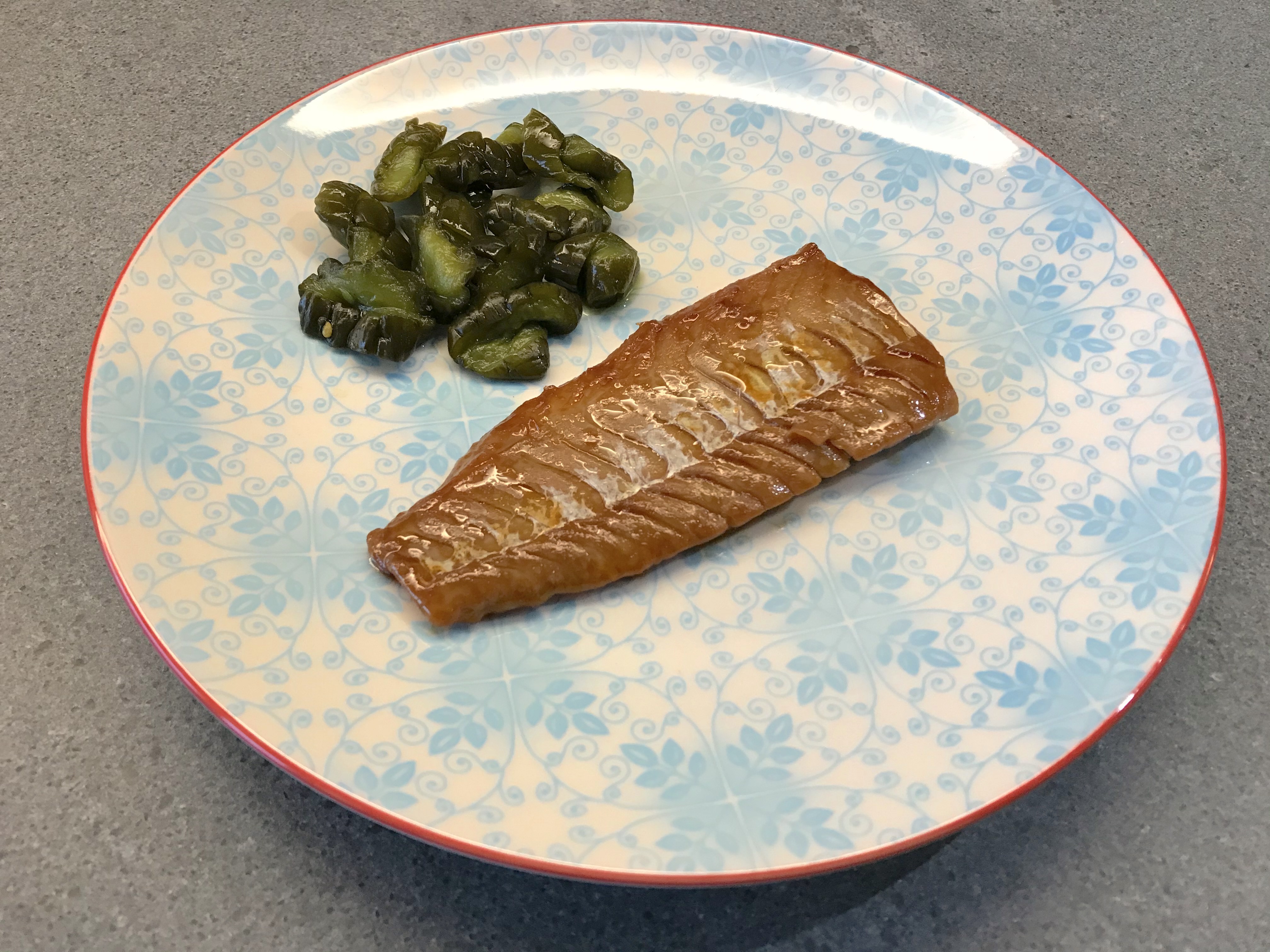
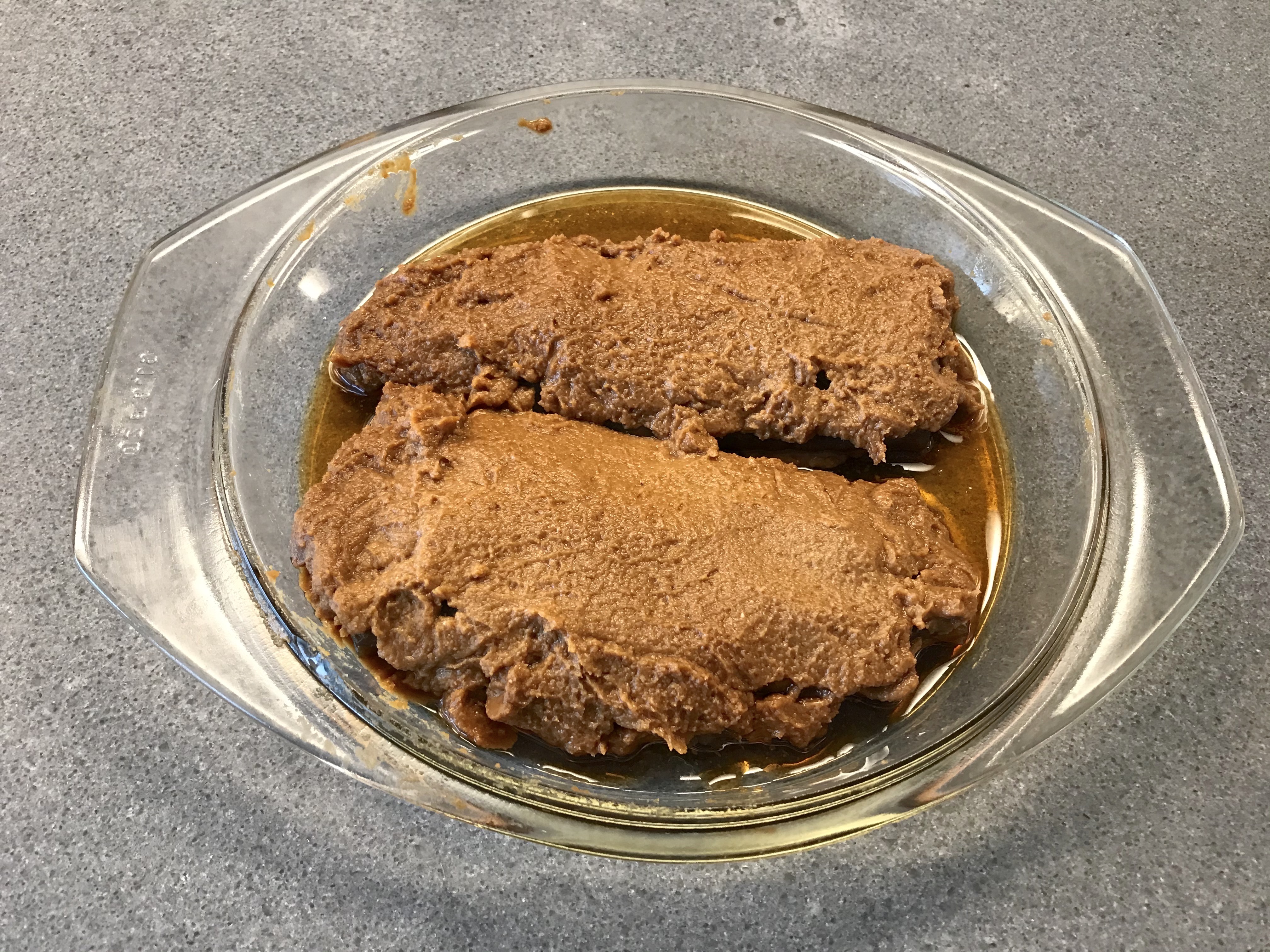
Halibut Marinated in White Miso

Saikyo Yaki

Grilling is an art in its own right in Japan. A simple way is Shioyaki: the fish is salted, left to chill overnight and grilled the next day. An essential element of a Japanese breakfast, together with pickled plums (Umeboshi),  sweet yet savoury omelet (Tamagoyaki), rice, a bowl of miso soup and green tea. As you can imagine a traditional Japanese breakfast is rather nutritious and packed with flavours.

A well known grilling method is Teriyaki: the fish is marinated in a combination of soy sauce, mirin and sake for a few hours and then grilled, with the fish dipped in the sauce several times during the grilling process.

Another way is Saikyo Yaki: the fish is marinated in Saikyo miso for 5 days and then grilled. Saikyo miso is a white, slightly sweet, low sodium miso from Kyoto. The marinated and grilled fish is served with pickled ginger. Originally a way to preserve the fish, it’s now much liked because of the umami and the intriguing combination of flavours and aromas.

Sake Pairing

Best served with dry sake. We prefer Junmai Taru Sake as produced by Kiku-Masamune. The sake is matured in barrels made of the finest Yoshino cedar. The aroma has indeed clear hints of cedar. The sake will clear your palate and allow for a more intense taste of the marinated halibut.

What You Need

  • Two slices of fresh halibut (thin is best)
  • White Miso (preferable with less salt)
  • Pickled Ginger or Cucumber
  • Karashi (Japanese mustard)

What You Do

Start four or five days in advance. Coat the halibut with miso making sure the halibut is fully coated. Cover with foil and transfer to the fridge. Check on a daily basis if the fish is still covered.
Using a small spoon carefully remove most of the miso. Rinse the halibut with water and dry with kitchen paper. The white flesh should now be slightly orange. Heat a non sticky pan until warm, but not hot, through and through. If too hot, the fish will burn. We set our induction hob to 6 (where 9 is the maximum). Add a bit of olive oil and then fry the fish for 2*2 minutes. Serve on a warm plate with pickles and karashi.


Tisane of Rosemary

Pruning is perhaps not the easiest thing to do, but with thyme, lavender and rosemary it’s not too difficult. They only downside is that after having pruned the plants you have a huge bundle of (in our case) rosemary. What to do? You could dry the rosemary and make flavoured oil or vinegar. But how to make use of lots of fresh rosemary?
This tisane of rosemary is a very delicate and powerful yet light and vibrant infusion. The tisane combines the aromatic flavours of the fresh rosemary with the stock. It’s all about rosemary, but in a surprisingly complex way. The edible flowers add an extra dimension to the tisane.
It’s best served in a small cup, size double espresso. It goes well between two more substantial dishes because it works as a palate cleaner. You could also serve it between two very different dishes.

The fun in preparing is that you need to find the right balance between the strength of the stock and the rosemary. Timing is also important. It simply requires some trial-and-error.

What You Need
  • Strong chicken or vegetable stock, preferably home made
  • Fresh Rosemary
What You Do

Heat the stock to 80° Celsius or 175° Fahrenheit. Warmer will make the tisane bitter. Now use the leaves (needles) of the rosemary and find out how many you need for let’s say 100 millilitre. Take 4 gram and set your alarm to 2 minutes. Remove the rosemary and taste. Too bitter: try again and set the alarm to 80 seconds. Not strong enough: increase the number of needles. Not intense enough: try 140 seconds. Keep testing until you have the perfect result!
Decorate with one or two rosemary flowers; their sweetness and colour adds value.


Risotto with Beetroot and Gorgonzola

Contemporary Classic

Enrico Bartolini (Castelmartini, Italy, 1979) is an extremely talented chef with restaurants in Italy, Hong Kong and Dubai. He is the only chef to have been awarded four Michelin stars at the same time. In his restaurant Mudec in Milan he showcases his motto Contemporary Classic by exploring new worlds and new flavours, without forgetting origins and traditions. One of his many signature dishes is Risotto with Beetroot and Gorgonzola (Risotto alle rape rosse e salsa al gorgonzola). An intriguing combination because beetroot can be very sweet which could easily ruin the taste of the risotto. Which is exactly what happened the first time we prepared this dish. We did more research only to read recipes we didn’t like because the beetroot was added at the beginning of the preparation process (giving the risotto a gluey texture) or honey, mint, balsamic vinegar, oranges or salty goat cheese (to balance the sweetness of the risotto!) was added.

We decided to take a different approach and see this as a combination of two dishes with the gorgonzola as connection. Now we could focus on preparing a savoury beetroot puree that would be tasty in its own right and create a brilliant combination with the risotto.

Wine Pairing

We enjoyed our risotto with a glass of Bianco di Custoza 2018, made by Monte del Frà from Italy. It is a well-balanced, dry white wine, with a fruity nose. Its colour is straw yellow, with pale green highlights. In general you’re looking for a light, aromatic dry white wine.
You could also serve a glass of Chardonnay; one that has a touch of oak and vanilla plus a lightly buttery finish. Our choice would be the Chardonnay of La Cour des Dames

What You Need

  • For the Risotto
    • 70 gram Carnaroli Rice (for instance from Acquerello)
    • (Vegetable) Stock
    • 1 Bigger Shallot
    • Parmesan Cheese
    • Butter
  • For the Beetroot Puree
    • 1 Fresh Beetroot
    • 2 Tablespoons of White (Cider) Vinegar
    • 1 Tablespoon of White Wine
    • 3 Freshly Grated Cloves
    • Black Pepper
  • For the Sauce
    • Gorgonzola Dolce
    • Milk

What You Do

The day before wash the beetroot and wrap in aluminium foil. Leave in the oven on 180° Celsius (or 355° Fahrenheit) for 60+ minutes. Cool and store in the refrigerator.
Thinly chop the shallot and glaze in butter. In parallel peel the beetroot and chop. Combine a third of the shallots with the beetroot, the white wine, the vinegar and finely grated clove. Blend until smooth. Taste and adjust. In the mean time prepare the risotto. With a fork combine the soft Gorgonzola Dolce with the milk until it’s smooth and has the consistency of custard. Depending on the ‘blue’ in the cheese you may want to use a blender. Warm both the beetroot puree and the Gorgonzola sauce in the microwave or Au Bain Marie.
Time to start assembling the dish. Add butter and Parmesan to the risotto. Add more Parmesan than usual to create the right balance. Now start adding the beetroot puree, spoon for spoon. You’re looking for a balanced taste and a bright red colour. Perhaps add a drop of lemon and some black pepper. Transfer to the plate and using a spoon or a small sauce bottle add the sauce (drop-wise).

Risotto with Beetroot and Gorgonzola © cadwu

Haddock Marinated in Miso

The original recipe is from Kyoto and combines fresh fish with Saikyo miso. This is a white, slightly sweet, low sodium miso. The fish is marinated in miso and then grilled and served with pickled ginger. Lots of umami of course and the intriguing combination of miso and fish. Nowadays salmon is often used when preparing this popular dish.

Our approach is slightly different. We use white fish (haddock preferred, but rouget, halibut or cod are also fine) and marinate it in red miso for four or five days. The flesh will become beautiful deep red and the miso will gently flavour the fish, without overwhelming it. It’s not a subtle starter but the taste is great especially when combined with pickled cucumber and karashi (Japanese mustard). 

Sake Pairing

Best served with a dry sake. We prefer Junmai Taru Sake as produced by Kiku-Masamune. This fine sake is matured in barrels made of the finest Yoshino cedar. The aroma has indeed clear hints of cedar. The sake will clear your palate and allow for a more intense taste of the marinated haddock.

What You Need
  • Two slices of Haddock (thin is best)
  • Red Miso (preferable with less salt)
  • Cucumber Pickles
  • Karashi
What You Do
  1. Start four or five days in advance
  2. (optional) Combine miso with some sake
  3. Fully coat the haddock with the mixture
  4. Cover the dish with foil and transfer to the fridge
  5. Check on a daily basis if the fish is still fully coated
  6. Use a small spoon to carefully remove most of the miso
  7. Rinse the haddock with water and dry it with kitchen paper
  8. The white flesh should now be red
  9. Heat a non sticky pan until warm, but not hot, through and through. If too hot, the fish will burn. We set our induction hob to 6 (where 9 is the maximum)
  10. Add a bit of olive oil and then fry the fish for 2*2 minutes
  11. Serve on a warm plate with pickles and karashi.

A Royal Sabayon

Happy Birtday!

Today April 27th we celebrate the King’s Birthday in the Netherlands. Hip hip hurrah! The Dutch Royal Family is known as the House of Orange-Nassau, hence the link to anything orange (oranje in Dutch), including a liqueur called Oranje Bitter. It’s not many people’s favourite; most people prefer another traditional drink: lots of beer.

There are many recipes for Oranje Bitter; most of them with too much sugar and undefined herbs. We prefer the more classic version produced by Van Wees and De Ooievaar. Their Oranje Bitter is made with Pomerans (Citrus Aurantium, the bitter orange) and Curaçao peel.

Our grandmother wasn’t a big fan of Oranje Bitter, but she felt she had to serve it on the (then) Queens Birthday. She combined one tradition with another: she made Dutch Advocaat using Oranje Bitter. Basically Advocaat (similar to Eggnog) is a sabayon-like drink made with egg yolks, sugar, vanilla and a strong alcohol (brandewijn, gin, vodka or grappa), served in a nice glass with a small spoon and possibly topped with whipped cream (but no need for that).

Grandmother cooked her advocaat Au Bain Marie; we prepare our Royal Sabayon using a microwave oven.

What You Need

  • 3 Egg Yolks
  • 30 grams of Sugar
  • 80 ml of Oranje Bitter

What You Do

Mix the egg yolks and the sugar well. Make sure the sugar is dissolved before adding the liquid. Transfer to the microwave and very gently heat the mixture. We used intervals of 10 seconds to start with and intervals of 5 seconds to finish. In total only 75 seconds on 30% power. Duration depends on the power of your microwave. Stir well (or whisk, but not too much) after every interval until it becomes thick. The consistency must be similar to a thick pastry cream (crème pâtissière). Cool quickly and store in the refrigerator.

PS Obviously you need fresh eggs when making  a sabayon, mayonnaise, béarnaise et cetera. We don’t think eating fresh, organic eggs is a problem. Eating all kinds of additives, unclear syrops, modified milk ingredients, guar gum, monoglycerides et cetera, that’s a problem.

PS Use the egg whites to make madeleines.

Roulade of Chicken with Rosemary and Pancetta

A Kitchen Puzzle

Roulade sounds terribly old-fashioned. And if not old-fashioned it will probably make you think of meat in a net, seasoned with something like ‘chicken herbs and spices’. Yuk! You have two options: ask your butcher to make one for you or the much-preferred option: Do It Yourself.
The key to a roulade is to buy smaller bits of meat. In this case we used 4 chicken thighs. This is the very tasty, boneless half of a chicken leg. To create a roulade you need fairly thin slices of meat that will be the outside of the roulade. For the inner part of the roulade you can use smaller, chunkier bits. Take your time to solve the puzzle. It may seem easier to buy one thin slice of meat and simply roll it up, and that could work very well with beef, but building a roulade with smaller bits of pork, veal or chicken is very rewarding. Use plenty of kitchen string to make the roulade.
After having tied the last knot, leave the roulade in the refrigerator for a few hours. This will help the roulade to become firm, which is helpful when frying it. It will also help the flavours to integrate.

Wine Pairing

We enjoyed our Roulade with a glass of excellent Austrian Zweigelt. This red wine is fruity and elegant which combines really well with the powerful rosemary and the full-bodied chicken roulade.

What You Need

  • 300 grams of Chicken Thigh
  • 3 sprigs of Rosemary
  • 2 slices of Pancetta
  • Butter
  • Olive Oil
  • Thyme
  • Chicken stock
  • Cream

What You Do

When you’ve solved the puzzle, simply add two slices of pancetta and the two sprigs of rosemary. Tie the roulade together with kitchen string. Cool for a few hours in the refrigerator. Heat some butter and olive oil in a skillet. Fry the roulade making sure you fry the seam first. A few minutes should be sufficient. Transfer the roulade to the oven, let’s say 160 °C. A higher temperature will shorten the cooking time and enhance the color, but you risk an overdone roulade. That’s why we prefer 160 °C or lower. When your roulade is bigger, feel free to turn it every 10 minutes.
Remove the roulade when the temperature in the centre is 70 °C. Wrap in foil and leave to rest for at least 15 minutes.
Start building the sauce by adding chicken stock, the third sprig of rosemary (leaves only) and some thyme. Cook gently for 5 – 10 minutes. Use a blender to make a smooth mixture and pass through a sieve. Transfer back to the skillet and add some cream. Remember to add the juices of the roulade as well. The juices should be clear. If not, the roulade needs to rest longer.
When the sauce is ready to be served, transfer the roulade from the foil, carefully remove the string and slice the roulade with a very sharp kitchen knife. Serve with the sauce on a hot plate.

Baba Ghanoush

Eggplant

Baba Ghanoush is tasteful and easy to make. Combine it with olives, pickles and flat bread (naan) to create a delicious starter to share. Don’t be tempted to buy Baba Ganoush at the supermarket. Most of these products lack the typical taste as a result of charring the eggplant.
Sumac is an ingredient from the Levantine cuisine. Basically sumac powder is the result of crunching dried berries of the sumac plant. The taste vaguely resembles cranberries with a touch of lemon. In this case it adds fruitiness to the dish. The sweetness of the berries combines well with the garlic.

Wine Pairing

Enjoy Baba Ganoush with a glass of white Lebanese wine, but since that’s hard to find a nice glass of Cava is also a good choice.

What You Need

  • 1 Eggplant
  • 1 Garlic glove
  • 1 Tablespoon of Tahini
  • Olive Oil
  • Greek or Turkish yoghurt
  • Lemon Juice
  • Sumac
  • Pomegranate

What You Do

Start by grilling the eggplant (in the oven in our case) to the point of charring. Ideal would be a char coal grill, but an oven grill also does the trick. Then leave the eggplant in the hot oven until very soft; maybe 30-45 minutes in total, depending on the seize of the eggplant. Some suggest rubbing the eggplant with olive before grilling it that’s not necessary.
Transfer the eggplant to a plate and let cool. Now cut in half and use a spoon to separate the flesh from the skin. Use a kitchen knife to cut the flesh very thinly. Put the mixture in a sieve and reduce the amount of liquid in the mixture. Add the garlic and mix well.  Add tahini and while stirring slowly add olive oil to create a thick mixture. Add yoghurt and some lemon juice. Taste well and adjust by adding more tahini, yoghurt or lemon juice. Allow to integrate for at least 15 minutes before serving.
Spread the baba ghanoush on a small plate, add a splash of excellent olive oil and sprinkle some pomegranate seeds and sumac to finish.


Farfalle with Wild Garlic (or Ramson) and Parmesan Cheese

In a number of countries ramson is a protected plant, so we don’t suggest you run out of the door and start picking it. But if it’s not protected, feel free to start running!
Ramson is much-loved in Germany, Austria (Bärlauch) and other parts of Europe. Its taste is like a combination of onion and garlic, but much greener, more intense, longer lasting and with a touch of bitterness at the end. Works very well as a pesto, but equally nice with potatoes or gnocchi. Once we made ramson soup, but that was not the best idea ever.
The flowers may have (if you’re lucky) a touch of sweetness because of the nectar in the flower. Always taste the leaves and the flowers before using and feel free to adjust quantities.

Wine Pairing

We would suggest a Soave to go with the dish. The Garganega grape combines very well with the specific taste of the ramson, given the wine is fresh with a subtle bitterness.

What You Need

  • 20 or so leaves of Ramson
  • Olive Oil
  • Parmesan Cheese
  • Farfalle
  • Lemon Juice

What You Do

Cut the leaves in smaller bits and blitz the leaves with grated Parmesan cheese. If you want to soften the taste, now is the moment to add some toasted almonds or pine nuts. Slowly add the olive oil until blended and smooth. Maybe you want to add a bit of lemon juice.
Cook the farfalle and serve with the pesto and some grated Parmesan cheese.
You can store the pesto for a week or so in the refrigerator if you add some extra olive oil to the jar, covering the pesto.

Haddock with White Beech Mushrooms

Popular Fish

When you mention Haddock, Cod is never far away. Two of the world’s most popular fish. Many recipes and foodies describe the two as being very similar in terms of taste and preparation. We humbly disagree. We think Haddock is more flavourful and present compared to the mild taste of Cod. The structures differ as well, although both require your constant attention; they easily overcook.

Beech Mushrooms are more and more widely available, which is great. The slightly nutty  taste in combination with their texture makes them ideal for this dish. And the golden colour of the fried white beech mushrooms is perfect with the golden colour of the fried haddock.

Wine Pairing

Our choice was a bottle of Pinot Grigio made by MezzaCorona. This is a dry and crispy white wine with a beautiful deep yellow colour. It’s an elegant wine with just the right acidity to relate to both the fish and the mushrooms.

What You Need

  • 200 grams of Haddock (without the skin)
  • 100 gram of Beech Mushrooms
  • Butter
  • White Pepper

What You Do

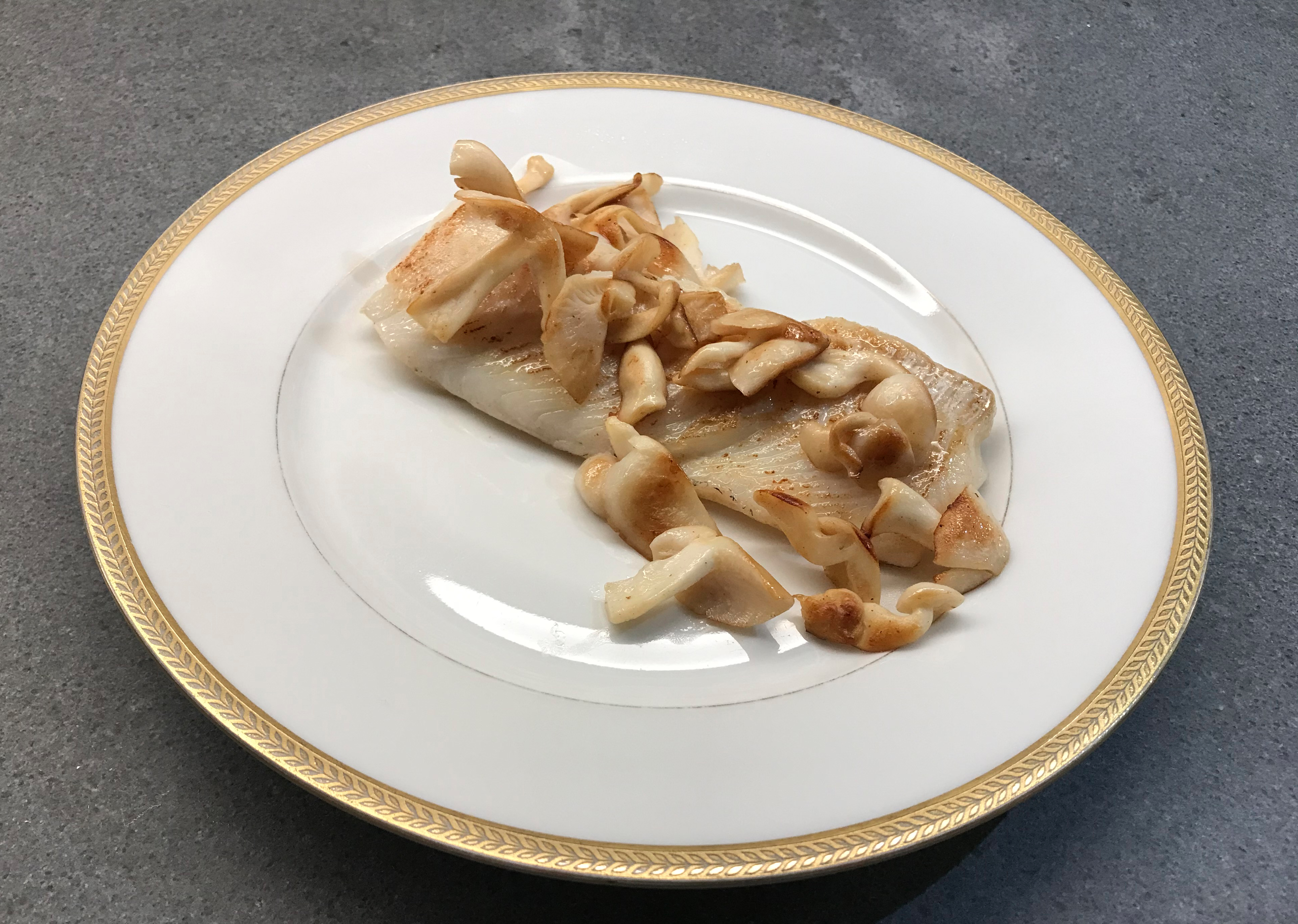
Clean the beech mushroom with kitchen paper and half. Check the fish for bits you don’t want to eat. Fry the fish in butter. Both sides should be beautiful golden brown. In parallel gently fry the beech mushrooms in butter.
Serve the beech mushrooms on top of fish. Perhaps a touch of white pepper.

Haddock with white Beech Mushrooms © cadwu

Homemade Bread

The Joy of Baking

We love baking in these challenging times. Baking no-knead bread is easy and straightforward and the result is amazing. Enjoy the homely and warm feel in your house after having baked a bread. Enjoy having lunch with freshly baked bread!
Baking is a great way of fighting stress and anxiety.

The perhaps oldest reference to no-knead bread is to Elizabeth Moxon who described a no-knead bread recipe in 1764 as shown in this nice instructive video. The recipe below is based on the recipe courtesy of Jim Lahey, owner of Sullivan Street Bakery, New York. It was published in the New York Times in 2006 and can also be found in his book My Bread.

The recipe is about slow rise fermentation. One gram of yeast (!) in combination with 19+3 hours of rest will do a wonderful job. The dough will be perfect and kneading, as you would expect, is not required.

What You Need

  • 400 gram of Flour (we use 200 gram of Whole Grain Flour and 230 gram of Plain White Flour)
  • 25 gram Blue Poppy Seed
  • 25 gram Brown Linseed
  • 1 gram Instant Yeast
  • 4 gram Salt
  • 355 gram Water
  • Additional Flour
  • Bran

What You Do

Start 24 hours before you want to eat your homemade bread.
Mix flour, seeds, yeast and salt. Add water and using a fork or spoon create one mixture. Let rest in a bowl covered with foil for 18 hours. Dust your worktop with a generous amount of additional flour. Remove dough from bowl and fold 4 times. Let rest on a towel also generously dusted with flour and bran for 3 hours. Heat your oven (with the pot inside) to 235˚ Celsius or 455˚ Fahrenheit. We used a 20 cm Le Creuset Cast Iron Round Casserole. Put the dough, seam side up, in the (very hot) pot, close it and bake for 30 minutes. Remove the lid and bake for 15 minutes until it is nicely browned. Let cool on a wire rack for at least an hour before slicing your no-knead with blue poppy seeds and brown linseed.
PS You can also follow the video as provided by the New York Times.