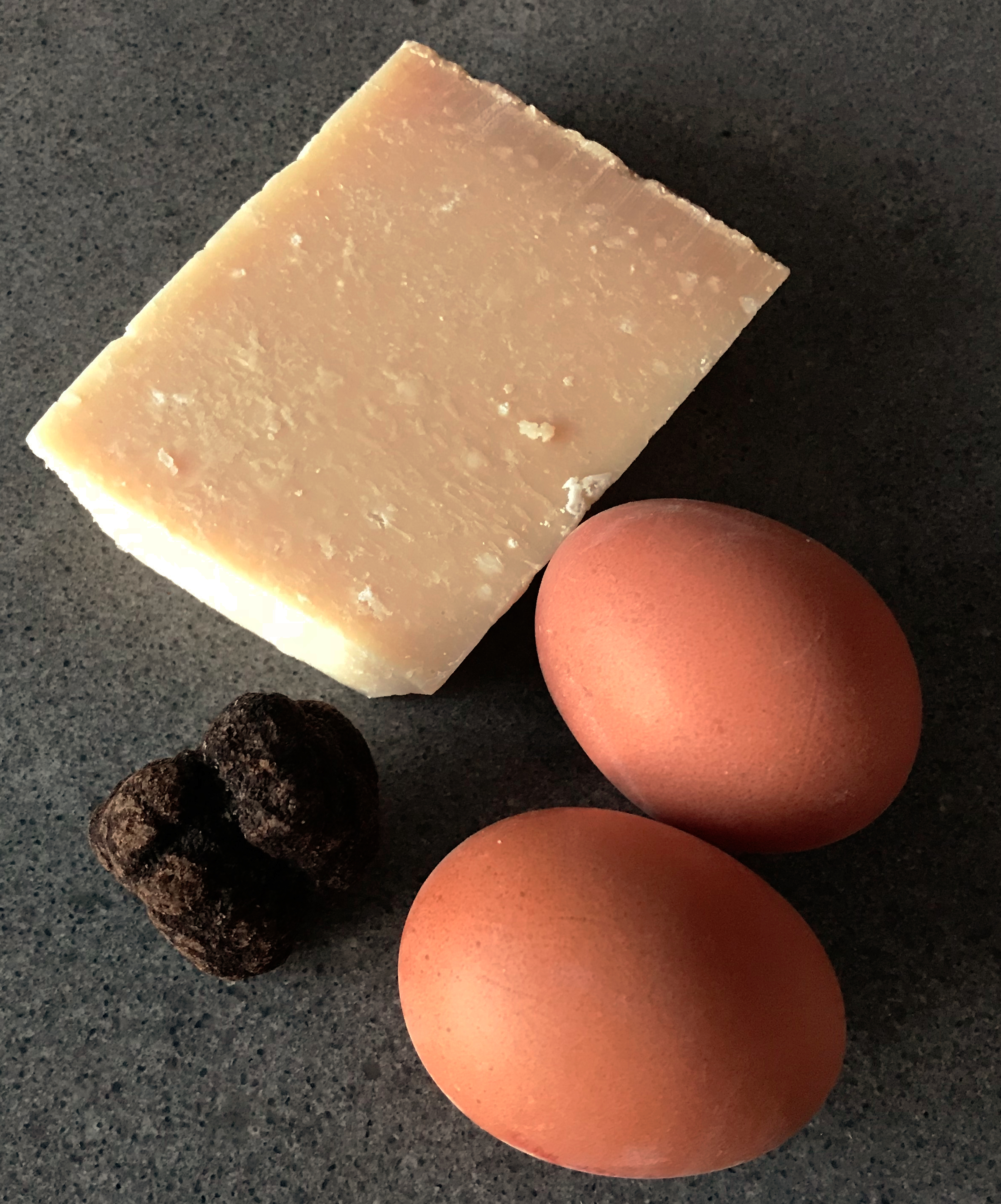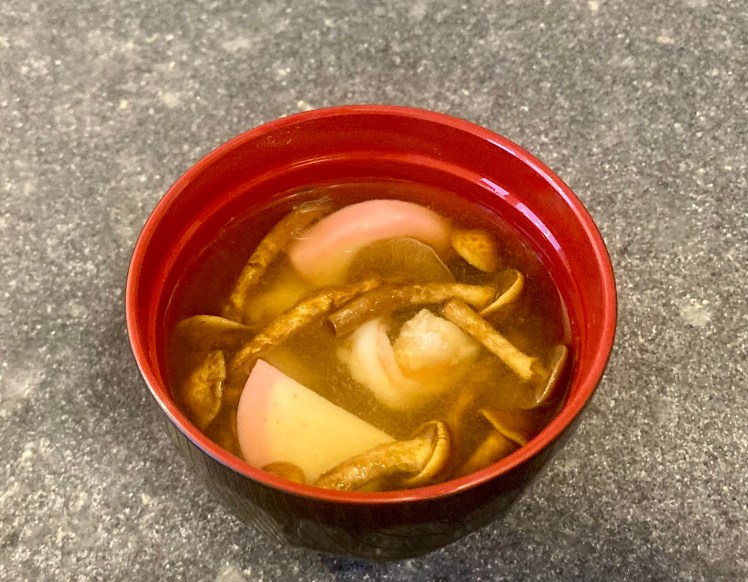
Tagliatelle with Artichokes, Pancetta and Parmesan Cheese

The Joy of Artichokes

We’re true fans of artichokes. Although available throughout the year, we especially love them in Summer. They come with various structures and flavours, an interesting shape and a beautiful flower. Have you noticed that the heart and the leaves have a similar yet different taste?
Artichokes also come with a challenge: how to serve them in an elegant way? One way of serving the small ones is as a salad; another way is using them as an ingredient in a pasta dish.
Let’s talk briefly about Pancetta: this is cured and dried pork meat, so not smoked. You could replace it with traditional bacon, but be careful not to use something heavy oak smoked.

Wine Pairing

We enjoyed our pasta with a glass of Italian Corvina from the Verona region. This is a fruity wine, think red fruit (strawberries, cherries), only a hint of acidity, not too much tannins. We bought a bottle from Torre del Falasco. Great buy!

What You Need

  • 4 Small Artichokes
  • 75 gram of Pancetta
  • 1 Garlic Glove
  • Thyme
  • 100 gram of Fresh Tagliatelle
  • Parmesan Cheese
  • Black Pepper

What You Do

Steam or cook the small artichokes. Let them cool, peel them and cut of the upper half. Cut the remainder in 6 or 8 chunks. Cut the pancetta in slices. Take a large skillet and warm. Add some olive oil and glaze the pancetta. It’s not the idea to fry the meat, the fat should not melt, only glaze. Now add the thinly chopped garlic and warm until the garlic is slightly soft. This may take a few minutes so an occasional stir is required. Now add the artichokes and the thyme. Stir very gently because the idea is that the artichokes remain intact.
Cook the tagliatelle (probably 4 minutes) and drain but keep some of the cooking liquid. Sprinkle a bit of Parmesan cheese over the artichokes, stir, very gently, add one or two spoons of the cooking liquid, add more Parmesan cheese and more liquid. Now add some olive oil and the tagliattele. Check if this looks fine to you. If not add more liquid. Add a generous amount of black pepper. Serve on a warm plate with some extra Parmesan cheese.

Ajo Blanco

Tasty, Simple and Rich

The talent of keeping things simple: that’s very true for Spanish Almond Soup. It should consist of white almonds, water, old bread, garlic, olive oil, vinegar and perhaps a pinch of salt. And trust us, there is no need to add anything else. No cucumber, green apples, jalapeño, chicken stock, pepper, flowers, white grapes, milk, aioli, Balsamic vinegar, raisins, cream, yoghurt, pine nuts or melon. We love creativity, but the ingredients people suggest to brighten up Ajo Blanco, it’s amazing. Especially because there is no need to add anything to the original.

Blanc Manger

The use of almonds and almond milk to thicken liquid was well known in medieval times. In the classic Van Soeter Cokene (1971), professor Johanna Maria Van Winter describes four recipes for Blanc Manger, the oldest one (Blamensier) from Germany (14th century).  It contained white almonds, goat milk, chicken, lard, sugar and violets (for colouring). A similar dish was enjoyed by Royalty in England in the 15th century. Also from that century is Brouès d’Allemagne. It contained almond milk, ginger, cinnamon, onions, lard and many other ingredients making for a hearty dish. Blancmanger was also known in 15th century France, as a dish for the sick with almonds and sugar.

Ajo Blanco seems to have its origin in Roman time, others mention Moorish roots. The soup is linked to Málaga and Granada. Ajo Blanco survived and Blamensier became extinct. Perhaps because Ajo Blanco is tasty, simple and rich whereas Blamensier is rather tasteless with the consistency of porridge?

Gazpacho

Mention Ajo Blanco and someone will say ‘white gazpacho’. Because both are cold soups, because both are from Spain? We can’t think of any other reason, so please, please don’t even think about gazpacho when you serve Ajo Blanco.

What You Need

  • 70 gram White Almonds
  • 200 ml ice-cold Water
  • 30 gram old stale White Artisanal Bread without the crust
  • 1 medium Garlic Clove
  • 1 tablespoon Jerez Vinegar
  • Pinch of Salt
  • 70 ml Olive Oil
  • 10 gram of Roasted Almonds

What You Do

Buy excellent almonds, so not the soft, bland ones from the supermarket. Start by very, very lightly roasting the white almonds in a dry non-stick pan. Let cool. Soak the bread for 10 minutes. Roughly chop the garlic. Using a heavy blender or food processor whizz the almonds, the garlic and some of the water until nearly smooth. Squeeze out the bread. Add bread and remaining water to the mixture. Continue blending. Add vinegar and salt. Check the mixture for taste and smoothness. It should be very smooth, cream like; this may take 1 minute on turbo! When happy with both smoothness and taste, slowly add olive oil with the blender running on low speed. Transfer the mixture to the refrigerator for at least two hours. Also cool the bowls you want to use.
Just before serving crush some roasted almonds and sprinkle these on the soup.

Ajo Blanco © cadwu
Ajo Blanco © cadwu

Fennel, Radish and Tarragon Salad

The Third Ingredient

Fennel and radishes go together very well. Radishes come with a spicy, piquant flavour; fennel comes with the flavour of anise. Both have a touch of sweetness and a lovely crunchy texture. Combine with a simple dressing of oil and vinegar and you’ll have a tasty salad.
But, yes, agreed, something is missing. What to add? Search the Internet and you’ll find additions such as lemon (zest and juice), cucumber, apple, Parmesan cheese et cetera. All very nice, but we think the not-very-obvious third ingredient is tarragon. It supports the anise flavour and unites the fennel and the radishes, especially after two of more hours in the refrigerator.

When on the Internet you will also see that most chefs put the vegetables in ice-cold water to make them extra crispy and that using a mandoline slicer is required. We much prefer coarsely dicing the ingredients in order to create one, flavourful, refreshing salad. By dicing the ingredients and letting the salad rest, the flavours will be much better distributed. Take your time to chew, allow the salad to linger in your mouth and enjoy the development of the flavour.

Food Pairing

Fennel and tarragon point in the direction of fish, which is indeed a good idea, provided the fish is one with lots of flavours. Think monkfish, skate, mackerel, red gurnard et cetera. You could also think of a home-made burger with first class beef, mustard, spring onion, a splash of soy sauce, Worcestershire sauce, garlic, black pepper, capers and dill.

What You Need

  • One small Fennel
  • Ten Radishes
  • Three sprigs of Tarragon
  • Olive Oil
  • White Wine or Cider Vinegar

What You Do

Cut the fennel and radishes into small cubes. Cut a large amount of tarragon leaves; similar size. Make a dressing with olive oil and vinegar. Don’t make the dressing very oily and don’t make too much dressing, it should only coat the ingredients. Combine in a bowl, mix well and store in the refrigerator for at least two hours.  Just before serving taste the salad. You may want to add some vinegar.

Fennel, Radish and Tarragon Salad © cadwu

Tamagoyaki (Japanese Omelette)

Rolled Omelette

Tamagoyaki is best described as a Japanese rolled omelette and it is often served for breakfast or included in a bento box. It’s made by rolling multiple thin layers of egg; let’s say the concept of a Swiss roll but with much thinner layers. Making Tamagoyaki requires years of practice and a special rectangular pan (a makiyakinabe) using chopsticks only. But we, as western cooks with little patience, we use a round small, non-stick pan and two spatulas. The result is very tasty and it will make you think of a real Tamagoyaki.

The ingredients are a bit of a puzzle. Eggs, soy sauce and mirin for sure. Other ingredients include sugar (for a sweet version), sake and dashi (for a savoury version called Dashimaki Tamago).

The technique of rolling thin layers of egg is a great way of making an omelette. Feel free to replace the Japanese ingredients with some chicken stock and finely grated Parmesan cheese. You will love it!

Wine Pairing

Tamagoyaki comes with some umami thanks to the dashi and a touch of sweetness. Enjoy with a sparkling wine, for instance a Crémant de Bourgogne. Our choice was a glass of Blanc de Blanc Brut made by Vitteaut Alberti. Its aromas are fresh and flowery; the flavours suggest honey and pear. You could also serve a dry Riesling or Sylvaner.
Serving sake is also a good idea; our choice would be a Ginjo-Shu because of its delicate and light flavour.

What You Need

  • 2 Eggs
  • 2 Tablespoons of (Light) Dashi
  • 1 Teaspoon of Mirin
  • 1 Teaspoon of Light Soy Sauce
  • Oil

What You Do

Heat a small non-stick pan (10 -15 centimetre) until warm but not hot. Whisk the eggs, add dashi and mirin. Use kitchen paper soaked with oil to coat the pan. Use a (small) sauce spoon to add a bit of the mixture. Make sure you can repeat this as often as possible, so it has to be a really thin layer of egg. When nearly set, roll it up and move to the side. Coat the pan with oil. Add some of the mixture, make sure it connects to the roll, wait until nearly set and roll it up. Repeat until the mixture is used up. The tamagoyaki should be yellow with perhaps a touch of golden brown.
When done, feel free to shape the tamagoyaki by rolling it in a bamboo sushi mat. Slice and serve, perhaps with some grated daikon on the side.

Clafoutis

Cherries, cherries, cherries!

We love them! The rich, sweet taste in combination with the right texture! They just want to be eaten, one after the other. So what better summer dessert than Clafoutis?
Fresh, small, black or dark red cherries are the best for Clafoutis. Don’t use anything canned or jarred.
Clafoutis is made with milk and eggs, so in a way familiar to Crè­me Brûlée and Far Breton. But in case of Clafoutis you only need to whisk and wait for it to bake in the oven. That’s all.
There are many recipes for Clafoutis, some with cold milk, some with hot. Some use milk and cream, others just milk. We use warm milk because you get a better feel for the consistency, but cold milk will also do the job.
Some add Kirsch and others add Vanilla. We can’t see the benefit of adding Kirsch when using tasty cherries. Vanilla is distracting, so not recommended.

Another decision to make: use whole cherries or pitted ones? Not removing the pits is less work (obviously) and it reduces the risk of a soggy Clafoutis. The pits contain amygdalin, a toxic compound that can also be found in almonds, apple seeds and apricot stones. Amygdalin tastes like almonds. In this recipe we pit the cherries and compensate for the lack of almond flavour by adding almond flour.
If you decide to pit the cherries, make sure you remove all of them!

Finally, yes, you can replace the cherries with fresh apricots, berries, peaches or prunes. Then it’s called a Flaugnarde. But nothing as tasty as Clafoutis made with fresh cherries!

What You Need

  • 2,5 dl of regular Milk
  • 2 Eggs
  • 30 grams of plain Flour
  • 10 grams of Almond Flour
  • 20 grams of Sugar
  • 500 grams of Cherries, pitted
  • 10 grams of Butter

What You Do

Pre heat the oven to 180° Celsius or 350° Fahrenheit. Whisk together the eggs, plain flour, almond flour and sugar. Bring the milk almost to a boil. Stir the milk into the mixture. Butter a large, shallow baking dish, add cherries to the dish and make sure the bottom is nicely covered with cherries. No need to have two layers of cherries. Pour the mixture over the cherries. Bake (lower third of the oven) for 20 minutes, add a few dots of butter, continue baking for another 20 minutes or until the clafoutis is golden. Leave to cool for 60 minutes or so, this will enhance the taste. clafoutis should be served luke-warm. You could decorate the clafoutis with icing sugar, but it’s not essential.

Avocado and Cucumber Soup

Something Extra

Preparing a chilled soup is more than simply combining and blending a few ingredients; it needs something extra, something that will give the soup a push, simply because it’s chilled and the aromas are not as present as when a soup is warm. For instance Gazpacho is not just a mixture of tomatoes, cucumber, bell pepper and red onion; it absolutely needs Jerez vinegar.
Cold soups also benefit from adding excellent olive oil just before serving. The olive oil will give that velvety, rich feel in your mouth.
Chilled avocado and cucumber soup also needs something extra. We add soft blue cheese (for instance Gorgonzola Dolce) and Dill. Lemon will bring the required acidity and Greek Yoghurt will enhance the texture.

What You Need

  • One Ripe Avocado
  • One Small Cucumber
  • Stock (Chicken, Veal or Vegetable)
  • Soft Blue Cheese
  • Fresh Dill
  • Lemon
  • Black Pepper
  • Greek Yoghurt
  • Olive Oil

What You Do

Peel the cucumber and remove the seeds. Add the cucumber, avocado, stock, cheese and dill to your blender and mix. Now it’s a matter of tasting. Add a bit of lemon and black pepper. You may want to add more dill because it’s a fairly delicate herb. Once you’re happy with the taste, add some yoghurt and mix with a spoon. Transfer to the refrigerator and let cool and integrate for at least 4 hours. In this case ‘integrate’ also means making sure the cucumber is not too present. Just before serving taste again and add some olive oil. Stir with a spoon. Serve in a cold soup plate and decorate with a sprig of dill.

Flan with Tofu, Dashi and Ginger

An Asian Coddler

Serving food prepared in a coddler is always good fun. Turn of the lid and be surprised! In this case it’s a light and elegant starter; one that you can prepare the day before. The ginger and spring onion bring spiciness and freshness, the dashi brings umami and the flan a velvety, rich feeling. Making the dish comes with two challenges: the flan should be smooth and the gel not too firm.

Sake Pairing

Sake is best with this dish. The taste of the flan is subtle with a nice fresh touch because of the ginger and spring onion. The gel is a bit salty, given the dish a nice edge. The sake should be straight and crisp (and cold of course).

What You Need

  • For the Flan
    • 8 Small Coddlers (so-called standard size)
    • 100 gram of Silken Tofu (light and soft)
    • 1 Egg
    • 1 Egg Yolk
    • 50 ml Dashi (preferably home-made)
    • Touch of Soy Sauce
    • 1 Teaspoon of Mirin
    • Butter
    • Dill
  • For the Gel
    • 75 ml Dashi
    • Cornstarch
    • Fresh Ginger
    • Spring Onion

What You Do

In a bowl mix the egg and the egg yolk. Use a blender to smoothen the tofu. After blendering it should look like yoghurt. In a second bowl mix the tofu, 50 ml dashi, a touch of soy sauce and mirin. Now combine the content of the two bowls and mix gently. Pass through a sieve. It’s important that the mixture is very smooth, so no lumps or bits of white from the egg. And no bubbles. If not, pass through a finer sieve.
Apply a very thin layer of butter to the coddler, just enough to cover the inside. Pour the mixture in the coddlers, but nor more than 2/3. The mixture will set but not raise (or only a little bit). Close the coddlers, but not too tight. You want to test one during the cooking process and you don’t want to burn your fingers.
Set your oven to ‘classic’ and to 170° Celsius or 340° Fahrenheit. Put the coddlers in a large oven tray and add boiling water. The water should reach ¾ of the coddler, leaving ¼ free. Once in the oven reduce the temperature to 120° Celsius or 250° Fahrenheit and cook for 25 to 30 minutes. The coddlers are done when a metal pin comes out clean.
Remove the coddlers from the oven and allow to cool. You can do this by putting them in cold water, but you can also give it a bit of time. Make sure you dry the inside of the metal lid (condense).
Reduce the dashi. The taste should be relatively strong because the cornstarch will soften it. Better to use agar agar, but cornstarch is perfectly fine in this case. Thicken the sauce with the starch and let it cool. It should work as a gel on top of the flan.
Grate the ginger and very thinly slice both white and green of the spring onion.
Put a bit of ginger in the middle of the flan; sprinkle the onion over the top of the flan and finish by pouring a bit of the gel. Ideally this will cover the top (and the ginger and spring onion) and flow between the coddler and the flan.
Put the coddlers in the refrigerator and let cool. Half an hour before serving take them out of the refrigerator, remove the lid, dry it and put it back on again. Decorate with dill.

Skate with Sauce Vierge

Butter and Lemon

Once upon a time, there was a simple sauce called Sauce Vierge. It wasn’t difficult to prepare, just beat some butter until soft, then add some lemon juice, salt and pepper and continue beating until fluffy. Serve with asparagus, leeks or other boiled vegetables. It was not the most exciting sauce ever and we could easily have forgotten Sauce Vierge.

But then, lo and behold, things changed. Sauce Vierge became hot and happening, thanks to the Nouvelle Cuisine and chef Michel Guérard. He replaced the butter with extra virgin olive oil. A Sauce Was Born!

Nouvelle Cuisine ruled the world and in its slipstream Sauce Vierge became a star. A now warm sauce with additional ingredients such as garlic, tarragon, basil, parsley and chervil. Sauce Vierge became the ideal sauce to accompany fish. Preparing it was fairly straightforward: flavour the oil with garlic, then remove the garlic and add lemon juice and chopped herbs.

Coriander and Tomatoes

In 1976 Michel Guérard published a recipe of Sauce Vierge, including crushed coriander seeds and diced tomatoes. His suggestion is to serve it with sea bass, cooked over seaweed (bladder wrack?), and a purée of watercress.

Antiboise

Sauce Vierge was a star, but from a marketing perspective the name isn’t ideal. The term Antiboise became popular, especially outside of France. Antiboise is named after the city of Antibes in the south of France. The name is clever and so is skipping the word ‘sauce’. So you could call Michel Guérard’s dish Sea Bass with Antiboise and a purée of Watercress.

A Warm Dressing

Let’s go back to the original Sauce Vierge. A simple sauce that combined fluffy butter with lemon. So a modern version with olive oil is a great idea. We also like the idea of flavouring the oil with garlic and chopped herbs.
Depending on the food that comes with the Sauce Vierge you could add chopped tomatoes, crushed coriander seeds, black olives or capers. Don’t add too much: today’s Sauce Vierge is more like a warm dressing then a classic sauce.

Wine Pairing

Given the powerful flavours (capers, olives, herbs, skate) we suggest a fresh white wine with a lots of fruit and easy to drink. Our choice was a Verdejo produced by Mocen (Spain). The tasting notes are described in this video.

What You Need

  • Skate (or Sea Bass)
  • Butter
  • Olive Oil
  • Garlic
  • Lemon
  • Excellent Tomatoes
  • Basil
  • Parsley
  • Chives
  • Black Olives
  • Capers
  • Black Pepper

What You Do

Heat some olive oil and add the crushed garlic glove. Let it rest on low temperature until the oil is infused. Peel and seed the tomatoes. Chop in small cubes. Cut the olives lengthwise in 8. Cut the capers. Roughly cut all the herbs. Fry the skate in oil and/or butter until brown. Remove the garlic, add lemon juice and tomatoes; mix. Serve the skate on a plate, add the herbs, the olives, the capers and black pepper to the sauce, mix and serve the sauce on top of the fish.

Skate with Sauce Vierge © cadwu

Stuffed Eggs with Summer Truffle

Summer Truffle

One of the obvious benefits of the summer truffle is its price. We paid € 3,50 per 10 gram last week, which is a very reasonable price for a genuine truffle. And 10 gram is sufficient for these delicious stuffed eggs.
Summer truffles are harvested between May and August in France, Italy and Spain. They come with a few characteristics that you have to take into account. First of all, summer truffle loses most (if not all) of its flavour when heated. A better idea is to shave the truffle over a warm dish, for instance asparagus or pasta, just before serving. Second aspect to keep in mind: summer truffles are not as powerful in terms of aroma and flavour as other truffles.

Truffles love eggs, love potatoes, love foie gras, love Madeira, love morels. Tournedos Rossini, Antonio Carlucci’s pasta with Morel & Truffle Sauce (described in The Complete Mushroom Book) and the classic Pâté Périgueux: all delicious.

We combine our summer truffle with eggs and mayonnaise. We crush the truffle to add a crunch to the dish. Please prepare the dish a few hours before serving, allowing the truffle to become more present. You will be surprised about the richness of these stuffed eggs!

Wine Pairing

Best to combine with a not too oaky Chardonnay, for instance French Burgundy. An excellent choice would be Bourgogne Couvent des Jacobins, made by Louis Jadot.

What You Need

  • Three eggs
  • (Homemade) Mayonnaise
  • 1 Anchovy
  • 10 gram of Summer Truffle (more preferred)
  • Black Pepper
  • Fresh Lemon

What You Do

Boil or steam the eggs until just done. Peel and let cool. Slice the eggs in two. Mash up the three egg yolks with a fork. Add a small spoon of mayonnaise and mix. Mash 1 cm of anchovy and add to the mixture. Crush the summer truffle and add to the mixture. Add a few drops of lemon juice and a bit of black pepper. Taste but keep in mind that the truffle will become much more present. Stuff the eggs, cover with foil and let cool. You could decorate the eggs with a thin slice of summer truffle.

White Asparagus with Summer Truffle

Spring and Summer

Time to celebrate! Summer has just begun and the Asparagus season has come to a close. So let’s bring the two together in this slightly extravagant dish. It is earthy, slightly bitter and sweet, velvety and complete.
The Summer Truffle (Tuber Aestivum) is not as intense and overwhelming as the Winter Truffle. It should be used immediately and preferably grated. It loses its taste when heated, so don’t use it for your Tournedos Rossini. This dish should be luke warm, so an excellent environment for a Summer Truffle. Take your time to appreciate the delicate combination in your plate.

Wine Pairing

We drank a glass of Pinot Blanc made by Bott Frères (Ribeauvillé, France) with our Asparagus with Summer Truffle. This dry, fresh wine has a bouquet of well-ripened fruit. It comes with just a touch of sweetness.
A glass of Gewürztraminer is also a good choice with this dish, provided it has a touch of sweetness only.
Parsley is essential because it brings freshness to the dish; nicely balanced with the velvety taste of the egg and butter. And butter is the ideal bridge between egg, asparagus and truffle. So your wine needs to have a certain suppleness.

What You Need

  • 4 Asparagus
  • 2 Eggs
  • 25 grams of Butter
  • 20 grams of Summer Truffle
  • Parsley
  • Black Pepper

What You Do

Cook or steam the asparagus. Make sure they are just done. Cook the eggs for 8-9 minutes. The yolk should not be completely firm. Cool the eggs in cold water, peel and mash with a fork. Add the finely chopped parsley and some black pepper. Taste. Melt the butter.
Put two asparagus per person on the plate, pour the warm butter over the asparagus, making sure they are fully covered, add the egg and finish by sprinkling the grated truffle. Poor a glass of excellent Pinot Blanc and enjoy the start of summer by eating the very last of this years asparagus.