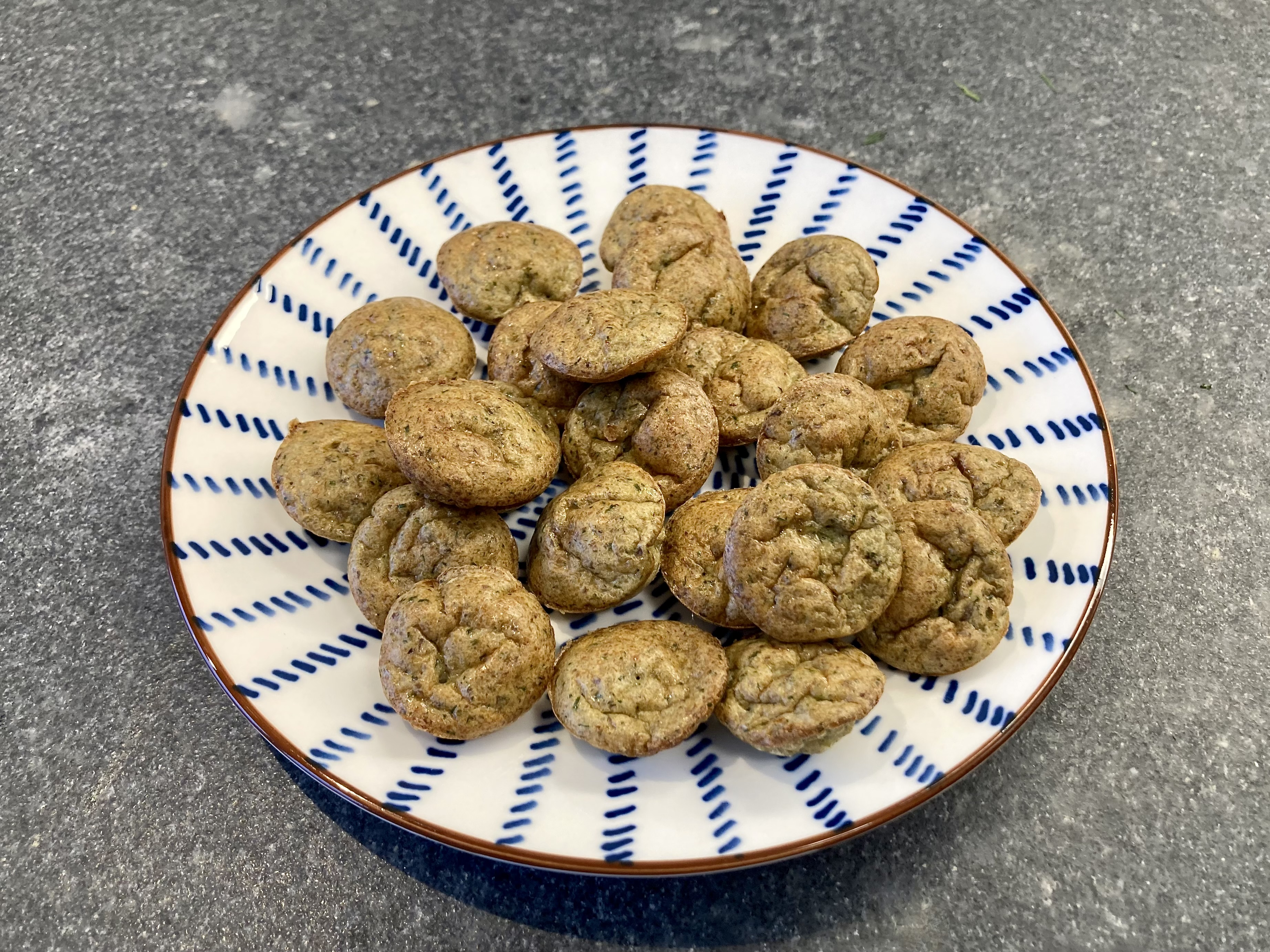
Roquefort and Mushroom Mini Bites

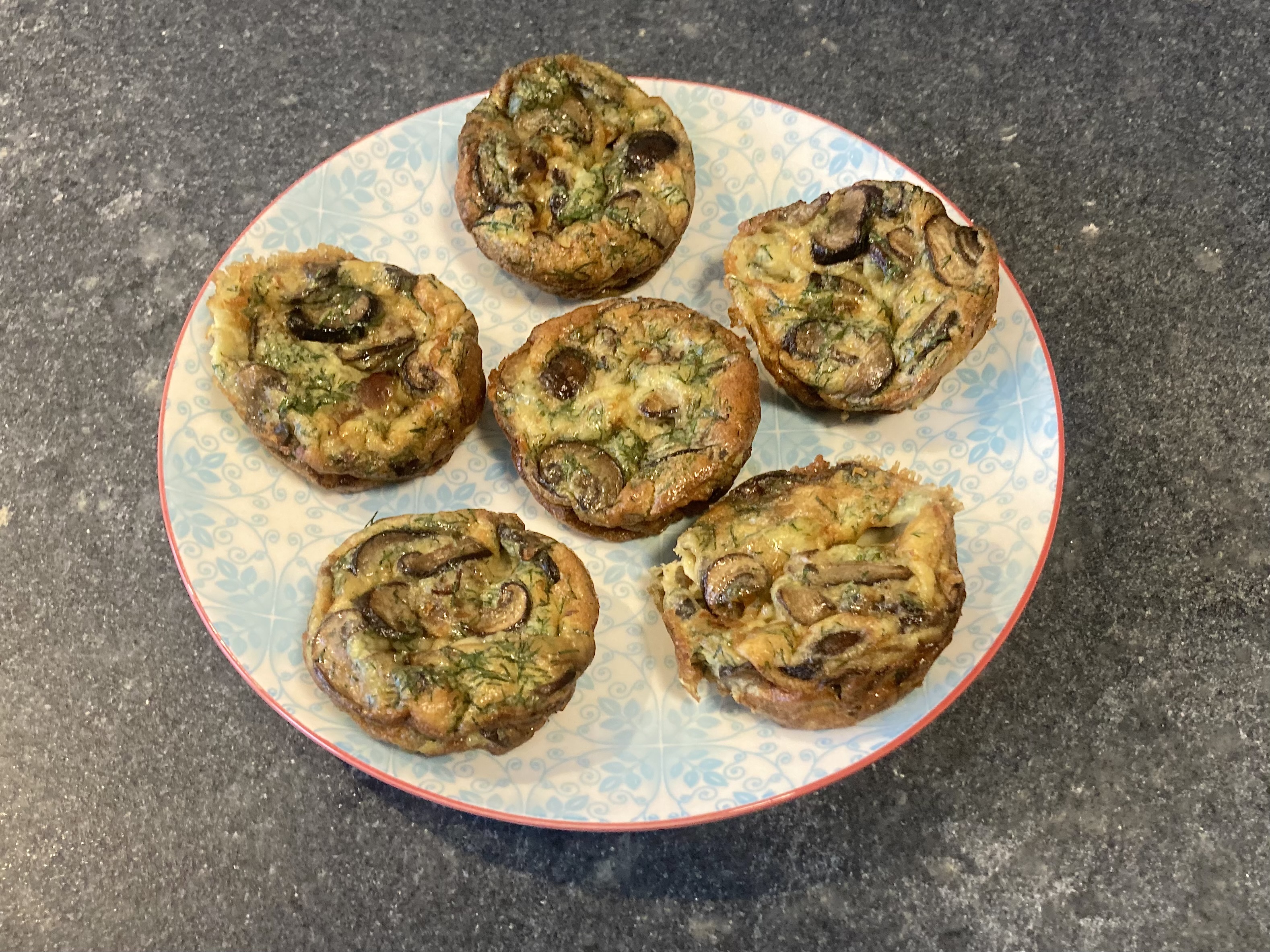
A few months ago we read a recipe for Herb and Mushroom Egg Bites. The bites looked like mini quiches. They were made with a combination of bacon, sauteed mushrooms, cheese, thyme and chives. We simply had to make them. They egg bites turned out to be delicious. Thanks Jeanne for sharing! More delicious recipes on her website.

Jeanne served them as a side dish with grilled tuna, focaccia and a rich salad. As she wrote: a perfect summer meal. We wanted to serve the bites as a starter. Worked well, but we felt something was missing. Why not make them smaller and serve them with an aperitif? That could work, but we would have to enhance the flavour. Which we did by using Roquefort (our favourite blue cheese) and dill. We used a silicon mould with 2,8 cm (1.1 inch) semi-sphere holes.

Wine Pairing

We enjoyed the mini bites with a glass of dry, sparkling wine. They will also combine very well with a dry white or rosé wine, or with a beer. Given the flavours of the mini bites, they are best combined with a non-sweet drink.

What You Need
  • 2 Eggs
  • 50 grams of Roquefort or another strong blue cheese
  • 100 ml Cream
  • Lots of Dill
  • 2 slices of Pancetta
  • 100 grams of mixed mushrooms, including Shiitake
  • Black Pepper
What You Do
  1. Slice the mushrooms
  2. Chop the dill
  3. Prepare the semi-sphere mould according to the instruction. We lightly buttered ours
  4. Pre-heat your oven to 170 °C or 340 °F (traditional, so not fan)
  5. Gently fry the slices of pancetta in a skillet
  6. When nicely done, transfer from the pan to a plate with kitchen paper
  7. Fry the mushrooms in the pan until done
  8. Transfer the mushroom to a plate and allow to cool
  9. Whisk the eggs and add the cream
  10. Add Roquefort, dill, crumbled pancetta, mushrooms and black pepper. Mix
  11. Taste and adjust
  12. Use a blender to pulse the mixture: you’re looking for a batter that is a bit smoother, but not completely smooth
  13. Pour the batter in the semi-sphere silicon mould and transfer to the oven for 20 minutes or until golden-brown
  14. Let cool in the mould for a few minutes, then pop them out
  15. Serve warm
PS

If you want to go for larger bites, then skip step 12. You could decorate each with a slice of mushroom.

The 2026 Johannes van Dam Prize

On February 2nd, the prize-giving ceremony of the 2026 Johannes van Dam award took place in the main auditorium of the University of Amsterdam. Previous winners of the prestigious Johannes van Dam award are Harold McGee, Yotam Ottolenghi, John Halvemaan, Carlo Petrini, Alice Waters, Claudia Roden, Alain Passard, Asma Khan and Jeroen Meus

The 2026 Johannes van Dam prize was awarded to Jonnie and Thérèse Boer. In 1992 they opened their restaurant De Librije in Zwolle (the Netherlands). One year later they received their first Michelin star and since 2004 the restaurant holds three Michelin stars.

Inspiration

In 1965 Jonnie Boer was born in Giethoorn, not far from Zwolle. He was proud to use and serve local products (fish, game, herbs, plants, roots, meat) in his restaurants. One of his many signature dishes was zander with apple syrup and Riesling accompanied by a glass of Chardonnay. Very often guests were impressed by the quality of the zander. Jonnie would happily explain that the fish was caught in a river, two kilometers from the restaurant. If they served lamb, it wasn’t from New Zeeland or from Sisteron or Pauillac, it was from a farm in Giethoorn, managed by Jonnie’s nephew. Why import it from France when quality is available next door?

Nature was the basis of his food and techniques. In this video (in English) for instance, he uses oysters to kick-start the fermentation process. Brilliant idea! His style was imaginative with a focus on the food and the customer.

Thérèse Boer is co-owner of De Librije, sommelier and overall responsible for the restaurant. Together they wrote several books, most of them in Dutch. One of their books in English (PURER: Cooking, Wine & Spirits Bible) is available via the usual channels.

Sadly, Jonnie Boer passed away in April 2025 at the age of 60. Thérèse and her team continue running the restaurant, and they were able to keep the three Michelin stars.

The Prize

Professor Louise Fresco, chair of the jury of the Johannes van Dam award, emphasised that for decades Jonnie and Thérèse Boer led the gastronomic development in the Netherlands. With the award the jury also wanted to recognise their mentorship for younger generations. Jonnie and Thérèse Boer have put the Netherlands firmly on the global culinary map. They are pivotal in the history of Dutch food and cooking.

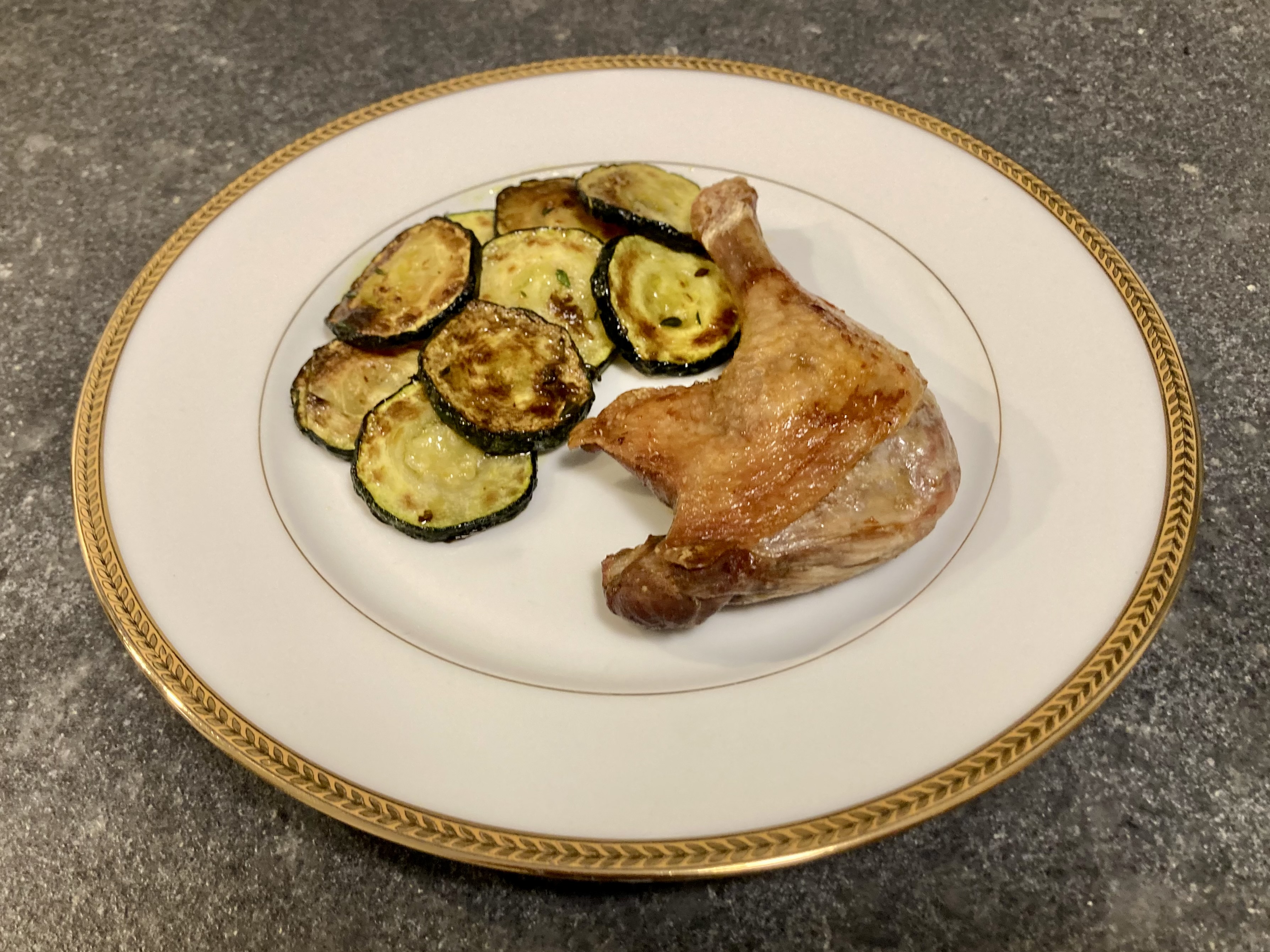
Duck and Zucchini

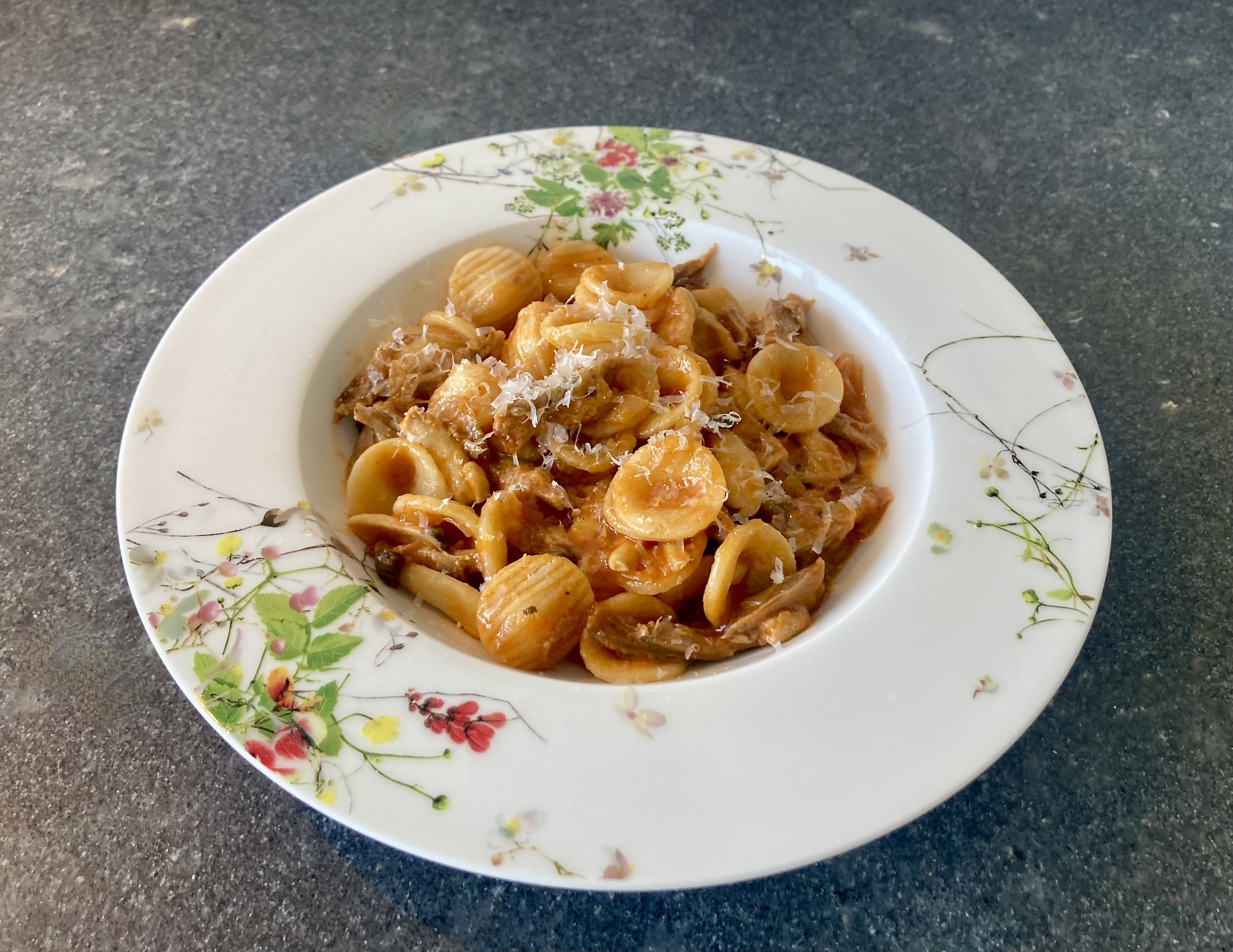
Fresh leg of duck is hard to find, which is a pity because it’s juicy and flavourful. We used it to prepare Pasta with Duck (Pappardelle al Ragù d’Anatra), a classic Italian dish that goes back to a recipe by Pellegrino Artusi, published in 1891. It inspired us to do more with leg of duck. This very simple dish combines fried leg of duck with excellent zucchini. Just a few ingredients, which means that quality is crucial.

Wine Pairing

We enjoyed our Duck and Zucchini with a glass of Chiroubles, produced by Didier Desvignes. The label of the wine shows a snail, indicating that the wine is made with respect for the environment. Chiroubles is one of the 12 appellations of the Beaujolais. All red Beaujolais wines are made with gamay grapes. Wines from the Chiroubles appellation are in general fresh, generous and expressive. They have flavours such as strawberry, raspberry and cherry. This Chiroubles had a hint of earthy and rustic aromas, which added to the complexity of the wine. Excellent pairing with the rich duck and the aromatic, slightly sweet and bitter zucchini.

What You Need
  • 2 Legs of Duck
  • Olive Oil
  • Zucchini
  • Black Pepper
What You Do
  1. Start by preparing the duck by removing the bits that you don’t like to eat
  2. Preheat the oven to 150 °C or 300 °F
  3. Heat a skillet, add olive oil and fry both sides of the legs until golden.
  4. Transfer the duck, skin on top, to the oven for 30 – 60 minutes depending on the size, 
  5. Bate every 15 minutes
  6. Remove from the oven and allow to rest for 10 minutes
  7. Wash, dry and slice the zucchini
  8. Warm a skillet, add olive oil and fry the zucchini until a touch golden
  9. Add black pepper to both the zucchini and the duck
  10. Serve the zucchini with some of the (green) oil and duck on a warm plate
PS

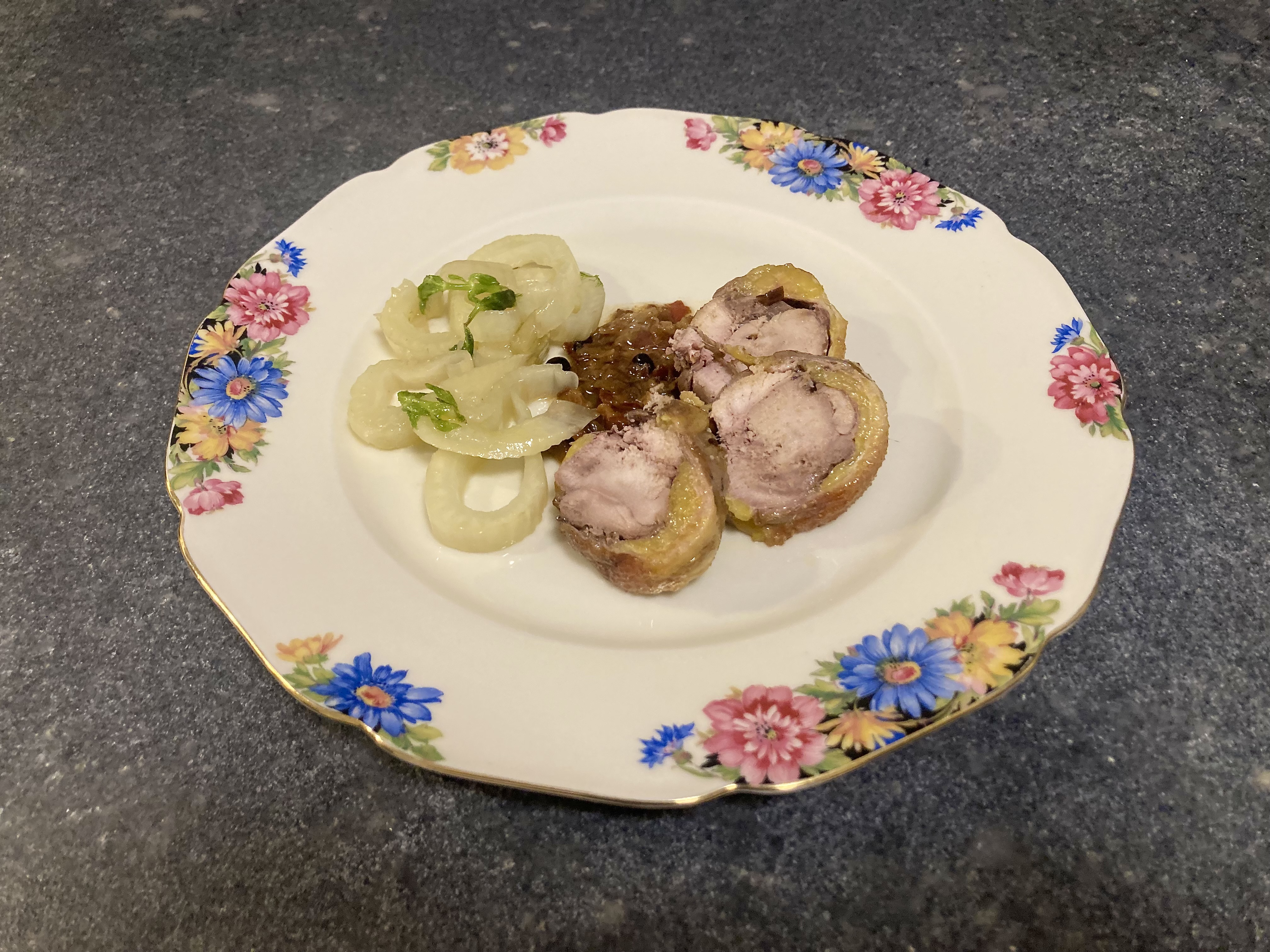
An alternative is to remove the bigger bone of the leg, season the meat and use kitchen wire to close the leg. Fry as above. When the meat is in the oven, slice the fennel and add to a pan with some olive oil. Leave on low heat. Alternatively for a lighter version you steam the fennel and add some olive oil just before serving. When the meat is resting, fry shallot, garlic, finely chopped carrot and/or celery and/or chopped pancetta. Add juices from the duck and make a sauce. Slice the meat and serve with fennel.
You could also fill the leg of duck with for instance a combination of thyme and chopped rosemary.

Easy Mushroom Pie

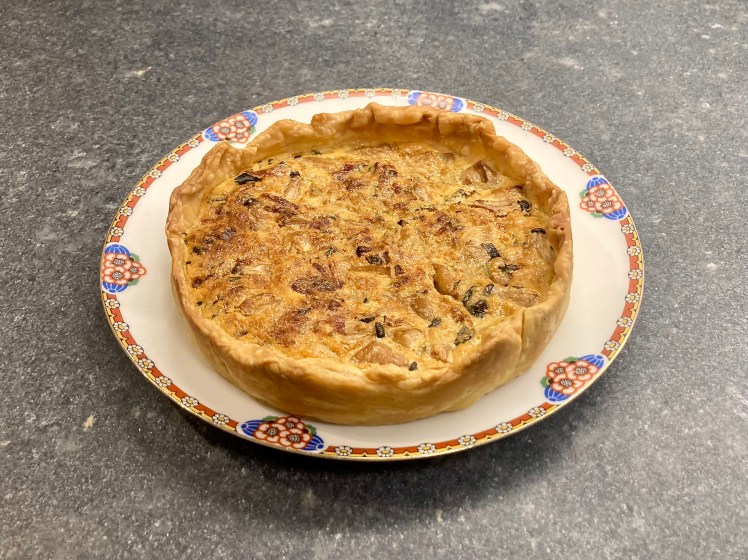
Thyme, oregano, nutty mushrooms and Parmesan cheese: a delicious combination at the heart of this easy mushroom pie. We used ready-made puff pastry, so making the filling is all you need to do.

Oregano (Origanum Vulgare) is typical for the Mediterranean cuisine. The leaves have an intense, earthy, slightly bitter taste. Use it when making tomato sauce, grilled vegetables or a lamb stew. Dried oregano is nearly as tasty as fresh oregano. When buying fresh oregano, make sure you’re not buying marjoram (Origanum Majorana) because its flavour is less intense and a bit sweet. To add to the confusion: oregano is also called wild marjoram whereas marjoram is called sweet marjoram.

Wine Pairing

We enjoyed our easy mushroom pie with a glass of Bardolino, made by Monte del Frà from Italy. The grapes used are Corvina, Rondinella and Molinara. It is a well-balanced, vibrant ruby red wine with lots of fruit and a hint of spices. Medium acidity. In general, you’re looking for a refreshing red wine with lots of fruit that should be served slightly chilled.

What You Need
  • 200 grams of firm Mushrooms, we used small Eryngii
  • 50 grams of Pancetta
  • 3 Eggs
  • 50 grams of Crème Fraîche
  • Parmesan Cheese
  • Thyme
  • Oregano
  • Shallot
  • 2 cloves of Garlic
  • Puff Pastry
  • Olive Oil
What You Do
  1. Warm a skillet
  2. Chop the shallot, the garlic and the oregano
  3. Clean the mushrooms and slice in two if so required
  4. Add some olive oil to the pan
  5. Add slices of pancetta
  6. Fry until crispy
  7. Transfer to a plate with kitchen paper
  8. Add the shallot to the pan and fry on low heat
  9. After a few minutes add the mushrooms and fry over medium heat
  10. After a few minutes add the garlic
  11. Reduce heat
  12. When all nicely done, add the thyme and the chopped oregano
  13. Set aside and let cool
  14. Preheat your oven to 180 °C or 355 °F
  15. Whisk the three eggs
  16. Add crème fraiche
  17. Add freshly grated Parmesan cheese and black pepper
  18. Cut or crumble the pancetta and add to the mushroom mixture
  19. Add the mushroom mixture to the egg mixture, combine
  20. Coat a 19 cm or 7.5-inch round baking tin with thin puff pastry
  21. Add the mixture and distribute evenly
  22. Transfer to the oven for 20-25 minutes or until nice and golden
  23. Allow to cool on a wire rack for a few minutes
  24. Remove from the tin as soon as possible
  25. If the bottom is not done, then transfer back to the oven (without the tin) for 10 minutes and set your oven to 160 °C or 320 °F, lower heat only
  26. Let cool and enjoy at 65 °C or 150 °F
PS

Skip the pancetta for a vegetarian version of this easy mushroom pie. Add extra thyme, oregano and Parmesan cheese.

Easy Mushroom Pie ©cadwu with thyme, oregano, nutty mushrooms and Parmesan cheese. The vegetarian version is as tasty as this one.
Easy Mushroom Pie ©cadwu

Bouchée a la Reine au Poisson

Crispy, fluffy, flaky puff pastry and a rich, warm ragoût, what better way to turn leftovers into a tasty starter. Bouchée a la Reine: a classic in Belgium and France. Not modern at all, but such fun to serve (and eat). The Bouchée a la Reine goes back to the days of Queen Marie Leszcynska, wife of King Louis XV. The story is that she tried to win back the attention of her husband (who was more interested in Madame de Pompadour) with these delicious small pastries. She assumed they would work as an aphrodisiac. One of her chefs (Nicolas Stohrer, also founder of the oldest patisserie in Paris) is probably the creator of Bouchée a la Reine (and Baba au Rhum by the way).
Enough history: you could fill the pastry with fish, poultry, mushrooms, sweetbread, just about anything will go, as long as you use a rich roux as basis.
Our ragoût combines fish with (common) shrimps. We bought halibut, a fish with compact, firm meat and a delicate taste, one that goes very well with butter, herbs and lemon. 

Wine Pairing

It all depends on the filling of your Bouchée a la Reine. Could be a light red wine if you have some left over veal, if it’s sweetbread then a lightly oaked chardonnay is fine et cetera. In all cases keep in mind that the filling comes with a generous amount of butter. In this case we enjoyed a glass of Mâcon, produced by Thierry Drouin. The wine has aromas of green apples and citrus, with a touch of toast and some minerality. Great in combination with the rich ragoût and its flavours. Good value for money too!

What You Need
  • One small Shallot
  • 100 grams of firm, delicate Fish
  • 50 grams of small Shrimps
  • 15 grams of Butter
  • 10 grams of All Purpose Flour
  • Fish Stock
  • Chervil
  • White Pepper
  • 2 Bouchées
What You Do
  1. Dice the raw fish (bite size)
  2. Finely chop the shallot
  3. Chop the chervil
  4. Warm the fish stock
  5. Preheat your oven to 180 °C or 355 °F
  6. Gently heat butter in a skillet
  7. Add the shallot and glaze for 5 minutes or so
  8. Add the flour
  9. Softly fry the flour until you begin smelling that typical cookie aroma
  10. Start adding the warm stock, slowly at first, constantly whisking.
  11. When the ragoût is ready, transfer the bouchées to the oven and leave for 10 minutes
  12. After 5 minutes, add the fish and combine
  13. After a few minutes the fish will be cooked
  14. Remove the pan from the heat
  15. Add white pepper, shrimps and chervil
  16. Combine
  17. Transfer the bouchées to the plates
  18. Add ragoût, decorate with chervil and serve immediately
PS

Normally we make our own stock. In this case we bought fish fond produced by Jürgen Langbein. We added water (1:1) to get the right stock for the ragout.

Bouchée a la Reine au Poisson ©cadwu made with a béchamel, halibut, shrimps and chervil
Bouchée a la Reine au Poisson ©cadwu

Your Favourites in 2025

In 2025 the most popular recipe was Scallops with Roe. We were inspired by the great quality of the scallops on the market in Nice and we were not disappointed. The combination of scallops, roe and mashed potatoes is simple and delicious.

This year’s runner up is an all time favorite: Kimizu. This classic, golden sauce from Japan, is made with egg yolks, rice vinegar, water and mirin. We also made a version with tarragon, let’s say the Béarnaise version of Kimizu. Although it is a classic sauce, we use a microwave to prepare Kimizu and Kimizu with Tarragon. An easy and very effective way of controlling temperature and consistency.

Number three was another classic sauce: Ravigote. We served it with Pâté de Tête Persillé and crusted bread. The recipe we posted goes back to the more or less original version. The Ravigote is light, uplifting and flavorful.

You’ve probably noticed we love mushrooms. Cultivated ones, like shiitake and oyster mushrooms and seasonal ones, such as morels and Caesar’s mushroom. This year we introduced a page with mushroom recipes in Dutch. It turned our to be a great success!

A few years ago we started exploring forgotten vegetables such as mashua and oca. We’re very pleased to see the popularity of this page. Clearly you’re as interested in these vegetables and their flavours as we are!

This year we will continue our series of sauces and of mushroom recipes, we will prepare dishes from illustrious Parisien restaurants and discuss wine pairing. We also plan to review cookbooks, with the help of our much loved tasting panel. In the meantime we look forward to your feedback, suggestions, likes and comments.

Let’s start cooking!

Oysters With Tarragon

Enjoying oyster begins by deciding which oysters to buy. Should they be small or large, should the taste be creamy and sweet or lean and juicy? If an oyster looks creamy (opaque) then it will taste creamy.

Next decision: raw or cooked? We think the best way to eat an oyster is to eat it raw. You will taste the saltiness, the texture and all of its flavours. The usual way to counter the saltiness is by adding a bit of lemon or mignonette but you could also go for something spicy like Tabasco, horseradish or perhaps wasabi. Don’t add something sweet because the oyster has its own sweetness.
In most cases cooked or steamed oysters are covered with lots of overwhelming ingredients, in an attempt to hide the taste of the oyster. Most likely the oyster will be overcooked and its structure rubbery and nasty. If you trust the chef, go for Steamed Oysters with Black Bean Sauce or for Oysters Rockefeller. Or even better: prepare our quick and easy Oysters with Tarragon, a delicious combination of warm (but not cooked) oyster and velvety anise flavours.

And finally: how to eat an oyster? Eating means chewing and tasting. Please don’t “drink” an oyster. If you do, you will only taste sea water.

Wine Pairing

When eating oysters, your wine must have some minerality. Think Chablis, Picpoul de Pinet, Sancerre or Sylvaner. We enjoyed a glass of Pommery Royal Brut champagne. The wine is elegant and uplifting, it comes with subtle notes of brioche and apple, a fine mousse and the perfect acidity with the oysters. Its freshness works very well after the intense taste of the oyster and the tarragon.

What You Need
  • 6 or 12 Oysters
  • Butter
  • Lots of Tarragon
  • White Pepper
  • Lemon Juice
What You Do
  1. Buy lean (not creamy) oysters, for instance the ones from the Île de Ré
  2. Combine butter and finely chopped tarragon with some white pepper
  3. Taste and add more tarragon
  4. Store in the refrigerator
  5. Scrub each oyster under cold, running water
  6. Open the oyster
  7. Use your knife or a spoon to detach the muscle underneath the oyster from the bottom shell
  8. Remove any small bits of broken shell or sediment
  9. Remove some of the liquid
  10. Add one or two drops of lemon juice to every oyster
  11. Top with a teaspoon of tarragon butter
  12. Make sure you have everything ready (plate, tongs, wine, guests)
  13. Transfer the oysters to the oven and place as close to the grill as possible
  14. Set your oven to grill or broil and leave the oysters for 3 or 4 minutes in the oven
  15. Transfer the oysters to a plate and serve immediately
  16. 🥂Happy New Year!🥂


Tortang Talong

Perhaps you wonder what kind of fish we prepared for this post. Well, actually, it’s Tortang Talong, a Philippine dish made with charred eggplant. Earlier this year we made banana ketchup and the idea was to serve it with Tortang Talong, but we couldn’t find the right eggplants. For Tortang Talong you need long, purple, slender eggplants, known as Chinese or Japanse eggplants. They not only look different from the oblong eggplant, their taste is slightly sweeter and softer. The shape is key to a moist and homogenous result.

Thanks Monch Weller for introducing us to the delectable sauce and the very tasty Tortang Talong!

Food Pairing

Serve Tortang Talong with banana ketchup as a starter. We could also imagine it as a side dish with fried vegetables, rice and perhaps chicken.

What You Need
  • 2 Chinese or Japanese Eggplants
  • 1 Egg
  • Black Pepper
  • (optional) Salt
  • Oil
What You Do
  1. Grill the eggplants for 5-10 minutes using the wire rack, following the instructions of your oven
  2. Flip and grill for another 5-10 minutes or until charred
  3. Let cool
  4. Peel of the skin
  5. Use a fork to flatten the eggplants
  6. Combine egg, salt (if using) and pepper
  7. Beat the mixture well
  8. Heat a heavy iron skillet
  9. Add oil to the skillet
  10. Dip the eggplant in the mixture
  11. Fry the eggplant
  12. Flip and use a brush to coat the top with the egg mixture
  13. Repeat step 12, two or three times

Duck with Garlic Thyme Sauce

Breast of Duck (Margret de Canard) is often paired with sweet ingredients, such as figs and oranges. We love the combination of duck with a green pepper sauce, because the sharpness emphasises the natural sweetness of the duck meat. In this recipe we do something similar. The sauce with thyme and mustard is aromatic and a touch sharp, which is very nice with the duck. The grated garlic adds spiciness to the sauce, making the dish more complex and bold. Delicious when combined with the sweet and sour caponata and crunchy fried polenta.

Wine Pairing

To balance the flavours of the dish, we suggest a fruity, dry red wine, one with subtle tannins and lots of freshness. We enjoyed a glass of Nero d’Avola, made in Sicily. The unoaked wine had a ruby red colour and aromas of cherries and plum. Serving the wine slightly chilled (meaning 15°C or 16°C (59°F or 61°F)) enhanced the freshness, acidity and fruitiness of the wine.

What You Need
  • 1 Breast of Duck
  • Thyme
  • Chicken Stock
  • Garlic
  • Mustard
  • Crème Fraîche
  • ½ grated clove Garlic
  • Black Pepper
  • To serve with the Duck
What You Do
  1. Check the breast for remainders of feathers
  2. Remove the vein on the meat side of the breast (and other bits you don’t like)
  3. Place on a dish, cover with foil and transfer to the refrigerator
  4. Leave in the refrigerator for one hour, making sure it’s nice, firm and cold
  5. Fry the duck in a hot, non-sticky skillet for 10-12 minutes on the skin side. Reduce the heat after a few minutes. You don’t need oil or butter, the ducks fat will do the trick
  6. Now fry for 2-3 minutes on the meat side and remove
  7. Cover with aluminum foil in such a way that the crispy skin is not covered. The foil should only cover the meat
  8. Remove most of the fat from the pan, but not all
  9. Add chicken stock and thyme
  10. Deglaze the pan
  11. Start building the sauce by adding juices from the duck
  12. Add mustard. This will not only add complexity and sharpness to the sauce, it will also make it thicker
  13. Add crème fraîche
  14. Add stock, mustard and crème fraîche to taste
  15. After 10 – 15 minutes add grated garlic, this will give a boost to the sauce
  16. Slice the duck (we like fairly big slices; you may prefer thinner ones)
  17. Add the last juices to the sauce and serve the duck with the sauce, caponata and fried polenta
Duck with Garlic Thyme Sauce ©cadwu served with caponata and polenta
Duck with Garlic Thyme Sauce ©cadwu

Three Winter Soups

A few weeks ago, we enjoyed a delicious vegan dinner at Lokaal, a small restaurant in the centre of Gent, Belgium. Friendly service, relaxed atmosphere and nice music. One of the specialties of Lokaal is fermentation, for instance homemade Tempeh from Bulgur. Lots of umami and length. We loved it!
Our dinner at Lokaal started with a nice winter soup made with kale and kohlrabi. We’re not the biggest fans of kale, but in this case it worked very well. The kohlrabi gave a nice, uplifting touch to the soup.

It made us think of other winter soups, like parsnip and Jerusalem artichoke soup, and parsley root soup. Ah, those forgotten vegetables! They bring us new flavours and combinations.

We used vegetable stock for all three soups. It is made with Carrot, Onion, Leek, Celery and Black Pepper (and optional a bouquet garni). Easy to make and lots of flavour. It freezes well, which makes it an even more important asset.

What You Need (Kale and Kohlrabi soup)
  • 500 ml Vegetable Stock
  • 200 grams of Kohlrabi
  • 50 grams of Kale
  • French Mustard
What You Do
  1. Clean the vegetables
  2. Devein the kale
  3. Peel the kohlrabi
  4. Coarsely chop the vegetables
  5. Warm the stock
  6. Add the kohlrabi
  7. Leave to simmer for 10 minutes
  8. Add the kale
  9. Leave to simmer for 10 minutes
  10. Use a blender to make a relatively smooth soup
  11. Add mustard to taste
  12. Serve
  13. PS The soup doesn’t keep well, so not one for the refrigerator
What You Need (Parsnip and Jerusalem Artichoke soup)
  • 500 ml Vegetable Stock
  • 200 grams Parsnip
  • 200 grams Jerusalem Artichokes
  • White Pepper (optional)
What You Do
  1. Clean, peel and coarsely chop the vegetables
  2. Warm the stock
  3. Add the vegetables
  4. Leave to simmer for 15 minutes or until the vegetables are done
  5. Use a blender to make a smooth and creamy soup
  6. Depending on the Jerusalem Artichokes the soup can become fairly thick. Add some stock if so required
  7. Taste (optional: add some white pepper)
  8. Serve
  9. PS You can also enjoy the soup the next day, it keeps well in the refrigerator
What You Need (Parsley Root soup)
  • 500 ml of Vegetable Stock
  • 200 grams Parsley Root
  • 1 small Shallot
  • ½ Leek (white only)
  • 1 small clove Garlic
  • Butter
  • Parsley
What You Do
  1. Warm butter in a pan
  2. Peel and coarsely chop parsley root
  3. Coarsely chop leek and onion
  4. Glaze onion and leek in butter
  5. Add parsley root
  6. Add garlic
  7. Leave on low heat for 5 minutes
  8. Add stock
  9. Simmer for 20-30 minutes or until the parsley root is soft
  10. Blender
  11. Pass through a sieve
  12. Simmer for 10 minutes
  13. Cool
  14. Serve the next day
  15. Decorate with chopped parsley leaves
Kale and Kohlrabi Soup made with vegetable stock. An intriguing combination. The kohlrabi gives this winter soup an uplifting flavour. ©cadwu
Kale and Kohlrabi Soup ©cadwu