Panna Cotta with Yuzu

When you shop at an Asian supermarket, you will see many products with yuzu: ponzu, yuzu dressing, jelly with yuzu flavour, yuzu marmalade, yuzu soy sauce, yuzu tea and even yuzu skincare. Probably the shop will also sell fresh yuzu juice. And if you’re lucky, they will have the real thing: yuzu!

Yuzu (Citrus Junos) is a citrus fruit and it looks like a small lemon or clementine, with an uneven skin. It is of Chinese origin and it was introduced in Japan during the Nara period (710-794). It’s expensive (we saw them on the market for 5 euro a piece), they have lots of seeds and very little juice. The flavour is tart but gentle, very aromatic and will make you think of mandarin, only different. The peel is as delicious as the juice. The combination of flavors and fragrancy makes it a unique citrus. Not a fruit to eat on its own. Use it to add freshness and aroma to a dish or sauce.

Yuzu juice costs between 30 and 100 euro per liter (because of the small amount of juice per yuzu) and therefore products with yuzu tend to be expensive. If not, check the label and make sure it contains yuzu. Especially ponzu shoyu (made with mirin, rice vinegar, katsuobushi, kombu, yuzu and soy sauce) is often made with lemon.

We also noticed the term ‘yuzu style’ which is a clear indication no yuzu is used. We spotted a bottle of Yuzu Style Dressing. It contains mandarin, lemon, apple, vinegar and lots of other ingredients, but no yuzu.

We bought our yuzu at a farmers’ market and on our way back home we thought about things to make with it. Perhaps our own yuzu kosho (a paste made with chili, yuzu and salt)? Or combine it with miso and cod? Or yuzu syllabub (with cream and sugar)?

Why not panna cotta?

What You Need
  • 500 ml Cream
  • 30 ml Yuzu Juice
  • 10 ml Lemon Juice
  • Yuzu Zest
  • 25 grams of Sugar
  • 3,5 leaves of Gelatine (5,25 grams)
What You Do (for 4)
  1. Slowly bring the cream to the boil.
  2. Keep close to boiling for 15 minutes. Stir when necessary.
  3. Add the juice and some of the zest.
  4. Remove from the heat and while stirring add sugar until totally dissolved.
  5. Follow the instruction of the gelatine and add the leaves.
  6. Stir well until homogeneous.
  7. Cool the liquid somewhat before filling the forms. We used a silicone mold. Nice and easy! The only thing you need to do is to make the mold a bit moist with water.
  8. Let the panna cotta cool and then store in the refrigerator until set.
  9. Don’t forget to seal with cling foil, otherwise your panna cotta will absorb aromas from other food in the refrigerator.
  10. Decorate with yuzu zest.
PS
  • If you can’t find yuzu or find them too expensive, then use 30 ml Lemon Juice and 10 ml Mandarin (or Clementine) Juice.
  • The amount of gelatine you need is a bit tricky. The acidity of the yuzu will thicken the cream and it will reduce the gelling effect of the gelatine. We decided to use the normal quantity.

Miso Sauce and Asparagus

Miso is made by combining soybeans, salt and koji, a fungus that is cultivated on rice. The fermentation process may take months. Additional ingredients include (brown) rice, barley or wheat. Originally from Japan, it is now used in many other countries. In general miso is intense, salty and deep. Expect lots of umami!
In this recipe we use white miso, because of its mildness, its delicacy and because it has some sweetness. Ideal for a sauce, marinade or dressing. Red miso combines well with oily fish and hearty vegetables.
More information about miso, the manufacturing process and how to use it (including recipes by chef Nobu Matsuhisa) on the website of Hikari Miso.
When buying miso we suggest to focus on organic miso and if possible a miso with less salt. Normally miso contains 12% salt.
A starter with miso and asparagus was not on our radar until we saw the menu of Restaurant Green in Amsterdam. One of their dishes combines white asparagus with miso, wild garlic, hazelnuts and yuzu. We planned to enjoy the very last white asparagus of the season in a classic way, but why not end the season with something completely new? Unfortunately, the season for wild garlic finished a few weeks ago, so we replaced this flavourful component with chives.

Wine Pairing

A Pinot Grigio will be perfect with this dish. Light, crisp, citrus and apple. We opened a bottle of Pinot grigio produced by Zenato. An affordable wine that combined very well with both the asparagus and the sauce.

What You Need
  • White Asparagus
  • Crushed Hazelnuts
  • Chives
  • For the Sauce
    • White Miso
    • Yuzu
    • Mirin
    • Light Soy Sauce (we used Tsuyu)
    • (optional) Rice Vinegar
    • (optional) Water
    • Potato Starch
What You Do

Clean and peel the asparagus. Steam them for 10-20 minutes, depending on the size. We use our Russel and Hobbs food steamer. An essential kitchen aid for only 50 euro or US dollar. Combine 2 teaspoons of white miso with a tablespoon of mirin, a tablespoon of tsuyu and a teaspoon of Yuzu. Gently warm the sauce and thicken with some potato starch until it is silky. Now it’s a matter of tasting and adjusting. Probably add more tsuyu; perhaps add some water and/or rice vinegar. Also taste the combination with the asparagus before serving. The asparagus make the sauce milder. Serve the asparagus with the sauce. Add crushed hazelnuts. Add chopped chives.

Miso Sauce and Asparagus ©cadwu

Duck with Ginger, Mirin, Soy Sauce and Yuzu

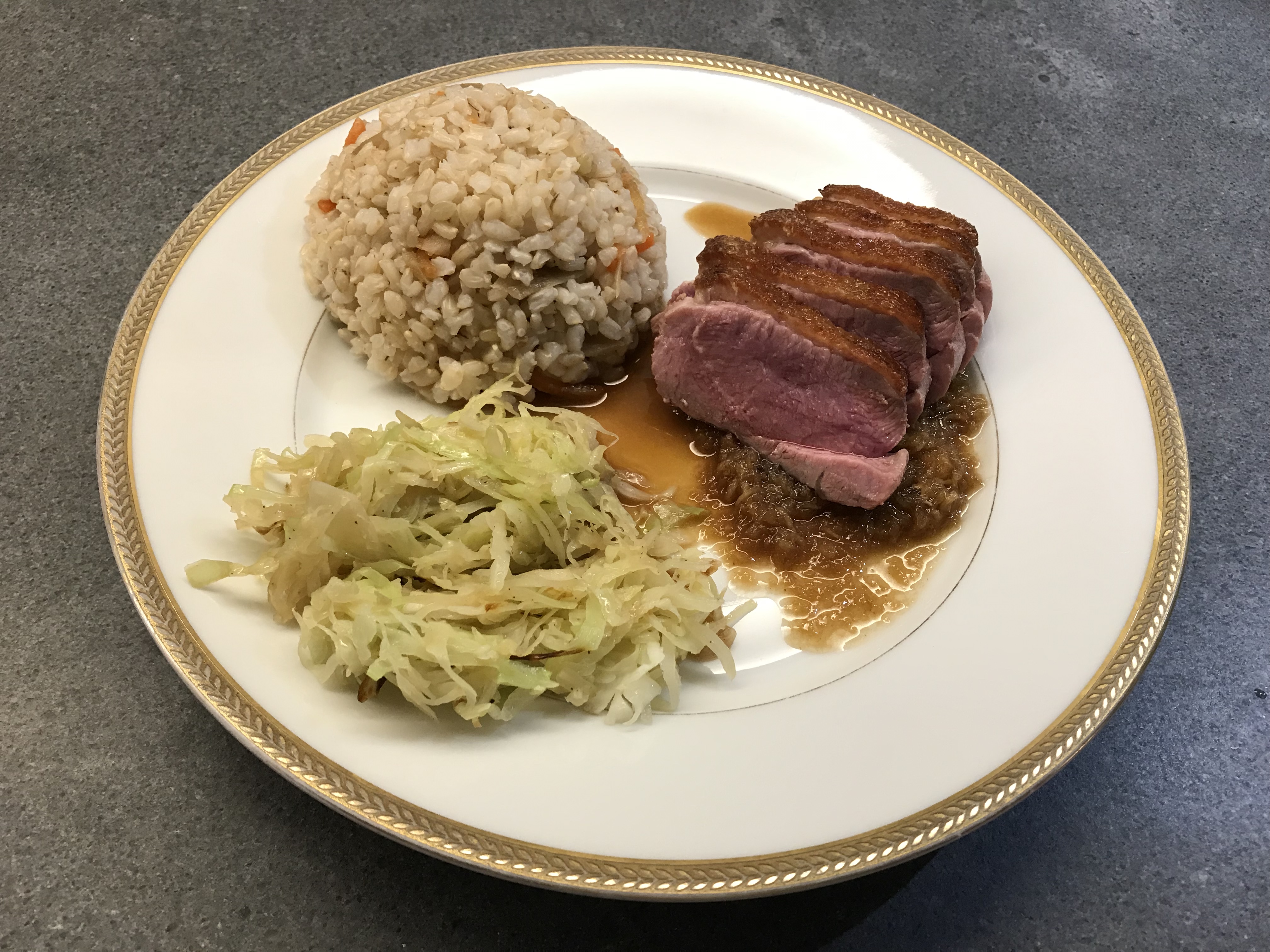
Obviously Breast of Duck is great when combined with an orange sauce (or even better, with Mandarine Napoléon). Or combined with a Green Pepper Sauce, or with hoisin, soy sauce and five-spice powder (as used for Peking Duck). We combine the duck with fresh ginger (a bit spicy, but since the ginger is cooked in the sauce it will be very mild), yuzu (citrus fruit originaly from Japan, Korea and China) and sweet mirin and soy sauce. The cabbage comes with tamari and sesame oil, so this dish is full of wonderful flavours. Have we mentioned the pickled cucumber?

Wine Pairing

You could combine the duck with white wine, provided it has lots of character, for instance a Gewürztraminer. A red wine is the more obvious choice: a rich, warm Carignan will do nicely. The wine needs to combine with the richness of the dish and of course the sweetness of the soy sauce and the mirin. Duck is somewhat sweet in its own right and the sauce amplifies this. The wine should be fruity (plum), spicy and definitely not too woody.

What You Need
  • 2 Small Breasts of Duck or 1 Large One
  • Soy Sauce (we prefer the version with less salt)
  • Mirin
  • Yuzu
  • Ginger (fresh)
What You Do
  1. Check the breast of duck for remainders of feathers
  2. Remove the vein on the meat side of the breast (and the odd membrane you don’t like)
  3. Put on a dish, cover and transfer to the refrigerator
  4. Leave in the refrigerator for a few hours, making sure it’s nice, firm and cold. We want crispy fat, so we need to fry the meat relatively long. In order to get the right cuisson, we start with cold meat (so not your normal room temperature).
  5. Fry the duck in a hot, non-sticky skillet for 12 minutes on the skin side
  6. Reduce the heat after a few minutes. You don’t need oil or butter, the duck fat will do the trick
  7. Flip and fry for 2 minutes on the other side
  8. Remove from the pan and cover the meat with aluminium foil in such a way that the crispy skin is not covered. The foil should only cover meat
  9. You may want to remove some fat from the pan
  10. Add some water and a generous amount of grated ginger (let’s say 3 – 4 centimetre), stir, add mirin and soy sauce
  11. Keep warm
  12. Add liquid from the duck to the sauce
  13. After 10 minutes or so the ginger should be soft and the falvours integrated. If not, just give it a few more minutes
  14. Remove the breast from the foil and slice
  15. Make sure that any liquid left is added to the sauce
  16. Quickly stir the sauce, add a bit of Yuzu to bring acidity to the sauce, heat a bit more, dress on a plate and put the slices of duck on top of it.
Serve with…
  • Vegetables
    • Oxheart or Chinese Cabbage
    • Olive Oil
    • Tamari
    • Sesame Oil
  • Rice
    • Whole Grain Rice
    • Pickled cucumber

Grate the cabbage. Fry in a warm skillet in some olive oil. Add some tamari. Taste and adjust if necessary. Before serving add some excellent sesame oil. In parallel cook the rice and add some chopped pickled cucumbers to the rice.

Duck with Ginger, Mirin and Soy Sauce © cadwu