End of the Asparagus Season

Only a few days left before the end of the asparagus season on June 24th! So dash off to your greengrocer and buy some lovely asparagus, white, green, purple, it’s all fine and great, as long as they are locally farmed and fresh.

Last year our favorite way to prepare them was with scrambled eggs and shrimps. A delicious combination. This year our favorite was with Truffle Butter and Egg. A combination that very much relies on the quality of the truffle butter. Other favorites this year were steamed asparagus with kimizu (the beautiful, light, golden Japanese sauce made with egg yolks and rice vinegar), à la Flamande (mimosa of egg, butter, parsley and nutmeg), as a salad and of course as a Charlotte.

Truffle Butter

Products with truffle (oil, tapenade, purée) can be very disappointing. The vast majority is based on oil that has been artificially flavoured using a synthetic agent such as 2,4-dithiapentane. Not a truffle in sight. In case of truffle purée or tapenade the mixture is often dominated by (button) mushrooms, dried cèpes, salt, garlic and again, synthetical flavored oil.
In this recipe we use white truffle oil. The two main white truffles are Bianchetti (Tuber Borchii Vitt) and Alba (Tuber Magnatum Pico). Bianchetti is a powerful and remarkable truffle (we use it in combination with oysters) but it is not as expensive and special as an Alba truffle. A Bianchetti truffle will cost you 10 euro per 10 grams whereas an Alba truffle will be priced at 70 euro per 10 grams. When buying a truffle product, make sure you read the label and check which truffle is used.

Asparagus with Truffle Butter ©cadwu

A dear friend gave us a jar of white truffle butter and a small bottle of white truffle oil, both produced by Il Mondo Del Tartufo. The butter was fantastic and so was the oil. Both are made with Alba truffle. Later we combined normal butter with truffle oil (and perhaps a pinch of salt) to recreate the truffle butter.

Wine Pairing

The obvious choice is a glass of Pinot Blanc, although we actually prefer a dry Muscat in combination with a classic preparation such as à la Flamande. Depending on the dish it could also be a Verdicchio, an Albariño or perhaps even a Portuguese Vinho Verde.
We combined our Asparagus with Truffle Butter with a Dutch wine, produced by Hoeve Nekum. The winery was founded in 1988 but the history of the actual farm (hoeve in Dutch) goes back to the 14th century. We enjoyed their Rivaner, a white wine with a light color, a floral aroma and a fresh delicate taste with some acidity. The combination with the rich, buttery slightly bitter asparagus was excellent. In general you’re looking for a fresh, gentle wine, not too complex and one that you would also enjoy as an aperitif.

What You Need
  • 14 White Asparagus
  • 1 Egg
  • some Butter
  • White Truffle Oil
  • White Pepper
What You Do

We use our Russel and Hobbs food steamer to prepare the asparagus. An essential kitchen aid for only 50 euro or US dollar. 
Towards the end of the season the asparagus can be fairly thin, hence the 14. Clean and peel the asparagus. Put butter in a cup. Start by steaming the egg. After 2 minutes add the asparagus. 3 Minutes later turn the egg upside down and place the cup in the steamer basket. Another 5 minutes later everything is ready. Peel the egg and mash with a fork, creating a ‘mimosa’ of egg. Add two or three teaspoons of truffle oil (depending on your taste and the quantity of butter) to the butter and mix. Add some white pepper to the mimosa. Spoon the butter over of the asparagus and decorate with mimosa.
PS If you make this dish earlier in the season, then steam the asparagus for 20 minutes, the egg for 5+5 minutes and the butter for 5 minutes.

Oyster Mushroom Salad

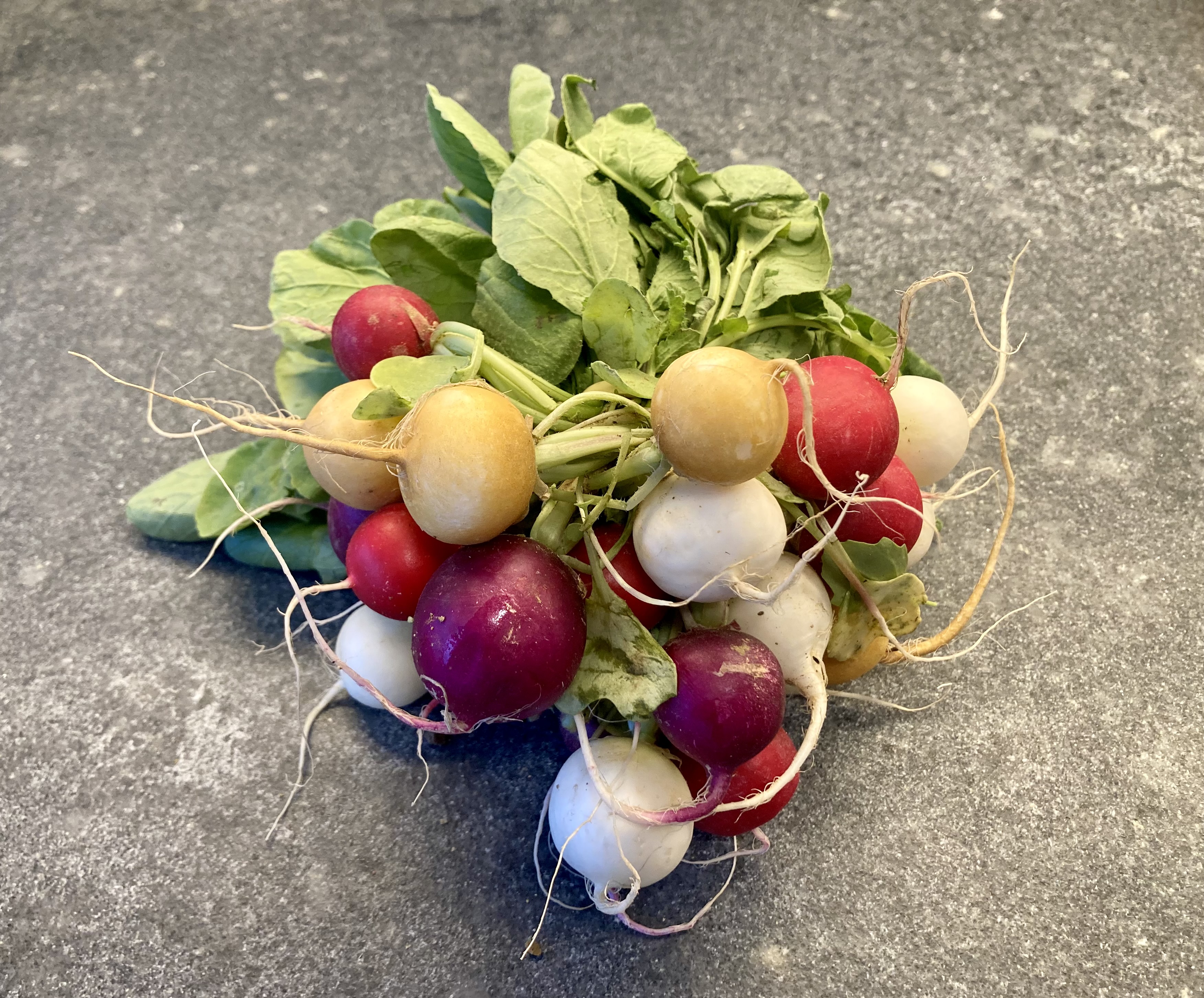
A few weeks ago, we posted a recipe for a salad with fried and marinated white button mushrooms. A rich, velvety salad with some acidity and lots of umami. This mushroom salad combines raw oyster mushrooms with radishes, sesame oil, mirin and cilantro. It’s both colourful and flavourful!
In general eating raw mushrooms is not a good idea. Some mushrooms contain mycotoxin that could be carcinogenic to humans. If you want to be 100% sure, it’s best to cook your mushrooms (and forget about this delicious salad!).
The variety we used is the Golden Oyster Mushroom (Pleurotus Citrinopileatusand its colour makes the salad even more vibrant. This mushroom is native to China, Japan and Russia. The ones we bought are cultivated. Compared to the more common grey oyster mushroom the caps are smaller in size and their taste is sweeter.
Another colourful oyster mushroom is pink (Pleurotus Djamor). Its taste is somewhat bitter. Perhaps not the best choice for a salad. If cooked well, it is supposed to taste like bacon, but by then it has lost all its colour.
Cultivated oyster mushrooms can be eaten raw. If you’re not sure, ask your greengrocer.

Wine Pairing

The salad comes with a range of flavours and obviously some acidity, which is important when choosing your wine. Perhaps a white wine with even more acidity? Or a wine that adds flavours or aromas to the dish? We decided to drink a glass of Vinho Verde with our salad, produced by Adega De Monção. This Portuguese white wine is made from Alvarinho and Trajadura grapes. Some citrus, slightly tropical, with notes of apples and pear. Tasty, elegant and refreshing. In general, you’re looking for a refreshing, easy to drink wine that has some acidity and flavours that make you think of apple, apricot or peach.

What You Need
  • 100 grams Golden Oyster Mushrooms
  • (Coloured) Radishes
  • For the Dressing
    • Excellent Olive Oil
    • Rice Vinegar
    • Mirin
    • Light Soy Sauce (we used Tsuyu)
    • Sesame Oil
  • Cilantro
What You Do

Wash the radishes and slice vertically in eight or six, depending on the size. Make the dressing. Add the sesame oil as the last ingredient because it’s very present. Combine the radishes with the dressing and the thinly sliced cilantro. Leave for a few minutes. Combine with the golden oyster mushrooms and serve immediately.

Mussels with Tomato Sauce

Earlier this month the mussels season started in the Netherlands. Time to prepare Moules Marinière, Mosselen met Look, Mussels in Beer, Mussels with Anise or Mussels with Tomato Sauce. Serve with crusted bread or French fries and you will have a delicious lunch, starter or main course.
Mussel-wise we prefer small ones, they seem to be tastier and juicier. For a lunch or starter we suggest 1 kilo for two persons, when served as a main course it’s 1 kilo per person. Please read our post about mussel basics if you’re not familiar with cleaning and cooking mussels.

Wine Pairing

The sauce is a touch spicy, so we suggest a white wine with more intense flavours. Could be a Picpoul de Pinet, could be a wine made with Verdejo or Albariño grapes. We enjoyed a glass of Bodegas Piqueras Almansa Wild Fermented Verdejo. This is an organic white wine from the Spanish Rueda region. The wine has a beautiful yellow colour. Its aromas are intense and slightly exotic. The wine has a subtle touch of wood, is balanced and has a long finish. A wine that accompanies the mussels plus the spiciness and the acidity of the sauce perfectly.

What You Need

For the Mussels

  • 1 kilo of Mussels
  • Olive Oil
  • 1 Shallot
  • 1 Garlic Glove
  • Bouquet Garni (Parsley, Bay Leaf, Thyme)
  • White Whine

For the Sauce

  • 4 Ripe Tomatoes
  • 1 Red Bell Pepper
  • 1 Shallot
  • Olive Oil
  • 3 Garlic Gloves
  • ½ Red Chili Pepper
  • Red Wine
  • Bouquet Garni (Parsley, Bay Leaf, Thyme)
  • And later on:
    • 2 Ripe Tomatoes
    • Grounded Chili Pepper

What You Do

Make the sauce one day ahead. Wash the tomatoes, the bell pepper and the chili pepper. Remove the seeds from the pepper and the bell pepper and slice. Chop the tomatoes. No need to remove the pits. Peel the shallot and garlic gloves and chop these. Glaze the onion, garlic and chili pepper in olive oil. Ten minutes on low heat. Add the tomatoes, the bell pepper, some red wine and the bouquet garni. Cook for at least two hours. Remove the bouquet garni, transfer the mixture to the blender and make a very smooth sauce. Pass through a sieve. Transfer back to the pan and reduce until it’s a nice, rich sauce. This may take 30 minutes. Cool quickly and transfer to the refrigerator. It freezes very well.

Clean the mussels with a small kitchen knife. Scrape off all the nasty bits. If you don’t do this, these will end up in your sauce and that’s not what you want.

Chop the garlic and the shallot. Warm a fairly big pan and gently glaze the shallot in olive oil. Then add the chopped garlic. Add a glass of white wine and the bouquet garni and cook on low heat for 10 minutes, allowing for the flavours to integrate.
Wash the tomatoes, remove the seeds and slice in nice small cubes. Warm the sauce. The moment you add the mussels to the pan, you add the cubed tomatoes to the sauce. Add some chilli powder to the sauce, just to give the sauce an extra push.
Turn up the heat to maximum and when really hot add the mussels and close the pan with the lid. Listen and observe: you will be able to hear when content of the pan is becoming hot again. You will see steam, more steam. Check the status of the mussels. Close the lid, listen and observe. Overcooking the mussels will make them chewy which is awful. Remove mussels with a slotted spoon, transfer to a warm soup dish and label the warm and spicy tomato sauce over the mussels.
You could add a spoonful of cooking liquid to the sauce, if you want to.

Mussels with Tomato Sauce ©cadwu

Asparagus!

Only a few days left before the end of the asparagus season on June 24th! So dash off to your greengrocer and buy some lovely asparagus, white, green, purple, it’s all fine and great, as long as they are locally farmed and fresh.

The classic way of preparing asparagus is to cook (or better: steam) them. You can pair the steamed asparagus with kimizu (the beautiful, light, golden Japanese sauce made with egg yolks and rice vinegar) Hollandaise, morels or scrambled eggs with shrimps. Classic way to serve them is à la Flamande (mimosa of egg, butter, parsley and nutmeg). You could add boiled eggs, ham and new potatoes to have a nice dinner. Or if you want to spent more money, then you serve them with summer truffle or with Sauce Périgueux.

Grilling the asparagus is also possible, simply serve them with excellent olive oil and grated Parmesan cheese.

Parhaps as a salad on a summers evening? Of course, with a delicious dressing made of white wine vinegar, olive oil, a touch of honey and lots of chervil.

A more exotic way of is to fry the asparagus with black olives and basil. Goes very well with lamb.

Wine Pairing

The obvious choice is a glass of Pinot Blanc, although we actually prefer a dry Muscat in combination with a classic preparation such as à la Flamande. Depending on the dish it could also be a Verdicchio, an Albariño or perhaps even a Portuguese Vinho Verde. Feel free to experiment; yesterday we enjoyed our asparagus with a glass of wine made of muscat and picpoul grapes. Delicious combination! The wine comes from the Pont Du Gard region (near Nimes, France) and is produced by Château Mourgues du Grès.
A more serious rosé is a perfect choice when you grill the asparagus, for instance a glass of Domaine Vico Corse Le Bois du Cerf Rosé 2021. This exceptional rosé from Corsica is made of grenache and sciacarello grapes. It is medium bodied and fresh with aromas of red fruit with a complex, long and fruity taste.
A pinot noir or grenache based wine is great when you fry the asparagus, depending on the preparation of the meat.

Asparagus ©cadwu
Asparagus ©cadwu

Lobster Mushroom with Pasta

The Lobster Mushroom is, obviously, bright reddish orange like the shell of cooked lobster. Not obvious is the fact that it’s actually a parasite that grows on certain mushrooms, making the host completely invisible and even changing its structure and taste. If you slice a lobster mushroom, you’ll see a beautiful red skin, as if the host mushroom is sprayed.
The taste of the Lobster Mushroom depends on the host. The ones we bought tasted fairly bland, but nevertheless the pasta turned out to be very tasteful and uplifting, partly due to the homemade tomato confit.

Wine Pairing

Enjoy a glass of white wine with your Lobster Mushrooms. We drank a Portuguese Vinho Verde, made by Cazas Novas. It comes with floral and fruit notes, has some acidity and a medium body with a good texture and a fresh aftertaste. In general you’re looking for a wine with freshness, minerality and some acidity. A wine that will go well with the intense flavors of the tomato confit and the creamy mushroom pasta.

What You Need

  • 100 grams of Lobster Mushroom
  • Shallot
  • Garlic
  • Thyme
  • 1 Bunch of Udon
  • 10 Small Tomatoes (confit or roasted)
  • Stock (Chicken, Veal or Vegetable)
  • Parmesan Cheese
  • Olive Oil
  • Black Pepper

What You Do

Clean the Lobster Mushroom. This is a bit time consuming due to the structure of the mushroom. Slice the shallot and the garlic. Strip the leaves of the thyme. In a large iron skillet gently fry the shallot in olive oil until soft. Add the garlic. After a few minutes add the sliced lobster mushroom (chunks). Add the thyme. Leave on low heat. In parallel cook the udon for 10 minutes or until ready. Drain the udon but keep some of the cooking liquid. Add stock, just to have more liquid in the pan. Add the tomatoes, mix gently. Now add the udon to the pan, mix, making sure the tomatoes remain intact. Add cooking liquid to get the right consistency. Finish with a splash of excellent olive oil, black pepper and finely grated Parmesan Cheese.

  • Lobster Mushroom with Pasta ©cadwu
  • Lobster Mushroom ©cadwu

Grilled Octopus Tentacles

Portugal

The Portuguese kitchen is not known for its subtleness or refinement. But that should not stop you from enjoying it! Portuguese cuisine comes with powerful flavours, lots of fish of course, bacalhau, Caldo Verde, octopus, cuttlefish, and the well known chicken piri-piri and pastel de nata. Same for Portuguese wine: perhaps not the most subtle wine (apart from Madeiras and Port wines), but how about an excellent Vinho Verde, a red wine from the Dão region made with Touriga Nacional or a red wine from Alentejo? We love flavors and we very much enjoy the bold dishes from Portugal.

Recently when in Brussels we booked a table at Chez Luis, a Portuguese Bar à vin and Restaurant. Tasty dishes like Pasteis de bacalhau, Cassolette de palourdes and Polvo lagareiro. Served with Portuguese wine, of course. And Chez Luis has an excellent choice! So we drank a vibrant espumante and a refreshing Vinho Verde (Longos Vales Alvarinho 2016). The Polvo made us think of one of our favorites: Octopus with summer vegetables. And since one octopus is way too much for two people, we simply bought two cooked tentacles. Feel free to buy a whole octopus, clean it, cook it, braise it and then follow the recipe below.

Wine Pairing

A Portuguese white wine will be a excellent choice, for instance a Vinho Verde like we enjoyed at Chez Luis. You could also go for a Spanish Verdejo from Rueda. Look for characteristics like fresh, fruity, clear acidity, subtle bitterness and full bodied.

What You Need

  • 2 Octopus Tentacles (cooked)
  • 1 Tomato
  • 1 Red Bell Pepper
  • 2 gloves of fresh Garlic
  • 1 Spring Onion
  • Jerez Vinegar
  • Black pepper
  • (Optional) Parsley
  • Lemon
  • Olive oil

What You do

Clean the red bell pepper and slice in 4 to 6 chunks. Grill it in your oven until nicely burned. Transfer to a plastic container and close the lid. Wait a few hours before peeling the bell pepper. Slice it into cubes (not too small). Remove the pits from the tomato. Slice in similar cubes. Slice the garlic (again, not too small). Slice the spring onion. Mix the vegetables and fry gently in a hot pan with olive oil. Set to low heat. In parallel heat your grill pan. Remove the gelatinous substance from the tentacles, dry them, coat with olive oil and grill for 4*2 minutes, creating a nice brown criss-cross pattern. It will not be very visible, but it will be crunchy. Just before serving the dish, add some Jerez vinegar to the vegetables, turning it into something like a salsa. Perhaps some parsley and black pepper. Serve the hot tentacle on the vegetables and add a slice of lemon.

grilled octopus tentacles

Pimientos de Padrón

Lovely and Simple Starter

Pimientos de Padrón are mild, sweet tasting and small green peppers, originally from the Galicia region in Spain, but now widely available in Spain and Portugal. Story has it that one in a hundred (or more?) is actually very spicy, but rest assured, we have eaten many more and never encountered a spicy one. Ask your greengrocer for these lovely peppers because we’re sure you will enjoy them.

Wine Pairing

We would suggest drinking a Vinho Verde with the Pimientos de Padrón. Vinho Verde is a wine from the most northern part of Portugal, between the Douro and Minho rivers. Verde refers to the fact that the grapes are harvested very early in the year. This implies that the grapes contain a fairly small amount of sugar. As a result of this the wine (in most cases) has a fairly low percentage of alcohol (think 10%). But don’t be surprised if you find one with a higher percentage.

About Vinho Verde

In general we feel Vinho Verde is undervalued. It’s a great, very taste wine; one that is not just wonderful on a summers evening.
Vinho Verde is not a wine to store, so make sure you buy one from the most recent harvest.
Most Vinho Verde wines are white. They tend to have a very subtle bubble. The taste is light, floral and the wine comes with some clear acidity.
We also found a rosé and a red Vinho Verde. Seldom have we seen a wine with such an intense colour! To balance the acidity of the red Vinho Verde you must be combined with fat meat or rich sauces. We combined it with grilled Secreto of Iberico pork, which is a treat in its own right. Secreto is a thin, juicy cut from acorn fed, free range Iberico pigs.

Secreto

As an extra: for two people buy 300 grams of Secreto. In a way the structure of the secreto resembles skate. One side of the secreto will look nice, fat and meaty, the other may look like if you have to remove extra fat. Which is exactly what you need to do! After having done that, heat a heavy grill pan (or the barbeque) and grill the meat for 4 times one minute, creating a nice pattern. The cuisson should be rosé. It’s not a problem if the thinner parts of the secreto are well done because the meat will be very juicy anyway, thanks to the fat. Serve with a sautéed courgette. The bitterness and the sweetness of the courgette combines really well with the juicy secreto. The red Vinho Verde will balance the fat and will turn the combination of secreto and courgette into an intriguing dish.

What You Need

  • Pimientos de Padrón
  • Olive Oil
  • Sea Salt

What You Do

Clean the Pimientos de Padrón and dry the peppers. Heat a heavy skillet, add olive oil and fry the peppers for a few minutes. Make sure they are fried but not cooked. Sprinkle some sea salt over the Pimientos de Padrón, fry for a few seconds making sure the salt is somewhat adsorbed in the olive oil. Serve immediately.