
The Art of Sauces: Remoulade

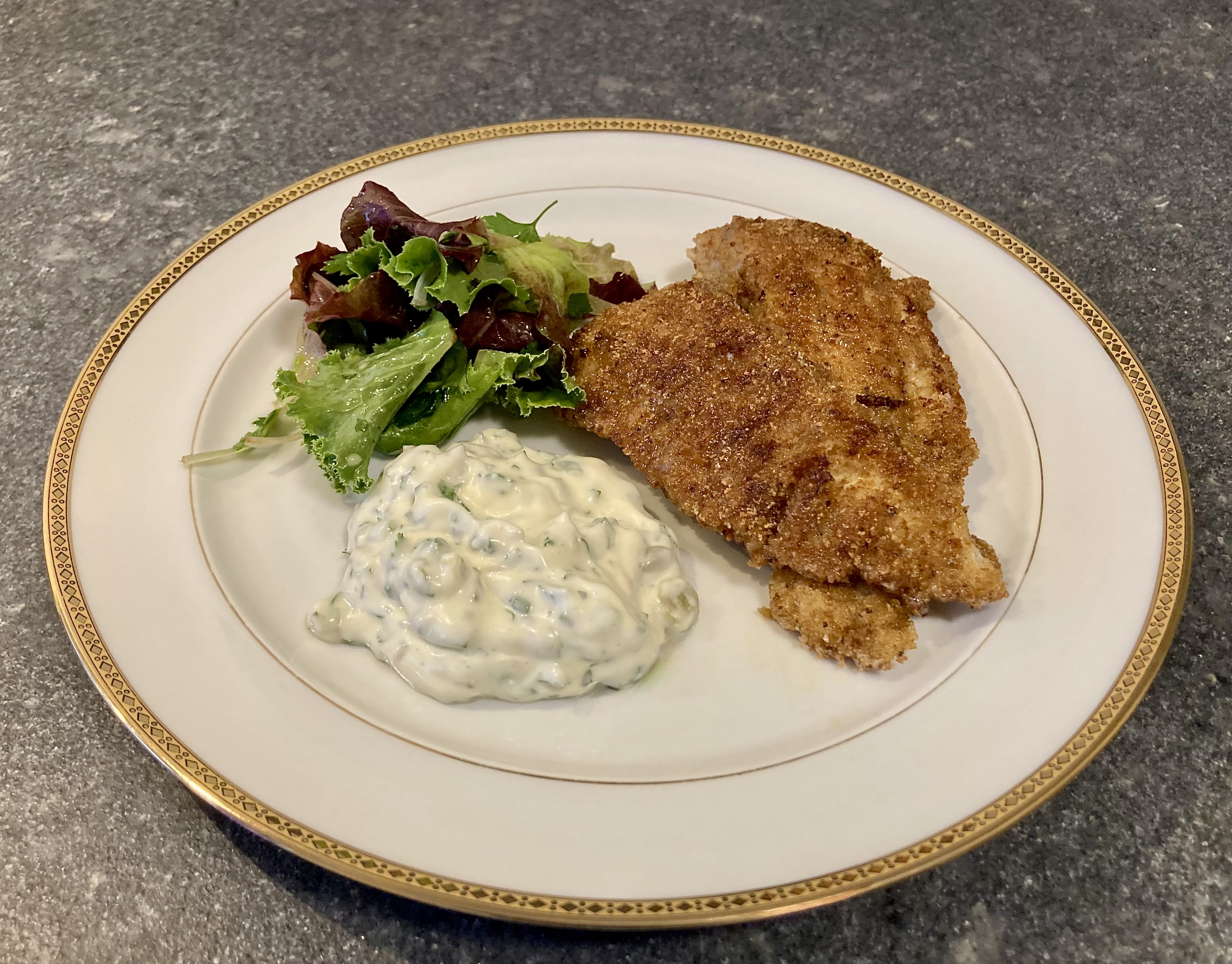
A few months ago we read an article in a Dutch wine magazine about pairing wine with a combination of fried cod, remoulade and a small salad. A nice challenge given the acidity in both the salad and the sauce plus the richness of the fried fish.

Remoulade is a sauce that goes very well with cold meat and fried or smoked fish. It combines mayonnaise with mustard, cornichons, capers, lemon and various herbs. Additional ingredients include anchovies, shallot and horseradish. Herbs could be parsley, tarragon, chives and chervil.
Turn it into a traditional French starter by adding celeriac (celery root).

One of the first recipes for remoulade (actually two recipes) was published in London in 1733 by Vincent La Chappelle, chef to the Earl of Chesterfield, in volume 1 of his book The Modern Cook.  Both versions contain oil, shallot, garlic, lemon, parsley, mustard, cullis (meat broth) and capers. Other ingredients of the first version (hot remoulade) are gravy, wine and cloves. Additional ingredients of the second version are green onions and anchovies.

Wine Pairing

According to the magazine’s wine expert the flavours in the dish are round and filming. The expert suggests a white wine with some oak or a white wine from a warmer country. We decided to drink a glass of  Verdejo made by Castelo de Medina with 100% verdejo grapes. The wine is well balanced, fresh and full bodied. It has a delicate bitterness which works very well with all components in the dish.

What You Need
  • Remoulade
    • 200 ml Mayonaise
    • teaspoon of Mustard
    • 2 Cornichons
    • teaspoon of Capers (in brine)
    • ½ small Shallot
    • Lemon Juice
    • 2 tablespoons of mixed herbs (Parsley, Chervil and Chives)
  • Fish
    • Cod, Hake, Haddock, Weever or another firm white fish
    • one Egg
    • Chapelure
  • Salad
    • Mâche, Mesclun
    • dressing made with olive oil, lemon and mustard
What You Do
  1. Remoulade
    1. Make the mayonnaise
    2. Very finely chop the shallot
    3. Dry and slice the cornichons and the capers
    4. Chop the herbs
    5. Combine all ingredients
    6. Add lemon juice to taste
    7. Transfer to the refrigerator for a few hours
  2. Fish
    1. Beat the egg
    2. Heat a non stick pan
    3. Add oil to the pan
    4. Coat the fish with egg
    5. Coat the fish with chapelure
    6. Fry the fish until golden
  3. Dish
    1. Make a dressing by combining olive oil. lemon and mustard
    2. Toss the salad with the dressing
    3. Serve the fried fish with the remoulade and the salad
PS

Comparing the list of ingredients used by Chef La Chapelle you wil notice that modern remoulade doesn’t contain garlic or cullis. He didn’t use mayonnaise for the simple reason that the first recipe for mayonnaise was published in 1828, nearly one hundred years later.

Mussels with Tomato Sauce

Earlier this month the mussels season started in the Netherlands. Time to prepare Moules Marinière, Mosselen met Look, Mussels in Beer, Mussels with Anise or Mussels with Tomato Sauce. Serve with crusted bread or French fries and you will have a delicious lunch, starter or main course.
Mussel-wise we prefer small ones, they seem to be tastier and juicier. For a lunch or starter we suggest 1 kilo for two persons, when served as a main course it’s 1 kilo per person. Please read our post about mussel basics if you’re not familiar with cleaning and cooking mussels.

Wine Pairing

The sauce is a touch spicy, so we suggest a white wine with more intense flavours. Could be a Picpoul de Pinet, could be a wine made with Verdejo or Albariño grapes. We enjoyed a glass of Bodegas Piqueras Almansa Wild Fermented Verdejo. This is an organic white wine from the Spanish Rueda region. The wine has a beautiful yellow colour. Its aromas are intense and slightly exotic. The wine has a subtle touch of wood, is balanced and has a long finish. A wine that accompanies the mussels plus the spiciness and the acidity of the sauce perfectly.

What You Need

For the Mussels

  • 1 kilo of Mussels
  • Olive Oil
  • 1 Shallot
  • 1 Garlic Glove
  • Bouquet Garni (Parsley, Bay Leaf, Thyme)
  • White Whine

For the Sauce

  • 4 Ripe Tomatoes
  • 1 Red Bell Pepper
  • 1 Shallot
  • Olive Oil
  • 3 Garlic Gloves
  • ½ Red Chili Pepper
  • Red Wine
  • Bouquet Garni (Parsley, Bay Leaf, Thyme)
  • And later on:
    • 2 Ripe Tomatoes
    • Grounded Chili Pepper

What You Do

Make the sauce one day ahead. Wash the tomatoes, the bell pepper and the chili pepper. Remove the seeds from the pepper and the bell pepper and slice. Chop the tomatoes. No need to remove the pits. Peel the shallot and garlic gloves and chop these. Glaze the onion, garlic and chili pepper in olive oil. Ten minutes on low heat. Add the tomatoes, the bell pepper, some red wine and the bouquet garni. Cook for at least two hours. Remove the bouquet garni, transfer the mixture to the blender and make a very smooth sauce. Pass through a sieve. Transfer back to the pan and reduce until it’s a nice, rich sauce. This may take 30 minutes. Cool quickly and transfer to the refrigerator. It freezes very well.

Clean the mussels with a small kitchen knife. Scrape off all the nasty bits. If you don’t do this, these will end up in your sauce and that’s not what you want.

Chop the garlic and the shallot. Warm a fairly big pan and gently glaze the shallot in olive oil. Then add the chopped garlic. Add a glass of white wine and the bouquet garni and cook on low heat for 10 minutes, allowing for the flavours to integrate.
Wash the tomatoes, remove the seeds and slice in nice small cubes. Warm the sauce. The moment you add the mussels to the pan, you add the cubed tomatoes to the sauce. Add some chilli powder to the sauce, just to give the sauce an extra push.
Turn up the heat to maximum and when really hot add the mussels and close the pan with the lid. Listen and observe: you will be able to hear when content of the pan is becoming hot again. You will see steam, more steam. Check the status of the mussels. Close the lid, listen and observe. Overcooking the mussels will make them chewy which is awful. Remove mussels with a slotted spoon, transfer to a warm soup dish and label the warm and spicy tomato sauce over the mussels.
You could add a spoonful of cooking liquid to the sauce, if you want to.

Mussels with Tomato Sauce ©cadwu

Monkfish Spanish Style

Rape a la Marinera

In October 2016 Jamie Oliver was criticised for making paella the wrong way. He dared adding chorizo to one of the most Spanish dishes ever. Paella should be made with rabbit, snails, chicken, beans, saffron and rice. How dare he insult all of Spain by adding chorizo to his Paella? Naked chef or not, ambassador of healthy food or not, no one touches Paella.

Rape a la Marinera is among our favourites because it’s all about monkfish, which is such a tasty fish. The monkfish is presented with a generous tomato sauce, large shrimps, vongole and bread. What better way to enjoy life!

In this recipe we will probably do a few things very wrong, but never mind, simply don’t tell your Spanish friends.

Wine Pairing

We very much enjoyed a glass of Spanish Verdejo. In our case a bottle of Monteabellon Rueda. In general wines made from the Verdejo grape combine very well with fish. The wine comes with the right acidity, giving freshness to the wine. It has floral aromas typical for the Verdejo grape. You may recognize the aromas of banana and exotic fruit.

What You Need

  • Monkfish
  • Olive Oil
  • Optional
    • Bay Leaf
    • Saffron
  • 4 Large Shrimps
  • Vongole (clams, Vongola Veraci)
  • White wine
  • Bouquet Garni

What You Do

The day before serving Rape a la Marinera make the tomato sauce.
Start by cleaning the monkfish and remove the skin where necessary. Clean the shrimps by removing the intestinal tract. Leave the head and the tail. Check the vongole and discard ones that are broken. In general vongole don’t need much cleaning. Vongola Verace are tasty, slightly sweet and juicy; great for Spaghetti Vongole and Rape a la Marinera.

In a large skillet fry the monkfish. When coloured add the sauce. Gently heat the sauce and cover the fish with it. Baste (arroser) and continue to do so. In parallel add some wine to a pan with a bouquet garni and let gently cook for 5 minutes.
Now it’s about timing! Add the raw shrimps to the pan with the monkfish, cover the shrimps with the sauce, continue basting both the fish and the shrimps. Add the vongole to the pan with the white wine. Cook quickly until open. Add some of the cooking juices of the vongole to the tomato sauce, mix, taste and add a touch of pepper. Serve the vongole on top of the monkfish and shrimps.
Serve with crusted bread.

Grilled Octopus Tentacles

The Portuguese kitchen is not known for its subtleness or refinement. But that should not stop you from enjoying it! Portuguese cuisine comes with powerful flavours, lots of fish of course, bacalhau, Caldo Verde, octopus, cuttlefish, and the well known chicken piri-piri and pastel de nata. Same for Portuguese wine: perhaps not the most subtle wine (apart from Madeiras and Port wines), but how about an excellent Vinho Verde, a red wine from the Dão region made with Touriga Nacional or a red wine from Alentejo? We love flavors and we very much enjoy the bold dishes from Portugal.

Recently when in Brussels we booked a table at a Portuguese Bar à vin and Restaurant. Tasty dishes like Pasteis de bacalhau, Cassolette de palourdes and Polvo lagareiro. Served with Portuguese wine, of course. We drank a vibrant espumante and a refreshing Vinho Verde. The Polvo made us think of one of our favorites: Octopus with summer vegetables. And since one octopus is way too much for two people, we simply bought two cooked tentacles. Feel free to buy a whole octopus, clean it, cook it, braise it and then follow the recipe below.

Wine Pairing

A Portuguese white wine will be a excellent choice, for instance a Vinho Verde like we enjoyed at Chez Luis. You could also go for a Spanish Verdejo from Rueda. Look for characteristics like fresh, fruity, clear acidity, subtle bitterness and full bodied.

What You Need
  • 2 Octopus Tentacles (cooked)
  • 2 Octopus Tentacles (cooked)
  • 1 Tomato
  • 1 Red Bell Pepper
  • 2 gloves of fresh Garlic
  • 1 Spring Onion
  • Jerez Vinegar
  • Black pepper
  • (Optional) Parsley
  • Lemon
  • Olive oil
What You do
  1. Clean the red bell pepper and slice in 4 to 6 chunks
  2. Grill it in your oven until nicely burned
  3. Transfer to a plastic container and close the lid
  4. Wait a few hours before peeling the bell pepper
  5. Slice it into cubes (not too small)
  6. Remove the pits from the tomato
  7. Slice in similar cubes
  8. Slice the garlic (again, not too small)
  9. Slice the spring onion
  10. Mix the vegetables and fry gently in a hot pan with olive oil
  11. Set to low heat
  12. In parallel heat your grill pan
  13. Remove the gelatinous substance from the tentacles, dry them, coat with olive oil and grill for 4*2 minutes, creating a nice brown criss-cross pattern. It will not be very visible, but it will be crunchy
  14. Just before serving the dish, add some Jerez vinegar to the vegetables, turning it into something like a salsa
  15. Perhaps add some parsley and black pepper
  16. Serve the hot tentacle on the vegetables and add a slice of lemon
grilled octopus tentacles