Mushroom Balls

We were asked to prepare a vegetarian main dish for a buffet style dinner. We immediately knew what we wanted to cook: mushroom balls and oven baked vegetables. Tasty and colourful. Could we make it gluten free? Which in this case means not adding breadcrumbs to the mushroom mixture, so we needed to think about an alternative. We tried well cooked rice, but that didn’t do the trick. Next idea was to blender the rice and make a very sticky paste. It did what we hoped it would do: the mushrooms balls are firm, but not dense. Great! Plus, they go very well with the vegetables!

Wine Pairing

We enjoyed a glass of French Malbec with the Mushroom Balls. In general you’re looking for a long, full bodied red wine, smooth, with hints of berries and ripe dark fruit.

What You Need
  • 25 grams of dried Porcini
  • 150 grams of fresh Mushrooms (Button Mushrooms, Shiitake)
  • 1 Shallot
  • 2 cloves of Garlic
  • 1 sprig of fresh Oregano
  • 2 sprigs of Thyme
  • 1 sprig of Rosemary
  • 1 sprig of Sage
  • 40 grams of Rice
  • ½ beaten Egg
  • Parmesan Cheese
  • Black Pepper
What You Do
  1. Boil the rice in water (with a pinch of salt) or in vegetable stock for 40 minutes. The rice should be thoroughly cooked.
  2. Soak the dried mushrooms in hot water for 30 minutes. Drain and check for sand.
  3. Chop the shallot and fry in oil until translucent.
  4. Clean the fresh mushrooms, chop, add to the pan and fry on a higher heat.
  5. When the mushrooms are somewhat fried, add the chopped garlic for five minutes. Be careful not to colour the garlic.
  6. Transfer the mixture to a bowl and allow to cool.
  7. Chop the soaked mushrooms. Add to the mixture.
  8. Use a kitchen knife to chop all herbs and then add these to the mixture.
  9. Blender half of the rice until it’s a sticky paste.
  10. Add remaining rice, paste and a relatively large amount of pepper to the mixture.
  11. Beat ½ egg and grate a generous amount of Parmesan Cheese.
  12. Add cheese and egg to the mixture.
  13. Pulse with a blender. The mixture should have granularity.
  14. Taste and add pepper and/or Parmesan if necessary.
  15. Allow the mixture to cool and transfer to the refrigerator.
  16. Preheat the oven to 180 °C or 355 °F.
  17. Use your hands to make balls, line a rack with baking paper and place the balls on the paper.
  18. Bake for 15-25 minutes until the balls are slightly coloured and firm.
  19. Allow to cool and leave for a few hours at room temperature.
  20. Preheat oven to 160 °C or 320 °F.
  21. Bake mixed, chopped vegetables (beetroot, parsnips, sweet potato, potato, butternut squash, parsley root, kohlrabi) by placing them in a large oven dish with plenty of olive oil and sprigs of rosemary, thyme, sage, marjoram in the oven for 20 minutes under aluminium foil at 160 °C or 320 °F and then 15-20 minutes at 180 °C or 355 °F without foil.
  22. Warm the mushroom balls in the oven in a separate oven dish.
  23. Combine just before serving.
  24. If gluten are okay, use half the rice (no need to make the sticky paste) and add breadcrumbs. The mixture will firmer and drier, so perhaps use 1 egg.
PS

This recipe is for two. The picture shows the result of the recipe times 2.

 
Mushroom Balls ©cadwu

Helianthus with Blue Cheese

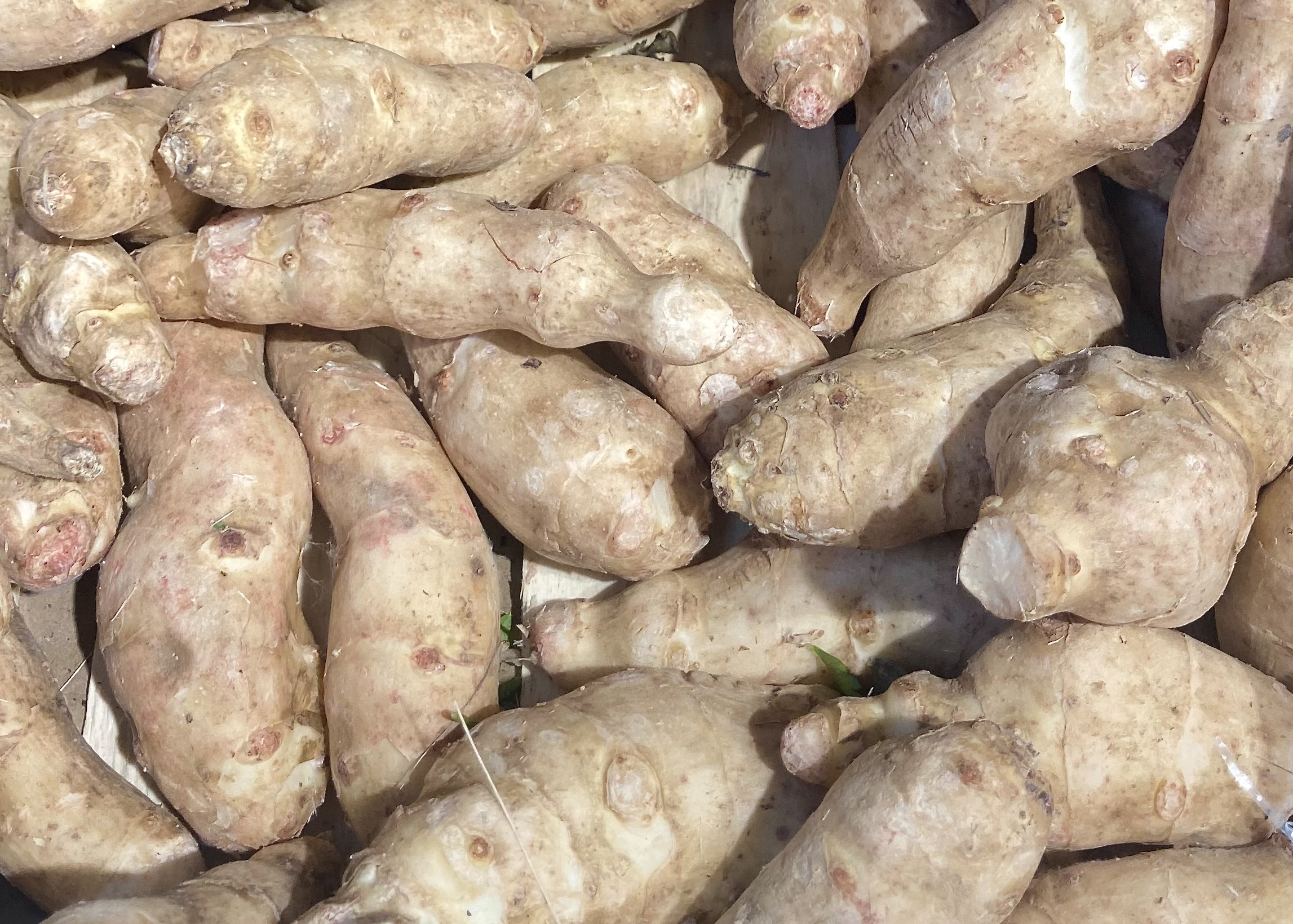
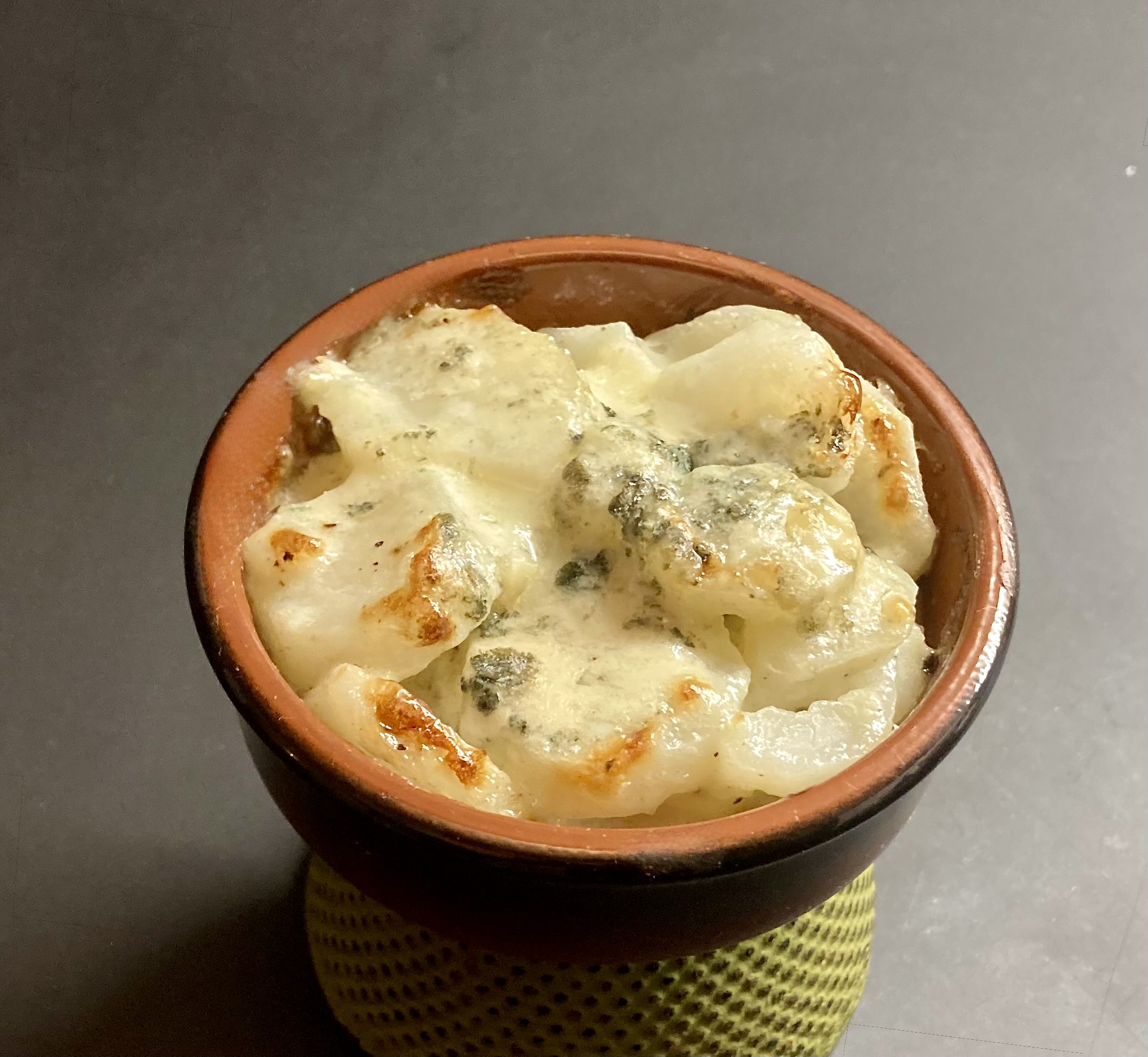
Always fun to shop at our organic supermarket and see what forgotten vegetables they have. This week they offered oca, Jerusalem artichoke (Helianthus Tuberoses), parsnip, black radish and helianthus, which was new to us. We bought a few of the helianthus roots and when at home we started thinking about ways to prepare them. Both Jerusalem artichoke and the helianthus roots are a touch sweet and nutty. A purée perhaps? We then noticed a recipe for a tartelette with blue cheese. Great idea, but not so sure about the combination with pastry. After a few minutes we came up with the recipe below. The helianthus roots are creamier than the Jerusalem artichokes and this worked very well in the combination with blue cheese and crème fraîche.The dish is rich with a touch of freshness.

Wine Pairing

In general, we suggest a full bodied, well balanced red wine, with aromas of black fruit, perhaps liquorice and with supple tannins. 

What You Need
  • Roots of the Helianthus Strumosus
  • Crème Fraîche
  • Roquefort
What You Do

Clean the roots and cook in boiling water for perhaps 5 minutes. They become soft very quickly. Drain and let cool. In parallel use a fork to combine equal parts of crème fraîche and Roquefort. Slice the roots and combine with the mixture. Place in ramekins and transfer to the oven at 200 °C or 390 °F for a few minutes, until hot and golden. You can also place them under the grill for a few minutes.

PS

Interested? Find out more about forgotten vegetables!

More PS

As Dorothy suggested (see below) it’s a great idea to fry or roast them with onions. We also added some garlic. Delicious!

Mushrooms and Miso

Shiitake is becoming more and more available. It has a unique flavour, savoury, meaty, earthy and it is rich in umami. The name is a combination of shii (a tree native to Japan and Korea, also known as the Japanese Chinquapin) and take (meaning mushroom, as in matsutake and maitake). The mushroom grows on decaying wood, not only on shii but also on other trees such as oaks and chestnuts. It’s fun to buy a shiitake log and grow your own mushrooms. 
In this dish we combine shiitake and oyster mushrooms. These two have very different structures, which adds value to the dish.

Wine Pairing

Enjoy your Mushrooms with Miso with a lightly oaked chardonnay. The oakiness of the wine will match well with the umami and miso flavours. The richness of the chardonnay will be very nice with the mushrooms.

What You Need
  • 100 grams Shiitake
  • 100 grams Oyster Mushrooms
  • Fresh Ginger
  • One Garlic Clove
  • One Scallion
  • Miso
  • Mirin
  • Soy Sauce (light)
  • Olive Oil
  • Black pepper
What You Do

Remove the stem of the shiitake, slice the caps and tear the oyster mushrooms. Fry in olive oil. Add thinly sliced white of the scallion. Add chopped garlic. Combine a teaspoon of miso with one tablespoon of mirin and one tablespoon of light soy sauce. If using thicker soy sauce, add some water. Mix and taste. It should be both salty and umami. Add some of the mixture to the mushroom. Coat the mushrooms with the miso mixture. Add more mixture if required. Be careful, you don’t want a sauce. When ready to serve add some black pepper, freshly grated ginger, the thinly sliced green of the scallion. Combine and serve. 

PS

Don’t throw the stems away! Simply add them to a pan with water, bring to a boil and leave to simmer for 30-60 minutes. Strain and store the broth. It freezes well.

Spicy Pumpkin Soup

It’s the time of year to enjoy simple, seasonal, rich and flavourful food, for instance spicy pumpkin soup. The trick in this case is in the coconut milk or cream. Coconut milk contains something like 15 grams of fat per 100ml. For this soup you need 25+ grams of fat per 100ml. The fat enhances the coconut flavour and it combines very well with the spicy and aromatic character of the soup (ginger, chili, djeroek poeroet).

What You Need (for 4)
  • Small Pumpkin
  • Large Shallot
  • 2 large Garlic Cloves
  • 4 cm Fresh Ginger
  • Chili Pepper
  • Olive Oil
  • 8 leaves of Djeroek Poeroet  
  • Coconut Cream
  • Cilantro
What You Do

Wash the pumpkin and chop. If the pumpkin is organic, then you don’t need to peel it. Peel and chop the shallot, garlic and the ginger. Ground dried chili pepper. Gently fry the shallot in olive oil. Add chilli pepper. Add ginger. Stir, mix and add pumpkin. Stir and add garlic. Now add the vegetable stock, the djeroek poeroet and allow to simmer for 30 minutes. If the pumpkin is soft, remove the djeroek poeroet and blender the mixture. Taste and adjust. Add 6 spoons of coconut cream, 1 by 1, mix and taste. When you’re happy with the flavours, leave the soup on low heat for 15 minutes. Serve with lots of chopped cilantro.

Spicy Pumpkin Soup ©cadwu

Asparagus with Chervil

One of the classic ways of serving asparagus is à la Flamande (Op Vlaamse wijze) with melted butter, boiled eggs, parsley and nutmeg. The mixture of melted butter and egg is like a sauce, delicious with the asparagus. In this case we add lots of chopped chervil to the mixture of melted butter and eggs, making it a light combination of bitter, crunchy and sweet (the asparagus) and velvety, anise-flavoured and savory (the mixture).

Wine Pairing

Serve the asparagus with a dry, white wine, for instance a glass of Silvaner produced by the German Winery Thörle. The wine comes with freshness, some acidity, minerality and fruit (pear, green apples). Excellent with our asparagus. A dry muscat will also be perfect.
We decided to take a different approach and balance the lightness in the dish with a Portuguese white wine, made from chardonnay grapes and aged for 4 months in oak barrels. It is produced by Casa Ermelinda, a winery some 20 kilometers south of Lisbon in the Setúbal region with over 550 hectares of vineyards and 29 different grape varieties. The barrel aged chardonnay is Intense and comes with a complex bouquet of exotic fruits. The wine is balanced, fresh, elegant and long..

What You Need

  • 4 Asparagus per person
  • 2 Eggs
  • Chervil
  • Butter
  • White Pepper

What You Do

We use our Russel and Hobbs food steamer to prepare the asparagus. An essential kitchen aid for only 50 euro or US dollar. 
Clean and peel the asparagus. Put butter in a cup. Steam them for 10+5+5 minutes. After 10 minutes add the eggs to the steamer basket. After 5 minutes, turn the eggs upside down and place the cup in the steamer basket. Another 5 minutes later everything is ready. Chop the chervil. Peel the egg and mash with a fork, creating a ‘mimosa’ of egg. Combine mimosa and chervil. Add some white pepper. Add the butter to the mixture and combine. Spoon the egg mixture on top of the asparagus.

Asparagus a la Flamande ©cadwu
Asparagus with Chervil ©cadwu

Thank You Betty’s!

Last Friday Restaurant Betty’s in Amsterdam closed its doors after more than 35 years. Betty’s was the place to go if you wanted to enjoy delicious vegetarian food and excellent Vin Nature. The restaurant served a three course surprise meal. Each course was a culinary journey around the world and existed of five or more dishes, each one tasteful and interesting, eloquently introduced by Gido. In 1988 he and his mother Rifka started the restaurant. Rifka specialised in vegan cakes and Gido focused on savoury dishes. Later Gido and Lien transformed Betty’s into a petit bistro. A place where you could enjoy delicious food. The music and ambience were peaceful and relaxing. No rush, take your time, talk about the food and wine with Gido, have a chat with Lien about the spices from Olivier Roellinger, about their choice of organic, local ingredients, their self imported Greek olive oil.
We enjoyed so many delicious dishes, for instance:

  • guacamole made with yoghurt, lime juice and roasted bell pepper
  • date caramelised in salted butter with chili peppers
  • borek with spinach, potato and garam masala
  • slow cooked ratatouille
  • saffron milk caps with artichoke and reduced tomatoes
  • potatoes fried in mustard seed oil with chili peppers, fennel seed and dill, and of course their
  • warm sticky toffee pudding
  • chocolate-chocolate cake and the superb
  • raspberry and white chocolate cake.

Everything homemade and super fresh, always served with love and attention.
Thank you, Gido and Lien, for so many wonderful evenings!

Caponata

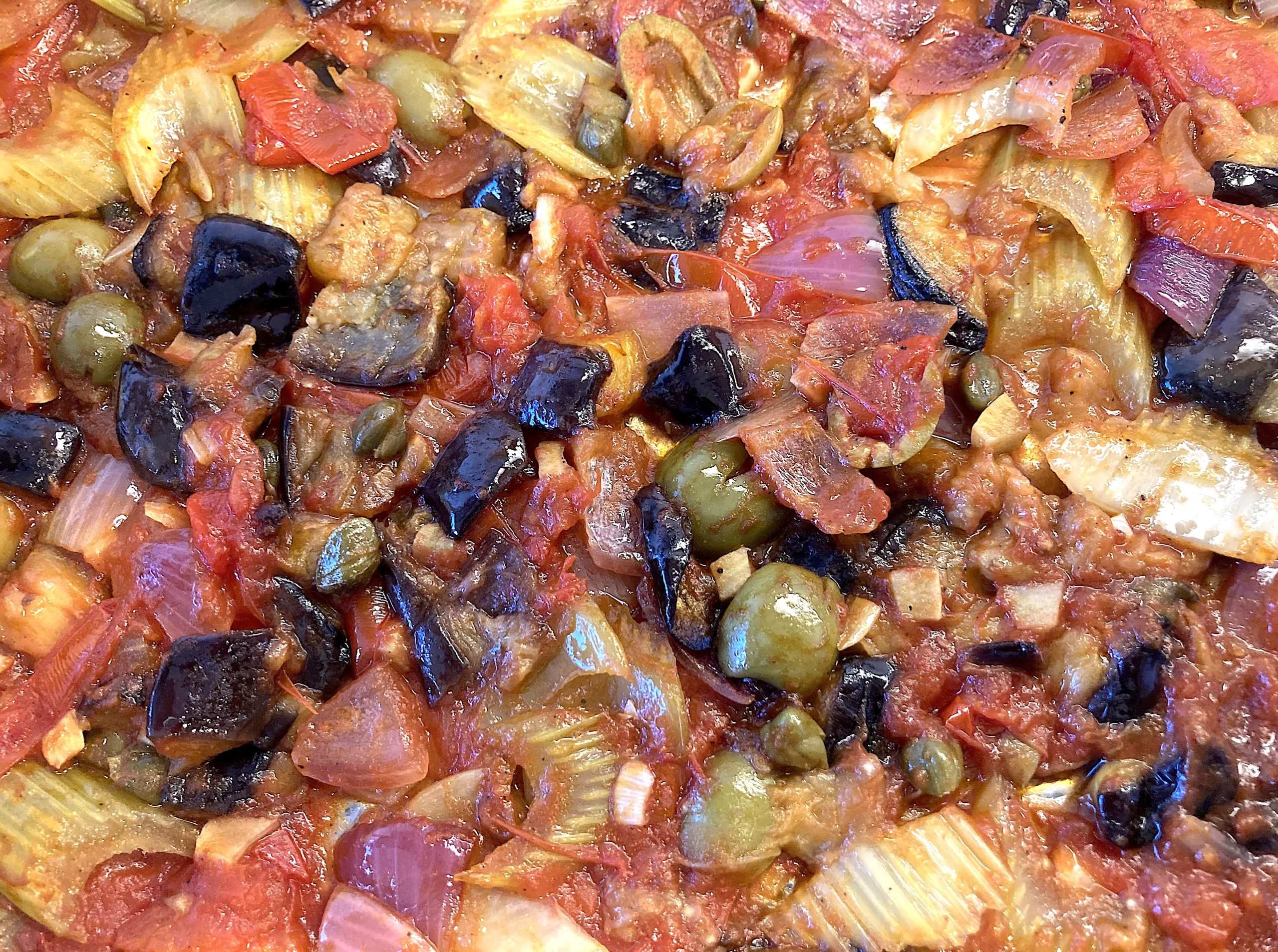
This very tasty dish originates from Sicily and is a mixture of chopped and fried vegetables. Eggplant (Aubergine), Tomatoes, Celery, rRed Onion and Green Olives are the main ingredients. The vegetables are prepared and served in an agrodolce sauce, so sweet and sour. Although we’re not keen on using sugar in a salad, in this case the combination of sugar and vinegar is perfect.
Perhaps the ingredients make you think of Ratatouille. Caponata and Ratatouille are very different dishes. Capanota is about fried vegetables, about crunchy celery, about sweet and sour.

Food and Wine Pairing

We served our Caponata with a roulade of pork with sage, rosemary, pancetta, black olives and black garlic. A dish we enjoyed with a glass of Barbera del Monferrato 2022, produced by Livio Pavese. In general, we suggest a full-bodied red wine with perhaps a touch of oak. Some acidity to balance the caponata and dark fruit (plums, blueberries).

The next day we served the Caponata with a roulade of chicken with pancetta, Parmesan Cheese and sage. A dish we enjoyed with a glass of Spätburgunder from the Pfalz area in Germany. In general, we suggest a medium bodied red wine with aromas of red fruit. Medium tannins and balanced acidity. Its taste dry, aromatic, fruity, juicy with a touch of strawberry.

You could also add some canned tuna (in olive oil) and serve the Caponata with crusted bread as a starter, perhaps accompanied with charcuterie and a glass of Crémant or Prosecco.

What you Need (recipe for 4)
  • 2 Aubergines
  • 400 grams excellent ripe Tomatoes
  • 10 Green Olives
  • Capers
  • 30 grams Tomato Puree
  • 4 cloves of Garlic
  • 4 small Red Onions
  • 3 stalks Celery
  • Tablespoon of Caster Sugar
  • Tablespoon of White Wine Vinegar
  • Black Pepper.
What You Do

Best to prepare Caponata one day ahead.

  1. Wash the vegetables.
  2. Slice the eggplant lengthwise in 8 and then in chunks. Drizzle with salt and mix. Put the chunks in a sieve and let rest above a bowl for one or two hours.
  3. Coarsely chop the onion.
  4. Quarter the tomatoes. Remove the internal hard bits and the pits and put these aside. Slice the outer part of the tomato lengthwise in three.
  5. Roughly cut the remainder of the tomatoes, add to a sieve and use the back of a spoon to capture the juices.
  6. Coarsely chop the garlic.
  7. Halve the olives.
  8. Use a knife to peel the back of the celery stalks, or ribs. Slice.
  9. Combine the tomato puree, black pepper, the caster sugar, the vinegar and the tomato juice.
  10. Set your oven to 140 °C or 285 °F.
  11. Discard the liquid of the eggplants, wash of the salt, dry with kitchen paper and fry the chunks in a generous amount of olive oil until golden.
  12. Transfer to a baking tray in your oven.
  13. Fry the onions and the celery until somewhat translucent. Add these to the baking tray.
  14. Now add the olives, the capers, the garlic, the tomato mixture and the tomatoes. Mix. Perhaps add a splash of water.
  15. Cover the baking tray with aluminium foil.
  16. After 20 minutes it’s time to mix the vegetables. Check if you need to add extra water.
  17. After another 20 minutes, remove and discard the foil, mix and increase the temperature to 160 °C or320 °F.
  18. Now you need to keep an eye on the mixture. It may take 10 to 20 minutes for the liquid to somewhat evaporate, but you don’t want the dish to become dry.
  19. When ready, let cool and transfer to the refrigerator.

Flammkuchen

We continue our series of very simple, tasty dishes by preparing Flammkuchen (Tarte Flambée in France, Feuerfleck in Austria). The dish originates from the Alsace. The first part of the name refers to fire and flames. The story is that bakers baked bread in wood fired ovens. The oven would initially become too hot, and the bakers had to wait for the oven to cool and reach the right temperature. The Flammkuchen would be the indicator. If it was ready within two minutes or so, then the temperature was right. If it would burn, the oven was too hot, but nothing was wasted. 

The dough of Flammkuchen is extremely simple, but also a bit puzzling. In all cases it’s flour, salt, olive oil and water. Some suggest adding egg yolks, others yeast. Adding yeast makes it into a bread dough. Doesn’t it seem obvious that the bakers would use the already prepared dough? Adding egg yolks seems odd too us. Why make a more expensive dough for a product that was to be used as an indicator only?

Back to yeast or no yeast. Which brings us to the question: isn’t Flammkuchen a kind of pizza? They do look very similar, and both are baked in a hot oven, but there are differences. Traditionally Flammkuchen are covered with crème fraîche, lardons and thinly sliced onions. The Flammkuchen should be very thin and very crispy. We think the bakers didn’t use their bread dough but made a quick, simple dough with the sole aim to test the temperature of the oven. Perhaps only water and flour?

Another difference is that Flammkuchen were not on the menu of restaurants until the 1960’s. Probably you would buy them at the local bakery or make them at home. Thanks to the global popularity of pizza, Flammkuchen have gained some visibility.

Drink Pairing

Flammkuchen are tasty, crispy, flavourful and not complex. Enjoy with a glass of white wine, with a beer, or your favourite drink.

What You Need
  • For the Dough
    • 250 grams of Flour
    • 2 tablespoons of Olive Oil
    • 125 ml Water
    • Pinch of Salt
  • Crème Fraîche
  • Black Pepper
  • Mushrooms (we used Trompettes de la Mort)
  • Red Onion
What You Do

Pass the flour through a sieve. Add a pinch of salt and mix. Add water and olive oil and quickly turn the mixture into a dough using your hands. Don’t kneed too long. Leave on room temperature for an hour. Pre-heat your oven to 220 °C or 430 °F. Roll out until very thin, 2 millimetre is perfect. Add black pepper to the crème fraiche and mix. Place the dough on baking or parchment paper in a baking tray, cover with a layer of crème fraiche, add mushrooms and sliced onion. Bake for 10-12 minutes or so and serve immediately.

Baking Flammkuchen on a higher temperature is preferred, but then you can’t use baking or parchment paper. Best is to use a pizza stone. The baking time will be 3 to 5 minutes on 300 °C or 570 °F.

Flammkuchen ©cadwu
Flammkuchen ©cadwu

Summer Truffle and Egg

Only a few weeks to go before the end of the summer truffle season. A truffle with mild flavours and aromas but nevertheless great when used in cold dishes, such as truffle mayonnaise or a salad with chicory. We decided to go for a luxurious appetizer with an excellent glass of white wine. We bought 25 grams of truffle (and paid € 12,50) and enjoyed every minute of it.

Wine Pairing

A lightly oaked chardonnay with lots of character will be great with the summer truffle and egg. We opened a bottle of Casa da Passarella Dão A Descoberta Branco. An elegant Portuguese wine with lots of character. Fresh, aromatic, lasting. 

What You Need

  • 3 Eggs
  • Mayonnaise
  • 25 grams of Summer Truffle
  • (optional) White Pepper

What You Do

Boil the eggs until nearly hard. Peel and allow to cool. Slice in halve, remove the egg yolk and use a fork to create mimosa. Grate half of the summer truffle, combine this with the mimosa and add some mayonnaise, just to get the right consistency. Perhaps some white pepper. Stuff the eggs, cover with cling foil and transfer to the refrigerator. After 2 hours decorate the eggs with thinly sliced summer truffle. Time to sit back, relax and enjoy summer.

Pasta with Tomato Balls

Recently we reviewed Oh She Glows for Dinner by Angela Liddon as part of the great cookbook review project by Bernadette. Angela Liddons aim is to create tasty, colourful, nutritious, vegan, simple, healthy, easy to make food that you can prepare in just a few minutes. Unfortunately, her book shows that this is nearly impossible. Nevertheless, we liked her idea for a burger with tomato-based patties. We changed the recipe and turned the dish into Pasta with Tomato Balls. It’s certainly a tasty, healthy and colourful dish, but not one you can make in a few minutes.

Wine Pairing

Tomatoes come with acidity, an aspect to keep in mind when choosing your wine. Cooking the tomatoes reduces the acidity and enhances the sweetness and depth of the tomatoes. In this case you could go for a non-oaky white wine (Pinot Grigio, Soave Classico) or for a red wine with soft tannins (Chianti, Sangiovese). A glass of crisp rosé will also be fine, so the choice is yours, as long it’s not an oaky chardonnay or a tannic red wine.

What You Need

  • Tomato Balls
    • 30 grams Brown Lentils
    • Vegetarian Stock
    • Bouquet Garni (Thyme, Parsley, Bay Leaf, Chives)
    • 1 small Red Onion
    • 1 Garlic Clove
    • 40 grams of roasted Cashews
    • 40 grams of roasted Hazelnuts
    • 5 grams (or more) of dried Oregano
    • 25 grams Sun Dried Tomatoes
    • Teaspoon Tomato Paste 
    • Teaspoon Lemon Juice
    • Red Pepper Flakes (to taste)
    • Salt
    • Black Pepper
    • Breadcrumbs
    • Olive Oil
  • Tomato Sauce
  • Orecchiette or Farfalle
  • Parmesan Cheese
  • Basil Leaves

What You Do

Start by washing the lentils. Cook in vegetarian stock with a bouquet garni. Set aside and let cool. Prepare the dried tomatoes: if they are salted, then wash them thoroughly. If they are oil-packed, drain them. Chop the red onion, the garlic clove and the dried tomatoes coarsely. Glaze the onion and the garlic in olive oil. Use a food processor to make a coarse mixture of the cashews, hazelnuts and oregano. Add the chopped tomatoes, the onion, the garlic, the tomato paste, the lentils, the lemon juice and the red pepper flakes (if using). Pulse a few times. Taste and decide if you want to add salt, pepper or lemon juice. Now it’s time to check the consistency. Is it possible to turn the mixture into balls? A bit soggy probably? Add breadcrumbs. Leave the mixture for 15 minutes. Divide the mixture in smaller portions and make balls, using your hands. Bake for a few minutes in a non-stick pan with some olive oil.
In parallel cook the orecchiette or farfalle according to the instruction on the package. Warm a tomato sauce. When all components are ready, add the pasta straight from the pan to the sauce. Add the balls and mix gently.  Finish by adding some freshly grated Parmesan cheese and basil.

Pasta with Tomato Balls ©cadwu