Saffron Milk Cap with Octopus and Tomatoes

Saffron Milk Cap with Chorizo and roasted Bell Pepper is one of our favourites. More recently we followed a recipe by Antonio Carluccio for a combination with Halibut. Another great combination. They can also be combined with Squid, with gamba and with Potatoes and Eggplant.
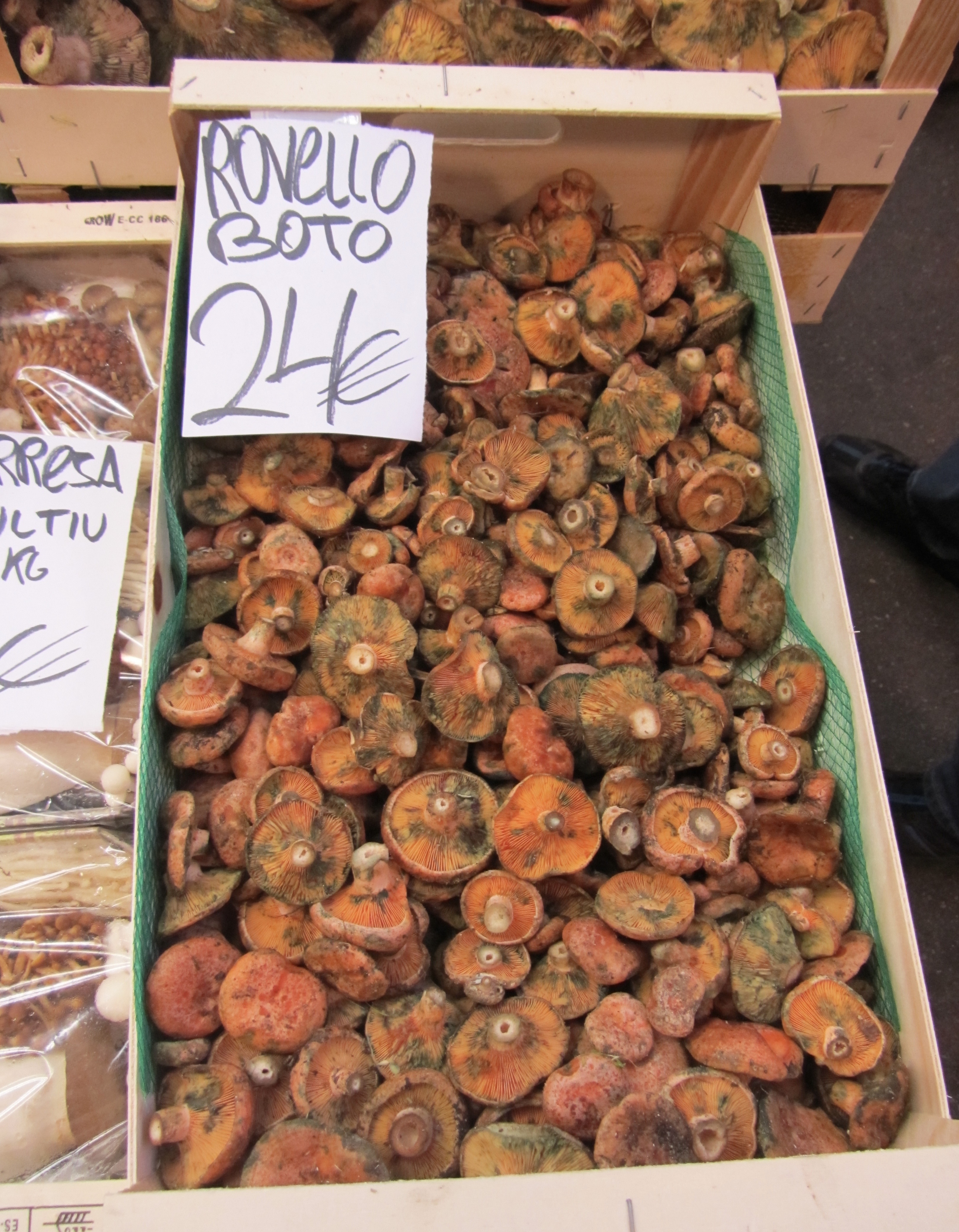
Saffron Milk Caps (Rovelló de Botó) are very popular in Spain. The picture below shows fresh Saffron Milk Caps on the Mercado Central in Valencia. Thinking about Spain we came up with the idea of combining the mushroom with octopus.

Wine Pairing

We opened a bottle of Domaine Font-Mars Picpoul de Pinet. Picpoul de Pinet (Son terroir c’est la mer) is a white wine from the South of France between Narbonne and Montpellier. The terroir (think calcareous soil) is influenced by the sea, which is reflected in the mineral taste of the wine. The story is that Picpoul could be read as pique poul which translates into something like ‘stings the lip’; a nice reflection of the high acidity of the grapes. This acidity guarantees a refreshing white wine, which is exceptional given the warm climate. The wine is bright yellow with a very subtle touch of green. It’s aromatic, floral and fruity. The taste has notes of citrus and apple.
In general we suggest drinking a refreshing, unoaked white wine that goes well with seafood.

What You Need

  • For the Sauce
    • 4 Tomatoes
    • 1 Shallot
    • 1 Garlic Clove
    • Red Wine
    • Thyme
    • Olive Oil
  • 150 grams of Saffron Milk Cap
  • 200 grams of pre-cooked Octopus Tentacles
  • Parsley
  • Cayenne Pepper
  • Olive Oil

What You Do

  1. Peel, seed and dice the tomatoes.
  2. Don’t discard the skin and the seeds: use a strainer to get as much tomato juice as possible
  3. Chop the shallot
  4. Chop the garlic finely
  5. Heat a skillet, add olive oil and add the shallot.
  6. Fry for a few minutes
  7. Add garlic and tomatoes
  8. Reduce heat
  9. After a few minutes add the tomato juice, half a glass of red wine and thyme
  10. Leave to simmer on low heat for 2 hours or until the sauce is ready both in flavour and texture
  11. Cool and transfer to the refrigerator
  12. The next day clean the mushrooms and slice (not too thin)
  13. Chop the parsley
  14. Heat a skillet, add olive oil
  15. Add the sliced mushroom
  16. Fry for one minute
  17. Reduce heat
  18. In parallel grill the pre-cooked octopus tentacles (4-6 minutes)
  19. Add the tomato mixture to the pan with mushrooms and cook for a few minutes
  20. Taste and add cayenne pepper. You’re looking for a fairly sharp, spicy taste
  21. Add parsley to the mixture and combine
  22. Slice the octopus
  23. After a few minutes add octopus to the mixture without combining,

Spanish Tortilla

We have fond memories of the Mercat Central in Valencia, one of the largest markets in Europe. Its architecture is amazing, but even more stunning are the products on sale: fruit, vegetables, mushrooms, chicken, fresh meat, sausages, hams, herbs, spices, fish, bread, wine, pickles, snails, weeds, offal, rice, nuts: anything and everything you can dream of.
And of course various bars with the tastiest tapas ever. We would go shopping early in the morning, buy what we needed that day (perhaps a bit more than just that) and buy two bocadillos de tortilla: a small crunchy roll with tortilla made with egg, onions and potato. We would run back to our apartment, make coffee, sit down and enjoy the rich, velvety, long taste of bread and tortilla.
Fond memories indeed.

Making Spanish tortilla is a matter of combining the best ingredients and being patient.

What You Need

  • 200 grams of Potato (waxy ones, we used Roseval)
  • 1 large Spanish (White) Onion
  • ½ Grilled Red Bell Pepper
  • 4 Eggs
  • Black Pepper
  • Olive Oil

What You Do

Heat a pan and gently fry the thinly sliced potatoes, slowly, in plenty of oil. You don’t want crunchy, golden potatoes, they should be nearly done, that’s all. In a separate pan glaze the quartered and sliced onion, also for let’s say 15 minutes. Let both cool. Dry the sliced grilled red bell pepper with kitchen paper. Beat the eggs and add potatoes and onions. Allow to rest for 15 minutes. For some reason this is a crucial step, one that should not be skipped. Add sliced red bell pepper and fresh black pepper. Warm a medium sized non-stick pan (22 cm or 9 inch), add oil and fry the tortilla until the top is slightly set. It could take 20 minutes so please don’t be tempted to increase the heat. Transfer to a plate, put the pan on top of the tortilla and flip. Fry a few minutes.
Serve lukewarm, perhaps with some chopped parsley and a crunchy roll.

PS

You could peel a fresh red bell pepper, but better is to clean it, slice in 4 to 6 chunks, flatten these and grill for 10 minutes. This should char the pepper significantly. Transfer to a plastic container and close. Leave for a few hours. Now you can easily remove the skin. This way a bell pepper has a richer, more complex taste and is easier to digest, but it is of course not as crunchy as a fresh bell pepper. 

Escargots de Bourgogne

We noticed that more and more supermarkets and shops sell snails. Canned, frozen or with garlic butter ready to be cooked in the oven, all very tempting. Snails are high on protein, low on fat, high on minerals, low on calories. A glass of white wine and some crusted bread; what more do you need as a healthy starter?
But before buying snails it’s important to look at the label and find out what kind of snail you’re buying.

The snail used for the classic Escargots de Bourgogne is called Helix Pomatia. It’s protected in many countries. Farming of this snail is not profitable. Excellent taste, expensive and hard to find.
There are three alternatives: Helix Aspera (either the small one called Petit Gris or the large one called Gros Gris) and Helix Lucorum. The last one is considered to be less tasty than the other three, but when prepared well, it’s a very nice, affordable alternative. All three can be farmed.

It could also say Achatina on the label. This is a different kind of land snail, much larger than the first four. It’s taste and texture are okayish.

Sometimes it simply says ‘Escargots’ and ‘Gros’ on the tin. Sounds good, doesn’t it? Well, it may and it may not. Some companies cook larger (sea) snails, chop these, and sell the chunks as ‘Escargots’. The term ‘Gros’ is supposed to make you think of the Gros Gris. Don’t be fooled: they are rubbery, tasteless and a waste of money.

The classic Escargots de Bourgogne are prepared with butter, garlic and parsley. We like to add a bit of tarragon and a pinch of salt. Traditionally they are served in the shell and you need a tong and a special fork to eat them. The ones we use are from a can, so no special equipment required. 

Wine Pairing

The obvious choice is a glass of Bourgogne: a chardonnay with a touch of oak. The wine must be dry, mineral and medium bodied.

What You Need

  • 12 snails
  • Butter
  • Parsley
  • Garlic
  • Tarragon
  • Salt
  • 2 Snail Plates

What You Do

You could of course buy fresh snails (which makes us think of the amazing market in Valencia! So much choice, such excellent quality. Also various kinds of snails, fresh and alive, obviously, also the Caragolus, the snail that is required when you prepare a traditional Paella Valenciana) but otherwise buy them canned. Remove them from the can, wash carefully with lots of water and set aside.

Chop parsley, tarragon and garlic very fine. Using a fork, combine butter, herbs, garlic and a pinch of salt. Transfer six snails to a snail plate, add a chunk of butter to every snail, transfer the snail plate to an oven at 160 °C or 320 °F for 10 minutes or until boiling hot. Serve the snail plate on a cool plain white plate.

Escargots de Bourgogne ©cadwu