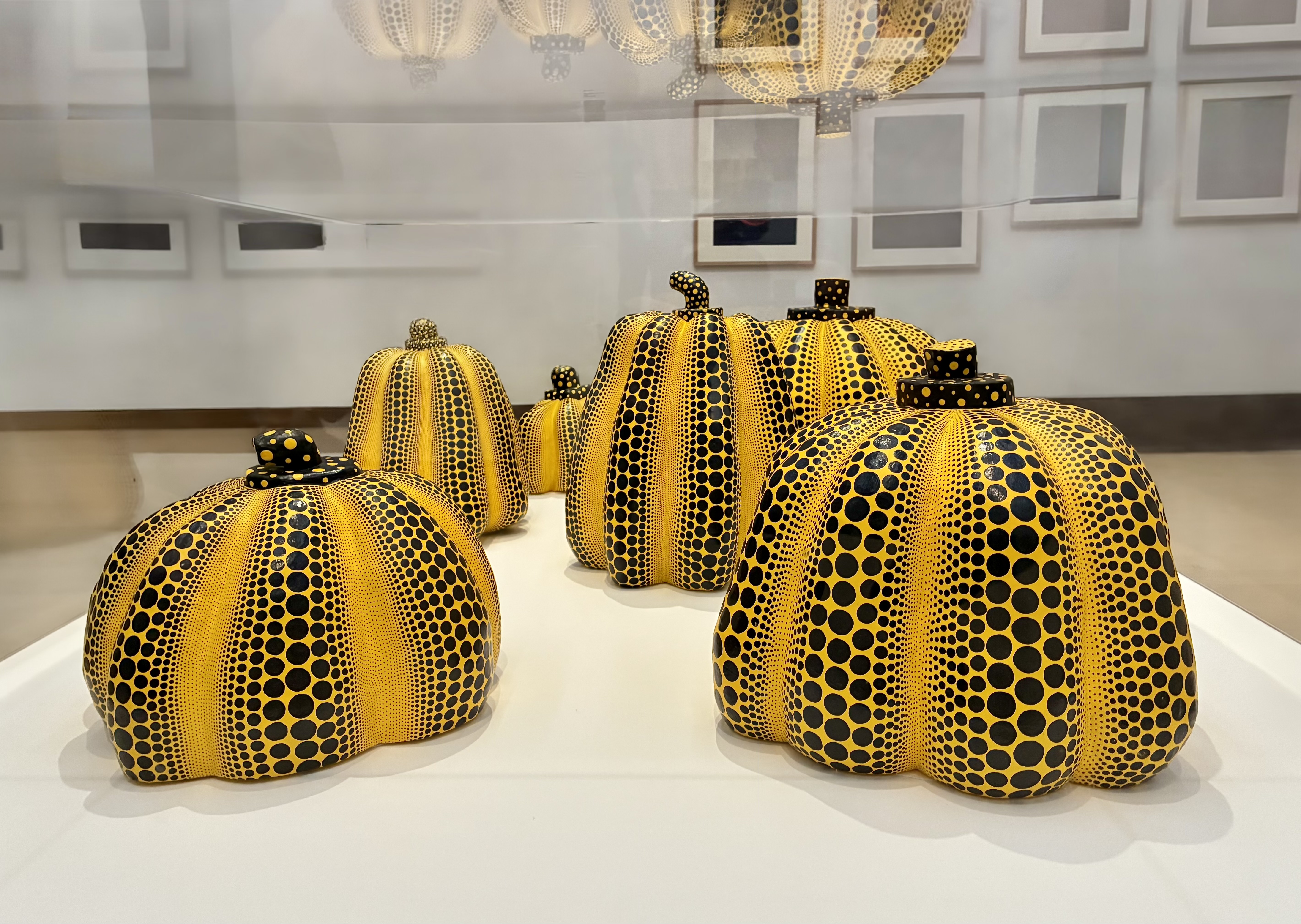
For the Love of Pumpkins

Until January 17th 2027 on view in the Stedelijk Museum in Amsterdam is the retrospective of Yayoi Kusama, one of the most influential and pioneering artists of the 20th and 21st centuries. She was born in 1929 in Matsumoto (Japan). As a child she began painting pumpkins, dots, flowers and patterns. The dots transformed into her famous polka dots, the net of self-obliteration. Pumpkins continued to inspire her throughout her life. In 2015 she said in an interview “I love pumpkins because of their humorous form, warm feeling, and a human-like quality”.

This is a comprehensive video about Yayoi Kusama and this article provides background information about her pumpkins.

Eating pumpkins was perhaps not something Yayoi Kusama would do, but we simply love them. In autumn they bring warmth and comfort to the table. Both dishes are made with kabocha, the Japanese pumpkin.
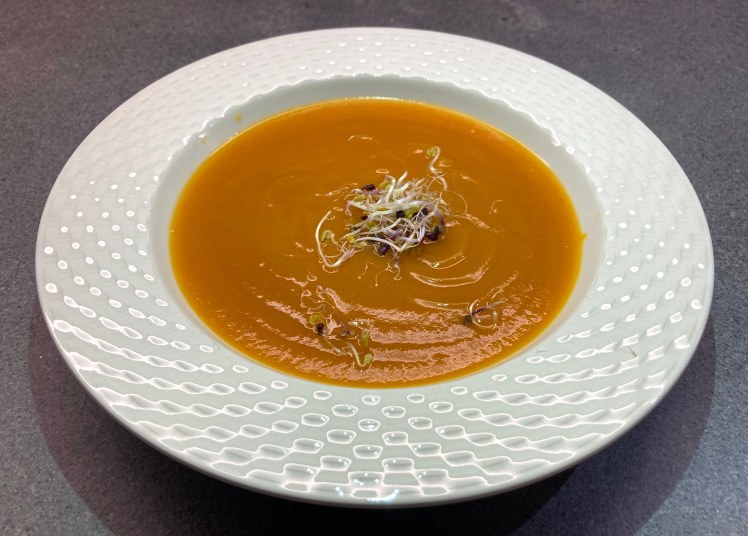
Pumpkin Soup (with Kabocha) ©cadwu
Pumpkin Soup

A vegetarian soup made with kombu dashi, meaning its basis is made with dried kelp only. Soy sauce is added to the soup, bringing saltiness and umami, which combines very well with the exceptional sweetness of the pumpkin and the mirin. You could prepare the soup with an unpeeled kabocha, but we love the intense orange colour of the inside.

Pumpkin with Shrimps

The shrimps are marinated in sake for a few hours and then fried. The pumpkin is simmered in dashi with tentsuyu and mirin. The pan is deglazed with dashi, mirin and tentsuyu. The shrimps are coated with the sauce and served with three slices of kabocha and pickled cucumber.
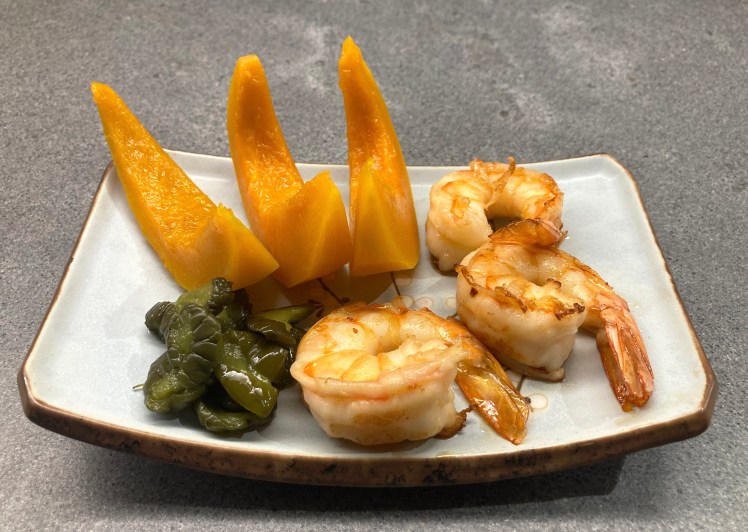
Japanese Pumpkin (Kabocha) with Shrimps ©cadwu

The Art of Sauces: Tentsuyu

A few years ago we were looking for a restaurant in Kyoto. We had difficulty in finding one (due to our lack of understanding of the language and the characters) but finally we found a tempura-beer-bar. Perhaps not ideal, but the menu came with helpful pictures. We enjoyed delicious tempura, fried to perfection, made with vegetables, with mushrooms, prawns and even with chrysanthemum leaves.

Tempura is served with a dipping sauce called Tentsuyu. Just before serving, the sauce is combined with grated daikon. It’s a light, umami rich sauce with subtle presence of soy sauce. We think it’s also a great dipping sauce for sashimi because it will not overpower the fish, something standard soy sauce will do.

Drink Pairing

A beer obviously! We paired our sashimi of tuna with our favourite sake: Junmai Taru Sake as produced by Kiku-Masamune. This elegant sake is matured in barrels made of the finest Yoshino cedar. The aroma has indeed clear hints of cedar. The sake will cleanse your palate, allowing to taste the tuna even better.

What You Need
  • 4 parts of Dashi
  • 1 part Soy Sauce (preferably with less salt)
  • 1 part Mirin
What You Do
  1. Prepare dashi
  2. Add dashi, soy sauce and mirin to a pan
  3. We use less mirin because we prefer the sauce to be less sweet.
  4. Bring to nearly boiling
  5. Leave for one or two minutes
  6. Remove from the heat and allow to cool
  7. Store in the refrigerator; it will keep for maximum one week
PS
  • Why not combine the ingredients as they are and store immediately you wonder? One reason could be that heating the combination helps the flavours to integrate. Another reason is that Japanese mirin may contain alcohol and it needs to evaporate.
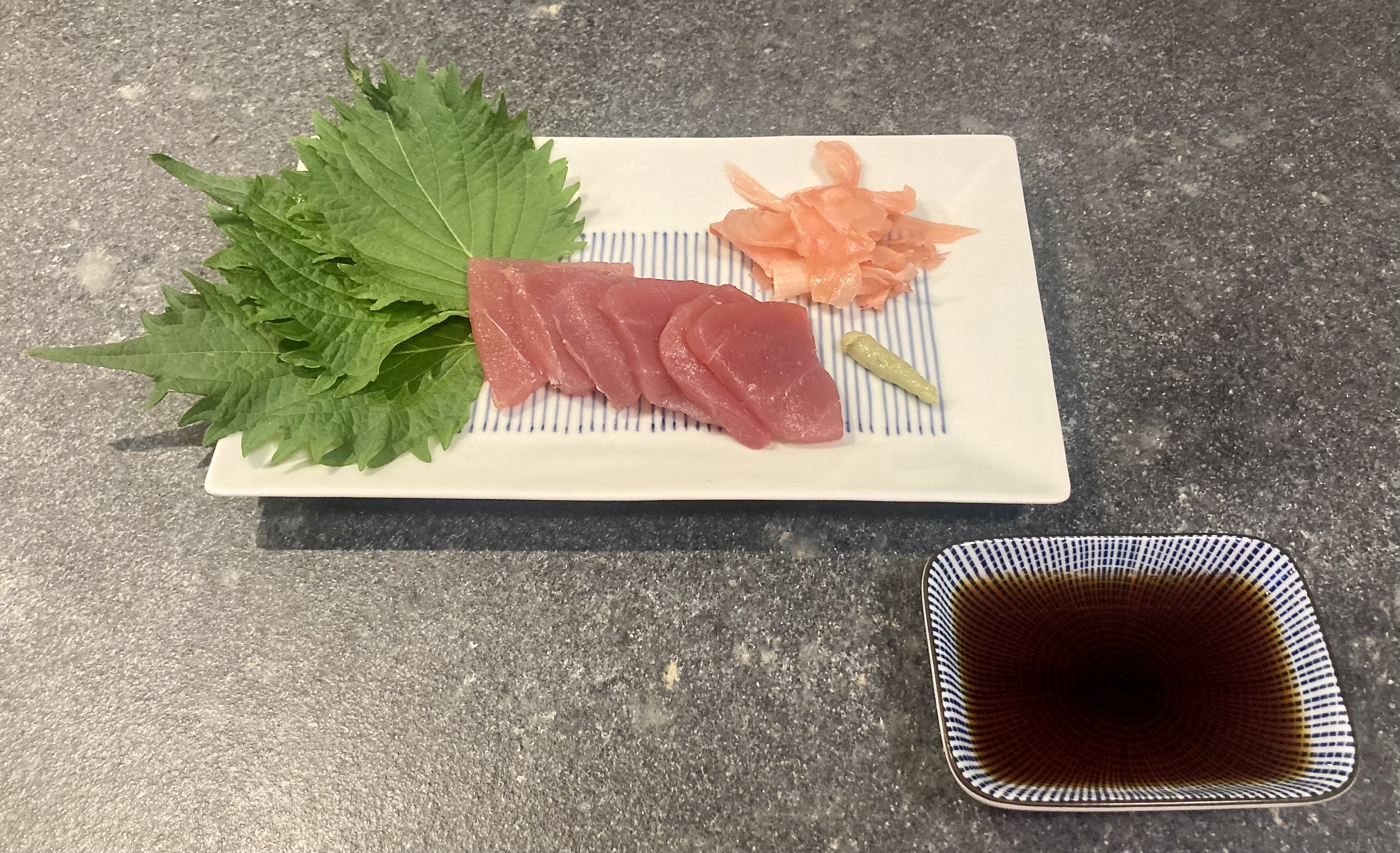
  • We serve the tuna with shiso leaves (ohba or perilla leaves), wasabi and pickled ginger. Shiso leaves can be purple or green. Its taste is difficult to describe. It’s vibrant, citrusy, herbaceous and refreshing. It goes very well with the fat in tempura or in salmon and tuna.