Coq au Vin

A classic French dish and one of our favorites. Warm, rich and full of flavors. Obviously the dish is about two ingredients: chicken and wine. Use (organic) chicken, preferably with the bone, so a whole chicken, legs or drumsticks. A classic Coq au Vin is made with Bourgogne (Burgundy), a relatively expensive red wine from France made from Pinot Noir grapes. According to some people the wine you use for the stew must also accompany the dish. Which would mean that some of your beautiful Bourgogne ends up in the stew. Not the best idea! We think that the background of this ‘rule’ is about the quality of the wine you use for the stew: in this case you’re looking for a nice, medium bodied red wine with aromas of dark fruit; one you would be perfectly happy to drink. So not some left over red wine, or a wine you didn’t like. A perfect stew requires quality ingredients, that’s all.
Earlier we thickened the sauce using mushrooms; in this version we use Beurre Manié, the combination of butter and flour, which gives the sauce a rich, velvety feel.

Wine Pairing

We decided to open a bottle of Merlot, produced by Le Fat Bastard. An easy to drink red wine with the right aromas and a hint of wood. Worked beautifully with the richness of the sauce, the depth of the mushrooms and obviously the chicken!

What You Need

  • 4 Drumsticks
  • Slice of Pancetta or Bacon
  • 10 Pearl Onions
  • 100 grams Button Mushrooms
  • 2 Garlic Gloves
  • 1 Carrot
  • Chicken Stock
  • Red Wine
  • Bouquet Garni (Bay Leaf, Parsley, Thyme, Rosemary)
  • Black Pepper
  • Olive Oil
  • Soft Butter
  • Flour

What You Do

Cube the strip of pancetta or bacon in, peel the onions, slice and quarter the carrot, peel and finely chop the garlic. Add olive oil to a warm heavy pan. Begin by frying the pancetta or bacon until crispy. Remove from the pan and let drain on kitchen paper. Add (whole) pearl onions and carrot to the pan and fry until golden. Remove from the pan and let drain on kitchen paper. Add chicken to the pan and fry until golden. When golden add the garlic and fry for 3 minutes on medium heat. Add pancetta, carrot and onions back to the pan. Add chicken stock and red wine. The chicken should be nearly covered. Add bouquet garni and leave to simmer on low heat for 45-60 minutes, depending on the size of the chicken.
Clean the mushrooms with kitchen paper and fry them gently in a skillet. Remove chicken and bouquet garni from the pan. Transfer the chicken to an oven at 60 °C or 140 °F. Discard the bouquet. Reduce the liquid. Use a fork to combine 20 grams of butter with 20 grams of flour (or more of both, depending on the amount of liquid). Add the Beurre Manié to the liquid, stir and allow to simmer and thicken for some 15 minutes. Return the chicken to the sauce, add the fried mushrooms, black pepper and allow to integrate for 5 minutes. Serve with a fresh green salad (a vinaigrette of olive oil, white wine vinegar and Dijon mustard will be great) and crusted bread.

Coq Au Vin ©cadwu
Coq Au Vin ©cadwu

Beef Stew with Djeroek Poeroet

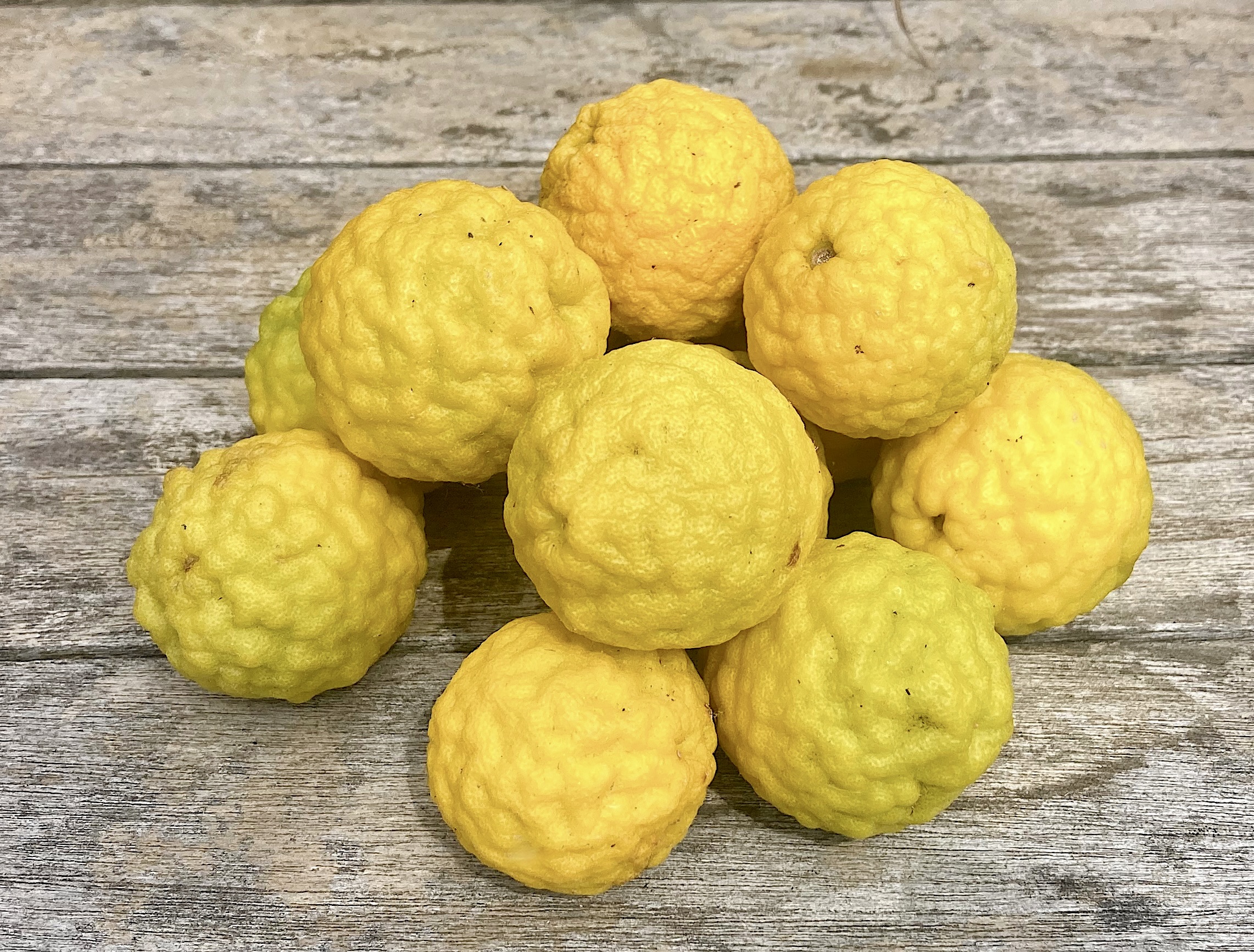
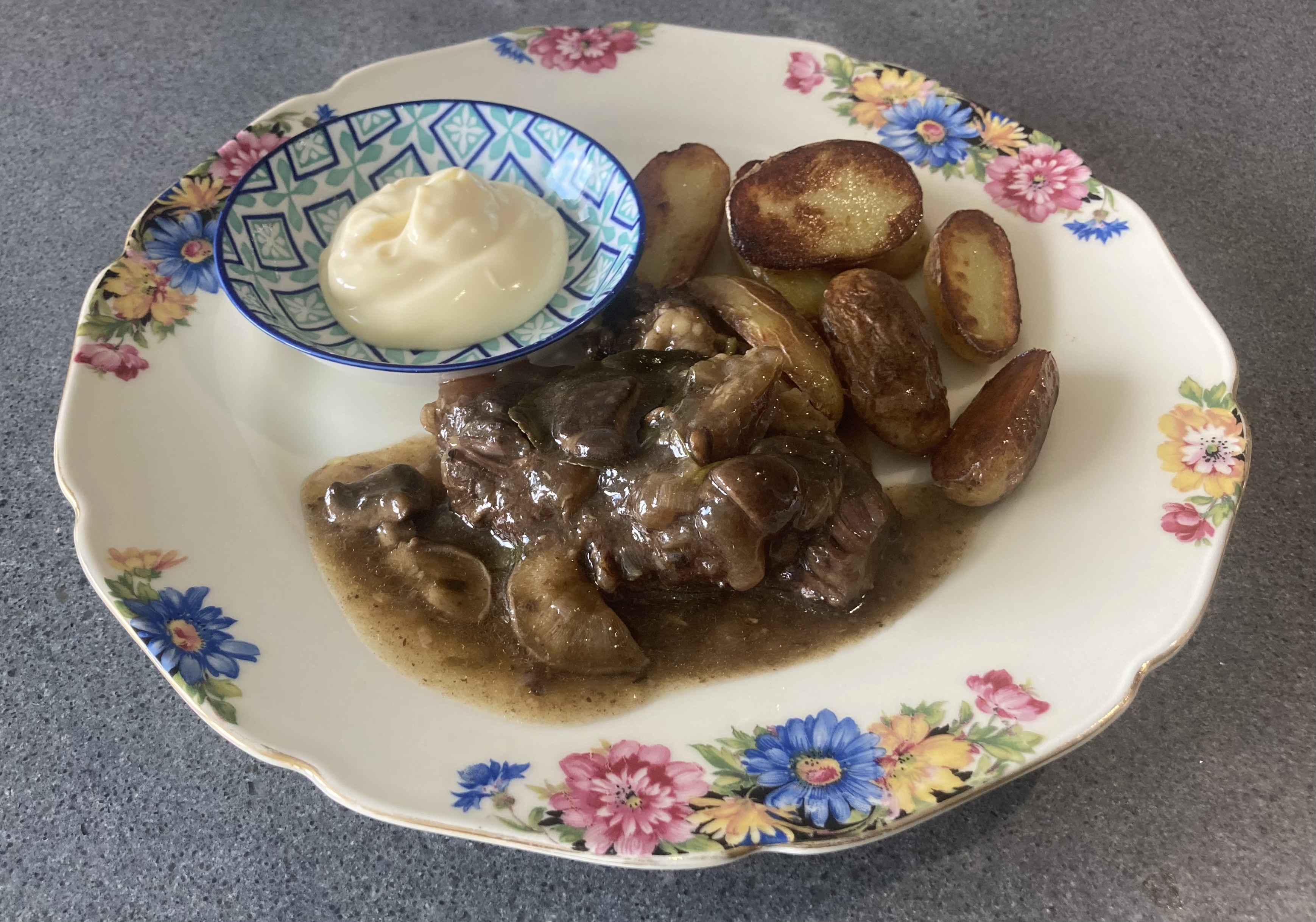
A few weeks ago we were looking for a nice restaurant, one where we could enjoy a quick, tasty meal and a nice beer. We looked at the menu of De Volkslust and decided this was exactly what we’re looking for. The restaurant originates from Antwerp, Belgium. Some 15 minutes later they brought us a Flemish Beef Stew, served with fried potatoes. It looked and smelled great. And it tasted, eh, slightly different? Of course! Chef used Djeroek Poeroet! Interesting, you would expect bay leaf in a Flemish Stew, but this was definitely djeroek poeroet (or jeruk purut, the leaves of the Makrut or Thai Lime). Great idea. Aromatic, refreshing, light. A few days later we made our version of it.
And typical for a good stew: make it a day in advance.

Wine Pairing

The obvious choice is a nice, cold beer. Perhaps the one you used for the stew? We used Affligem Blond, an award winning Belgian Blond beer with pleasant bitterness and fruitiness.
If you go for a glass of red wine, make sure it is full-bodied and rich; a wine with dark fruit and a touch of oak.

What You Need (for 4 persons)

  • 1 kilo of excellent, fat, marbled Beef
  • 2 Shallots
  • 250 grams of Button Mushrooms (Champignon de Paris)
  • Olive Oil
  • 2 bottles (33 cl) of Blond Belgian Beer
  • Bouquet Garni (Thyme, Parsley, Chives)
  • 6 leaves of Djeroek Poeroet (frozen preferred)
  • Black Pepper

What You Do

Slice the meat by following its structure. We prefer bigger parts, so not cubes. They will take longer to cook, but the meat benefits from this approach. Clean the mushrooms and slice the bigger ones in half. Coarsely shop the onion. Heat olive oil in a large pan and fry the meat. You probably will have to do this in 2 or 3 batches. Make sure the meat is nicely colored. Remove the meat from the pan and fry the mushrooms. Remove them when nicely golden, add some more olive oil and caramelize the sliced onions. When ready, add the mushrooms, the beef, the beer, the Bouquet Garni and 6 leaves of djeroek poeroet. Heat through and through. Close the pan and keep on a low heat for 5 to 6 hours. Stir every hour. Check the taste during the cooking process, perhaps you want to remove the djeroek poeroet (or add more!).
When you’re happy withe the cuisson, remove the meat from the pan, discard the bouquet Garni and reduce the sauce. Transfer the meat back into the pan, reheat, then cool and transfer to the refrigerator until the next day.
Serve with unpeeled potatoes fried in olive oil and (homemade) mayonaise.

Classic Beef Stew

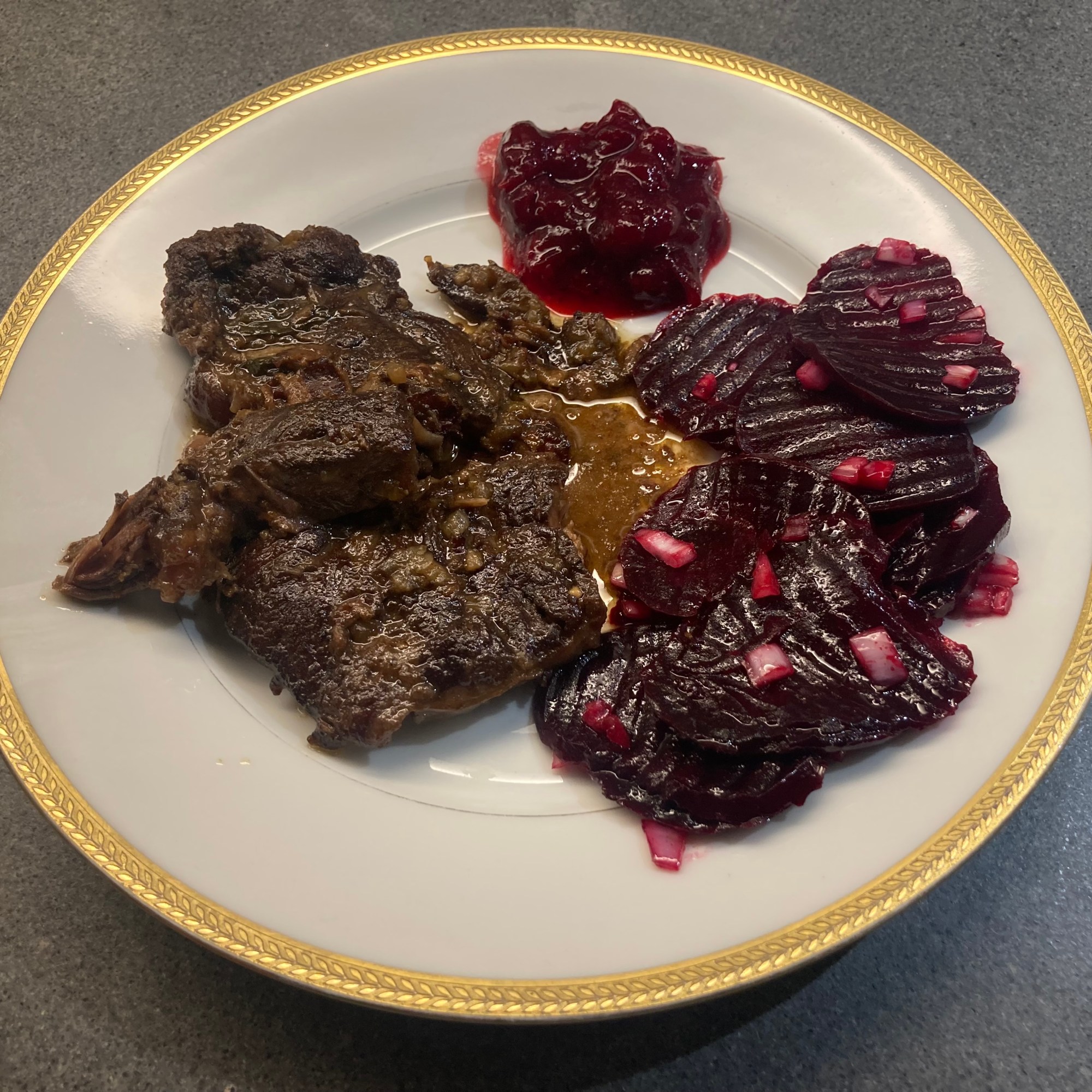
Wintery weather, sunny and cold, the best time of year to enjoy a beef stew. We decided to cook an old-fashioned version, with red wine, bay leaf, mustard and black pepper. And patience of course, because it will take hours.

Regardless if you want to cook a Flemish Stew, Bœuf Bourguignon, Daube à la Provençale or this beef stew, you must use fatty, structured meat. The idea to use lean meat because fat is unhealthy or altogether wrong is one to forget quickly. Fat, structured meat is the key to a delicious stew. In general you’re looking for meat from the neck or the shoulder (beef chuck roast, sucadepaleron). When in doubt, ask your butcher.

Most recipes suggest dicing the meat. We didn’t want to do that. When cutting the meat before serving, we followed the structure of the meat, which gives the plate a rustic feel.

We served the beef stew with a beet root salad and cranberry compote.

Drink Pairing

A rich beer or a full-bodied red wine will be a great accompaniment with the stew. The dish comes with some sweetness (the stew, the salad and the compote, obviously) so the wine should have some acidity and tannins. A robust wine with aromas of dark fruit (plums, blackberries, cherries), a touch of oak and a long taste will be perfect. 

What You Need

  • 400 grams of excellent Fat, Structured Beef
  • 50 grams of organic Bacon
  • Butter
  • Shallot
  • Mustard
  • Red Wine
  • 2 Bay Leaves
  • Bouquet Garni (Thyme, Parsley, Sage)
  • Black Pepper
  • Water

What You Do

Heat a heavy iron skillet, pat the meat dry with kitchen paper, add butter to the pan and fry until golden-brown. Reduce the heat and remove the meat from the pan. Add the sliced bacon and fry until golden. Add the shallot and glaze. Return the meat to the pan, add red wine, some water, mustard, bay leaves, bouquet garni and crushed black pepper. Allow to simmer for 6+ hours. You could close the pan with a lid. We prefer to cook it without a lid. The meat will take longer to become tender and soft. Our impression is that a stew prepared in a skillet without a lid is more moist. In all cases check the pan every 30 minutes, turn the meat and add water if required.
You could reduce the jus or turn it into a sauce, but you could also keep it as is.

What You Need – Beet Root Salad

  • One Beet Root
  • Excellent Olive Oil
  • White Wine Vinegar
  • Shallot
  • Black Pepper

What You Do – Beet Root Salad

The day before wash the beetroot and wrap in aluminium foil. Leave in the oven on 180° Celsius or 355° Fahrenheit for 45 – 60 minutes depending on the size. Cool and store in the refrigerator.
The next day peel the beet root and use a vegetable slicer (or mandoline) to make ridges. This will not only make the dish look more inviting, it will also enhance the taste given there is more coated surface and more air when chewing it. Make a simply, relatively acidic dressing with olive oil and vinegar. Finely chop the shallot and add to the dressing. Test a small slice of beet with the dressing and adjust when necessary. Perhaps some fresh black pepper? If you’re happy with the combination, toss the slices with the dressing making sure everything is nicely coated.

Coq au Vin

One of our favourites for a grey, wintery evening. Warm, rich and full of flavours.
Let’s first talk about the chicken: we prefer using chicken thighs, organic, obviously. Great texture, layered and a bit of fat. You could also use chicken legs, but then we suggest removing the main bone; you don’t want to struggle while eating.

The second main ingredient is the red wine. A classic Coq au Vin is made with Bourgogne, a relatively expensive red wine from France made from Pinot Noir grapes. According to some people the wine you use for the stew must be the same that accompanies the dish. Which would mean that part of your beautiful Bourgogne ends up in the stew. Hm. We think that the background of this ‘rule’ is about the quality of the wine you use for the stew: it must be a nice, dry, red wine; one you would be perfectly happy to drink. So not some left over red wine, or a wine you didn’t like. A perfect stew requires quality ingredients, that’s all.

The third main ingredient is the pearl onion, that lovely small, silver onion. Great to pickle, but for a Coq au Vin you need fresh ones.

Wine Pairing

We enjoyed our Coq au Vin with a glass of Révélation Pays d’Oc Syrah-Viognier produced by Badet Clément. It’s a full-bodied wine with flavours of blackberry and spices. Touch of oak as well. The 15% Viognier gives the wine a nice, light touch. Great wine for a very reasonable price.

What You Need

  • 2 Chicken Thighs
  • 4 strips of Pancetta or Bacon
  • 14 Pearl Onions
  • 100 grams Mushrooms
  • 2 Garlic Gloves
  • Chicken Stock
  • Red Wine
  • Water
  • Bouquet Garni (Bay Leaf, Parsley, Thyme, Rosemary)
  • Black Pepper
  • Chopped Parsley
  • Olive Oil
  • Snow Peas (Mangetout)
  • Nutmeg

What You Do

Clean and quarter the mushroom, slice the strips of pancetta or bacon in four, peel the onions, slice the thighs in two or three, peel the garlic and chop. Add olive oil to a warm heavy pan. Begin by frying the pancetta or bacon until crispy. Remove from the pan and let drain on kitchen paper. Add (whole) pearl onions to the pan and fry until golden. Remove from the pan and let drain on kitchen paper. Add mushrooms to the pan and fry until golden. Remove from the pan and let drain on kitchen paper. Add chicken thighs to the pan and fry until golden. When golden add the garlic and fry for 3 minutes on medium heat. Add pancetta, mushrooms and onions to the pan. Add chicken stock, red wine and perhaps some water. The chicken should be nearly covered. Add bouquet garni and leave to simmer on low heat for 30-45 minutes, depending on the size of the chicken. 

Remove chicken, mushroom, pancetta, garlic and bouquet garni from the pan. Discard the bouquet. Return one or two mushroom to the liquid. Transfer the remaining ingredients to an oven at 60 °C or 140 °F. Blender the liquid for one minute. Reduce the liquid until it has reached the right consistency. The fun is that a liquid thickened with blended mushrooms doesn’t split. Return the ingredients to the sauce and boil the snow peas. Combine the coq au vin with the parsley, add some black pepper. Steam or quickly cook the peas, coat with excellent olive oil and add some freshly grated nutmeg.

Coq Au Vin ©cadwu
Coq Au Vin ©cadwu

Daube Provençale

On a warm summer’s evening, sitting on your terrace, relaxing and sipping rosé, you wonder what to eat. Perhaps something that will make you think of the beautiful Cote d’Azur, with the chirping of cicadas and aromas of pine trees? A Salade Niçoise or something more substantial?
That’s the moment to dive into your freezer and look for that last portion of Daube Provençale. Excellent beef, stewed in red wine and packed with flavours, olives and mushrooms.

Fortunately preparing Daube Provençale is not too much work (and it keeps well in the freezer). You can also be fairly flexible with the recipe. Well known chef Hélène Barale (La Cuisine Niçoise, Mes 106 Recettes) uses beef, veal and pork with tomatoes and dried mushrooms, Hilaire Walden (French Provincial Cooking) suggests marinating the beef in red wine and also adds orange peel and olives whereas the classic La Cuisinière Provençale published in 1897 and written by Jean-Baptiste Reboul suggests adding vinegar to the marinade but doesn’t use tomatoes, mushrooms or olives.

Wine Pairing

We prepared our daube with red wine from France, made from Cabernet Franc grapes and produced by La Tour Beaumont. In general you need a full bodied, fruity red wine, with a good structure. You could of course enjoy the daube with the same red wine, but the daube is flexible. Just remember that the flavours and aromas are intense. 

What You Need (2 portions for 2)

  • 750 grams of Excellent Marbled Beef (Blade Steak for instance)
  • ½ Carrot
  • Shallot
  • 3 Garlic Gloves
  • 250 grams of Mushrooms
  • 50 grams of Black Olives (Kalamata or Taggiasca)
  • Olive Oil
  • Bouquet Garni (Bay Leaf, Thyme, Oregano, Rosemary, Parsley, Chives and/or Sage)
  • 500 ml Red Wine

What You Do

Start by slicing the meat into nice, big cubes. Heat a heavy large pot through and through, add olive oil and fry the meat until brown. Probably you need to do this in two batches. Set the meat aside and fry the chopped shallot, the carrot and the garlic until smooth. Transfer the meat to the pot, stir well, add the red wine, the (halved) olives and the bouquet garni. Keep on low heat for 2 hours. Clean the mushrooms and add these to the pan. Keep on low heat for another two hours. Check if the meat is soft and tender. Quickly cool the pot and transfer the content to the refrigerator.

The next day label off some of the fat (we prefer not to do this, but feel free to do so). Divide the daube in two portions. One for the freezer, the other one to enjoy today. Warm the (halved) daube and remove some of the bigger mushrooms and four tablespoons of cooking liquid. Blender the liquid and mushrooms very fine and transfer back to the pan. This mixture will thicken the cooking liquid. Leave the daube to gently simmer for an hour. If the sauce has not yet reached the right consistency, then transfer cooking liquid to a separate pan and reduce on medium to high heat. Transfer back to the main pan and combine.

Serve with red bell pepper salad, pasta, polenta or boiled potatoes.

  • Daube Provençale ©cadwu
  • Ingredients of Daube Provençale ©cadwu
  • Daube Provençale ready to be stewed ©cadwu

Veal Cheeks with Pak Choi (Bok Choy)

Joue de Veau

You may have spotted this in a French Boucherie or Supermarket. Probably close to the Ris de Veau, the Collier D’Agneau and the Abats de Porc. Not the most obvious choices, but in reality the Joue de Veau (Veal Cheek) is a true delicacy. The meat requires a few hours to become tender, but it’s worth the wait. When you serve it you will pleasantly surprised: the meat is extremely tender, juicy and a touch of pink on the inside. Which makes it a great idea to serve it sliced, especially because the outside of the meat is deep dark brown.
The Joue or Cheek requires cleaning. Best is to ask your butcher to do this or use a very sharp knife.
We use a classic combination carrot, onion, leek and celeriac plus red wine and a bouquet garni. Don’t make the bouquet too powerful; the idea is to support the meat, nothing else.
No need to use an expensive wine for the stew. A simple, red wine is fine. Some people will argue that the wine you use for cooking must be the one you serve with the food. Nonsense. Feel free to drink a Baralo (like we did) with the Veal Cheeks, but don’t waste half a bottle of it by using it as a cooking liquid.
The Pak Choi works really well with the Veal Cheeks. It brings the bitterness of cabbage, balancing the sweetness of the meat and the deep taste of the sauce. Plus the fried Pak Choi is a bit crispy, both the leaves and the stem, which is great in combination with the moist, tender meat.

Wine Pairing

A full-bodied red wine with clear tannins, a delicate smell and red fruit aromas will be an excellent choice. Velvety and smooth. As the Veal Cheeks: simple yet complex. We drank a glass of Barolo San Silvestro, Serra Dei Turchi, 2014. A perfect match with the braised veal, the sauce and the cabbage.

What You Need

  • 2 Veal Cheeks (one per person)
  • Carrot
  • Celeriac
  • Onion
  • Leek
  • Olive Oil
  • Bouquet Garni
    • Bay Leaf
    • Thyme
    • Parsley
  • Red Wine
  • Cognac
  • (baby) Pak Choi (Bok Choy)

What You Do

Start by adding oil to the pan. Fry the Veal Cheeks until they have a nice, golden colour. Transfer to a plate. Add more oil and fry the chopped vegetables. Be careful not to add too much carrot or celeriac. Stir for a few minutes and then add the meat. Add wine and the bouquet garni. Leave on a low heat for 4-6 hours until tender. Make sure to turn the meat every hour or so. Cool the stew and transfer to the refrigerator. The next day remove the fat (if any) and warm the stew. When warm, transfer the meat to a plate and keep warm (for instance in an oven of 70 C, the ideal temperature for your plates as well). Remove the vegetables and the bouquet. Reduce the liquid with one-third or more. Taste the sauce. Add a splash of cognac. Black Pepper? Cook a few minutes longer allowing for the alcohol to evaporate.
In a non-sticky pan heat some oil and fry the Pak Choi for 2 times 2 minutes, maximum. In parallel fry the meat in a non-sticky pan, one or two minutes in total. This will give the meat a crispy touch and an even deeper dark brown colour. Serve the Joue de Veau with the sauce, crusty bread and the Pak Choi.

Carbonade à la Flamande (Flemish Beef Stew)

This is a true classic, so many will claim to have the one and only original recipe. This dish is all about beef, onions and brown Belgian beer. Herbs like parsley and bay leaf, spices like nutmeg plus mustard and cider vinegar. Definitely not bacon, stock, prunes and garlic. Maybe some brown sugar if you prefer a sweet touch to the dish.
Given it’s a true classic many traditional restaurants in Belgium (or better said Flanders) will have this on the menu. Try it with some bread and a glass of brown Beer, preferably draught.

We serve the stew with two vegetables: celeriac and green beans. You could also go for mashed potatoes or fries, but balancing the rich stew with vegetables and bread is (we think) a much healthier idea.
And typical for a good stew: make it a day in advance.
Don’t worry if you made too much, the stew will keep for months in the freezer.

Wine Pairing

If you go for a glass of red wine, make sure it is full-bodied and rich, because the stew is really hearty. Bordeaux is a good choice. We drank a glass of Chateau Beaulieu, Cotes de Bourg. It is a wine with lots of dark fruit and a touch of oak. The wine is a blend of the traditional Merlot, Cabernet Sauvignon and Cabernet Franc plus 10% Malbec.

What You Need (for 4 persons)

  • 1 kilo of excellent, fat, marbled Beef
  • 4-6 large White Onions
  • Olive oil
  • Butter
  • 1 tablespoon of all purpose Flour
  • Nutmeg
  • 2 bottles (33 cl) of Belgian Brown Beer (we prefer Westmalle)
  • Bouquet garni, consisting of Thyme, Bay Leaf and Parsley
  • Cider Vinegar
  • Slice of Bread
  • Mustard

What To Do

  1. Start by slicing the meat. Don’t make the cubes too small; they will shrink during the cooking process
  2. Slice the onions, not too thin, they should be visible in the stew
  3. Heat butter and olive oil in a large pan
  4. Start frying the meat. You probably will have to do this in 2 or 3 batches
  5. Make sure the meat is nicely colored
  6. Add some more olive oil and caramelize the sliced onions
  7. Add the flour and coat the onions and the beef
  8. Add nutmeg, the beer, the cider vinegar and the bouquet
  9. Close the pan and keep on a low heat for 3 to 4 hours
  10. Check and stir every hour.
  11. Check the meat and add one slice of bread (not the crust)
  12. Add a nice spoon of French mustard
  13. Leave to simmer for another hour. By now the bread will be dissolved
  14. Stir and check the meat
  15. If okay, then remove the meat from the pan and reduce the sauce
  16. Discard the bouquet
  17. Transfer the meat back into the pan, reheat, then cool and transfer to the refrigerator until the next day.
  18. Reheat slowly and serve with Celeriac and Beans.

PS How to Prepare Celeriac?

Good question! Clean the celeriac and cut in cubes. Transfer to a pan with some water and one or two generous slices of lemon. One or two you ask? Well, the answer depends on the size of your celeriac and the acidity of the lemon. If in doubt, then go for one slice. Cook the celeriac until nearly done. Remove the water and the lemon. Now add (single) cream to the pan. Keep on a low heat for 10 minutes. The celeriac will absorb some of the cream. Transfer the mixture to the blender and create a smooth puree. Serve with nutmeg.

PS How to Cook Green Beans?

Short is the only answer. Serve with excellent olive oil. Normally we would add some nutmeg, but given it’s already on the celeriac and in the stew you may want to skip it. Olive oil is essential to coat the beans and make them nuttier. Butter will also coat them, but it is much more mouth filming and the butter will not emphasize the nuttiness of the beans.