Coronation Quiche

The coronation of King Charles is a wonderful combination of tradition, religion and mystery, a ceremony loved by many, for its pageantry, the celebrations, the concerts and of course the coronation food. Just think about a lovely Victorian Sponge Cake with raspberry jam and buttercream or a Coronation Chicken (Poulet Reine Elizabeth) with carrots, green peas, rice and a creamy curry sauce.

King Charles’s coronation quiche is supposed to somehow reflect his vision regarding the monarchy and its role in modern society. The quiche is tasty, healthy, nutritious, not expensive and relatively easy to make. Plus, when you replace the lard in the original recipe with butter (as we do), then it’s a nice vegetarian dish. Great to share with friends.

The quiche combines spinach with broad beans, tarragon and cheddar cheese. We suggest baking it one day ahead and serving it at room temperature.

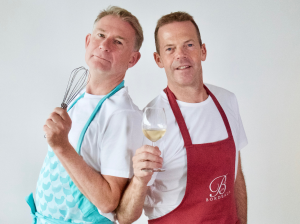
We read the recipe, watched a few videos (this one is good fun, it also shows how to make a Victorian Sponge cake) and decided to prepare a Coronation Quiche, topped with a Crown!

What You Need (for a 15 cm tin)

  • For the Pastry
    • 125 grams All Purpose Flour
    • Pinch of Salt
    • 50 grams Cold Butter
    • 2 tablespoons Water
  • For the Filling
    • 200 ml Double Cream
    • 2 Eggs
    • 1 tablespoon chopped Fresh Tarragon
    • 100 grams grated Cheddar Cheese
    • 400 grams fresh Spinach
    • 450 grams fresh Broad Beans (or Fava Beans)

What You Do

Start by making the shortcrust pastry. Dice the butter. Sieve the flour, add a pinch of salt and combine. Add the butter and mix using your fingertips until is has a crumble-like texture. Add the water and turn the mixture into a dough. Cover and allow to rest in the refrigerator for one hour.

Now it’s time to prepare the vegetables. Wash and cook the spinach. Let cool. Drain and squeeze to remove as much liquid as possible. Chop finely. Remove the beans from the shell. Cook for 2 minutes. Let cool and double pod.
Flour your work surface and roll out the pastry to a circle a little larger than the top of the form. The dough should be approximately 4 mm thick. Coat the form with butter. Line the form with the pastry. Use a knife to remove the excess dough. Cover and let rest for 30 minutes in the refrigerator.

Preheat the oven to 190 °C or 375 °F. Use a fork to make small holes in the pastry. Line the pastry with greaseproof paper, add baking beans and bake blind for 15 minutes. Remove the paper and the baking beans. If you think the pastry is a bit wet, then transfer back to the oven for 2 or 3 minutes.
Reduce the oven temperature to 160 °C or 320 °F.
Beat the eggs and keep some of the egg apart. You need it later to give some extra colour to the crown. Beat together cream, eggs, herbs and fresh black pepper. Scatter half of the grated cheese in the blind-baked base, top with the chopped spinach and then the beans, and finally pour over the mixture with cream, eggs, herbs and pepper. Finish by sprinkling the remaining cheese.

Use the remainder of the dough to make a crown. Coat with the egg mixture. You could apply an extra coating halfway the baking process.

Place the quiche and the crown into the oven and bake for 30 – 35 minutes until set and lightly golden. The crown is ready after some 10 – 15 minutes.

Fromage de Fribourg

When reading La Cuisine Niçoise d’Hélène Barale: Mes 106 recettes, we noticed that she uses only one kind of cheese in her recipes. Not Parmesan, not Pecorino, but Fromage de Fribourg. She adds it to her fish soup, to her ravioli, to her tourte de blette and to various other dishes. But what is Fromage de Fribourg?

It’s also known as Vacherin Fribourgeois and it originates from the region around the Swiss city Fribourg. It’s a semi-hard, creamy cheese made with raw cow milk. It matures for at least 6 weeks in a damp cellar. Its taste is aromatic, floral, full-bodied and lasting, with a touch of sweetness, bitterness and umami. It is used in a fondue called moitié-moitié (50% Gruyère and 50% Fribourg). It’s also possible to make a fondue with Fribourgeois only, using three ingredients: water, cheese and garlic.

Obviously we wanted to taste this cheese and we assumed that in the home town of Hélène Barale we would be able to buy it. We found a great cheese shop and bought a nice slice of this complex cheese. At home we decided to make an omelet with spinach, following a recipe from Hélène Barale for Omelette aux Blettes.

Omelet

For this omelet you need spinach, shallot, garlic, bay leaf, egg and freshly grated Vacherin Fribourgeois. No thyme, black pepper or salt. We were much surprised by the perfectly balanced flavours of spinach, cheese and eggs. Wonderful omelet.
You’ll find all the details you need in La cuisine niçoise d’Hélène Barale: Mes 106 recettes.

Wine Pairing

We enjoyed our omelet with a nice glass of Côtes de Provence Rosé. You could also enjoy it with an unoaked Chardonnay.
If you decide to eat the cheese as dessert, then we suggest a glass of full bodied red wine (Bordeaux, Côtes du Rhône etcetera).

PS

From a culinary point of view we think we understand why Madame Barale favored Fromage de Fribourg. If it’s her personal choice, something typical for the Niçoise cuisine, a culinary trend or perhaps because she was fond of Fribourg, that remains a mystery to us.

Green Gnocchi

We love eating Gnocchi, preferably as a starter with some olive oil and Parmesan cheese. Tasty and rich. Perhaps sometimes a bit too rich and too filling, especially the ones you can buy at your local shop or supermarket. Therefore it’s best is to make your own gnocchi, which is not too difficult, just time consuming.

We were pleasantly surprised when we found Green Gnocchi in Nice (France), made with Swiss Chard. The chopped leaves help improve the structure of the Gnocchi and add complexity and freshness to the dish. Yummy!

So all is good? Well, the name is a bit odd, to say the least. This Niçoise speciality is called Merda de Can, which translates into something from a dog – not very pleasant and certainly not something you want to eat. Very odd.

The name shouldn’t stop you from enjoying it. Merda de Can with Sage Butter is truly delicious.

Wine Pairing

We enjoyed our Merda de Can with a glass of Saint Roman Sable de Camargue Rosé. In general you’re looking for a well-balanced, fresh wine. Given the butter and sage sauce you could serve a Chardonnay or perhaps an Italian white wine such as Gavi di Gavi or Soave

What You Need for 8 starters

  • For the Merda de Can 
    • 600 Grams of Starchy Potatoes
    • 300 Grams of Swiss Chard, Spinach or Water Spinach (cleaned and ready to use)
    • Olive Oil
    • Nutmeg
    • 1 Egg
    • All Purpose Flour
  • For the Sauce
    • Butter
    • Sage
  • Parmesan Cheese or (preferred) Vacherin de Fribourgeois)

What You Do

Best is to follow the instructions by a Niçoise chef. 
Or prepare gnocchi as you would normally. Quickly fry the leaves in olive oil, remove from the pan, chop finely and drain. Add to the potato mixture, add the beaten egg, add freshly grated nutmeg and combine. Now start adding flour until you have the right consistency. You’re looking for a flexible, non-sticky dough. Flour your hands and start making short, small, thin, sausage like pasta. (Perhaps this is the moment to think about a small dog. Or perhaps not.) Don’t worry about the shape, it’s okay if they are not very similar. Devein the sage leaves. Warm butter in a pan and add the sage. In parallel heat a generous amount of water. Add the pasta to the boiling water and wait until the pasta surfaces. Remove from the water, add the pasta to the pan with sage butter, coat the pasta and freshly grated Parmesan cheese and serve.

PS

The Merda de Can we enjoyed was bought at a local Niçoise shop and had a more elegant shape.

Green Gnocchi (Merda de Can) ©cadwu

Flan with Prawns, Blue Cheese, Spinach and Dill

Something on a Spoon

A glass of white wine, perhaps a glass of Crémant d’Alsace or maybe even a glass of Champagne; such a great way to start dinner (or lunch when you feel like treating yourself). You enjoy some bread with homemade Tapenade, or a few nice olives. All good. And then suddenly the chef presents you her or his Amuse-Bouche. Something very special and an indication of the chef’s talent. But in most cases it’s something on a spoon and not very special.

A bit of background: amuse-bouche is actually not a French term. Restaurateurs made it up because they think amuse-gueule (the correct term) is a bit harsh. ‘Gueule’ can refer to both humans and animals. And ‘ferme ta gueule’ is far from polite. So restaurateurs started using ‘bouche’, to eliminate the impression that they think their guests have a snout.

Some say the concept of the amuse was invented by the Nouvelle Cuisine in the 1960s. Not really. In 1946 Francis Ambrière, in his book Les Grandes vacances, writes … Une côtelette à midi. Quelques amuse-gueule à l’heure du goûter. Et le soir, ô splendeur, un gigot bien saignant, le premier gigot depuis l’an 40!

Today’s amuse-gueule is a dish in its own right that amuses the mouth, fools your appetite and makes you want to start on the first course. Small, tasty, full of flavours and maybe a bit out of the ordinary.

We use a traditional coddler for this amuse-gueule, but you could also use a small ramequin. No spoon, please.

Wine Pairing

Typically the amuse-gueule is combined with your aperitif. We combined this amuse gueule with a glass of German Sekt, to be more precise with a glass of Reichsrat von Buhl – Pfalz – Sekt – Spätburgunder Brut rosé 2016, which is a superb pale pink wine, made from 100% Pinot Noir and produced by one of the leading wineries in Germany. Think red berries, brioche, a delicate texture with a nice mousse, fresh acidity and a long-lasting aftertaste.

What You Need (for 4)

  • One Egg
  • Four Medium Sized Raw Prawns
  • 75 grams Spinach
  • ½ Shallot
  • A Generous Tablespoon of Crème Fraiche
  • Dill
  • Blue Cheese
  • Chives
  • 4 Edible flowers

What You Do

Start by cleaning the prawns, removing the head, the shell and the vein. We used Argentine red shrimps. The meat is fairly soft and they become beautifully red when cooked. Fry the shrimps is some olive oil for 3 minutes. Remove the shrimps from the pan, set aside and let cool. Gently fry the shallot in the same pan for 10 minutes until glazed. Remove from the pan and let cool. In a different pan quickly cook the (dry and clean) spinach in some olive oil. Keep stirring! Drain if so required, set aside and let cool.
Cut the prawns in smaller bits. Chop the spinach using a large knife. Whisk the egg until completely smooth. Now add the (cool) bits of prawn, the spinach and the shallot. Whisk with a spoon. Add the Crème Fraiche. Add some chopped dill (depending on your taste), a bit of blue cheese (not too much, just to add a dimension to the dish) and a generous amount of chives. Mix. Coat the coddlers or ramequins with butter. Add the mixture to the coddlers or ramequins. Heat your oven to 170° Celsius (or 340° Fahrenheit). Place the coddlers or ramequins in a shallow dish. Add boiling water up to 2/3 of the height of the coddler or ramequin. Close the oven and reduce the temperature to 120° Celsius (or 250° Fahrenheit). After 30 minutes au bain marie your amuse-gueule should be ready. Test with a needle. Let cool.
If using a coddler, remove and dry the lid, add the flower and close.

Amuse-Gueule © cadwu