Peaches with Lavender

The cookbook review project hosted by Bernadette has come to an end, unfortunately! It was inspiring to read cookbooks from chefs that were new to us, like Patricia Wells and Nagi Maehahi. It was fun preparing dishes for our esteemed panel and sharing their views with you. Thank you so much Bernadette, for running the project!

José Pizarro - Basque

Our suggestion to the cookbook review team was a book mentioned by Sheree: José Pizarro’s book Basque: Spanish Recipes from San Sebastián & Beyond, published in 2016. It’s a beautifully designed and edited book with a range of diverse dishes, for instance Veal Chops with Black-Eyed PeasPan Fried Cèpes with Egg Yolk and Cream Cheese Ice Cream with Blackcurrant and Camomile Syrup. The book is recommended by Claudia Roden (‘José Pizarro is an amazing cook who has brought us the best of Spanish food’) and Rick Stein (‘José’s recipes take us to the very heart of the best Spanish cooking’).

José Pizarro was born in the Extremadura region in Spain. Currently he owns seven restaurants in the UK and one in Abu Dhabi. He published six Spanish cookery books, received various awards and is often credited with making Spanish food popular in the UK.

We decided to make two dishes from the book, Grilled Octopus with Peppers and Aubergine and Roasted Lavender Peaches with Baked Custard. As a main dish we served Pork Belly with Sherry, Chickpeas and Chestnuts, following a recipe published in the Guardian. Our panellist Jan and Anton were happy to provide their feedback.

Grilled Octopus ©cadwu

The starter: Anton mentioned the octopus was tasty, with the right texture and nicely grilled. Jan was also pleasantly surprised by the octopus and its flavours. We all felt the dish as a whole could do with a bit more flavour and some acidity. We also expected the parsley oil to bring the various components together, but that didn’t really happen.

We enjoyed our starter with a glass of Portuguese Vinho Verde, made by Cazas Novas. It comes with floral and fruity notes, has some acidity and a medium body with a good texture and a fresh aftertaste. In general, you’re looking for a wine with freshness, minerality and some acidity.

Pork with Chestnuts, Chickpeas and Sherry ©cadwu

The dish with the pork belly strips was nice. Jan would have preferred the pork to be crispy. Perhaps prepare the stew and the pork separately? Anton enjoyed the chickpeas in the rich combination with sherry, onions, spinach and thyme. Surprisingly flavourful.

The recipe suggests leaving the pot in the oven for 30 to 40 minutes. The next day we decided leaving the leftovers in a warm oven for a few hours. The result was a very nicely integrated stew; a tribute to all ingredients. Next time we will prepare the vegetables a day ahead with some of the pork, perhaps allow for more time in the oven and serve with crispy fried pork.
We enjoyed the dish with a glass of Portuguese red wine, produced by Vidigal. The wine is made with aragonez, castelão and cabernet grapes. The wine has a nice red colour and aromas of fruit and herbs. Its taste is light, with some tannins and a touch of oak. In general, you’re looking for a smooth, easy to drink red wine with character.

Peaches, Lavender and Custard ©cadwu

Time for dessert. Peaches with Lavender? Four peaches and a tablespoon of lavender? Served with custard? We were intrigued.
We looked at the list of ingredients and noticed Patxaran, a sloe flavoured liqueur from the Basque country, normally served as a digestif.
Even more intriguing.

The combination of peaches, lavender, patxaran and custard was a winner. One night we served it with vanilla ice cream, which was a nice and tasty combination. We served our panel the peaches with home-made custard, following the recipe of José Pizarro. It’s a delicious combination. Rich, smooth, silky custard with uplifting, sweet and aromatic peaches. The sauce is a mixture of honey, patxaran and peach juice. Like us you would probably expect the lavender to be over the top, but it worked brilliantly. A winner! Our panel was very pleased and enjoyed the combination.
“Lovely custard, great way to prepare peaches, interesting how the lavender is supporting the fruit, present, never overwhelming, could I have another glass of patxaran?”
Of course you can!

Bernadette final review-question was: should this book be on your shelf? Our answer would be yes, because of the inspirational recipes, the use of ingredients and the beautiful pictures of food and the Basque country.

Basque: Spanish Recipes from San Sebastián & Beyond is available via your local bookshop or the usual channels for 15 euro or 40 US dollar. You can also enjoy the recipes José Pizarro publishes on a monthly basis in the Guardian.

Hilaire Walden

Some chefs love the limelight, some prefer to stay in the background, focusing on cooking and writing. Hilaire Walden is clearly one of them. 

She is author of some 40 books and she has written for prestigious magazines and newspapers about food, cooking and restaurants. She wrote The Great Big Cookie Book, The Book of Tapas and Spanish Cooking, the Book of French Provincial Cooking, The Singapore CookbookQuick After Work Summer Vegetarian CookbookThe Book of Fish and Shellfish and more recently I Love My Barbecue. Indeed, a broad culinary spectrum!

The Loire

One of our favourites is Loire Gastronomique. In this book she follows the course of the French river and describes the various regions, local products, local recipes and of course the wines that go with it. Cheese, cookies, pies, everything. The Loire region is known as the Garden of France. In this garden you’ll find wonderful castles (Azay-le-RideauChambordChinon), great wine (MuscadetSancerrePouilly-Fumé) and beautiful food (asparagus, lots of fruit, artichokes and of course Lentille Verte du Puy). The book is inspiring and it will make you dream of a walk along the Loire, with a view on Amboise and a glass Crémant de Loire in your hand.

Recipes

One of the benefits of Hilaire Walden’s recipes is that they are always correct. Sounds odd, but as we all know, unfortunately, often recipes are simply not complete or correct.
If you prepare a dish for the first time, simply follow her instructions and you’re fine.

She started publishing books around 1980, so perhaps your favourite book will be second hand, but don’t worry, it will not be outdated.

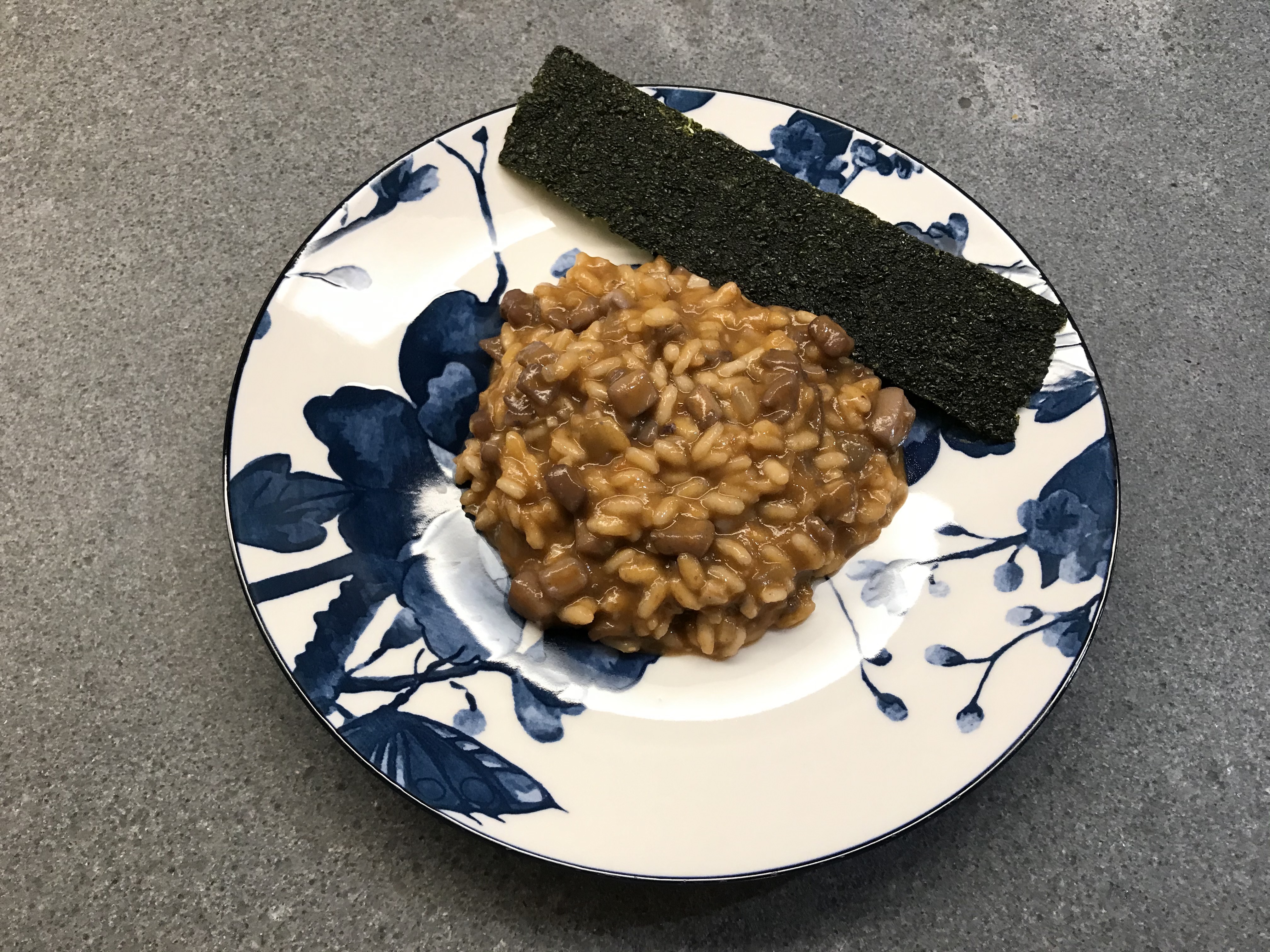
Risotto With Squid

A Tasty Bonus

Combining rice with squid is an excellent idea. Just think about Arroz Negro, the black rice from Valencia. We combine rice (Acquerello, of course!) with fresh (or frozen) squid. Cleaning squid can be a bit intimidating, but it’s not difficult at all. The result is much better than the already cleaned frozen tubes you can buy plus you get the tentacles as a tasty bonus. Becky Selengut’s video is very helpful. This is how we do it:

  • Start by removing the head from the body. When you do this gently, you will also remove most of the internal organs of the squid. You may want to secure the ink for later use.
  • Just below the eyes, cut off the tentacles using a knife or scissors. Remove the beak (located at the base of the tentacles). Discard internal organs and beak. Transfer the tentacles to a bowl.
  • With your fingers remove the cartilage (this is the part that looks like it is made of plastic).
  • Now you have a choice: you could leave the skin on; it does add extra colour to the stew. But you could also remove the skin of the tube and fins. Best is to start in the middle and then gently pull the skin towards the top and bottom.
  • Remove the fins and transfer to the bowl.
  • Turn the tube inside out by pushing the top into the tube. This allows you to remove all internal organs and the membrane.
  • Turn the tube outside in by pushing the top into the tube. Transfer to the bowl.
  • Wash the tube, fins and tentacles with cold water.

Wine Pairing

Best is to combine this seafood risotto with a light, aromatic white wine. One that is fresh and dry. We enjoyed our risotto with a glass of Bianco di Custoza 2018, made by Monte del Frà in Italy. It is a well-balanced, dry white wine, with a fruity nose. Its colour is straw yellow, with pale green highlights. It is made from a variety of grapes: Garganega, Trebbiano Toscano, Trebbianello and Cortese. An excellent combination with the seafood risotto.

What You Need

  • For the Squid Stew
    • 500 grams of Squid (to be cleaned)
    • Olive Oil
    • Shallot
    • 2 Garlic Gloves
    • 200 grams of Tomatoes (peeled, seeded and cut in chunks)
    • 1 Red Chilli
    • Red Wine
    • Two Fresh Bay Leaves
  • For the Risotto
    • 100 gram of Risotto Rice (Acquerello)
    • Fish Stock
    • Shallot
    • Butter
    • Parmesan cheese
    • Black Pepper
    • Crispy Japanese Seaweed

What You Do

A day before serving the risotto, prepare the stew: use a heavy, iron skillet. Cut the shallot in small bits and glaze gently in olive oil. Once the shallot is glazed add the garlic and the deseeded, chopped red chilli. After a few minutes add the squid (chopped tube and fins, tentacles ). Fry for a few minutes, add the tomatoes, a glass of red wine and the bay leaf. Allow to simmer for 4 hours. If necessary add a splash of water. Stir every 15 minutes. Remove the bay leaf, cool and store in the refrigerator.

The next day start by peeling and chopping the shallot. Add butter and olive oil to a pan and glaze the shallot. In another pan bring the light fish stock to a boil. After 5 minutes add the rice to the pan with the shallot and coat for 2 minutes. Add the squid stew and mix. Start adding the stock, spoon by spoon and stir the rice frequently. When using Acquerello rice it takes 18 minutes. Check the rice. When okay, transfer the pan to the kitchen counter top and leave to rest for 2 minutes. Add chunks of butter, stir, add a bit more butter and grated Parmesan cheese. Stir, a bit of black pepper, add more butter or Parmesan cheese if so required. Serve immediately with some crispy Japanese seaweed.

Risotto with Squid © cadwu

Salad with Various Beans and Swordfish

When in Valencia

The Mercat Central in Valencia is one of the largest markets in Europe. Its architecture is amazing, but even more stunning are the products: fruit, vegetables, mushrooms, wines, fresh meat, sausages, hams, herbs, spices, fish, bread, chickens, pickles, snails, weeds, offal, rice, nuts, beans: anything and everything you can dream of.
Albufera is a fresh water area not far from Valencia used for growing rice. It is of course the ideal rice for paella. If an original recipe of paella would exist, it would include rice, olive oil, rabbit, saffron and various beans such as broad beans, roget and garrofón.
Inspired by the classic Salade Niçoise we bought a slice of excellent swordfish, sweet onions, potatoes, eggs and of course: lots of beans. Shall we call it Salade Valençoise?

Wine Pairing

We served the salad as a main dish. Combining wine and salad is not straightforward because acidity is an important aspect of a dressing and therefore of a salad. In this case we have a range of flavours and textures so we would suggest a wine with a very present floral bouquet. The taste should be smooth and fruity. We enjoyed it with a glass of Albariño Rias Baixas 2018 produced by Bodegas Bouza do Rei, made from 100% Albariño grapes.
Another excellent choice would be Sericis, 2018 from the house of Murviedro. A wine from Utiel-Requena, so from the Valencia region. A wine made from 100% Merseguera grapes. Full bodied yet light, elegant and surprisingly low in its alcohol with only 12%. Well balanced acidity which is great when combining it with a salad.

What You Need

  • Mixed Salad
  • White Sweet Onion
  • Flat Beans (we also used the local red variety Roget)
  • Green Peas
  • Broad Beans
  • Garrofón (Lima Beans or Butter Beans)
  • Sword Fish
  • 2 Eggs
  • 2 Small (New) Potatoes
  • Olive Oil
  • Vinegar
  • Mustard
  • Black Pepper

What You Do

Start by pealing the broad beans, the green peas, the flat beans, the garrofón beans and the potatoes. Cook all five ingredients separately until al dente. Cook the eggs until just done. Let cool. Peel the broad beans and the garrofón beans again. Make a dressing by combining olive oil, vinegar and mustard. Slice the flat beans, the onion and the potatoes. Cut the egg in four. Fry the swordfish until just done. In parallel mix the salad with the onion, the flat beans, the green peas, the potatoes and the broad beans. Add the dressing and toss. Slice the swordfish and decorate the salad with egg, garrofón and swordfish. A touch of black pepper to finish.

Monkfish Spanish Style

Rape a la Marinera

In October 2016 Jamie Oliver was criticised for making paella the wrong way. He dared adding chorizo to one of the most Spanish dishes ever. Paella should be made with rabbit, snails, chicken, beans, saffron and rice. How dare he insult all of Spain by adding chorizo to his Paella? Naked chef or not, ambassador of healthy food or not, no one touches Paella.

Rape a la Marinera is among our favourites because it’s all about monkfish, which is such a tasty fish. The monkfish is presented with a generous tomato sauce, large shrimps, vongole and bread. What better way to enjoy life!

In this recipe we will probably do a few things very wrong, but never mind, simply don’t tell your Spanish friends.

Wine Pairing

We very much enjoyed a glass of Spanish Verdejo. In our case a bottle of Monteabellon Rueda. In general wines made from the Verdejo grape combine very well with fish. The wine comes with the right acidity, giving freshness to the wine. It has floral aromas typical for the Verdejo grape. You may recognize the aromas of banana and exotic fruit.

What You Need

  • Monkfish
  • Olive Oil
  • Optional
    • Bay Leaf
    • Saffron
  • 4 Large Shrimps
  • Vongole (clams, Vongola Veraci)
  • White wine
  • Bouquet Garni

What You Do

The day before serving Rape a la Marinera make the tomato sauce.
Start by cleaning the monkfish and remove the skin where necessary. Clean the shrimps by removing the intestinal tract. Leave the head and the tail. Check the vongole and discard ones that are broken. In general vongole don’t need much cleaning. Vongola Verace are tasty, slightly sweet and juicy; great for Spaghetti Vongole and Rape a la Marinera.

In a large skillet fry the monkfish. When coloured add the sauce. Gently heat the sauce and cover the fish with it. Baste (arroser) and continue to do so. In parallel add some wine to a pan with a bouquet garni and let gently cook for 5 minutes.
Now it’s about timing! Add the raw shrimps to the pan with the monkfish, cover the shrimps with the sauce, continue basting both the fish and the shrimps. Add the vongole to the pan with the white wine. Cook quickly until open. Add some of the cooking juices of the vongole to the tomato sauce, mix, taste and add a touch of pepper. Serve the vongole on top of the monkfish and shrimps.
Serve with crusted bread.

Pimientos de Padrón

Lovely and Simple Starter

Pimientos de Padrón are mild, sweet tasting and small green peppers, originally from the Galicia region in Spain, but now widely available in Spain and Portugal. Story has it that one in a hundred (or more?) is actually very spicy, but rest assured, we have eaten many more and never encountered a spicy one. Ask your greengrocer for these lovely peppers because we’re sure you will enjoy them.

Wine Pairing

We would suggest drinking a Vinho Verde with the Pimientos de Padrón. Vinho Verde is a wine from the most northern part of Portugal, between the Douro and Minho rivers. Verde refers to the fact that the grapes are harvested very early in the year. This implies that the grapes contain a fairly small amount of sugar. As a result of this the wine (in most cases) has a fairly low percentage of alcohol (think 10%). But don’t be surprised if you find one with a higher percentage.

About Vinho Verde

In general we feel Vinho Verde is undervalued. It’s a great, very taste wine; one that is not just wonderful on a summers evening.
Vinho Verde is not a wine to store, so make sure you buy one from the most recent harvest.
Most Vinho Verde wines are white. They tend to have a very subtle bubble. The taste is light, floral and the wine comes with some clear acidity.
We also found a rosé and a red Vinho Verde. Seldom have we seen a wine with such an intense colour! To balance the acidity of the red Vinho Verde you must be combined with fat meat or rich sauces. We combined it with grilled Secreto of Iberico pork, which is a treat in its own right. Secreto is a thin, juicy cut from acorn fed, free range Iberico pigs.

Secreto

As an extra: for two people buy 300 grams of Secreto. In a way the structure of the secreto resembles skate. One side of the secreto will look nice, fat and meaty, the other may look like if you have to remove extra fat. Which is exactly what you need to do! After having done that, heat a heavy grill pan (or the barbeque) and grill the meat for 4 times one minute, creating a nice pattern. The cuisson should be rosé. It’s not a problem if the thinner parts of the secreto are well done because the meat will be very juicy anyway, thanks to the fat. Serve with a sautéed courgette. The bitterness and the sweetness of the courgette combines really well with the juicy secreto. The red Vinho Verde will balance the fat and will turn the combination of secreto and courgette into an intriguing dish.

What You Need

  • Pimientos de Padrón
  • Olive Oil
  • Sea Salt

What You Do

Clean the Pimientos de Padrón and dry the peppers. Heat a heavy skillet, add olive oil and fry the peppers for a few minutes. Make sure they are fried but not cooked. Sprinkle some sea salt over the Pimientos de Padrón, fry for a few seconds making sure the salt is somewhat adsorbed in the olive oil. Serve immediately.

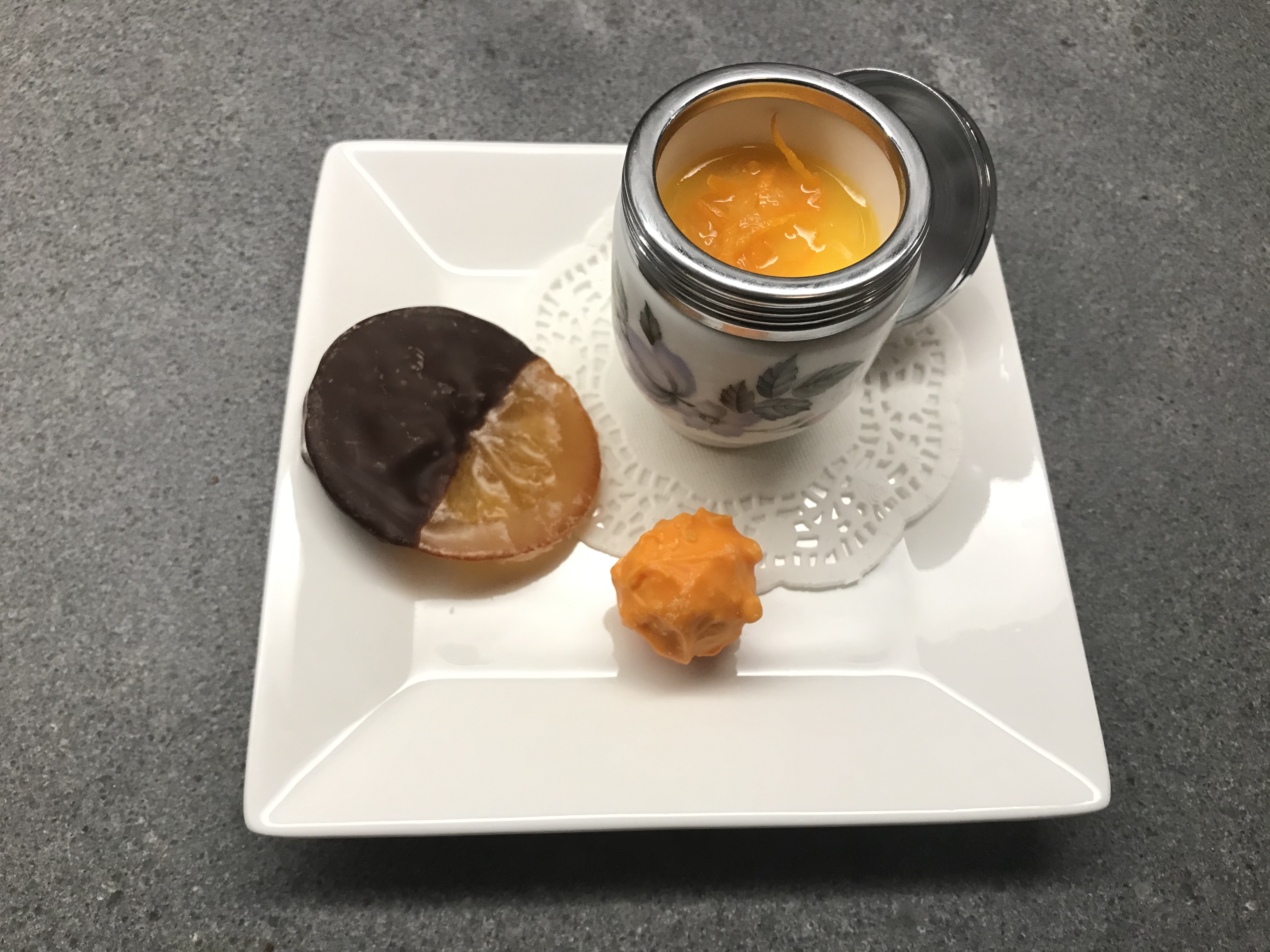
Orange Flan

Such a nice small dessert! It combines the gentle taste of a classic flan with the fruity orange. The fun is that the orange is in the flan itself, in the gel and of course in the zest. We’re sure you and your guests will appreciate the lightness and long taste.

We love to combine this dish with Rivesalte Ambré. If you can’t get hold of the Ambré, then go for another Rivesalte. The Ambré has a long, deep taste that supports the taste of the flan very well; it lifts it to an exquisite level. The Ambré comes with a hint of citrus; if it’s clementine even better.

 Here is what you need

  • For the flan
    • 8 small Coddlers (so-called standard size)
    • 2 Eggs
    • 2 Egg Yolks
    • 200 ml fresh Orange Juice
    • 20 grams of Sugar (depending on the sweetness of the orange juice)
    • butter
  • For the gel
    • 100 ml fresh Orange Juice
    • Grand Marnier or Cointreau
    • 0,5 gram of Agar Agar
  • And also
    • Orange Zest
    • Edible Flower

In a bowl mix the eggs and the egg yolks using a spoon. Make sure to do this very gently; we don’t want any bubbles in the mixture. Now add 20 gram of sugar to the orange juice and make sure it’s totally absorbed. Combine the juice and the egg and stir gently. Pass through a sieve. It’s important that the mixture is very smooth, so no bits of egg, sugar and orange. If not, pass through a finer sieve. If you have bubbles in the mixture then let rest in the refrigerator.
Apply a very thin layer of butter to the coddlers, just enough to cover the inside. Pour the mixture in the coddlers, but nor more than 2/3. The mixture will set but not raise (or only a little bit). Close the coddlers, but not too tight. You want to test one during the cooking process and you don’t want to burn your hands.
Set your oven to ‘classic’ and to 170° Celsius or 340° Fahrenheit . Place a large oven tray in the middel of the oven. When the oven has reached the right temperature, place the coddlers in the tray and add boiling water. The water should reach ¾ of the coddler, leaving ¼ free. Once in the oven reduce the temperature to 120° Celsius or 250° Fahrenheit and cook for 30 minutes. The flans are done when a metal pen comes out clean.
Remove the coddlers from the oven and allow to cool. You can do this by putting them in cold water, but you can also give it a bit of time. When cool, dry the inside of the metal lid (condense). Transfer to the refrigerator.
Reduce 100 ml orange juice and the Grand Marnier or Cointreau. When nearly reduced by 50% add the agar agar. Allow to simmer for a few minutes. You may want to test the consistency. Simply put some reduced liquid on a saucer, transfer to the freezer and wait for 2 minutes. The consistency will be a good indication of the final result.
Now for the zest: most citrus fruit is waxed, so you may need to rub the orange. Put a bit of very thin orange zest on top of the flan and finish by pouring some (still warm) gel over it. Ideally this will cover the top (and the zest) and flow between the coddler and the flan.
Put the coddlers in the refrigerator and let cool. Half an hour before serving, take them out of the refrigerator, remove the lid, dry the inside and put it back on again.
If you can get hold of a nice edible flower, then put it on top of the gel, just before serving.
You can serve them with a slice of confit of orange. And if you have made these anyway, why not dip them in deepest, darkest chocolate?

orange flan