A Classic for you – 1

Ratatouille

Think summer vegetables, think Ratatouille! Which is also a comedy released in 2007 about a rat called Remy with a passion for cooking. If you want to see how he prepares ratatouille then simply enter Remy cooks ratatouille as search term in YouTube (or buy the DVD if you’re old fashioned like us).
Ratatouille brings back memories of summer, of the South of France, of the Mediterranean. Or for some, of their youth. It combines very well with a simple sausage, with lamb, with grilled chicken.
However you prepare your ratatouille, be sure to use courgette or zucchini, aubergine or eggplant, tomato and bell peppers. Also make sure you prepare it a day ahead. The taste becomes much more integrated after a day (or two) in the refrigerator.
Our recipe is very much the recipe of a dear friend. She taught us how to make ratatouille in her summer kitchen, overlooking the pool and the garden with herbs and vegetables. Indeed, fond memories.
To our surprise she added cilantro (you would expect thyme or basil) and many years later we are still grateful for this twist. The cilantro enhances the feeling of summer and it supports the various vegetables in a beautiful way.

We enjoyed our ratatouille with a glass of simple, red wine with lots of red and black fruits. Spicy. A wine that brings summer to your glass.

Here is what you need:

  • Aubergine
  • Courgette
  • Red Bell Pepper
  • Chili Pepper
  • Tomatoes
  • Cilantro
  • Garlic (optional)
  • Olive oil

If you combine 1 of each, with the exception of 3 tomatoes, this will serve 4 people.
Start by cutting the aubergine in small but not too small chunks. Drizzle with salt and mix. Let the mixture rest for a few hours, allowing for the aubergine to loose water and become firm. Best way to do this is by putting the aubergine in a sieve and let it rest above a bowl.
The tomatoes require some attention as well. You could peel them, but that’s optional. What is not optional is to separate the tomato meat and juices from the pits. First step is to remove the internal hard bits and the pits and put these aside. You now have the outer part of the tomato, which you can slice. Cut the remainder of the tomatoes roughly, add to a sieve and by using the back of a spoon make sure you capture the juices. Be surprised about the volume of tomato juice and the small amount of tomato bits that remain in your sieve.
Peel the courgette, slice in the way you sliced the aubergine and fry over medium heat in olive oil. In the mean time cut the bell pepper into long slices and add these to the pan. Continue frying. Add the finely chopped chilli pepper (not the seeds of course). Add the firm aubergine after having removed the remaining salt with water. After a few moments add the tomato chunks, fry a bit more, add the tomato juice (and the optional garlic) and leave on a medium heat for 30 minutes. Try not to stir too much; otherwise you risk creating mashed vegetables. Cool, set aside and store in the refrigerator.
The next day gently warm the ratatouille, add some chopped cilantro, mix and add more cilantro just before serving.


Apricot Chutney

One For The Cupboard

Something you have to have in your cupboard (or refrigerator in our case): chutney. Why? Because once in a while you don’t feel like making a sauce when you eat duck, rib eye or grilled lamb chops. Or because you want to eat something nice, simple and vegetarian, like rice with lentils and, there we are, chutney.
If there would be a top three of main ingredients for chutney it would read mango-tomato-apricot. The basic recipe is the same for all three; it’s a matter of adjusting the quantities and choosing the spices.
Chutney needs to integrate, much more than jam or marmalade. So cook it for an hour or so and leave it in a jar for at least a week before using it. The fact that it needs to integrate will create a hopefully nice surprise when opening the jar. If not, there is little you can do (eat more quickly, give a jar to a not too close friend et cetera).
We use just a bit of sugar so our chutney needs to be stored in the refrigerator. Too much sugar (200 grams on 1 kilo of mango for instance) will only hide the taste of the mango. Chutney is a balance of sweet (fresh fruit, onion, garlic, cinnamon), sour (vinegar), bitter (the skin of the apricot or tomato), spiciness (ginger, red chilli, garlic) and depth (cardamom, nutmeg, cumin). Too much sugar will only disturb the balance. Cooking is about pairing tastes and textures, not about creating a simple, one-dimensional product.
Why would we make apricot chutney if it’s our number 3? Simple: we like the touch of bitterness that comes with the apricot.
When making mango chutney, try using unripe mangos. The chutney will be much tastier and complex!

What You Need

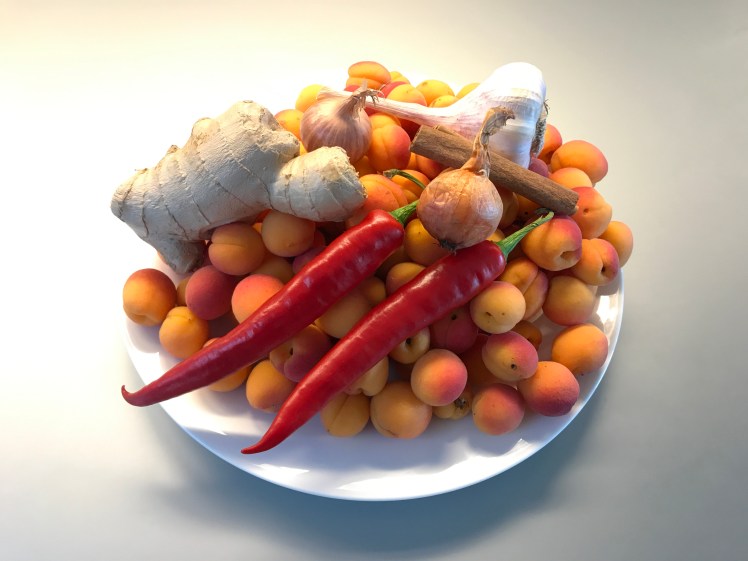
  • 1 kilo stoned Apricots (meaning 1,25 kilo of Apricots)
  • 2 Shallots
  • Olive Oil
  • 2+2 gloves Fresh and Cooked Garlic
  • 1 Red Chilli
  • 100 ml Vinegar
  • 100 ml Water
  • 50 grams of Sugar
  • Fresh Ginger
  • Spices such as
    • Cardamom
    • Mustard Seed
    • Coriander
    • Cinnamon
    • Nutmeg
    • Cumin

What You Do

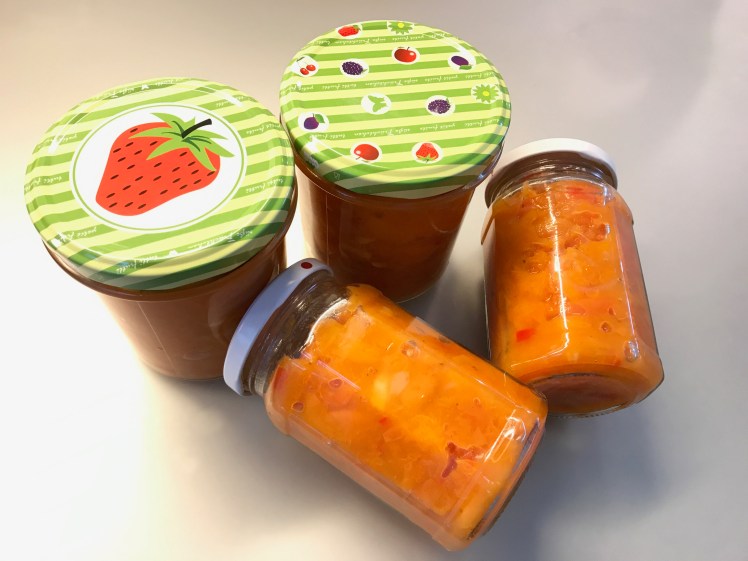
Stone and quarter the apricots. Cut the shallots in 4 and slice (not too thin). Slice the fresh garlic. Same with the seeded red chilli. Cut let’s say 5 cm of ginger in small bits. Start by glazing the shallots for 10 minutes in olive oil, making sure they will enhance the sweetness of the chutney. Then add all other ingredients to the pan, mix, add the grated ginger, the spices of your choice, mix and bring slowly to a simmer. We used vinegar and water given the acidity of our apricots. If your apricots are really sweet and ripe use 200 ml of vinegar. Spices wise we prefer using cardamom, cinnamon, and a touch of cumin and nutmeg. Leave to simmer for at least one hour. Stir occasionally but gently. After an hour increase the heat and transfer to very, very clean glass jars. Close the jars, leave them to cool a bit, then put in cold water and later on transfer to the refrigerator.