Kimizu (with a Twist)

A few years ago we enjoyed an excellent Kaiseki dinner at Yamazato in Amsterdam. One of the dishes on the menu was Kimizu-Ae: a combination of white asparagus and Kimizu. A few days later we prepared Kimizu, a rich and light sauce. It comes with a velvety mouthfeel, a natural note of sweetness, a bright yellow colour and perfect acidity. Over the years we used it as a base for Béarnaise and Sauce Perigord.

Kimizu combines rice vinegar, mirin and egg. Compared to Hollandaise, Kimizu is lighter, easier to digest and fresher, because it does not contain butter (the egg yolk being the only source of fat).
The vinegar used to prepare Hollandaise or Béarnaise is often a flavoured vinegar, for instance with tarragon, shallot and black pepper. An idea we simply had to try when making Kimizu, with a twist!

Using a microwave oven to make Kimizu is a great idea (see our recipe for Hollandaise), although it does require more whipping and more attention compared to making Hollandaise.

What You Need
  • For the Castric (35 ml)
    • 5 ml Vinegar
    • 50 ml dry White Wine
    • 20 ml Noilly Prat
    • One corn of Black Pepper
    • One small Shallot
  • For the Kimizu
    • 35 ml Castric
    • 25 ml Water
    • 1 teaspoon Mirin
    • 2 Egg Yolks
What You Do
  1. Start by making the Castric
    • Chop the shallot
    • Combine all ingredients and leave to reduce by 1/2 on low heat
    • Pass through a sieve; try to capture the juices of the shallot
    • Set aside
  2. Make the Kimizu
    • The castric should be at room temperature
    • Whisk the egg yolks
    • Add the castric, the mirin, the water and whisk some more
    • Now transfer to the microwave and give it let’s say 10 seconds of 30%. Power and duration very much depend on your microwave
    • Remove from oven and whisk
    • Repeat
    • You will now feel the consistency changing. If not, don’t worry, just keep repeating the step
    • You may want to reduce the power or the duration
    • Whisk, whisk again and feel free to find your own way
    • When the Kimizu is ready, take it out of the oven and serve immediately
  3. We served the Kimizu with excellent beef and pommes dauphinois
Kimizu, the Japanese golden sauce
Kimizu with a Twist ©cadwu

Beef and Black Garlic

This is the first of two recipes with black garlic, which is made by fermenting fresh garlic in a controlled environment (humidity, temperature) for 6 to 12 weeks. The flavour and aroma of black garlic differ from fresh garlic. Black garlic has notes of liquorice and caramel. Its taste is long, intense and rich in umami. The consistency is paste-like which makes it easy to use in sauces and dressings. Black garlic is also supposed to be very healthy thanks to the amount of antioxidants it contains.
Black garlic is becoming more popular, so your greengrocer or health food store should have it. If not, you can also order it online via the usual channels.
We combine excellent beef with a mixture of black olives, shallot, thyme, rosemary, tomato purée and black garlic. A very powerful and intense combination, with sweetness, bitterness, umami and lots of aroma thanks to the herbs.

Wine Pairing

To balance the intense sauce, we suggest drinking a glass of dry red wine, one with some earthy notes, aromas of black fruit, limited tannins and clear acidity. We enjoyed a glass of Pinot Noir from La Cour Des Dames. A very nice pinot noir with sufficient earthiness and dark fruit.

What You Need
  • Excellent Beef
  • Olive Oil
  • Black Pepper
  • For the Sauce
    • Shallot
    • Scallion
    • Thyme
    • Rosemary
    • One Clove of Crushed Black Garlic
    • Teaspoon of Tomato Purée
    • Ten Black Olives
    • Vegetable Stock
    • Teaspoon of Mustard
What You Do

The beef must be at room temperature. Halve the olives. Slice the scallion in 1-cm or 1-inch chunks. Finely chop the thyme and the rosemary. Coarsely chop the shallot. Heat a heavy iron skillet and quickly fry the meat. Transfer and keep warm. Reduce heat and gently fry the shallot. Add scallion, thyme, rosemary and black garlic. Add some vegetable stock. Combine with tomato purée and mustard until it’s a velvety sauce. The black garlic should be dissolved. Add more stock if necessary. Add liquid from the meat. Thinly slice the beef, add some black pepper and serve with the sauce. 

The Art of Sauces: Ravigote

A classic, French sauce, traditionally served with Tête de Veau, but in general great with cold meat and cold, poached fish. A very simple, easy to make sauce with just the right acidity to brighten up your cold starter. The warm version is made with a broth, the cold one with oil, vinegar and mustard, as you would prepare a vinaigrette.
No eggs?
Indeed, no eggs. If you look at the list of ingredients, you could think of Remoulade or Tartare Sauce (both mayonnaise based) or Gribiche (made with hard boiled eggs). Ravigote is different, it’s light and uplifting. Just give it a try next time you serve cold meat or fish as a starter. Forget about the mayonnaise and enjoy this delicious, flavourful sauce.
We served our Ravigote with Pâté de Tête Persillé and crusted bread.

Wine Pairing

We enjoyed a glass of white Pontificis, made with Viognier and Chardonnay grapes by Badet- Clément. This is an oaked dry wine from the Languedoc-Roussillon region in France. It is elegant, with some oak, clear acidity and some bitterness. Creamy, with some vanilla, butter and perhaps tropical fruit. In general you’re looking for a white wine with clear acidity, oak and balance.

What You Need

  • Coarse Mustard (Moutarde à l’Ancienne
  • White Wine Vinegar
  • Oil (Sunflower, Avocado)
  • 3 Cornichons
  • 8 Capers
  • 1 Shallot
  • Parsley
  • Tarragon
  • Chervil
  • Black Pepper

What You Do

  1. Finely chop the shallot, slice the cornichons, halve the capers
  2. Chop the herbs
  3. Combine a spoonful of mustard with the same amount of vinegar
  4. Slowly add the oil until you have the right consistency and flavour
  5. Add more vinegar to get the right acidity
  6. Happy? Add shallot, cornichons and capers
  7. Mix
  8. Add a generous amount of parsley, tarragon and chervil
  9. Finish the sauce with black pepper.

PS

The amount of tarragon depends on the type of tarragon and your personal preference. There are actually three types: French tarragon (intense and aromatic, the one to use in the kitchen), Russian tarragon (limited flavour, no complexity) and Mexican (a touch of anise, but not even close to French tarragon). 

Pike Perch with Shrimps and Dill

Pike Perch (zandersnoekbaarssandre) is one of the tastiest, flavour-packed freshwater fish. The flesh is white, firm and lean and the taste is delicate, mild and perhaps a touch sweet. It combines very well, for instance with this delicious shrimp-based sauce with dill. It seems to be a bit of work, but when you prepare the bisque-like sauce in advance, then it’s actually a very quick recipe.

Wine Pairing

We opened a bottle of Domaine Font-Mars Picpoul de Pinet 2022. This is a white wine from the South of France between Narbonne and Montpellier. The terroir (think calcareous soil, clay, quartz) is influenced by the sea, which is reflected in the mineral taste of the wine.
If you feel like spending more money, then we suggest a glass of Chablis. In general you’re looking for a refreshing, unoaked white wine with minerality and fresh acidity.

What You Need

  • Pike Perch fillets
  • Butter
  • For the Bisque
    • 300 grams of unpeeled small Grey Shrimps
    • Tomato Paste
    • 1 Shallot
    • 1 Garlic Clove
    • Dill
    • Olive oil
    • Saffron
    • Cognac
    • Salt
    • Butter

What You Do

Start by peeling the shrimps. It’s a very simple, mindfulness exercise. Remove the heads and discard. Use the shells for the bisque and transfer the bodies of the shrimps to the refrigerator. Chop the shallot and the garlic. Gently glaze the shallot for 10 minutes or so in olive oil. Add the shells and the garlic. Increase the heat for a few seconds.  Add some water. Stir. Add tomato paste, dill and saffron. Add a splash of cognac and a pinch of salt. Allow to simmer for 20 minutes. Pass the liquid through a fine sieve. Make sure you get all the lovely juices. Reduce the liquid until it’s powerful. Cool and set aside.
Transfer the shrimps from the refrigerator. In a non-stick pan heat some butter and fry the pike-perch. In parallel warm the bisque. Use ice cold butter to make the sauce thicker and richer. Plate up by creating a pool of sauce. Place the fried fish somewhat in the middle of the sauce. Add the shrimps and finish with some fresh dill.

Pike Perch with Shrimps and Dill ©cadwu

The Art of Sauces: Cameline

Welcome to the Middle Ages, welcome to the world of bread sauces and strong flavours. Already in the thirteenth century Sauce Cameline was very popular and in the fourteenth century it could be bought ready-made from vendors. It was used as accompaniment with fish, wild boar, chicken and it was served warm or cold.

Different from béchamel, velouté, Hollandaise or other modern sauces, a bread sauce has a very specific structure. In the United Kingdom a bread sauce with milk, onion, cloves, bay leaf and peppercorns is served with turkey as part of the traditional Christmas dinner.

Recipes for Sauce Cameline are included in several books, for instance in Two Fifteenth Century Cookery by Faulke Watling and Thomas Austin, 1888 and in The Viandier of Taillevent: An Edition of All Extant Manuscripts by Terrence Scully, 1988. Both books are available via the well-known channels.

The Viandier of Taillevent is very much a historical research into the origin of 5 manuscripts with recipes, all ranging from probably the same source, but all different. The oldest is from the second half on the thirteenth century. Taillevent, also known as Guillaume Tirel (ca. 1310 – 1395), was cook to the court of France (Charles V and many others). As the dates suggest it’s not very likely that he is the author of the oldest version of the recipes but on the other hand no other name is mentioned.

Terence Scully explains in wonderful detail the background of the manuscripts and the recipes. He also includes a modern version of 220 recipes, based on his historical and culinary interpretation of all manuscripts. A very impressive book.
The Viandier of Taillevent is also the inspiration for many other historical cookbooks.

There is no original recipe for Sauce Cameline. Our impression is that it must contain vinegar, bread, cinnamon, cloves, grains of paradise, mace and ginger. 

Food Pairing

We would suggest pairing it with chicken. Depending on your choice of ingredients you could combine it with pork or wild boar. We enjoyed Sauce Cameline with small chicken roulades, stuffed with chopped raisins and rosemary.

What You Need

  • Old White Bread
  • Red Wine Vinegar
  • Cinnamon Powder
  • Ginger Powder
  • Mace
  • Clove
  • Grains of Paradise
  • Optional
    • Nutmeg
    • Raisins
    • Almonds
    • Black Pepper
    • Salt 

What You Do

Soak the bread in red wine vinegar (and water). In a mortar combine cinnamon, ginger and other spices. When using raisins, make sure to soak them.
The first option is to strain the bread and then combine it with the mixture.
We didn’t think that worked very well, so we drained the bread, added the mixture to the liquid and added some of the bread. We used a blender to create a sauce. We added a bit more bread and cinnamon to make it tastier and thicker.
The third option is to cook and reduce the mixture. According to the Viandier it should be a cold sauce, but others claim a warm sauce was served during winter.
Regardless the way you prepare it, keep in mind it should be a fairly acidic sauce with a dominant cinnamon taste.

PS

Grains of Paradise? New to me!
The grains are common to the North and West African cuisine. They were brought to Europe in the thirteenth century.
The taste is supposed to be hot, peppery and fruity. Unfortunately, we couldn’t find them and we didn’t feel the need to order the grains online. We substituted them with freshly grounded black pepper. The other flavours were sufficiently intense!

Sauce Provençale

Based on one of the leading (mother) sauces this is a quick, tasty and uplifting sauce with olives, capers and Herbes de Provence. The success of this sauce depends on the use of the intense, flavorful classic tomato sauce. Sauce Provençal has a good structure and comes with a variety of flavors, making it very much an accompaniment for grilled chicken or fish. If you use modern tomato sauce, then the result will be nice, but not as spectacular.

Herbes de Provence is a mixture of dried herbs such as oregano, thyme, rosemary, savory and perhaps sage and lavender. Feel free to create your own mixture. If you buy a ready-made mixture, make sure it has character, aromas and structure.

What You Need

  • Classic Tomato Sauce
  • One shallot
  • Two Tomatoes
  • One Glove of Garlic
  • Teaspoon of Herbes de Provence
  • Capers
  • Black Olives
  • Olive Oil
  • Black Pepper

What You Do

Peel the tomatoes, remove the seeds and cut in small cubes. Finely chop the shallot. Wash and drain the capers. Crush the garlic and slice the olives in two. Heat a heavy iron skillet and gently glaze the shallot. Add tomatoes, garlic and herbes de Provence. Leave on low heat for 5 minutes. Now add the classic tomato sauce, the capers and the olives. Leave for 5-10 minutes. Stir the mixture gently. You want to keep the structure of the tomatoes. Taste and perhaps add some black pepper.

Sauce Provençal with Grilled Chicken ©cadwu

The Art of Sauces: Classic Tomato Sauce

This recipe goes back to the days of Antonina Latini who published a recipe for a tomato sauce in his Lo Scalco alla Moderna (The Modern Steward, or The Art of Preparing Banquets Well) in 1692. Marie-Antoine Carême wrote about Latini’s recipes and Auguste Escoffier positioned the sauce as a leading (mother) sauce.

The sauce is different from a modern, vegetarian tomato sauce, for instance because one of the ingredients is salted pork, which obviously brings saltiness and depth to the sauce, in a very natural way. 
The sweetness of the tomato is supported by carrots, onions and various herbs, making it a much more complex sauce. The flavours and aromas of the tomatoes benefit from the rich and tasteful context. This also supports the concept of a leading sauce: you can use it as a starting point for other sauces.
The texture of the sauce (it’s not smooth) in combination with the fat creates a very pleasant mouthfeel.

Sauce Tomate has many derivatives, such as Sauce PortugueseSauce Marinara and even Ketchup. In one of our next posts we will describe how to make Sauce Provençal and Oeuf à la Provençal (eggs poached in tomato sauce).

What You Need

  • 200 grams of Salted Organic Pork (not smoked)
  • ½ Leek
  • 1 Carrot
  • 1 Celery Stalk
  • 1 Shallot
  • 2 gloves of Garlic
  • 4 – 6 Excellent Ripe Tomatoes
  • White Stock (Veal preferably)
  • Bouquet Garni (Parsley, Thyme, Bay Leaf, Rosemary)

What You Do

  1. Start by cleaning and chopping the vegetables
  2. Wash, dry and dice the salted pork
  3. Render the pork meat on medium heat in a Dutch oven
  4. Once lightly coloured add the leek, carrot, celery and shallot
  5. Allow to cook for 5 to 10 minutes
  6. You’re looking for a bit of colour, but not too much
  7. Add the tomatoes and the garlic
  8. Once warm, wait for a few minutes before adding some white stock
  9. This is a tricky part: if you add too much stock your sauce will be thin. Therefore some recipes suggest adding flour. We decided against it because we want a natural consistency
  10. Now it’s a matter of simmering, either in the oven or on low heat
  11. Allow to simmer for 90 minutes.
  12. Remove the pork meat from the sauce
  13. Pass the sauce through a sieve, making sure you capture all those lovely juices
  14. It’s hard work, but the remainder in your sieve should be as dry as possible.

The Art of Sauces: Modern Tomato Sauce

We love a good sauce: it supports the flavours, it adds complexity to the dish and it brings components together. Orange sauce with duck, Béarnaise with beef, Sauce Mornay on a Croque Monsieur: the sauce is the key to the dish.

Marie-Antoine Carême (1784 – 1833) was the first chef to analyse sauces and create a classification. He identified four leading (mother) sauces and described how other sauces could be derived from these four. His four leading sauces are Espagnole (made with brown roux, roasted bones and brown stock), Velouté (white roux and light (veal) stock), Béchamel and Allemande (light roux with veal stock and thickened with egg yolks and cream). If for instance you want to make a Pepper Sauce, then you start by making a Sauce Espagnole.

Auguste Escoffier (1846 – 1935) refined the classification and replaced Sauce Allemande with Sauce Tomate as leading sauce. Later Hollandaise and Mayonnaise were added to the list of main sauces.

Sauce Tomate as prepared by Carême and Escoffier is very different from the sauce we use on pizza’s and pasta’s. It’s made with salted pork, veal stock, bones, various aromatic vegetables and of course tomatoes. Among the derived sauces are Sauce Portuguese and Sauce Provençal.
Next week we will share the Classic way of cooking Sauce Tomate in detail; today we share our modern (vegetarian) recipe.
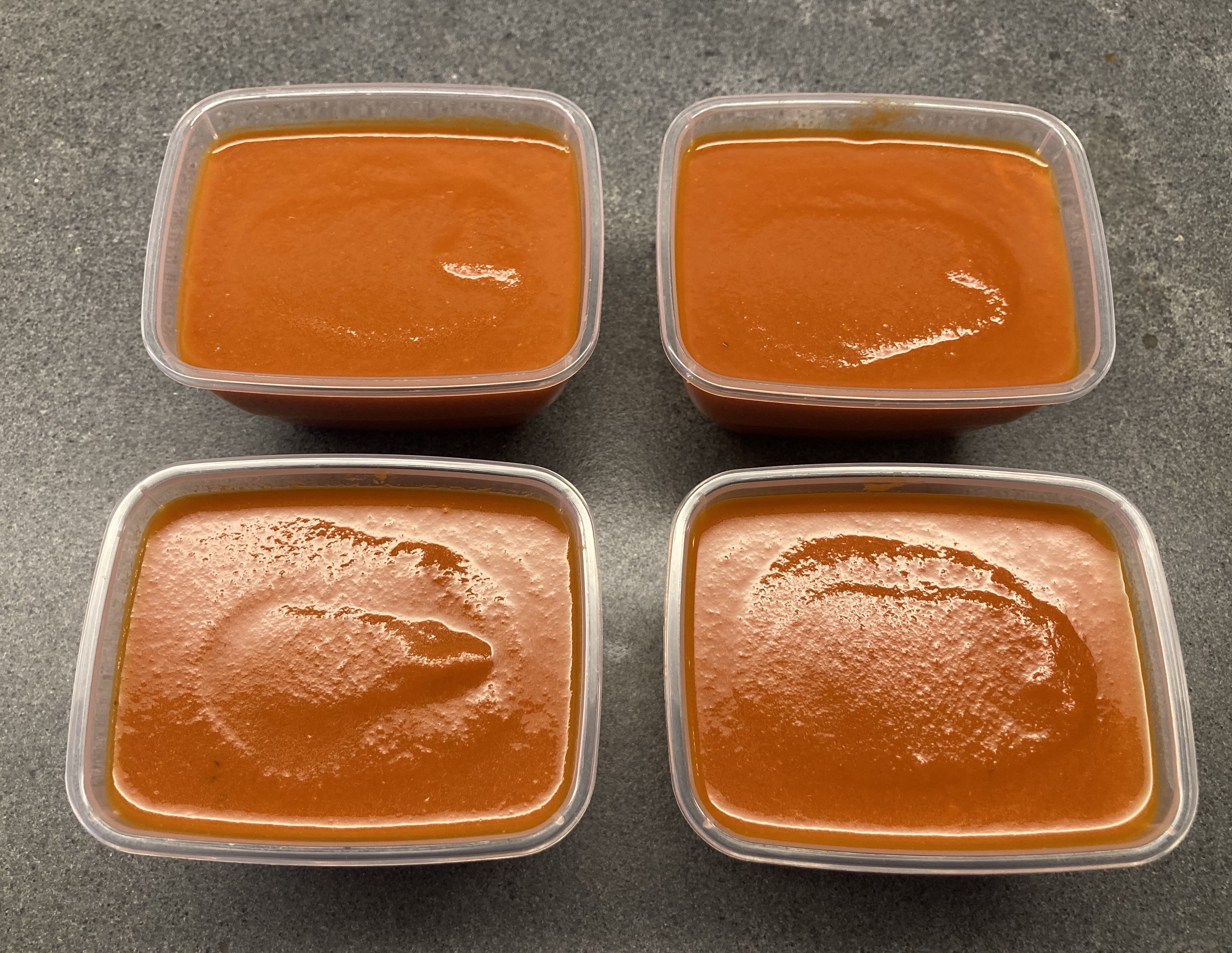
The sauce freezes very well, so ideal to make a nice quantity.

What You Need

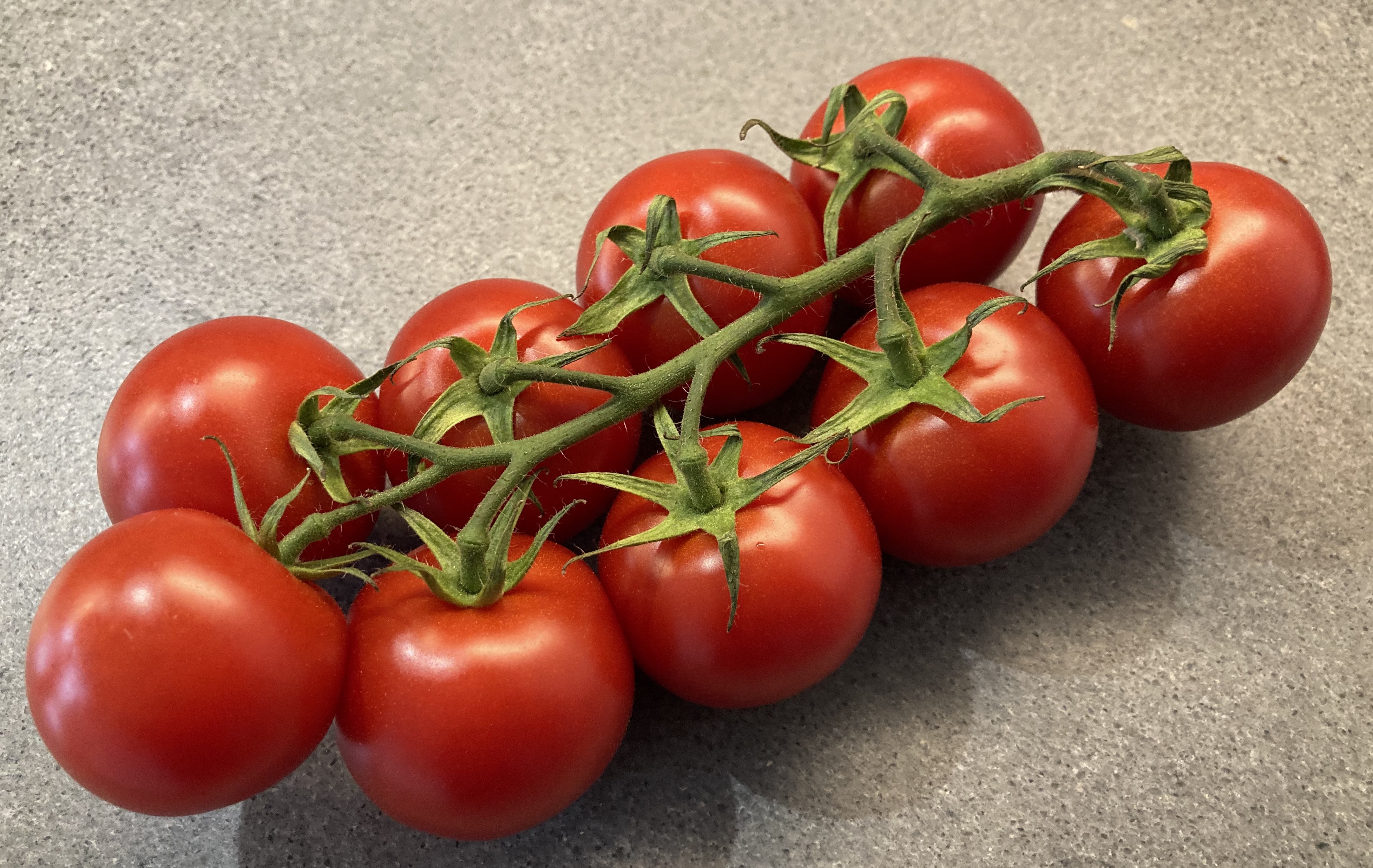
  • 4 – 6 Excellent Ripe Tomatoes (depending on the size)
  • 1 Red Bell Pepper (preferably grilled and peeled)
  • ½ Chilli
  • 1 Onion
  • 1 Garlic Clove
  • Olive oil
  • 1 Glass of Red Wine
  • Bouquet Garni (Parsley, Thyme, Rosemary, Bay Leaf)

What You Do

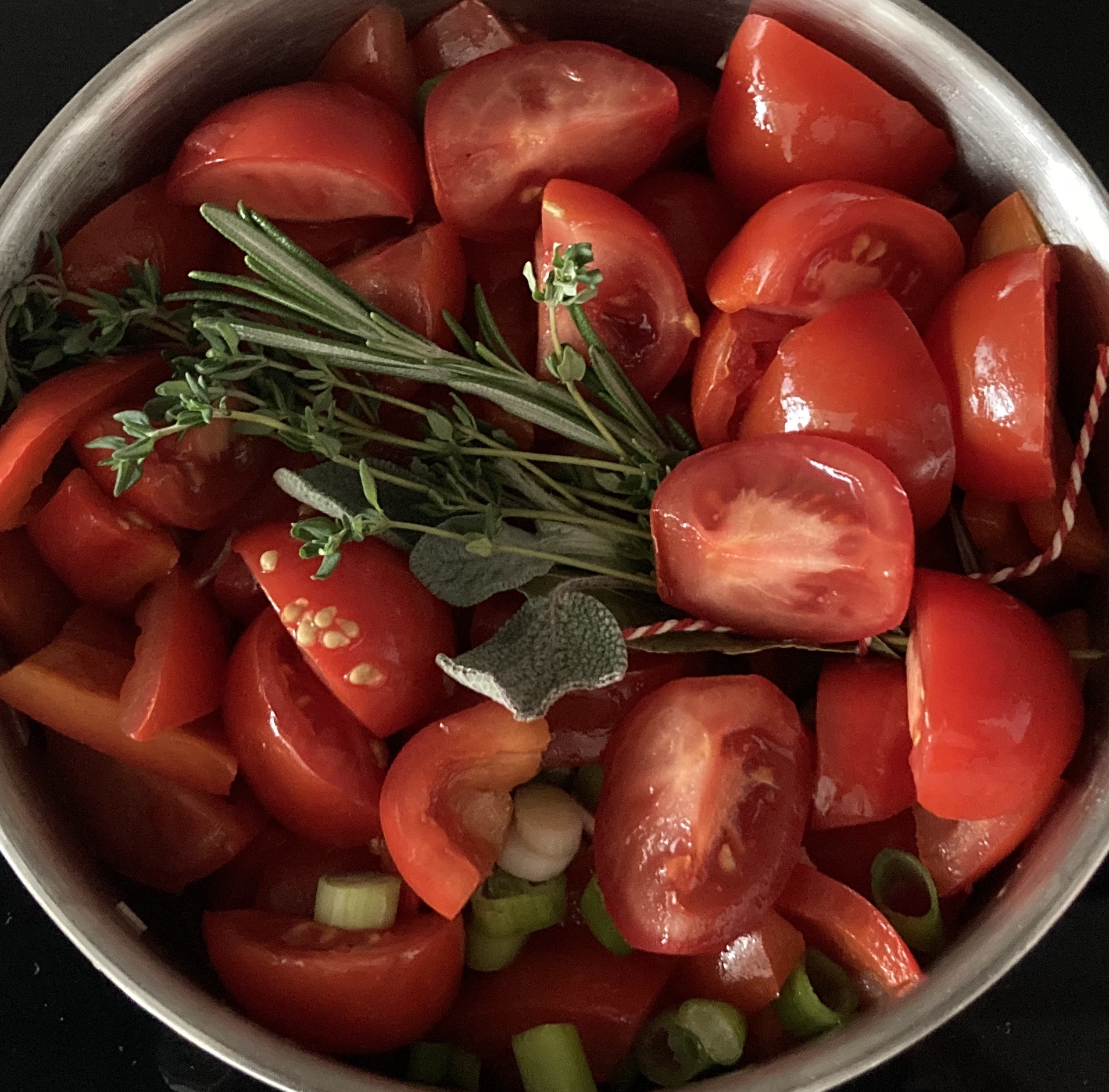
Wash the tomatoes and slice in chunks. Peel the onion and chop. Add olive oil to the pan and glaze the onion for 10 minutes or so. Stir and add the sliced bell pepper and the sliced and seeded chilli. Let cook on medium heat for 5 minutes or so. Reduce heat. Add the chopped garlic clove. After 5 minutes or so add the sliced tomatoes, the red wine and the bouquet garni. Leave for 2 hours minimum to simmer. Remove the bouquet garni and blender the mixture. Pass through a sieve and leave to simmer for another 2 hours. Cool and transfer to the refrigerator or freezer.

PS Grilling a bell pepper: slice the pepper in large slices. Set your oven to grill, put a sheet of aluminium foil on the baking tray, put the slices on the foil, skin up and transfer to the oven, as close to the grill as possible. Wait for 10 minutes or until the skin is seriously burned. Transfer the slices to a plastic container and close the lid. Wait for an hour. Using your fingers and perhaps a knife, peel of the skin. Store the bell pepper and the juices in the refrigerator. The taste is deeper and sweeter compared to raw bell pepper.

Monkfish with Tomato Olive Sauce

Not the kind of fish you want to meet when swimming in the sea, but definitely one you want to meet when shopping at the fishmonger. Make sure you bring some money because monkfish tends to be expensive. Great meat, delicate yet distinctive taste and not difficult to prepare as long as you’re not in a hurry.
The sauce has to be made a day in advance. It needs time to cook and time to integrate.
You will need to remove the skin of the monkfish. There seem to be several layers of skin and one is (when cooked) really rubbery and inedible. So take you knife, start at the tail end and move forwards, thus removing the membrane. You will find useful videos on the Internet. Unfortunately these videos suggest removing the main bone of the fish, which is a mistake for three reasons. You lose taste and meat plus you lose a natural indicator of the cuisson of the fish.
Pitted black olives. Sounds simple but isn’t simple at all. Buy quality, for instance Niçoise or Kalamate and stay away from cheap and canned. Dry-cured black olives (the wrinkly ones like Nyon) can be overpowering.
Monkfish is an essential ingredient of Zarzuela because of its texture and taste. In this recipe we combine the obvious: monkfish and tomato. We add a bouquet garni consisting of rosemary, thyme and bay leaf. The black olives give the required twist to the sauce and the dish as a whole.

We suggest a glass of Chardonnay to accompany the monkfish, provided the wine is not too woody; a light touch of oak will be best. Soave could also be a good combination.

Here is what you need

  • one Shallot
  • one Garlic Glove
  • Olive Oil
  • two Tomatoes
  • Pitted Black Olives
  • Bay Leaf
  • Thyme
  • Rosemary
  • Monkfish (200 gram per person, bone included)
  • Black Pepper

Start by making the sauce. Gently fry the chopped shallot in a splash of olive oil. After a few minutes add the chopped garlic. Now add the chopped tomatoes and the pitted black olives (depending on their taste we suggest between 10 and 15). Add the bouquet garni and allow to cook on low heat for a number of hours. Make sure to check on a regular basis. When ready, remove the bouquet garni and transfer to a blender. Pass the mixture through a sieve. The sauce should be as smooth as possible. Transfer to the refrigerator and use the next day.
Use a heavy iron skillet to fry the monkfish in olive oil. When nicely coloured, reduce the heat and start adding the sauce. Since the sauce is cold, you need to do it spoon by spoon. Coat the fish with warm sauce, again, and again. Use your knife to try separating the meat from the bone. When this is possible without applying too much pressure, the fish is nearly perfect. Remove the bone, turn the fish on the side that was connected to the bone and cook for one or two minutes. Taste the sauce; maybe you want to add some fresh black pepper.
Serve on a warm plate with some crusted bread.

Haddock with Shiitake

One of the Most Popular Fish

Well known of course as one of the most popular fish used for Fish and Chips. And when you mention Haddock, Cod is never far away. According to many recipes and foodies the two are very similar in terms of taste and way to prepare.
That’s where we disagree. We think Haddock has a much more delicate taste compared to Cod. Plus its structure is more compact. When frying Cod it’s not difficult to see and feel what the cuison is. The compact structure of Haddock implies that you have to test the cuison in a different way. Frying haddock requires your constant attention.

Shiitake is more and more widely available, which is great! The nutty taste with the firm structure makes them ideal for this dish. Powerful but not overwhelming. The classic White Mushroom (or the chestnut coloured variation) will not do the trick; too soft and not sufficiently intense. The Shiitake brings umami to the dish.

The white wine sauce is actually enriched with Classic Dry Noilly Prat, our favourite vermouth. Why favourite? Because Noilly Prat comes with a touch of bitterness, with umami, bringing the sauce and the Shiitake together. The vermouth is made with a number of botanicals, including chamomile. The white wine will bring acidity, but the dish also requires a hint of sweetness. The vermouth will enhance the natural sweetness of the Haddock. We use fish stock to create the sauce, obviously. Spend some money on buying a jar of excellent stock (or make your own).

So on your plate you have an intriguing combination of fish and mushrooms, with all five tastes represented. Nice isn’t it?

Wine Pairing

Our choice was a bottle of Pinot Grigio made by MezzaCorona. This is a dry and crispy wine with a beautiful deep yellow colour. It’s an elegant wine with just the right acidity to relate to both the fish and the sauce. The producer mentions hints of chamomile.

What You Need

  • 200 grams of Haddock (without the skin)
  • 100 gram of Shiitake
  • Shallot
  • Parsley
  • Butter
  • Olive Oil
  • Fish Stock
  • Noilly Prat
  • Dry White wine
  • White pepper

What You Do

Start by cutting the shallot. Fry gently in butter for a few minutes. Clean the Shiitake with kitchen paper and slice. Check the fish for bits you don’t want to eat. Add wine and Noilly Prat to the shallots and let the alcohol evaporate. Then add parsley and some fish stock. Leave for a few minutes and taste. Maybe add a bit more vermouth or fish stock. Be careful with the white wine. In parallel fry the fish in butter and olive oil. Both sides should be beautiful golden brown. Gently fry the shiitake in olive oil. When not yet completely ready (check the flexibility, feel how warm the fish is) transfer the fish to a sheet of aluminium foil. Don’t close it; you only want to keep it warm. Pass the sauce through a sieve and be ready to blender the sauce. Add all juices from the two pans and from the aluminium wrapping. Blend the liquid. You could add a small chunk of ice-cold butter to thicken the sauce. We didn’t.
Serve the fish on top of the sauce and add the shiitake. Perhaps a touch of white pepper.